

Maritime Security and Safety
144 Dead or Missing as “Backway” Migrant Boat Drifts 25 Days off Mauritania

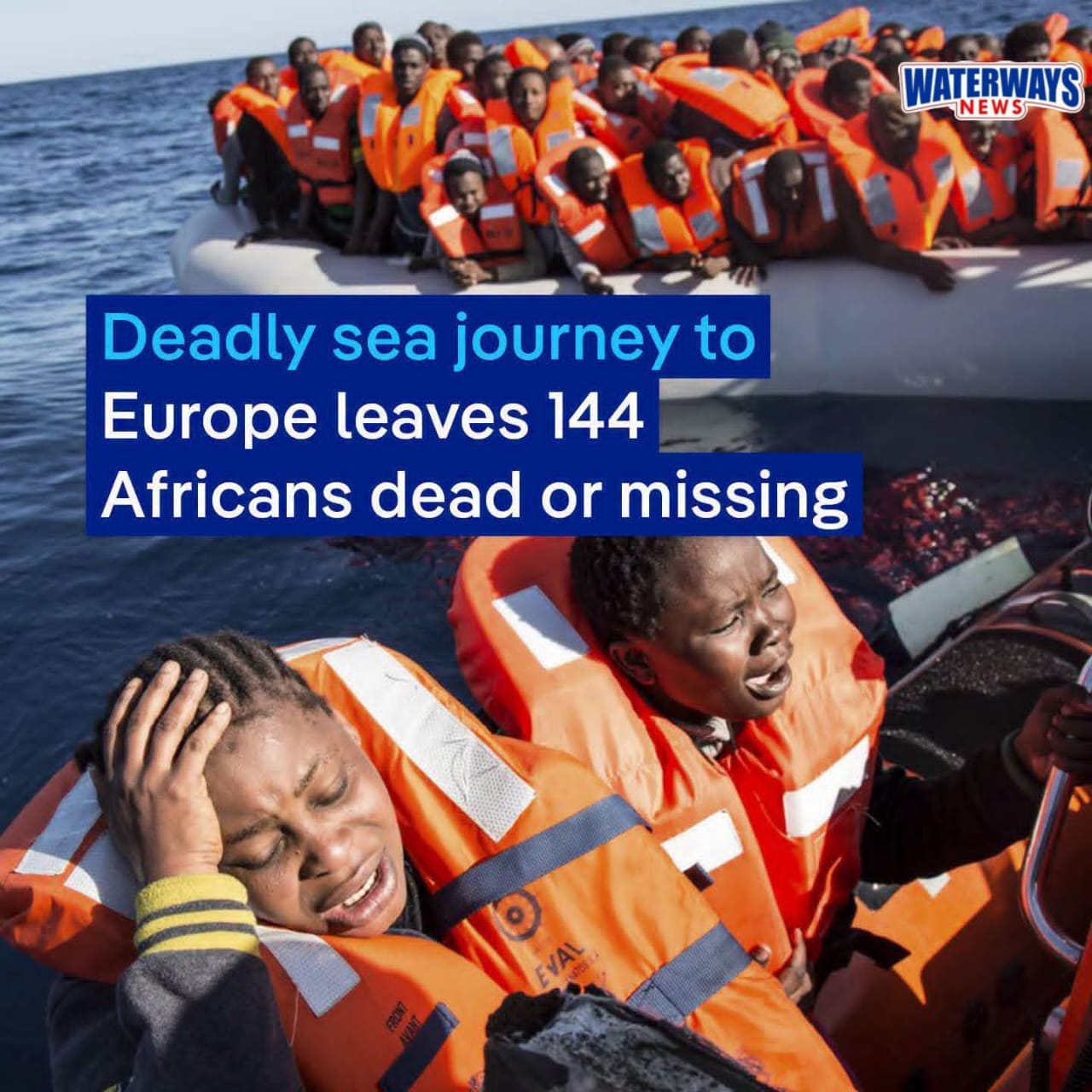

144 Dead or Missing as “Backway” Migrant Boat Drifts 25 Days off Mauritania
UNHCR Renews Warning Over Deadly Atlantic Route
By Raymond Gold | Waterways News
At least 144 people, most of them from The Gambia, have been confirmed dead or gone missing after a migrant boat that spent nearly 25 days drifting in the Atlantic Ocean was finally rescued off the coast of Mauritania, the United Nations refugee agency, UNHCR, has confirmed.
The vessel, a wooden pirogue that departed from Bafuloto in The Gambia with around 160 people on board, ran out of fuel far from shore and drifted helplessly for over three weeks before it was intercepted and towed into the Mauritanian port city of Nouadhibou on 18 July. Only 38 survivors were found alive, alongside the bodies of some of those who had perished. Mauritania’s Ministry of Fisheries put the number still unaccounted for at 122, with one body recovered separately.

Passengers on the stranded boat reportedly ran out of food and water within days and were forced to drink seawater to survive. Among the 38 survivors pulled from the vessel were two children who lost every member of their family during the croossing and are now recovering in hospital in Mauritania, according to UNHCR spokesperson Matt Saltmarsh, who briefed reporters in Geneva.
The Bafuloto boat was the deadliest of three separate disembarkations that Mauritanian authorities, UNHCR and humanitarian partners handled between 14 and 18 July, a week in which 387 people in total were brought safely ashore from vessels in distress. In a separate incident during the same window, a boat that had set out from neighbouring Senegal was intercepted with all 179 people on board rescued alive. A further person died aboard another vessel that disembarked on 14 July.
UNHCR described itself as “extremely saddened” by the deaths and again labelled the Atlantic route to Spain’s Canary Islands, roughly 1,677 kilometres from Bafuloto, “one of the world’s deadliest,” citing the extreme distances involved and the routine use of overcrowded, unseaworthy wooden boats never designed for open-ocean voyages of that length.
The tragedy fits into a grim and escalating pattern. According to the International Organization for Migration’s Missing Migrants Project, 1,214 people died or disappeared on the West Africa/Atlantic route to the Canary Islands in 2025 alone, out of nearly 8,000 migrant deaths recorded worldwide that year. IOM has also warned that the real toll on the Atlantic route is almost certainly far higher, since search-and-rescue information is increasingly restricted and many disappearances at sea are never verified or linked to any known incident.
The route has become deadlier even as arrival numbers have fallen. Mauritania, a key transit and departure point for the crossing, signed a migration-management partnership with the European Union and subsequently launched a crackdown on departures involving coastal patrols, document raids and mass expulsions, a campaign that has drawn criticism from neighbouring countries over alleged human rights violations. IOM notes that as border enforcement has tightened, migrants have increasingly been pushed toward longer, more dangerous, and more geographically dispersed departure points further down the West African coast, rather than being deterred from travelling altogether.
UNHCR has renewed its call for governments in the region and in Europe to expand access to education and legitimate livelihood opportunities as alternatives to the crossing, warning that enforcement alone will not stop people from attempting the journey as long as the underlying drivers of migration remain unaddressed.
Nigeria Watch: When “Japa” Meets the Backway. A Warning Nigeria’s Maritime and Water Transport Stakeholders Cannot Ignore
The Bafuloto tragedy did not happen in Nigerian waters, and its 144 dead and missing were overwhelmingly Gambian and other West African nationals rather than Nigerians. But for Nigeria’s maritime community, and for the ordinary Nigerians who increasingly frame irregular emigration through the lens of “Japa,” the incident is impossible to read as someone else’s story.
The Gambian “Backway” and the Nigerian “Japa” impulse are, at bottom, the same phenomenon wearing different national colours, a generation convinced that the only rational response to state failure is exit, by whatever means available. Nigeria’s version of “Japa” has, for now, expressed itself mainly through visa routes, student migration, and irregular land and sea journeys through the Sahara and Libya toward the Mediterranean rather than the Atlantic pirogue route favoured by Gambians, Senegalese and other coastal West Africans sailing for the Canary Islands. But the Atlantic route is not sealed off from Nigerians, and the underlying pressure which include youth unemployment, currency depreciation, insecurity, and a collapsing sense of opportunity at home.
This is where the maritime and blue economy governance conversation Waterways News covers every week intersects directly with a humanitarian catastrophe. NIMASA, NIWA and the Federal Ministry of Marine and Blue Economy under Minister Adegboyega Oyetola have spent this period building out a blue economy agenda anchored on the promise that Nigeria’s waters, properly harnessed, can generate legitimate livelihoods: fisheries, aquaculture, coastal tourism, cabotage shipping, and inland waterways transport. The Bafuloto disaster is a brutal illustration of what happens when that promise fails to materialise fast enough, and young people instead look at the same ocean and see not opportunity but an exit route worth risking their lives for.
There is also a sober lesson here for Nigeria’s own inland and coastal waterways safety conversation, one this publication has returned to repeatedly in the context of fatal boat capsizings on routes across different parts of the country. The Bafuloto boat failed for reasons that will sound uncomfortably familiar to anyone who has covered Nigerian boat mishaps: an unregulated wooden vessel, wildly overloaded beyond any safe capacity, undertaking a journey with no functioning safety net, no reliable fuel margin, and no search-and-rescue backstop until it was almost too late. Whether the vessel is crossing the Atlantic toward the Canary Islands or crossing the Lagos Lagoon toward Apapa, or from the Benue to the Niger rivers, the pattern of preventable waterways death, poor vessel standards, absent regulation, and desperate passengers absorbing risks that better-resourced systems would simply not allow, is the same.
For Nigeria’s seafarer and boat operator associations, including cooperative operators like WABOTAN and ATBOWATON or advocacy group like SWAAADO, that this publication engages closely, the episode is also a reminder that the maritime labour market genuinely on offer to irregular migrants in Europe is rarely the dignified opportunity the journey promises.
Undocumented migrants overwhelmingly end up in precarious, low-status, and often exploitative work, frequently work that mirrors the very maritime, artisanal and service-sector jobs Nigerians could be doing at home, but without the legal protection, wage security, or dignity that a properly regulated domestic blue economy could offer.
None of this argues against legal migration, which remains a legitimate and valuable pathway for Nigerian professionals, including trained seafarers seeking certification and berths abroad through proper channels. It argues for urgency on CVFF disbursement reaching genuine small operators rather than stalling in bureaucratic limbo; on NIMASA and NIWA’s safety regulation of inland and coastal vessels being enforced rather than merely announced; and on the blue economy’s job-creation promises translating into visible, bankable opportunities before another generation concludes that a 25-day gamble on an open boat to Europe is more rational than staying home.
The 144 lives lost off Mauritania were not Nigerian. But the conditions that put them on that boat, and the temptation that could just as easily put a young Nigerian on the next one, are not foreign to us at all.

Maritime Security and Safety
IMO Council Mourns Slain Seafarers, Demands Stronger Protection as Maritime Conflicts Deepen
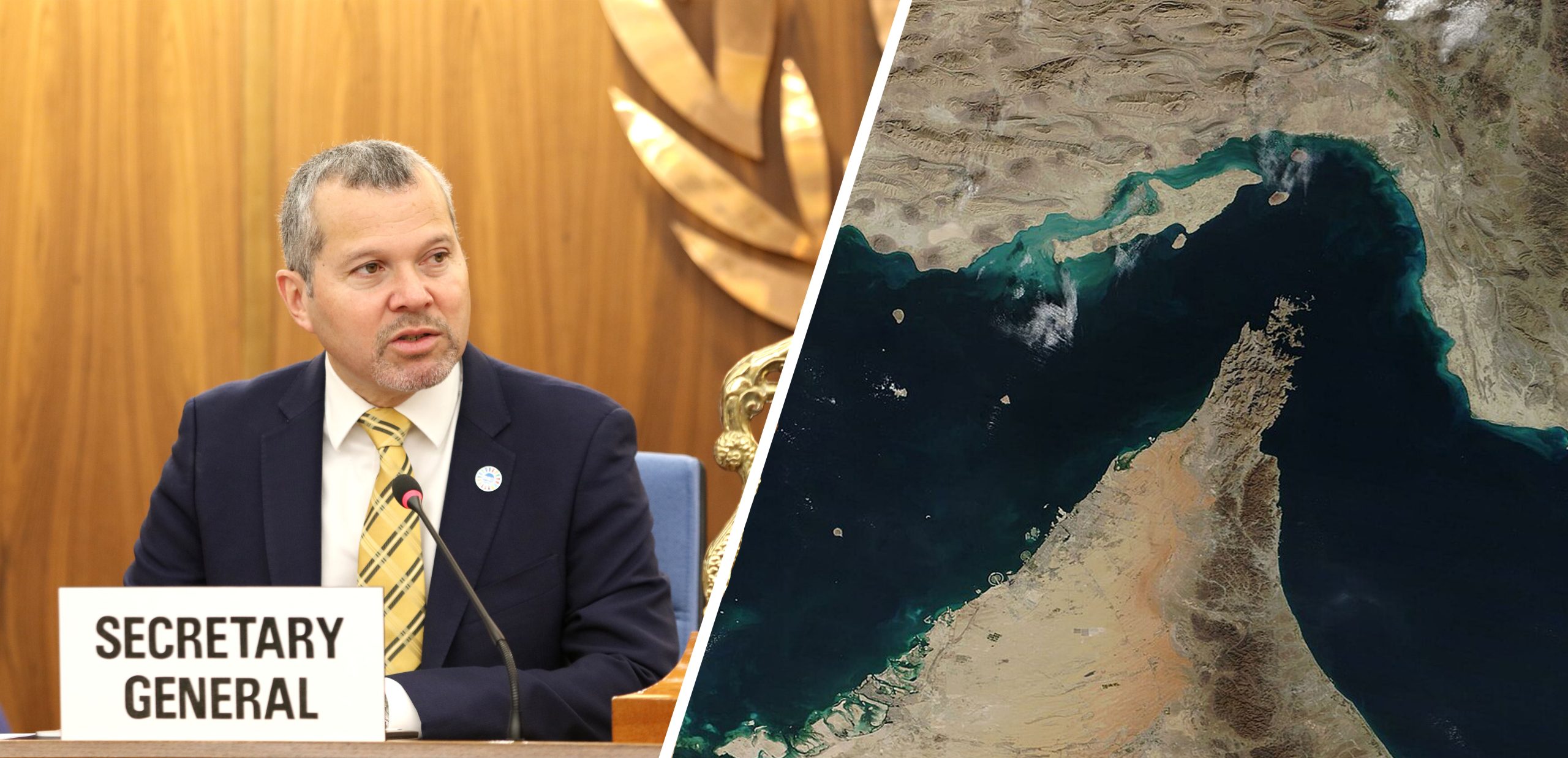
IMO Council Mourns Slain Seafarers, Demands Stronger Protection as Maritime Conflicts Deepen
Dominguez warns merchant ships remain exposed from Hormuz to the Black Sea as 138th Council session ends in London
By Okeoghene Onoriobe | Waterways News
Member states at the International Maritime Organization (IMO) used the opening of the Council’s 138th session to mourn seafarers killed in recent attacks and to demand firmer protection for civilian mariners.
Council met in London from 2 to 6 November, with Russia and Iran putting security in the Black Sea and the Strait of Hormuz at the centre of discussions. On 2 November, Secretary-General Arsenio Dominguez said commercial shipping remained exposed to attack in the Strait of Hormuz, the Red Sea, Bab el-Mandeb, the Eastern Mediterranean, the Black Sea and the Sea of Azov.
The mourning was driven by a run of deaths this year. Five seafarers reportedly died on 29 September during the rescue of the hijacked HONOUR 25 in Somali waters, and several others were seriously injured. In all, 44 seafarers were freed from three vessels. Dominguez noted that 22 seafarers remain captive aboard the ASANA, which was seized earlier this year, and urged continued effort to secure their release.
The Strait of Hormuz remains the deadliest flashpoint. The IMO had verified at least 70 attacks on international shipping there, with 19 seafarers killed, by its late-August assessment. A tally reported by gCaptain put the seafarer death toll at 24 as of 5 November.
Dominguez has repeatedly insisted that seafarers are civilians doing their jobs. He has said they should never become casualties of conflicts to which they are not a party.
Member states echoed the call. Liberia renewed its appeal for seafarer protection and freedom of navigation, and Indonesia said seafarer protection and safety of navigation must be a shared priority.
The session also dealt with leadership. Council backed a second four-year term for Dominguez, subject to approval by the IMO Assembly in 2027. The term would run from 1 January 2028 to 31 December 2031.
Nigeria Watch
Nigeria has more at stake than a distant diplomatic debate. Hormuz disruption has fed through to freight rates, war-risk insurance and port costs for Nigerian importers and shippers. Piracy off Somalia and the Gulf of Aden is a reminder that the Gulf of Guinea’s own security gains, including the Deep Blue Project, cannot be taken for granted.
The Council session also bears on Nigeria’s IMO seat. Abuja has pushed seafarer welfare and maritime security as part of its diplomacy, and the Council’s message gives that agenda more weight. The test is whether Nigeria backs its advocacy abroad with welfare protections, training and safety enforcement for its own mariners and for the informal waterway operators represented by WABOTAN and ATBOWATON.
For those operators, the lesson from London is that protection is a shared responsibility, and it has to reach the people who work on the inland water, not just those on ocean-going ships.
Nigeria Unveils Home-Built ADX-Barra 200 Autonomous Vessel at AFRIDEX 2026
Arridex, DICON joint venture Helagon delivers country’s first indigenously developed unmanned surface vessels%
By Ighoyota Onaibre | Waterways News
Nigeria has unveiled its first indigenously developed autonomous surface vessel, the ADX-Barra 200. Arridex Group, formerly RusselSmith Group, built it through Helagon, its defence joint venture with the Defence Industries Corporation of Nigeria (DICON).
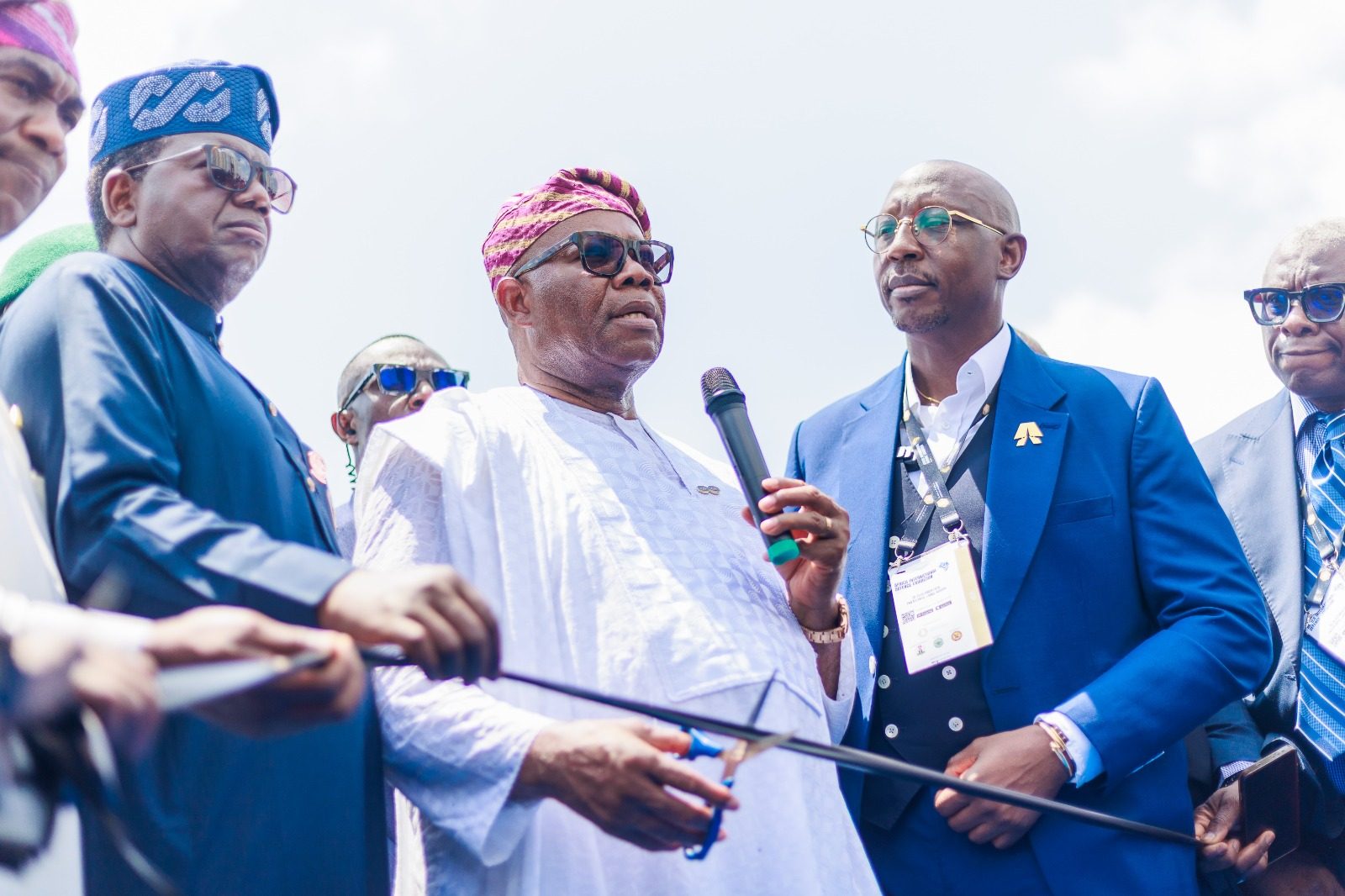
The vessel was unveiled on 26 October at the inaugural Africa International Defence Exhibition (AFRIDEX 2026) at Eko Atlantic, Lagos. The exhibition ran from 26 to 29 October.
President Bola Ahmed Tinubu was represented by Senate President Godswill Akpabio. He said the administration prioritises defence industry growth because a nation is more secure when it can build and maintain its own capability. He described the vessel as that capability taking shape, designed and built by local engineers in partnership with DICON, and said it deserves government support and the confidence of the armed forces.
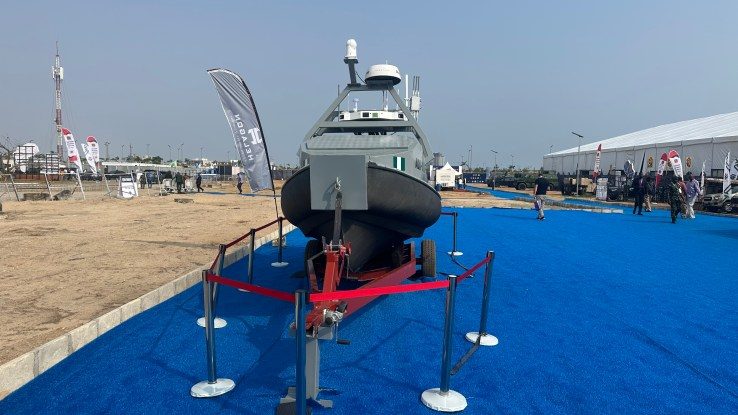
ADX-Barra 200
Arridex Group CEO Kayode Adeleke presented the vessel. He said Helagon was set up to design autonomous systems and that the ADX-Barra 200 is the result. For the forces that will use it, he called it a force multiplier.
The ADX-Barra 200 is one of two platforms in the ADX-Barra series launched at the exhibition. The other is the ADX-Barra 100. Arridex says both were designed, built and integrated in Nigeria by its engineers.
Adeleke tied the platforms to Gulf of Guinea security. He said the region’s waters carry its trade, support its coastal communities and hold much of its energy wealth, and that protecting them calls for capability the region can build, sustain and improve itself. He invited the armed services and other stakeholders to arrange demonstrations and to help shape later generations of the vessels.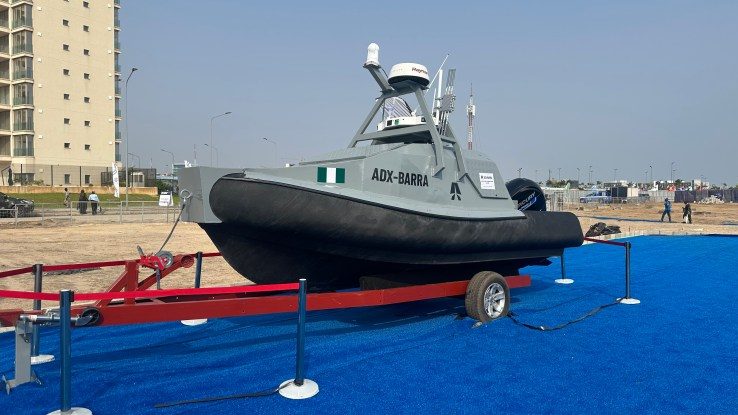
Others at the unveiling included Lagos State Deputy Governor Dr Obafemi Hamzat and the Minister of State for Defence, Dr Bello Matawalle. DICON Director-General Major General Babatunde Ibrahim Alaya, Helagon Chief Operating Officer Engr. Precious Omo-Agege and Arridex senior management were also present.
Arridex has not published the vessel’s technical specifications, including its length, endurance, payload and sensors. Both vessels remained on display at the exhibition.
NIGERIA WATCH
A home-built answer to a long-standing maritime problem: Nigeria’s waters have long needed more patrol capacity than its platforms and budgets can supply. A locally designed vessel that “can be supported, adapted and improved by the team that made it,” as Arridex puts it, addresses one persistent weakness. Imported hulls and systems often sit idle for want of spares, support and trained hands.
The questions that matter next: Unveilings are not deployments. The Navy, NIMASA’s Deep Blue Project and other agencies will want to know the vessel’s range, endurance, sensors and sea-state limits. They will also want to know whether it can work in the Gulf of Guinea. Until Arridex publishes specifications and arranges trials, the “game-changing” claim remains the company’s own.
Beyond defence: Waterways News readers should watch whether this technology filters into civil uses such as inland waterway surveillance, anti-vandalism patrols and search and rescue. The country’s inland operators, including those represented by WABOTAN and ATBOWATON, face insecurity and safety gaps that policy announcements have not closed. Local manufacturing capacity matters to them only if it eventually reaches the waterways where they work.
The accountability test: The industrial-policy argument is sound. It is build locally and maintain locally. It will be judged by procurement, deployment and sustained operation, not by launch-day speeches.
Editor's Choice
Australia Bars Repeat-Offender Bulk Carrier for 90 Days Over Falsified Crew Rest Records
Australia Bars Repeat-Offender Bulk Carrier for 90 Days Over Falsified Crew Rest Records
By Okeoghene Onoriobe | Waterways News
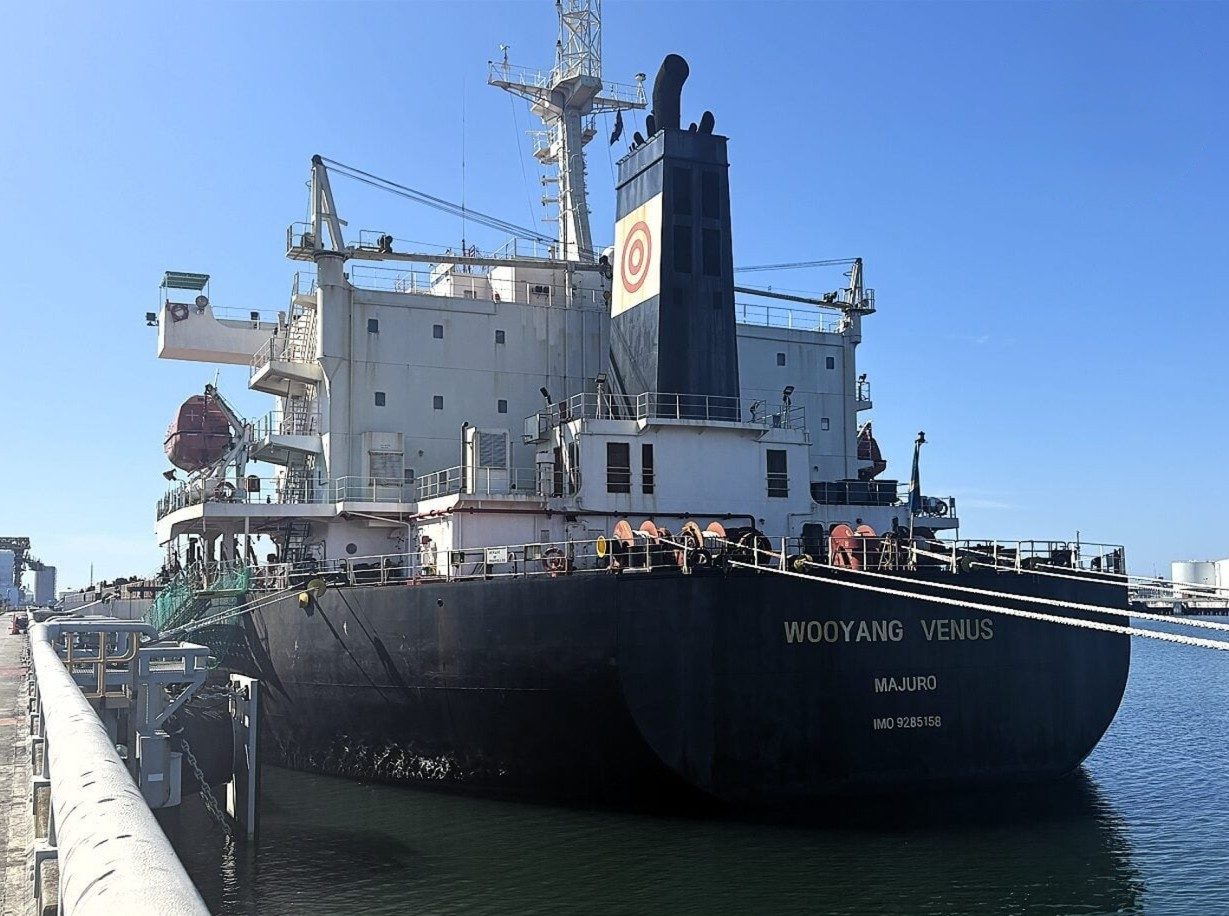
Australian maritime authorities have banned the Marshall Islands-flagged bulk carrier Wooyang Venus from its ports and waters for 90 days. Inspectors found that the ship’s crew work and rest-hour records had been deliberately falsified to hide excessive working hours.
The Australian Maritime Safety Authority (AMSA) boarded the vessel at the Port of Newcastle on 29 October after a complaint under the Maritime Labour Convention (MLC). Its port state control inspection found that the records did not match the hours the crew actually worked. The ship left Newcastle on 31 October for Korea, and the ban took effect afterwards.
This is the vessel’s third brush with Australian enforcement in under three years. AMSA detained it in August 2026 when crew hours were neither properly recorded nor monitored. It was first detained in December 2023, after a complaint from the International Transport Workers’ Federation (ITF).
That inspection found falsified hours records, poor food provisions and an allegation that the master had assaulted a crew member. AMSA’s annual MLC report says the operator then submitted a corrective action plan covering repatriation, better provisions and training on rest-hour compliance. The latest findings suggest those measures did not take hold.
AMSA Executive Director for Maritime Safety and Environmental Compliance, Greg Witherall, said falsifying records meant to protect seafarers undermines both crew welfare and ship safety. He warned that fatigue dulls judgement and slows reaction times, raising the risk of collisions, groundings and injuries, particularly during navigation and watchkeeping.
The ban was imposed under Section 246 of Australia’s Navigation Act 2012. AMSA cited the deliberate falsification, the repeated breaches and doubts over the effectiveness of the owner’s and operator’s safety management systems.
Nigeria Watch
The case matters for Nigeria for three reasons:
Records are the enforcement tool. Fatigue rules only work if rest-hour logs can be trusted. Australia treated falsification as a safety-system failure, not a paperwork lapse, and banned the ship rather than detaining it again.
Repeat offenders need escalating penalties. Two detentions and a corrective plan did not change this operator’s behaviour. Nigerian port state control should ask whether its own follow-up on repeat deficiencies has real consequences.
Seafarer welfare is a Nigerian issue. Nigerian seafarers serve on foreign-flagged ships, and those working boats and ferries on domestic waters face fatigue and welfare gaps too, often with no records at all.
The MLC regime Australia is enforcing shows what accountability looks like. It is the benchmark NIMASA and the inland regulators should be measured against, and one this publication will keep pressing.

 Oil and Gas8 months ago
Tantita’s Pipeline Deal: $144m Contract, Rising Output, and the Questions that Deserve Answers
 MARITIME TRADE & SHIPPING8 months ago
World’s Largest Container Ship Sets New Maritime Record with 22,233 TEUs on Single Voyage
 Blue Economy9 months ago
Nigeria’s Coast Guard Bill: A Solution in Search of a Problem?