
Connect with us

Blue Economy

Nigeria’s Coast Guard Bill: A Solution in Search of a Problem?

Published

on

Stay connected via Google News
Follow us for latest news and information on Nigeria water ways.
Add as preferred source on Google
The bill to establish a Nigerian Coast Guard has refused to die quietly.
First introduced in 2021 by Senator Akon Eyakenyi during the 9th Senate, it was revived in late 2024 under the sponsorship of Senator Wasiu Eshinlokun (APC-Lagos), passing its second reading in October 2024.
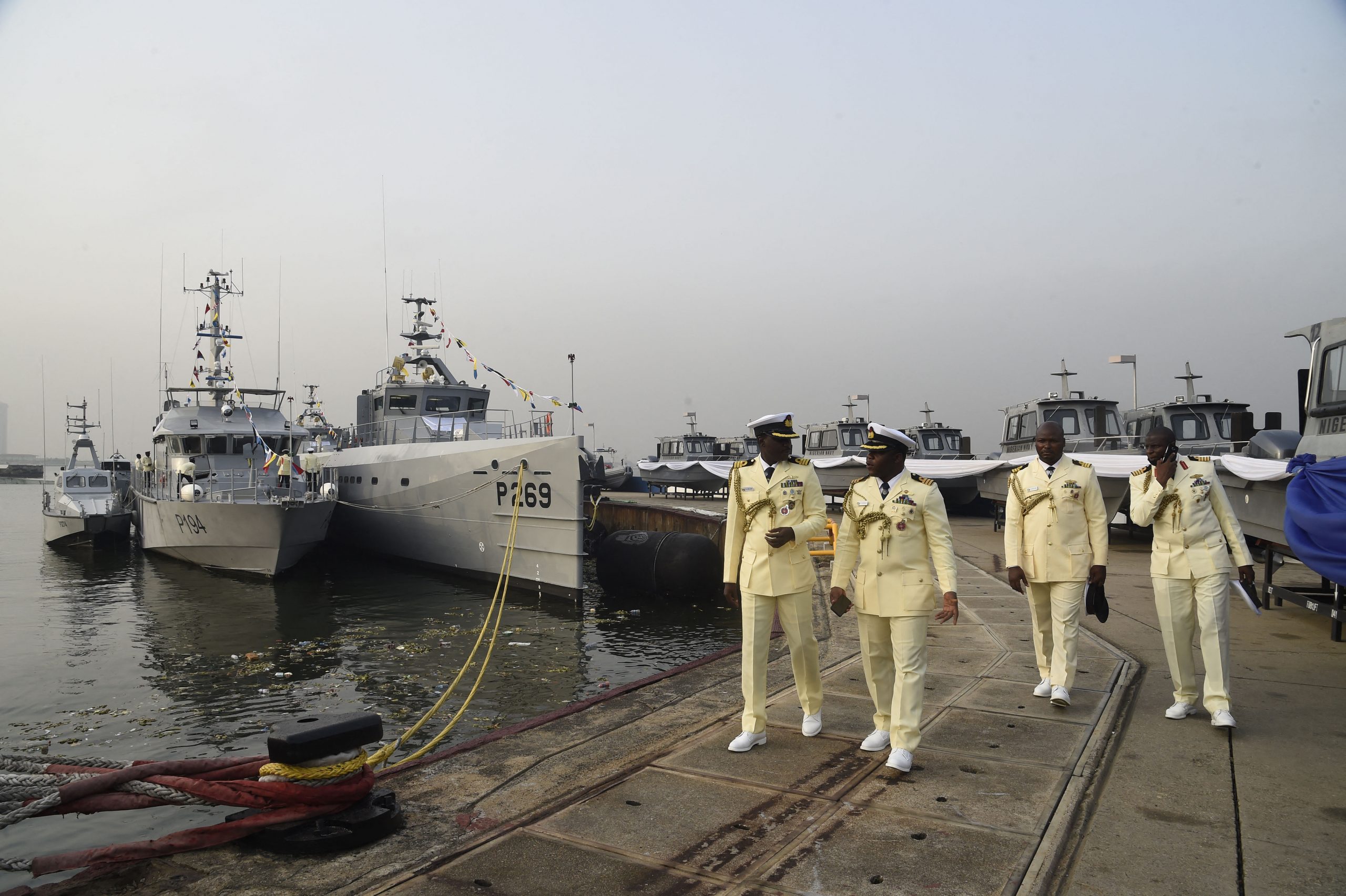
Its stated ambition is bold: create a full-fledged military service branch under the Ministry of Marine and Blue Economy, charged with maritime security, law enforcement, and search-and-rescue operations across Nigeria’s 853-kilometre coastline and approximately 10,000 kilometres of inland waterways.
The response from virtually every major stakeholder has been swift and overwhelming — opposition.

Why the Navy Says No

The Nigerian Navy’s resistance is not merely institutional protectionism. At the December 2024 public hearing convened by the Senate Committee on Marine Transport, the Navy presented a substantive case rooted in both domestic realities and global precedent.
Rear Admiral Olusegun Ferreira, representing the Chief of Naval Staff, drew on international examples to challenge the bill’s logic, pointing out that the United Kingdom does not operate a Coast Guard with military powers. Instead, the Royal Navy handles military defence and maritime security, while the UK Coast Guard, operating under the Maritime and Coastguard Agency, manages search-and-rescue and occupational safety as essentially a civilian and volunteer body.
The Navy’s core argument is that Nigeria already has a functioning maritime security architecture. Beyond the Navy itself, agencies including NIMASA, the Nigerian Inland Waterways Authority, the Nigeria Police Marine Unit, and Nigeria Customs Marine Unit all operate within the same maritime domain.
Adding a Coast Guard with overlapping military powers, the Navy contends, would not strengthen this architecture — it would fracture it.

Why Was the Bill Proposed at All?

Supporters of the bill, including the Minister of Marine and Blue Economy, Gboyega Oyetola, argue that Nigeria’s waterways face threats that existing agencies have simply failed to contain — rampant boat mishaps, illegal fishing costing billions of naira annually, pollution, unregulated coastal development, and the persistent vulnerability of inland waterways. Their position is that the Navy’s primary orientation is military defence, and that a dedicated civilian-facing Coast Guard would fill a genuine governance and enforcement gap.
The argument has merit on its face. Many countries — including the United States — operate a Coast Guard distinct from their navy, precisely to manage the civilian, regulatory, and environmental dimensions of maritime governance that fall awkwardly within a military mandate.
However, the Nigerian proposal is not a civilian Coast Guard. The bill explicitly seeks to make the Coast Guard a full-fledged military service and a branch of the Armed Forces of Nigeria, which erases the very distinction that justifies a Coast Guard’s existence in most countries.

A Security Threat in the Making?

Beyond duplication, there is a darker concern. Security analysts warn that without a clearly defined mandate and strategic alignment with existing agencies; the proposed Coast Guard could complicate Nigeria’s already crowded maritime security domain.
The National Security Adviser, Mallam Nuhu Ribadu, has reportedly rejected the bill, citing intelligence reports suggesting that militant factions from the Niger Delta are already forming organizations in anticipation of absorption into the proposed structure. If accurate, the Coast Guard risks becoming not a security institution but a pipeline for legitimising armed groups — a profound threat in a region with a long history of militancy.

The Fiscal Absurdity

Senator Adams Oshiomhole put the financial dimension bluntly: “It is imprudent to take loans to establish a new agency when existing structures can be strengthened.”
Nigeria is a country where the Navy already operates under severe budgetary strain. House Committee chairman Gagdi was direct: “We have a Navy that is working hard but suffocated. It would be irrational to consider another agency when the Navy is not adequately funded.”
The cost of establishing a new military service branch — recruitment, training, equipment, platforms, jetties, uniforms, salaries, pensions — would run into hundreds of billions of naira, money Nigeria does not have and would likely borrow.

What Should Government Do Instead?

The consensus from the Navy, lawmakers, security experts, and civil society groups is clear, even if the government has been slow to hear it: fix what exists before building something new.
Concretely, this means adequately funding the Nigerian Navy to expand its operational reach, particularly on inland waterways where its presence is thin. It means strengthening NIMASA’s regulatory and enforcement capacity, reforming NIWA to better police inland waterways, and improving coordination and intelligence-sharing between the multiple agencies already operating in the maritime space. It also means addressing the legal and regulatory gaps in maritime safety enforcement — the kind of work that does not require a new institution, only the political will to resource and reform existing ones.
If Nigeria genuinely needs a civilian body focused on environmental protection, search-and-rescue, and inland waterway safety — functions the Navy is structurally ill-suited to prioritize — the answer is a lean, civilian Coast Guard clearly subordinate to civil authority, with no military powers, no armed mandate, and no overlap with naval operations. That is the model that works in countries like the UK. It is emphatically not what the current bill proposes.

The Danger of Duplication

The deeper problem the Coast Guard Bill exposes is a pattern that has long weakened Nigerian governance: the habit of creating new institutions rather than fixing broken ones. Every duplicate agency adds bureaucratic friction, jurisdictional disputes, and competition for resources. In the maritime domain, where coordination between agencies is already a documented weakness, adding another armed actor with an overlapping mandate is not a reform — it is a recipe for operational paralysis and, potentially, armed confrontation between agencies of the same government.
Nigeria’s waters deserve better. So does the public that depends on them.
Facebook Comments Box
Stay connected via Google News
Follow us for latest news and information on Nigeria water ways.
Add as preferred source on Google
Continue Reading
Advertisement
1 Comment

1 Comment

  1. Promise Nwaobilor

    March 31, 2026 at 7:45 pm

    Nigeria Coast guard should be signed under the law and it will help the society to get jobs in the country

Leave a Reply

Your email address will not be published. Required fields are marked *

Blue Economy

WABOTAN President Raises Alarm Over Prohibitive Water Transport Fares, Urges Government Intervention

Published

on

Stay connected via Google News
Follow us for latest news and information on Nigeria water ways.
Add as preferred source on Google

WABOTAN President Raises Alarm Over Prohibitive Water Transport Fares, Urges Government Intervention

Fajemirokun warns that rising fuel costs, ageing vessels, and inadequate public investment are pricing commuters off Nigeria’s waterways

By Okeoghene Onoriobe | Waterways News Correspondent

The President of the Waterfront Boat Owners and Transporters Association of Nigeria (WABOTAN), Mr. Tope Fajemirokun, has raised the alarm over the prohibitively high cost of water transportation across Nigeria, warning that unless governments at all levels intervene decisively, the sector will continue to haemorrhage passengers to road transport despite the obvious advantages of the nation’s extensive waterway network. Fajemirokun made the remarks during a live radio broadcast in Lagos, where he painted a stark picture of the economic burden borne by waterway commuters.

Fares Outpacing Road Transport
At the heart of his concern is a cost paradox that should trouble any serious maritime policy observer: water transport, which by its very nature should offer a cheaper and faster alternative to gridlocked Nigerian roads, is in many corridors costing passengers more than the road equivalent. Fajemirokun cited the Badagry-to-CMS run as a telling example, noting that a commuter on that route parts with approximately ₦5,000 per trip each way — amounting to ₦10,000 daily on transportation alone.

Advertisement

“This is one of the major factors discouraging passengers from using the waterways. That is why we are appealing to government at all levels to invest more in the sector,” he said.

Fuel Costs Strangling Operators
Beyond passenger fares, Fajemirokun identified soaring fuel prices as a primary driver of the sector’s operational distress. The post-subsidy-removal fuel environment has dramatically inflated running costs for boat operators, many of whom are already working at the margins of viability. The knock-on effect, he explained, is that operators are increasingly unable to reinvest in their fleets or expand capacity — a vicious cycle that keeps vessel quality low, fares high, and passenger volumes depressed.

“When you are in business, you must continue to improve and invest in it despite the challenges,” he said, acknowledging the burden while calling on government to cushion it through targeted support and soft loans to enable operators to acquire modern, fuel-efficient vessels.

Safety Preparedness as the Rains Arrive
WABOTAN’s president also used the platform to outline the association’s safety readiness agenda as Nigeria enters the rainy season — historically the most hazardous period on the nation’s waterways. He disclosed that WABOTAN had already conducted two safety induction programmes in 2026, with a third planned before August, to be convened in partnership with veteran maritime journalist Frank Meke and involving stakeholders, media, and regulatory agencies.
Fajemirokun commended both the Lagos State Waterways Authority (LASWA) and the National Inland Waterway Authority (NIWA) for their collaborative engagement with the association, noting that LASWA’s recent investment in clearing water hyacinth from Lagos waterways was a significant operational safety intervention.

He expressed particular concern about Rivers and Bayelsa States, where proximity to the Atlantic Ocean creates elevated hazard conditions during the rainy season, and said WABOTAN was intensifying sensitisation efforts in those states with NIWA’s support.

Advertisement

On the perennial issue of unsafe banana and wooden boats, Fajemirokun renewed his call for government financial intervention to help operators transition to sturdier, more modern vessels. “Eliminating banana and wooden boats will be easier if government provides the necessary support and investment,” he said. He also commended the Lagos State Government for its ongoing intervention in the sector as a model for other state governments to emulate.

Meke: ‘More Lip Service Than Concrete Action’
Veteran maritime journalist Frank Meke, who also addressed the broadcast, echoed Fajemirokun’s concerns with characteristic directness, contrasting the obvious congestion on Nigerian roads — pointing specifically to the perennial Apapa gridlock — with what he described as insufficiently backed government rhetoric on waterways development.

“Sometimes, there appears to be more lip service than concrete action. The blue economy holds enormous potential,” Meke said, praising WABOTAN for the investments and sacrifices it makes within its resource constraints, while challenging government agencies to demonstrate comparable commitment.

Meke also expanded the geographic lens of the debate, flagging landlocked and riverine states including Kwara, Niger, Benue, and Taraba as jurisdictions where functional inland waterway services could transform the economics of agricultural logistics — providing farmers with cost-effective, reliable means of moving produce to market. He called on the federal government to declare a state of emergency in the water transportation sector, and for soft loans to be made available to operators for vessel acquisition and crew training.

Advertisement

Both speakers agreed on one non-negotiable: life jackets must be worn on every journey, every time, without exception.

Nigeria Watch: Analysis by Waterways News
The concerns voiced by Mr. Fajemirokun and Frank Meke on that Lagos radio programme are neither new nor unfamiliar to this publication’s readers. What is striking, however, is how little has changed in the structural condition of Nigeria’s inland and coastal passenger waterway sector despite years of advocacy from operators and industry voices.

The ₦10,000 daily transport bill on the Badagry-CMS corridor is not merely an inconvenience — it is a market failure signal. Water transport along that axis should, by any rational calculation, be the cheaper and faster option. The fact that it is not speaks to a fundamental absence of the economies of scale that only sustained public investment, modern fleet deployment, and subsidised infrastructure can generate.

WABOTAN’s operators are caught in a trap familiar to many sectors of Nigeria’s economy: the cost of inputs — fuel, maintenance, insurance, compliance — has surged dramatically in the post-subsidy-removal environment, but passenger affordability has not kept pace. The result is an affordability ceiling that suppresses ridership, keeps revenues thin, and starves operators of the capital needed for fleet renewal. Ageing wooden and banana boats are not just a safety hazard; they are the rational economic response of an operator who cannot access affordable credit to do better.

Advertisement

This publication notes that the federal government’s April 2026 approval of the long-delayed CVFF disbursement was a step in the right direction, but the Cabotage Vessel Financing Fund was designed primarily for deep-sea and coastal commercial shipping — not for the community-level passenger boat operators that WABOTAN represents. What the inland and passenger waterway sub-sector requires is a dedicated, purpose-designed financing window, with concessional interest rates and simplified access procedures, that speaks directly to the scale and the needs of small and medium-sized waterway operators.

Frank Meke’s invocation of Kwara, Niger, Benue, and Taraba is timely. Nigeria’s waterway potential is habitually discussed in the context of Lagos and the Niger Delta, but the country’s network of navigable rivers — the Niger, the Benue, the Kaduna tributary system — represents an enormous untapped logistics asset for agricultural value chains in the Middle Belt and North Central zones. The failure to activate this network is not merely a transport policy failure; it is an agricultural competitiveness failure with direct consequences for food security and rural income.

As the 2026 rainy season deepens, WABOTAN’s renewed focus on safety education is commendable. But it should not be left to an industry association, operating on voluntary resources, to carry the primary burden of waterway safety sensitisation. NIWA, LASWA, and the Federal Ministry of Marine and Blue Economy must resource and lead that function — not merely partner with it from the margins.

By Raymond | Waterways News | Lagos
waterwaysnews.ng

Advertisement
Facebook Comments Box
Stay connected via Google News
Follow us for latest news and information on Nigeria water ways.
Add as preferred source on Google
Continue Reading

Blue Economy

UK Delegation Hold Talks with NPA on Navigational Safety, Port Modernisation

Published

on

Stay connected via Google News
Follow us for latest news and information on Nigeria water ways.
Add as preferred source on Google

UK Delegation Hold Talks with NPA on Navigational Safety, Port Modernisation

By Ighoyota Onaibre | Waterways News Correspondent

A high-level British delegation led by the United Kingdom’s National Hydrographer, Rear Admiral Angus Essenhigh, and the Deputy High Commissioner, Jonny Baxter, has visited the Nigerian Ports Authority (NPA) headquarters for bilateral discussions centred on hydrography, navigational safety, and port infrastructure development.

The delegation, which also included officials of the United Kingdom Hydrographic Office (UKHO), was received by NPA Managing Director Dr. Abubakar Dantsoho and the Executive Director, Engineering and Technical Services, along with other senior management officials.

At the heart of the meeting was a shared agenda to deepen the long-standing maritime partnership between Nigeria and the United Kingdom, with particular focus on hydrographic cooperation, nautical charting, and the adoption of S-100 data standards — the next-generation framework for digital maritime navigation being championed globally by the International Hydrographic Organization (IHO).

Advertisement

Dr. Dantsoho used the occasion to highlight the NPA’s ongoing modernisation programme, which spans port rehabilitation, navigational channel improvements, and broad infrastructure upgrades designed to raise operational efficiency and sharpen Nigeria’s competitive position in West African regional trade.

The UK side, for its part, reaffirmed its commitment to supporting Nigeria’s hydrographic development through technical cooperation, digitalisation of navigational services, and professional capacity-building programmes for NPA personnel.

Nigeria Watch
The UKHO visit carries practical significance for Nigeria’s port and shipping ecosystem. Accurate, up-to-date hydrographic data is foundational to safe vessel navigation into Nigerian ports — particularly the notoriously congested approaches to Apapa and Tin Can Island, where channel silting and inadequate charting have long been cited as operational hazards by shipowners and port users.

The S-100 standards framework at the centre of the UK’s technical offer represents a significant leap from the current S-57 electronic chart standard. S-100 enables the integration of multiple data layers — tidal streams, port data, under-keel clearance — into a single dynamic navigational environment. For Nigeria’s ports, which are actively seeking to attract larger vessel calls and position themselves as transshipment hubs, migration to S-100-compliant charting would be a measurable competitive advantage.

Advertisement

Waterways News notes that the UKHO has been a long-standing partner of the Nigerian Navy Hydrographic Office, which carries primary national responsibility for chart production and notices to mariners. The extent to which NPA’s bilateral engagement with the UKHO will be coordinated with the Navy’s hydrographic function — and with NIMASA’s broader maritime domain awareness agenda — will be worth watching as both sides move from courtesy visit to actionable cooperation.

The ball is now in Nigeria’s court to translate diplomatic goodwill into concrete capacity gains that benefit port users, mariners, and the wider blue economy.

Facebook Comments Box
Stay connected via Google News
Follow us for latest news and information on Nigeria water ways.
Add as preferred source on Google
Continue Reading

Blue Economy

African Ports at Risk of Ceding Trade Leverage as Infrastructure Gaps Widen

Published

on

Stay connected via Google News
Follow us for latest news and information on Nigeria water ways.
Add as preferred source on Google

African Ports at Risk of Ceding Trade Leverage as Infrastructure Gaps Widen

By Okeoghene Onoriobe | Waterways News Reporter


Africa’s ports are sounding alarm bells. From the Gulf of Guinea to the East African coastline, a convergence of ageing infrastructure, foreign operator dominance, escalating climate compliance costs, and a deepening $14 billion investment deficit is threatening to strip the continent of its hard-won leverage in global maritime trade.

Industry leaders, port managers, and maritime economists are increasingly united in their warning: without urgent, strategic investment, Africa could find itself managing cargo for the world while capturing little of the value.


Nigeria at the Centre — But Not Immune

Nigeria sits in a commanding position within West and Central Africa’s maritime landscape. According to Dr. Abubakar Dantsoho, Managing Director of the Nigerian Ports Authority (NPA) and President of the Port Management Association of West and Central Africa (PMAWCA), Nigeria currently handles more than 70 per cent of cargo traffic across the sub-region — a dominance built on its large population, strategic location, and its role as the gateway for landlocked neighbours including Niger, Chad, Mali, and Burkina Faso.

“Our market extends beyond Nigeria because several landlocked countries depend on Nigerian ports,” Dantsoho said at the close of the PMAWCA Mid-Year Session held in Lagos. “But to sustain that advantage, we must provide deeper waters, stronger quays and modern infrastructure that can accommodate bigger ships.”

Advertisement

Yet that advantage is under threat. Nigeria’s legacy ports — Apapa, Tin Can Island, Onne, Warri, and Calabar — continue to suffer from infrastructural decay, shallow draught limitations, and inefficient cargo evacuation corridors. The average vessel turnaround time at Nigerian ports stands at seven days, against one to two days in developed maritime economies. Regional competitors in Ghana, Togo, and Benin Republic are increasingly exploiting that gap.


Who Owns the Cranes?

Beneath the infrastructure deficit lies a deeper and more complex challenge: the question of who controls Africa’s ports.

Across the continent, ownership of port operations has been consolidating in the hands of a small group of global terminal operators. While African governments generally retain land ownership, the operational levers — and the pricing power that comes with them — are increasingly exercised by foreign firms. Chinese companies, particularly China Merchants Port, have a recurring presence along Africa’s coastline, drawing scrutiny over sovereignty concerns. Yet analysts note the real risk is less about nationality and more about structural dependency.

Once concession contracts are signed and infrastructure committed, African port authorities have limited room to renegotiate. Pricing power, operational standards, and logistics decisions can drift away from local hands — quietly, contractually, and often irreversibly.

Advertisement

The lesson for Nigeria and its neighbours is stark: ports are not merely trade infrastructure. They are leverage points. Ceding their operation without robust regulatory oversight and performance benchmarks is ceding economic sovereignty, one terminal at a time.


The Climate Compliance Trap

Adding urgency to the investment challenge is a wave of new global maritime emissions regulations that risk landing disproportionately on African nations.

At a recent regional workshop in Abuja — described by participants as the first time African countries have coordinated at scale on maritime decarbonisation — experts warned that the International Maritime Organization’s (IMO) evolving carbon pricing framework could raise costs for African ports and shipping lines without delivering corresponding climate benefits to the continent.

Africa contributes the least to global maritime emissions yet faces the greatest structural constraints in adapting to new rules. A critical vulnerability: of the 44 African countries that are IMO members, only 18 have ratified the MARPOL Annex VI treaty, meaning most are ineligible to vote on the policies that will govern their ports’ futures.

Advertisement

Omar Touray, President of the Economic Community of West African States (ECOWAS), put the paradox plainly: “Africa contributes the least to global emissions, yet faces the greatest constraints.” He called on policymakers to prioritise port efficiency and trade competitiveness rather than impose compliance burdens that serve distant agendas.


The Shipyard Gap: Revenue Haemorrhage Hiding in Plain Sight

Another dimension of Africa’s eroding maritime leverage rarely makes front-page news: the near-total absence of functional shipyard infrastructure across West Africa.

The African Maritime Council has raised concerns about the scale of maritime revenue leaving the region for repairs, dry-docking, and marine engineering services that African yards cannot yet provide. Despite over 1,200 vessels operating across offshore support, tanker operations, cargo trade, and fishing activities along the Gulf of Guinea, the bulk of ship repair and maintenance spending flows abroad.

This is not a marginal issue. Ship repair activities generate high-value industrial activity — steel fabrication, hull engineering, marine coatings, structural inspections, towage, and port services. Without indigenous shipyard capacity, West Africa is effectively subsidising the maritime industries of Europe and Asia while its own ports handle the traffic.

Advertisement

Lekki and the Road Not Yet Taken

There are reasons for cautious optimism. The Lekki Deep Sea Port, which began operations in 2023, has drawn attention as a model of what is possible when policy intent, private capital, and public infrastructure align. Minister of Marine and Blue Economy Dr. Adegboyega Oyetola has pointed to Lekki as evidence of Africa’s capacity to meet global maritime standards.

Nigeria’s 823-kilometre coastline, extensive inland waterways network, and proximity to major Atlantic shipping routes give it structural advantages that no policy gap can entirely negate. The Federal Government’s ongoing reforms under the Ministry of Marine and Blue Economy — including the expected activation of the National Single Window for cargo clearance — could, if fully executed, cut average cargo dwell time from over 18 days to under seven.

But Dantsoho’s message at the PMAWCA meetings was sobering: ambition without investment is a promise without a foundation. “No nation can grow its GDP without substantial investment in efficient and modern port infrastructure,” he said. Africa’s ports are not yet lost to foreign operators or obsolescence. But the window for self-determined transformation is narrowing.


What Must Be Done

Regional maritime stakeholders are converging on a common prescription:

Advertisement

Infrastructure first. Deep-water ports, mechanised terminals, and modern quay infrastructure must be fast-tracked across West and Central Africa. Refurbishment of legacy ports is a bridge solution, not an answer.

Stronger concession governance. Public-private partnerships must come with performance benchmarks, transparent pricing oversight, and genuine accountability structures — not just capital inflows and long-term operational handovers.

Regional solidarity at the IMO. African nations must ratify the necessary treaties to claim their voting rights and coordinate a common position on maritime emissions policies before compliance costs are imposed on them without their input.

Invest in shipyards. The West African maritime economy is haemorrhaging industrial revenue that could be captured locally. Establishing viable shipyard hubs — potentially through regional financing under AfCFTA frameworks — would help close this gap.

Advertisement

Harness inland waterways. For Nigeria specifically, the country’s estimated 10,000 kilometres of navigable inland waterways remain vastly underutilised. Greater integration of inland ports and waterway transport with coastal port infrastructure would reduce congestion, lower logistics costs, and extend Nigeria’s maritime advantage deeper into the sub-region.


Africa’s ports handle the continent’s trade. The question is whether Africa will also hold the leverage that comes with it. The answer will not be settled by declarations at summits, but by the investments, regulations, and regional coalitions built — or not built — in the years immediately ahead.


Waterways News covers Nigeria’s maritime, shipping, and inland waterways sectors. Follow us for updates on port policy, blue economy developments, and trade infrastructure across the Gulf of Guinea

Advertisement
Facebook Comments Box
Stay connected via Google News
Follow us for latest news and information on Nigeria water ways.
Add as preferred source on Google
Continue Reading

Trending