
Security & Safety
Why the Incidence of Piracy in Gulf of Guinea Is Declining


Introduction
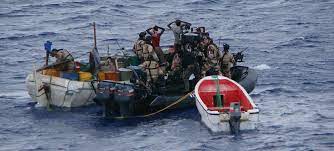
Piracy in the Gulf of Guinea used to pose a serious threat to ships and people. Pirates affected global trade, regional stability, and local economies. Over the past few years, reports say piracy incidents are dropping. But why is this happening? Understanding the reasons behind this decline is crucial for everyone involved—governments, companies, and local communities. Exploring the security, legal, economic, technological, and external factors helps us see the full picture of this positive change.
Enhanced Maritime Security Initiatives Transform the Region
Increased Naval Patrols and Coast Guard Presence
Regional navies and international forces have stepped up their patrols. Countries like Nigeria and Ghana now regularly patrol key shipping routes. These patrols make pirates afraid to attack, knowing they might be caught. The presence of armed ships acts as a strong deterrent, reducing attacks significantly.
International Collaboration and Joint Operations
Multiple countries and agencies work together on joint missions. Organizations like INTERPOL and NATO regularly support West African navies. They share intelligence and conduct coordinated patrols. These efforts often catch pirates before they can strike, disrupting their networks and lowering piracy rates.
Implementation of Maritime Domain Awareness Technologies
Technology plays a key role in monitoring the region. Ships now install AIS (Automatic Identification System) and radar systems. Drones and satellite tools help track suspicious vessels fast. These high-tech systems allow quick responses and better tracking of pirate movements. As a result, pirates find it harder to operate unnoticed.

Legal and Policy Frameworks Strengthen Anti-Piracy Efforts
Adoption of Regional Maritime Security Protocols
Countries in West Africa have signed treaties like the Yaoundé Code of Conduct. These agreements create shared rules for fighting piracy. They also improve cooperation among nations. With clearer laws and combined efforts, pirates find it more difficult to escape prosecution.
Strengthening Legal Proceedings and Maritime Courts
Special courts are now functioning to try maritime crimes. These courts help bring pirates to justice quickly. While facing challenges, many pirates are being convicted. Stronger legal systems discourage future attacks and build trust among regional partners.
Anti-Piracy Legislation and Enforcement
Many nations have passed tougher laws against piracy. They also train their police and coast guards to enforce these laws better. Fewer pirates are willing to take risks when they know penalties are severe. This stricter enforcement has helped slow piracy incidents.
Economic and Social Factors Influence Piracy Trends
Improved Livelihoods and Economic Opportunities
Programs now focus on giving local people better jobs. When communities have options besides piracy, fewer are tempted. Recent data links economic growth with lower piracy levels. Prosperous communities tend to support security efforts more actively.
Reduction in Pirate Sponsorship and Funding
Authorities are cracking down on the money trail. Banks and financial bodies are more careful tracking illegal funds. They disrupt pirate financing, making attacks less profitable. This chokehold on funding weakens pirate groups overall.
Community Engagement and Local Incentives
Local communities are now part of security efforts. Participation in patrols and information sharing keeps villagers engaged. When they see benefits from safety and development, support for piracy drops. Community policing programs have shown real success in building trust and reducing support for pirates.
Technological and Operational Innovations Disrupt Pirate Activities
Use of Best Management Practices (BMP) by Shipping Industry
Ship owners follow protective guidelines like route changes, speed adjustments, and watch schedules. Hardening vessels with bars or water cannons makes piracy harder. These measures have lowered success rates for pirates, making attacks less attractive.
Deployment of Armed Security Personnel
More ships now hire private security teams onboard. These guards are often the first line of defense during an attack. While debates about legality exist, many report that armed guards prevent pirates from boarding ships altogether.
Use of Data Analytics and Intelligence Sharing
Sharing intelligence across agencies helps predict when and where pirates might strike. Data analysis reveals patterns and hot spots. Quick, informed responses mean fewer successful assaults and safer shipping routes.
External Factors Contributing to Decline
Global Maritime Security Initiatives and Support
International agencies like the IMO and INTERPOL provide training, funding, and guidance. These efforts strengthen local capabilities and promote best practices. The ongoing support keeps the region resilient against piracy resurgence.
Fluctuations in Pirate Activity Due to Market and Political Changes
Regional political stability influences pirate activities. When countries improve governance, piracy drops. Global shifts like rerouting ships away from high-risk areas also reduce opportunities for pirates.
Conclusion
The decline in piracy in the Gulf of Guinea stems from many factors. Stronger security measures, smarter laws, economic development, and better technology all play key roles. External support and changing regional dynamics help keep pirates at bay. But this isn’t the time to relax. Sustained effort, regional cooperation, and constant innovation are necessary. For policymakers and industry leaders, the message is clear: staying ahead of threats keeps the seas safer for everyone. Continued focus on these areas will help maintain the downward trend and secure the region’s future.


Tin Can Customs Nets 204 More Pump-Action Rifles Smuggled in From Turkey
By Emetena Ikuku | Waterways News
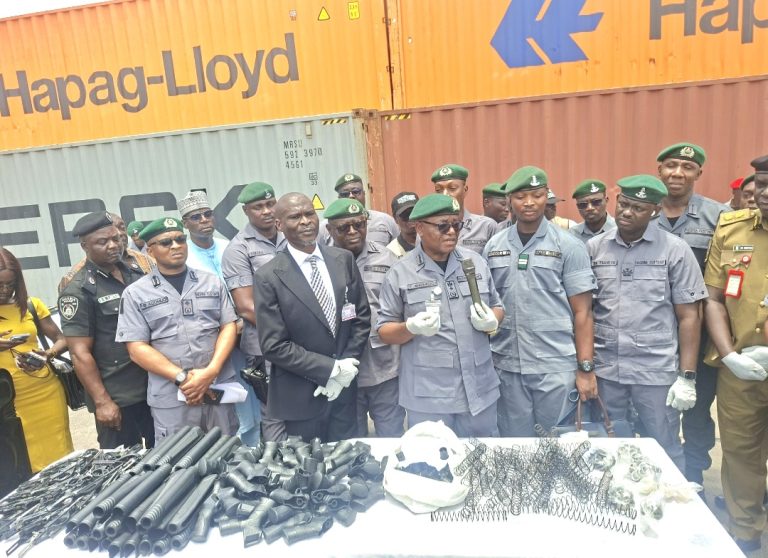
The Nigeria Customs Service’s Tin Can Island Port Command has recorded another major arms interception, recovering 204 pump-action rifles concealed in a container that arrived from Turkey, the second such haul at the command in under three weeks.
The seizure was disclosed at a Monday briefing at the port by Deputy Comptroller-General Timi Bomodi, who heads Enforcement, Investigation and Inspection at Customs headquarters and spoke on behalf of Comptroller-General Bashir Adewale Adeniyi.
According to Bomodi, a 20-foot container that reached Nigeria aboard the vessel MV Algeciras Express on August 16 was flagged on the basis of intelligence and pulled for full physical examination two days later. Officers found knocked-down firearm components hidden among a declared cargo of used furniture, refrigerators, solar panels and detergent. Investigators also noted inconsistencies in the shipment’s paperwork, particularly around the identity of the consignee, and say that thread remains under investigation.
A joint team drawn from the Customs Armament Unit and the National Centre for the Control of Small Arms and Light Weapons, working under the Office of the National Security Adviser, assembled the parts into 204 complete MAS 49 Alter Magnum pump-action rifles. Customs also catalogued a large volume of leftover components, including dozens of trigger pins, locking lugs, charging handles, springs, barrels and pistol grips, which will be handed over alongside the assembled weapons for statutory disposal.
The find follows an August 18 seizure at the same command, when the Comptroller-General personally announced the interception of knocked-down parts later assembled into 399 pump-action rifles.
Bomodi framed the recovery as evidence that the Service’s risk-management and profiling systems are closing off the concealment tactics smugglers have relied on, and said the priority now is tracing the full supply chain, from origin and shipment to the intended buyers, rather than stopping at the seizure itself. Customs Area Controller for Tin Can Island, Compt. Joe Anani, added that the command does not intend to be an easy route for dangerous or prohibited imports into Nigeria.
The rifles were formally handed to the South-West Zonal Director of the National Centre for the Control of Small Arms and Light Weapons, CP Abiodun Alamutu (rtd), for further statutory action.
Nigeria Watch
Two firearms seizures out of one command in three weeks, 603 pump-action rifles between them, say less about a single smuggling attempt than about a route. Tin Can Island has now surfaced twice running as the entry point of choice for parts shipped in a disassembled state and hidden inside legitimate-looking used-goods cargo, a method built to survive a cursory look and only fail under full physical examination.
For the ports and waterways sector, the story sits inside the wider Gulf of Guinea security conversation that Waterways News has tracked through the Deep Blue Project and the Navy’s anti-piracy posture: land-side arms trafficking through container cargo is as much a threat vector as offshore piracy, and it feeds the same informal weapons economy that inland waterway operators say complicates their own security exposure on the creeks and rivers.
The unresolved question in Bomodi’s own account, the mismatched consignee details still under investigation, is the one worth watching. Seizures make headlines; whether the paperwork trail leads back to identifiable importers and financiers is what will determine if this is enforcement working, or enforcement catching only the visible tip of a recurring supply line into Nigerian ports.
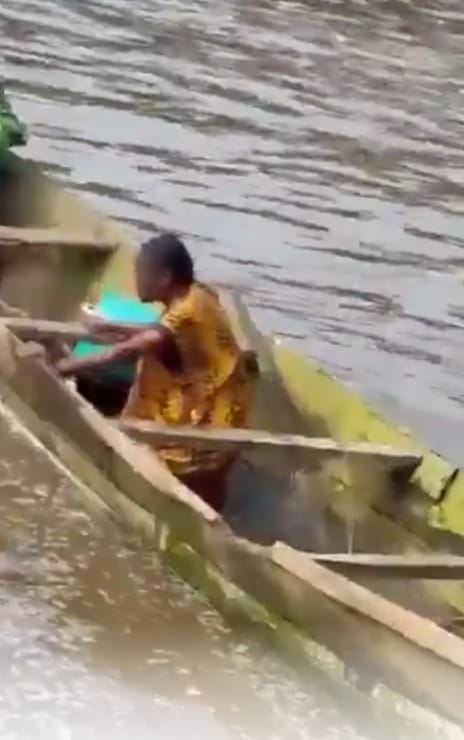
BOAT OPERATORS ARE THE FIRST RESPONDERS ON THE LAGOON
.…..Carter bridge rescue exposes gap
By Oghenewoke Osaweren | Waterways News
Lagos, Nigeria. For the second time in just over a year, informal boat operators, not any designated emergency service, were the ones who pulled a woman alive from the Lagos Lagoon after she jumped from Carter Bridge, raising fresh questions about who is actually responsible for water rescue on one of Africa’s busiest urban waterways.
The unidentified woman jumped from the Idumota end of the bridge on the afternoon of Tuesday, August 4. Eyewitnesses said local boat operators working within the area reacted within moments, pulling her from the water before she could be swept further into the lagoon’s currents. Video circulating on social media shows her seated inside a wooden canoe, visibly disoriented, as bystanders on the bridge above shouted down, some pleading with the operators not to hand her over to the police, others audibly distressed and asking what could have driven her to the water’s edge.
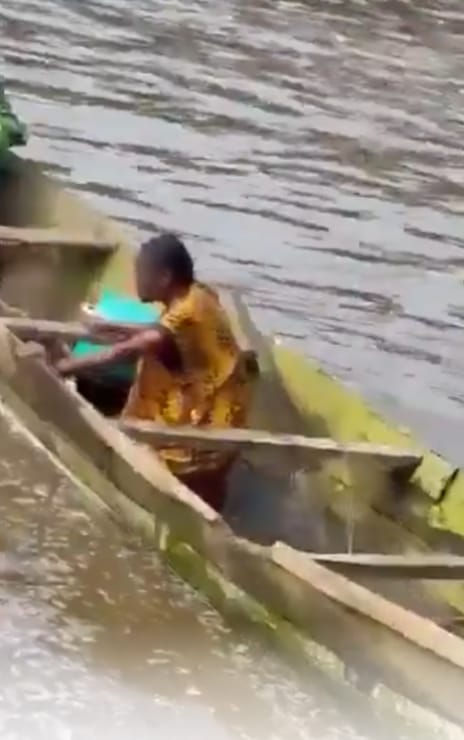
A PATTERN AT THE SAME BRIDGE
This is not an isolated site incident. In July 2025, a separate woman was intercepted at the same Carter Bridge location, that time by police Rapid Response Squad officers on routine patrol, before she entered the water. Tuesday’s case had no such patrol presence. The outcome depended entirely on boat operators who happened to be working nearby.
Carter Bridge, opened in 1901, is one of only three crossings linking Lagos Island to the mainland, alongside Eko and Third Mainland bridges, and sits directly over lagoon waters used daily by commercial boat traffic, artisanal fishermen and ferry operators. That density of water traffic is precisely why informal operators keep ending up as the default emergency responders, they are simply the ones already on the water when someone goes in.
NO FORMAL WATER RESCUE MANDATE
Neither the Lagos State Waterways Authority (LASWA) nor the National Inland Waterways Authority (NIWA) operates a dedicated, publicised rapid-response rescue protocol for bridge-jump incidents on Lagos waterways, despite the lagoon’s role as a primary transport corridor for hundreds of thousands of commuters. Search-and-rescue capacity for road-based emergencies sits with the police and, in some cases, the Lagos State Emergency Management Agency (LASEMA) but water incidents routinely fall to whichever boat happens to be nearest, with no formal reporting chain back to state authorities on outcomes, casualty data or referral to mental health support afterward.
That gap matters beyond this single case. Nigeria records among the highest estimated suicide rates in West Africa according to World Health Organization modelling, yet has no national suicide prevention strategy comparable to those adopted elsewhere on the continent, and Lagos, a lagoon city where bridges double as the tallest accessible points over open water, has no publicly documented protocol connecting bridge surveillance, water rescue and post-rescue mental health referral into a single chain of response.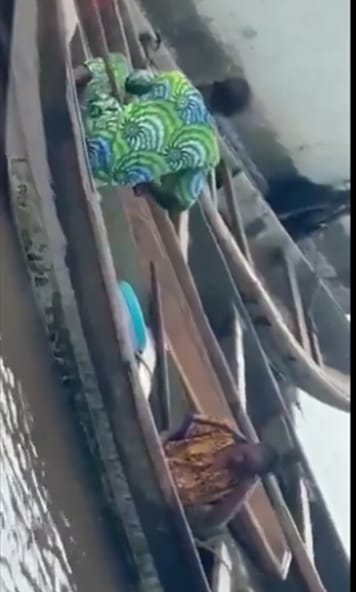
WHAT HAPPENED AFTER THE RESCUE
As of the time of filing, the woman’s identity, condition and the circumstances that led to the incident remain undisclosed. It is not yet known whether she was handed to police, taken to a hospital, or released, despite the pleas heard on video against police involvement, a detail that itself reflects a wider public wariness in Lagos toward treating suicide attempts as a criminal matter rather than a medical one. The Lagos State government had not issued a statement at the time of this report.
This story concerns a suicide attempt. If you or someone you know is struggling, please reach out to a trusted person, a doctor, or a crisis line for support.
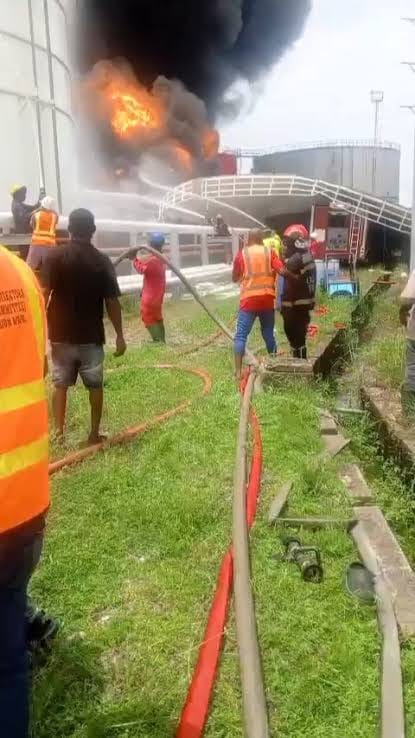
Fire Breaks Out at Bono Tank Farm in Olodi-Apapa, Cause Yet Unknown
By Oghenewoke Osaweren | Waterways News
Firefighters were on Friday battling a blaze at Bono Tank Farm in the Coconut area of Olodi-Apapa, Lagos, one of several petroleum storage facilities lining the busy Apapa-Oworonshoki Expressway corridor.
The Lagos State Fire and Rescue Service confirmed the incident, with its spokesperson, Shakiru Amodu, stating that crews had been deployed to the scene to contain the fire and prevent it from spreading to adjoining tank farms and energy installations in the densely industrialised zone.
As at press time, the cause of the fire remained unconfirmed, and there was no official word on casualties or the scale of damage to the facility. Authorities said updates on the investigation and the outcome of firefighting efforts would follow as operations continued.
Nigeria Watch: The blaze once again puts a spotlight on the fire safety architecture around Apapa’s tank farm cluster, an area with concentrations of petroleum storage in the country. Recurring incidents of this kind raise familiar questions for regulators, terminal operators, and depot owners alike: are inspection regimes, firefighting readiness, and emergency evacuation protocols keeping pace with the volume and proximity of fuel storage in the corridor?
With Nigeria’s downstream sector expanding rapidly on the back of Dangote Refinery output and rising import substitution, incidents like this one underline why depot safety compliance deserves the same regulatory urgency being applied to port and vessel safety elsewhere in the sector.

 Oil and Gas7 months ago
Tantita’s Pipeline Deal: $144m Contract, Rising Output, and the Questions that Deserve Answers
- MARITIME TRADE & SHIPPING7 months ago
World’s Largest Container Ship Sets New Maritime Record with 22,233 TEUs on Single Voyage
- Blue Economy7 months ago
Nigeria’s Coast Guard Bill: A Solution in Search of a Problem?