
Top Stories
SSASGOC Honours Adeyanju, Akingboye for Outstanding Leadership in Maritime Sector

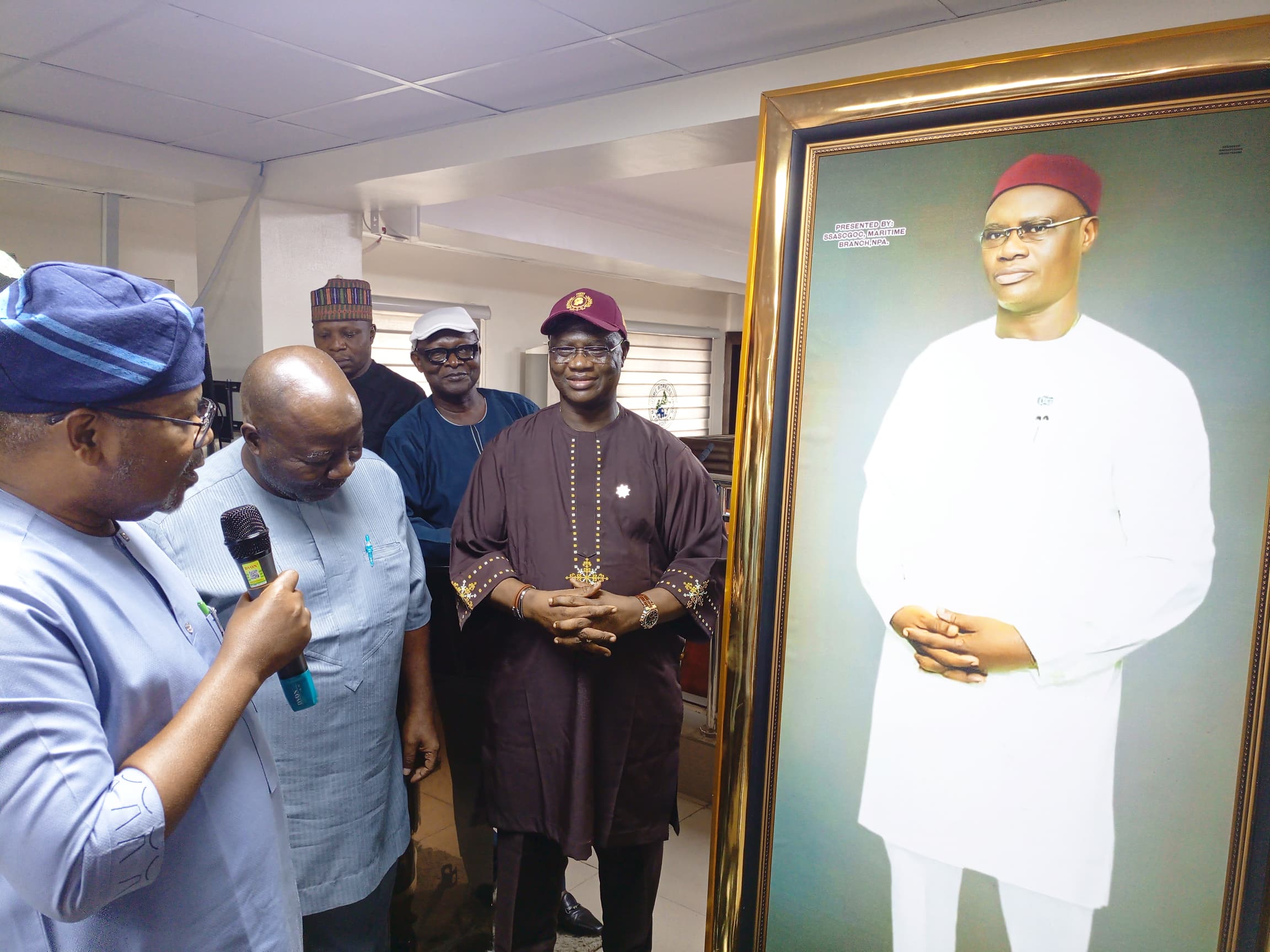

The Senior Staff Association of Statutory Government-Owned Companies (SSASGOC) has honored the President General of the Maritime Workers Union of Nigeria (MWUN), Comrade Adewale Adeyanju, in recognition of his exemplary leadership and contributions to the maritime industry over the past eight years.
The award ceremony, held at the MWUN headquarters in Lagos on Thursday, saw Comrade Akinola Bodunde, SSASGOC Maritime President, lead a delegation of senior officials from the Nigerian Ports Authority (NPA) to pay tribute to Adeyanju’s transformational leadership. Speaking at the event, Bodunde described Adeyanju as a leader whose tenure has been defined by industrial harmony, improved worker relations, and an unwavering commitment to maritime employees’ welfare.
Bodunde emphasized that Adeyanju’s leadership had played a crucial role in fostering a strong relationship between workers and management, preventing industrial crises that could have disrupted port operations. He highlighted that the collaboration between SSASGOC and MWUN in honoring a union leader was unprecedented, demonstrating the lasting impact of Adeyanju’s leadership.
“This is the first time an event of this nature is taking place between SSASGOC and MWUN, and it is happening because of the legacy of industrial harmony, dialogue, and enhanced productivity created by Comrade Adeyanju,” Bodunde remarked. He urged future union executives to emulate Adeyanju’s dedication, emphasizing that his leadership would serve as a benchmark for years to come.

In addition to Adeyanju, Comrade Felix Akingboye, the immediate past Secretary General of MWUN, was also recognized for his exceptional service and contributions to the union’s success. His tenure was marked by significant advancements in worker engagement and policy implementation, strengthening the union’s operational framework.
While presenting the award, Bodunde acknowledged Akingboye’s vital role in ensuring smooth labor relations within the maritime sector. He praised Akingboye for his steadfast commitment to workers’ rights and his efforts in promoting dialogue between labor and management.
In his acceptance speech, Comrade Adewale Adeyanju expressed deep gratitude for the recognition, stating that the honor was not just a personal achievement but a testament to the collective effort of the Maritime Workers’ Union of Nigeria. He reflected on his tenure, highlighting both the challenges and triumphs in advancing the welfare of maritime workers.
“This celebration is not about me; it is about the Maritime Workers’ Union of Nigeria. The work we have done together has laid a strong foundation, and I am grateful for the cooperation and support we have received,” Adeyanju stated. He called on future leaders to continue prioritizing workers’ welfare and industrial peace, stressing that the maritime sector thrives on mutual respect and collaboration among stakeholders.
The event was attended by key maritime stakeholders, including Port Managers from Tin Can and Apapa Ports, as well as the newly appointed NPA Assistant General Manager, Industrial Relations. The dignitaries commended Adeyanju for his visionary leadership and the transformation the union had achieved under his tenure.
Stakeholders praised his ability to mediate disputes, foster a productive working environment, and promote policies that benefit workers and the maritime industry. They emphasized that Adeyanju’s leadership had not only strengthened the union but also contributed to a more stable and efficient maritime sector.
As the event concluded, speakers reaffirmed their commitment to sustaining industrial harmony in the sector and urged upcoming leaders to build on the foundation laid by Adeyanju and Akingboye. The occasion served as both a celebration of past achievements and a call to action for the next generation of maritime leaders to uphold the principles of unity, fairness, and workers’ welfare.
Maritime Security and Safety
Strait of Hormuz Crisis Deepens as IMO Confirms 80 Attacks, 22 Seafarer Deaths — Warns Conflicts Now “Pretext” to Target Merchant Ships

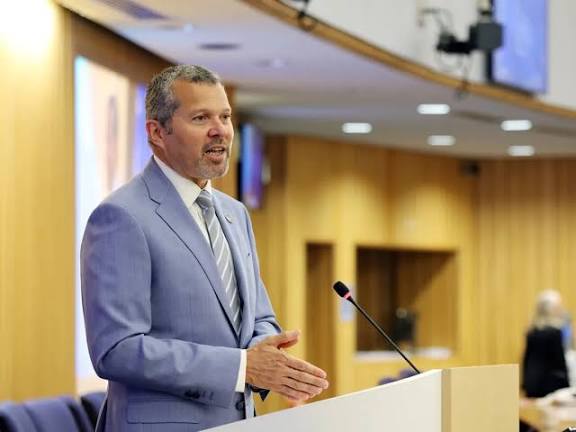
Strait of Hormuz Crisis Deepens as IMO Confirms 80 Attacks, 22 Seafarer Deaths — Warns Conflicts Now “Pretext” to Target Merchant Ships
By Okeoghene Onoriobe | Waterways News
The International Maritime Organisation (IMO) has issued a fresh warning to governments to halt attacks on merchant shipping, as conflicts in the Middle East, the Black Sea and the Red Sea continue to spill into some of the world’s most critical trade corridors.
IMO Secretary-General, Arsenio Dominguez, raised the alarm on Wednesday as the organisation confirmed 80 verified attacks on international shipping in and around the Strait of Hormuz since the Middle East conflict escalated on February 28. At least 22 seafarers have been killed, with many more injured.
“We are reaching a point where these conflicts are being used as a pretext to attack merchant vessels and innocent seafarers,” Dominguez told delegates at the IMO’s Sub-Committee on Carriage of Cargoes and Containers in London. “Do not use these conflicts to attack innocent seafarers.”
The crisis is not confined to the Gulf. In the Black Sea and Sea of Azov, the IMO says dozens of seafarers are believed to have died in attacks on shipping in recent months, though it admits verifying exact casualty figures in that theatre remains difficult. The Red Sea, too, has seen renewed bloodshed — four seafarers were killed on August 11 in the latest Houthi strike on a merchant vessel.
Dominguez was careful to note that no single actor is responsible for the violence. “In the Strait of Hormuz, it is not only one country attacking merchant vessels,” he said. “In the Black Sea and Sea of Azov, it is not only one country attacking merchant vessels.”
The numbers show how quickly the Hormuz crisis has escalated. On August 28 — six months into the conflict — the IMO had verified 70 attacks and 19 deaths. By September 15, that had risen to 80 confirmed incidents and at least 22 deaths. Recent casualties include two seafarers left missing after the September 12 attack on the El Gaia; one seafarer killed when the Hercules Star was struck on September 9; and two crew killed aboard the Sidr on August 31.
The fallout extends beyond casualties. As of late August, the IMO says roughly 400 ships carrying about 6,000 seafarers remain effectively trapped in the Persian Gulf, unable to safely exit the region.
In July, the IMO Council had reaffirmed that transit passage through straits used for international navigation must not be threatened, impeded or suspended, and called for a coordinated return to unhindered navigation through Hormuz.
That call has yet to translate into calmer waters. Dominguez acknowledged that resolving the underlying conflicts sits outside the IMO’s mandate, but urged member states to escalate the shipping consequences to their governments and to relevant UN bodies.
Nigeria Watch
For Nigerian shippers, the Hormuz crisis has long since stopped being a distant headline. The strait handles a significant share of the world’s seaborne crude and gas, and with roughly 400 vessels now bottled up in the Gulf, the knock-on effects of elevated war-risk insurance premiums, longer transit times on re-routed voyages, and tighter global tonnage, continue to feed into freight costs that Nigerian importers and NIMASA-regulated carriers ultimately absorb.
The IMO’s 22-death toll and the seizure of vessels like the El Gaia and Sidr also sharpen the stakes for Nigerian seafarers serving on international fleets transiting the Gulf, at a moment when NIMASA under Dr Dayo Mobereola has been pushing to expand Nigerian crewing on global tonnage. A prolonged Hormuz standoff makes that a harder sell to shipowners weighing crew safety against cost.
With Nigeria holding a seat on the IMO Council, Dominguez’s call for member states to escalate the shipping fallout to “relevant United Nations bodies” is also a cue for Abuja’s maritime diplomacy — an area the Federal Ministry of Marine and Blue Economy under Minister Adegboyega Oyetola has flagged as a priority even as the domestic reform agenda (NPERA’s rollout, the CVFF disbursement saga) competes for attention.
MARITIME TRADE & SHIPPING
Lagos Ports Handle N35.07trn in Q2 2026, Accounting for 84.6% of Nigeria’s Total Trade — NBS
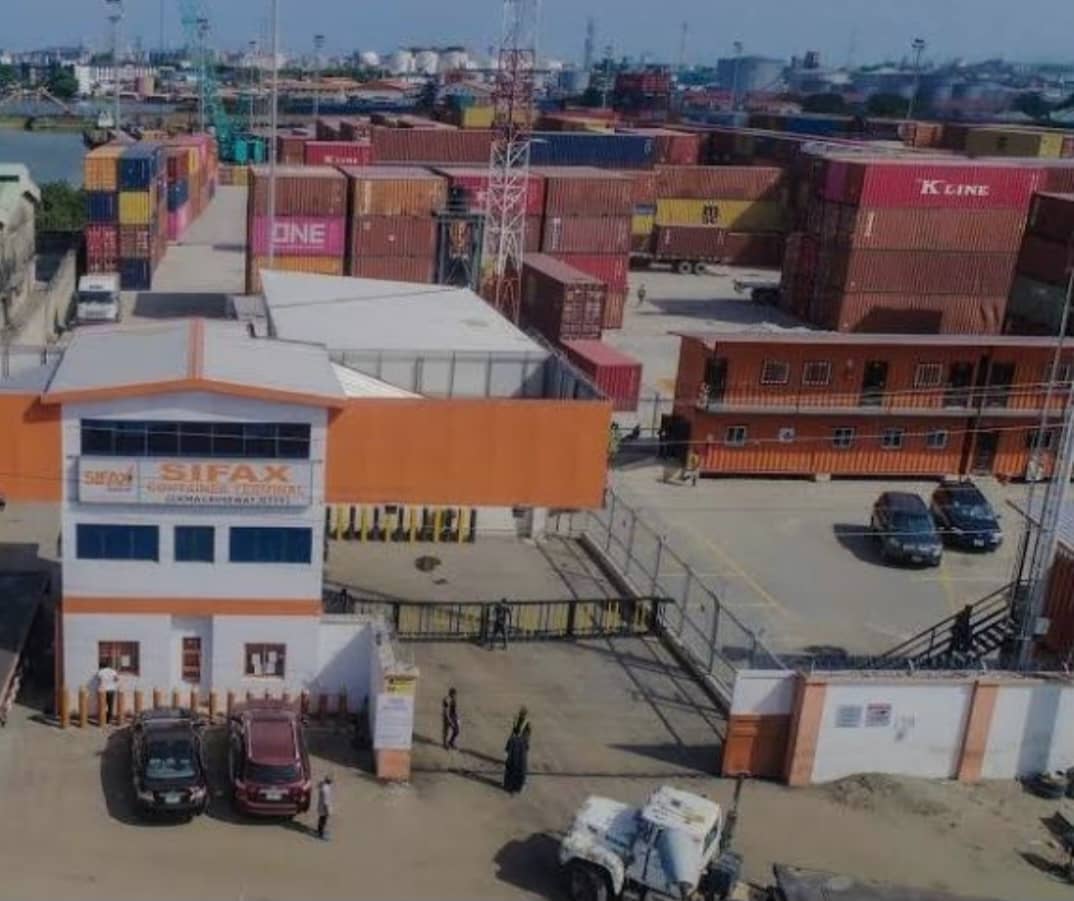
Lagos Ports Handle N35.07trn in Q2 2026, Accounting for 84.6% of Nigeria’s Total Trade — NBS
By Okeoghene Onoriobe | Waterways News
Lagos ports processed an estimated N35.07 trillion worth of Nigeria’s merchandise trade in the second quarter of 2026, representing about 84.6 per cent of the country’s total trade of N41.44 trillion, the latest Foreign Trade in Goods Statistics released by the National Bureau of Statistics (NBS) has shown.
The data indicates that Nigeria’s merchandise trade for the quarter was made up of N27.02 trillion in exports and N14.42 trillion in imports, with the figures reaffirming Lagos’ position as the country’s dominant gateway for international trade. Apapa Port, Lekki Deep Sea Port and Tin Can Island Port jointly accounted for the bulk of the transactions, collectively handling about N34.90 trillion in combined exports and imports during the period.
Apapa Port recorded the highest trade volume among all ports, at N25.53 trillion, comprising N19.07 trillion in exports and N6.46 trillion in imports.
Lekki Deep Sea Port followed with N6.64 trillion (N5.03 trillion in exports and N1.61 trillion in imports), while Tin Can Island Port handled N2.90 trillion, made up of N726.92 billion in exports and N2.17 trillion in imports.
On exports alone, Apapa retained its lead, handling N19.07 trillion, representing 70.57 per cent of total exports recorded during the quarter, while Lekki Deep Sea Port followed with N5.03 trillion, or 18.62 per cent. Together, the two ports accounted for 89.19 per cent of exports recorded among the leading customs ports and posts nationwide.
On the import side, Apapa again led with N6.46 trillion, representing 44.76 per cent of Nigeria’s total imports. Tin Can Island ranked second with N2.17 trillion (15.07 per cent), while Lekki Deep Sea Port recorded N1.61 trillion, or 11.15 per cent of total imports.
Outside Lagos, other ports also posted notable trade volumes. Port Harcourt Area-1 handled about N1.40 trillion in combined exports and imports, comprising N1.17 trillion in exports and N229.77 billion in imports, while the Onne facility recorded approximately N2 trillion in trade — N802.72 billion in exports and N1.20 trillion in imports.
The distribution underscores the continued strategic weight of Nigeria’s seaports, particularly the Lagos corridor, to the national economy and to the movement of goods in and out of the country.
Nigeria Watch
The NBS numbers give quarterly weight to something operators on the ground have said for years: Nigeria’s trade economy runs almost entirely through one stretch of Lagos coastline. That 84.6 per cent concentration is not a new phenomenon, but it is a reminder of how exposed the national economy remains to any disruption such as congestion, security incidents, or regulatory bottlenecks at Apapa, Tin Can, or Lekki.
It also puts fresh context around the slow pace of decongestion efforts and the case for the newer deep seaports — Badagry, Olokola, Ibom, Bakassi, Bonny — that have been approved but remain largely undeveloped. Lekki Deep Sea Port’s rapid climb to second place, just three years after commissioning, shows what capacity diversification can do; but at N6.64 trillion against Apapa’s N25.53 trillion, it has not yet meaningfully dented Apapa’s dominance, let alone the wider Lagos concentration.
For the informal and small-scale operators under WABOTAN and ATBOWATON who move goods and passengers along the inland and coastal waterways feeding these ports, the figures are also a reminder of scale mismatch: trillions in formal port throughput sit alongside a barely capitalised informal waterway transport sector that NIWA and NPA policy rarely accounts for in proportion to its role in last-mile cargo and passenger movement around the Lagos port complex. As the NPERA Act’s implementation continues and port economic regulation takes shape, how and whether that informal layer gets folded into the reform conversation remains one to watch.
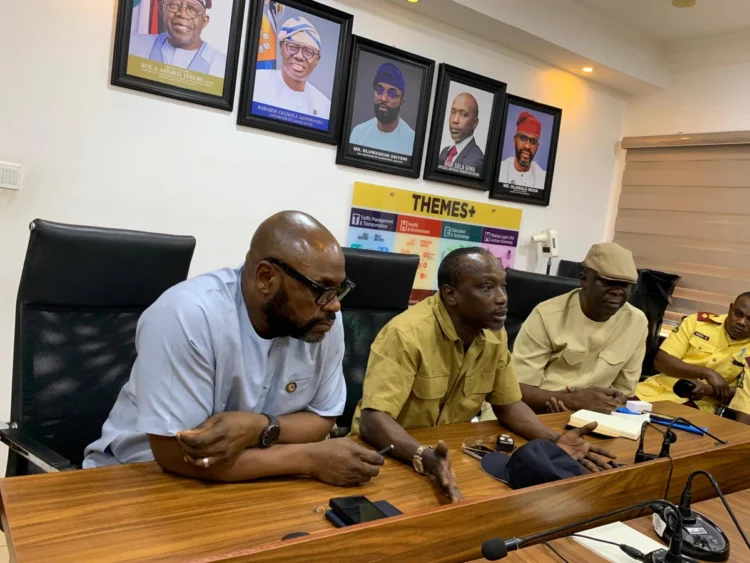
Lagos Moves to Tighten Enforcement Along Apapa, Lekki Port Corridors as Gridlock Persists
By Ighoyota Onaibre | Waterways News
The Lagos State Government has announced a re-jigged enforcement strategy for the Apapa and Lekki port corridors, deploying more traffic personnel and introducing round-the-clock shifts for officers of the Lagos State Traffic Management Authority (LASTMA) as the state moves to shore up compliance with its E-Call-Up truck scheduling system.
The disclosure came at a strategy meeting held at the Ministry of Transportation, Alausa, and chaired by the Special Adviser to the Governor on Transportation, Hon. Sola Giwa. Giwa said a review of the traffic situation in both corridors, along with feedback from stakeholders, had exposed gaps in the existing enforcement process, necessitating the overhaul.
According to Giwa, the ministry will post additional traffic management personnel to the Lekki Port corridor to strengthen truckers’ compliance with the E-Call-Up system and keep articulated trucks moving smoothly in and out of the ports, including Apapa. He said the improved strategy had already been scheduled for roll-out and urged LASTMA officers to remain diligent in their duties.
Also speaking at the meeting, the ministry’s Permanent Secretary, Olawale Musa, said LASTMA would introduce a shift system for officers posted to the two corridors to guarantee a round-the-clock presence, with underperforming officers to be redeployed immediately. Musa warned operators of illegal truck parks around the Apapa and Lekki port areas to fall in line with the state’s rules.
The ministry reiterated its call for voluntary compliance with the E-Call-Up system to ease congestion, cautioning that pleas for clemency after enforcement action would no longer be entertained.
Officials present at the meeting included the General Manager of LASTMA, Mr Olalekan Bakare-Oki; the LASTMA Director of Operations; LASTMA controllers; commanders of the Zebras; and other senior officers responsible for the two corridors.
Nigeria Watch
Lagos has been here before. The state first rolled out E-Call-Up on the Lekki-Epe axis in September 2024 to head off a repeat of the gridlock that once paralysed Apapa and Tin Can, only to suspend it in March 2025 and relaunch it that June after months of consultation. That the government is now conceding “gaps” in enforcement barely a year into the reset run is a familiar admission for stakeholders who track these corridors: policy announcements arrive with confidence; the follow-through is what falters.
For the truckers and cooperative operators Waterways News hears from regularly, the more consequential line in this latest announcement may be the warning against “pleas for clemency” once enforcement resumes. That posture will be tested against a parallel and unresolved grievance — the extortion and illegal tolling along the Tincan-Apapa corridor that the same Ministry of Transportation pledged to clamp down on, alongside the police and other agencies, following complaints from the Association of Maritime Truck Owners (AMATO). Truckers accepted assurances then, under the 2018 State Transport Sector Reforms Law banning unauthorised toll collection, and stood down a planned strike.
Whether the new shift system and troop deployment translate into fewer miscreants and touts on the ground — not just more uniforms — will determine whether operators view this as reform or another round of the same cycle.
The stakes extend beyond Lagos traffic management. Apapa and Tin Can remain Nigeria’s primary gateway ports, and Lekki Deep Sea Port’s rapid ramp-up means the state is now trying to police two congestion-prone corridors simultaneously with the same enforcement playbook. Cooperative operators and inland waterway stakeholders that Waterways News covers, including those represented by WABOTAN and ATBOWATON have long argued that road congestion at the ports is precisely the kind of pressure that ought to be pushing more cargo evacuation toward the inland waterways.
Every cycle of “renewed enforcement” on the Apapa-Lekki road corridors is, from that vantage point, also a reminder of how little progress has been made on offering trucking operators a genuine modal alternative.

 Oil and Gas7 months ago
Tantita’s Pipeline Deal: $144m Contract, Rising Output, and the Questions that Deserve Answers
- MARITIME TRADE & SHIPPING7 months ago
World’s Largest Container Ship Sets New Maritime Record with 22,233 TEUs on Single Voyage
- Blue Economy7 months ago
Nigeria’s Coast Guard Bill: A Solution in Search of a Problem?