

News
Arrested Again: The Long Legal Shadow of Okoi Obono-Obla


A former Buhari anti-corruption chief now faces fresh criminal allegations — but are these the consequences of genuine wrongdoing, or the price of powerful enemies?
By Crime Correspondent, February 20, 2026
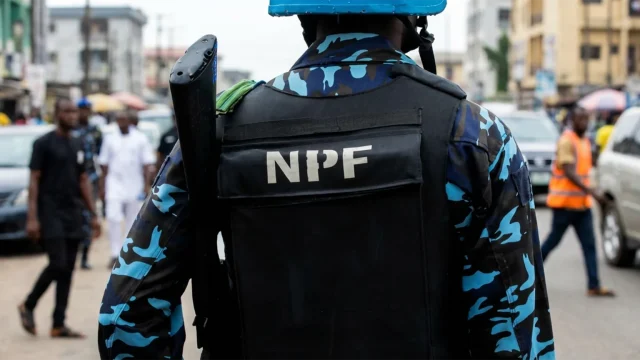
On the afternoon of Wednesday, February 19, 2026, operatives of the Cross River State Police Command moved quietly through Ugep town in Yakurr Local Government Area and placed a man in handcuffs near the Abuja Park motor park. The man was no ordinary citizen. He was Okoi Ofem Obono-Obla — a lawyer, a former presidential aide, and the man who once ran Nigeria’s most powerful asset recovery body under President Muhammadu Buhari.
Within hours, his supporters were on social media claiming he had been kidnapped by unknown gunmen. The police, in a swift and unusually detailed statement, pushed back hard. The Cross River State Police Command confirmed the arrest was carried out lawfully, and that it followed a petition submitted to the commissioner of police alleging offences of forgery and obtaining admission or professional qualification — including entry into the legal profession — by false pretence.

He was subsequently taken to the State Criminal Investigation Department (SCID) in Calabar, where investigations are ongoing.
The command dismissed circulating reports suggesting abduction, stating categorically that “allegations of kidnapping or involvement of unidentified security outfits are false, unfounded, and entirely without factual basis.”
His lawyer has been informed and is involved in the process. His family knows where he is.
But the question that hangs over this arrest — as it has over every proceeding involving this man — is far older and far more corrosive: did Okoi Obono-Obla ever legitimately qualify to be a lawyer in the first place?
A Sudden Rise, A Sudden Fall
Obono-Obla’s elevation to national prominence came in 2016, when President Buhari appointed him Senior Special Assistant to the President on Prosecution at the Federal Ministry of Justice. Simultaneously, he was made chairman of the Special Presidential Investigation Panel for the Recovery of Public Property (SPIP) — a body mandated with the enormous and politically sensitive task of recovering assets looted from the Nigerian state.
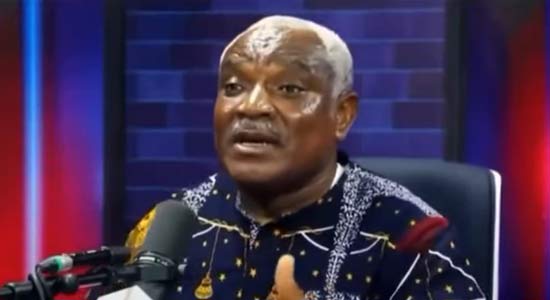
By all accounts, he pursued that role with aggression. In an interview on the MIC ON podcast hosted by Seun Akinbaloye, he described pursuing offshore assets, armoured Mercedes fleets, and multi-million-pound property portfolios tied to politically connected figures. He claimed, remarkably, that some of the assets his panel recovered were subsequently returned to their original owners after he submitted reports to the Presidency and then-Attorney General Abubakar Malami.
“Through the Panama Papers, we discovered offshore properties worth over £200 million belonging to a prominent former governor and senator,” he stated. “Despite submitting detailed reports to the president and the Attorney General, no actions were taken.”
Whether those claims are accurate, exaggerated, or self-serving is difficult to independently verify. What is documented, however, is that his tenure at SPIP generated enormous controversy — not only over those he investigated, but over the man doing the investigating.
The ICPC File: Certificate Forgery and Diverted Funds
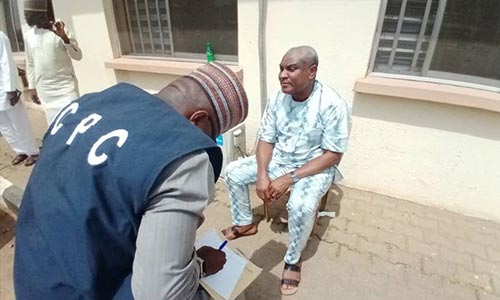
In August 2019, President Buhari suspended Obono-Obla as chairman of the panel following an investigation by the Independent Corrupt Practices and Other Related Offences Commission (ICPC) over alleged falsification of records and financial impropriety. In October 2019, ICPC declared him wanted over his repeated failure to appear before it to answer questions about fraud and corruption allegations.
His dismissal letter — unusual in its specificity — stated that he would face criminal prosecution and raised the prospect of the University of Jos withdrawing his law degree and the Nigerian Law School debarring him from practice. That was a remarkable, almost unprecedented threat for a government sack notice.
ICPC arrested him in Abuja in March 2020. He legally challenged the ICPC’s authority to investigate certificate forgery, but the courts dismissed that challenge in May 2020, clearing the path for his formal arraignment in January 2021.
What followed was a complex, layered prosecution. ICPC, in a 10-count charge before the FCT High Court in Apo, Abuja, accused Obono-Obla of knowingly presenting a fake O’Level result — a credit pass in English Literature — to the University of Jos to secure admission to study law.
The commission alleged that while Obono-Obla did not sit for the GCE Ordinary Level in English Literature in 1982, he presented a result of that same examination, containing a Credit 6 from Mary Knoll College, Ogoja, to the university in 1985.
He was also charged, alongside his Senior Adviser on Protocol Aliyu Ibrahim and the Managing Director of ABR Global Petroleum Resources Limited, Daniel Omughele, with diverting funds meant for SPIP office furniture. The charge alleged that the three men diverted N18.2 million out of N19.9 million released by the Nigeria Deposit Insurance Corporation for the furnishing of SPIP’s offices. All three pleaded not guilty.
In March 2021, the charges were amended. ICPC alleged in the revised charge that Obono-Obla and Ibrahim conspired to divert N10,174,000 — part of N15,187,917 paid to contractors by the NDIC — into the account of ABR Global Petroleum Resources, a company in which Ibrahim held a directorship. The third defendant was discharged as part of that amendment.
In October 2021, ICPC separately arraigned Obono-Obla before the High Court of Plateau State in Jos, on a two-count charge of certificate forgery — specifically, that he presented a forged GCE result to gain admission to the University of Jos to study law. He again pleaded not guilty.
The NBA Watching
The Nigerian Bar Association has responded to the latest arrest with cautious engagement. The NBA confirmed it is monitoring the situation closely and that it is committed to ensuring Obono-Obla’s constitutional rights are protected. Its representative stressed he should be given a fair opportunity to defend himself and have access to proper legal representation, warning that the NBA’s human rights committee would intervene if necessary.
As of the time of writing, Obono-Obla has not publicly responded to the latest arrest.
Political Witch-Hunt or Pattern of Conduct?
The “witch-hunt” argument is one that Obono-Obla’s supporters have raised repeatedly, and it deserves serious scrutiny rather than dismissal. He is a member of the All Progressives Congress (APC). His arrest comes under a Tinubu administration that has no particular loyalty to Buhari-era operatives. He made public statements implicating powerful figures in corruption and claiming his recovered assets were returned to looters by the Buhari administration itself — allegations that would embarrass the political class broadly.
It is also true that Nigerian anti-corruption investigations have historically been weaponised against political opponents, and that petitions to police commissioners can be filed by anyone with a grievance, however motivated.
But here is what the record shows: the core allegation — that Obono-Obla entered the legal profession using forged credentials — was not invented by the Tinubu government, the current Cross River police commissioner, or any political adversary of recent vintage. It was first formally raised under the Buhari administration, by Buhari’s own anti-graft agency. The ICPC investigation predates any plausible political motive by the current government. The court challenge to ICPC’s jurisdiction — a legal route that failed — was pursued years before the current political climate.
The specific allegation is also extraordinarily specific: that he did not sit for a GCE English Literature examination in 1982, but presented a result from that examination to the University of Jos three years later. This is the kind of allegation that is either comprehensively provable or comprehensively disprovable through examination board records. It is not the sort of allegation typically conjured from thin air.
What the latest Cross River arrest adds — and what should concern observers — is a question of forum shopping and coordination. If the ICPC has been prosecuting these same allegations since 2021 in Abuja and Jos courts, why is the Cross River State Police now receiving a fresh petition on the same core facts? Who filed that petition, and why now? These are legitimate questions about process that deserve answers — not because Obono-Obla is necessarily innocent, but because Nigeria’s justice system must not allow parallel prosecutions to become instruments of harassment, whatever the underlying merits.
What We Know, and What Remains Unresolved
The facts, as they stand, are these: Okoi Obono-Obla was a practicing lawyer and senior government official who has faced, and continues to face, allegations that he never legitimately qualified for either role. Those allegations were first formally raised by Nigeria’s anti-corruption establishment in 2019. Courts have ruled against his procedural challenges. He has been arraigned multiple times, in multiple jurisdictions, and has consistently pleaded not guilty. None of these cases have yet produced a conviction — but none have been resolved in his favour either.
He now sits in the SCID in Calabar, and an old question remains conspicuously unanswered: how did a man allegedly armed with forged school results make it all the way to the office of the Presidency, charged with hunting Nigeria’s looters?
The irony, if the allegations prove true, would be almost too stark to bear.
— Additional reporting from court filings, ICPC official statements, and Cross River State Police Command communications.
EDITOR’S FACT-CHECK NOTES:
- The original draft referred to the fraud figure as “N19.9 million” throughout. This is accurate for the initial January 2021 arraignment but was amended to approximately N10.1 million in the March 2021 rearraignment when charges were revised and one defendant discharged. Both figures appear in credible court records and refer to different charge iterations.
- The original draft stated the court challenge was dismissed “in May 2020” — confirmed accurate by multiple sources.
- The original draft cited “January 2021” as the formal arraignment date — confirmed accurate (January 22, 2021).
- The latest arrest date is February 19, 2026, not vaguely described. Confirmed by TheCable, Premium Times, TheGuild, and the official police statement. Two minor outlets (Blueprint, Information Nigeria) incorrectly cited January 19 — this appears to be a typo.
- The claim about recovered assets being “returned to looters” comes from Obono-Obla’s own unverified interview statements and has not been independently confirmed
Waterwaysnews.ng is committed to professionalism in journalism. Fact-checked stories are essential to public good.
News
Bayelsa Waterways Claim Police Officer, Woman in Two Days as Rescued Commissioner’s Boat Mishap Deepens Safety Fears

Bayelsa Waterways Claim Police Officer, Woman in Two Days as Rescued Commissioner’s Boat Mishap Deepens Safety Fears
Boat Capsize and Tanker-Canoe Collision Within 24 Hours, Renew Waterway Safety Alarm
By Ighoyota Onaibre| Waterways News
A serving police officer and a woman have died in two separate waterway accidents in Bayelsa State, the state Police Command has confirmed, renewing concerns about safety on the Niger Delta’s busy water routes.
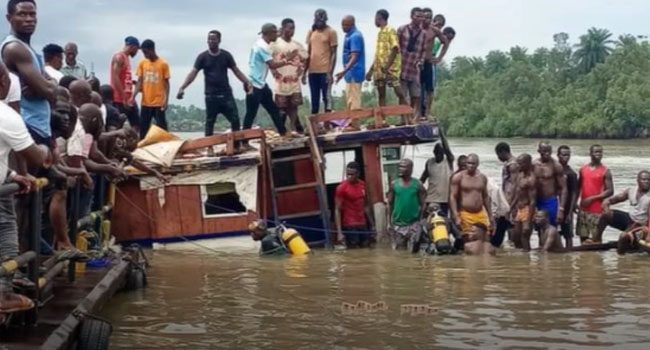
In a statement issued Saturday night by its spokesperson, DSP Musa Mohammed, the command said the first accident happened on Thursday. A passenger boat travelling from Yenagoa to Akassa capsized along the Abedigbene waterways in Brass Local Government Area with eight people on board.
Maritime Union workers in the area raised the alarm. Personnel of the Nigerian Navy’s Forward Operating Base (FOB) Formoso, local divers and members of the Abedigbene fishing community then launched a joint search-and-rescue operation. Seven passengers were pulled out alive, among them Bayelsa State Commissioner for Trade, Industry and Investment, Ebiere Jones, and an officer of the Nigeria Security and Civil Defence Corps. The police officer, initially reported missing, was later confirmed dead.
The second incident happened around 5:20am on Saturday near Angalabiri Community in Sagbama Local Government Area. An oil tanker reportedly operated by Sterling Global Oil Ltd collided with canoes close to the shoreline. Several canoes were destroyed, and a local woman, Mrs Victoria Abetnigo, was seriously injured. She was rushed to Ebedeibiri General Hospital, where she was pronounced dead.
Police said investigations are ongoing into both incidents.
Commissioner of Police CP Ajao Saka Adewale offered condolences to the families, colleagues and loved ones of the victims. He commended the Navy, local divers, maritime workers and fishermen for their swift response. He also urged commercial vessel operators to follow maritime safety regulations, keep a safe distance from shorelines and established canoe routes, and avoid reckless navigation. Passengers, he said, should wear life jackets throughout their journeys.
NIGERIA WATCH
Two incidents, one lesson: safety on Nigeria’s inland waters is still decided in the first minutes.
The Abedigbene rescue worked because local responders were close by. Fishermen, divers and union workers reached the scene before formal help could, which is typical of Niger Delta emergencies. It also exposes how much of the region’s rescue capacity is informal and unfunded.
The Angalabiri collision points to a different risk: large commercial vessels sharing shoreline lanes with canoes. Small-scale operators and riverine communities bear most of the risk in these encounters. They are also the group least represented in the enforcement conversation, which is a recurring Waterways News concern.
Three questions remain for regulators and operators:
Will the investigations into both incidents be made public, including the cause of the capsize and the tanker’s navigation conduct?
Will life-jacket rules be enforced on small passenger boats and canoes, or only announced?
Will marine safety agencies and state authorities put shared safety corridors and visibility measures in place for canoe routes?
Operator associations such as WABOTAN and ATBOWATON have long argued that safety messaging must reach the last-mile operator, not just licensed fleets.
$200m Fish Lifeline: FG Taps World Bank Funds to Push States Towards Fish Sufficiency
Oyetola Sets Sights on Net Exporter Status as FG Secures $200m World Bank Backing for State-Led Aquaculture
By Okeoghene Onoriobe | Waterways News
The Federal Government says it has secured a $200 million commitment from the World Bank Group to drive fisheries and aquaculture production nationwide, as it moves to cut fish imports and close a supply gap of more than 2.2 million tonnes.
The money will be lent to state governments on concessional terms. It is meant to help them expand fish production, attract investment and build viable aquaculture projects.
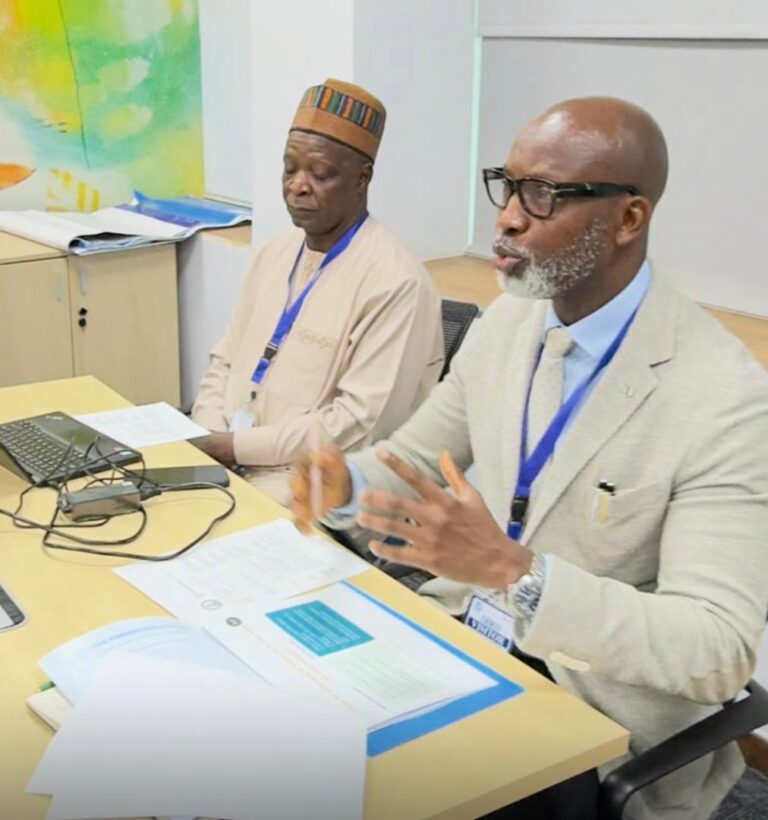
The Minister of Marine and Blue Economy, Dr Adegboyega Oyetola, announced this at an Executive Training on the Aquaculture Investment Guide, organised by his ministry with the World Bank Group in Abuja. He was represented by the Senior Special Assistant to the President on Marine and Blue Economy, Professor Busayo Fakinlede.
Oyetola said fish is central to food security, household nutrition and rural livelihoods, and that Nigeria cannot be food secure while importing most of its fish. He said the goal is to “produce more, import less” and eventually become a net exporter, which he said requires every state to play its part.
The numbers
Nigeria needs about 3.6 million tonnes of fish a year but produces roughly 1.4 million tonnes. Imports cover the gap and cost nearly $1 billion annually in foreign exchange.
State-driven framework
Under the ministry’s framework, each state is expected to:
identify priority aquaculture value chains
assess investment readiness
develop bankable project pipelines
commit to measurable contributions to national fish output
The training brought together commissioners from Rivers, Bayelsa, Delta and Cross River States, plus permanent secretaries and directors of fisheries and aquaculture from across the federation. It covered business models, risk management, environmental and social safeguards, and public-private partnerships.
A Federal-State interface is also planned to coordinate a national fish security strategy.
Oyetola commended the World Bank for its support on analytical studies, cluster-based development, capacity building and the Aquaculture Investment Guide. He will oversee a post-training stakeholders’ roundtable with states and other stakeholders to sustain momentum.
Ministry’s scorecard
Fakinlede credited the minister’s leadership for:
the August 2026 inauguration of the Technical Committee on Accelerating Fish Production
digitisation of fish import licensing
a rise in national output from 1.1 million to 1.4 million tonnes
US shrimp-export certification after compliance with Turtle Excluder Device requirements
the Fish City and Fish Terminal investment portfolio to attract private capital
NIGERIA WATCH
Read the fine print. As of 9 November, I could not find a published World Bank project document for the $200 million, and the figure rests on the ministry’s statement. The repayment period, interest rate, per-state allocation and disbursement date have not been made public, and it is unclear whether this is new money or part of financing already agreed. Waterways News should press the ministry on these before treating the figure as settled.
Loans, not grants. States carry the debt and must show bankable projects. Strong states like Rivers, Bayelsa, Delta and Cross River, whose commissioners attended, sit on the water and are best placed to benefit. Inland and riverine communities lacking project-preparation capacity risk being left behind.
The missing small operators. The framework speaks of investors, PPPs and bankable pipelines. It says little about artisanal fishers, boat operators and fishing communities, including those represented by WABOTAN and ATBOWATON, who supply and move much of the country’s fish. Without cold chains, landing jetties, safe water transport and affordable engines, higher production will not reach markets.
Policy versus delivery. The target is ambitious, with output reportedly up from 1.1 million to 1.4 million tonnes. Yet Nigeria still meets under 40 per cent of its fish demand, and it has heard similar promises before, from the Cabotage Vessel Financing Fund onward. The test is whether the roundtable produces dates, allocations and measurable state commitments.
Maritime Security and Safety
IMO Council Mourns Slain Seafarers, Demands Stronger Protection as Maritime Conflicts Deepen
IMO Council Mourns Slain Seafarers, Demands Stronger Protection as Maritime Conflicts Deepen
Dominguez warns merchant ships remain exposed from Hormuz to the Black Sea as 138th Council session ends in London
By Okeoghene Onoriobe | Waterways News
Member states at the International Maritime Organization (IMO) used the opening of the Council’s 138th session to mourn seafarers killed in recent attacks and to demand firmer protection for civilian mariners.
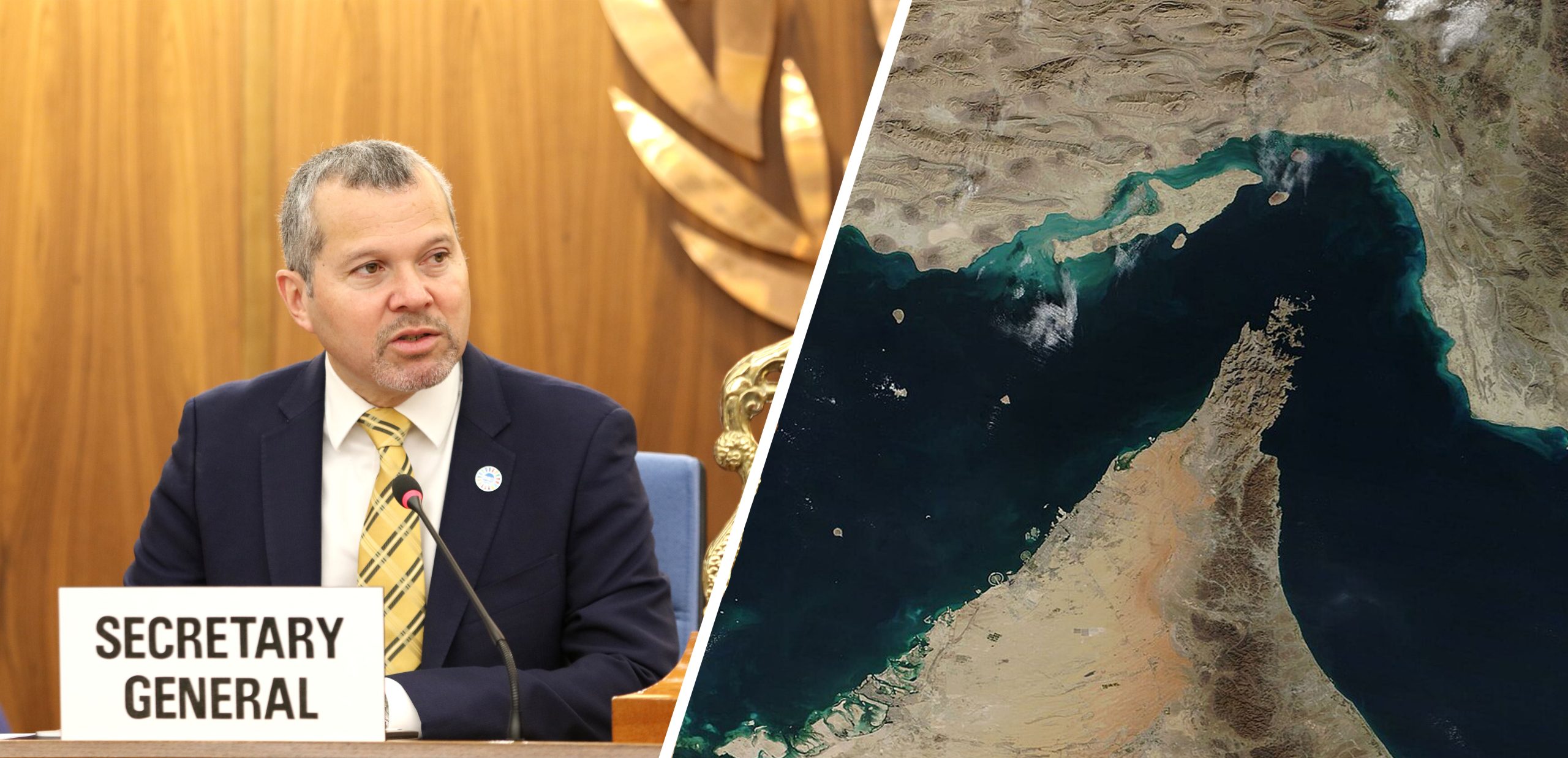
Council met in London from 2 to 6 November, with Russia and Iran putting security in the Black Sea and the Strait of Hormuz at the centre of discussions. On 2 November, Secretary-General Arsenio Dominguez said commercial shipping remained exposed to attack in the Strait of Hormuz, the Red Sea, Bab el-Mandeb, the Eastern Mediterranean, the Black Sea and the Sea of Azov.
The mourning was driven by a run of deaths this year. Five seafarers reportedly died on 29 September during the rescue of the hijacked HONOUR 25 in Somali waters, and several others were seriously injured. In all, 44 seafarers were freed from three vessels. Dominguez noted that 22 seafarers remain captive aboard the ASANA, which was seized earlier this year, and urged continued effort to secure their release.
The Strait of Hormuz remains the deadliest flashpoint. The IMO had verified at least 70 attacks on international shipping there, with 19 seafarers killed, by its late-August assessment. A tally reported by gCaptain put the seafarer death toll at 24 as of 5 November.
Dominguez has repeatedly insisted that seafarers are civilians doing their jobs. He has said they should never become casualties of conflicts to which they are not a party.
Member states echoed the call. Liberia renewed its appeal for seafarer protection and freedom of navigation, and Indonesia said seafarer protection and safety of navigation must be a shared priority.
The session also dealt with leadership. Council backed a second four-year term for Dominguez, subject to approval by the IMO Assembly in 2027. The term would run from 1 January 2028 to 31 December 2031.
Nigeria Watch
Nigeria has more at stake than a distant diplomatic debate. Hormuz disruption has fed through to freight rates, war-risk insurance and port costs for Nigerian importers and shippers. Piracy off Somalia and the Gulf of Aden is a reminder that the Gulf of Guinea’s own security gains, including the Deep Blue Project, cannot be taken for granted.
The Council session also bears on Nigeria’s IMO seat. Abuja has pushed seafarer welfare and maritime security as part of its diplomacy, and the Council’s message gives that agenda more weight. The test is whether Nigeria backs its advocacy abroad with welfare protections, training and safety enforcement for its own mariners and for the informal waterway operators represented by WABOTAN and ATBOWATON.
For those operators, the lesson from London is that protection is a shared responsibility, and it has to reach the people who work on the inland water, not just those on ocean-going ships.

 Oil and Gas8 months ago
Tantita’s Pipeline Deal: $144m Contract, Rising Output, and the Questions that Deserve Answers
 MARITIME TRADE & SHIPPING8 months ago
World’s Largest Container Ship Sets New Maritime Record with 22,233 TEUs on Single Voyage
 Blue Economy9 months ago
Nigeria’s Coast Guard Bill: A Solution in Search of a Problem?