
Blue Economy
The Presence of Foreign Crew Aboard Our Coastal Vessels: What Must be Done to Enforce the Nigeria Cabotage Law – Part Two



The Presence of Foreign Crew Aboard Our Coastal Vessels: What Must be Done to Enforce the Nigeria Cabotage Law
A Comprehensive Special Report on Legislative Intent, Systemic Failures, Human Costs, and the Reform Agenda Nigeria Cannot Afford to Delay
By Waterwaysnews.ng | Maritime Desk | Thursday, March 19, 2026
Our four-parts report started yesterday with the release of part one: The vision – What the Cabotage Law was designed to achieve. Here is part two of the report
PART TWO: THE REALITY — WHY THE OBJECTIVES REMAIN LARGELY UNDERACHIEVED

Twenty-three years after its enactment, the verdict of industry observers, academic researchers, and regulatory insiders is consistent and troubling. Over twenty years since the enactment of the Nigerian Cabotage Act, the cabotage trade is still dominated by foreigners, raising questions about the reasons for the policy’s failure to deliver its intended objectives.
Despite the Cabotage Act, less than 20% of maritime trade is under indigenous control, indicating a failure to increase local participation since its enforcement. Foreign ownership of vessels still dominates the sector, undermining local shipping growth.
The causes of this failure are multiple, interconnected, and deeply rooted. Waterwaysnews.ng examines them in detail below.
2.1 INSTITUTIONAL WEAKNESS AND NIMASA’S ENFORCEMENT DEFICIT
The Nigerian Maritime Administration and Safety Agency (NIMASA) was designated as the principal implementation and enforcement agency under the Act. The scale of its institutional challenge has been consistently documented. NIMASA’s institutional incapacity to monitor compliance affects adversely the enforcement of the Cabotage Act 2003 in Nigerian coastal and inland shipping. The inability of NIMASA to bridge the capacity gap results in poor compliance with the Cabotage Act.
The institutions are weak and ineffective; the laws are not up to date to fill lacunae existing while implementing the policy. Defects thrown up by the agencies of government given the responsibility of regulating and promoting maritime cabotage have become evident.
The history of NIMASA’s leadership instability has compounded its institutional weakness. On July 8, 2009, the then Director-General of NIMASA was dismissed by the Nigerian Government, with his removal attributed to the fact that under his administration NIMASA lacked the requisite managerial capacity to implement and enforce the Cabotage Act and also failed in translating the intent of the Act to the benefit of potential Nigerian investors who have interest in the shipping sector.
2.2 THE WAIVER PROBLEM: A DOOR LEFT WIDE OPEN
Perhaps the single most damaging structural flaw in the legal framework is the waiver system established under Sections 9 to 11 of the Cabotage Act. While waivers serve a legitimate function in principle — allowing foreign vessels to operate temporarily where no Nigerian alternative exists — their administration has created a massive loophole that has effectively undermined the entire cabotage regime.
Section 9 of the Cabotage Act 2003 gives the Minister sole discretion to grant waivers upon an application by a foreign vessel that can prove there is unavailability of a wholly owned Nigerian vessel to perform the cabotage services required. This application must be scrutinised by NIMASA; however, NIMASA, which is the implementation agency, lacks the capacity and machinery to verify the claims made in these applications. This has resulted in the issuance of arbitrary exemptions without proper verification.
SEREC attributed the persistent failure of the Cabotage regime to institutional weaknesses, policy inconsistencies, discontinuity between successive administrations, as well as political interference and patronage networks influencing waiver issuance and contract allocation. The group further identified subtle pressures from dominant external operators, who benefit from Nigeria’s dependency on foreign tonnage, overly flexible waiver clauses (Sections 9–11), and the granting of excessive discretion to public officials.
Since the enactment of the Nigerian Cabotage Act, there has been a persistent dependence on cabotage waivers which exempt non-compliant vessels from adhering to the cabotage requirements in Nigeria. Countries like Nigeria and South Africa have encountered challenges in leveraging cabotage restrictions in order to build their supply-side capacity.
2.3 LACK OF INDIGENOUS TONNAGE AND THE VESSEL SHORTAGE CRISIS
The cabotage law can only be enforced if Nigerian-owned vessels are available to replace foreign ones. The fundamental reality is that they are not available in sufficient numbers. Another obstacle to the effectiveness of the Cabotage Act is the scarcity of cabotage vessels compared to the available tonnage. Insufficient funds for acquiring new ships and marine equipment have been identified as reasons for this shortage.
Despite the legal preference for Nigerian-owned vessels, a structural shortfall in Nigerian-owned tonnage has persisted for many years. Foreign vessels and foreign-crewed ships continue to participate in domestic coastal logistics through various exemptions, loopholes, or weak enforcement, particularly in the oil and gas sector, where chartering conditions and urgency often trump local-only rules.
The shortage of vessels has a devastating ripple effect on seafarer training. The training of Nigerian crew as mandated by the Act to man Nigerian vessels engaged in coastal trade is highly dependent on vessel availability, as trainees cannot be certified until they have completed their sea time training onboard vessels. In other words, a vessel shortage has a ripple effect on the training of Nigerian crew. The primary challenge in seafarer training in Nigeria stems from the discontinuation of the Nigerian National Shipping Line (NNSL), which had a fleet of more than 40 ships that provided training opportunities for Nigerian cadets during its operation.
This creates a vicious cycle: few Nigerian ships means few sea-time training opportunities for cadets; fewer certified Nigerian seafarers means fewer qualified people to man Nigerian-flagged vessels; fewer qualified seafarers provides justification for more waivers for foreign crew. The cycle repeats.
2.4 THE LONG DORMANCY OF THE CABOTAGE VESSEL FINANCING FUND (CVFF)
The Cabotage Act established the Cabotage Vessel Financing Fund (CVFF) precisely to break the vessel shortage cycle — a dedicated credit facility to help Nigerian operators acquire and maintain tonnage. Its failure to operate effectively for most of its existence represents one of the Act’s most critical failures. The CVFF, designed to financially empower Nigerian shipping companies, reportedly trapped over N40 billion in local banks since its establishment, with no significant disbursements occurring as of 2016.
SEREC faulted the poor management and delayed disbursement of the CVFF, describing it as a major setback to indigenous ship ownership.
The provision of funds remains a major challenge for the successful implementation of the Cabotage Act, despite the availability of the CVFF. Shipping requires significant capital investments that indigenous shippers may struggle to afford, preventing their access to funds for vessel acquisition and perpetuating foreign dominance.
It is only in the last two years that meaningful movement has been recorded. NIMASA, via its marine notice releases in November 2024, invited duly licensed deposit money banks and local and foreign development financial institutions to apply for accreditation as Primary Lending Institutions under the CVFF for the inaugural round of disbursements slated to take place before the last quarter of 2025. In January 2026, NIMASA launched a digital application portal to commence the process, following directives to boost indigenous shipping capacity.
2.5 THE COVERT OPERATION: FOREIGN SEAFARERS SMUGGLED ONTO COASTAL VESSELS
Perhaps the most alarming dimension of foreign crew dominance on Nigerian coastal vessels is not merely regulatory non-compliance but active circumvention of the law. Investigations have uncovered a structured system through which foreign nationals are clandestinely placed aboard vessels operating in Nigerian waters. Despite the Coastal and Inland Shipping (Cabotage) Act 2003, which seeks to protect Nigerian seafarers and the shipping industry, foreign seafarers are still being smuggled from neighbouring Togo and Benin Republic to board vessels on the nation’s waters in contravention of the law.
The mechanism is calculated. Foreign seafarers are flown to Benin Republic and Togo from where they are picked up mid-sea on the territorial waters of these countries and ferried to board vessels in Nigeria. The illegal operation was possible because most of the vessels operating under the Cabotage area in the country are foreign-owned with Nigerians as fronts to enable them operate freely.
The scale of this infiltration, according to maritime stakeholders, is staggering. Some maritime observers have stated that sometimes out of a hundred ships that call to Nigeria, “you may not see five Nigerians working inside those ships. But they are bringing goods to Nigeria. So the Cabotage Act itself has not really worked.”
2.6 WEAK INTER-AGENCY SYNERGY AND FRAGMENTED ENFORCEMENT
The enforcement of cabotage is not the function of a single agency. It requires coordinated action among NIMASA, the Nigerian Ports Authority (NPA), the Nigerian National Petroleum Company Limited (NNPCL), and the National Inland Waterways Authority (NIWA). This coordination has historically been absent.
A lack of inter-agency synergy among NIMASA, the Nigerian Ports Authority (NPA), Nigerian National Petroleum Company Limited (NNPCL) and National Inland Waterways Authority (NIWA), resulting in fragmented enforcement, has been identified as a major contributing factor to the persistent failure of the Cabotage regime.
The consequences of this fragmented approach are practical and immediate: vessels can be refused at one regulatory point and cleared at another; compliance documentation is not cross-checked across agencies; and foreign operators learn the administrative fault lines between institutions and exploit them.
2.7 POLITICAL INTERFERENCE AND ABSENCE OF POLITICAL WILL
Running through all the institutional and legal challenges is a thread of political failure that analysts return to repeatedly. The problems can be related to the inadequate understanding of the basic requirements of the Cabotage Act by the regulators and the government’s lack of will power in implementing the regime. This has led to the annual loss of over $6 billion to foreign maritime operators due to the lack of indigenous participation.
“Political will remains the most decisive factor in rescuing the Cabotage regime from perpetual stagnation. Government should declare emergency in cabotage implementation,” maritime stakeholders have urged.
Nigerian maritime experience has shown that African nations are not lacking in the development of well thought-out policy blueprints for maritime development; they rather have poor policy implementation strategies, as past records have shown — a failure pattern that mirrors the total abandonment of the UNCTAD 40-40-20 policy before it.

Oyetola Woos Turkish Investors for Fisheries Sector, Vows to Protect Artisanal Fishers
By Okeoghene Onoriobe | Waterways News
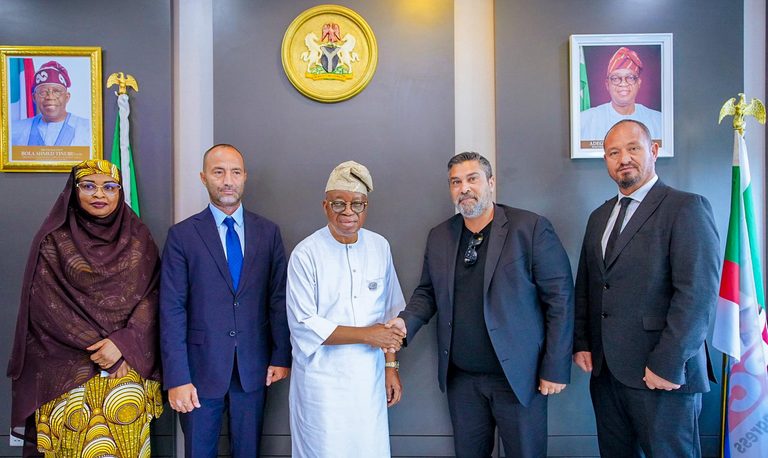
The Minister of Marine and Blue Economy, Dr Adegboyega Oyetola, has thrown Nigeria’s fisheries sector open to Turkish investment, insisting that any fresh capital coming into the industry must strengthen and not sideline the millions of Nigerians who depend on artisanal fishing for a living.
Oyetola made the pledge while receiving a delegation from Turkish fisheries and aquaculture firm CRD Impex, led by the company’s General Manager for Fisheries, Cem Tarhan, at his Abuja office. He told the investors the Federal Government was ready to create an investment-friendly climate for credible local and foreign players willing to bring capital, technology and modern value-chain solutions to the sector, on condition that such investment remains inclusive.
“We welcome investors who can bring capital, technology, expertise and modern value-chain solutions to the sector. However, investment must be inclusive and sustainable. It must complement and empower our artisanal fish producers, not undermine their livelihoods,” the Minister said
He listed inadequate infrastructure, poor access to modern fishing technology, weak cold-chain systems, limited processing and storage capacity, and gaps in market access as the major constraints holding back the sector, framing each as an opening for targeted investment rather than a dead end.
The Turkish team, which included CRD Impex founder Hanefi Cardak and Tetra Underwater Services founder Ersun Buyukgoze, toured key fisheries and aquaculture points around the country to size up the terrain first-hand. Stops included the Kirikiri Lighter Terminal in Lagos, the Ozumba Mbadiwe Fish Market in Lekki, and the Esuk Nsidung Beach Market, a major waterfront seafood hub in Calabar, Cross River State.
The Ministry described the visit as part of a broader push to attract serious investment into Nigeria’s blue economy while keeping the welfare of artisanal fishers central to that growth.
Nigeria Watch
The Turkish courtesy call lands squarely in the pattern this desk has tracked all year: big-ticket investment pledges for Nigeria’s waterways, paired with familiar assurances that the small operator won’t be crowded out. The test, as always, is what happens after the photo-op.
Nigeria’s artisanal fishing communities occupy the same economic space as the informal boat operators represented by WABOTAN and ATBOWATON, river- and creek-dependent Nigerians whose livelihoods rise or fall on decisions made far from the waterfront. The infrastructure gaps Oyetola cited which include, weak cold-chain systems, poor storage and limited market access, all mirror the exact complaints this desk has documented from inland waterway operators for years but modernisation announced from Abuja rarely reache the jetties.
Turkish capital chasing Nigerian fisheries and aquaculture is a genuinely new thread, distinct from the Strait of Hormuz shipping story or the CVFF disbursement saga this desk has followed closely. But the underlying question is the same one that has defined Oyetola’s tenure at the Ministry of Marine and Blue Economy: will “inclusive investment” translate into contracts, cooperative partnerships and cold-chain infrastructure that artisanal operators can actually use or will it, like so many blue-economy pledges before it, stall at the courtesy-visit stage?
Waterways News will be watching for the first concrete CRD Impex commitment — site, timeline, or local partnership — as the marker of whether this one is different.

NPERA, NPA Open Technical Talks on Handover of Inland Dry Port Functions
By Ighoyota Onaibre | Waterways News
The Nigerian Ports Economic Regulatory Agency (NPERA) and the Nigerian Ports Authority (NPA) have begun formal engagement on transferring inland dry port oversight to NPERA, marking the start of what both agencies describe as a critical phase in operationalising Nigeria’s new port regulatory framework.
At a management-level meeting between the two agencies, officials focused on the technical groundwork for the handover, chiefly how to draw clear lines of responsibility and avoid duplication among the government bodies with a stake in inland dry port administration.
NPERA’s Director-General/CEO, Dr Akutah Pius, framed the transition as flowing directly from the Minister of Marine and Blue Economy, Dr Adegboyega Oyetola, whom he credited with steering the process toward the sector’s broader development. Akutah was emphatic that NPERA could not carry out the transfer alone, and said the buy-in of every relevant stakeholder agency would be needed to see it through.
He indicated that the Ministry would stay central to coordinating the process even as specific mandates move to the agencies best placed to execute them. Akutah also pointed to the Minister’s earlier interventions during the NPERA Bill’s passage through the National Assembly, which he said had defused inter-agency friction and set the stage for the cooperation now underway.
Describing the purpose of the meeting, Akutah said it was meant to formally kick off the transfer of inland dry port responsibilities to NPERA in fulfilment of its statutory role as economic regulator of the ports sector. He singled out Section 51 of the NPERA Act as a provision that now needs to be put into practical effect to keep the transition orderly and ensure stakeholder roles are properly aligned.
To manage the process going forward, the NPERA boss proposed setting up a joint committee drawing in NPERA, NPA, the National Inland Waterways Authority (NIWA), and the Federal Ministry of Marine and Blue Economy. He argued that inland dry ports matter well beyond the coastline. They extend maritime sector benefits into Nigeria’s hinterland and reinforce the country’s trade and logistics chain.
Responding on behalf of NPA, Managing Director Dr Abubakar Dantsoho welcomed the move and pledged his agency’s full operational and technical backing throughout the transition. He said the process had started on the right footing, and that NPA would furnish updated data on the current state of inland dry ports to inform further discussions, expressing confidence that continued engagement would help the agencies meet their shared objectives.
NPA’s Executive Director, Engr. Lekan Badmus, also commended NPERA for setting the collaboration in motion, calling the meeting a solid first step toward a smooth integration. He noted the two agencies have now moved into the technical phase of the exercise, with close attention being paid to eliminating overlapping functions.
Closing the meeting, Akutah said the proposed joint committee would reconvene with the Minister to seek further guidance and agree on next steps to keep the transition on track.
Nigeria Watch
This meeting is the first visible test of whether the NPERA Act’s promise of a rationalised port regulatory architecture can survive contact with Nigeria’s crowded agency landscape. Section 51’s transfer of inland dry port functions to NPERA looks straightforward on paper; in practice, it touches NPA’s traditional port administration turf, NIWA’s inland waterways mandate, and the Ministry’s coordinating role all at once, precisely the kind of overlapping jurisdiction that has bedevilled reform efforts elsewhere in the sector, most visibly in the long-running NIWA-LASWA tussle that only the Supreme Court could settle.
The proposed joint committee of NPERA, NPA, NIWA, and the Ministry, is a sensible mechanism, but Waterways News readers who have followed the CVFF disbursement saga know that Nigerian maritime governance has no shortage of well-designed committees whose outputs never quite reach implementation. What will matter is whether Akutah’s “technical phase” produces a binding timeline, not another round of goodwill statements.
For inland dry port operators and the hinterland trade corridors that depend on them, the stakes are practical: unclear jurisdiction between NPA and NPERA has historically meant slower cargo evacuation, duplicated levies, and uncertainty for freight forwarders planning routes away from the congested Lagos ports. If this transition is handled well, it strengthens the case for dry ports as genuine pressure valves for Apapa and Tin Can. If it stalls in inter-agency turf negotiation, it becomes one more entry in the gap between policy pronouncement and delivery that this desk continues to track.
Worth watching: whether Minister Oyetola’s office sets an explicit deadline when the committee reconvenes, and whether NIWA, whose inland waterways mandate intersects with dry port hinterland connectivity, gets more than a seat at the table.
Two More Tankers Struck in Strait of Hormuz as Attack Count Hits Five in a Week
By Okeoghene Onoriobe | Waterways News
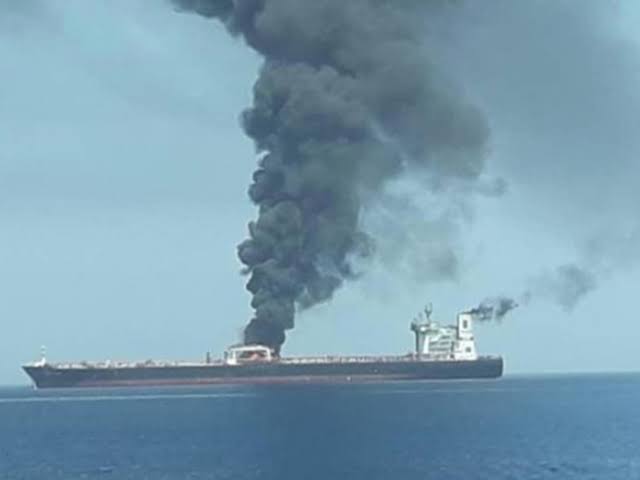
Two more tankers have been hit while transiting the Strait of Hormuz, leaving two seafarers with minor injuries and pushing the number of reported attacks or security incidents against commercial vessels in the waterway to at least five since 16 September.
The UK Maritime Trade Operations (UKMTO) centre said an inbound tanker was struck by an unidentified projectile on Monday. Two crew members sustained minor injuries, but the vessel stayed under its own power and continued to its next port, with no environmental impact reported.
Hours later, UKMTO issued a second alert after an outbound LPG tanker reported being struck by debris from unknown projectiles. All crew were reported safe and the vessel also continued its voyage. Authorities are investigating both incidents, and UKMTO has not attributed either attack to a specific actor.
The two strikes build on a Joint Maritime Information Center (JMIC) advisory covering three earlier attacks between 16 and 18 September, one of which saw a tanker’s hull breached by a projectile, sparking a fire. JMIC continues to rate the threat level in the strait as “severe,” citing a high likelihood of deliberate hostile action and pointing to a pattern of harassment by Iran’s Islamic Revolutionary Guard Corps — drone overflights, surveillance of merchant vessels and VHF hailing, alongside the direct attacks.
Traffic through the chokepoint remains sharply depressed. Only 17 commodity vessels were visibly transiting over the weekend, down from 37 the week before and against a pre-war daily average of roughly 125. That figure excludes vessels sailing with their AIS transponders switched off, and JMIC notes a persistent gap between visible and actual traffic.
Nigeria Watch
For Nigerian maritime stakeholders, the Hormuz crisis is no longer a distant Gulf story. It is a cost line. Every fresh escalation feeds directly into the war-risk insurance premiums and freight rates that Nigerian importers, refiners and shipping agents ultimately absorb, since global tanker and container capacity pulled off the Hormuz route tightens supply elsewhere and pushes rates up across long-haul trades, including those serving West African ports.
The renewed attacks also sharpen the stakes around Nigeria’s push for a stronger voice at the IMO Council table and its broader blue-economy diplomacy under Minister Adegboyega Oyetola. A sustained Gulf disruption is exactly the kind of systemic shock that tests whether Nigeria’s seat translates into influence over how global shipping risk, insurance and rerouting decisions are made, rather than Nigeria simply absorbing the downstream cost.
Locally, the episode is a reminder of the layered nature of “maritime security” as a policy word: the Deep Blue Project and Gulf of Guinea security architecture address piracy and armed robbery close to home, but Nigeria’s ports and shippers remain exposed to security failures thousands of kilometres away in the Gulf.
Waterways News will continue tracking how the Hormuz situation feeds into freight cost pressure at Nigerian ports and NIMASA’s public messaging on the issue.

 Oil and Gas7 months ago
Tantita’s Pipeline Deal: $144m Contract, Rising Output, and the Questions that Deserve Answers
- MARITIME TRADE & SHIPPING7 months ago
World’s Largest Container Ship Sets New Maritime Record with 22,233 TEUs on Single Voyage
- Blue Economy7 months ago
Nigeria’s Coast Guard Bill: A Solution in Search of a Problem?