Security & Safety
NSML Confirms Removal of War Risk Insurance on Nigeria-Bound Ships, Unveils New Logo

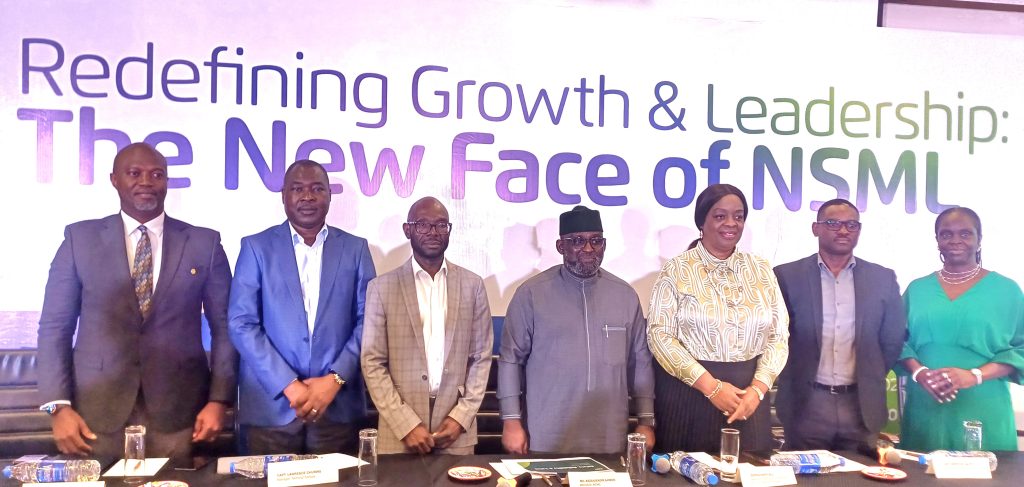

The NLNG Shipping and Marine Services Limited (NSML) has confirmed the removal of War Risk Insurance Premiums on Nigeria-bound ships, a surcharge imposed by foreign shipping companies due to security concerns in the Gulf of Guinea.
Managing Director of NSML, Abdulkadir Ahmed, made this known in Lagos on Monday during a press conference to unveil the company’s new logo. The rebranding marks a significant milestone in NSML’s expansion into new markets and service offerings.
Ahmed attributed the removal of the insurance surcharge to the successes recorded under the Deep Blue Project, spearheaded by the Nigerian Maritime Administration and Safety Agency (NIMASA).
“War risk is a perception of safety in the region, and I am glad to mention that the NIMASA Deep Blue Project has significantly addressed security concerns within West African waters,” he said.

He, however, stressed the need for continuous efforts to maintain a secure maritime environment to ensure the sustainability of this development.
“We commend NIMASA for what they have done. It has really enhanced security within the Gulf of Guinea. However, we must continue to sustain a safe and secure environment because this can change at any moment,” Ahmed added.
 On the issue of sea time training for cadets, Ahmed revealed that NSML has provided sea time opportunities for several cadets under the National Seafarers Development Programme (NSDP).
According to him, nearly 300 cadets have sailed on NSML vessels, with about 200 completing their certifications and 100 securing employment within the company.
“The challenge of securing sea berth placements is a global issue, but it is even more pronounced in Nigeria because our shipping industry is still growing. The number of ocean-going vessels is limited, but we are exploring more opportunities to increase berth spaces for cadets,” he stated.
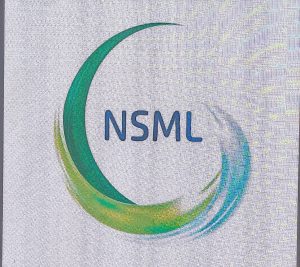
Introducing the company’s new visual identity, Ahmed explained that the updated logo aligns with the NLNG Group’s rebranding initiative, which began in 2024.
He noted that the new design reinforces NSML’s commitment to excellence, sustainability, and collaboration in the maritime sector.
“Our new logo is more than just a visual update; it embodies our core values of professionalism, teamwork, respect, excellence, and care. It also reflects our mission to provide cost-efficient maritime services in a safe, reliable, and sustainable manner,” Ahmed said.
The new logo features an “advanced swivel” in green, lemon, and blue colors. The green represents NSML’s commitment to safety and sustainability, blue signifies reliability and operational excellence, while lemon symbolizes innovation and forward-thinking maritime solutions.
Ahmed emphasized that the rebranding would strengthen NSML’s brand identity, positioning it as a leading provider of integrated maritime services in Nigeria and beyond.

Tin Can Customs Nets 204 More Pump-Action Rifles Smuggled in From Turkey
By Emetena Ikuku | Waterways News
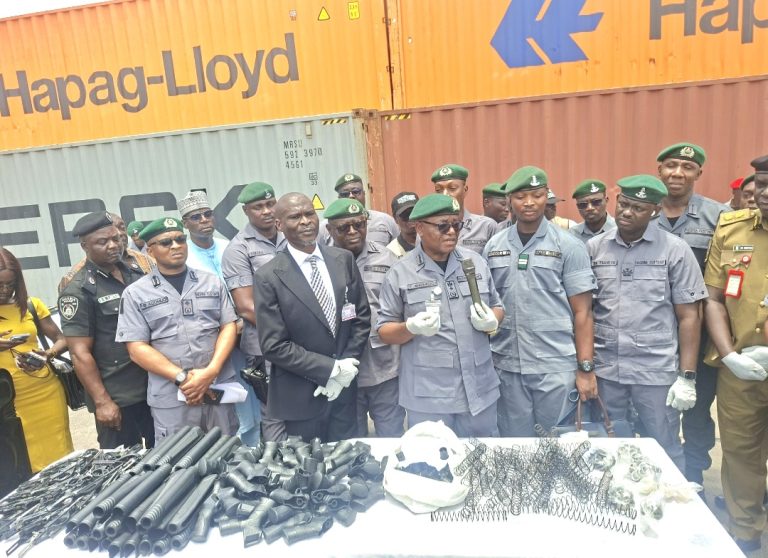
The Nigeria Customs Service’s Tin Can Island Port Command has recorded another major arms interception, recovering 204 pump-action rifles concealed in a container that arrived from Turkey, the second such haul at the command in under three weeks.
The seizure was disclosed at a Monday briefing at the port by Deputy Comptroller-General Timi Bomodi, who heads Enforcement, Investigation and Inspection at Customs headquarters and spoke on behalf of Comptroller-General Bashir Adewale Adeniyi.
According to Bomodi, a 20-foot container that reached Nigeria aboard the vessel MV Algeciras Express on August 16 was flagged on the basis of intelligence and pulled for full physical examination two days later. Officers found knocked-down firearm components hidden among a declared cargo of used furniture, refrigerators, solar panels and detergent. Investigators also noted inconsistencies in the shipment’s paperwork, particularly around the identity of the consignee, and say that thread remains under investigation.
A joint team drawn from the Customs Armament Unit and the National Centre for the Control of Small Arms and Light Weapons, working under the Office of the National Security Adviser, assembled the parts into 204 complete MAS 49 Alter Magnum pump-action rifles. Customs also catalogued a large volume of leftover components, including dozens of trigger pins, locking lugs, charging handles, springs, barrels and pistol grips, which will be handed over alongside the assembled weapons for statutory disposal.
The find follows an August 18 seizure at the same command, when the Comptroller-General personally announced the interception of knocked-down parts later assembled into 399 pump-action rifles.
Bomodi framed the recovery as evidence that the Service’s risk-management and profiling systems are closing off the concealment tactics smugglers have relied on, and said the priority now is tracing the full supply chain, from origin and shipment to the intended buyers, rather than stopping at the seizure itself. Customs Area Controller for Tin Can Island, Compt. Joe Anani, added that the command does not intend to be an easy route for dangerous or prohibited imports into Nigeria.
The rifles were formally handed to the South-West Zonal Director of the National Centre for the Control of Small Arms and Light Weapons, CP Abiodun Alamutu (rtd), for further statutory action.
Nigeria Watch
Two firearms seizures out of one command in three weeks, 603 pump-action rifles between them, say less about a single smuggling attempt than about a route. Tin Can Island has now surfaced twice running as the entry point of choice for parts shipped in a disassembled state and hidden inside legitimate-looking used-goods cargo, a method built to survive a cursory look and only fail under full physical examination.
For the ports and waterways sector, the story sits inside the wider Gulf of Guinea security conversation that Waterways News has tracked through the Deep Blue Project and the Navy’s anti-piracy posture: land-side arms trafficking through container cargo is as much a threat vector as offshore piracy, and it feeds the same informal weapons economy that inland waterway operators say complicates their own security exposure on the creeks and rivers.
The unresolved question in Bomodi’s own account, the mismatched consignee details still under investigation, is the one worth watching. Seizures make headlines; whether the paperwork trail leads back to identifiable importers and financiers is what will determine if this is enforcement working, or enforcement catching only the visible tip of a recurring supply line into Nigerian ports.
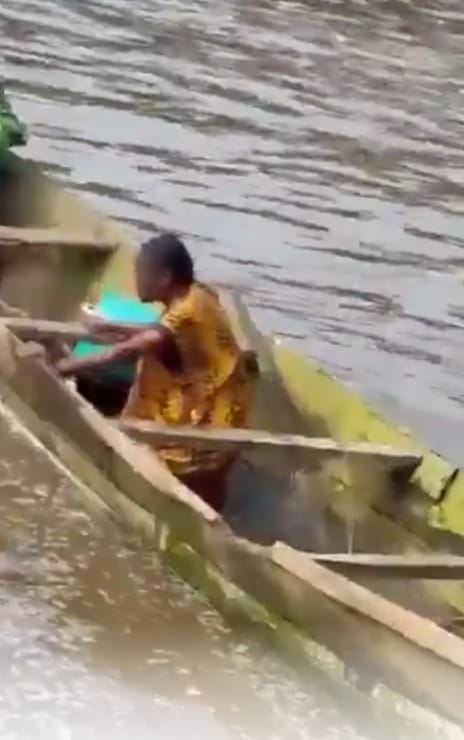
BOAT OPERATORS ARE THE FIRST RESPONDERS ON THE LAGOON
.…..Carter bridge rescue exposes gap
By Oghenewoke Osaweren | Waterways News
Lagos, Nigeria. For the second time in just over a year, informal boat operators, not any designated emergency service, were the ones who pulled a woman alive from the Lagos Lagoon after she jumped from Carter Bridge, raising fresh questions about who is actually responsible for water rescue on one of Africa’s busiest urban waterways.
The unidentified woman jumped from the Idumota end of the bridge on the afternoon of Tuesday, August 4. Eyewitnesses said local boat operators working within the area reacted within moments, pulling her from the water before she could be swept further into the lagoon’s currents. Video circulating on social media shows her seated inside a wooden canoe, visibly disoriented, as bystanders on the bridge above shouted down, some pleading with the operators not to hand her over to the police, others audibly distressed and asking what could have driven her to the water’s edge.
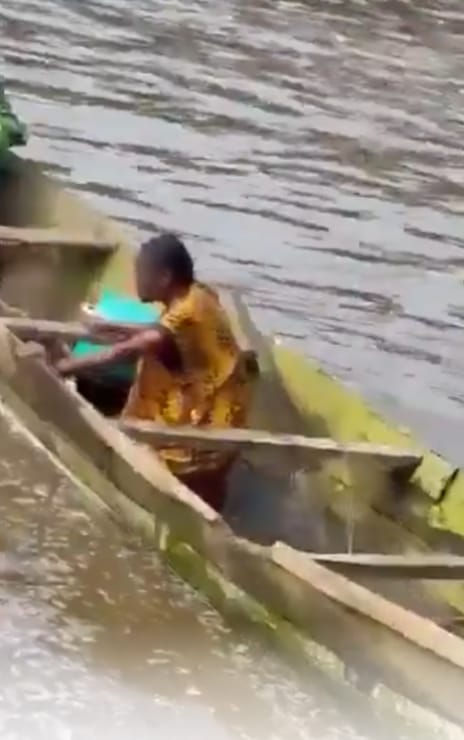
A PATTERN AT THE SAME BRIDGE
This is not an isolated site incident. In July 2025, a separate woman was intercepted at the same Carter Bridge location, that time by police Rapid Response Squad officers on routine patrol, before she entered the water. Tuesday’s case had no such patrol presence. The outcome depended entirely on boat operators who happened to be working nearby.
Carter Bridge, opened in 1901, is one of only three crossings linking Lagos Island to the mainland, alongside Eko and Third Mainland bridges, and sits directly over lagoon waters used daily by commercial boat traffic, artisanal fishermen and ferry operators. That density of water traffic is precisely why informal operators keep ending up as the default emergency responders, they are simply the ones already on the water when someone goes in.
NO FORMAL WATER RESCUE MANDATE
Neither the Lagos State Waterways Authority (LASWA) nor the National Inland Waterways Authority (NIWA) operates a dedicated, publicised rapid-response rescue protocol for bridge-jump incidents on Lagos waterways, despite the lagoon’s role as a primary transport corridor for hundreds of thousands of commuters. Search-and-rescue capacity for road-based emergencies sits with the police and, in some cases, the Lagos State Emergency Management Agency (LASEMA) but water incidents routinely fall to whichever boat happens to be nearest, with no formal reporting chain back to state authorities on outcomes, casualty data or referral to mental health support afterward.
That gap matters beyond this single case. Nigeria records among the highest estimated suicide rates in West Africa according to World Health Organization modelling, yet has no national suicide prevention strategy comparable to those adopted elsewhere on the continent, and Lagos, a lagoon city where bridges double as the tallest accessible points over open water, has no publicly documented protocol connecting bridge surveillance, water rescue and post-rescue mental health referral into a single chain of response.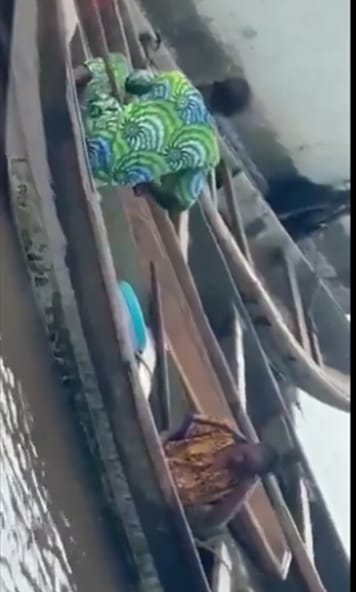
WHAT HAPPENED AFTER THE RESCUE
As of the time of filing, the woman’s identity, condition and the circumstances that led to the incident remain undisclosed. It is not yet known whether she was handed to police, taken to a hospital, or released, despite the pleas heard on video against police involvement, a detail that itself reflects a wider public wariness in Lagos toward treating suicide attempts as a criminal matter rather than a medical one. The Lagos State government had not issued a statement at the time of this report.
This story concerns a suicide attempt. If you or someone you know is struggling, please reach out to a trusted person, a doctor, or a crisis line for support.
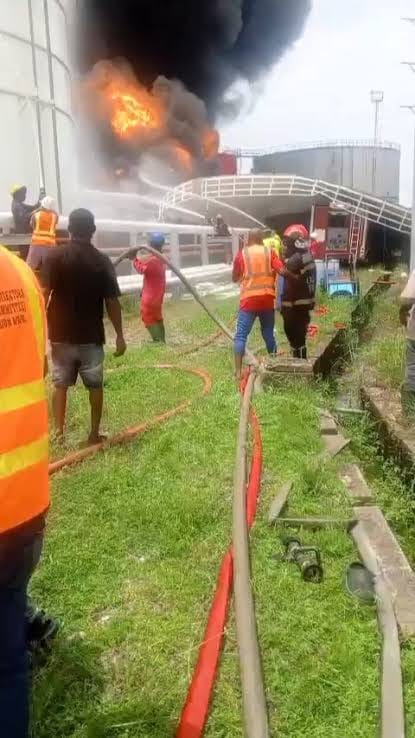
Fire Breaks Out at Bono Tank Farm in Olodi-Apapa, Cause Yet Unknown
By Oghenewoke Osaweren | Waterways News
Firefighters were on Friday battling a blaze at Bono Tank Farm in the Coconut area of Olodi-Apapa, Lagos, one of several petroleum storage facilities lining the busy Apapa-Oworonshoki Expressway corridor.
The Lagos State Fire and Rescue Service confirmed the incident, with its spokesperson, Shakiru Amodu, stating that crews had been deployed to the scene to contain the fire and prevent it from spreading to adjoining tank farms and energy installations in the densely industrialised zone.
As at press time, the cause of the fire remained unconfirmed, and there was no official word on casualties or the scale of damage to the facility. Authorities said updates on the investigation and the outcome of firefighting efforts would follow as operations continued.
Nigeria Watch: The blaze once again puts a spotlight on the fire safety architecture around Apapa’s tank farm cluster, an area with concentrations of petroleum storage in the country. Recurring incidents of this kind raise familiar questions for regulators, terminal operators, and depot owners alike: are inspection regimes, firefighting readiness, and emergency evacuation protocols keeping pace with the volume and proximity of fuel storage in the corridor?
With Nigeria’s downstream sector expanding rapidly on the back of Dangote Refinery output and rising import substitution, incidents like this one underline why depot safety compliance deserves the same regulatory urgency being applied to port and vessel safety elsewhere in the sector.

 Oil and Gas7 months ago
Tantita’s Pipeline Deal: $144m Contract, Rising Output, and the Questions that Deserve Answers
- MARITIME TRADE & SHIPPING7 months ago
World’s Largest Container Ship Sets New Maritime Record with 22,233 TEUs on Single Voyage
- Blue Economy7 months ago
Nigeria’s Coast Guard Bill: A Solution in Search of a Problem?