
Editorial
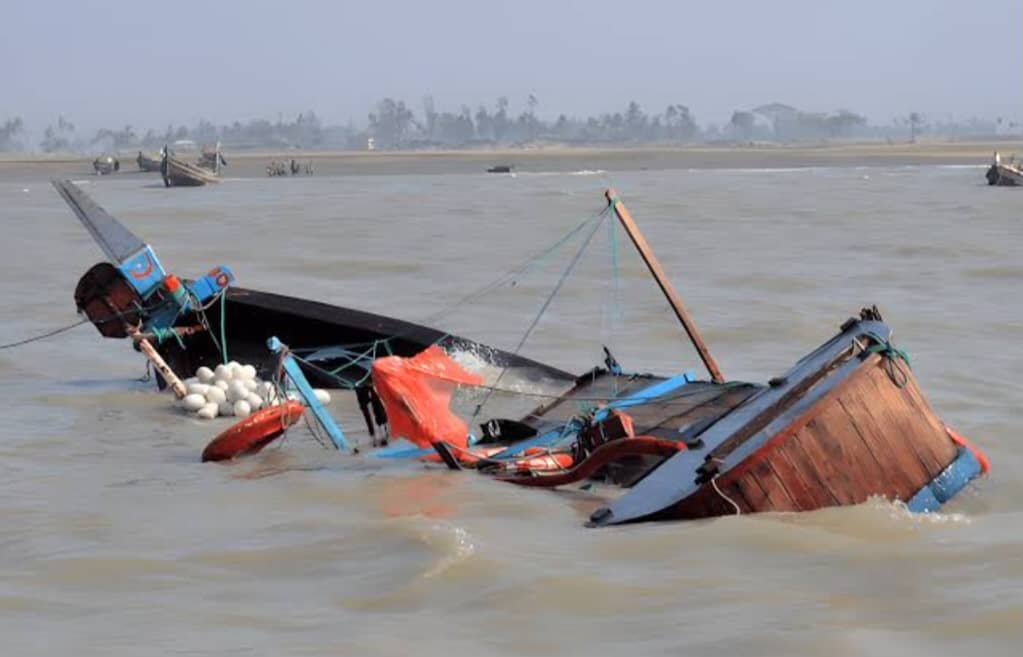
150 Bandits, One Capsized Boat, Zero Evidence: Inside Nigeria’s Latest Viral Security Lie


150 Bandits, One Capsized Boat, Zero Evidence: Inside Nigeria’s Latest Viral Security Lie
Multiple official bodies deny the report as Sokoto’s rivers run dry this season
By Oghenewoke Osaweren Waterwaysnews.ng | March 23, 2026
A viral report claiming that over 150 suspected armed bandits perished in a boat mishap along a waterway in Sokoto State has been dismissed as false by the National Inland Waterways Authority (NIWA), the Nigerian Army, and the Sokoto State Police Command — raising serious questions about the origin and intent of the widely-circulated story.
How the Story Broke

The report first gained traction through a post by Zagazola Makama, a counter-insurgency and security analyst focused on the Lake Chad region, who cited local sources claiming the incident occurred on the evening of Saturday, March 21, 2026. According to those sources, a vessel carrying a large number of armed men capsized while crossing a water body in the Sabon Gida area of Sabon Birni Local Government Area, Sokoto State.
The vessel was reportedly overloaded with armed men, and preliminary findings cited by Makama suggested that many of those on board could not swim, resulting in what sources described as heavy casualties, with early reports indicating that none of the occupants survived. The story spread rapidly across Nigerian media platforms on Sunday, with headlines referring to the dead as “bandits” or “Boko Haram fighters” — the latter label being factually imprecise given that the incident was reportedly located in Sokoto’s North-West banditry corridor, not the North-East where Boko Haram primarily operates.
Crucially, there was no official confirmation from any security agency at the time the initial report was filed.
NIWA: “The River Is Not Navigable”
The most authoritative rebuttal came from the agency statutorily responsible for Nigeria’s inland waterways. NIWA Area Manager for the Sokoto Zonal Office, Mr. Bello Bala, flatly dismissed the report as fake in an interview with the News Agency of Nigeria on Monday, stating that no such incident occurred and that the river mentioned in the reports is not navigable.
This is a significant technical point. From a waterways management standpoint, a river that is not navigable cannot sustain the kind of large-scale boat crossing described in the viral reports. Bala further noted that NIWA maintains active community-level engagement in riverine areas, and that any genuine water-related casualty of that magnitude would have been reported through established channels. He stressed that community members would have reported such an event to water users’ association leaders — a grassroots early-warning mechanism NIWA relies on across its operational zones.
Police: “It Only Existed in the Imagination of Fabricators”
The Sokoto State Police Command went further in its denial. The Command’s Public Relations Officer, DSP Ahmed Rufa’i, said the report was completely false, adding that it had “no iota of truth.” He explained that rivers in Sokoto’s eastern axis — where Sabon Birni is located — are largely not navigable during the dry season, only becoming so during the rainy season. His statement provides an important seasonal context: March falls squarely within Nigeria’s dry season, when water levels in North-West rivers drop dramatically, making large-boat crossings physically implausible.
Nigerian Army: Troops Were on Ground, No Incident Reported
A source within the Nigerian Army’s 8 Division in Sokoto, speaking on condition of anonymity, also confirmed that the report was false, stating that troops deployed across the area recorded no boat-capsize incident involving armed groups. The military’s presence in the area is part of ongoing counterbanditry operations across Sokoto and Zamfara states.

In a separate but related development, the 8 Division Strike Force launched a verified operation targeting the camp of notorious bandit leader Bello Turji in Kagara Forest, spanning Shinkafi and Isa local government areas of Zamfara and Sokoto states. That operation — a confirmed, active military engagement — stands in stark contrast to the unverified boat-capsize claim, and underscores that credible security reporting from the region is entirely possible when sourced properly.
What the Evidence Suggests
The viral story presents several verifiability problems. The original report was attributed entirely to anonymous local sources relayed through a single analyst’s social media post, with no eyewitness footage, no recovered bodies, no community confirmation, and no corroboration from any of the security agencies that maintain active operational presence in the area. Every official body with jurisdiction over the location — NIWA, the Nigerian Police, and the Nigerian Army — has independently denied the incident.
The mislabelling of North-West bandits as “Boko Haram” in some versions of the story also points to a troubling lack of editorial rigour. Boko Haram and its offshoots operate primarily in the North-East — Borno, Yobe, and Adamawa — not in Sokoto’s banditry-afflicted local government areas. Conflating the two distinct insurgencies does a disservice to public understanding of Nigeria’s complex security landscape.
A Word on Responsible Waterways Reporting
For a publication focused on Nigeria’s inland waterways sector, this story carries an important lesson. NIWA’s Bala appealed to media organisations to always verify reports with credible sources before publication, reaffirming that the authority remains available to provide technical clarification on waterway-related incidents. His call is particularly apt here: the specific claim that a mass-casualty boat event occurred on a non-navigable stretch of river is precisely the kind of detail that waterways-focused editorial teams are best positioned to scrutinise and challenge.
Verdict
Based on available evidence as of Monday, March 23, 2026, the claim that over 150 bandits drowned in a boat mishap at Sabon Gida, Sabon Birni Local Government Area, Sokoto State remains “unverified and officially denied” by NIWA, the Sokoto State Police Command, and the Nigerian Army. The geographical, seasonal, and logistical basis of the original claim does not withstand scrutiny. Waterwaysnews.ng urges readers and fellow media outlets to await verified, official accounts before amplifying security-related waterway reports.
Waterwaysnews.ng Editorial Desk

Seafarers’ Day 2026: Carrying World’s Cargo at Enormous Personal Cost
As the global maritime community marks the 2026 Day of the Seafarer, Waterways News examines the deepening welfare crisis confronting the 1.9 million workers who keep world trade afloat — and what Nigeria must urgently do to protect its own.
Raymond Gold O | Waterways News Editorial Desk
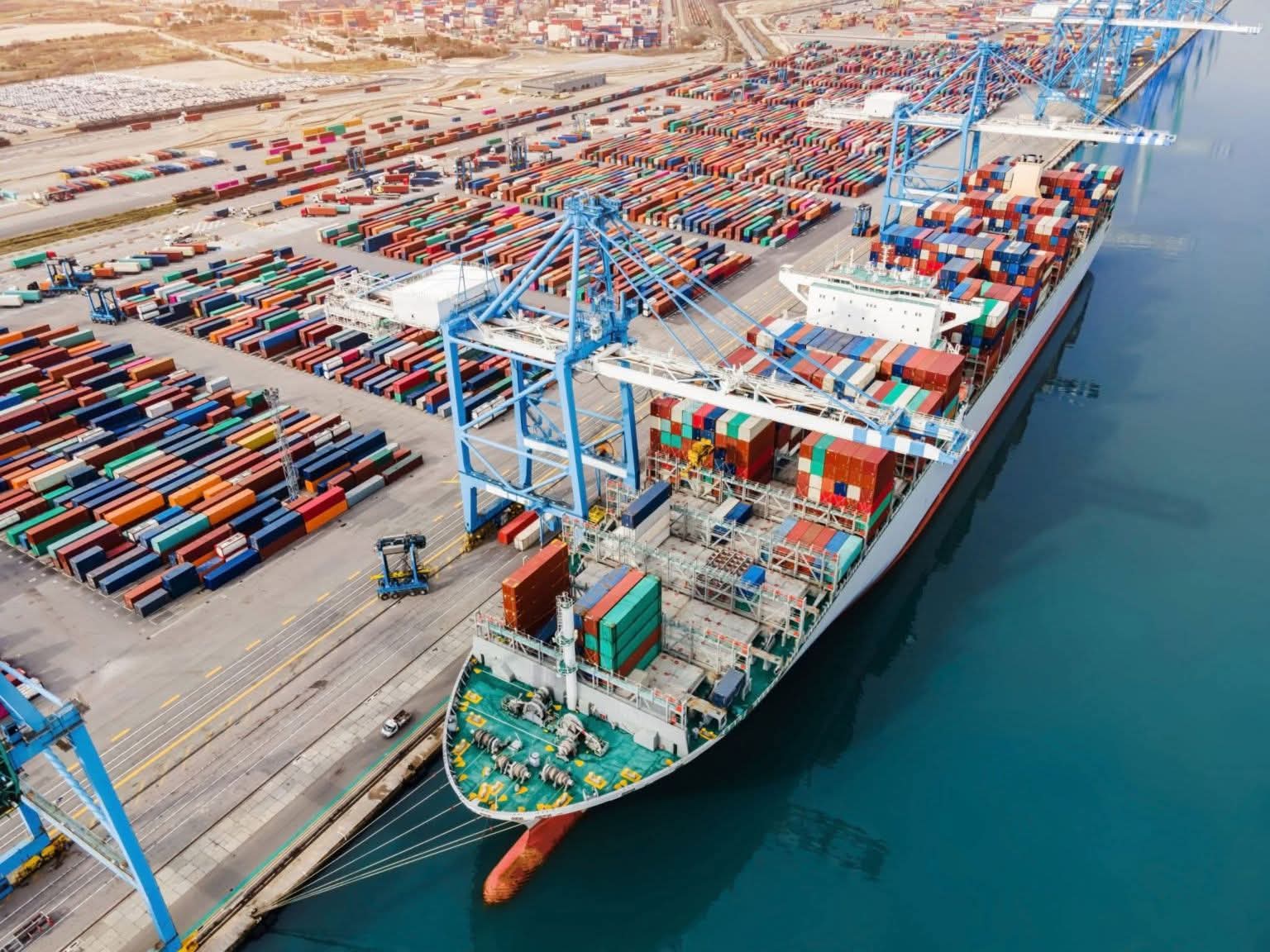
The world paused on June 25 to observe the annual Day of the Seafarer, but for the men and women at the helm of the global supply chain, there was little reason to celebrate. This year’s theme — Carrying the World’s Trade, Carrying the Risks — captured with uncomfortable precision the reality confronting maritime workers across the globe: they move over 80 per cent of world trade by volume, yet they remain among the most exposed, underprotected and under-resourced workers in any industry.
The International Maritime Organisation (IMO) Secretary-General, Arsenio Dominguez, acknowledged as much in his tribute to seafarers worldwide, affirming that those working at sea are the force sustaining international trade and remain central to the global economy, ensuring the unbroken flow of food, fuel, medicines and everyday commodities across global supply chains. The tribute, however, rings hollow against the backdrop of mounting evidence that the international maritime community has, across multiple fronts, failed the very workers it purports to celebrate.
Conflict Zones, Stranded Crews
The escalating Middle East crisis involving Iran, the United States and Israel has emerged as one of the most acute flashpoints for seafarer welfare this year. More than 20,000 seafarers aboard cargo vessels have been left stranded in deteriorating security conditions across volatile corridors including the Red Sea, the Black Sea and the Strait of Hormuz, with some reportedly killed or wounded in missile strikes on vessels, their plight largely invisible to global media coverage fixated on the geopolitics of the conflict.
The IMO, the World Shipping Council, the International Transport Workers’ Federation (ITF) and the Joint Negotiating Group have all called on the international community to ensure seafarers are protected. Yet shipowners and flag states have, in too many documented cases, failed to mount effective rescue or evacuation responses. Crews have been left without adequate food, water, communications or medical supplies — forgotten in the calculus of great power tensions.
“Whether in the Red Sea, the Black Sea, the Strait of Hormuz or other challenging regions, we must remember that every ship carries more than cargo. It carries people. Seafarers should never become unintended victims of wider geopolitical conflict,” Secretary-General Dominguez has warned. The warning is apt; its implementation, so far, inadequate.
MLC at 20: A Convention in Crisis
This year also marks two decades since the Maritime Labour Convention (MLC) was adopted on February 23, 2006 — a milestone that should have been an occasion for measured celebration. Instead, industry observers have used the anniversary to take stock of a convention that, despite amendments covering abandonment, violence, harassment, piracy victim protections and the 2025 designation of seafarers as key workers, has struggled to achieve enforcement on the ground.
Twenty years on, seafarers continue to face unpaid wages, abandonment, unlawful detention, excessive fatigue and the routine denial of shore leave. The ITF’s 2025 survey documented 6,223 seafarers abandoned across 410 vessels, with shipping companies owing an estimated $25.8 million in unpaid wages. The Seafarers Happiness Index 2025 report reinforced a picture of growing pressures: intense operational demands, geopolitical fear, reduced shore leave, mounting workloads and a regulatory environment that often adds complexity without delivering protection.
The criminalisation of seafarers — a long-standing concern — remains particularly egregious. In June 2025, the ILO and IMO’s Tripartite Working Group released guidelines on the fair treatment of seafarers detained in connection with alleged crimes. Most countries have not meaningfully implemented those guidelines, as a court ruling right here in Lagos demonstrated this month.
Lagos Court, 11 Indian Sailors and a Hard Question
On June 11, 2026, a Federal High Court in Lagos convicted 11 Indian sailors arrested in January following the discovery of 31.5 kilogrammes of cocaine aboard their vessel at the Apapa seaport. The crew had spent six months in detention before sentencing. Three principal officers were ordered to pay restitution of $100,000 each to the Federal Government; the remaining crew members were directed to pay $50,000 each.
The Secretary-General of the Merchant Seafarers Association of Nigeria and the USA, Prof. Alfred Oniye, has been among the most vocal critics of such prosecutions, noting that seafarers are routinely detained when narcotics are found on commercial vessels — often without credible evidence linking them personally to the contraband. Organised criminal networks, he argues, use sophisticated concealment methods to smuggle drugs aboard vessels without the crew’s knowledge, yet it is the crew who bear criminal liability. The consequences — months or years in foreign detention, separation from family, loss of livelihood and lasting professional stigma — are devastating and, in many cases, unjust.
This conviction, occurring in Nigeria’s own courts, is a test of the country’s commitment to the principles it endorses internationally. Nigeria cannot campaign at the IMO for fair treatment of seafarers and simultaneously maintain a domestic legal and prosecutorial framework that imposes collective punishment on crews for crimes they did not commit.
Nigeria’s Seafarers: Trained, Certified, Left Behind
The structural dimensions of Nigeria’s seafarer crisis are perhaps the most troubling of all. Despite controlling over 70 per cent of Africa-bound trade, possessing one of the continent’s most strategically positioned coastlines, and maintaining approximately 30 NIMASA-approved Maritime Education and Training (MET) institutions operating under STCW standards, Nigeria has failed to translate its maritime training infrastructure into meaningful seafarer employment.
Industry figures put the number of trained, certified Nigerian seafarers unable to secure sea-time or trade placement at over 4,000 — a stark contrast with the Philippines, which repatriates approximately $6.14 billion annually in seafarer remittances, and India, which earns around $2 billion. Nigeria’s contribution to these figures remains negligible.
Minister of Marine and Blue Economy Dr Adegboyega Oyetola has cited the Nigerian Seafarers Development Programme (NSDP) as evidence of government commitment, disclosing that 2,459 cadets have been sponsored for training in institutions across the United Kingdom, Egypt, the Philippines, India and Romania, with 1,088 obtaining their Certificates of Competency. Yet anecdotal evidence — and considerable industry frustration — suggests a significant number of NSDP beneficiaries remain unemployed, some reportedly engaged in informal trading or POS operations entirely outside the maritime sector.
The failure has multiple authors. The Director at Tantita Security Services, Enisuoh Warredi, has identified two systemic bottlenecks: insufficient flag-state vessels creating a domestic employment vacuum, and the limited global acceptability of Nigeria’s Certificate of Competency, which sees Nigerian cadets rejected by many foreign vessel operators.
Board Member of the Alumni of Maritime Academy of Nigeria, Oron (AMANO), Jonathan Peter, has added further layers: bureaucratic delays in certification, institutional politicisation, restricted fleet capacity, prohibitive interest rates and regulatory bottlenecks that combine to suppress investment in indigenous shipping.
The International Chamber of Shipping estimates the global seafarer workforce at approximately 1.89 million, with the Philippines, Russia, Indonesia, China and India as the dominant supplier nations. Nigeria, with all its maritime potential, does not feature meaningfully in that pecking order. That must change.
NIGERIA WATCH
Editorial Commentary | Waterways News
On This Seafarers’ Day, Nigeria Must Do More Than Honour — It Must Act
Every June 25, Nigeria’s maritime institutions issue statements honouring seafarers. NIMASA releases figures. The Ministry of Marine and Blue Economy issues tributes. Industry associations hold events. And then June 26 arrives, and the same 4,000-plus certified Nigerian seafarers who could not find sea berths yesterday wake up to the same reality.
This is the gap that defines Nigeria’s relationship with its maritime workforce: the distance between rhetoric and remedy.
The Day of the Seafarer is not merely a PR occasion. It is a moment of accountability — for flag states, for employers, for regulators and for governments. On each of those counts, Nigeria has outstanding obligations it has not yet discharged.
Consider the NSDP. The programme represents genuine government expenditure and genuine aspiration. But investment in training without a corresponding investment in placement and fleet expansion is an incomplete policy at best. The Federal Government has spent public funds producing seafarers who are selling second-hand clothing. That is not a maritime strategy — it is a leakage problem.
NIMASA and the Ministry must urgently develop structured placement partnerships with international shipping companies, leverage bilateral maritime agreements, and accelerate the upgrade of Nigeria’s Certificate of Competency to internationally competitive standards. The Malta ship registry partnership that NIMASA has been exploring must also be interrogated for what practical employment pathways it creates for Nigerian nationals, not merely what flag revenue it generates.
The fleet question is foundational. Nigeria cannot meaningfully employ its own seafarers without ships flying the Nigerian flag. The Cabotage Vessel Financing Fund (CVFF) has languished in bureaucratic limbo for too long. Its disbursement — long promised, long delayed — must become a political priority, not a perennial headline.
Without vessels, there is no sea-time. Without sea-time, certificates remain academic. Without employment, the entire human capital investment chain collapses.
The Lagos cocaine conviction also demands a policy response, not just prosecutorial discretion. Nigeria should formally adopt and implement the ILO-IMO Tripartite Working Group guidelines on fair treatment of detained seafarers. Port State Control officers, prosecutors and the judiciary need clear procedural frameworks that distinguish between crew complicity and crew victimhood when narcotics are discovered aboard vessels. The criminalisation of innocent mariners is not law enforcement — it is an injustice with a maritime label.
On the broader geopolitical front, Nigeria has obligations to its nationals sailing in conflict zones. Nigerian seafarers trapped aboard vessels in the Strait of Hormuz, the Red Sea or the Black Sea are not merely statistics in an ITF report. They are citizens, and their welfare is a consular responsibility. The Department of Shipping and NIMASA must work with the Ministry of Foreign Affairs to develop a rapid welfare response protocol for Nigerian seafarers caught in crisis zones — something that does not currently exist in any operational form.
The 2026 Day of the Seafarer has come and gone. The theme — Carrying the World’s Trade, Carrying the Risks — will be archived, cited in conference papers and forgotten by most. But for Nigeria’s certified seafarers queuing at POS machines because there are no ships to board, the risks are not abstract. They are daily. And they demand a policy response proportionate to the scale of the problem.
Nigeria’s blue economy ambitions will be hollow so long as the human capital at its centre remains undeployed, unprotected and undervalued. The time for tributes has passed. The time for policy is now.
Waterways News | waterwaysnews.ng | Maritime | Ports | Inland Waterways | Blue Economy
Day of the Seafarer 2026: Nigeria’s Maritime Professionals Deserve More Than Ceremonies
By Raymond Gold | Waterways News Editorial Board | Lagos, Monday, June 22, 2026
On Wednesday, June 25, the International Maritime Organization will once again convene the global maritime community to mark the annual Day of the Seafarer. This year’s theme — Carrying Global Trade. Carrying the Risks — is particularly resonant at a time when seafarers navigating the Strait of Hormuz and other conflict-affected waters are daily confronting the human cost of geopolitical brinkmanship. The IMO’s campaign rightly highlights that the men and women who keep world trade moving often do so under conditions of extreme hazard, far removed from the comfort of boardrooms and policy chambers.
Waterways News joins the global maritime community in honouring seafarers for their indispensable service to international commerce. Their sacrifices underpin every cargo movement, every imported good, every barrel of crude that reaches export terminals. Nigeria, as Africa’s largest oil exporter and one of the continent’s busiest maritime economies, owes its seafarers a particular debt of gratitude. But gratitude, unaccompanied by concrete action, is a hollow tribute.
A Crisis Hiding in Plain Sight
Each year, the Day of the Seafarer prompts reflection on conditions facing Nigerian maritime professionals. And each year, the picture is the same: a growing population of trained seafarers struggling against unemployment, wage disparity, certification barriers, and a domestic industry that too often reaches for foreign crews before it looks inward.
Unlike their counterparts caught in the crossfire of the Middle East conflict, the primary threat to Nigerian seafarers is not armed aggression. It is systemic marginalisation at home. The problem begins — and largely ends — with a structural mismatch between the supply of trained seafarers and the absorptive capacity of the Nigerian maritime industry.
Nigeria has no shortage of maritime training institutions. What it has is a serious shortage of vessels. Without a substantial fleet of indigenous commercial shipping tonnage, the maritime sector simply cannot accommodate the volume of graduates produced annually. The few Nigerian shipping companies that do operate frequently prefer to hire foreign seafarers, citing competency and reliability concerns — a preference that reflects, in part, genuine gaps in the training pipeline, and in part, the inertia of established hiring practices that successive administrations have failed to challenge through policy.
The Certificate Trap
The certification crisis is arguably the most damaging structural constraint facing Nigerian seafarers and one that demands urgent regulatory intervention.
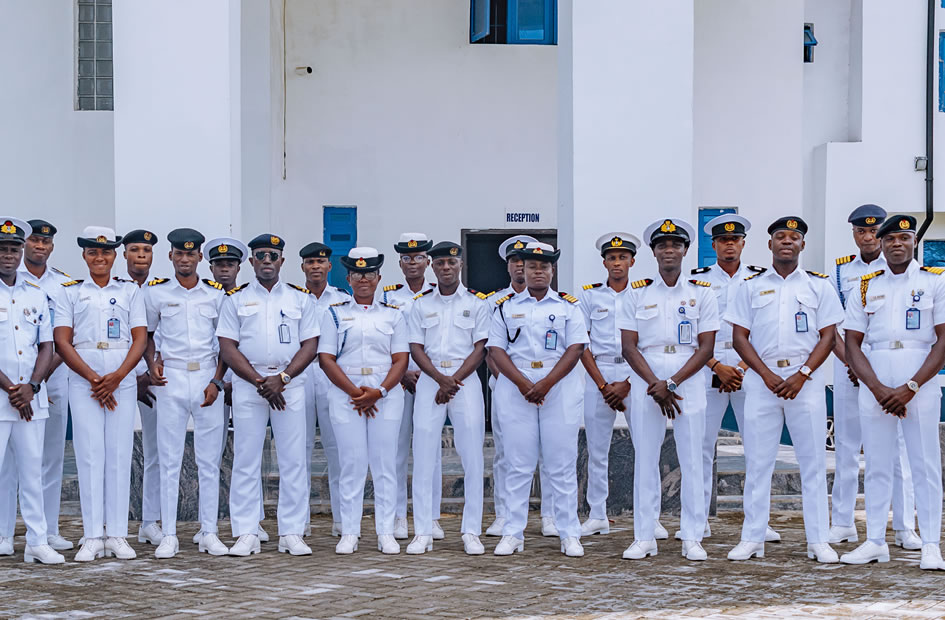
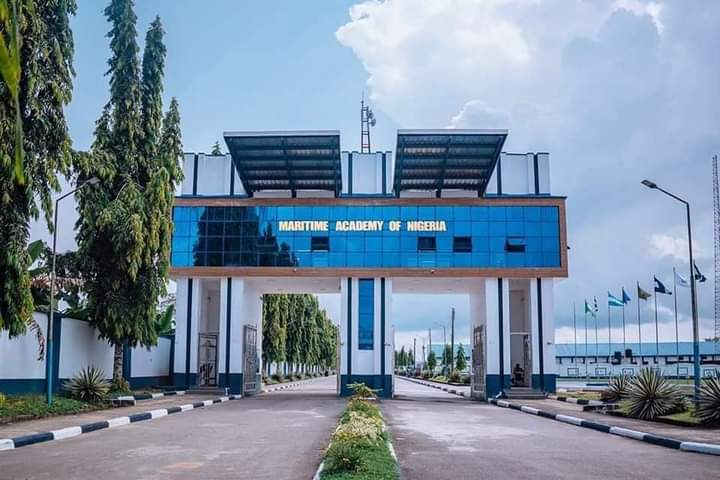
The IMO’s STCW Convention sets the international benchmark for seafarer training and certification. Meeting that benchmark requires investment in modern training infrastructure, qualified instructors, functional simulators, and credible quality assurance systems. Nigeria’s maritime academies, including the Maritime Academy of Nigeria (MAN) in Oron, Akwa Ibom State — the country’s flagship institution — have long struggled to deliver at that standard. The consequences are direct and severe: certificates issued by Nigerian institutions face recognition challenges in international labour markets, limiting the global employment options available to holders.
Maritime Academy of Nigeria, Oron
More critically, Nigeria currently issues only Near Coastal Voyage certificates. This is a fundamental ceiling on professional ambition. Without Class 1 and Class 2 certificates of competency, Nigerian seafarers cannot advance to the command-level positions — Chief Engineer, Chief Mate, Captain — that represent the pinnacle of a seafaring career. Those who aspire to these ranks must travel abroad and bear the personal cost of foreign certification programmes. For most, that cost is prohibitive. The effect is a bottleneck that traps capable maritime professionals in the lower tiers of the career ladder, regardless of their experience or aptitude.
NIMASA and the Question of Institutional Priority
Responsibility for maritime labour policy and seafarer development sits squarely with the Nigerian Maritime Administration and Safety Agency. The agency has not been idle: the National Seafarers Development Programme (NSDP) has sent cohorts of young Nigerians to foreign maritime academies for training in nautical science and marine engineering, and NIMASA has invested in maritime departments at several Nigerian universities.
These initiatives are commendable. But they do not address the core problem. Sending Nigerians abroad for training that cannot be delivered at home is a palliative, not a solution. The more urgent priority must be the rehabilitation and re-equipment of MAN Oron to a standard that can support unrestricted certificate issuance — that is, certificates recognised globally, at all officer levels, without the Near Coastal limitation that currently constrains Nigerian seafarers’ international employability. Until that happens, Nigerian maritime training will continue to produce graduates whose qualifications are, for practical purposes, domestically stranded.
The agency must also pursue with greater urgency the structural incentives needed to grow an indigenous fleet. The Cabotage Vessel Financing Fund, now running well over two decades behind on its disbursement mandate, remains the most glaring symbol of institutional failure in this regard. Without ships, there are no berths for Nigerian seafarers — no matter how many academies are built or how many graduates are certified.
Beyond Ceremony
As Nigeria marks the 2026 Day of the Seafarer, it is worth confronting an uncomfortable truth: a generation of the country’s most accomplished seafarers — officers who trained aboard Nigerian National Shipping Line vessels in the era when Nigeria still owned ocean-going tonnage — has aged out of service. That institutional knowledge and sea-time experience has not been fully transmitted to the next generation. Nigeria no longer owns the high-tonnage fleet that once gave those officers purpose and a career path. Reversing that decline is not simply a matter of national pride; it is a commercial and strategic imperative for a country that imports almost everything it consumes and exports almost everything it produces by sea.
What Nigeria’s seafarers need on this Day of the Seafarer is not another roundtable. They need a fully funded and internationally accredited Maritime Academy of Nigeria. They need an accelerated CVFF disbursement framework that places Nigerian-owned vessels on Nigerian waters. They need a NIMASA that uses its regulatory authority to enforce local content obligations on vessel operators, not merely promulgate them. And they need a Federal Ministry of Marine and Blue Economy that treats seafarer workforce development as the economic development issue it fundamentally is.
Celebrating Nigerian seafarers must mean more than commemorative plaques and press statements. It must mean ensuring that the next generation of Nigerian maritime professionals has ships to sail, certificates the world will accept, and careers worthy of the risks they carry.
Waterways News is Nigeria’s specialist publication for the maritime sector, inland waterways, and blue economy.
Editorial
AfCFTA: Nigeria’s Ports and Shipping Sector Must Drive Continental Trade — Or Cede the Table

AfCFTA: Nigeria’s Ports and Shipping Sector Must Drive Continental Trade — Or Cede the Table
By Emetena Ikuku | Waterways News
Nigeria’s underwhelming engagement with the African Continental Free Trade Area (AfCFTA) is not just a trade policy failure — it is a maritime failure. And until the country fixes the rot at its ports, on its waterways, and in its shipping corridors, no amount of ministerial cheerleading will change that.
The AfCFTA, which brings together 54 of the 55 African Union member states into a single market of 1.3 billion people and a combined GDP of around $3.4 trillion, was designed precisely to reverse Africa’s long-standing failure to trade with itself. Research by the African Development Bank had established that only 16 percent of the continent’s international trade takes place between African nations — a damning indictment that the AfCFTA set out to correct.
Nigeria signed up to the agreement in July 2019 and ratified it in December 2020. Six years on, the country has little to show for it. The numbers tell a brutal story. Of approximately 8,500 Certificates of Origin issued across Africa under the AfCFTA framework — the key instrument that certifies local content in exported goods and qualifies them for preferential tariff access — South Africa alone issued over 4,000, accounting for nearly half the continental total. Egypt, Kenya and Ghana all maintain significantly higher utilisation rates. Nigeria, Africa’s largest economy and most populous nation, sits far behind all of them.
It is the ports and the waterways that hold the answer — and equally, the problem.
For decades, Nigeria’s seaports have been synonymous with gridlock, inefficiency and regulatory bottlenecks. Cargo dwell times remain among the highest on the continent. Lengthy customs procedures, inconsistent border checks, and layered bureaucratic requirements pile cost upon cost, ensuring that Nigerian goods arrive at continental markets already priced out of competitiveness. The AfCFTA’s preferential tariff regime means nothing if the port-to-market journey bleeds exporters dry before they can benefit from it.
Compounding this is the country’s near-total dependence on foreign-owned vessels for cargo movement. Without a functional national carrier or meaningful investment in indigenous shipping capacity, Nigeria cannot build the regional maritime connectivity that sustained intra-African trade demands. Competitors are not standing still — South Africa, Egypt and Kenya have leveraged their maritime infrastructure to position themselves as AfCFTA frontrunners. Nigeria’s weak coastal and inland waterway links continue to inflate logistics costs and undermine the competitiveness of Nigerian manufacturers and exporters.
Roads and rail are in a similar state. Poor transport networks from production hubs to port gates continue to raise the cost of doing business, making it harder for Nigerian goods — particularly from small and medium enterprises — to compete even within a framework designed to give them an advantage.
There is no shortage of institutional structures. A National Action Committee on AfCFTA implementation exists on paper. But the evidence suggests it has been far too ineffective in galvanising Nigeria’s participation. The implementation framework remains hamstrung by bureaucratic inertia, limited automation and weak coordination between the agencies that must work together — NPA, Customs, NIMASA, Standards bodies — if AfCFTA trade is to flow.
It is therefore difficult to reconcile reality with the claims of the Minister of Industry, Trade and Investment, Dr Jumoke Oduwole, who has described Nigeria as a “pacesetter” in AfCFTA implementation and cited unverified “groundbreaking achievements” from 2025. Such declarations, unsupported by data and contradicted by Nigeria’s Certificate of Origin rankings, are precisely the kind of self-congratulation that deepens the problem by forestalling urgent corrective action.
The waterways community — port operators, terminal concessionaires, freight forwarders, shipping lines, maritime agencies and logistics players — must recognise that AfCFTA is their opportunity as much as it is a challenge. The agreement creates preferential demand for African-origin goods across 54 markets. Nigeria’s manufacturers, farmers and processors can only access that demand if cargo moves efficiently from factory to vessel to destination. That chain passes through Nigeria’s ports. It runs along its inland waterways. It depends on its shipping corridors.
The fixes are known: accelerate port digitalisation and the National Single Window, reduce cargo dwell times, invest in indigenous shipping, rehabilitate inland waterways and eastern ports to ease congestion at Lagos, and build genuine awareness among exporters — particularly SMEs — about how to use AfCFTA trade instruments.
Nigeria cannot afford to keep warming a bench while South Africa, Egypt and Kenya lead the game. The AfCFTA table is set. Nigeria must decide whether to eat — or watch others dine

 Oil and Gas7 months ago
Tantita’s Pipeline Deal: $144m Contract, Rising Output, and the Questions that Deserve Answers
- MARITIME TRADE & SHIPPING7 months ago
World’s Largest Container Ship Sets New Maritime Record with 22,233 TEUs on Single Voyage
- Blue Economy7 months ago
Nigeria’s Coast Guard Bill: A Solution in Search of a Problem?