
Maritime Security and Safety
Israel Kills IRGC Navy Commander Over Hormuz Threat, Vows More Strikes


Israel Kills IRGC Navy Commander Over Hormuz Threat, Vows More Strikes
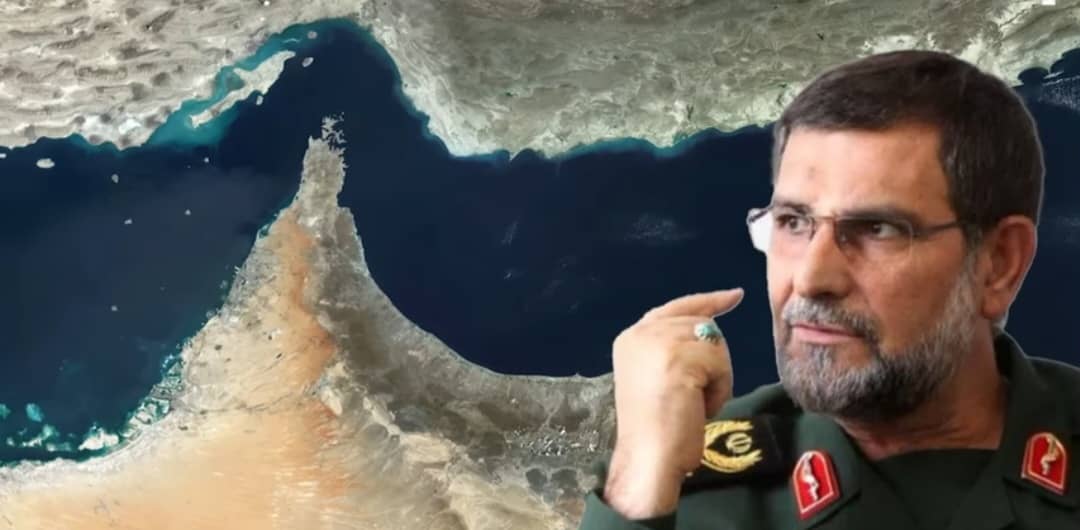
Israel has announced the killing of a senior Iranian military commander it accused of spearheading efforts to mine and blockade the Strait of Hormuz, one of the world’s most critical maritime chokepoints.
Israeli Defence Minister Israel Katz confirmed on Thursday that the country’s military had eliminated Alireza Tangsiri, the commander of the Islamic Revolutionary Guard Corps (IRGC) Navy, in a strike carried out in Bandar Abbas, a key port city in southern Iran. Iranian officials say Tangsiri was in a meeting with other senior naval commanders at the time of the strike.
Katz, speaking after a high-level security briefing with top military officials, said the operation was both a retaliatory action and a direct warning to Tehran. He described Tangsiri as “the person directly responsible for the terror operation of mining and blocking the Strait of Hormuz to maritime traffic” — a move that posed a grave threat to international shipping and global trade.
The Strait of Hormuz, through which a significant portion of the world’s seaborne oil and liquefied natural gas passes, has long been a flashpoint in tensions between Iran and Western-aligned nations. Any disruption to traffic through the waterway carries serious consequences for global energy markets and maritime commerce.

Beyond confirming the strike, the Israeli defence minister signalled that the operation was not an isolated event. Katz warned that Israel intends to pursue individual members of Iran’s Revolutionary Guard leadership it holds responsible for hostile maritime activities, framing the campaign as a targeted, ongoing effort.
Israel has also made clear that its broader military operations inside Iran remain active, with officials linking the strikes to wider strategic war objectives.
Waterwaysnews.ng

Maritime Security and Safety
Shipping Lines Hail Security Gains as US Lifts 12-Year Condition of Entry on Nigerian Vessels
Shipping Lines Hail Security Gains as US Lifts 12-Year Condition of Entry on Nigerian Vessels
By Ighoyota Onaibre | Waterways News
International shipping lines operating in Nigeria have welcomed the United States Coast Guard’s (USCG) decision to remove the 12-year Condition of Entry (CoE) restriction on vessels arriving in the US from Nigerian ports, describing it as evidence of the country’s improved maritime security standing.
The CoE, in force since 2014, subjected vessels that had called at Nigerian ports within their previous five port calls to additional security checks and enhanced scrutiny before US entry. Its removal ends over a decade of extra costs, delays and paperwork for operators trading between Nigeria and the US.
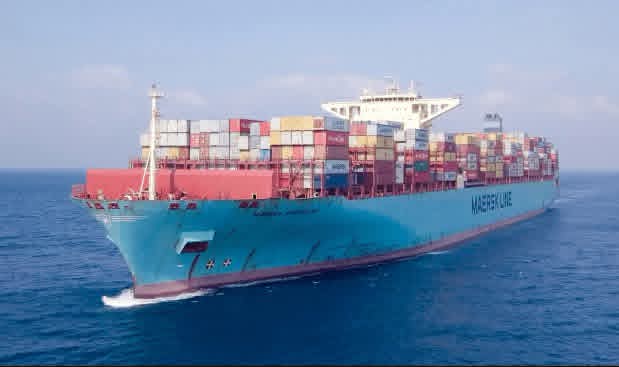
Maersk’s Terminal Planning Lead for West Africa, Srijesh Subramanian, said the move would benefit both importers and exporters given the volume of Nigerian trade with the US, and would likely embolden shipping companies to expand their services. He read the decision as a signal that Nigeria now looks like a safer environment than previously perceived.
Ocean Network Express’s Nigeria Director, Stefan Pedersen, credited the outcome to NIMASA’s sustained work, though he noted ONE has no direct US sailings and so is not directly affected. He expects the removal of restrictions to still ease trade generally for lines that do run direct US services.
Pacific International Lines’ Managing Director, Ugo Opiah, framed the lifting as an image win: qualifying for US standards marks a country as a high-integrity player, and Nigeria’s decade-plus wait to clear the bar signals real improvement in maritime security compliance.
Mediterranean Shipping Company’s Vessel and Terminal Coordinator, Adesina Omoparuwa, said the restriction had forced MSC into trans-shipment routings rather than direct Nigeria–US calls, the same workaround the line uses for China, and that direct service should now become possible, opening opportunities for US-based businesses to trade directly through Nigerian ports.
Nigeria Watch
The CoE’s removal is the payoff of a process that has run since at least 2019, when the USCG first proposed a phased, bi-annual assessment track with NIMASA to bring Nigerian ports into full ISPS Code compliance. The agency conducted four full assessments of Nigeria’s port facilities and national maritime security framework between March 2024 and April 2026 before signing off.
Marine and Blue Economy Minister Dr Adegboyega Oyetola has called the lift a major milestone, crediting sustained collaboration between the Ministry, NIMASA, port and terminal operators and shipping lines. Washington has echoed that framing: in a letter dated August 26, 2026, US Assistant Secretary of State for African Affairs Frank Garcia congratulated Oyetola on the reform, tying it to Nigeria’s anti-terrorism and port-security compliance record.
For Nigeria’s port competitiveness push, running alongside the NPERA Act’s commencement and the deep seaport approvals at Badagry, Olokola, Ibom and Bakassi, the CoE exit removes one of the more persistent reputational drags on the sector: an active US security flag that shipping lines, insurers and freight forwarders had priced into Nigeria-bound trade for over a decade. Whether the savings in inspection time, insurance and freight cost are passed down to Nigerian shippers, or absorbed by the lines quoted here, is the next thing worth watching.
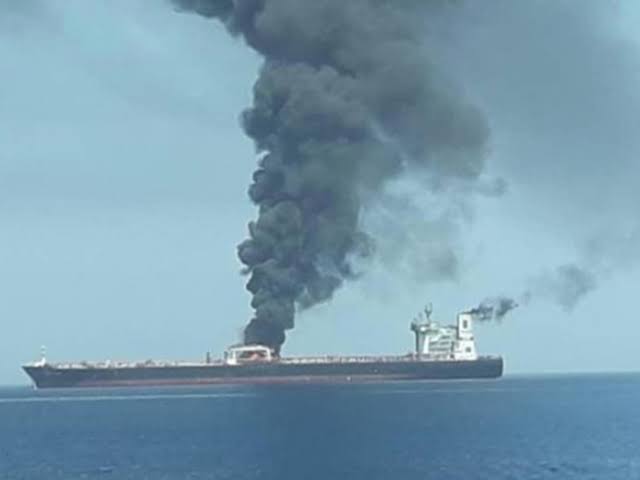
Two More Tankers Struck in Strait of Hormuz as Attack Count Hits Five in a Week
By Okeoghene Onoriobe | Waterways News
Two more tankers have been hit while transiting the Strait of Hormuz, leaving two seafarers with minor injuries and pushing the number of reported attacks or security incidents against commercial vessels in the waterway to at least five since 16 September.
The UK Maritime Trade Operations (UKMTO) centre said an inbound tanker was struck by an unidentified projectile on Monday. Two crew members sustained minor injuries, but the vessel stayed under its own power and continued to its next port, with no environmental impact reported.
Hours later, UKMTO issued a second alert after an outbound LPG tanker reported being struck by debris from unknown projectiles. All crew were reported safe and the vessel also continued its voyage. Authorities are investigating both incidents, and UKMTO has not attributed either attack to a specific actor.
The two strikes build on a Joint Maritime Information Center (JMIC) advisory covering three earlier attacks between 16 and 18 September, one of which saw a tanker’s hull breached by a projectile, sparking a fire. JMIC continues to rate the threat level in the strait as “severe,” citing a high likelihood of deliberate hostile action and pointing to a pattern of harassment by Iran’s Islamic Revolutionary Guard Corps — drone overflights, surveillance of merchant vessels and VHF hailing, alongside the direct attacks.
Traffic through the chokepoint remains sharply depressed. Only 17 commodity vessels were visibly transiting over the weekend, down from 37 the week before and against a pre-war daily average of roughly 125. That figure excludes vessels sailing with their AIS transponders switched off, and JMIC notes a persistent gap between visible and actual traffic.
Nigeria Watch
For Nigerian maritime stakeholders, the Hormuz crisis is no longer a distant Gulf story. It is a cost line. Every fresh escalation feeds directly into the war-risk insurance premiums and freight rates that Nigerian importers, refiners and shipping agents ultimately absorb, since global tanker and container capacity pulled off the Hormuz route tightens supply elsewhere and pushes rates up across long-haul trades, including those serving West African ports.
The renewed attacks also sharpen the stakes around Nigeria’s push for a stronger voice at the IMO Council table and its broader blue-economy diplomacy under Minister Adegboyega Oyetola. A sustained Gulf disruption is exactly the kind of systemic shock that tests whether Nigeria’s seat translates into influence over how global shipping risk, insurance and rerouting decisions are made, rather than Nigeria simply absorbing the downstream cost.
Locally, the episode is a reminder of the layered nature of “maritime security” as a policy word: the Deep Blue Project and Gulf of Guinea security architecture address piracy and armed robbery close to home, but Nigeria’s ports and shippers remain exposed to security failures thousands of kilometres away in the Gulf.
Waterways News will continue tracking how the Hormuz situation feeds into freight cost pressure at Nigerian ports and NIMASA’s public messaging on the issue.
Navy Renews Call for Special Maritime Courts, But Nigeria’s Justice Gap Persists
By Raymond Gold
The Nigerian Navy has again pressed for the creation of dedicated courts to try maritime offences, arguing that Nigeria’s regular judicial process is too slow to match the pace at which security agencies are arresting suspects at sea.
The renewed push came last week in Lagos at the 4th Ehingbeti Blue Economy Hub, on a panel built around strengthening the regulatory and justice frameworks needed to secure Nigeria’s blue economy. The session drew senior officers from the Navy and Marine Police, alongside a retired flag officer and other maritime stakeholders.
Rear Admiral A. A. Mustapha, Flag Officer Commanding the Western Naval Command, represented on the panel by his Chief Staff Officer, Rear Admiral N. C. Ekwom, said Nigeria is working toward an integrated maritime security strategy that would fold the country’s various security agencies into one common operating picture. He pointed to the Navy’s Falcon Eye system and the Regional Maritime Awareness Capability System as the technological backbone of that effort, noting that artificial intelligence is increasingly being layered onto surveillance operations.
Mustapha’s team acknowledged a persistent integration problem: the Navy’s Maritime Command and Control Centre reserves roughly 15 seats for personnel from partner agencies, but most command centres nationwide still operate in isolation. He linked the gap to a wider unfamiliarity with the sector across government, describing it as “maritime blindness”, a failure, in his words, to recognise the maritime domain’s importance to national development.
It was retired Rear Admiral Olanrewaju Beckley, however, who delivered the panel’s sharpest message: that slow prosecutions, not weak detection, may be the Navy’s biggest handicap. Beckley ran through the familiar list of threats I including illegal fishing, illegal bunkering, kidnapping for ransom, illegal refineries, terrorism and smuggling, and said the Navy’s “detect, arrest and prosecute” model breaks down at the final stage. Suspects and their vessels can sit in detention for extended periods awaiting trial, he said, a delay that risks suspects walking free and undermines the deterrent effect of every arrest made at sea.
His prescription was the same one Nigerian naval officers have floated repeatedly over the past decade: dedicated maritime courts that could fast-track case determination and cut down on prolonged detention without trial. Beckley also called for heavier government investment in surveillance assets such as vessels, drones and manned aerial platforms, arguing that the size of Nigeria’s maritime estate demands a security budget to match.
Assistant Inspector-General of Police Okunade Ronke Nurat, represented by CSP Olalekan Faniyi, described the working relationship between the Marine Police and the Navy as cordial, with joint patrols proceeding without friction, though she conceded there was room for deeper collaboration. Other panellists urged that any security-first approach to the blue economy be matched with investment in the coastal and riverine communities that live alongside Nigeria’s waterways.
The session’s recommendations, taken together, called for tighter integration among maritime security agencies, wider surveillance deployment, closer Navy–Marine Police cooperation, more security-asset funding, specialised judicial mechanisms for maritime crimes, and stronger economic support for coastal communities.
Nigeria Watch
Beckley’s plea will sound familiar to anyone who has followed this file. The Navy has asked for special maritime courts under at least three different Chiefs of Naval Staff over the past decade — through a Senate committee proposal in 2016, a direct appeal from the naval leadership in 2021, and now this latest call in 2026 — with no legislation to show for it. NIMASA’s leadership has separately lobbied the judiciary through its annual Admiralty Law Seminar for Judges, seeking faster case turnaround for the same reason Beckley cited: arrests that don’t stick because prosecutions crawl.
What has changed since 2020 is the legal toolkit, not the court structure. The Suppression of Piracy and Other Maritime Offences (SPOMO) Act gave prosecutors their first dedicated piracy statute and produced Nigeria’s first SPOMO conviction at the Federal High Court in Port Harcourt. But SPOMO cases still route through the same generalist Federal High Court dockets — carrying admiralty, commercial and constitutional matters alongside maritime crime — that Beckley says are the bottleneck. A special court, as envisaged, would need enabling legislation the National Assembly has never passed, whatever the number of naval appeals for it.
For operators represented by cooperatives like WABOTAN and ATBOWATON, the stakes in this debate cut both ways. Faster maritime prosecutions would, in principle, mean faster resolution for the vessels and crews the Navy detains, a genuine grievance among small-scale operators who say their boats and livelihoods can be tied up in custody for months over infractions far short of piracy or oil theft.
But any push to tighten enforcement and expand naval surveillance across the inland and coastal waterways will also be watched closely by the same informal operators, who have long argued that security crackdowns too often catch legitimate local transporters in the same net cast for pirates and illegal bunkerers. Whether the next iteration of this proposal survives the National Assembly, or joins its predecessors as a recommendation without a bill, will say much about how seriously Abuja is treating the justice half of its blue economy ambitions.

 Oil and Gas7 months ago
Tantita’s Pipeline Deal: $144m Contract, Rising Output, and the Questions that Deserve Answers
- MARITIME TRADE & SHIPPING7 months ago
World’s Largest Container Ship Sets New Maritime Record with 22,233 TEUs on Single Voyage
- Blue Economy7 months ago
Nigeria’s Coast Guard Bill: A Solution in Search of a Problem?