
News
EFCC, Customs Close Ranks to Choke Off Smuggling and Money Laundering at Nigeria’s Borders


EFCC, Customs Close Ranks to Choke Off Smuggling and Money Laundering at Nigeria’s Borders
By Okeoghene Onoriobe, Waterways News, Lagos April 15, 2026
The Economic and Financial Crimes Commission (EFCC) has thrown its weight behind its growing partnership with the Nigeria Customs Service (NCS), signalling that the two agencies are tightening their joint grip on smuggling networks and financial crime operations feeding off Nigeria’s trade corridors.
Speaking during a high-level engagement in Kano, EFCC Acting Zonal Director Friday Ebelo said the collaboration is already yielding tangible results — illicit goods intercepted, funds recovered and high-profile suspects arrested. He credited the gains to a deliberate effort by both agencies to understand each other’s operational mandates and align their enforcement strategies.
“No single agency can combat cross-border crime alone,” Ebelo said, stressing that intelligence sharing and joint enforcement are essential to protecting national revenue and disrupting the financial networks that sustain organised criminal groups.

The visit was led by the Commandant of the Nigeria Customs Command and Staff College, Gaura, who brought students for an immersive look at how the EFCC conducts its operations. Gaura commended the Commission’s transparency and operational efficiency, noting that modern Customs work has long outgrown the border post — it now demands intelligence-led financial investigation skills that are built through exactly this kind of interagency exposure.
The engagement covered a lecture on interagency cooperation, interactive sessions on intelligence sharing and joint investigations, and a focused discussion on managing seized assets connected to currency smuggling and financial crimes.
For a country whose ports and waterways remain entry points for contraband — from petroleum products and narcotics to foreign currencies — the deepening of this EFCC-Customs alliance carries direct implications for maritime enforcement. Smuggling routes that exploit Nigeria’s coastline and inland waterways often rely on the same financial infrastructure that both agencies are now working to dismantle together.
Waterways News | waterwaysnews.ng

Maritime Security and Safety
Shipping Lines Hail Security Gains as US Lifts 12-Year Condition of Entry on Nigerian Vessels
Shipping Lines Hail Security Gains as US Lifts 12-Year Condition of Entry on Nigerian Vessels
By Ighoyota Onaibre | Waterways News
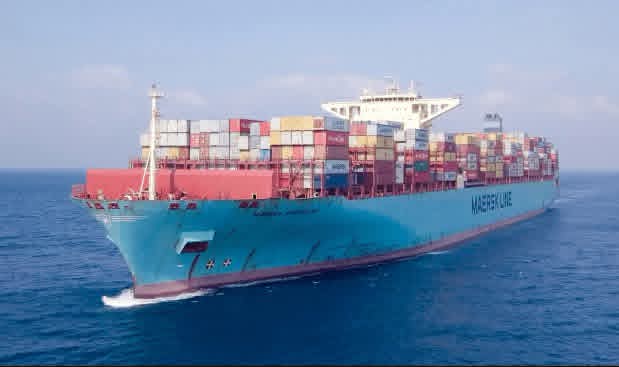
International shipping lines operating in Nigeria have welcomed the United States Coast Guard’s (USCG) decision to remove the 12-year Condition of Entry (CoE) restriction on vessels arriving in the US from Nigerian ports, describing it as evidence of the country’s improved maritime security standing.
The CoE, in force since 2014, subjected vessels that had called at Nigerian ports within their previous five port calls to additional security checks and enhanced scrutiny before US entry. Its removal ends over a decade of extra costs, delays and paperwork for operators trading between Nigeria and the US.
Maersk’s Terminal Planning Lead for West Africa, Srijesh Subramanian, said the move would benefit both importers and exporters given the volume of Nigerian trade with the US, and would likely embolden shipping companies to expand their services. He read the decision as a signal that Nigeria now looks like a safer environment than previously perceived.
Ocean Network Express’s Nigeria Director, Stefan Pedersen, credited the outcome to NIMASA’s sustained work, though he noted ONE has no direct US sailings and so is not directly affected. He expects the removal of restrictions to still ease trade generally for lines that do run direct US services.
Pacific International Lines’ Managing Director, Ugo Opiah, framed the lifting as an image win: qualifying for US standards marks a country as a high-integrity player, and Nigeria’s decade-plus wait to clear the bar signals real improvement in maritime security compliance.
Mediterranean Shipping Company’s Vessel and Terminal Coordinator, Adesina Omoparuwa, said the restriction had forced MSC into trans-shipment routings rather than direct Nigeria–US calls, the same workaround the line uses for China, and that direct service should now become possible, opening opportunities for US-based businesses to trade directly through Nigerian ports.
Nigeria Watch
The CoE’s removal is the payoff of a process that has run since at least 2019, when the USCG first proposed a phased, bi-annual assessment track with NIMASA to bring Nigerian ports into full ISPS Code compliance. The agency conducted four full assessments of Nigeria’s port facilities and national maritime security framework between March 2024 and April 2026 before signing off.
Marine and Blue Economy Minister Dr Adegboyega Oyetola has called the lift a major milestone, crediting sustained collaboration between the Ministry, NIMASA, port and terminal operators and shipping lines. Washington has echoed that framing: in a letter dated August 26, 2026, US Assistant Secretary of State for African Affairs Frank Garcia congratulated Oyetola on the reform, tying it to Nigeria’s anti-terrorism and port-security compliance record.
For Nigeria’s port competitiveness push, running alongside the NPERA Act’s commencement and the deep seaport approvals at Badagry, Olokola, Ibom and Bakassi, the CoE exit removes one of the more persistent reputational drags on the sector: an active US security flag that shipping lines, insurers and freight forwarders had priced into Nigeria-bound trade for over a decade. Whether the savings in inspection time, insurance and freight cost are passed down to Nigerian shippers, or absorbed by the lines quoted here, is the next thing worth watching.
Oyetola Woos Turkish Investors for Fisheries Sector, Vows to Protect Artisanal Fishers
By Okeoghene Onoriobe | Waterways News
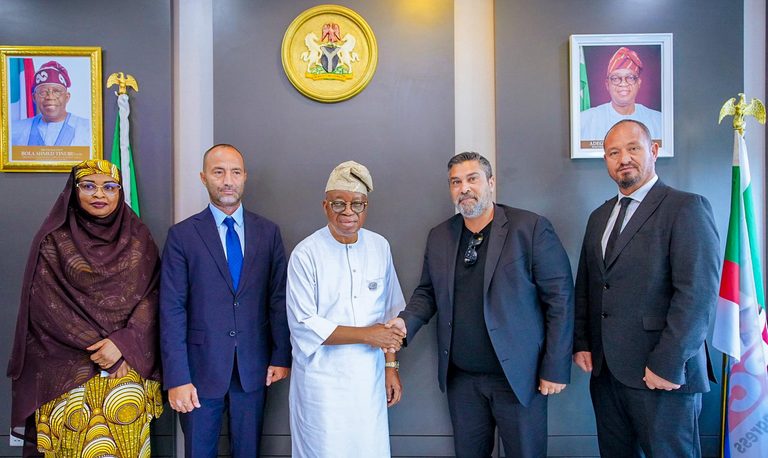
The Minister of Marine and Blue Economy, Dr Adegboyega Oyetola, has thrown Nigeria’s fisheries sector open to Turkish investment, insisting that any fresh capital coming into the industry must strengthen and not sideline the millions of Nigerians who depend on artisanal fishing for a living.
Oyetola made the pledge while receiving a delegation from Turkish fisheries and aquaculture firm CRD Impex, led by the company’s General Manager for Fisheries, Cem Tarhan, at his Abuja office. He told the investors the Federal Government was ready to create an investment-friendly climate for credible local and foreign players willing to bring capital, technology and modern value-chain solutions to the sector, on condition that such investment remains inclusive.
“We welcome investors who can bring capital, technology, expertise and modern value-chain solutions to the sector. However, investment must be inclusive and sustainable. It must complement and empower our artisanal fish producers, not undermine their livelihoods,” the Minister said
He listed inadequate infrastructure, poor access to modern fishing technology, weak cold-chain systems, limited processing and storage capacity, and gaps in market access as the major constraints holding back the sector, framing each as an opening for targeted investment rather than a dead end.
The Turkish team, which included CRD Impex founder Hanefi Cardak and Tetra Underwater Services founder Ersun Buyukgoze, toured key fisheries and aquaculture points around the country to size up the terrain first-hand. Stops included the Kirikiri Lighter Terminal in Lagos, the Ozumba Mbadiwe Fish Market in Lekki, and the Esuk Nsidung Beach Market, a major waterfront seafood hub in Calabar, Cross River State.
The Ministry described the visit as part of a broader push to attract serious investment into Nigeria’s blue economy while keeping the welfare of artisanal fishers central to that growth.
Nigeria Watch
The Turkish courtesy call lands squarely in the pattern this desk has tracked all year: big-ticket investment pledges for Nigeria’s waterways, paired with familiar assurances that the small operator won’t be crowded out. The test, as always, is what happens after the photo-op.
Nigeria’s artisanal fishing communities occupy the same economic space as the informal boat operators represented by WABOTAN and ATBOWATON, river- and creek-dependent Nigerians whose livelihoods rise or fall on decisions made far from the waterfront. The infrastructure gaps Oyetola cited which include, weak cold-chain systems, poor storage and limited market access, all mirror the exact complaints this desk has documented from inland waterway operators for years but modernisation announced from Abuja rarely reache the jetties.
Turkish capital chasing Nigerian fisheries and aquaculture is a genuinely new thread, distinct from the Strait of Hormuz shipping story or the CVFF disbursement saga this desk has followed closely. But the underlying question is the same one that has defined Oyetola’s tenure at the Ministry of Marine and Blue Economy: will “inclusive investment” translate into contracts, cooperative partnerships and cold-chain infrastructure that artisanal operators can actually use or will it, like so many blue-economy pledges before it, stall at the courtesy-visit stage?
Waterways News will be watching for the first concrete CRD Impex commitment — site, timeline, or local partnership — as the marker of whether this one is different.

NPERA, NPA Open Technical Talks on Handover of Inland Dry Port Functions
By Ighoyota Onaibre | Waterways News
The Nigerian Ports Economic Regulatory Agency (NPERA) and the Nigerian Ports Authority (NPA) have begun formal engagement on transferring inland dry port oversight to NPERA, marking the start of what both agencies describe as a critical phase in operationalising Nigeria’s new port regulatory framework.
At a management-level meeting between the two agencies, officials focused on the technical groundwork for the handover, chiefly how to draw clear lines of responsibility and avoid duplication among the government bodies with a stake in inland dry port administration.
NPERA’s Director-General/CEO, Dr Akutah Pius, framed the transition as flowing directly from the Minister of Marine and Blue Economy, Dr Adegboyega Oyetola, whom he credited with steering the process toward the sector’s broader development. Akutah was emphatic that NPERA could not carry out the transfer alone, and said the buy-in of every relevant stakeholder agency would be needed to see it through.
He indicated that the Ministry would stay central to coordinating the process even as specific mandates move to the agencies best placed to execute them. Akutah also pointed to the Minister’s earlier interventions during the NPERA Bill’s passage through the National Assembly, which he said had defused inter-agency friction and set the stage for the cooperation now underway.
Describing the purpose of the meeting, Akutah said it was meant to formally kick off the transfer of inland dry port responsibilities to NPERA in fulfilment of its statutory role as economic regulator of the ports sector. He singled out Section 51 of the NPERA Act as a provision that now needs to be put into practical effect to keep the transition orderly and ensure stakeholder roles are properly aligned.
To manage the process going forward, the NPERA boss proposed setting up a joint committee drawing in NPERA, NPA, the National Inland Waterways Authority (NIWA), and the Federal Ministry of Marine and Blue Economy. He argued that inland dry ports matter well beyond the coastline. They extend maritime sector benefits into Nigeria’s hinterland and reinforce the country’s trade and logistics chain.
Responding on behalf of NPA, Managing Director Dr Abubakar Dantsoho welcomed the move and pledged his agency’s full operational and technical backing throughout the transition. He said the process had started on the right footing, and that NPA would furnish updated data on the current state of inland dry ports to inform further discussions, expressing confidence that continued engagement would help the agencies meet their shared objectives.
NPA’s Executive Director, Engr. Lekan Badmus, also commended NPERA for setting the collaboration in motion, calling the meeting a solid first step toward a smooth integration. He noted the two agencies have now moved into the technical phase of the exercise, with close attention being paid to eliminating overlapping functions.
Closing the meeting, Akutah said the proposed joint committee would reconvene with the Minister to seek further guidance and agree on next steps to keep the transition on track.
Nigeria Watch
This meeting is the first visible test of whether the NPERA Act’s promise of a rationalised port regulatory architecture can survive contact with Nigeria’s crowded agency landscape. Section 51’s transfer of inland dry port functions to NPERA looks straightforward on paper; in practice, it touches NPA’s traditional port administration turf, NIWA’s inland waterways mandate, and the Ministry’s coordinating role all at once, precisely the kind of overlapping jurisdiction that has bedevilled reform efforts elsewhere in the sector, most visibly in the long-running NIWA-LASWA tussle that only the Supreme Court could settle.
The proposed joint committee of NPERA, NPA, NIWA, and the Ministry, is a sensible mechanism, but Waterways News readers who have followed the CVFF disbursement saga know that Nigerian maritime governance has no shortage of well-designed committees whose outputs never quite reach implementation. What will matter is whether Akutah’s “technical phase” produces a binding timeline, not another round of goodwill statements.
For inland dry port operators and the hinterland trade corridors that depend on them, the stakes are practical: unclear jurisdiction between NPA and NPERA has historically meant slower cargo evacuation, duplicated levies, and uncertainty for freight forwarders planning routes away from the congested Lagos ports. If this transition is handled well, it strengthens the case for dry ports as genuine pressure valves for Apapa and Tin Can. If it stalls in inter-agency turf negotiation, it becomes one more entry in the gap between policy pronouncement and delivery that this desk continues to track.
Worth watching: whether Minister Oyetola’s office sets an explicit deadline when the committee reconvenes, and whether NIWA, whose inland waterways mandate intersects with dry port hinterland connectivity, gets more than a seat at the table.

 Oil and Gas7 months ago
Tantita’s Pipeline Deal: $144m Contract, Rising Output, and the Questions that Deserve Answers
- MARITIME TRADE & SHIPPING7 months ago
World’s Largest Container Ship Sets New Maritime Record with 22,233 TEUs on Single Voyage
- Blue Economy7 months ago
Nigeria’s Coast Guard Bill: A Solution in Search of a Problem?