
Editor's Choice
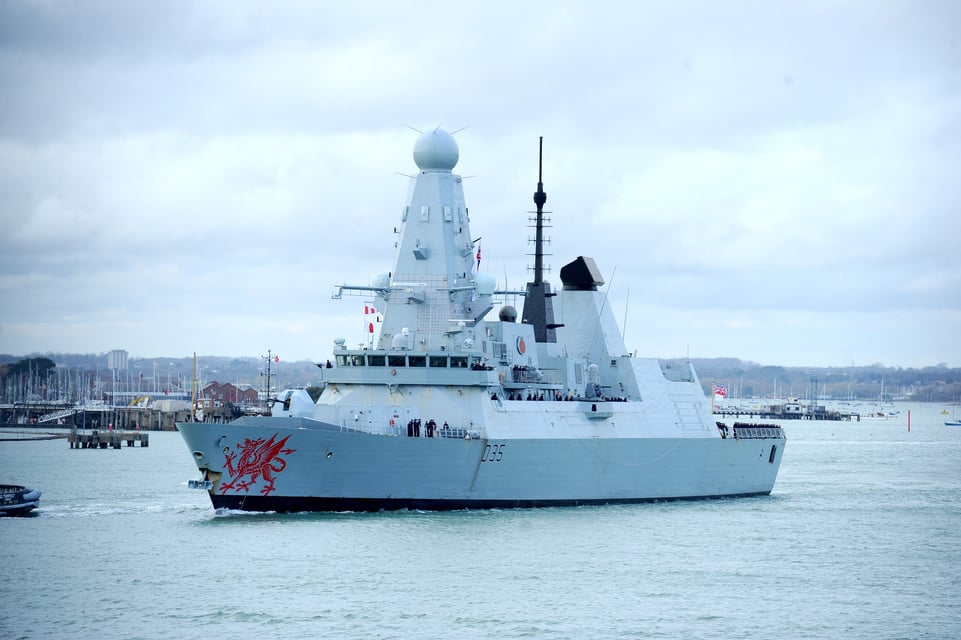
HMS Dragon Repositioned to Gulf Region as Britain and France Move to Secure Strait of Hormuz
By Emetena Ikuku | Waterways News Correspondent
Britain has repositioned one of its most capable warships, HMS Dragon, from the Eastern Mediterranean to the Middle East as London and Paris escalate efforts to build a multinational naval coalition aimed at protecting commercial shipping through the strategically vital Strait of Hormuz — a chokepoint through which roughly a fifth of the world’s oil supply passes daily.
The Type 45 air defence destroyer, regarded as one of the Royal Navy’s most sophisticated surface combatants, was originally dispatched to the Eastern Mediterranean in March following the outbreak of hostilities involving Iran, where it served in a defensive role supporting British assets and helping to safeguard Cyprus. Its repositioning to the Gulf region signals a significant shift in British strategic intent — from defensive posturing to active preparation for a potential freedom-of-navigation mission.
Britain’s Ministry of Defence confirmed the deployment on Sunday, describing it as part of “prudent planning” to ensure the United Kingdom is prepared to support a UK-France-led coalition to secure the Strait of Hormuz once diplomatic and security conditions allow.

France has already moved ahead with its own contribution, deploying its carrier strike group — centred on the aircraft carrier Charles de Gaulle — to the southern Red Sea, underscoring the seriousness with which both European powers are treating the threat to global maritime trade in the region. The two countries are currently working jointly on an operational plan that, when activated, would aim to restore shipping confidence along one of the world’s most critical sea lanes.
The Strait of Hormuz, a narrow passage between Iran and Oman at the mouth of the Persian Gulf, is the transit point for enormous volumes of crude oil, liquefied natural gas, and general cargo bound for markets across Asia, Europe, and beyond. Any prolonged disruption to shipping in the strait carries severe consequences for global energy prices and supply chains — implications that are acutely felt in import-dependent economies like Nigeria, where freight costs, energy prices, and consumer goods are all sensitive to shocks in global shipping markets.
Nigeria, which relies heavily on the importation of refined petroleum products and industrial goods that often originate from or transit through Gulf states, has already been exposed to elevated freight costs linked to instability in the broader region. Earlier this year, MSC Mediterranean Shipping Company imposed a war risk surcharge of up to $4,000 on cargo moving from the Arabian Peninsula to West Africa, a development that alarmed Nigerian maritime operators and trade experts.
A successful multinational escort mission through Hormuz would go some way toward stabilising shipping confidence and easing the war risk premiums that have driven up costs for Nigerian importers and ultimately consumers.
The proposed operation, however, is diplomatically complex. According to British defence sources, the mission would require some level of coordination with Iran — whose territorial waters border the strait — making it distinct from previous Gulf escort operations. Around a dozen countries have reportedly indicated willingness to participate in the coalition, though formal commitments are still being worked out as the security situation remains fluid.
Analysts note that Britain’s decision to deploy HMS Dragon rather than a lighter patrol vessel reflects the seriousness of the air threat environment in the region. The Type 45 destroyer is equipped with the Sea Viper missile system, designed to intercept ballistic missiles, cruise missiles, and drones — the kinds of threats that have been used to target commercial vessels in the Red Sea and Gulf of Aden in recent years.
The development comes as the global maritime community continues to grapple with the twin pressures of geopolitical instability and rising operational costs. For Nigerian shipping stakeholders, the outcome of this nascent coalition effort carries direct consequences — particularly as the country seeks to expand its role as West Africa’s dominant maritime hub and attract greater volumes of transhipment trade through Lekki Deep Sea Port and other emerging facilities.
Waterways News will continue to monitor developments on the Hormuz security situation and its implications for Nigeria’s maritime and trade sectors.

Blue Economy
LAGOS WATERWAYS: State Unveils Lekki Water Taxi, Targets Two Million Monthly Passengers
By Okeoghene Onoriobe | Waterways News Correspondent,
Lagos, May 13, 2026
Introduction of High-Speed Corridor Service Anchors Sanwo-Olu’s Third-Year Transport Reform Record
The Lagos State Ministry of Transportation has unveiled an ambitious 2026 waterways expansion programme anchored by the introduction of a dedicated Lekki Water Taxi initiative, signalling a decisive push to transform the state’s inland water transport from a supplementary option into a mainstream urban mobility solution.
The disclosure came at the 2026 Ministerial Press Briefing held to mark the third year of Governor Babajide Olusola Sanwo-Olu’s second term in office, where the Commissioner for Transportation, Mr. Oluwaseun Osiyemi, outlined the administration’s scorecard on multimodal transport and presented a forward-looking agenda for the remainder of the year.
Lekki Water Taxi: What Is Being Proposed
The Lekki Water Taxi initiative is designed to introduce dedicated high-speed water taxi services along key waterway corridors within the Lekki axis — one of Lagos’s fastest-growing residential and commercial districts. The corridor, which connects densely populated communities along the Lekki Peninsula to the Lagos Island business hub, is among the most traffic-congested routes in the metropolis, making it a strategic priority for waterway intervention.
Although specific vessel specifications and terminal locations were not disclosed at the briefing, the initiative is understood to be part of a broader effort to provide scheduled, point-to-point water transport services as a credible alternative to road travel — particularly for commuters navigating the chronic gridlock that defines the Lekki-Victoria Island corridor during peak hours.
The water taxi model, when fully operationalised, is expected to significantly cut commute times for residents travelling between Lekki Phases 1 and 2, Ajah, and the commercial centres of Victoria Island and Lagos Island. Industry observers note that a well-managed water taxi service on this route could serve as a proof-of-concept for replicating the model on other high-density waterway corridors across the state.
Near Two Million Monthly Passengers on Lagos Waterways
Commissioner Osiyemi disclosed that Lagos waterways are now serving close to two million passengers monthly — a milestone that underscores both the growing public appetite for water transport and the cumulative impact of infrastructure investments made under the current administration.
The figure represents a substantial increase from earlier ridership benchmarks, with the Lagos Ferry Services Corporation (LAGFERRY) having previously recorded an average daily throughput of 2,000 passengers in 2025. The aggregation of LAGFERRY operations, private ferry operators licensed under the Lagos State Waterways Authority (LASWA), and emerging water taxi services has collectively pushed monthly usage toward the two-million mark.
The Commissioner attributed the growth to a combination of expanded route coverage, improved safety standards, and sustained public confidence in water transport following the introduction of mandatory life jacket distribution at ferry terminals across the state.
Cowry Card Integration: Linking Water to Rail and Road
A significant element of the 2026 waterways agenda is the planned integration of ferry and water taxi services into the state’s unified Cowry Card payment ecosystem. The contactless smart card, which already interconnects Lagos Rail Mass Transit’s Blue Line and Red Line services with the Bus Rapid Transit (BRT) fleet, is set to be extended to cover ferry terminals — enabling commuters to use a single payment instrument across all three transport modes.
The integration is considered a crucial step toward seamless intermodal mobility in a city where many commuters combine bus, rail, and water transport within a single journey. For maritime operators and terminal managers, the Cowry Card rollout will also generate real-time ridership data that can improve scheduling and fleet deployment decisions.
OMI-EKO Electric Ferry and the Green Transition
Alongside the Lekki Water Taxi, the ministry highlighted the OMI-EKO electric ferry initiative as a cornerstone of its sustainability agenda. The programme, which introduces zero-emission electric vessels into the Lagos waterways fleet, reflects a deliberate alignment between the state’s transport expansion goals and broader environmental commitments.
The push toward electric ferries and cleaner propulsion technologies positions Lagos as an early mover on green maritime transition among Nigerian states, and mirrors global trends in urban waterway transport where cities such as Oslo, Amsterdam, and San Francisco have pioneered electric ferry deployment. For LASWA and maritime regulators, the OMI-EKO programme will also test the operational and maintenance infrastructure needed to support electric vessel fleets at scale within a West African urban context.
Safety Campaigns and Life Jacket Distribution
The ministry also reported sustained progress on water transport safety, with widespread life jacket distribution at ferry terminals forming the centrepiece of ongoing safety campaigns. Nigeria’s inland waterways have historically recorded preventable fatalities attributable to the absence of personal flotation devices, making the distribution programme both a regulatory and humanitarian priority.
The safety drive complements the National Inland Waterways Authority (NIWA) and the National Maritime Safety Administration’s (NIMASA’s) own vessel safety inspection mandates, and will be critical to building the passenger trust required to sustain the ridership growth trajectory the state is targeting.
Modernisation of Ferry Terminals
Commissioner Osiyemi confirmed that ferry terminal modernisation remains a priority for 2026, with upgrades planned to improve passenger processing capacity, berthing facilities, and real-time scheduling displays at major terminals. While specific terminal locations undergoing upgrades were not itemised at the briefing, the modernisation drive is expected to address longstanding infrastructure gaps that have historically undermined service reliability.
Improved terminals will also support the planned integration of the water taxi service, which will require dedicated berthing infrastructure distinct from standard ferry operations.
Technology Upgrades Across the Transport Ecosystem
Beyond waterways specifically, the Commissioner highlighted technology-driven efficiency gains across the broader transport network. These include the E-Call Up system for truck scheduling — a digital queuing platform aimed at reducing congestion at port access roads — and Automatic Number Plate Recognition (ANPR) cameras deployed at strategic intersections to improve traffic enforcement and flow.
These upgrades, while road-focused, have direct relevance to port logistics and maritime trade facilitation, as smoother truck movement between the Apapa and Tin Can Island port complexes and the wider Lagos road network reduces dwell time and lowers cargo handling costs for importers and exporters.
Nigeria Watch: What the Lekki Water Taxi Means for the Blue Economy
The announcement of the Lekki Water Taxi initiative is more than a Lagos transport story — it is a bellwether moment for Nigeria’s inland and urban waterway economy.
With Lagos Harbour and the surrounding waterways sitting at the intersection of the country’s busiest cargo port complex and its most populous urban agglomeration, the commercialisation of water taxi services represents a tangible extension of the blue economy concept into everyday urban life. It signals to federal policymakers, private investors, and development finance institutions that Nigerian waterways can generate sustained commercial revenue beyond cargo transit and industrial use.
For the Federal Ministry of Marine and Blue Economy, the Lagos model — if it delivers on ridership and safety targets — offers a replicable template for other coastal and riverine states including Rivers, Delta, Bayelsa, Cross River, and Akwa Ibom, where inland waterway potential remains largely untapped.
NIWA, which holds the federal mandate for inland waterway development and route licensing, will be watching the Lekki corridor closely. A successful water taxi operation on a high-density urban route could strengthen the case for accelerating private sector participation in waterway transport under NIWA’s licensing framework, and provide evidence to justify increased capital allocation to jetty and channel maintenance.
For NIMASA, the expansion of passenger vessel operations in a major urban market reinforces the need for robust vessel safety certification standards and crew competency requirements specifically calibrated for high-frequency, short-haul urban ferry and water taxi operations — a regulatory sub-segment that has historically received less attention than deep-sea and offshore shipping.
The roll-out of the Cowry Card across water transport is also worth monitoring from a fintech and maritime logistics perspective. Digital ticketing and payment systems, when properly integrated, generate the transaction data and commercial discipline necessary to attract institutional investment into waterway infrastructure — a funding gap that has constrained development across Nigeria’s inland waterway network for decades.
Ultimately, Lagos is betting that the water is the road. If the Lekki Water Taxi launches on schedule and meets its ridership projections, it will mark a watershed in Nigerian urban maritime history.
Waterways News | Maritime. Shipping. Blue Economy.
www.waterwaysnews.ng
Blue Economy
NSC Recovers N348.8m for Port Users in Q1 2026, Resolves 19 Disputes in Three Months
By Ighoyota Onaibre | Waterways News Reporter | May 13, 2026
The Nigerian Shippers’ Council (NSC) has delivered a significant financial reprieve to maritime stakeholders, recovering and saving a combined sum of N348,813,072.06 for port users across Nigeria during the first quarter of 2026 — a development that underscores the agency’s growing role as a frontline protector of commercial interests in the nation’s port ecosystem.
The figure, drawn from the Council’s Q1 2026 complaints and dispute resolution data, reflects recoveries and avoided losses facilitated on behalf of importers, exporters, freight forwarders, shipping agents, and a broad range of port-based businesses who turned to the NSC when commercial relationships broke down or charges went unresolved.
32 Complaints Filed, 19 Resolved
According to the Council’s quarterly report, a total of 32 complaints were received between January and March 2026. Of these, 19 cases were successfully resolved, with monetary remedies or corrective actions secured for the aggrieved parties. Twelve cases remain under active investigation, while one complaint was administratively closed.
The resolution rate — nearly 60 percent of all complaints handled in the quarter — points to the NSC’s capacity to intervene decisively in commercial disputes that would otherwise drag through informal channels or remain unresolved, leaving port users bearing unnecessary financial burdens.
For many small and medium-scale importers and exporters who lack the legal muscle to confront large shipping lines or terminal operators, the NSC’s intervention represents a crucial equaliser in an industry where power imbalances are common.
Shipping Companies Top Complaints List
The data reveals that shipping companies and their agents attracted the highest volume of complaints, accounting for 22 of the 32 cases filed in the period. This continues a pattern observed in previous quarters, where shipping lines remain the most frequently cited respondents in port-related disputes — a trend that industry watchers say reflects the dominance of these entities in determining freight rates, cargo documentation timelines, and demurrage policies.
Other respondents against whom complaints were filed included seaport terminal operators, government agencies, exporters, importers, de-consolidators, and freight forwarders and clearing agents — indicating that grievances span virtually every segment of the maritime trade chain.
Container Deposit Refunds, Arbitrary Charges Lead Dispute Categories
A breakdown of the nature of complaints filed in Q1 2026 reveals systemic issues that continue to plague the Nigerian port environment.
Container deposit refund disputes topped the list with five cases, a recurring problem in which shipping lines or their agents delay or refuse to return deposits paid by importers upon collection of empty containers. For businesses operating on tight margins, these withheld refunds — often running into hundreds of thousands of naira per container — can significantly disrupt cash flow.
Arbitrary charges followed closely with four cases. These involve fees that stakeholders describe as undocumented, inconsistently applied, or lacking regulatory backing — charges that, critics argue, are often levied without recourse and go unchallenged due to the complex, opaque nature of shipping documentation.
Other notable categories of complaints handled by the NSC during the quarter included:
- Unsettled demurrage — disputes over storage fees charged when containers are not cleared within the shipping line’s allotted free days, often linked to delays caused by port agencies rather than the cargo owner.
- Missing cargo — cases involving goods lost or misplaced in transit or at port terminals, with claimants seeking accountability and compensation from operators.
- Service failures — instances where shipping or terminal service providers failed to deliver agreed standards of cargo handling, documentation, or customer support.
- Damaged cargo — complaints from importers who received goods in compromised condition, seeking liability acknowledgement and redress.
- Wrong port of discharge — cases where containers were offloaded at ports other than those specified in the bill of lading, resulting in additional freight costs and logistical complications for the consignee.
- Non-release of auction cargo — grievances involving cargo that had been subjected to auction by relevant authorities but was yet to be formally released to rightful buyers or cleared parties.
The Council also handled complaints relating to delays in cargo transfer, invoice cancellation, breach of trust, export fraud, absence of telex release, delays in export documentation, waiver-related disputes, vessel demurrage, and breach of contract — a diverse portfolio that reflects the complex and often contentious commercial relationships that define Nigeria’s port trade.
Shippers Remain Most Vulnerable
The data reinforces a well-documented reality: that shippers — importers and exporters — bear the brunt of operational dysfunction in Nigeria’s ports. Alongside freight forwarders and shipping agents, they constitute the majority of complainants, underscoring the persistent commercial and operational pressures faced by the cargo-owning community.
Industry analysts note that many port users remain unaware of the NSC’s dispute resolution mandate or hesitate to file formal complaints, often settling for informal negotiations that tend to favour more powerful parties. The Council has in recent years intensified its stakeholder engagement efforts to widen awareness of its consumer protection role, but experts say much more sensitisation is needed — particularly among smaller traders and first-time importers who may not understand their rights under Nigeria’s shipping regulations.
NSC’s Mandate Under the Spotlight
The Nigerian Shippers’ Council was established to protect the commercial interests of cargo owners and to regulate economic activities in the shipping and port sector. Under the leadership of its Executive Secretary, Dr. Pius Akutah Ukeyima, the Council has sought to position itself as a more assertive regulator — one capable of compelling refunds, mediating disputes, and holding shipping lines and terminal operators accountable.
The Q1 2026 figures suggest that the agency’s dispute resolution architecture is delivering measurable results, even as the volume and complexity of port-related grievances continues to grow alongside the throughput ambitions of Nigeria’s increasingly busy seaports.
Port industry observers, however, caution that the N348.8 million recovered in three months is likely a fraction of the total financial losses that port users incur to arbitrary charges, service failures, and contractual breaches — many of which go unreported. Strengthening the NSC’s capacity to proactively investigate and sanction violators, rather than relying solely on complaints lodged by affected parties, is seen as the next frontier for the agency.
A Signal to the Market
The publication of this quarterly data sends an important signal to stakeholders across Nigeria’s maritime value chain: that there is a regulatory body actively monitoring the conduct of shipping lines, terminal operators, and other port service providers — and that aggrieved parties have a viable channel through which to seek redress.
For Waterways News readers — whether seasoned freight forwarders, clearing agents, vessel operators, or import/export businesses navigating Nigeria’s complex port landscape — the NSC’s Q1 2026 performance data serves as a timely reminder that the Council’s complaints desk remains open, and that the billions exchanged daily across Nigeria’s wharves are not beyond the reach of regulatory oversight.
Waterways News is Nigeria’s leading maritime industry publication, covering shipping, ports, inland waterways, and maritime trade.
Editor's Choice
Trump Administration Unveils $65.8bn ‘Golden Fleet’ in Most Aggressive US Naval Expansion in Decades
By Aghogho Ejumedia | Washington D.C. | Waterways News
The United States has launched one of the most sweeping naval expansion programmes in its modern history, unveiling a 30-year shipbuilding strategy backed by a proposed $65.8 billion investment that its architects say will restore American maritime supremacy and rebuild an industrial base that has quietly eroded over the past two decades.
Presented as the Fiscal Year 2027 Shipbuilding Plan, the initiative — branded the “Golden Fleet” under the Trump administration — sets out to dramatically grow the size of the US Navy, overhaul how the country procures warships, and revive domestic shipbuilding capacity across a network of yards and suppliers spanning the entire country. The plan carries profound implications not only for American naval power but for the global balance of maritime strength at a time of rising tensions with China, ongoing instability in the Middle East, and intensifying competition over strategic sea lanes.
A Fleet in Decline
The United States Navy currently operates 291 battle force ships — significantly below the long-standing congressional target of 355 vessels that defence planners have cited for years as the minimum threshold for effective global power projection. The gap between ambition and reality has grown steadily wider, and the FY2027 plan does not shy away from acknowledging why.
The report delivers a remarkably candid assessment of the Navy’s recent record: despite shipbuilding budgets doubling over the past two decades, the overall size of the fleet has stubbornly failed to grow beyond what it was in 2003. Procurement delays, cost overruns, shifting strategic priorities, and the fragmentation of America’s industrial shipbuilding base have combined to blunt the impact of successive increases in naval spending.
Acting Secretary of the Navy, Hung Cao, framed the moment in stark terms. The United States, he argued, is at a strategic turning point that demands urgent, structural action — not incremental reform. The “Golden Fleet,” he said, is designed to be that response.
Three Pillars of Reform
The strategy rests on three central objectives that together represent a fundamental rethinking of how America builds and sustains its naval power.
The first is procurement reform. The Navy has acknowledged that the way it buys ships is broken. Long development timelines, over-engineered specifications, and a procurement culture that prizes customisation over efficiency have driven up costs and slowed delivery. The new plan calls for a shift towards more standardised, modular designs and streamlined acquisition processes intended to get ships into service faster and at lower unit cost.
The second pillar is maritime superiority through fleet diversification. Rather than concentrating investment solely in the most expensive, high-end platforms, the strategy envisions a two-tier fleet — retaining advanced destroyers, submarines, and carriers at the top end, while introducing lower-cost, high-volume vessels capable of taking on a wider range of missions. The logic is that numbers matter as much as capability in deterring adversaries who are themselves rapidly expanding their fleets.
The third, and perhaps most consequential, pillar is industrial base reconstruction. The United States has allowed much of its shipbuilding capacity to atrophy since the end of the Cold War. Today, only around 10 per cent of Navy shipbuilding work flows through distributed production networks — meaning most work is concentrated in a handful of large yards already operating at or near capacity. The new plan sets a target of 50 per cent through distributed production, achieved by expanding modular construction, accelerating digital ship design, and drawing a far wider network of regional suppliers and subcontractors into the shipbuilding ecosystem.
Officials have drawn a deliberate historical parallel, framing the “Golden Fleet” as a modern successor to Theodore Roosevelt’s Great White Fleet — the armada dispatched on a round-the-world voyage in 1907 that announced America’s arrival as a global naval power. The message is intentional: Washington intends to be unmistakably dominant at sea again.
What Is Being Built
The scale of planned procurement is considerable. In FY2027 alone, the Navy is seeking funding for 34 manned ships and five unmanned platforms. Over the following five years, from FY2027 through FY2031, the plan targets the acquisition of 122 ships and 63 unmanned platforms — a pace of building not seen in the United States since the 1980s Reagan-era naval build-up.
The five-year shopping list includes five Columbia-class ballistic missile submarines — the bedrock of America’s sea-based nuclear deterrent — alongside 10 Virginia-class attack submarines, which have become the Navy’s primary workhorse for undersea warfare and intelligence gathering. Seven Arleigh Burke-class guided-missile destroyers are also included, along with four frigates, two amphibious assault ships, five San Antonio-class amphibious transport docks, 23 Medium Landing Ships, seven fleet oilers, and five ocean surveillance vessels.
In a move that signals both urgency and strategic priority, the Navy is also accelerating the procurement of the future CVN 82 aircraft carrier — pulling its acquisition timeline forward by a full year, from FY2030 to FY2029.
The Return of the Battleship
Nothing in the plan has attracted more attention — or more debate — than the proposal for an entirely new class of warship: a nuclear-powered battleship, designated BBGN.
The battleship concept was effectively retired by the United States Navy in the 1990s, with the last Iowa-class vessels decommissioned after the Cold War. Their return, even in a radically modernised form, represents a dramatic departure from three decades of naval doctrine. The proposed BBGN would be built around four core capabilities: long-range precision strike, survivable command-and-control functions — meaning it is designed to keep fighting even when under attack — enhanced power generation to support advanced directed-energy and electronic warfare systems, and expanded magazine capacity for next-generation weapons.
Navy officials have been careful to stress that the battleship is not intended to replace destroyers. Rather, it is envisioned as an entirely new category of surface combatant — a heavily armed, highly survivable vessel capable of adding combat mass and staying power to a fleet that planners fear may be spread too thin across multiple theatres.
The New Frigate
Alongside the headline-grabbing battleship proposal, the plan also introduces a new generation of frigates intended to absorb missions currently handled by the Arleigh Burke destroyers. These include convoy escort, anti-submarine warfare, maritime interdiction, homeland defence patrols, and counter-narcotics operations in the Caribbean and Eastern Pacific.
By offloading these lower-intensity but operationally necessary tasks to frigates, the Navy hopes to free its destroyers to concentrate on the high-end warfighting roles for which they were designed — air defence, ballistic missile defence, and surface warfare in contested environments. The frigate programme is therefore as much about rationalising the existing fleet as it is about adding new hulls.
Unmanned Systems Take Centre Stage
The plan marks a significant deepening of the Navy’s commitment to unmanned systems, reflecting a broader shift in military thinking towards platforms that can take on dangerous missions without putting personnel at risk and that can be produced in larger numbers at lower cost than crewed vessels.
The FY2027 budget includes procurement of three Medium Unmanned Surface Vessels. Across the five-year plan, the Navy is seeking 47 such vessels alongside 16 Extra Large Unmanned Underwater Vehicles — autonomous submarines capable of operating independently over extended periods. These platforms are expected to take on roles ranging from mine-hunting and anti-submarine surveillance to logistics support and long-range strike.
What It Means for Global Maritime Trade
For international shipping and port communities, including those in Nigeria and across West Africa, the implications of this shift are considerable and worth watching closely.
A larger, more assertive US naval presence in the Atlantic, Indo-Pacific, and Gulf regions has direct consequences for the security environment in which global trade operates. American naval dominance has historically underwritten the freedom of navigation on which international shipping depends. A revitalised US fleet capable of projecting power more decisively — and across more theatres simultaneously — would generally be regarded as stabilising for global trade routes.
At the same time, the acceleration of US shipbuilding could tighten the global market for specialist maritime labour, steel, and naval engineering expertise. Countries seeking to develop their own shipbuilding industries, as Nigeria has long aspired to do, may find both inspiration and caution in the American experience: the United States has spent heavily on naval procurement for decades, yet allowed the underlying industrial base to hollow out. Rebuilding it, as Washington is now discovering, is far harder and more expensive than maintaining it in the first place.
A Test of Political Will
The “Golden Fleet” plan is, at this stage, a proposal — a detailed and ambitious one, but still subject to congressional approval and the political pressures that have derailed previous naval expansion programmes. Funding at the scale envisaged will require sustained bipartisan support in a legislature that has not always agreed on defence priorities.
What is not in doubt is the ambition. The United States is signalling, loudly and with considerable specificity, that it intends to be the dominant power on the world’s oceans for the next generation. How far it is prepared to go — and how much it is willing to spend — will become clearer when the FY2027 defence budget reaches the floor of Congress.
For those who sail, trade, and govern on the world’s waterways, the outcome matters enormously.
Waterways News | Covering Nigeria’s maritime, inland waterways, and blue economy sectors
-
Oil and Gas2 months agoTantita’s Pipeline Deal: $144m Contract, Rising Output, and the Questions that Deserve Answers
-
Blue Economy3 months agoNigeria’s Coast Guard Bill: A Solution in Search of a Problem?

-
MARITIME TRADE & SHIPPING2 months agoWorld’s Largest Container Ship Sets New Maritime Record with 22,233 TEUs on Single Voyage