
Featured
Rethinking Sustainable Waterways Safety for Nigeria Inland Waterways: CVFF to the Rescue


Rethinking Sustainable Waterways Safety for Nigeria Inland Waterways: CVFF to the Rescue
By Okeoghene Onoriobe | Waterways News
Advocacy groups, boat operators, and waterways safety experts are calling on the Federal Government to urgently expand the scope of the Cabotage Vessel Financing Fund (CVFF) to cover small-scale private boat operators on Nigeria’s inland and coastal waterways, arguing that the $700 million fund, accumulated over two decades in NIMASA’s coffers, represents the most readily available solution to the nation’s epidemic of fatal boat mishaps.
The calls come against a backdrop of sustained mass casualties on Nigeria’s rivers and creeks. According to data from the Nigeria Safety Investigation Bureau (NSIB) and various industry stakeholders, over 452 lives were lost to boat accidents between July and December 2024 alone, with industry watchdogs estimating the annual toll may be even higher than official figures reflect. The Marine Crafts Builders Association of Nigeria (MCBAN) has recorded over 3,000 boat accidents across the country in the past decade. Investigators and maritime safety experts consistently identify the same culprit: the continued operation of old, substandard, and overloaded wooden boats by private operators who lack the financial capacity to upgrade their vessels to safer, modern standards.
A report by the NSIB has found that more than two-thirds of boat accident fatalities result from drowning, with 90 per cent of victims not wearing life jackets at the time of the incidents. Over 67 per cent of recorded accidents are classified as preventable, attributed to operational inefficiencies, overloading, poor maintenance, the absence of basic safety equipment and conditions that can be directly linked to the quality of vessels in service.

“Common causes include poor operator experience, operational inefficiencies, lack of safety measures such as life-saving appliances, overloading, inadequate boat maintenance, and weak regulatory oversight,” maritime expert Captain Ahmed Hambali stated, noting that these factors highlight the need for immediate and comprehensive action to restore safety and public confidence in waterways transportation.
Nigeria’s inland waterway network spans approximately 8,600 kilometres. It is Africa’s third-longest and connects 28 of the country’s 36 states. For millions of Nigerians in riverine communities without adequate road infrastructure, water transport is not a choice but a necessity, making the quality and safety of vessels on these routes a matter of life and death.
Very recently, eleven persons perished when a wooden boat capsized on the evening of Saturday June 13, 2026. Victims were returning from a burial ceremony in Wadata, a suburb of Makurdi, to the island settlement of Daudu Dawadawa located about 25 kilometres from Makurdi city along the River Benue.
CVFF Portal Launched, But Scope Excludes Inland Operators
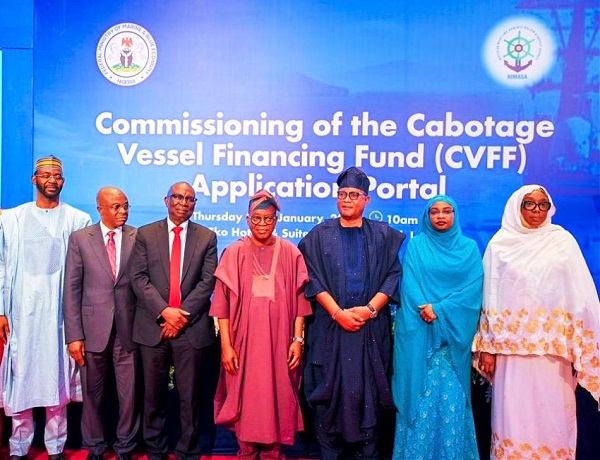
The Federal Government took a significant step in January 2026 when Minister of Marine and Blue Economy Dr. Adegboyega Oyetola officially launched the CVFF Application Portal at Eko Hotel and Suites in Victoria Island, Lagos, describing the occasion as a historic milestone in operationalising structured financing for indigenous ship ownership. The CVFF was established under the Coastal and Inland Shipping (Cabotage) Act of 2003 and is funded primarily through a 2% surcharge on all cabotage contracts, managed by the Nigerian Maritime Administration and Safety Agency (NIMASA).
Minister of Marine and Blue Economy Dr. Adegboyega Oyetola (Middle), DG of NIMASA Dr Dayo Mobereola (second from left) and other guests at the official launching of the CVFF Application Portal at Eko Hotel and Suites in Victoria Island, Lagos on January 22, 2026
Under the current framework, eligible indigenous firms may access financing of up to $25 million each at competitive interest rates, through 12 appointed Primary Lending Institutions. The fund is structured as a revolving facility, meaning loan repayments will sustain future lending cycles.However, advocacy organisations and boat operators’ groups have raised concerns that the fund’s eligibility framework — designed for registered corporate shipping companies acquiring ocean-going or offshore vessels — effectively excludes the small, private boat operators who operate the passenger ferries, water taxis, and canoes that most inland Nigerians rely on.
The Sustainable Waterways Awareness Advancement and Advocacy Organisation (SWAAADO) has noted in a recent research report that inland ferry services and coastal mass transportation fall within the mandate of the CVFF, with the Act’s provisions supporting the inclusion of local boat operators under the scheme. SWAAADO’s Head of Desk, Corporate Communication and Strategy, Chief Gold Raymond, has stated that with inflows into the CVFF valued at around $700 million, its proper deployment could substantially address the vessel quality crisis on Nigeria’s inland waterways.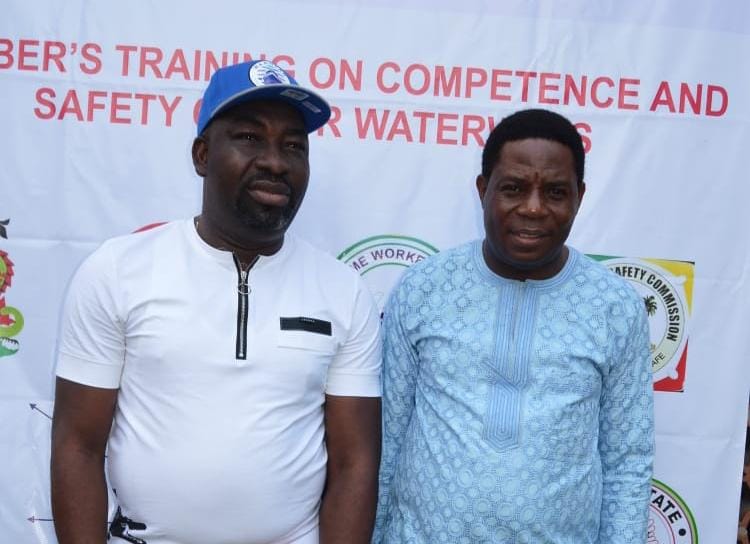
National President of Waterfront Boat Owners and Transporters Association of Nigeria (WABOTAN), Comrade Tope Fajemirokun and President of Maritime Workers Union of Nigeria (MWUN), Seamen/NIWA and Water Transport Branch, Comrade Sunday Avoseh at a workshop for Water Transport stakeholders recently organized by WABOTAN at Apapa, Lagos
National President of the Waterfront Boat Owners and Transporters Association of Nigeria (WABOTAN), Comrade Tope Fajemirokun, also supported calls for an amendment of the Cabotage Act to formally open the CVFF to inland boat operators.
Operators Call for Tiered Disbursement Window
Stakeholders are proposing a dedicated grassroots disbursement window within the CVFF framework, with loan sizes ranging from $100,000 to $500,000, structured over extended repayment periods at single-digit interest rates. They argue that a basic Corporate Affairs Commission (CAC) business registration and operator registration with the National Inland Waterways Authority (NIWA), the Lagos State Waterways Authority (LASWA), or the relevant State Waterway Authority should serve as the primary eligibility gateway for inland operators, replacing the complex corporate documentation requirements currently applicable to large shipowners.
Proponents note that a modern safety-compliant passenger ferry or waterbus carrying 30 to 100 passengers can be acquired for between $100,000 and $200,000 depending on specification, meaning even a modest allocation from the CVFF could place hundreds of modern vessels in private operators’ hands across the country.
NIWA itself has demonstrated the concept in practice. Among its recent fleet acquisitions is a modern 62-seater passenger boat piloted as a safer replacement for wooden canoes, alongside surveillance boats, enforcement vessels, and water ambulances. The agency recorded a 72 per cent reduction in waterway fatalities by mid-2025 compared to 2022 averages, though stakeholders caution that sustainable change requires the private operator fleet, not just government agency vessels, to be modernised.
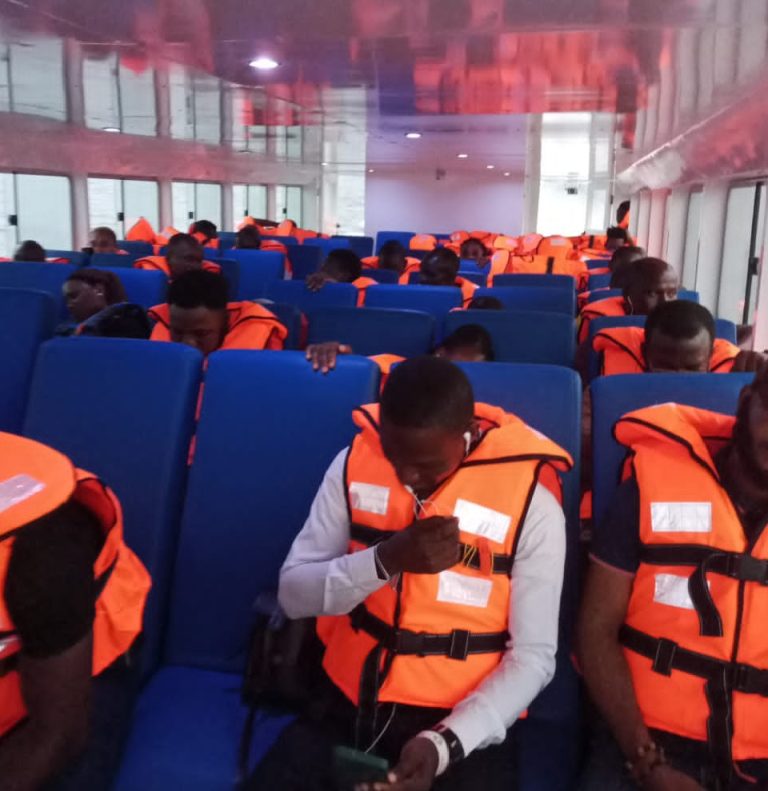
Passengers seated inside NIWA’s 62-seater capacity modern passengers ferry boat
LASWA also demonstrated this concept in practice. In it’s first phase of the Omí Eko project, the Lagos State government through LASWA, acquired some modern 60-seater and 40-seater capacity passenger ferry boats, equipped with modern navigational gadgets, for moving citizens daily across the state waterways. These crafts are not just improving safety on the state’s waterways but also giving it a face lift as they all add positively to the look and feel of the state waterways.
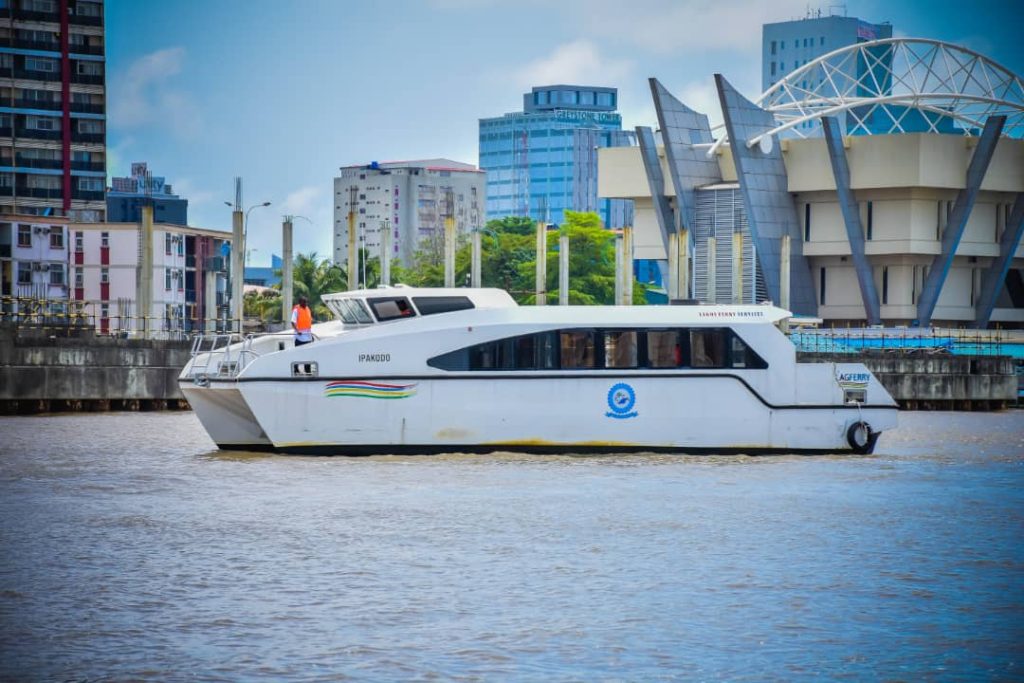
Lagos State 60-seater passenger ferry boat operated by Lagos Ferry Services Company (Lagferry)
Minister Oyetola has separately called on state governments to phase out unsafe wooden boats and invest in modern vessels, warning that many old boats have become safety hazards. The House of Representatives Committee on Maritime Safety, Education, and Administration has also signalled support for NIMASA’s CVFF implementation progress, with stakeholders urging legislators to go further and amend the Cabotage Act to widen the fund’s beneficiary scope.
The CVFF fund balance, held securely at the Central Bank of Nigeria under the Single Treasury Account, was confirmed intact by NIMASA Director General Dr. Dayo Mobereola, who stated the agency would continue to manage it with the utmost responsibility.
NIGERIA WATCH: Analysis and Commentary for Nigeria’s Maritime Stakeholders
The $700 Million Question Nigeria Must Answer Before the Next Boat Goes Down
There is a conversation Nigeria keeps almost having, and then not having, every time a boat goes down. We talk about enforcement. We talk about life jackets. We talk about overloading. We talk about night travel. All of these conversations are legitimate, and some of the enforcement measures of recent years, NIWA’s water marshals, the no-life-jacket-no-boarding policy, the Water Transport Code, have produced measurable results. Fatalities dropped from over 330 annually in 2021–2022 to 92 in the first eight months of 2025. That is real progress, and it deserves acknowledgement.
But there is a conversation Nigeria seems to be overlooking. It is the conversation about the boats themselves. Not about how they are operated. Not about whether passengers are wearing life jackets. But about the fundamental, stubborn, structural reality that the vast majority of Nigeria’s inland waterway passenger transport is conducted by private operators using wooden boats that are old, under-powered, poorly maintained, and critically, unaffordable to replace. The operators running these boats, especially in the northern part of the country, are not villains. They are small entrepreneurs, community transporters, boat cooperative members, doing what they can with what they have. What they have is not enough to keep their passengers alive.This is the heart of the problem. And the solution, or at least a very significant part of it, has been sitting in an account at the Central Bank of Nigeria for the past 22 years.
Why the CVFF Must Look Downriver
The Cabotage Vessel Financing Fund was established in 2003 with a genuinely good purpose: to build indigenous capacity in Nigeria’s maritime shipping sector by providing accessible, affordable financing for Nigerian operators to acquire vessels. Twenty-two years later, $700 million has accumulated. The fund is intact. A portal has been launched. And eligible shipowners can now apply for up to $25 million each.This is all commendable. But $25 million is the financing language of ocean-going cargo ships and offshore supply vessels. It is not the language of the operator on the Benue crossing, or the water taxi owner in Badagry, or the cooperative ferry running between Onitsha and the east bank.The Cabotage Act was written looking outward, toward international shipping competitiveness, offshore oil and gas logistics, the deep sea. The inland waterway passenger transport sector was, for its drafters, probably an afterthought. Two decades later, that afterthought is the sector where Nigerians are dying by the hundreds every year, in vessels that a modest fraction of the CVFF could replace with modern, standard, safe alternatives.The mathematics are straightforward. A modern 50-to-100-seat passenger ferry with GPS, VHF communications, life jackets, fire safety equipment, and compliant freeboard costs between $150,000 and $500,000. At an average of $250,000 per vessel, a $50 million grassroots window within the CVFF, just over 7 per cent of the total fund, could finance 200 modern ferry boats in its first disbursement cycle. Run that as a revolving fund, with repayments feeding back into fresh lending, and you have a self-sustaining mechanism for progressively replacing wooden boats with modern vessels across Nigeria’s navigable inland waterways.Two hundred modern ferries in the first cycle. Four hundred after the first repayment cycle. Within a decade, the wooden boat, not abolished by regulation that cannot be enforced on a 3,000-kilometre waterway network, but made economically redundant by accessible financing, could be a relic of a more dangerous past.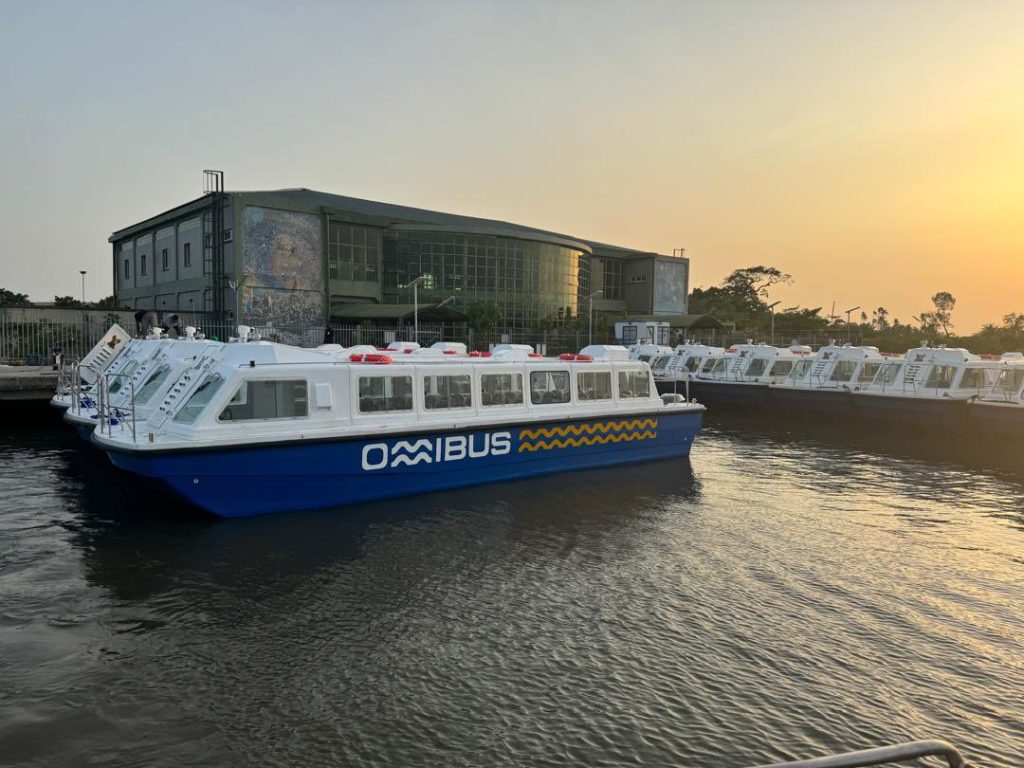
A fleet of OmiBus 40-seater capacity passenger ferry boats at LASWA head office , Five Cowries Terminal Ikoyi
The Eligibility Barrier Must Come Down
For this to work, the eligibility framework must be redesigned for the sector it is trying to serve. The current CVFF guidelines, requiring corporate registration, audited financial statements, business plans of the kind that corporate shipowners commission and artisanal boat operators have never heard of, are designed for an applicant that does not look like a canoe operator in Kogi State.The gateway for a grassroots CVFF window should be registration with NIWA, LASWA, or the relevant State Waterway Authority. If an operator is licensed, registered, and known to the regulator, that is the accountability foundation on which a micro-loan can be built. Boat operators’ associations and cooperatives, WABOTAN and similar bodies, should be formally empowered as conduit institutions, aggregating applications, vouching for members, and facilitating group accountability frameworks analogous to cooperative lending models that have worked in agricultural finance.This is not reinventing the wheel. It is applying standard microfinance logic to a sector that desperately needs it.
If the Cabotage Act requires amendment to make this legally possible, then let the National Assembly act. The House of Representatives Committee on Maritime Safety has shown appetite for engagement with NIMASA on CVFF matters. A bill to expand CVFF eligibility to inland passenger transport operators, framed explicitly around waterways safety and the phase-out of wooden boats, would be difficult to oppose. Which senator or representative wants to be on record voting against a measure designed to stop Nigerians from drowning?
The Minister’s Own Diagnosis
It is worth noting that Minister Oyetola has himself identified the direction. He has publicly called on state governments to phase out unsafe wooden boats and invest in modern vessels. His ministry has overseen a measurable improvement in NIWA’s operational capacity. He launched the CVFF portal with language about repositioning Nigeria’s maritime sector as a central pillar of national development.All of this is directionally correct. But calling on state governments to invest in vessel modernisation while the Federal Government holds $700 million in a fund that could finance exactly that investment is a policy gap that needs to be closed, not by more calls, but by action.The Minister does not need to wait for the National Assembly to act first. A ministerial directive expanding CVFF eligibility guidelines to include a dedicated inland waterway passenger transport window, pending full legislative amendment, would send an immediate signal to the sector. NIMASA, which already has a dedicated Cabotage Secretariat Unit managing CVFF implementation, has the institutional infrastructure to pilot such a window.
Connecting the Dots
Nigeria has the fund. Nigeria has the need. Nigeria has operators who want to do better. Nigeria has a regulatory framework that, with some expansion, can deliver accountability. Nigeria has a Minister who has diagnosed the problem correctly. Nigeria has a NIWA that has already demonstrated, in its own 62-seater pilot ferry, what a modern vessel looks like on an inland waterway.The only thing missing is the political will to connect these dots, to say, explicitly, that the CVFF is not only for shipowners dreaming of ocean-going cargo fleets, but also for the boat operator in Delta State who is running a cracked wooden hull because he has never had access to any other option.
Boat mishaps are not acts of God. They are the predictable outcome of a transport market in which safe vessels are financially inaccessible, and in which a fund designed to solve exactly that problem has been directed away from the people who need it most.The CVFF can rescue Nigeria’s inland waterways. But first, Nigeria must rescue the CVFF from a definition of its mission that is too narrow, too corporate, and too ocean-facing to save the lives being lost, right now, on the rivers that run through the heart of the country.The time to look downriver is long overdue.
Okeoghene Onoriobe writes for Waterways News (www.waterwaysnews.ng), Nigeria’s foremost digital publication covering ports, shipping, inland waterways, and the blue economy.© Waterways News | www.waterwaysnews.ng | All rights reserved

Featured
IMO Sets First-Ever Two-Year Theme for World Maritime Day, Tasks Member States to Move “From Policy to Practice”
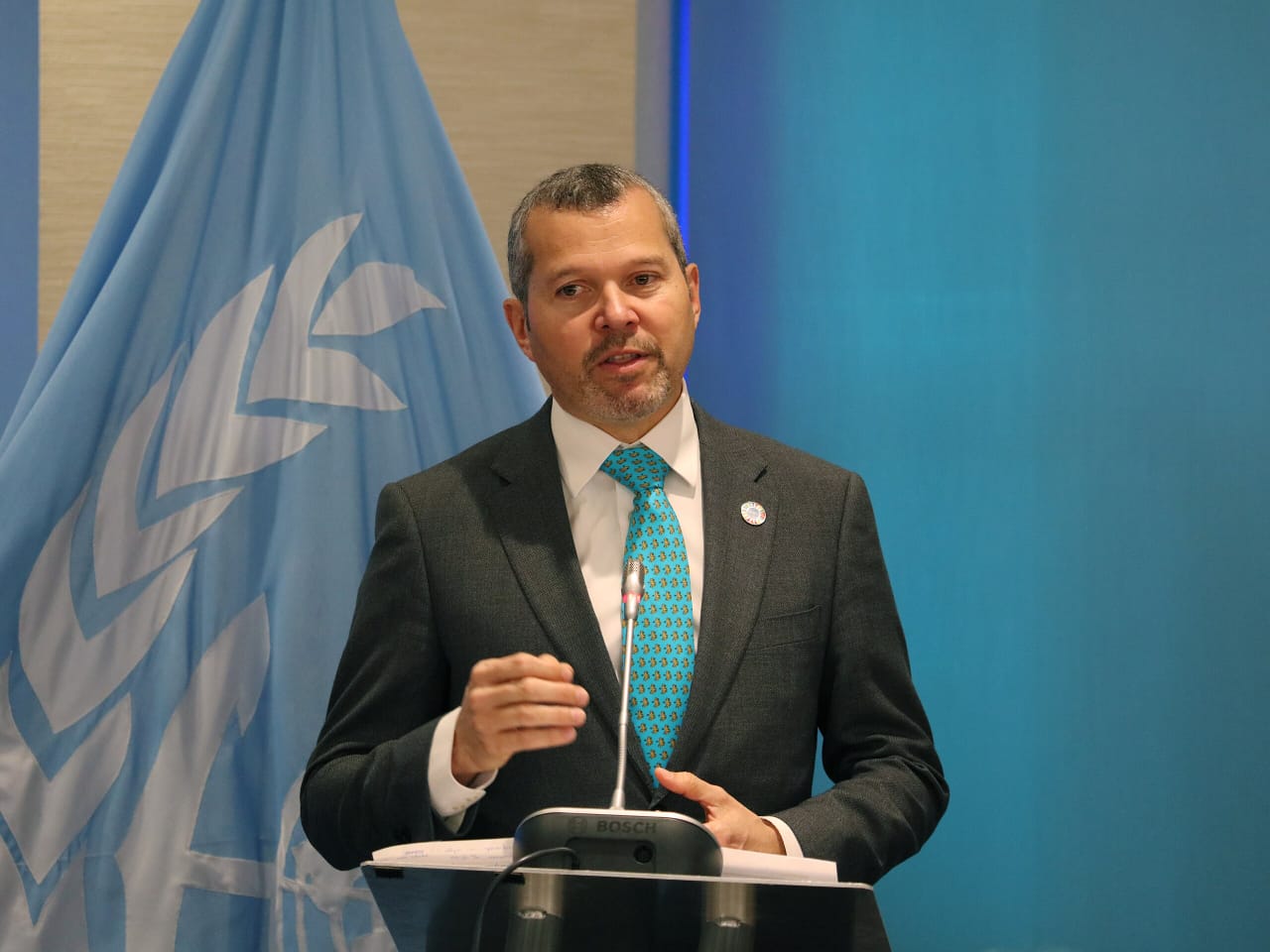
IMO Sets First-Ever Two-Year Theme for World Maritime Day, Tasks Member States to Move “From Policy to Practice”
By Emetena Ikuku | Waterways News
The International Maritime Organization (IMO) has adopted “From Policy to Practice: Powering Maritime Excellence” as its World Maritime Day theme for both 2026 and 2027, marking the first time in the observance’s history that a single theme will run for a full two-year cycle instead of the usual one.
The decision was endorsed by the IMO Council at its 134th session in London, held from July 7 to 11, on a proposal from IMO Secretary-General Arsenio Dominguez. World Maritime Day will continue to fall on the last Thursday of September each year, with 2026 and 2027 both marked under the same theme.
IMO explained that the extended timeframe reflects a deliberate shift in focus, from the adoption of new rules to ensuring those already on the books are actually applied. According to the organisation, “From Policy to Practice” speaks to its core mandate: making sure that conventions, codes and guidelines agreed at the international level are translated into national law, enforced consistently, and embedded in the daily operations of ports, ships and administrations worldwide, rather than existing only on paper.
The “Powering” element of the theme points to the practical support IMO intends to deploy to help member states close that implementation gap, including technical assistance, training programmes, capacity-building and knowledge-sharing partnerships aimed at strengthening maritime administrations and port state control regimes. “Maritime Excellence,” the organisation says, describes the end goal: a shipping industry that is safe, secure, efficient and environmentally sound, held to the highest international standards and committed to continuous improvement.
In a video message announcing the campaign, Dominguez said the true test of the global regulatory framework lies in implementation, stressing that when the industry talks about “practice,” it is ultimately talking about people, and that IMO is committed to powering that transition through direct technical cooperation and support.
IMO has invited member states, industry stakeholders and the public to join the campaign using the hashtags #WorldMaritimeDay and #MaritimePolicytoPractice as national and regional activities roll out over the two-year period.
Nigeria Watch
For Nigeria, a theme built entirely around closing the gap between policy and practice lands close to home. It is, in many ways, the exact fault line this desk has tracked for years across the country’s maritime sector: regulations that exist in full on paper but struggle to survive contact with implementation on the water.
The theme’s emphasis on national legislation, enforcement and day-to-day operations speaks directly to open questions around NIMASA’s cabotage regime and the long-delayed disbursement of the Cabotage Vessel Financing Fund (CVFF), to the jurisdictional tug-of-war between NIWA and LASWA over inland waterways regulation even after Supreme Court intervention, and to the practical rollout of the NPERA Act now that the agency has formally begun operations. Each of these is, at bottom, a policy-to-practice story still waiting for its second half to be written.
It also speaks pointedly to the everyday reality of Nigeria’s informal and small-scale waterway operators, represented by bodies like WABOTAN and ATBOWATON, who often experience federal and state maritime policy not as technical assistance and capacity-building, but as enforcement action with little of the promised support attached. If IMO’s two-year campaign is genuinely about “translating international rules into action at sea and on shore,” as the organisation puts it, Nigerian regulators have an unusually clean, IMO-endorsed framework to be measured against between now and 2027, and operators on the inland waterways will be watching to see whether “powering” the transition includes powering their own long-stalled asset financing and safety upgrades, not just headline compliance targets aimed at the deep-sea fleet only.
With Nigeria holding a seat on the IMO Council, the country also carries a diplomatic stake in how visibly it is seen to be putting the theme into practice at home over the coming biennium.
Blue Economy
Oyetola Sets Up Technical Committee to Fast-Track Fish Production, Cut Nigeria’s Import Bill
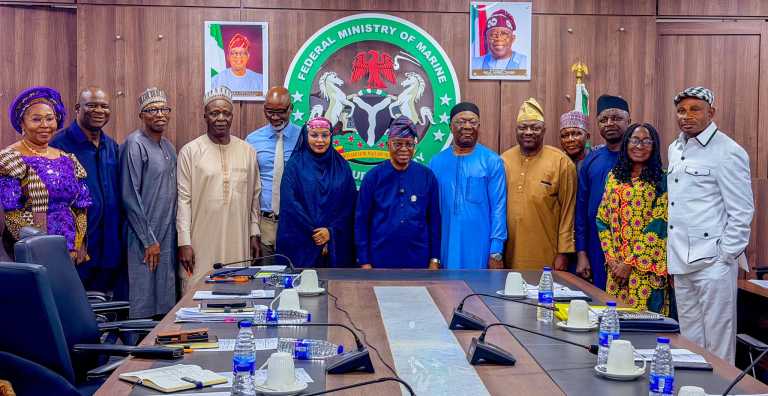
Oyetola Sets Up Technical Committee to Fast-Track Fish Production, Cut Nigeria’s Import Bill
By Ighoyota Onaibre | Waterways News
The Federal Ministry of Marine and Blue Economy has begun moving from policy talk to implementation on fish production, with the Minister, Dr Adegboyega Oyetola, inaugurating a Technical Committee on Accelerating Fish Production in Nigeria in Abuja on Thursday.
Oyetola said the committee’s job was to convert existing recommendations into coordinated action that can deliver measurable gains in the country’s fisheries and aquaculture sector, rather than produce another policy document.
He noted that fish remains a major source of animal protein for millions of Nigerians, and that the fisheries and aquaculture value chain sustains livelihoods across production, processing, marketing and transportation. But domestic output still falls well short of national demand, he said, with knock-on effects for food security, household incomes and the country’s foreign exchange position.
The Minister listed the sector’s key constraints as high production costs, particularly feed, poor access to quality fish seed and broodstock, weak fish-health and biosecurity systems, post-harvest losses, and inadequate cold-chain and storage infrastructure. He also pointed to limited access to affordable finance, thin research and data systems, and gaps in standards, traceability and market development.
Oyetola said the recent transfer of fisheries and aquaculture functions to his ministry gave the sector a stronger institutional platform, and reaffirmed government’s commitment to growing sustainable domestic production and cutting Nigeria’s reliance on fish imports.
The committee’s work builds on a strategic roundtable the ministry convened with the National Institute for Policy and Strategic Studies (NIPSS) on October 29, 2025, which produced a set of recommendations on production and value-chain bottlenecks. Members have been asked to test each recommendation against existing national policy, laws and institutional mandates, deciding whether it should be adopted, refined, folded into current programmes, studied further, or dropped and to map ongoing public, private and development-sector initiatives so scarce resources are not duplicated.
Oyetola said the committee’s final output must include a clear implementation roadmap and matrix covering priority interventions, responsible institutions, timelines, indicative costs, funding options, performance indicators and required approvals, along with credible entry points for private investment, public-private partnerships and development finance.
The Permanent Secretary of the ministry, Mrs Fatima Sugra Mahmood, who chairs the committee, pledged a thorough review process aimed at practical, measurable interventions. Prof Akintola Shehu Latunji of Lagos State University, speaking for other members, thanked the Minister and committed the committee to working with stakeholders to boost fish production nationwide.
Other members include Mr Omoragbon Wellington and Mr Garba Usman of the Federal Department of Fisheries and Aquaculture; Prof Ayo Omotayo of NIPSS; Prof Sule Abiodun of the Nigerian Institute for Oceanography and Marine Research; Prof Sadiku Suleiman Omeiza of the Federal University of Technology, Minna; Bayelsa State’s Commissioner for Marine and Blue Economy, Dr Faith Izibenua Zibs-Godwin; Dr Charles Okaga, Technical Assistant to the Minister; Dr Ebinimi Ansa of the Fisheries Society of Nigeria; Mr Onoja Sunday of the Catfish Farmers Association of Nigeria; Mr Mashi Gabriel Sani of the Fisheries Cooperative Federation of Nigeria; Mr Remi Ahmed of the Tilapia Development Association of Nigeria; and Dr Charles Iyangbe of WorldFish Nigeria.
The committee has eight weeks to submit its report.
Nigeria Watch
Fish production is not a subject Waterways News covers often, but it sits squarely inside the blue economy mandate this Ministry now carries and it is worth watching for the same reason CVFF, NPERA and NIMASA reforms are worth watching: Nigeria has no shortage of roundtables, committees and roadmaps; what it has historically lacked is follow-through.
Oyetola’s own framing, “your assignment is not to develop another policy”, reads as an implicit acknowledgment of that pattern, and an eight-week deadline is a useful marker for readers to hold the ministry to. The emphasis on cold-chain and storage infrastructure, and on post-harvest losses, also echoes concerns Waterways News has tracked on the inland waterways side, where WABOTAN and ATBOWATON operators regularly cite poor storage and logistics as a drag on returns from fish and other perishable cargo moved by water. A serious fisheries roadmap that funds cold-chain and market infrastructure along riverine routes would have direct relevance for the informal waterway transport economy this desk covers closely.
Whether this committee’s report becomes another shelved document or an actual funding and implementation pipeline is the story to follow when the eight weeks are up.
Blue Economy
NPERA Charges Staff on New Mandate as Akutah Eyes $1 Trillion Economy, Pledges Harmony with Sister Agencies
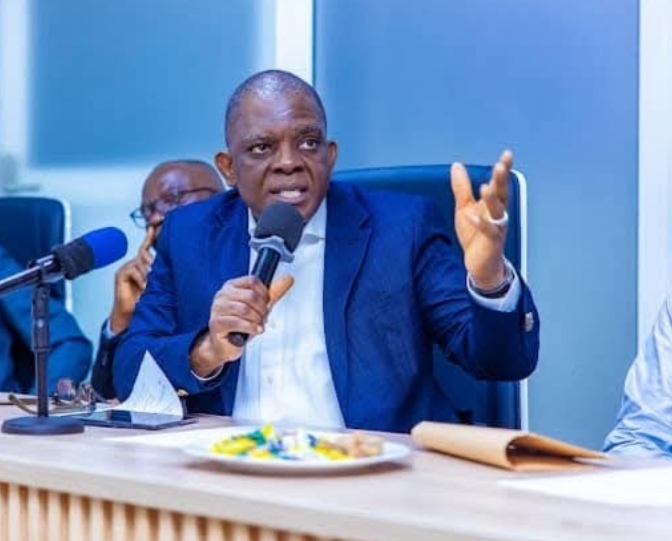
NPERA Charges Staff on New Mandate as Akutah Eyes $1 Trillion Economy, Pledges Harmony with Sister Agencies
By Okeoghene Onoriobe | Waterways News
The newly transitioned Nigeria Ports Economic Regulatory Agency (NPERA) has told its workforce that the agency’s expanded powers must translate into measurable gains for the maritime sector, as its chief executive moved to calm anxieties over possible turf conflicts with other port institutions.
Speaking at a townhall session with staff, NPERA’s Director-General, Dr Pius Akutah, said the agency’s new statutory footing, created under the Nigerian Ports Economic Regulatory Agency Act, 2026, leaves no room for institutional rivalry, since the law spells out NPERA’s role as the ports’ economic regulator distinctly from the operational and infrastructure mandates held by other agencies.
Akutah described the President’s assent to the Act as a breakthrough for the maritime industry, saying the reinforced regulatory powers position the agency to curb sharp practices and drive efficiency at the ports. He urged staff to raise their professional standards to match the agency’s new responsibilities, and said NPERA intends to work closely with the Nigerian Ports Authority (NPA) in particular, alongside other sister agencies, to deepen reforms and improve service delivery across the ports.
He linked the agency’s broadened mandate directly to government’s wider ambition of building a $1 trillion economy, arguing that a more predictable and business-friendly port environment is central to that goal.
The remarks follow the formal transition of the Nigerian Shippers’ Council (NSC) into NPERA, a process more than a decade in the making. NPERA Governing Board chairman, Dr Ibrahim Shema, has described the change as a structural separation of economic regulation from the NPA’s landlord and infrastructure functions, with NPERA’s approach to be anchored on transparency, fairness, predictability, efficiency and accountability. Both officials have stressed that NPA retains its infrastructure role while NPERA takes on tariff regulation, licensing, competition oversight and commercial dispute resolution.
NIGERIA WATCH
Every new regulator in Nigeria’s port and maritime space arrives with the same reassurance: this one won’t fight the agencies already there. NPERA’s rollout is no exception, and the emphasis on “harmony” with NPA is itself a tell — it signals that stakeholders, including operators and shippers who have lived through NIMASA-NPA and NIWA-LASWA turf disputes, are watching closely for the first sign of overlap.
For the informal and small-scale end of the water transport economy that Waterways News tracks — the operators represented by WABOTAN and ATBOWATON — NPERA’s mandate is, on paper, encouraging. A regulator empowered to resolve commercial disputes and rein in unapproved charges could, if it functions as designed, extend some protection to smaller port users who have historically had the least leverage against terminal operators and shipping lines. But the sector’s experience with the CVFF disbursement saga is a caution against measuring reform by its founding rhetoric alone. An agency can be transparent on paper about “five principles” and still take years to deliver anything an ordinary operator can point to.
The real test for NPERA, as with NPERA’s own DG has implicitly acknowledged by tasking his staff before the agency has even settled into its new powers, will be whether tariff clarity and faster dispute resolution reach beyond the big shipping lines and terminal operators to the smaller players who move goods and people along Nigeria’s waterways every day. Waterways News will be watching how NPERA’s mandate is implemented in practice, not just how it is announced.

 Oil and Gas7 months ago
Tantita’s Pipeline Deal: $144m Contract, Rising Output, and the Questions that Deserve Answers
- MARITIME TRADE & SHIPPING7 months ago
World’s Largest Container Ship Sets New Maritime Record with 22,233 TEUs on Single Voyage
- Blue Economy7 months ago
Nigeria’s Coast Guard Bill: A Solution in Search of a Problem?