
Blue Economy
APM Terminals Apapa, NPA Stage Joint Clean-Up of Lagos Port Corridor as Global Go Green Week Kicks Off


APM Terminals Apapa, NPA Stage Joint Clean-Up of Lagos Port Corridor as Global Go Green Week Kicks Off
Exercise targets Finger Jetty, NPA Roundabout and Adekunle Road stretch as terminal operator pushes 2040 net-zero ambition
By Emetena Ikuku | Waterways News
APM Terminals Apapa has renewed its environmental sustainability pledge with a large-scale clean-up of key access roads within the Lagos Port Complex (LPC), as part of its 2026 Go Green Week campaign.
The exercise, which drew employees of the terminal operator alongside staff of the Nigerian Ports Authority (NPA), covered the corridor stretching from the Finger Jetty through the common-user road to Eko Support Services, the NPA Roundabout, Adekunle Road and the terminal’s main gate. Workers equipped with cleaning tools and protective gear cleared plastics, nylon packaging, wooden planks, bottles, stones and other debris that had accumulated along the routes.

Go Green Week is APM Terminals’ annual global environmental campaign, designed to translate the company’s binding commitment to achieving net-zero carbon operations by 2040 into ground-level action across its terminal network. This year’s edition carries the theme “Healthy Ecosystems… More Resilient and Sustainable Business,” underscoring the link the company draws between environmental health and business resilience.
Speaking at the exercise, Managing Director of APM Terminals Apapa, Kamal Alhraishat, described Go Green Week as a platform for deepening environmental awareness and driving collective action among port community stakeholders. He noted that employees across APM Terminals’ global operations are being encouraged to convert environmental commitments into practical activity, clean-up campaigns, recycling, tree planting and habitat restoration, and said the involvement of NPA staff in the Apapa exercise reflected the value of stakeholder collaboration in sustaining a cleaner port environment.
Health, Safety and Environment Manager, Felix Ugwuagbo, said sustainability sits at the core of the terminal’s operations and decision-making. He argued that environmental responsibility cannot remain confined to boardroom policy but must be embedded in daily port operations and adopted by all port users if lasting progress is to be achieved. A clean port, he added, translates directly into a safer and more efficient one, with knock-on benefits for trade flow and supply chain resilience.
Assistant Manager, NPA Environment (Lagos Port Complex, Apapa), Umar Ibrahim, commended the initiative, stressing that effective waste management underpins safe and efficient port operations. He said a clean port environment protects public health, preserves the surrounding ecosystem and enables the smooth movement of cargo and personnel, while prompt waste removal reduces environmental hazards and improves air quality for all port users.
Nigeria Watch
For a port corridor as congested and heavily trafficked as Apapa, the symbolism of a joint APM Terminals–NPA clean-up matters as much as the exercise itself. The Finger Jetty–NPA Roundabout–Adekunle Road axis is one of the most contested stretches of road in Nigeria’s maritime sector, a corridor that has, for years, doubled as a case study in the country’s port-access congestion crisis, with truck queues, informal trading activity and haulage debris regularly cited as contributors to gridlock and environmental degradation around the LPC.
That an NPA-branded environmental official joined a terminal operator’s own sustainability drive is notable in a sector where regulator-operator relations are more often defined by friction, over concession terms, tariff disputes or infrastructure funding obligations, than by joint action. Whether this collaboration extends beyond a single clean-up day to sustained waste-management protocols along the corridor will be the more meaningful test.
The exercise also lands against the backdrop of Nigeria’s own decarbonisation posture within the IMO framework, and NIMASA’s stated ambitions around green shipping and environmental compliance. As global terminal operators tie local ESG activity to binding 2040 net-zero targets, Nigerian port authorities and operators, NPA, NIMASA and private concessionaires alike, face growing pressure to demonstrate that similar environmental accountability applies not just to corporate campaigns, but to routine port and waterway operations across Lagos, the Niger Delta and beyond.
Blue Economy
Petroleum Products Dominate Lekki Deep Sea Port’s Import Chart as Facility Cements Role in National Energy Supply
Petroleum Products Dominate Lekki Deep Sea Port’s Import Chart as Facility Cements Role in National Energy Supply
By Okeoghene Onoriobe | Waterways News
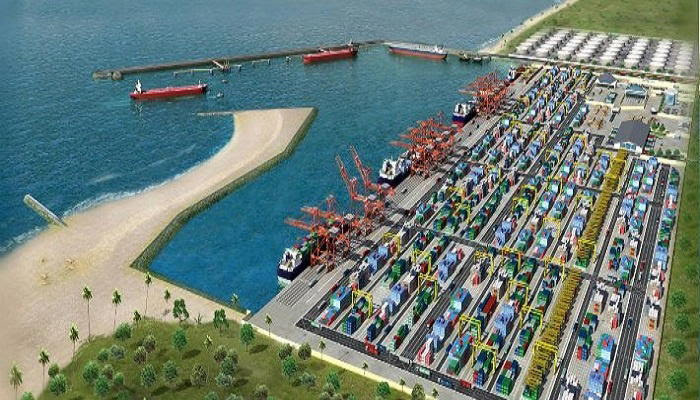
Crude oil-based products remain the single largest category of cargo moving through Lekki Deep Sea Port, with fresh shipping data underscoring the facility’s growing weight in Nigeria’s petroleum import chain.
Shipping documents covering the first week of August showed that petroleum-related cargo, including aviation fuel, Automated Gas Oil (AGO) and Premium Motor Spirit (PMS), accounted for roughly 1.87 million metric tonnes of the products cleared through the port as of August 10. Aviation fuel led the breakdown with 245,600 metric tonnes, followed by AGO at 104,000 metric tonnes, while the balance of the volume was recorded across other refined product categories. Bulk urea, at 99,000 metric tonnes, was the next-largest non-petroleum commodity handled at the facility during the period.
The figures build on a year in which Lekki Deep Sea Port has steadily overtaken Nigeria’s older terminals in overall cargo significance. Nigerian Ports Authority (NPA) data for 2025 showed the port handling roughly 40.6 percent of national cargo throughput, with liquid bulk cargo, petroleum products, fuel and chemicals, making up 54.7 percent of all cargo moved across Nigerian ports that year, ahead of containerised cargo at 24 percent. Container traffic at the port also grew sharply, with import containers rising by close to a third over the same period.
By the end of the third quarter of 2025, Lekki Port had recorded an estimated ₦13.46 trillion in combined import and export trade value, according to figures presented by port management. NPA’s Daily Shipping Position reports through mid-2026 have continued to show a steady stream of tankers arriving at the port carrying petrol, diesel, aviation fuel, condensate and crude oil, alongside bulk carriers moving fertiliser, wheat, sugar and gypsum.
Industry stakeholders have continued to emphasise the importance of efficient port operations in reducing logistics costs, improving cargo movement and strengthening Nigeria’s position as a major maritime hub in the region. With petroleum products accounting for a substantial share of cargo recorded at Lekki, import volumes at the facility are expected to remain closely watched by businesses, consumers and other stakeholders across the downstream petroleum and maritime sectors in the months ahead.
Nigeria Watch: A Single Port, A National Dependency
The scale of petroleum movement through Lekki Deep Sea Port is worth sitting with for a moment. A facility that only became fully operational in 2023 is now handling well over half of all liquid bulk cargo passing through Nigerian ports, and a meaningful share of the aviation fuel, diesel and petrol keeping the country’s transport and energy sectors running. That is a remarkable concentration of national dependency in one deep-water terminal on the Lagos coastline.
There is a case to be made that this is exactly what efficient infrastructure should look like, deeper draft, faster turnaround, automated cargo handling, and the scale to absorb vessels that older terminals like Apapa and Tin Can Island simply cannot berth. Nigeria has spent years talking about reducing the congestion and demurrage costs that have historically plagued its ports, and Lekki’s rise is, on paper, a direct answer to that problem.
But concentration cuts both ways. A downstream sector, refineries, marketers, aviation fuel suppliers, that increasingly routes its imports through a single facility is also a downstream sector exposed to a single point of failure. Any disruption at Lekki, whether from equipment downtime, customs bottlenecks, or the kind of geopolitical shock that has already rattled freight rates and war-risk premiums this year, would ripple through fuel availability nationwide far faster than it would have when cargo was distributed more evenly across Lagos’s ports.
This is also a moment that tests the regulatory architecture around Nigeria’s ports. As NPERA settles into its new role as economic regulator, and as NIMASA, NIWA and NPA continue to work out overlapping jurisdictional lines, the question of who is actually monitoring throughput, pricing and safety standards at Nigeria’s busiest facility deserves more scrutiny than it currently receives.
A port handling this much of the country’s fuel supply is not just a commercial success story. It is critical national infrastructure, and it should be treated with the oversight that designation demands.
Tinubu Signs NPERA Bill Into Law, Ending Years-Long Wait for Statutory Port Regulator
By Raymond Gold | Waterways News
President Bola Tinubu has assented to the Nigerian Ports Economic Regulatory Agency (NPERA) Bill, 2026, formally establishing a dedicated statutory economic regulator for Nigeria’s port industry after years of legislative back-and-forth.
The development was disclosed by the Executive Secretary and Chief Executive Officer of the Nigerian Shippers’ Council (NSC), Dr Pius Akutah, in a post on his Facebook page. “Nigerian Port Economic Regulatory Agency Act, 2026. Thank you Mr President for making it a reality,” Akutah wrote.
Details of the assent and the accompanying implementation framework were not immediately available at press time, but the signing closes out one of the longest-running items on Nigeria’s port reform agenda.
A regulator years in the making
The new law is designed to give statutory backing to functions the NSC has performed on an interim basis since 2014, when the Federal Government designated the Council as economic regulator of the ports pending a substantive Act. Without dedicated legislation, the Council’s oversight of tariffs, rates and charges rested largely on government policy rather than enforceable statutory powers.
NPERA is expected to take over and strengthen regulation across tariffs, rates and charges, competition in the port sector, licensing of port service providers, and resolution of commercial disputes — areas that have long been sources of friction between shipping lines, terminal operators, freight forwarders and shippers.
A bumpy legislative road
The Bill’s passage was not straightforward. An earlier version cleared the National Assembly and was transmitted to the Presidency, but Tinubu withheld assent after concerns were raised over some of its provisions. The National Assembly went back to work, addressing the flagged issues, and the Senate rescinded its earlier passage after a review turned up further legal and procedural problems requiring correction. An amended version was passed in April 2026, setting up this week’s assent.
Central to the controversy has been the risk of regulatory overlap. Stakeholders and some maritime agencies raised concerns that NPERA’s mandate could duplicate functions already exercised by the Nigerian Ports Authority (NPA) and the Nigerian Maritime Administration and Safety Agency (NIMASA), and have pushed for clearer boundaries to head off conflicting or overlapping mandates. Legal analysts have separately flagged that the Bill, formally the Nigeria Shipping and Port Economic Regulatory Agency Bill, proposes repealing the Nigerian Shippers’ Council Act and transferring its functions to the new agency, effectively splitting economic and commercial oversight of the ports away from the operational and safety mandate the NPA has historically held.
With presidential assent secured, attention now turns to implementation: the transition from the NSC to NPERA, and how the new agency’s structure, leadership and powers will be defined in practice.
Nigeria Watch
For Nigeria’s port and waterway stakeholders, NPERA’s arrival is less a single event than the start of a new phase of institutional bargaining — and one that inland waterway operators, terminal users and cargo owners should watch closely.
The immediate question is jurisdictional. NIMASA already regulates maritime safety, seafarer certification and shipping administration; the NPA runs port operations and infrastructure; NIWA and LASWA govern inland and Lagos waterways respectively. Layering a fourth economic regulator onto tariffs, licensing and dispute resolution raises the same “regulatory layering” risk that critics warned about while the Bill was still in the National Assembly, the danger that compliance costs rise for shippers and operators before any efficiency gains materialise.
Waterways News readers who have followed the CVFF disbursement saga and NIMASA-AMANO tensions will recognise the pattern: a new statutory body with strong powers on paper, but whose real impact depends on how cleanly its mandate is carved out from incumbent agencies.
There is also a stakes question for the smaller operators this publication has consistently centred, WABOTAN, ATBOWATON and similar cooperatives working Lagos’s creeks and Nigeria inland waterways. NPERA’s brief on licensing of port service providers and commercial dispute resolution is written with seaports in mind, but if its remit is interpreted broadly, it could eventually touch licensing and tariff questions that affect waterway transport operators feeding cargo and passengers into the port corridor.
Clarity from the National Assembly and the Presidency on where NPERA’s authority stops and NIWA’s begins will matter as much to canoe and ferry operators as it does to container terminals.
Finally, timing is notable. NPERA’s establishment lands as Nigeria settles back into its seat on the IMO Council and as NIMASA and NIWA prepare for the IMO’s 2027 shift to risk-based continuous monitoring under IMSAS. A fourth regulator entering the port governance space just as the country’s existing agencies are being assessed against international standards adds one more variable to an already crowded institutional picture and one Waterways News will continue tracking as NPERA’s transition takes shape.
NIWA, Parts Central Ltd to Unveil Nationwide Waterways Clean-Up Initiative in Lagos
By Okeoghene Onoriobe | Waterways News
The National Inland Waterways Authority (NIWA) is set to formally unveil a nationwide clean-up initiative for Nigeria’s inland waterways, in partnership with Parts Central Limited, an indigenous multi-sectoral environmental firm.
The unveiling is scheduled to hold in Lagos on Tuesday, August 18, 2026, at Bic Garden, where NIWA and Parts Central will brief government officials, private-sector stakeholders and other maritime industry players on the scope of the programme and seek their buy-in.
In a joint statement, NIWA Lagos Area Manager, Engr. Sarat Braimah, and Managing Director of Parts Central Limited, Henry Olaoluwa Onifade, said the initiative would deploy structured systems for removing waste from the waterways and converting recyclable materials into economic value.
According to the statement, the programme is designed as a comprehensive environmental reform effort, targeting the sources of pollution and the indiscriminate dumping of waste that have long plagued Nigeria’s inland waterways ecosystem. Beyond clean-up, NIWA said the project would tackle oil spillage and broader environmental degradation across the waterways network.
The clean-up is also expected to improve navigation by eliminating debris and pollution-related obstructions, while supporting the conservation of aquatic biodiversity, much of which remains undocumented in Nigeria’s inland waterways. NIWA said the project would additionally support the growth of the fisheries economy through cleaner, healthier aquatic environments, and create employment opportunities for communities living along the waterways.
The initiative was conceived under the leadership of the immediate past Managing Director of NIWA, Asiwaju Bola Oyebamiji, who has since emerged as the All Progressives Congress (APC) governorship candidate in Osun State. NIWA had earlier, in June, announced that it had engaged Parts Central Limited to provide strategic oversight and implementation support for the clean-up.
The Minister of Marine and Blue Economy, Adegboyega Oyetola, has consistently canvassed the strategic use of Nigeria’s inland waterways beyond transportation, positioning them as key drivers of economic diversification under the Federal Government’s blue economy agenda.
NIWA described the Lagos unveiling as a demonstration of its commitment to innovation, environmental sustainability and the development of the nation’s inland waterways.
Nigeria Watch
For operators along Nigeria’s inland waterways, this initiative touches a problem they encounter daily but has rarely attracted this level of structured attention: the volume of waste, from household refuse to water hyacinth, that clogs channels, damages engines and slows down boat traffic on routes serving Lagos, the Niger Delta and beyond.
The project’s real test will not be the August 18 unveiling, but what follows it. NIWA has run clean-up efforts before, including hyacinth clearance around Ikorodu’s Ebute Metta axis under Braimah’s Lagos office, but these have tended to be localised and episodic rather than nationwide and sustained. A structured system for converting waste to economic value, if it materialises as described, could offer a genuine income stream for waterfront communities, provided implementation reaches beyond Lagos to the Niger Delta, the Niger-Benue axis and other inland routes where WABOTAN, ATBOWATON and other organized operators work daily.
Two questions will matter most to stakeholders in the coming months. First, whether the programme includes enforcement against indiscriminate dumping and reliable waste-collection infrastructure, since a clean-up without prevention risks a short-lived improvement. Second, whether the transition in NIWA’s leadership, given that the project was conceived under Oyebamiji, who has since moved into Osun State politics, affects the pace or continuity of implementation.
Small-scale operators and waterfront communities will be watching for evidence that this is a durable investment in navigable, livable waterways rather than a one-off exercise timed to a change in NIWA leadership.

 Oil and Gas5 months ago
Tantita’s Pipeline Deal: $144m Contract, Rising Output, and the Questions that Deserve Answers
- MARITIME TRADE & SHIPPING5 months ago
World’s Largest Container Ship Sets New Maritime Record with 22,233 TEUs on Single Voyage
- Blue Economy6 months ago
Nigeria’s Coast Guard Bill: A Solution in Search of a Problem?