

Maritime Security and Safety
Nigerian, French Navies Open Six-Day Grand African NEMO Drills to Choke Gulf of Guinea Crime


Nigerian, French Navies Open Six-Day Grand African NEMO Drills to Choke Gulf of Guinea Crime
Exercise in Onne targets piracy, oil theft, illegal fishing and trafficking, with five warships, two helicopters and two drones deployed
By Okeoghene Onoriobe | Waterways News
The Nigerian Navy and the French Navy have launched a six-day joint maritime exercise, Grand African NEMO 2026, aimed at crimes at sea in the Gulf of Guinea.
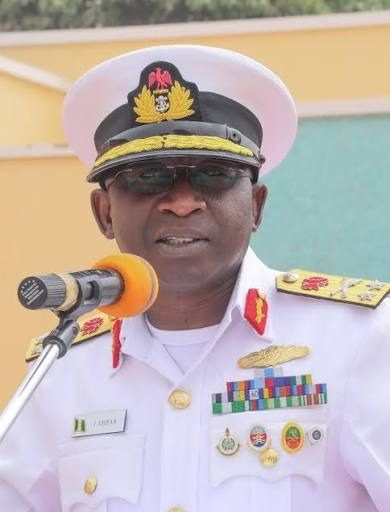
The exercise was inaugurated on Thursday, October 29, in Onne, Rivers State. The Chief of the Naval Staff, Vice Admiral Idi Abbas, was represented by the Flag Officer Commanding, Navy Training Command, Rear Admiral Ebiobowei Zipele.

The Navy has committed five warships, two helicopters, two drones and personnel of the Special Boat Service. It is also drawing on its three operational commands and allied partners.
Zipele said the drills will strengthen maritime surveillance, safeguard freedom of navigation and improve the Navy’s ability to protect Nigeria’s territorial waters and Exclusive Economic Zone (EEZ).
The scenarios cover piracy and armed robbery at sea, human trafficking, illegal oil bunkering, illicit fishing, and the trafficking of arms and narcotics.
Abbas, in his message, said evolving maritime threats make sustained cooperation among regional navies essential. He noted that NEMO has grown since 2018 into a major annual security initiative in the Gulf of Guinea.
The Flag Officer Commanding, Central Naval Command, Rear Admiral Suleiman Ibrahim, said the exercise builds on Exercise Fleet Sentinel, held six months ago, and the ongoing Operation Delta Sentinel.
The drills are expected to deepen cooperation under the Yaoundé maritime security architecture and support Nigeria’s blue economy ambitions.
Nigeria Watch
NEMO is useful as a rehearsal, and Nigeria is a repeat host: the 2021 edition, also flagged off at Onne, involved 13 ships and about 1,500 personnel. That contrast is worth noting. This year’s announced deployment is five warships, though the scope of the two exercises may not be directly comparable.
The real test is what happens after the exercise ends. Stakeholders should watch three things:
Sustained presence: Joint drills sharpen skills, but safe waters depend on patrols and quick response on ordinary days, not exercise week.
Coverage beyond the open sea: Operators on the creeks, rivers and coastal routes, including the small-scale and informal operators represented by WABOTAN and ATBOWATON, face insecurity that rarely makes headlines. They will want to see these gains reach them.
Policy-to-delivery gap: NEMO, Operation Delta Sentinel and the Deep Blue Project all promise better maritime security.
Waterways News will keep asking for measurable results, such as fewer incidents, prosecutions and reduced oil theft.
Gabon Rig Disaster: Prospector 5 Sinks With 115 Aboard, One Dead and Four Missing
Jack-up lost stability during preload operations off Mayumba; search continues as Dussafu production halts
By Okeoghene Onoriobe | Waterways News
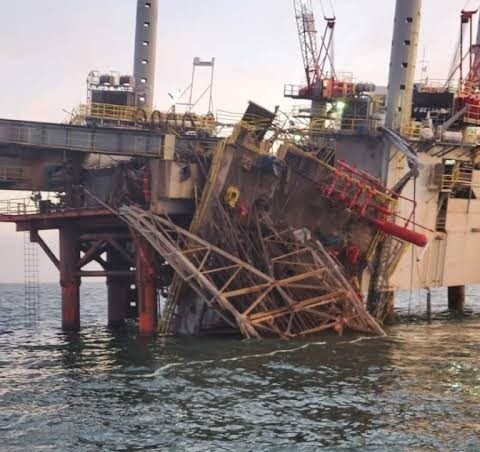
One worker has died and four others are still missing after the jack-up drilling rig Prospector 5 sank off Mayumba, southern Gabon, on Saturday night. The rig was carrying 115 people, and 110 have been confirmed safe. The body of one of the five initially unaccounted for, an Indian national, has been recovered, according to Reuters sources. The four still missing are three Gabonese nationals and one other expatriate. Note that the rig owner’s own update, issued earlier, made no mention of a death and said five people remained unaccounted for.
BW Energy puts the time of the incident at 20:37 local time on Saturday, 24 October 2026, during jacking operations ahead of a planned drilling campaign. The rig lost stability and then sank. Borr Drilling said the rig suffered a “punch through”, a failure of the seabed beneath the rig’s legs, which caused the loss of stability.
The Prospector 5 is a 2014-built unit owned and operated by Borr Drilling. It had been mobilising to the MaBoMo facility to begin the Phase II drilling campaign for BW Energy, and had begun operations for the company in early July. It had not yet started drilling.
Gabon’s authorities have moved to contain the situation. The Ministry of Petroleum and Gas has activated a crisis unit, ordered the navy to strengthen search and rescue, and opened a technical investigation, according to Minister Clotaire Kondja. The unit brings together the ministry, the navy, Gabon Oil, BW Energy and Borr Drilling.
Borr Drilling chief executive Bruno Morand said the company was deeply concerned for those unaccounted for and that supporting the search and the welfare of all personnel was its immediate priority.
On the environment, the early signals are reassuring. Panoro Energy said production had been halted, with no reports of damage or accidental discharge, and the ministry said no harmful substances had been detected in the surrounding waters. Pollution-response resources remain deployed to protect the coastline and Mayumba National Park.
Borr Drilling shares fell more than 9% in US premarket trading on Monday. BW Energy has said its MaBoMo facility was undamaged. BW Energy and Panoro are the field’s two listed partners, holding 73.5% and 17.5% respectively.
NIGERIA WATCH: The Prospector 5 tragedy is a Gulf of Guinea story, and Nigerian stakeholders should read it as one. Jack-up rigs of this class work shallow-water fields across the region, including Nigeria’s, and the risk that sank this one, seabed failure during positioning, is a standard hazard at every location.Nigerian operators, regulators and the crews they employ should be asking three questions.
First, how rigorously are site-specific seabed and soil assessments verified before a jack-up is preloaded in Nigerian waters?
Second, are emergency response and search-and-rescue arrangements around offshore installations tested often enough to match the speed Gabon’s crisis unit has shown?
Third, when casualties include Nigerians and other West African nationals on foreign-owned rigs, who speaks for them and their families?
For NIMASA, the Federal Ministry of Marine and Blue Economy and the Nigerian Navy, the incident is a timely test of readiness. It also sits uneasily beside the sector’s recurring gap between safety rhetoric and delivery, a gap that is felt most by the ordinary workers and small-scale operators who carry the risk when systems fail. Waterways News will follow the Gabon investigation and report any lessons it holds for Nigerian waters.
Maritime Security and Safety
Blacklisted Tanker On Peace Hit by Projectile in Hormuz, 12 Seafarers Injured
Blacklisted Tanker On Peace Hit by Projectile in Hormuz, 12 Seafarers Injured
By Okeoghene Onoriobe | Waterways News
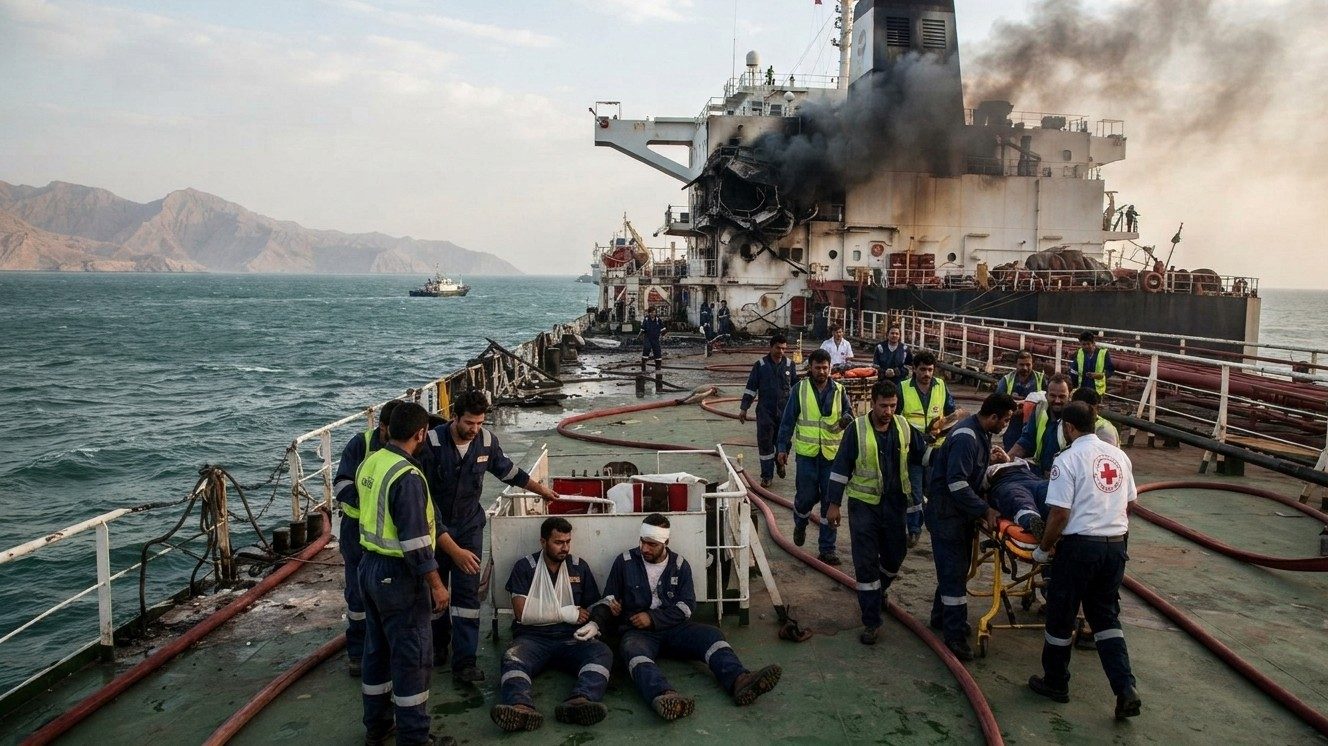
Twelve seafarers were injured on Tuesday when the Panama-flagged tanker On Peace was struck by a projectile in the Strait of Hormuz. The strike is the latest in a run of attacks on commercial shipping in the waterway.
India’s Ministry of External Affairs said the Aframax tanker was hit off the coast of Oman with 19 crew on board, 17 of them Indian nationals. Eleven of the injured were Indian. The UK Maritime Trade Operations centre (UKMTO) reported that the vessel was struck above the waterline while on an outbound transit.
The ministry said the injured were evacuated with Omani assistance and are being treated in Khasab, Oman. New Delhi thanked Muscat for its support and condemned the attack. It called for an immediate end to attacks on shipping and for navigation through international waterways to be restored.
The 2021-built tanker, about 250 metres long and roughly 115,000 deadweight tonnes, is owned and operated by Dubai-based ONEX DMCC. It is managed by Anglo-Eastern Tanker Management. No party has claimed responsibility, and India did not name one.
On Peace is one of 81 vessels on a blacklist kept by the Persian Gulf Strait Authority (PGSA), which says they breached Iran’s protocols for the strait. The authority has warned that listed ships face fines, detention or confiscation on future passages.
At least five commercial vessels have been attacked in the strait since 3 October. Four more were reported hit on 28 and 29 September. A day before the On Peace strike, UKMTO said an inbound tanker was hailed and threatened by Iran’s Islamic Revolutionary Guard Corps about 11 nautical miles north of Khasab and forced to turn back.
Iran has asserted control over much of the strait since the war involving the United States and Israel began on 28 February. Traffic has partly recovered but remains well below pre-war levels.
NIGERIA WATCH
Nigerian stakeholders should read this as a continuing cost signal, not a distant incident. The blacklist adds a new risk: a vessel’s trading history or ownership can now determine whether it is threatened or struck. Cargo owners and charterers will want to know whether the ships carrying their goods are listed.
War-risk cover remains the most direct channel to Nigerian importers. A September tanker market report put Hormuz war-risk premiums at 7.5% to 12.5% of hull value per transit, against about 0.25% before the conflict. That was before the latest escalation. Higher insurance and longer voyages feed into freight rates and landed costs at Lagos ports.
The crew toll is also a reminder of seafarer welfare. No Nigerian casualties have been reported. The Nigerian Shippers’ Council, NIMASA and the Federal Ministry of Marine and Blue Economy should say what contingency and welfare arrangements exist for Nigerian seafarers on vessels trading through high-risk zones.
Waterways News will continue to track the crisis and its effect on Nigeria’s ports, freight costs and maritime workers.
Maritime Security and Safety
IMO Mourns Five Seafarers Killed as Somali Forces Retake Hijacked Tanker
IMO Mourns Five Seafarers Killed as Somali Forces Retake Hijacked Tanker
Deaths on MT Honour 25 are the first at the hands of Somali pirates in over a decade, as 22 crew remain captive on another ship
By Okeoghene Onoriobe | Waterways News
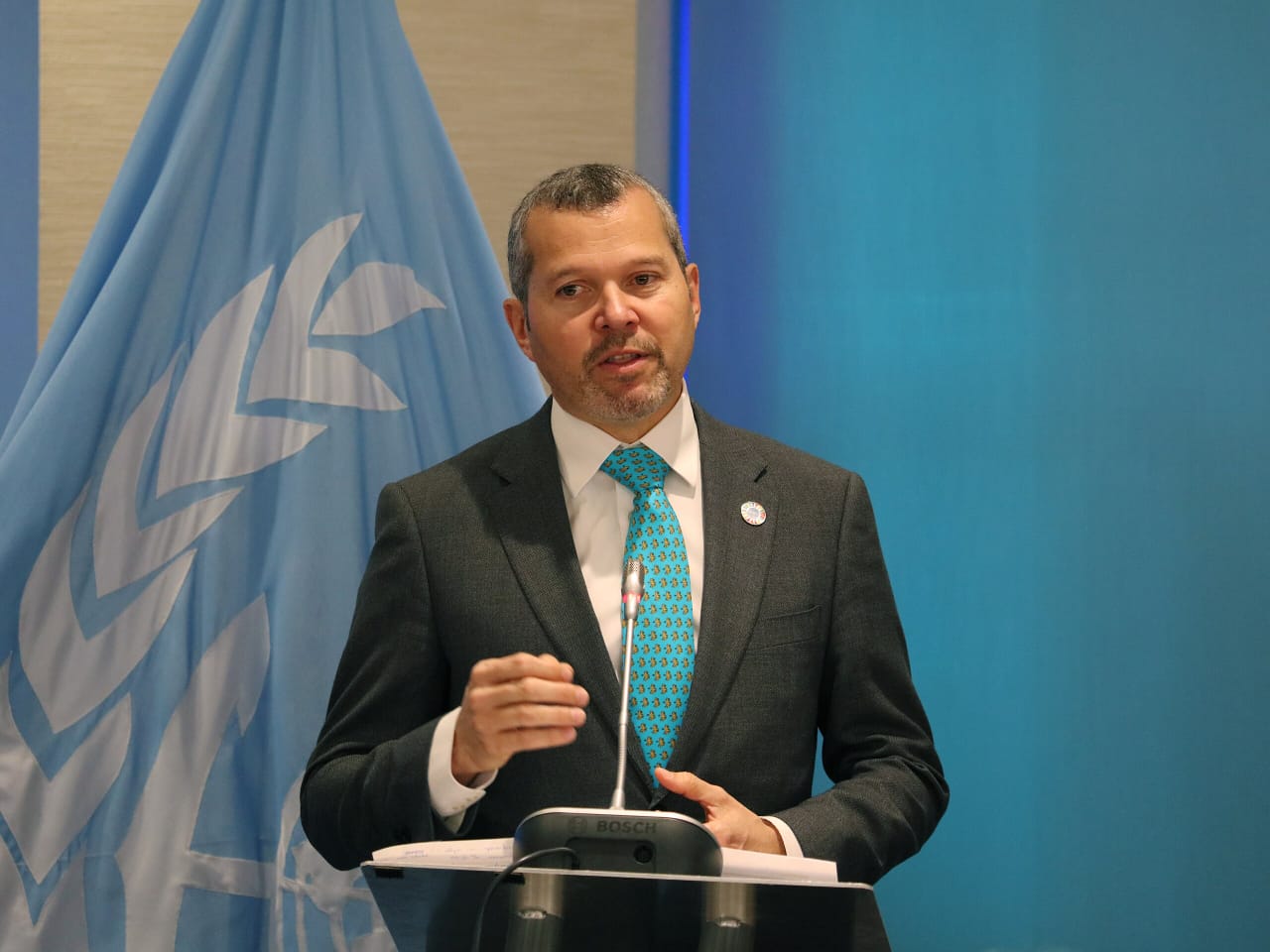
IMO Secretary-General Arsenio Dominguez has expressed condolences over the deaths of five crew members during the operation to free the hijacked vessel HONOUR 25 in the Gulf of Aden region.
The Palau-flagged tanker was seized by pirates off Somalia on April 21. Puntland’s Information Ministry said a rescue mission freed the ship and captured 16 suspected pirates. The ministry said the pirates killed five crew members before the operation began: three Pakistanis, one Myanmar national and one Indian. Pakistan’s Foreign Office named its three dead nationals as Rafiullah Khan, Syed Kashif Umer and Mahmood Ahmed Ansari. Four other crew members were injured, three of them Pakistanis and one Indian. The ship carried 17 crew, and the deaths are the first from Somali piracy in more than a decade.
Dominguez said he was “deeply saddened” and promised to keep pressing those responsible for the injured crew’s care. He thanked the Government of Somalia for its efforts. In all, 44 seafarers were freed from three hijacked vessels: HONOUR 25, SEAMULL (SIBU 1) and EUREKA. He also reminded the world that 22 seafarers remain captive aboard the ASANA.
Accounts of the deaths differ. The IMO described the five as dying in the crossfire of rescue operations, while Puntland says they were killed before its forces moved in. Arrest figures also vary, with 16 suspects in some reports and 21 in others.
Nigeria Watch
The 25 tragedy matters to Nigerian stakeholders for three reasons:
Piracy is back. Somali piracy had largely faded from the headlines. Its return, along with the Hormuz crisis, shows how quickly security gains at sea can reverse when attention and patrols thin out.
Gulf of Guinea lessons. Nigeria’s Deep Blue Project was built on the premise that deterrence has to be sustained. The Somali experience suggests that arrests and rescues must be backed by capacity on land and at sea.
Crew welfare. Families of the victims have had to appeal to governments and the IMO themselves. Nigerian seafarers and operators should be asking what repatriation, insurance and welfare support exist for crew caught in similar incidents.
No Nigerian crew were reported among the casualties.

 Oil and Gas8 months ago
Tantita’s Pipeline Deal: $144m Contract, Rising Output, and the Questions that Deserve Answers
 MARITIME TRADE & SHIPPING8 months ago
World’s Largest Container Ship Sets New Maritime Record with 22,233 TEUs on Single Voyage
 Blue Economy9 months ago
Nigeria’s Coast Guard Bill: A Solution in Search of a Problem?