

News
Navy, Local Divers Rescue Bayelsa Commissioner, Six Others After Brass Boat Mishap; Search Continues for Missing Police Officer

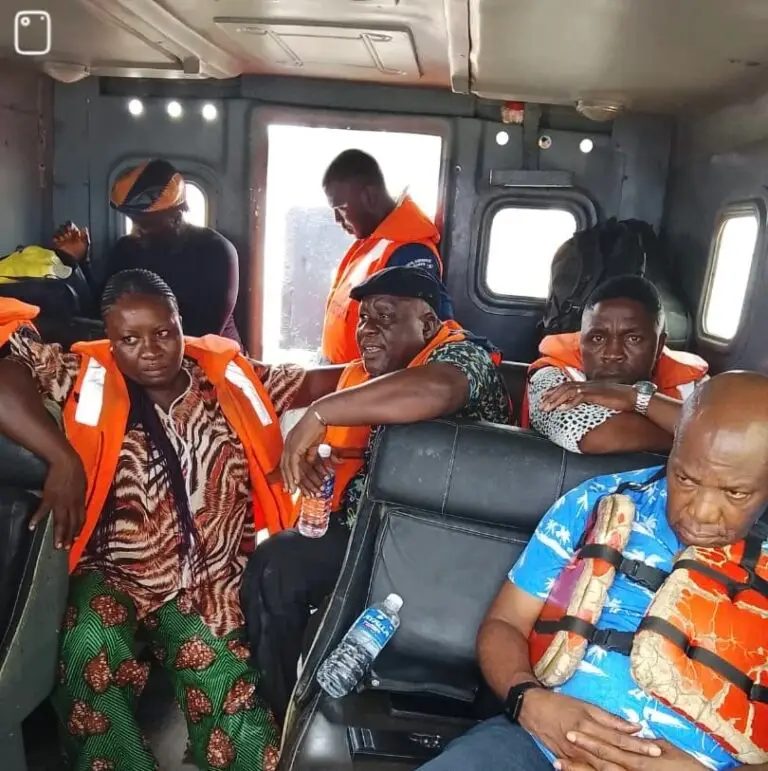

Navy, Local Divers Rescue Bayelsa Commissioner, Six Others After Brass Boat Mishap; Search Continues for Missing Police Officer
By Raymond Gold | Waterways News
Personnel of the Nigerian Navy’s Forward Operating Base (FOB) Formoso, working with local divers and members of the Abedigbene fishing community, have rescued seven passengers from a boat mishap in Abedigbene waters, Brass Local Government Area of Bayelsa State. The incident happened on 5 November 2026.
The rescue followed a distress report from a local fisherman about a passenger boat travelling from Yenagoa to Akassa. Navy personnel at the base, stationed at the Labrador Lagosgbene Houseboat, moved quickly to the scene and began search and rescue operations alongside the divers and community members.
Seven of the eight people reportedly on board were pulled from the water. Among them was the Bayelsa State Commissioner for Trade, Industry and Investment, Dr Ebieri Jones, along with an officer of the Nigeria Security and Civil Defence Corps (NSCDC) and five other passengers.

The survivors were taken to the Labrador Lagosgbene Houseboat and given first aid. Preliminary checks found no visible injuries. One passenger, a police officer, is still missing, and search operations are ongoing. On 6 November, the commissioner and the six other survivors were taken to Yenagoa to reunite with their families.
The Commanding Officer of FOB Formoso commended his personnel for their prompt response and professionalism. He also thanked the local divers and the Abedigbene community, saying the operation shows the value of cooperation between security agencies and host communities in protecting lives on the water.
The cause of the mishap has not been disclosed.
Nigeria Watch
The rescue is welcome news, but it is also a reminder of how fragile safety is on Bayelsa’s waterways. The first alert came from a fisherman, and the first hands in the water belonged to local divers. For operators and passengers on the creeks, rescue still depends largely on whoever is nearest.
The same Navy base has been active in Brass before. FOB Formoso personnel rescued two teenagers from a boat mishap in Egweama Community, Brass LGA in July. In the same month, two fishermen went missing after their boat capsized off Opu-Okumbiri community in Brass. A fisherman involved in that incident appealed for better safety equipment and weather monitoring for fishing communities.
For stakeholders, the questions are familiar:
Were life jackets available and worn?
Was the boat within its manifest limit?
Is the operator licensed and the vessel fit to sail?
Is there a standing rescue capability on the Yenagoa–Brass–Akassa route that does not rely on chance?
The Bayelsa State Government has previously announced measures to curb avoidable boat mishaps, including mandatory life jackets and lifebuoys for all boat operators. This incident again raises the gap between such directives and enforcement, a recurring concern for associations like WABOTAN and ATBOWATON.
NIWA, the state government and operators will be expected to say what lessons come out of the investigation.
Waterways News will follow the search for the missing officer.
News
Bayelsa Waterways Claim Police Officer, Woman in Two Days as Rescued Commissioner’s Boat Mishap Deepens Safety Fears
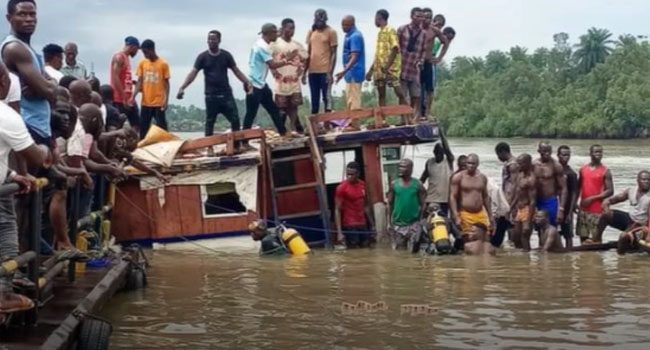
Bayelsa Waterways Claim Police Officer, Woman in Two Days as Rescued Commissioner’s Boat Mishap Deepens Safety Fears
Boat Capsize and Tanker-Canoe Collision Within 24 Hours, Renew Waterway Safety Alarm
By Ighoyota Onaibre| Waterways News
A serving police officer and a woman have died in two separate waterway accidents in Bayelsa State, the state Police Command has confirmed, renewing concerns about safety on the Niger Delta’s busy water routes.
In a statement issued Saturday night by its spokesperson, DSP Musa Mohammed, the command said the first accident happened on Thursday. A passenger boat travelling from Yenagoa to Akassa capsized along the Abedigbene waterways in Brass Local Government Area with eight people on board.
Maritime Union workers in the area raised the alarm. Personnel of the Nigerian Navy’s Forward Operating Base (FOB) Formoso, local divers and members of the Abedigbene fishing community then launched a joint search-and-rescue operation. Seven passengers were pulled out alive, among them Bayelsa State Commissioner for Trade, Industry and Investment, Ebiere Jones, and an officer of the Nigeria Security and Civil Defence Corps. The police officer, initially reported missing, was later confirmed dead.
The second incident happened around 5:20am on Saturday near Angalabiri Community in Sagbama Local Government Area. An oil tanker reportedly operated by Sterling Global Oil Ltd collided with canoes close to the shoreline. Several canoes were destroyed, and a local woman, Mrs Victoria Abetnigo, was seriously injured. She was rushed to Ebedeibiri General Hospital, where she was pronounced dead.
Police said investigations are ongoing into both incidents.
Commissioner of Police CP Ajao Saka Adewale offered condolences to the families, colleagues and loved ones of the victims. He commended the Navy, local divers, maritime workers and fishermen for their swift response. He also urged commercial vessel operators to follow maritime safety regulations, keep a safe distance from shorelines and established canoe routes, and avoid reckless navigation. Passengers, he said, should wear life jackets throughout their journeys.
NIGERIA WATCH
Two incidents, one lesson: safety on Nigeria’s inland waters is still decided in the first minutes.
The Abedigbene rescue worked because local responders were close by. Fishermen, divers and union workers reached the scene before formal help could, which is typical of Niger Delta emergencies. It also exposes how much of the region’s rescue capacity is informal and unfunded.
The Angalabiri collision points to a different risk: large commercial vessels sharing shoreline lanes with canoes. Small-scale operators and riverine communities bear most of the risk in these encounters. They are also the group least represented in the enforcement conversation, which is a recurring Waterways News concern.
Three questions remain for regulators and operators:
Will the investigations into both incidents be made public, including the cause of the capsize and the tanker’s navigation conduct?
Will life-jacket rules be enforced on small passenger boats and canoes, or only announced?
Will marine safety agencies and state authorities put shared safety corridors and visibility measures in place for canoe routes?
Operator associations such as WABOTAN and ATBOWATON have long argued that safety messaging must reach the last-mile operator, not just licensed fleets.
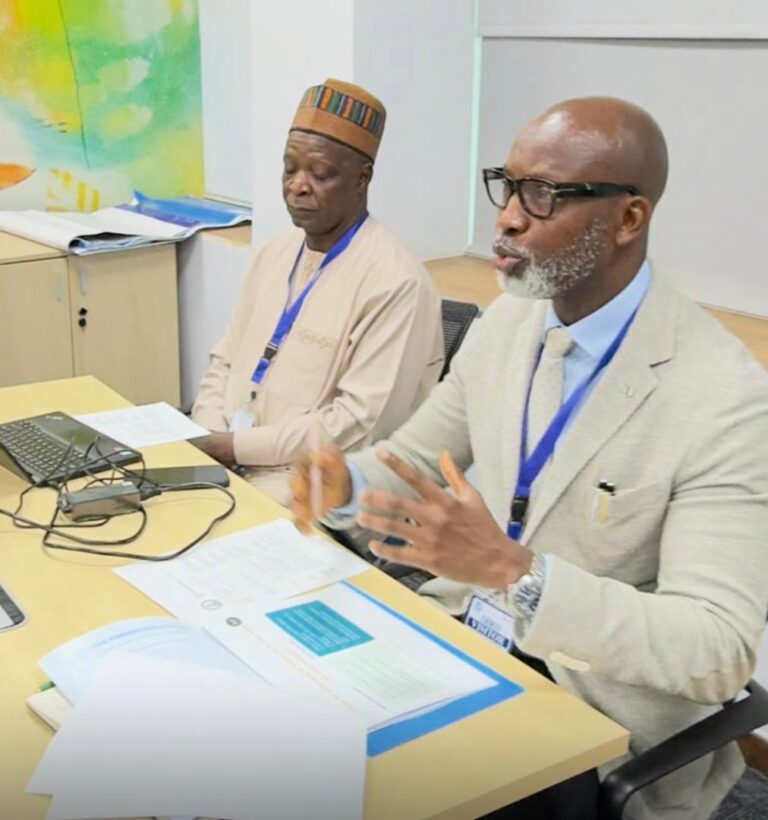
$200m Fish Lifeline: FG Taps World Bank Funds to Push States Towards Fish Sufficiency
Oyetola Sets Sights on Net Exporter Status as FG Secures $200m World Bank Backing for State-Led Aquaculture
By Okeoghene Onoriobe | Waterways News
The Federal Government says it has secured a $200 million commitment from the World Bank Group to drive fisheries and aquaculture production nationwide, as it moves to cut fish imports and close a supply gap of more than 2.2 million tonnes.
The money will be lent to state governments on concessional terms. It is meant to help them expand fish production, attract investment and build viable aquaculture projects.
The Minister of Marine and Blue Economy, Dr Adegboyega Oyetola, announced this at an Executive Training on the Aquaculture Investment Guide, organised by his ministry with the World Bank Group in Abuja. He was represented by the Senior Special Assistant to the President on Marine and Blue Economy, Professor Busayo Fakinlede.
Oyetola said fish is central to food security, household nutrition and rural livelihoods, and that Nigeria cannot be food secure while importing most of its fish. He said the goal is to “produce more, import less” and eventually become a net exporter, which he said requires every state to play its part.
The numbers
Nigeria needs about 3.6 million tonnes of fish a year but produces roughly 1.4 million tonnes. Imports cover the gap and cost nearly $1 billion annually in foreign exchange.
State-driven framework
Under the ministry’s framework, each state is expected to:
identify priority aquaculture value chains
assess investment readiness
develop bankable project pipelines
commit to measurable contributions to national fish output
The training brought together commissioners from Rivers, Bayelsa, Delta and Cross River States, plus permanent secretaries and directors of fisheries and aquaculture from across the federation. It covered business models, risk management, environmental and social safeguards, and public-private partnerships.
A Federal-State interface is also planned to coordinate a national fish security strategy.
Oyetola commended the World Bank for its support on analytical studies, cluster-based development, capacity building and the Aquaculture Investment Guide. He will oversee a post-training stakeholders’ roundtable with states and other stakeholders to sustain momentum.
Ministry’s scorecard
Fakinlede credited the minister’s leadership for:
the August 2026 inauguration of the Technical Committee on Accelerating Fish Production
digitisation of fish import licensing
a rise in national output from 1.1 million to 1.4 million tonnes
US shrimp-export certification after compliance with Turtle Excluder Device requirements
the Fish City and Fish Terminal investment portfolio to attract private capital
NIGERIA WATCH
Read the fine print. As of 9 November, I could not find a published World Bank project document for the $200 million, and the figure rests on the ministry’s statement. The repayment period, interest rate, per-state allocation and disbursement date have not been made public, and it is unclear whether this is new money or part of financing already agreed. Waterways News should press the ministry on these before treating the figure as settled.
Loans, not grants. States carry the debt and must show bankable projects. Strong states like Rivers, Bayelsa, Delta and Cross River, whose commissioners attended, sit on the water and are best placed to benefit. Inland and riverine communities lacking project-preparation capacity risk being left behind.
The missing small operators. The framework speaks of investors, PPPs and bankable pipelines. It says little about artisanal fishers, boat operators and fishing communities, including those represented by WABOTAN and ATBOWATON, who supply and move much of the country’s fish. Without cold chains, landing jetties, safe water transport and affordable engines, higher production will not reach markets.
Policy versus delivery. The target is ambitious, with output reportedly up from 1.1 million to 1.4 million tonnes. Yet Nigeria still meets under 40 per cent of its fish demand, and it has heard similar promises before, from the Cabotage Vessel Financing Fund onward. The test is whether the roundtable produces dates, allocations and measurable state commitments.
Maritime Security and Safety
IMO Council Mourns Slain Seafarers, Demands Stronger Protection as Maritime Conflicts Deepen
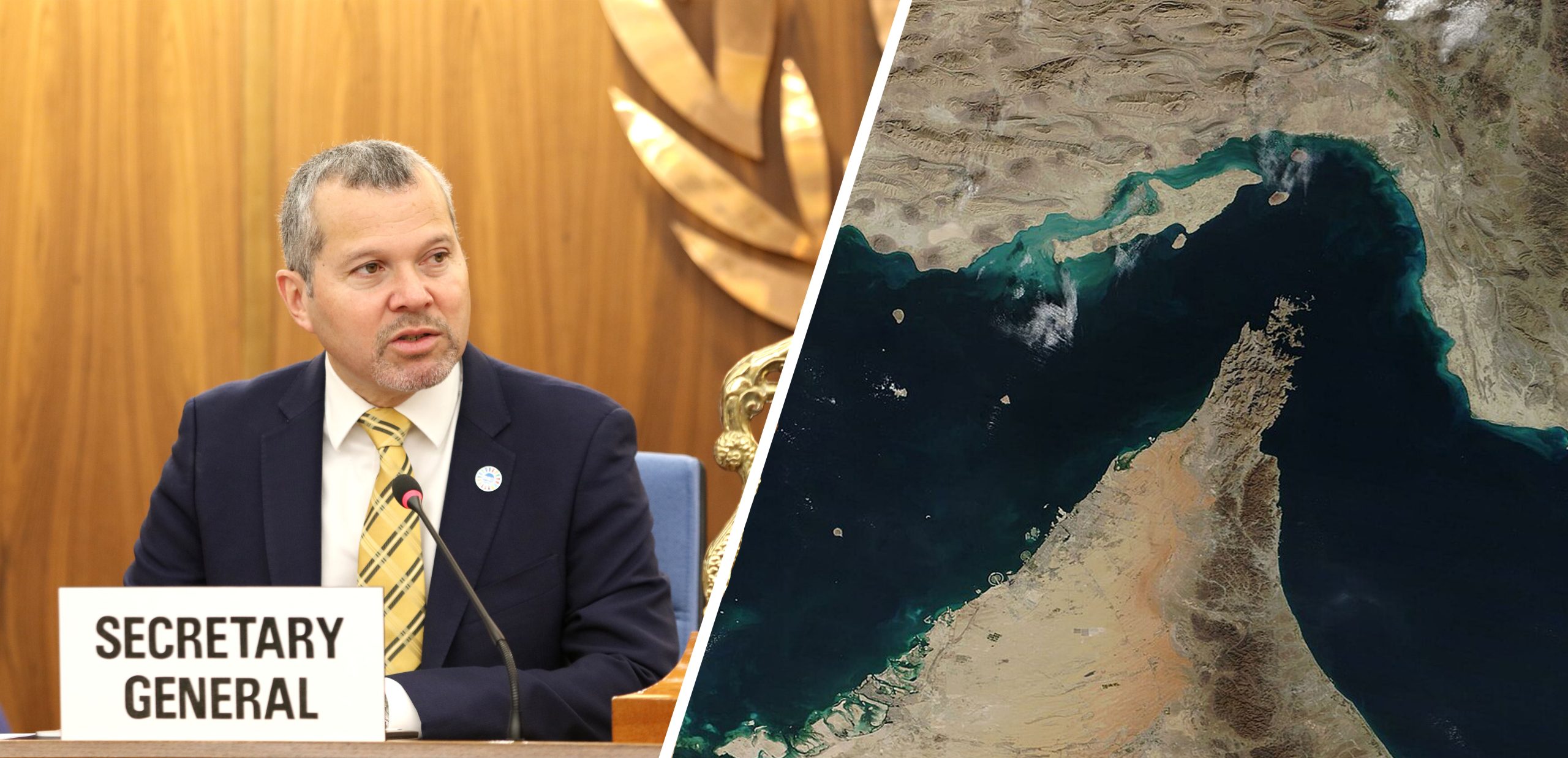
IMO Council Mourns Slain Seafarers, Demands Stronger Protection as Maritime Conflicts Deepen
Dominguez warns merchant ships remain exposed from Hormuz to the Black Sea as 138th Council session ends in London
By Okeoghene Onoriobe | Waterways News
Member states at the International Maritime Organization (IMO) used the opening of the Council’s 138th session to mourn seafarers killed in recent attacks and to demand firmer protection for civilian mariners.
Council met in London from 2 to 6 November, with Russia and Iran putting security in the Black Sea and the Strait of Hormuz at the centre of discussions. On 2 November, Secretary-General Arsenio Dominguez said commercial shipping remained exposed to attack in the Strait of Hormuz, the Red Sea, Bab el-Mandeb, the Eastern Mediterranean, the Black Sea and the Sea of Azov.
The mourning was driven by a run of deaths this year. Five seafarers reportedly died on 29 September during the rescue of the hijacked HONOUR 25 in Somali waters, and several others were seriously injured. In all, 44 seafarers were freed from three vessels. Dominguez noted that 22 seafarers remain captive aboard the ASANA, which was seized earlier this year, and urged continued effort to secure their release.
The Strait of Hormuz remains the deadliest flashpoint. The IMO had verified at least 70 attacks on international shipping there, with 19 seafarers killed, by its late-August assessment. A tally reported by gCaptain put the seafarer death toll at 24 as of 5 November.
Dominguez has repeatedly insisted that seafarers are civilians doing their jobs. He has said they should never become casualties of conflicts to which they are not a party.
Member states echoed the call. Liberia renewed its appeal for seafarer protection and freedom of navigation, and Indonesia said seafarer protection and safety of navigation must be a shared priority.
The session also dealt with leadership. Council backed a second four-year term for Dominguez, subject to approval by the IMO Assembly in 2027. The term would run from 1 January 2028 to 31 December 2031.
Nigeria Watch
Nigeria has more at stake than a distant diplomatic debate. Hormuz disruption has fed through to freight rates, war-risk insurance and port costs for Nigerian importers and shippers. Piracy off Somalia and the Gulf of Aden is a reminder that the Gulf of Guinea’s own security gains, including the Deep Blue Project, cannot be taken for granted.
The Council session also bears on Nigeria’s IMO seat. Abuja has pushed seafarer welfare and maritime security as part of its diplomacy, and the Council’s message gives that agenda more weight. The test is whether Nigeria backs its advocacy abroad with welfare protections, training and safety enforcement for its own mariners and for the informal waterway operators represented by WABOTAN and ATBOWATON.
For those operators, the lesson from London is that protection is a shared responsibility, and it has to reach the people who work on the inland water, not just those on ocean-going ships.

 Oil and Gas8 months ago
Tantita’s Pipeline Deal: $144m Contract, Rising Output, and the Questions that Deserve Answers
 MARITIME TRADE & SHIPPING8 months ago
World’s Largest Container Ship Sets New Maritime Record with 22,233 TEUs on Single Voyage
 Blue Economy9 months ago
Nigeria’s Coast Guard Bill: A Solution in Search of a Problem?