Business
GHOST BERTHS AND EMPTY DEPOTS: HOW THE DANGOTE REFINERY AND FUEL SUBSIDY REMOVAL ARE RESHAPING NIGERIA’S ECONOMY — AND DEVASTATING THE DOWNSTREAM SECTOR

GHOST BERTHS AND EMPTY DEPOTS: HOW THE DANGOTE REFINERY AND FUEL SUBSIDY REMOVAL ARE RESHAPING NIGERIA’S ECONOMY — AND DEVASTATING THE DOWNSTREAM SECTOR
By Oghenewoke Onoriode| Maritime & Energy Correspondent | March 15, 2026
THE VIEW FROM THE CREEK
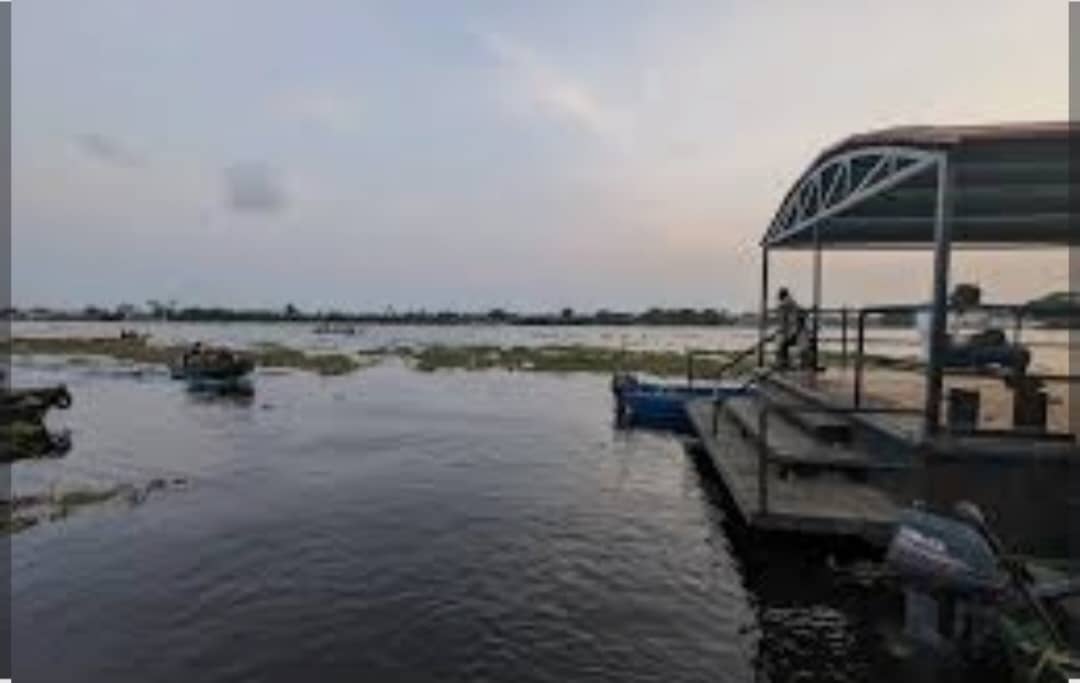
A boat tour along the Lagos creeks and lagoon this week paints a picture few government economists would want to acknowledge. The berths that once teemed with product tankers — vessels loaded with imported petroleum offloading into an armada of tank farms along Creek Road, Kirikiri, Apapa and the Ojo waterfront — now sit idle. The vessels are gone. The jetties, quiet. And in what may be the most dramatic commercial signal yet, dozens of tank farms that once formed the backbone of Nigeria’s petroleum distribution value chain are now listed for sale.


This is the new reality of Nigeria’s downstream sector — a sector caught between two seismic forces: the removal of the fuel subsidy in May 2023 and the full ramping up of the Dangote Petroleum Refinery.
THE REFINERY: AN INDUSTRIAL COLOSSUS WITH A DISRUPTIVE WAKE
The Dangote Refinery, located in Ibeju-Lekki, Lagos, finally reached full operational capacity of 650,000 barrels per day — the world’s largest single-train refinery — marking an important milestone in Nigeria’s efforts to cut reliance on imported fuel. By January 2026, it was supplying 62% of the country’s Premium Motor Spirit, overtaking fuel importers for the first time in the country’s history.
Projections indicate the country could save up to $10 billion annually in foreign exchange previously spent on fuel imports, with petrol imports falling by more than 54% year-on-year in the first quarter of 2025 as local supply increased. Beyond the domestic market, diesel and jet fuel shipments have reached Ghana, Togo, and Cameroon, positioning the facility as a regional export hub.
But every revolution has its casualties, and the casualties along the Lagos waterway are visible and verifiable.
TANK FARMS FOR SALE: THE EVIDENCE ON THE WATER
The evidence is not anecdotal. It is documented in hard numbers, in regulatory data, and in property listings that any journalist can verify today.
No fewer than 70 tank farm owners have been compelled to cease operations, leaving their facilities abandoned and idle as retailers and station owners increasingly bypass the storage facilities. These dormant farms represent 65% of the total 120 approved facilities, with operators turning to alternative trucking options instead.
On Nigeria Property Centre alone, 48 tank farm properties are currently listed for sale, with facilities in Kirikiri, Dockyard Apapa, and surrounding maritime zones — some priced at ₦18 billion each — offering private jetties, multiple loading gantries and Certificate of Occupancy titles. These are not speculative land plots. They are fully operational, licensed petroleum storage facilities now without a buyer.
The business closure was primarily driven by the removal of the fuel subsidy, which led to a 488% increase in petrol prices, affecting the purchasing power of fuel marketers and fundamentally changing the economics of tank farm operations.
AN INDUSTRY BUILT ON IMPORTS — NOW STRANDED
The import data tells the full story of why the berths are empty. Bloomberg, citing data from analytics firm Vortexa Ltd., reported that fuel shipments into Nigeria stood at approximately 110,000 barrels per day in the first weeks of 2025 — the lowest since 2017, when imports regularly exceeded 200,000 barrels per day and sometimes reached 400,000 bpd.
By early 2026, the collapse had deepened further. Shipping data from Kpler showed petrol imports into Nigeria fell by more than half in February 2026 to around 50,000 barrels per day — a drop of nearly two-thirds compared with the same period the previous year.
As CORAN, the Coalition of Refineries and Associated Industries, noted in January 2026, Nigeria’s downstream sector for much of the past 30 years was shaped by an import-led trading model — one where fuel importation became profitable due to price differences, access to foreign exchange, and subsidy reimbursement systems, with no reinvestment into refining capacity. That model is now obsolete.
The diagnosis from industry insiders is frank. Captain Emmanuel Ihenacho, Chairman/CEO of Integrated Oil & Gas and CEO of Genesis Shipping, warned that “Job losses and slump in investment is bound to happen if tank farm owners are no longer being able to sell.”
He did not mince words on the scale of disruption: “What is happening currently in the downstream sector is something we have never seen before. It’s a complete emasculation of a class of business people.”
THE SUBSIDY REMOVAL: THE ACCELERANT
Layered onto this structural disruption is the shock of fuel subsidy removal. On May 29, 2023, President Bola Tinubu declared in his inaugural speech that the subsidy was gone. The result was a petrol price hike of nearly 488% in Africa’s largest oil producer by October 2024, with electricity costs also rising multifold because more than 58% of Nigerian households — off the national grid — rely on petrol and diesel generators.
Research presented at a stakeholders’ dialogue in Abuja by Mohammed Shuaibu of the University of Abuja found that poverty rose from a baseline of about 50% to 63% after subsidy removal, before moderating slightly to 56.2% when limited cash transfers were introduced. The national poverty gap — measuring the depth of poverty — also widened from 31.6% to over 45%, meaning many poor households became even poorer.
The human sentiment data from Afrobarometer’s March 2025 national survey is equally stark. More than nine in ten Nigerians (93%) say the country is going in the wrong direction. Nearly nine in ten (88%) describe the country’s economic condition as “fairly bad” or “very bad.” Three-fourths report poor personal living conditions, and 95% say they or someone in their household went without a cash income at least once during the previous year. A large majority — 85% — disapprove of the government’s decision to remove the fuel subsidy, and 58% say it should be reinstated even at the cost of reductions in health or education spending.
A TALE OF TWO ECONOMIES
The paradox is glaring. At the macro level, Nigeria is being celebrated. The refinery is generating foreign exchange, stabilising the naira, and exporting fuel to markets from West Africa to the United States. At the micro level, millions of Nigerians cannot afford to eat. The World Bank projects 139 million Nigerians will be living in poverty by the end of 2025 — a nearly 60% increase from 87 million in 2023.
A 2024 Afrobarometer survey found that 62% of Nigerians believe the removal of the petrol subsidy has worsened their living conditions, while only 18% think the savings are being used effectively.
Meanwhile, along the Lagos waterways, the human cost of creative destruction is written in rusting jetties and “For Sale” signs on facilities that once employed dockhands, surveyors, product inspectors, clearing agents, vessel operators, and thousands more in ancillary maritime services.
MONOPOLY CONCERNS IN THE DOWNSTREAM
The restructuring has also raised legitimate concerns about market concentration. An operator who sought anonymity expressed concern over the direction of the sector: “The NMDPRA has not issued any licence for petrol imports this year. Dangote is gradually enjoying a monopoly in the downstream, and we all know that this is not healthy for any sector.”
The NMDPRA noted that a sharp reduction in imports caused overall fuel supply to decline significantly in February 2026, recording a drop of 25.4 million litres per day due to the sudden fall in imports — suggesting the market may not yet be ready for a single-source supply model.
WHAT COMES NEXT?
Aliko Dangote has initiated plans to expand the refinery’s capacity to 1.4 million barrels per day, which would further consolidate the facility’s dominance over Nigeria’s fuel supply chain.

Industry voices are increasingly proposing a structural separation of functions: the Dangote Refinery should refine and sell through ships to tank farm owners, who in turn distribute to retail outlets by truck — preserving the role of existing storage infrastructure. Without such a framework, the emptying of Lagos’s berths is likely to continue.
For now, as one moves through the Lagos creeks and lagoons, the answer blowing in from the idle berths is unambiguous: the transformation of Nigeria’s energy economy is real, historic, and irreversible — but for the workers, marketers, and investors built on the import model, no managed transition plan yet exists.