
News
Lake Nwonyo Roars Back to Life: Ibi Fishing Festival Draws Presidents, ₦15m in Prize Money, and a Global Spotlight on Nigeria’s Inland Waters

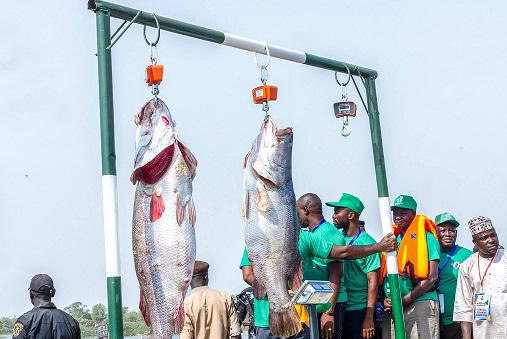

Lake Nwonyo Roars Back to Life: Ibi Fishing Festival Draws Presidents, ₦15m in Prize Money, and a Global Spotlight on Nigeria’s Inland Waters and Water Tourism
By Laraba Haruna | Waterways News | Jalingo
The ancient waters of Lake Nwonyo became the centre of the world on April 18, 2026, as the historic fishing community of Ibi, Taraba State, hosted the grandest edition yet of the Nwonyo International Fishing Festival — a century-old tradition that is fast cementing Nigeria’s inland waterways as a serious draw for culture, diplomacy, and blue economy investment.
From first light, the lakeside buzzed with the kind of energy that only water can generate. Decorated canoes cut elegant arcs across the lake in a colourful boat regatta, while traditional horsemen staged a full durbar on the banks and young swimmers competed in contests that drew roaring applause from thousands of spectators. For a publication dedicated to Nigeria’s waterways, Nwonyo is not merely a cultural event — it is proof that the nation’s rivers and lakes hold untapped economic and diplomatic power.

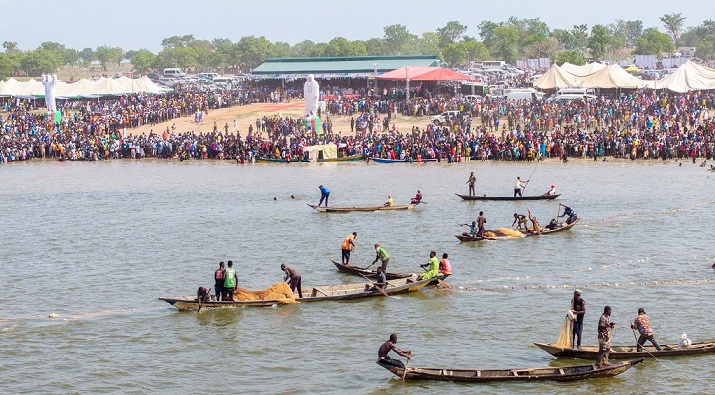
The festival attracted a roster of dignitaries that underscored its growing international weight. President Bola Ahmed Tinubu was represented by the Minister of Tourism. President Dickon Mitchell of Granada attended in person. Ghanaian President John Dramani Mahama sent a representative. Elder statesman General Theophilus Yakubu Danjuma was represented by Plateau State Governor Caleb Mutfwang. Also present were Senator David Jimkuta and host Governor Agbu Kefas of Taraba State, alongside traditional rulers and stakeholders from across the country.
At the heart of the festival, as always, was the fishing competition itself — the symbolic act that gives Nwonyo its soul. Participants cast their nets into the famed lake in a contest that is as much about identity and heritage as it is about catch weight. This year, the Taraba State Government put up ₦15 million in prize money, sending a clear signal that the state is serious about monetising its waterways assets.
Haruna Saleh Busara took the top prize of ₦10 million after hauling in an impressive 55.5 kilograms of fish. Samaila Yakubu followed in second place with 52.6 kilograms, earning ₦3 million, while Emmanuel Daniel rounded out the podium with 18.2 kilograms and a ₦2 million reward.
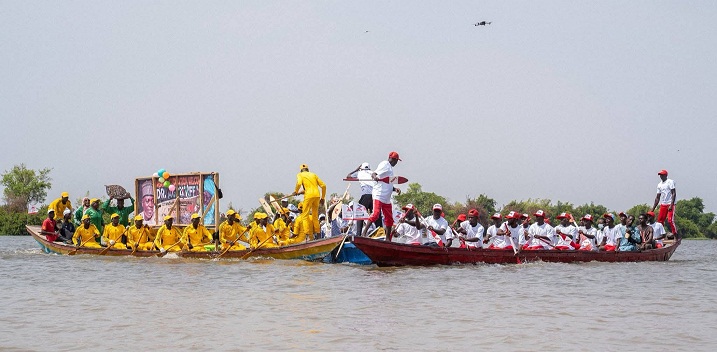
President Tinubu, speaking through his representative, described the festival as a mirror of Nigeria’s unity in diversity and a key driver of tourism. He reaffirmed the Federal Government’s commitment to leveraging culture as an economic engine — a message that resonates directly with ongoing national conversations about the blue economy.
Governor Kefas used the occasion to pitch Taraba State as safe, open, and investment-ready, announcing plans to expand the festival’s global footprint. For a state endowed with rivers, lakes, and fertile fishing grounds, the Nwonyo festival is a flagship opportunity to position those waterways as engines of growth rather than mere geographic features.
General Danjuma, also represented, called the festival a symbol of unity in diversity, noting its enduring role in preserving cultural identity and fostering national cohesion. Senator Jimkuta echoed that sentiment, pointing to the economic ripple effects felt by local traders, transporters, and hospitality operators whenever thousands of visitors descend on the lakeside community.
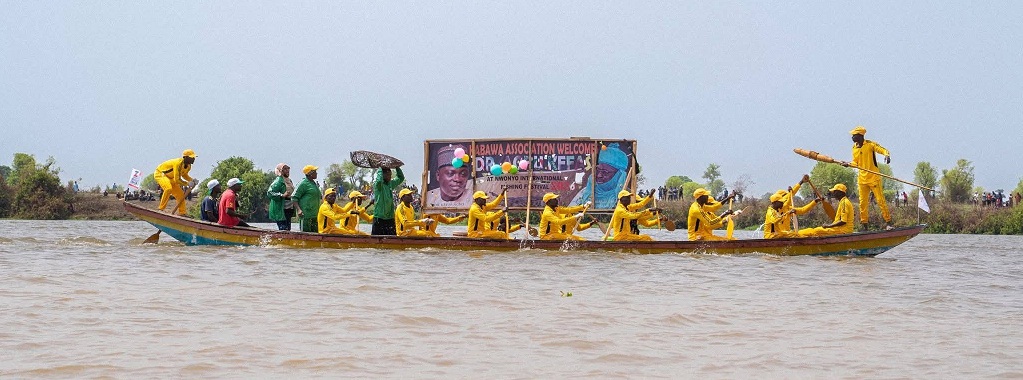
Those economic benefits were visible this year. Markets swelled, boat operators were in high demand, and guesthouses reported full capacity — a microcosm of what Nigeria’s inland water communities can achieve when their natural assets are properly showcased.
The Nwonyo International Fishing Festival has been held for more than a century, evolving from a local Jukun fishing tradition into an internationally recognised cultural institution. Its trajectory is a reminder that Nigeria’s waterways — so often discussed in terms of security threats, oil spills, or flooding — are also sites of living heritage, ecological wealth, and considerable economic promise.
The 2026 edition has placed Taraba State firmly on the global cultural map. But for the waterways community, the larger story is this: when Nigeria’s inland waters are celebrated, managed, and invested in, everyone benefits — from the fisherman hauling his catch at dawn to the diplomat watching from the lakeside.
Adapted from a report by Laraba Haruna

Blue Economy
China Launches World’s Largest Fully Electric Container Ship, Setting New Benchmark for Green Shipping
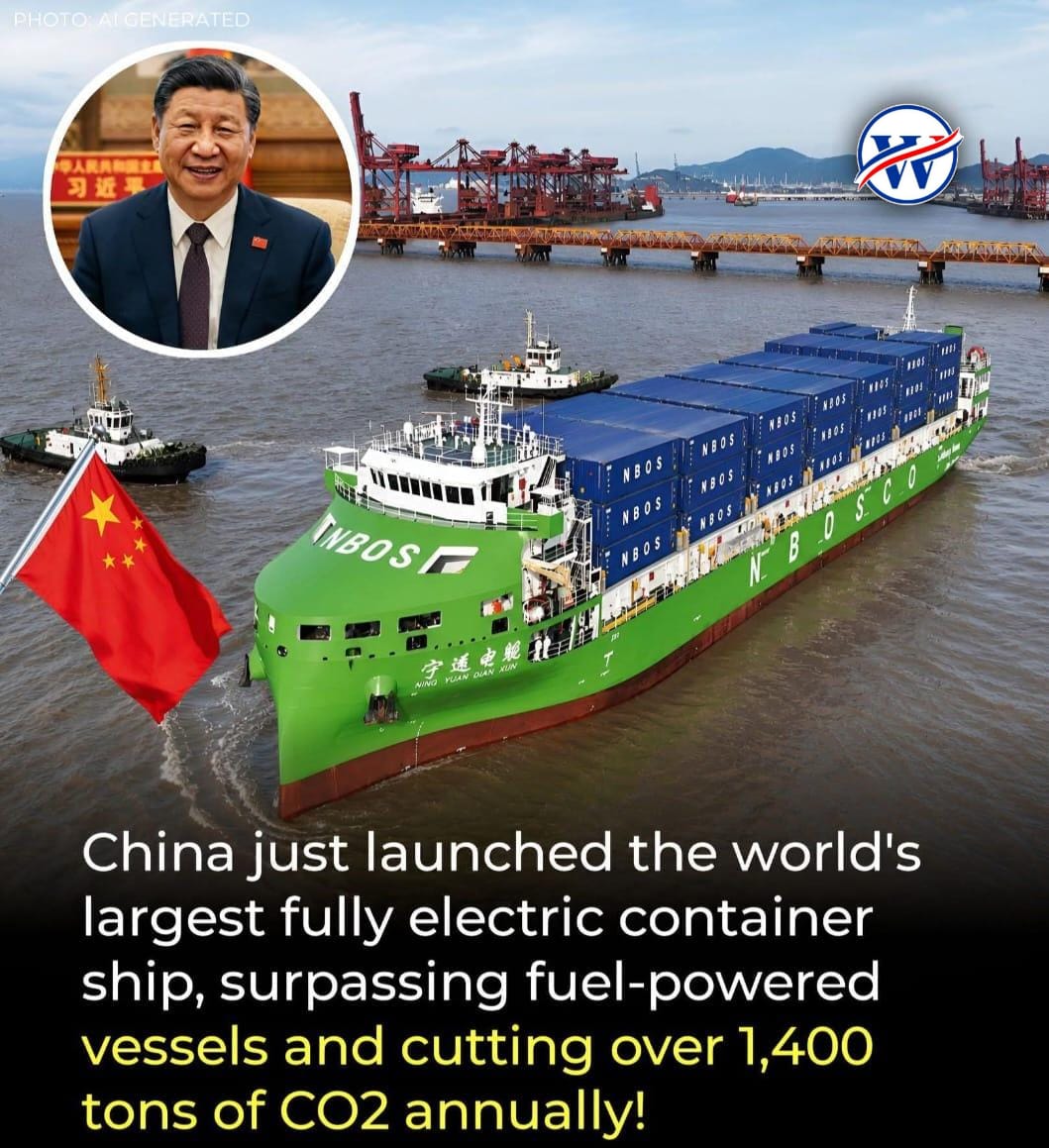
China Launches World’s Largest Fully Electric Container Ship, Setting New Benchmark for Green Shipping
The Ningyuan Diankun enters commercial service on zero-emission coastal route, as Nigeria and African ports weigh the implications of a fast-accelerating global maritime energy transition
By Okeoghene Onoriobe | Waterways News Correspondent
A new chapter in global maritime history opened on April 15, 2026, when the Ningyuan Diankun — the world’s largest fully electric container ship — departed the Beilun port area of Ningbo-Zhoushan Port in eastern China, bound for the Zhapu port area of Jiaxing Port. The voyage, modest in distance but historic in significance, marked the official commencement of commercial operations for a vessel that has already reshaped industry conversations about the future of zero-emission shipping.
Developed by Ningbo Ocean Shipping Co., the Ningyuan Diankun is the world’s largest and China’s first 10,000-tonne all-electric intelligent container vessel. (Global Times) Its entry into service signals that battery-powered propulsion — long considered viable only for short ferry crossings and inland river craft — is now capable of supporting meaningful commercial freight operations on coastal routes.
A Vessel of Considerable Scale and Sophistication
Measuring 127.8 metres in length and 21.6 metres in width, the vessel has a cargo capacity of 742 twenty-foot equivalent units (TEUs). It features a twin-engine and twin-propeller system with a maximum speed of 11.5 knots, and supports both high-voltage shore power charging and rapid battery swapping.
The ship is powered by 10 standardised containerised battery units with a combined storage capacity of approximately 20,000 kilowatt-hours — roughly the equivalent of 300 household electric vehicles — driving twin 875-kilowatt permanent-magnet synchronous propulsion motors.
Independently developed and designed by the Shanghai Merchant Ship Design and Research Institute, the ship boasts zero carbon emissions, intelligent operation, and high efficiency. Beyond its all-electric propulsion, the vessel incorporates an intelligent platform embedded within its operating systems, including a smart engine room, autonomous navigation technology, real-time panoramic ship monitoring, and weather routing tools.
Emissions Impact and the Green Transition
The environmental credentials of the Ningyuan Diankun are considerable. The vessel is expected to reduce carbon dioxide emissions by 1,462 tonnes annually while operating with zero emissions, minimal noise, and no pollution during voyages. It is also projected to save 580 tonnes of fuel per year after entering regular operation.
According to reports from China Daily, Xinhua, and other Chinese outlets, the ship is intended to demonstrate that zero-emission propulsion can work on regular freight corridors, not just on short ferry crossings. This distinction is significant: the Ningbo-Zhoushan to Zhapu route is a high-volume coastal artery, and operating a vessel of this scale on it without any fossil fuel propulsion represents a genuine proof of concept for the broader industry.
Ningbo Ocean Shipping currently operates 32 green and energy-efficient vessels, accounting for 57 percent of its fleet.The Ningyuan Diankun is one of the company’s first two fully electric intelligent ships.
Sister Ship and a Scaled-Up Vision
Its sister vessel, the Ningyuan Dianpeng, is scheduled to begin trial voyages in May and be delivered in June.
Once both vessels are operating together on fixed routes, Ningbo Ocean Shipping says they will form the backbone of a scaled green shipping network for China’s coastal container sector. The broader policy context is equally ambitious. China unveiled a national action plan in March 2026 to accelerate artificial intelligence integration across the shipping industry, setting a target to operate more than 100 smart vessels and open five pilot routes by 2027. The Ningyuan Diankun is widely viewed as a flagship demonstration of that agenda.
NIGERIA WATCH | What This Means for Nigerian Ports and the Blue Economy
Implications for West Africa’s maritime future
China’s deployment of the world’s largest electric container ship is not merely a story about technology — it is a signal about where global shipping regulation, investment, and infrastructure are heading, and Nigeria’s maritime sector would do well to pay close attention.
The International Maritime Organisation’s revised greenhouse gas strategy, which targets net-zero shipping emissions by or around 2050, is already compelling shipowners, terminal operators, and port authorities worldwide to plan for a fundamental energy transition. The Ningyuan Diankun demonstrates that battery-electric propulsion is now commercially deployable at meaningful cargo scales — not just on rivers, but on coastal and short-sea routes of the kind that define so much of Nigeria’s waterborne freight movement along the Lagos–Warri–Calabar corridor and the inland waterway network.
For Nigerian port operators, terminal concessionaires, and shipping lines calling at Apapa, Tin Can Island, and the emerging Lekki Deep Sea Port, the questions this vessel raises are no longer theoretical. Shore power infrastructure, battery charging facilities, and the electrical grid capacity to support them will increasingly become factors in how global carriers evaluate port calls and routing decisions. Ports that fail to plan for this shift risk being left behind as the global fleet progressively electrifies.
The Nigerian Ports Authority (NPA) and the Nigerian Maritime Administration and Safety Agency (NIMASA) have roles to play. NIMASA, as the flag state authority responsible for the Cabotage Vessel Financing Fund (CVFF) and fleet development policy, could consider how green vessel acquisition standards might be incorporated into future CVFF disbursement criteria. At the same time, the Federal Ministry of Marine and Blue Economy, under whose mandate Nigeria’s blue economy strategy falls, should be tracking the pace of electrification in global short-sea shipping — precisely the segment most analogous to Nigerian coastal and inland waterway operations. For inland waterway operators, including those running passenger and cargo services on NIWA-designated routes and LASWA-regulated Lagos channels, the Ningyuan Diankun represents a vision that is not as distant as it may appear. China’s electric vessel programme began with river ferries before scaling to coastal container ships. Nigeria’s Omi-Eko waterways development initiative and related infrastructure investment could, with deliberate policy intent, create conditions for a similar trajectory over the medium term. The Ningyuan Diankun has made history on the seas. The question for Nigeria is whether it will be a spectator to that history — or begin laying the groundwork to participate in what comes next.
Editor's Choice
Nigerian Navy, NIWA Rally Behind Niger Delta Waterways Safety Push as Boat Accidents Remain Critical Concern
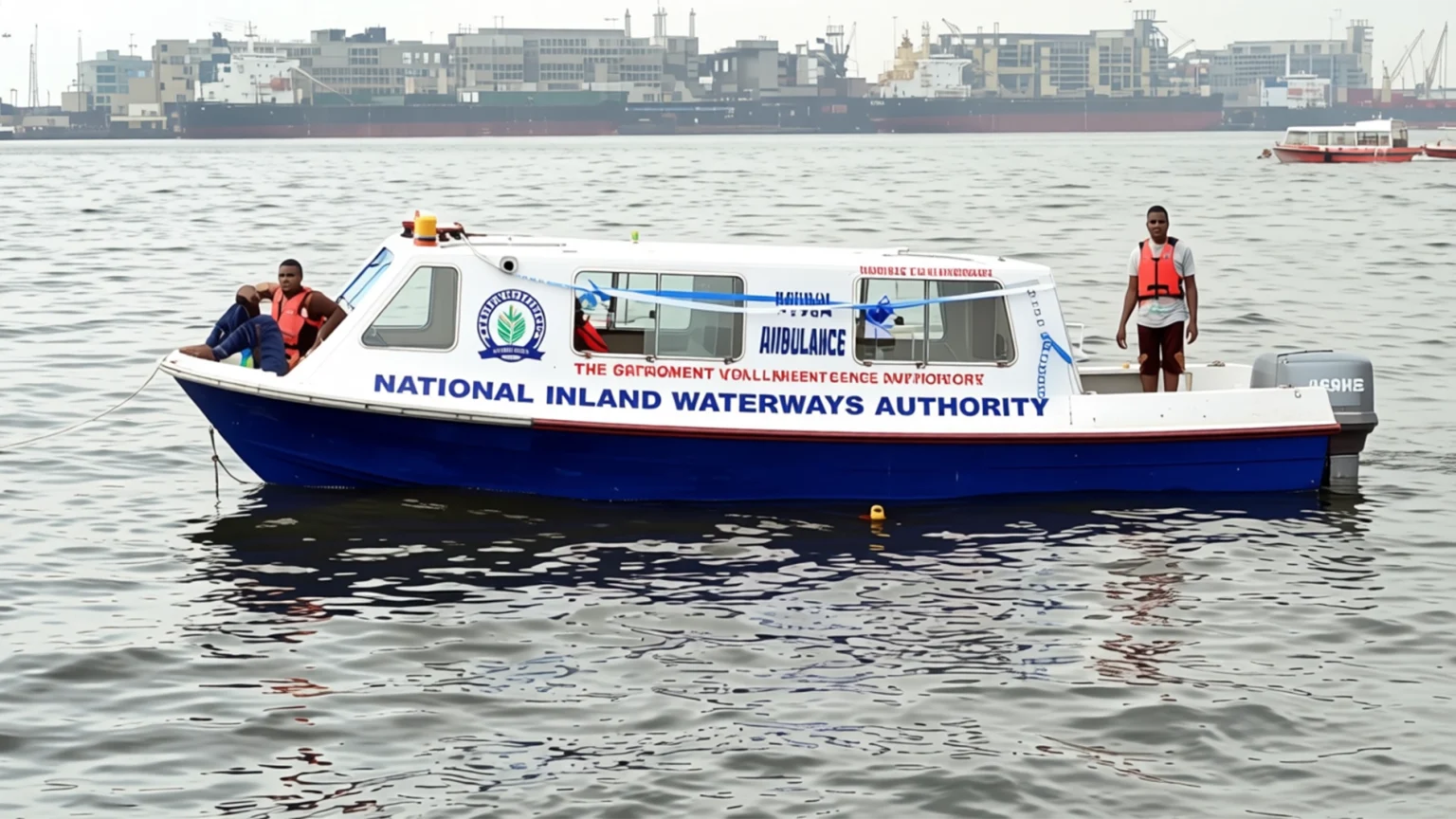
Nigerian Navy, NIWA Rally Behind Niger Delta Waterways Safety Push as Boat Accidents Remain Critical Concern
Navy and NIWA facilitators led technical sessions and simulation exercises at a two-day Warri training for boat operators and jetty personnel from Delta, Bayelsa and Ondo states
By Emetena Ikuku | Waterways News Correspondent | Warri
The Nigerian Navy and the National Inland Waterways Authority (NIWA) have reinforced their joint commitment to safer inland waterways, lending institutional muscle to a boat safety training initiative targeting operators and jetty personnel across three Niger Delta states.
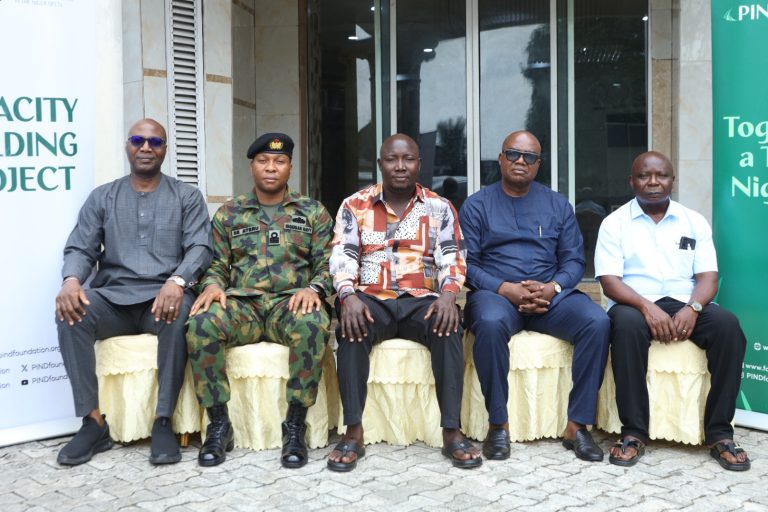
The collaboration was put on public display during a two-day Boat Safety, Security and Risk Management Training organised by the Foundation for Partnership Initiatives in the Niger Delta (PIND) in Warri, Delta State — bringing together boat operators, safety officials and development stakeholders from Delta, Bayelsa and Ondo states to confront what organisers described as a worsening safety crisis on remote riverine routes.
Lives on the Line
Speaking on behalf of PIND Executive Director Sam Ogbemi Daibo, the organisation’s Security Manager, retired Colonel Abdulfatai Mohammed, framed the stakes in stark terms.
“This intervention is about protecting lives — both for those who work on the waterways and the communities we serve. By strengthening the skills, awareness and accountability of boat operators, we are addressing one of the most critical risk points in riverine operations,” Mohammed said.
He noted that as development activities push deeper into hard-to-reach communities across the Niger Delta, marine transportation has become a critical lifeline — yet one that remains dangerously under-regulated at the operational level. The training, he said, was designed to arm operators with practical competencies in emergency response, navigation safety, maritime security awareness and incident reporting.
Navy and NIWA Take the Lead
Facilitators drawn from the Nigerian Navy and NIWA led technical sessions, practical demonstrations and simulation exercises benchmarked against national maritime safety standards — a signal that the training carried regulatory weight beyond a routine awareness programme.
The Base Administrative Officer of Nigerian Navy Ship (NNS) Delta, Commander Samuel Ateru, described the programme as timely, arguing that improved safety compliance among operators would materially reduce avoidable accidents on inland waterways.
“Safety on the waterways is a shared responsibility. Trainings like this strengthen preparedness, improve operational discipline and support safer navigation across riverine communities,” Ateru said.
NIWA’s Area Manager in Warri, Engr. Rufus Ogbonlato, echoed that position, commending PIND for providing a platform that promotes professional standards among marine transport operators.
“Regular training and adherence to safety procedures are essential to reducing marine accidents. We commend PIND for creating a platform that promotes professionalism and responsible marine transport operations,” Ogbonlato said.
Beyond the Classroom
PIND said the Warri training forms part of its broader duty-of-care framework covering waterways frequently used by development actors and local communities in the Niger Delta. The organisation added that follow-up monitoring and compliance measures would be deployed to ensure that the safety standards instilled during training do not erode once operators return to the field.
Nigeria Watch
The PIND initiative lands at a moment when inland waterway safety has climbed the policy agenda — but enforcement on the ground remains thin.
NIWA’s mandate over Nigeria’s inland waterways has long been contested by state-level bodies, most visibly LASWA in Lagos, creating regulatory gaps that leave boat operators in many riverine communities without consistent oversight. In the Niger Delta specifically, where creeks and rivers serve as primary transport corridors for oil field workers, humanitarian actors and ordinary commuters alike, the absence of mandatory operator certification and the prevalence of overloaded, poorly maintained vessels continue to drive avoidable fatalities.
The Nigerian Navy’s participation in training of this nature reflects an expanding role for the service in non-kinetic waterway governance — a trend worth watching as the Federal Ministry of Marine and Blue Economy seeks to consolidate authority over the sector. Whether PIND’s follow-up compliance measures can substitute for a functioning regulatory framework remains the key question.
Blue Economy
MAERSK Vessel Grounds at Onne, Chokes Bonny Channel as Port Harcourt Traffic Grinds to Halt
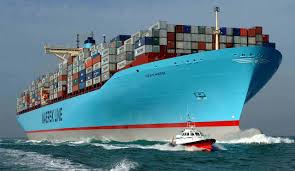
MAERSK Vessel Grounds at Onne, Chokes Bonny Channel as Port Harcourt Traffic Grinds to Halt
MV Maersk Valparaiso stuck in mud with 717 containers aboard; NPA, NIMASA alerted as Bonny Anchorage congestion deepens
By ThankGod Miller | Waterways News Correspondent | Onne/Port Harcourt | Thursday, May 21, 2026
A serious navigational incident at Onne Port has brought vessel traffic across the eastern corridor to a standstill, after the Maersk container vessel MV Maersk Valparaiso (Voyage 621S) collided with a barge on the Bonny Channel on Tuesday, subsequently running aground and blocking the waterway.
The vessel, laden with an estimated 717 containers, is reported to have taken a wrong channel while manoeuvring toward Berth 4 at Onne after passing Bonny. The resulting grounding has lodged the ship firmly in the mud, rendering it immovable by normal tidal action — frustrating early hopes among those involved that the situation would self-correct.
The development effectively sealed off both Onne Port and Port Harcourt Port from seaward access, with vessels that have completed cargo discharge unable to depart and inbound ships unable to proceed to berth. Congestion at Bonny Anchorage has since been mounting.
Incident Concealed for Three Days
Particularly alarming to industry observers is the revelation that the incident occurred approximately three days before it became publicly known. The Shipping Trade Practitioners Association of Nigeria (STPAN) confirmed to Waterways News that those initially involved withheld the information, banking on tidal conditions to free the vessel without intervention.
“This incident happened three days ago but it was only made known yesterday. When it happened three days ago, they thought the tide would help the vessel to move, but the vessel is already stuck in the mud and it cannot move,” said Dr. Babalola Olatunde, STPAN’s spokesman.
The delay in disclosure has drawn implicit criticism, as the blockage has had cascading consequences across multiple terminals. Dr. Olatunde cited the case of MV Jamal Topic at Berth 2, Port Harcourt Port, which completed discharge but has been unable to sail due to the channel obstruction.
MWUN: Wrong Channel Was Taken
The President-General of the Maritime Workers Union of Nigeria (MWUN), Comrade Francis Bunu Abi, confirmed the grounding and pointed to navigational error as the root cause. According to him, the Maersk Valparaiso deviated from the established vessel channel while approaching Onne.
“They said the vessel actually took a wrong channel, not the normal channel other vessels were taking,” Comrade Abi stated.
The Nigerian Ports Authority (NPA) and the Nigerian Maritime Administration and Safety Agency (NIMASA) have both been notified and are expected to coordinate the emergency response, which is likely to require specialised salvage operations to refloat the grounded vessel and reopen the channel.
Nigeria Watch
The Onne grounding is a sharp reminder of the navigational vulnerabilities embedded in Nigeria’s southern port approach channels — and of the risks that attend any delay in incident disclosure.
The Bonny Channel, which serves both Onne Port and Port Harcourt Port, is among the most commercially critical waterways in the country, handling a substantial share of Nigeria’s petroleum-related imports, containerised cargo, and bulk commodities. Any protracted blockage carries severe consequences: demurrage costs for vessel operators, supply chain disruption for terminal users, and revenue losses for the NPA and government.
The three-day silence before the incident was made public is troubling. It suggests that the instinct of those involved was to manage the situation discreetly — a posture that, in the end, compounded the problem by delaying the mobilisation of appropriate salvage resources. NIMASA’s mandate over maritime safety and casualty investigation should include a close examination of how the notification failure occurred and who bears responsibility.
For port users, freight forwarders, and vessel operators with cargo interests at Onne and Port Harcourt, the immediate concern is the timeline for channel clearance. Waterways News will continue to monitor developments and report updates as the salvage operation progresses
-

 Oil and Gas2 months ago
Tantita’s Pipeline Deal: $144m Contract, Rising Output, and the Questions that Deserve Answers
-
 Blue Economy3 months ago
Nigeria’s Coast Guard Bill: A Solution in Search of a Problem?
-
 MARITIME TRADE & SHIPPING2 months ago
World’s Largest Container Ship Sets New Maritime Record with 22,233 TEUs on Single Voyage