
Blue Economy
$4,000 War Surcharge: MSC Shipping Move Threatens Nigeria’s Maritime Sector, Stokes Inflation Fears

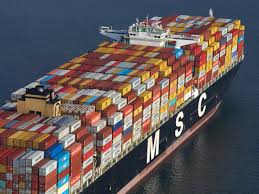

$4,000 War Surcharge: MSC Shipping Move Threatens Nigeria’s Maritime Sector, Stokes Inflation Fears
By Okeoghene Onoriobe | News Correspondent, Waterways News (www.waterwaysnews.ng)
A wave of anxiety is sweeping through Nigeria’s maritime industry following the decision by MSC Mediterranean Shipping Company to impose a war risk surcharge of up to $4,000 on cargo shipments bound for Nigeria and other African countries — a development industry stakeholders warn could trigger a fresh round of inflation and deal a severe blow to the nation’s already stressed trade ecosystem.
MSC announced on its website that effective March 5, 2026, until further notice, it will apply the surcharge on all cargo moving from the Arabian Peninsula — including Bahrain, Iraq, Kuwait, Oman, Qatar, Saudi Arabia, and the UAE — to West Africa, East Africa, South Africa, Mozambique, and the Indian Ocean Islands.

The charges are structured as follows: $2,000 for 20-foot containers, $3,000 for 40-foot containers, and $4,000 for refrigerated (reefer) cargo.
“The evolving security situation in the Middle East is affecting maritime traffic in the Straits of Hormuz and Bab El-Mandeb and causing disruption throughout our network,” MSC stated, adding that it is working with relevant authorities to ensure the safety of its operations.
Industry Voices Alarm
Maritime and trade experts who spoke with Waterways News expressed serious concern over the ripple effects the surcharge will have on Nigeria’s import-dependent economy.
Former acting National President of the National Association of Nigerian Licensed Customs Agents, Mr. Kayode Farinto, said the surcharge was largely inevitable given the deteriorating security situation along key shipping routes.
“Any shipping company bringing cargo will want to charge. Most insurance companies are already dropping policies because of this war, and the routes are being taken over by Iran. So shipping lines are being forced to manoeuvre and take alternative routes — possibly through South Africa — which increases costs,” Farinto explained.
He warned that the consequences would be far-reaching: cargo volumes will decline, freight rates will climb, and the prices of goods will rise as importers pass on overhead costs and insurance premiums to consumers. He added that products from the Dangote Refinery could also be affected, with the full impact expected to be felt more acutely in the coming weeks.
Muda Yusuf, Chief Executive Officer of the Centre for the Promotion of Private Enterprise, was equally blunt in his assessment.
“It’s going to affect trade significantly. Cost has already gone up and may go higher. If costs rise that much, trade volumes will drop — and that means less business for the maritime industry, job losses, loss of income, and a whole lot of issues that will cascade through the sector,” he said.
Manufacturers Sound Export Warning
The manufacturing sector is also bracing for impact. Dr. Benedict Obhiosa, Secretary of the Manufacturers Association of Nigeria Export Group, said the surcharge would erode the competitiveness of Nigerian-made products in international markets.
“The hike in prices will discourage exports and affect the volume and value of non-oil exports in the current and possibly the next quarter, if the problem is not resolved by the Nigerian government and shipping authorities,” Obhiosa said. He noted, however, that some exporters may pivot to road transport as an alternative.
Freight Forwarders Demand Government Intervention
The Africa Association of Professional Freight Forwarders and Logistics of Nigeria (APFFLON) has described the surcharge as a major economic shock that could deepen Nigeria’s vulnerability as an import-dependent nation.
In a strongly worded statement, APFFLON’s National President, Frank Ogunojemite, warned that Nigeria — which relies on maritime transport for over 80 percent of its international trade — faces sharp increases in the prices of food and pharmaceuticals, with reefer containers carrying frozen foods, dairy products, fish, and medicines bearing the heaviest burden.
Ogunojemite called on the Federal Government, the Ministry of Marine and Blue Economy, the Nigerian Shippers’ Council, and other maritime regulators to urgently engage international shipping lines and global maritime stakeholders to cushion the impact of the surcharges on Nigerian trade.


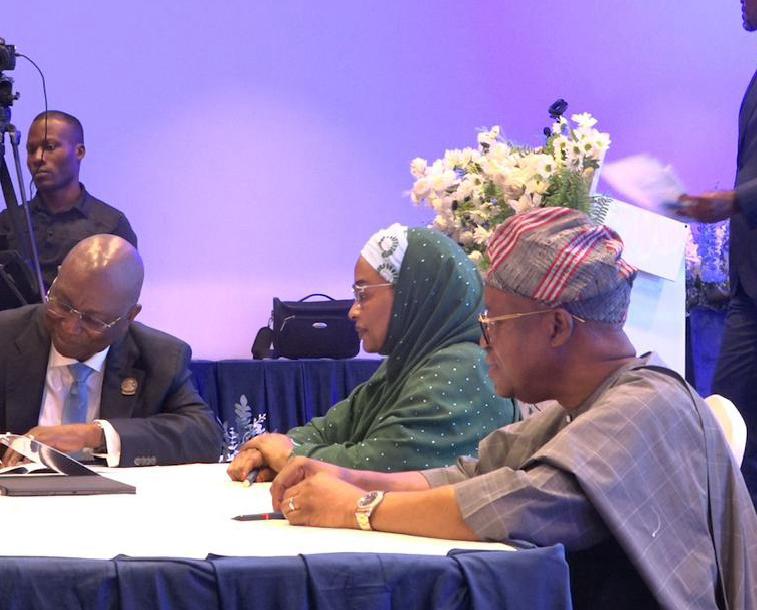
NIMASA Receives Over 60 CVFF Applications, Vows Open and Accountable Disbursement
By Okeoghene Onoriobe | Waterways News Correspondent | Lagos
The Nigerian Maritime Administration and Safety Agency (NIMASA) has disclosed that it has received more than 60 applications for the Cabotage Vessel Financing Fund (CVFF), a development that signals fresh momentum in the push to strengthen indigenous participation in Nigeria’s shipping sector.
The agency equally assured stakeholders that the disbursement of the fund would be handled transparently, with strict accountability measures guiding every step of the process.
The disclosure came on Thursday in Lagos, during the signing of the 2026 Performance Bond between NIMASA’s Director-General, Dr. Dayo Mobereola, and the Minister of Marine and Blue Economy, Dr. Adegboyega Oyetola.
At the event, Minister Oyetola left no room for ambiguity, issuing a pointed directive to heads of agencies under his ministry to focus on results and shun complacency.
“Let me emphasise that all Departments and Agencies under the Ministry must remain firmly focused on delivering tangible results,” the Minister stated.
He further stressed that the performance bonds carry real weight, describing them as binding commitments subject to close monitoring and rigorous evaluation — not documents to be signed and shelved.
“These are not ceremonial documents. They are binding commitments. Accountability will not be optional,” Oyetola declared.
Speaking after the signing, Director-General Mobereola said the reforms being pursued at NIMASA are deliberate and are being driven with strong backing from the Ministry, adding that the agency remains firmly aligned with the Federal Government’s Renewed Hope Agenda.
On maritime security, Mobereola highlighted a landmark achievement: Nigeria has recorded zero piracy incidents in its territorial waters over the past four years. He attributed this record to enhanced surveillance systems and improved collaboration among security agencies.
The NIMASA chief also announced that the agency is close to completing the automation of its ship registry processes — a reform expected to eliminate administrative delays, speed up turnaround times, and sharpen Nigeria’s competitiveness in the global maritime industry.
Additionally, Mobereola noted that Nigeria has deposited three maritime conventions with the International Maritime Organization (IMO), with three more pending Federal Executive Council approval. He also highlighted Nigeria’s re-election into Category C of the IMO Council in November 2025 as a milestone that restores the country’s standing in global maritime governance and reinforces its leadership role on the African continent.
Waterways News | www.waterwaysnews.ng
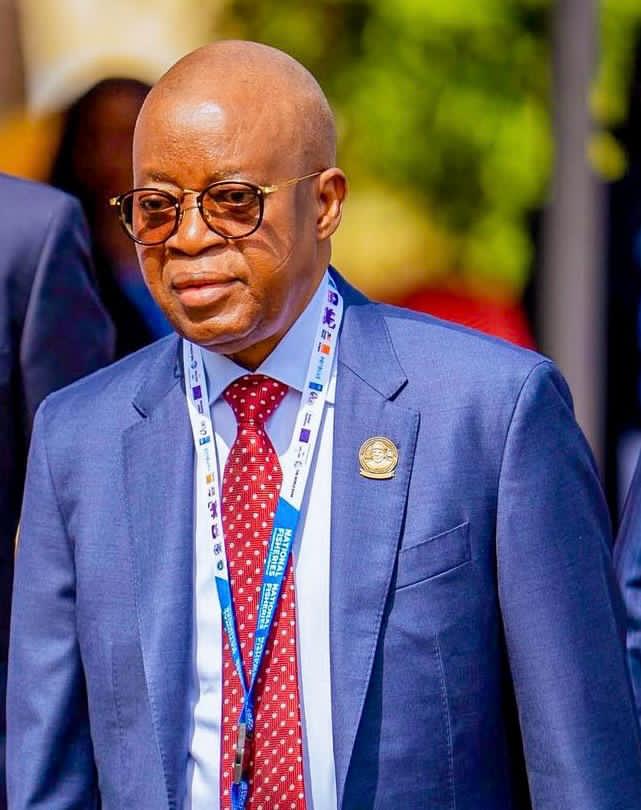
Oyetola Orders NSC Probe into Alleged Plot to Squeeze Out Local Barge Operators
Minister vows zero tolerance for anti-competitive behaviour as indigenous operators cry foul over foreign interference at Nigerian seaports
By Oghenewoke Onoriode|Waterways News Correspondent, LAGOS
The Minister of Marine and Blue Economy, Dr Adegboyega Oyetola, has ordered the Nigerian Shippers’ Council (NSC) to investigate allegations that a coordinated effort is underway to push indigenous barge operators out of Nigeria’s seaport logistics chain.
The directive came during the 2026 First Quarter Citizens/Stakeholders’ Engagement, Sectoral Performance Review, and Ministerial Management Retreat of the Federal Ministry of Marine and Blue Economy, held in Lagos on Thursday.
Operators Raise the Alarm
Representatives of local barge operators used the platform to allege that certain foreign interests are engaged in a deliberate campaign to undermine their operations. They told the Minister that policies, operational bottlenecks, and preferential treatment allegedly extended to foreign-linked entities by some terminal operators are tilting the competitive landscape against Nigerian businesses.
The operators warned that if left unaddressed, the situation could erode local capacity and destabilise Nigeria’s maritime logistics ecosystem.
NSC Given the Mandate
Responding to the allegations, Dr Oyetola reaffirmed the Federal Government’s commitment to protecting local investments and ensuring a level playing field in the maritime sector. He directed the NSC — in its capacity as port economic regulator — to conduct a thorough and impartial investigation into the claims.
The Minister was unequivocal: any anti-competitive behaviour or policy inconsistency that disadvantages Nigerian businesses would not be tolerated.
Engagement as Policy Tool
Dr Oyetola also used the occasion to underscore the importance of regular stakeholder engagement in driving effective sectoral governance. He noted that the government remains firmly focused on developing the marine and blue economy as a pillar of national growth, employment generation, and sustainable development.
Nigeria Watch
The allegations against terminal operators echo long-standing concerns in the Nigerian maritime industry about the marginalisation of indigenous players in port operations. Local barge operators form a critical link in Nigeria’s cargo evacuation chain — particularly at Apapa and Tin Can Island ports — and their displacement would deepen the country’s dependence on foreign logistics providers.
The NSC’s mandate as port economic regulator makes it the appropriate body to probe these claims. However, the effectiveness of the investigation will depend on the Council’s willingness to act on its findings — including, where necessary, imposing sanctions on terminal operators found to have violated fair competition principles.
For the Federal Ministry of Marine and Blue Economy, Thursday’s engagement signals a more assertive posture on indigenous content in maritime logistics — one that stakeholders will be watching closely.
Waterways News — Covering Nigeria’s Maritime, Shipping and Blue Economy Sector
Blue Economy
Tinubu Approves Cargo Tracking Scheme That Could Save Nigeria N900bn in Lost Import Revenue

Tinubu Approves Cargo Tracking Scheme That Could Save Nigeria N900bn in Lost Import Revenue
Presidential approval secured for ICTN as Nigerian Shippers’ Council begins procurement; scheme expected to go live before year-end
By Emetena Ikuku, Lagos
President Bola Ahmed Tinubu has approved the full implementation of the International Cargo Tracking Note (ICTN), a flagship initiative of the Nigerian Shippers’ Council (NSC) designed to plug revenue leakages in the country’s import trade and strengthen regulatory oversight of inbound cargo.
The approval, confirmed at a stakeholders’ engagement convened by the Federal Ministry of Marine and Blue Economy in Lagos, ends months of uncertainty over the scheme’s future and sets the stage for what industry analysts say could be one of the most consequential reforms in Nigeria’s maritime sector in recent years.
What the ICTN Does
The ICTN is a real-time, online cargo tracking system that monitors the movement of inbound shipments from origin to destination. Beyond logistics visibility, it is designed to function as an economic intelligence tool — capturing import data that can be used to close gaps in revenue declaration and combat under-invoicing.
Industry projections suggest the system could help Nigeria recover up to N900 billion annually in import revenue currently lost to leakages — a figure that underscores the commercial stakes of getting the rollout right.
Procurement Underway
Pius Akutah, Executive Secretary and CEO of the Nigerian Shippers’ Council, confirmed to stakeholders that presidential approval had been secured and that procurement processes were already in motion. He expressed confidence that the ICTN would become operational before the end of the year.
Akutah acknowledged that previous implementation attempts had been suspended due to unresolved operational challenges, but said the Council had drawn lessons from those setbacks.
He noted that the Minister of Marine and Blue Economy, Adegboyega Oyetola, is personally committed to ensuring a seamless rollout, with the ministry taking deliberate steps to resolve all outstanding issues before the scheme goes live.
Nigeria Watch
The ICTN revival is significant beyond its revenue implications. For years, Nigerian freight forwarders, cargo agents, and port operators have operated in an environment where cargo data is fragmented and often unreliable — creating fertile ground for manifest fraud, valuation disputes, and customs evasion.
A fully operational ICTN would give the NSC, the Nigeria Customs Service, and the Nigerian Ports Authority (NPA) access to a unified cargo data stream, potentially transforming how import risk is assessed at Apapa, Tin Can Island, and the emerging Lekki Deep Sea Port.
For the broader blue economy agenda being championed by Minister Oyetola, real-time cargo intelligence also supports Nigeria’s ambitions to position its ports as West Africa’s premier logistics hub — a goal that requires the kind of regulatory credibility the ICTN is designed to provide.
Stakeholders will be watching the procurement timeline closely. The scheme has been suspended before, and the maritime industry’s confidence in its delivery will depend on whether the ministry can demonstrate tangible progress before the year runs out.
-

 Oil and Gas4 weeks ago
Tantita’s Pipeline Deal: $144m Contract, Rising Output, and the Questions that Deserve Answers
-
 Blue Economy2 months ago
Nigeria’s Coast Guard Bill: A Solution in Search of a Problem?
-
 Business1 month ago
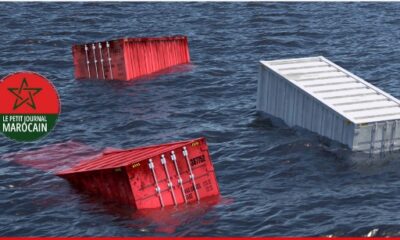
CASABLANCA PORT SHUT DOWN AFTER VESSEL LOSES 85 CONTAINERS — SHIP SERVES NIGERIAN ROUTES