Politics
Group working to recall Senator Dafinone for ‘sleeping in senate’.

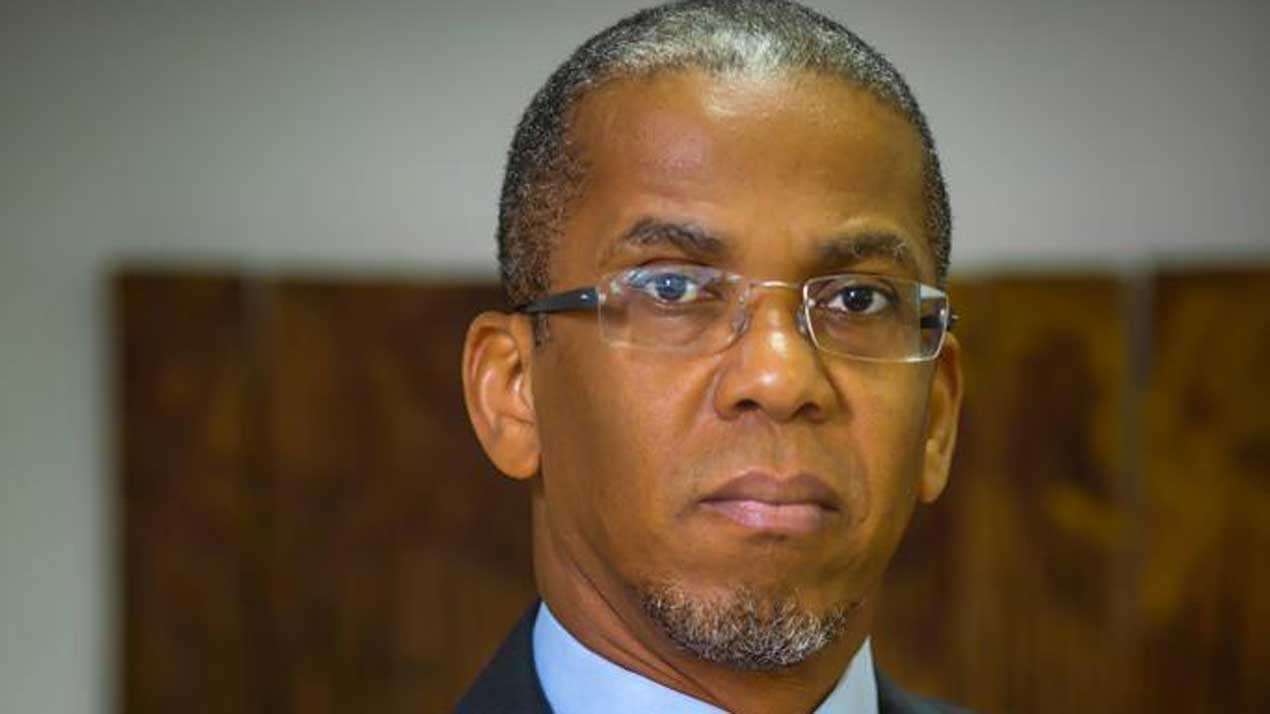

Senator representing Delta central, Senator Ede Dafinone has been accused of sleeping during session and his constituents have threatened to commence the legislator’s recall from the national assembly.
The All Progressives Congress (APC) senator, was elected to office in 2023. The recall move is being pushed by the Delta state chapter of the Nigeria Polling Unit Forum, led by Nicholas Evwienure, accusing the representative of non-performance.
Evwienure, said at a press briefing in Asaba on Friday, that the group is also demanding Dafinone’s resignation.
“We, the eligible registered voters across party lines of Delta central’s electoral district, are appealing to the senator representing Delta central, Ede Dafinone, to resign honourably or face recall,” he said.

Abel John-Gold, one of the constituents, expressed support for the process to debar others from similar acts, saying “Ede is sleeping in the senate, Ede has failed us, I strongly support the recall of Senator Ede Dafinone,”
“He has failed in every ramification. He even forgot those who worked for him, he forgot those who campaigned for him. He forgot all his supporters.”
Meanwhile, other constituents are of different opinion, like Nelson Egware, said it is too early to judge the lawmaker’s performance, saying “For me, he has not done badly, because you cannot use two years to gauge the performance of a legislator,” he said.
While a female constituent, Josephine Omo-Dion, was supportive of the senator, saying “I don’t think it’s necessary at this stage because he still has like two more years to go.”
“He should be given time to bring in more things. At the end of these two years, if he is seen not to have made much impact, the electorate, which includes me, will decide to send him back there or not.”
A recall is a process that allows voters to remove a serving lawmaker before the end of their tenure.
Tinubu Places Hydrography at Heart of Nigeria’s Maritime Agenda — Matawalle
By Okeoghene Onoriobe, Lagos Correspondent
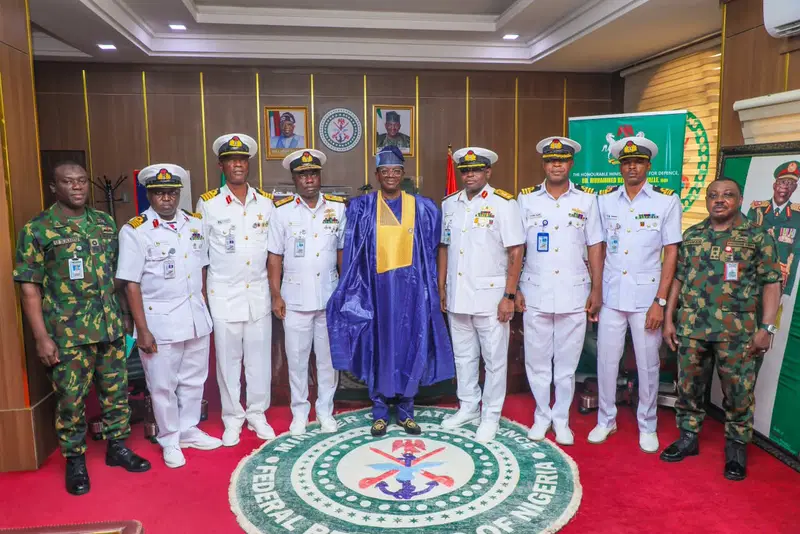
The Federal Government has signalled a renewed commitment to hydrography as a strategic pillar of Nigeria’s maritime development, with the Minister of State for Defence, Dr. Bello Muhammad Matawalle, declaring that President Bola Ahmed Tinubu’s administration has placed the discipline at the centre of the nation’s maritime priorities.
Matawalle made the declaration on Wednesday in Abuja while receiving the Hydrographer of the Federation and Chief Executive Officer of the National Hydrographic Agency (NHA), Rear Admiral O.O. Fadahunsi, who led a management delegation on a courtesy visit to the minister.
Federal Government Reaffirms Support for NHA
In a statement released through his Personal Assistant on Media, Ahmad Dan-Wudil, the minister said the Federal Government remains firmly committed to strengthening Nigeria’s hydrographic infrastructure to support improved marine navigation, defence operations, and ocean-based economic activities.
Matawalle stressed that the National Hydrographic Agency occupies a critical position in Nigeria’s broader maritime ambitions, particularly in the Gulf of Guinea — a zone where overlapping concerns over maritime security and resource governance continue to demand sustained governmental attention.
He noted that hydrographic work underpins the country’s emerging Blue Economy agenda, which seeks to expand maritime trade while ensuring the sustainable exploitation of ocean and riverine resources.
Nigeria Positioned for Regional Leadership
The minister expressed confidence that existing policy frameworks under the Renewed Hope administration have positioned Nigeria to assume a leadership role in hydrography across the West African sub-region. He pledged that government support would be sustained to improve navigational safety, enhance maritime security, and deepen scientific data generation to serve national development objectives.
Rear Admiral Fadahunsi, for his part, commended the minister for what he described as consistent support and visionary leadership. He affirmed the agency’s readiness to work in concert with relevant ministries, departments, and agencies to strengthen intergovernmental coordination and build greater hydrographic resilience. Both parties indicated that the meeting focused on expanding Nigeria’s hydrographic capacity in line with global maritime standards.
Nigeria Watch
For the Nigerian maritime sector, this development carries significant operational implications.
Hydrography — the science of measuring and describing the physical features of navigable waters — is the often-overlooked backbone of safe shipping, port operations, and offshore resource extraction. Without current, accurate hydrographic data, vessels navigating Nigeria’s coastal waters, the Niger Delta creeks, and the nation’s inland waterways do so at elevated risk.
The National Hydrographic Agency, which is mandated to produce and maintain nautical charts covering Nigerian waters, has historically operated with limited visibility in national maritime policy discussions. Its elevation to a stated priority under the Tinubu administration — articulated at the level of the Defence Ministry — signals a more integrated, security-conscious approach to maritime domain awareness.
For port operators, shipping companies, and offshore energy stakeholders, a well-funded and operationally capable NHA translates directly to more reliable navigational data, reduced insurance risk premiums, and safer routing in Nigeria’s busiest sea lanes. For NIMASA and the Nigerian Navy, improved hydrographic coverage strengthens the infrastructure for maritime domain awareness and threat response in the Gulf of Guinea, where Nigeria continues to assert its role as the dominant maritime power.
The blue economy dimension is equally noteworthy. Hydrographic surveys are a prerequisite for viable offshore wind energy development, aquaculture zoning, and the delimitation of maritime boundaries — all areas where Nigeria’s policy ambitions have outpaced technical groundwork. If this stated presidential prioritisation translates into budgetary commitments and institutional capacity-building for the NHA, it could mark a foundational shift in how Nigeria approaches its vast but under-mapped maritime estate.
Stakeholders will be watching to see whether the rhetoric of prioritisation is matched by concrete resource allocation in the next budget cycle.
Blue Economy
Lagos Governorship Aspirant Jim-Kamal Targets State Control of Territorial Waters, Challenges Federal Revenue Model


Lagos Governorship Aspirant Jim-Kamal Targets State Control of Territorial Waters, Challenges Federal Revenue Model
APC contender vows to claim Lagos share of vessel-generated earnings, challenge Hyson Nigeria’s dollar revenue monopoly
By Okeoghene Onoriobe | Waterways News Correspondent
A Lagos governorship aspirant on the platform of the All Progressives Congress (APC), Otunba Lanre Jim-Kamal, has unveiled a sweeping maritime governance agenda anchored on reclaiming state authority over Lagos territorial waters and redirecting billions in vessel-generated revenues currently flowing exclusively to the Federal Government.
Speaking at a press conference in Lagos on Monday, Jim-Kamal laid out proposals that, if enacted, would significantly alter the revenue-sharing architecture governing maritime operations along Nigeria’s busiest coastal corridor — with implications for port operators, terminal concessionaires, shipowners, and the broader blue economy ecosystem in the southwest.
Staking Lagos’ Claim to Territorial Waters
At the heart of Jim-Kamal’s maritime agenda is a constitutional argument: that recent legislative and policy shifts have moved waterways governance from an exclusively federal domain to a concurrent one, enabling states with coastlines to assert jurisdictional and commercial rights over their adjacent waters.
“Before now, the control of the waterway was on the exclusive list, basically for the Federal Government, but today, in any state where there is water, it must be shared by the Federal and State governments,” he stated. “We in Lagos State want to control our territorial waters. This is part of the places we intend to generate revenue for this state.”
He pledged to pursue this through structured collaboration with the Federal Ministry of Marine and Blue Economy rather than outright confrontation, describing the approach as strategic synergy designed to formalise Lagos State’s stake in waterway commercialisation.
“Before now, the control of the waterway was on the exclusive list, basically for the Federal Government, but today, in any state where there is water, it must be shared by the Federal and State governments,” he stated. “We in Lagos State want to control our territorial waters. This is part of the places we intend to generate revenue for this state.”
Hyson Nigeria in the Crosshairs
Perhaps the most commercially significant element of Jim-Kamal’s proposals is his declared intention to challenge the operational monopoly of Hyson Nigeria Limited — the body responsible for collecting dollar-denominated levies from crude oil evacuation vessels transiting Nigerian waters.
Under current arrangements, all revenues collected from tankers loading crude within Nigeria’s exclusive economic zone accrue entirely to the Federal Government. Jim-Kamal described this as an inequity that Lagos, as the state within whose territorial domain much of the vessel activity occurs, can no longer afford to accept. “There is a board in Nigeria called Hyson Nigeria Limited. The work of that body is that all vessels coming to Nigeria to take our oil out — it is only the Federal Government that collects revenue from them in dollars,” he said. “One of the first bills I will send to the State Assembly is that we want to control Hyson Limited, because they are coming to our land. Maritime business will thrive seriously under my watch.”
The proposal, if translated into legislation and successfully defended before the courts and the National Assembly, would constitute one of the most consequential challenges to Federal maritime revenue authority in recent years.
$50 Billion Investment Package with Blue Economy Dimension
Jim-Kamal also disclosed that he has secured commitments from international partners to direct a $50 billion foreign investment package into Lagos across multiple sectors, with coastal and waterway infrastructure identified as a priority vehicle for revenue generation and job creation. He gave no further details on the identity of the investment partners or the disbursement timeline.
Beyond maritime, the aspirant outlined a broad social welfare programme encompassing a N150,000 monthly lifetime stipend for citizens aged 60 and above, free education and healthcare, housing support for unemployed youths, and mechanised agriculture schemes — all framed within the revenue headroom that waterway monetisation would, in his projection, create for the state.
APC Primary Dynamics
On the party’s internal race, Jim-Kamal dismissed reports that Deputy Governor Obafemi Hamzat had secured a consensus endorsement from key APC power brokers, insisting that only five of the thirty-member Governor’s Advisory Council (GAC) had backed Hamzat and that media amplification had distorted the picture. He praised President Bola Tinubu as committed to open primaries and urged aspirants to pursue the ticket through legitimate party processes.
Nigeria Watch | What Jim-Kamal’s Maritime Agenda Means for the Sector
For maritime and port sector stakeholders, the Jim-Kamal proposals are worth tracking beyond their electoral context. The question of whether Lagos State can assert a statutory revenue stake in vessel operations within its territorial waters cuts to the unresolved tension at the heart of Nigeria’s maritime federalism debate.
NIWA currently governs inland waterways on a federal mandate, while NIMASA exercises jurisdiction over cabotage, vessel registration, and coastal shipping under national legislation. The establishment of the Federal Ministry of Marine and Blue Economy under the Tinubu administration has, in theory, opened constitutional space for a more layered governance model — though no state has yet tested those boundaries in a commercially meaningful way.
A Lagos State bid to legislate control over Hyson Nigeria Limited — or to compel revenue-sharing from crude evacuation vessel fees — would face formidable legal hurdles, including potential conflict with NIMASA’s enabling statute and Nigeria’s continental shelf legislation. However, the political salience of the argument is itself significant: it signals growing appetite among subnational actors to monetise the blue economy assets within their geographic reach, a trend that terminal operators, port service providers, and offshore logistics firms operating in Lagos waters would do well to monitor. Should any future Lagos administration pursue such a legislative agenda with genuine momentum, it could trigger a renegotiation of the revenue and regulatory frameworks that currently govern maritime commercial activity along the Apapa-Tin Can-Badagry corridor — and reshape the operating environment for every stakeholder along that value chain.
Peter Obi Open to Cross-Party Alliances, Puts People’s Welfare Above 2027 Politics
Labour Party’s 2023 presidential candidate signals readiness to work with any leader committed to Nigerians’ wellbeing — a posture with implications for maritime sector advocacy
By Ighoyota Onaibre
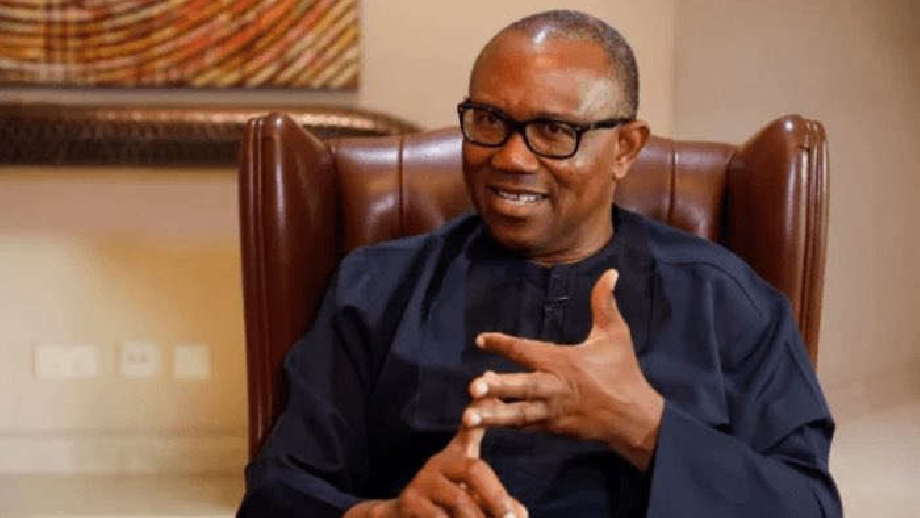
Peter Obi, the Labour Party’s 2023 presidential candidate, has declared that he is not fixated on the 2027 election cycle, saying his primary concern remains the deteriorating living conditions of ordinary Nigerians — and that he is willing to work with any political actor who shares that commitment.
Speaking in an interview on Noire TV, Obi struck a notably conciliatory tone, signalling a departure from the rigid partisan positioning that has characterised Nigerian opposition politics in recent years.
“I’m not preoccupied about the next election. I’m preoccupied with how the average Nigerian lives today,” Obi said, adding that the country’s persistent insecurity and economic hardship demanded urgent, collective attention beyond party lines.
On the question of political alliances, the former Anambra governor was direct: “I’m prepared to work with anybody who is talking about the care of the people.”
Nigeria Watch
What Obi’s stance means for the maritime and blue economy sector
For maritime stakeholders, port communities, and blue economy advocates, Obi’s remarks carry relevance beyond the electoral calculus.
The Nigerian maritime sector — encompassing ports, inland waterways, shipping, and coastal livelihoods — remains one of the most governance-sensitive segments of the national economy, yet one that routinely falls below the radar of mainstream political discourse.
Nigeria’s ports at Apapa and Tin Can Island continue to struggle with infrastructure decay, port access gridlock, and unresolved concession frameworks, while agencies including NIMASA, the NPA, and the Nigerian Shippers’ Council navigate overlapping mandates and chronic underfunding.
The Federal Ministry of Marine and Blue Economy, established under the current administration, has signalled ambitions for sectoral reform — but sustained political will, and cross-party consensus on maritime development, remains elusive.
Obi’s framing — prioritising people’s welfare over electoral positioning — echoes longstanding calls from maritime industry operators for a depoliticized approach to port governance and blue economy investment. Whether that rhetoric translates into a coherent maritime policy agenda, if and when Obi joins any formal political coalition, remains to be seen.
What is clear is that as Nigeria edges toward 2027, the country’s maritime communities — from fisherfolk in the Niger Delta to freight forwarders at Lekki Deep Sea Port — are watching to see which political voices will take the sector’s structural challenges seriously, and which will treat it as an afterthought.

 Oil and Gas7 months ago
Tantita’s Pipeline Deal: $144m Contract, Rising Output, and the Questions that Deserve Answers
- MARITIME TRADE & SHIPPING7 months ago
World’s Largest Container Ship Sets New Maritime Record with 22,233 TEUs on Single Voyage
- Blue Economy7 months ago
Nigeria’s Coast Guard Bill: A Solution in Search of a Problem?