
Politics
Group working to recall Senator Dafinone for ‘sleeping in senate’.

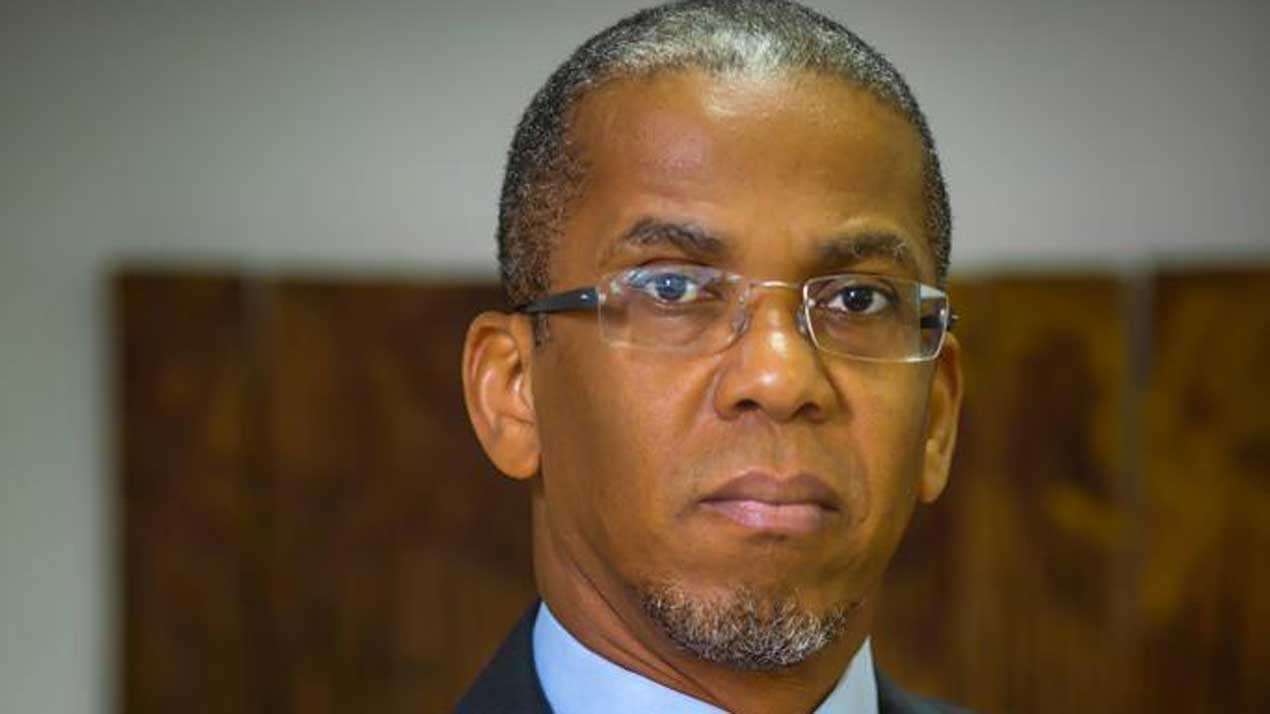

Senator representing Delta central, Senator Ede Dafinone has been accused of sleeping during session and his constituents have threatened to commence the legislator’s recall from the national assembly.
The All Progressives Congress (APC) senator, was elected to office in 2023. The recall move is being pushed by the Delta state chapter of the Nigeria Polling Unit Forum, led by Nicholas Evwienure, accusing the representative of non-performance.
Evwienure, said at a press briefing in Asaba on Friday, that the group is also demanding Dafinone’s resignation.

“We, the eligible registered voters across party lines of Delta central’s electoral district, are appealing to the senator representing Delta central, Ede Dafinone, to resign honourably or face recall,” he said.
Abel John-Gold, one of the constituents, expressed support for the process to debar others from similar acts, saying “Ede is sleeping in the senate, Ede has failed us, I strongly support the recall of Senator Ede Dafinone,”
“He has failed in every ramification. He even forgot those who worked for him, he forgot those who campaigned for him. He forgot all his supporters.”
Meanwhile, other constituents are of different opinion, like Nelson Egware, said it is too early to judge the lawmaker’s performance, saying “For me, he has not done badly, because you cannot use two years to gauge the performance of a legislator,” he said.
While a female constituent, Josephine Omo-Dion, was supportive of the senator, saying “I don’t think it’s necessary at this stage because he still has like two more years to go.”
“He should be given time to bring in more things. At the end of these two years, if he is seen not to have made much impact, the electorate, which includes me, will decide to send him back there or not.”
A recall is a process that allows voters to remove a serving lawmaker before the end of their tenure.



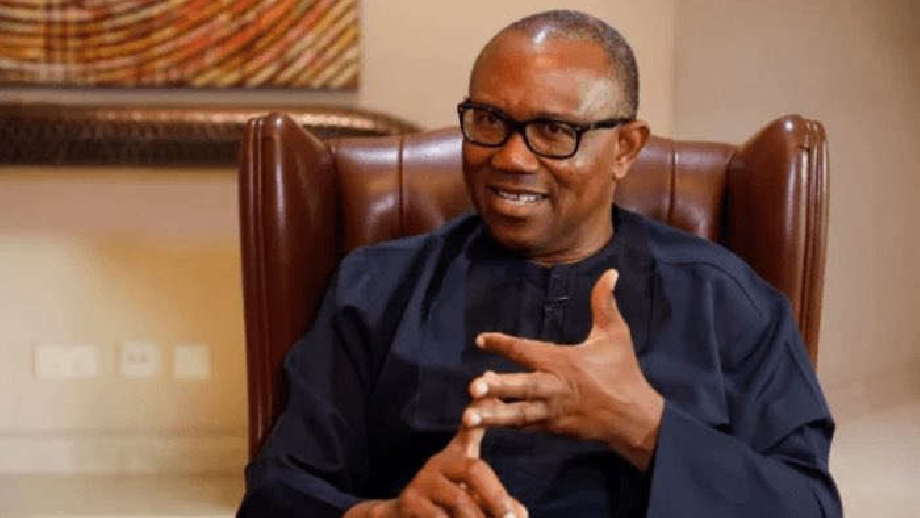
Peter Obi Open to Cross-Party Alliances, Puts People’s Welfare Above 2027 Politics
Labour Party’s 2023 presidential candidate signals readiness to work with any leader committed to Nigerians’ wellbeing — a posture with implications for maritime sector advocacy
By Ighoyota Onaibre
Peter Obi, the Labour Party’s 2023 presidential candidate, has declared that he is not fixated on the 2027 election cycle, saying his primary concern remains the deteriorating living conditions of ordinary Nigerians — and that he is willing to work with any political actor who shares that commitment.
Speaking in an interview on Noire TV, Obi struck a notably conciliatory tone, signalling a departure from the rigid partisan positioning that has characterised Nigerian opposition politics in recent years.
“I’m not preoccupied about the next election. I’m preoccupied with how the average Nigerian lives today,” Obi said, adding that the country’s persistent insecurity and economic hardship demanded urgent, collective attention beyond party lines.
On the question of political alliances, the former Anambra governor was direct: “I’m prepared to work with anybody who is talking about the care of the people.”
Nigeria Watch
What Obi’s stance means for the maritime and blue economy sector
For maritime stakeholders, port communities, and blue economy advocates, Obi’s remarks carry relevance beyond the electoral calculus.
The Nigerian maritime sector — encompassing ports, inland waterways, shipping, and coastal livelihoods — remains one of the most governance-sensitive segments of the national economy, yet one that routinely falls below the radar of mainstream political discourse.
Nigeria’s ports at Apapa and Tin Can Island continue to struggle with infrastructure decay, port access gridlock, and unresolved concession frameworks, while agencies including NIMASA, the NPA, and the Nigerian Shippers’ Council navigate overlapping mandates and chronic underfunding.
The Federal Ministry of Marine and Blue Economy, established under the current administration, has signalled ambitions for sectoral reform — but sustained political will, and cross-party consensus on maritime development, remains elusive.
Obi’s framing — prioritising people’s welfare over electoral positioning — echoes longstanding calls from maritime industry operators for a depoliticized approach to port governance and blue economy investment. Whether that rhetoric translates into a coherent maritime policy agenda, if and when Obi joins any formal political coalition, remains to be seen.
What is clear is that as Nigeria edges toward 2027, the country’s maritime communities — from fisherfolk in the Niger Delta to freight forwarders at Lekki Deep Sea Port — are watching to see which political voices will take the sector’s structural challenges seriously, and which will treat it as an afterthought.
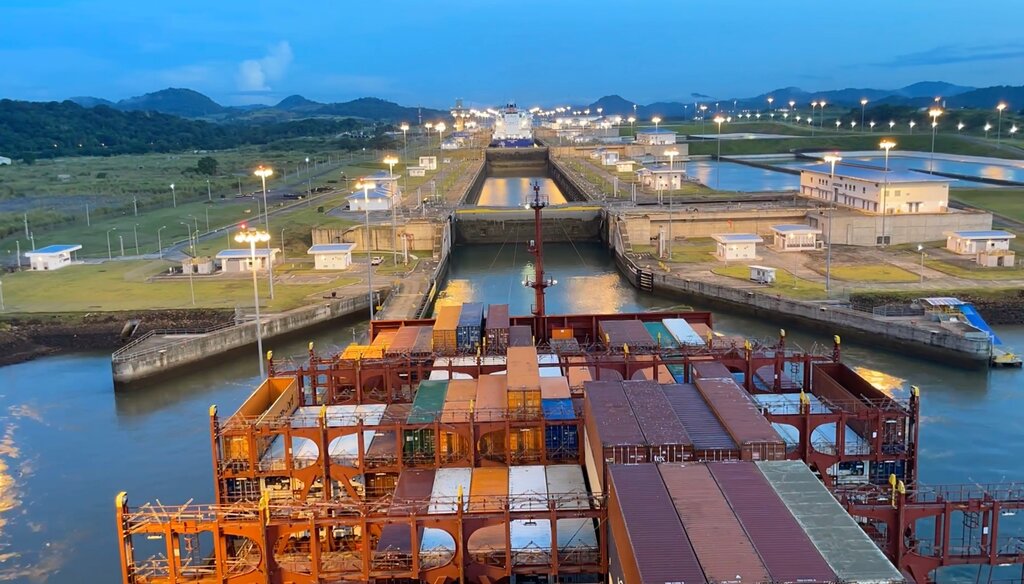
Global Trade Shifts Boost Panama Canal as Hormuz Tensions Reshape Shipping Routes
By Okeoghene Onoriobe | Waterways News
The ongoing conflict in the Middle East and mounting disruptions around the Strait of Hormuz are reverberating across global shipping lanes, with the Panama Canal recording a significant uptick in vessel traffic and cargo volumes as traders seek safer and more reliable routes.
Data released by the Panama Canal Authority covering October 2025 to March 2026 — the first half of the canal’s financial year — show that 6,288 vessel transits were completed during the period, a rise of 224 compared with the corresponding period a year earlier. Total cargo volumes grew by roughly five per cent to reach 254 million Panama Canal Universal Measurement System tonnes, underscoring the waterway’s expanding importance amid shifting geopolitical dynamics.
The momentum has been particularly evident in recent months. Daily transit averages climbed to 34 vessels in January and 37 in March, with peak days recording more than 40 transits — a clear sign that shipping lines are routing more cargo through the Central American passage.
Panama Canal Administrator Ricaurte Vásquez Morales attributed the growth to strong container traffic and a sharp surge in liquefied petroleum gas shipments, describing energy cargoes as an increasingly vital part of the canal’s traffic profile.
The high demand has also driven transit slot auction prices to unprecedented levels. Víctor Vial, Vice President of Finance at the Panama Canal Authority, disclosed that auction prices for some vessels have crossed the $1 million mark — a remarkable climb from the pre-conflict average of between $135,000 and $140,000. Between March and April alone, average auction prices surged to approximately $385,000. Vial was quick to stress, however, that these elevated figures reflect short-term market conditions and do not affect the cost or scheduling of transits booked in advance through the reservation system, which accounts for the bulk of traffic.
The canal’s recovery has been further supported by a return to normal water levels following the severe drought that constrained operations in 2023 and 2024. Gatún and Alhajuela Lakes — the primary water sources for canal operations — are currently at maximum capacity, thanks in part to unseasonably heavy rainfall.
Chief Sustainability Officer Ilya Espino de Marotta said the authority is not anticipating major disruptions in the near term but will maintain close monitoring of water levels as it navigates an El Niño year. Preventative conservation measures remain in place as a precaution.
Nigeria Watch
For Nigerian shippers, freight forwarders and maritime operators, these developments carry direct implications. With LPG shipments surging through the Panama Canal and freight markets reacting sharply to geopolitical pressures, the ripple effects on global fuel supply chains and shipping costs are worth watching closely. Nigeria, as a major crude oil and gas producer and a significant importer of refined petroleum products, sits squarely within the global trade flows being reshaped by these dynamics.
Vásquez Morales reaffirmed the canal’s readiness to meet rising global demand, describing the waterway as open, dependable and well-positioned to serve as a key pillar of international commerce in these uncertain times.
Waterways News | waterwaysnews.ng
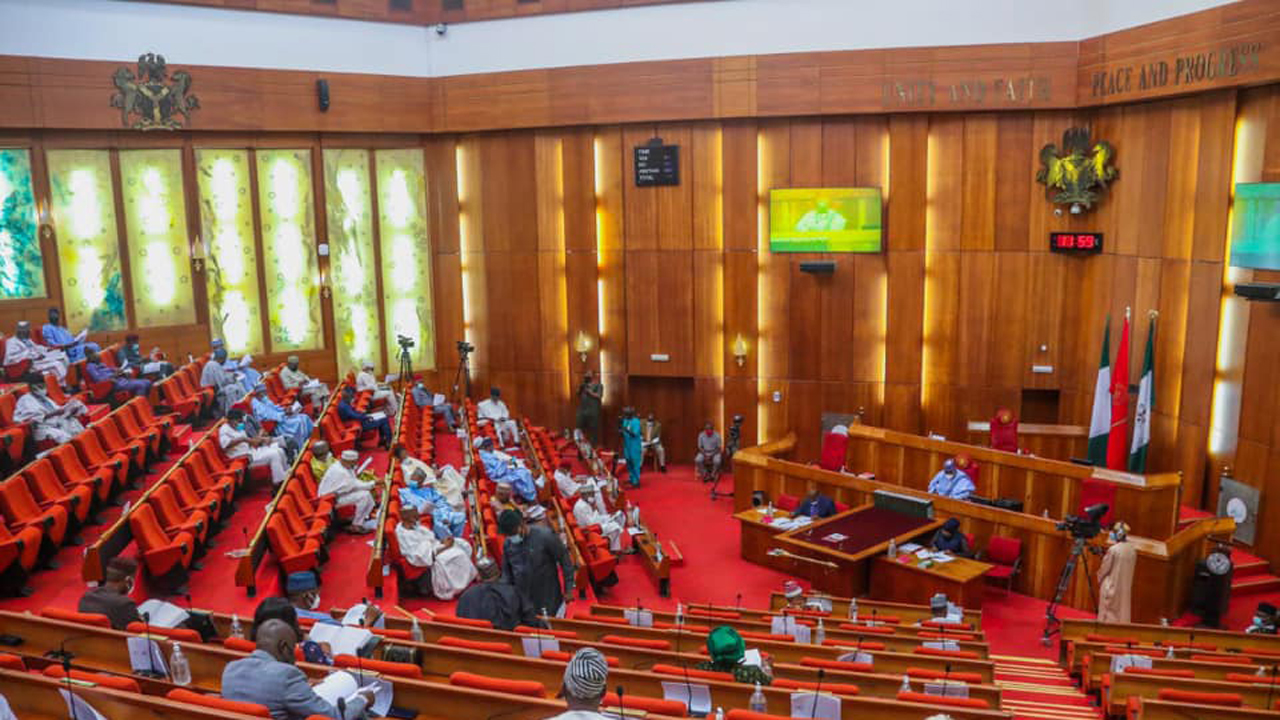
NASS Backs NSC on Shipping Tariff Review, Sets Three-Week Deadline For Resolution
By Ighoyota Onaibre | Waterways News Correspondent
The House of Representatives Committee on Shipping Services has thrown its weight behind the Nigerian Shippers’ Council (NSC) in its bid to review tariffs charged by shipping companies operating in Nigerian ports, while directing stakeholders to conclude consultations within three weeks.
Abdussamad Dasuki, Chairman of the Committee, made the position of the National Assembly clear at a stakeholders’ meeting held in Abuja on Monday, stating that lawmakers are in agreement with the NSC on the need for a modest upward review of shipping charges — but insist that all parties must be carried along before implementation.
Dasuki said the NSC’s Executive Secretary, Dr. Pius Akutah, would lead a fresh round of structured engagements involving key agencies including the Nigeria Customs Service and the Nigerian Ports Authority, with a firm deadline of three weeks to arrive at an agreed framework and implementation timeline.
Akutah, defending the Council’s stance, maintained that the NSC acted within its mandate as the sector’s economic regulator by directing shipping companies to engage their stakeholders before rolling out any new charges. He acknowledged that while some operators had begun consultations, the depth of those engagements remained patchy, necessitating the Committee-mandated final round of talks.
He assured that ongoing discussions between shipping firms and their clients would not be disrupted, but must be wrapped up ahead of a decisive follow-up session next week, where progress reports will determine the final outcome.
However, not everyone left the meeting satisfied. Boma Alabi, President of the Shipping Association of Nigeria, said no meaningful resolution had been reached, drawing attention to what she described as the absence of a transparent, standardised mechanism for reviewing tariffs in the shipping sector — a contrast, she noted, with more structured frameworks that exist in telecoms and energy.
Alabi argued that the current approach — where individual companies seek tariff approvals separately — wastes time and resources, and called on the Committee to press the NSC to build a more credible, sector-wide system that would command stakeholder confidence.
She also raised operational concerns about the Nigeria Customs Service, citing irregular container auctions and fragmented command structures as persistent pain points for the industry.
On security, Alabi flagged the growing burden on shipping companies from stowaway incidents and investigation-related port delays, warning that carriers are increasingly being made to bear financial and operational costs that fall outside their control. She urged stronger inter-agency coordination, clearer lines of accountability, and improved port security frameworks to address these challenges.
The three-week window set by the Committee is now seen as a critical test of whether the NSC, the legislature, and industry operators can forge a unified path forward on one of the maritime sector’s most contentious issues.
Waterways News | Maritime & Blue Economy Reporting
-

 Oil and Gas2 months ago
Tantita’s Pipeline Deal: $144m Contract, Rising Output, and the Questions that Deserve Answers
-
 Blue Economy2 months ago
Nigeria’s Coast Guard Bill: A Solution in Search of a Problem?
-
 MARITIME TRADE & SHIPPING2 months ago
World’s Largest Container Ship Sets New Maritime Record with 22,233 TEUs on Single Voyage