
Connect with us

Security & Safety

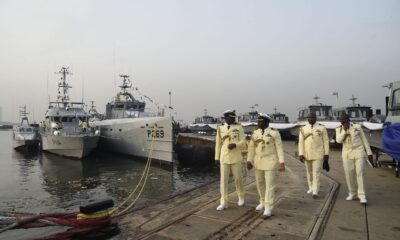
Nigeria Marks Three Years Without Piracy, Unveils Major Maritime Reforms – Oyetola

Published

on

Stay connected via Google News
Follow us for latest news and information on Nigeria water ways.
Add as preferred source on Google

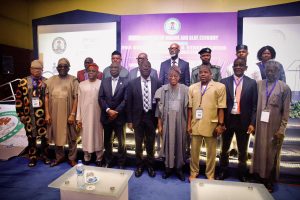
Nigeria has sustained three consecutive years without any reported piracy incidents in its territorial waters, a milestone credited to the Deep Blue Project, according to the Minister of Marine and Blue Economy, Alhaji Adegboyega Oyetola..

Nigeria Marks Three Years Without Piracy

Speaking at a one-day stakeholders’ engagement held Thursday in Lagos, Oyetola emphasized that maritime security remains a central pillar of the ministry’s mandate, adding that the nation’s progress in securing its territorial waters has attracted global commendation and contributed to regional maritime stability.

He further disclosed that Nigeria’s offer to host the African Union Combined Maritime Task Force in Lagos has received formal endorsement from the AU Peace and Security Council.

Commending the collaborative efforts of stakeholders across the maritime sector, the Minister affirmed their alignment with President Bola Tinubu’s Renewed Hope Agenda, which he said is repositioning the sector for national economic growth.

“The creation of the Marine and Blue Economy Ministry and the recent approval of its national policy are landmark reforms,” he stated. The policy, he explained, spans a wide range of focus areas including port infrastructure, maritime security, aquaculture, ocean governance, marine biotechnology, renewable energy, coastal tourism, and climate resilience.

Advertisement

Oyetola noted that the stakeholder engagement was a working session aimed at developing actionable frameworks, setting clear priorities, and assigning institutional responsibilities.

“We must enhance coordination, ensure accountability, and build capacity across all operational levels,” he emphasized.

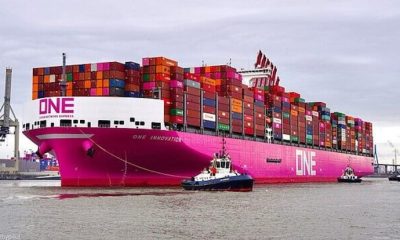
Providing updates on recent developments, the Minister announced that a Nigeria-flagged vessel docked at Tincan Island Port on July 2 with 359 containers onboard, showcasing progress in local shipping capacity.

Since the ministry’s inception in 2023, Oyetola said significant progress has been made in collaboration with its agencies to deliver on key ministerial targets. He revealed that an evaluation by the Presidential Policy Office and CRDCU rated the ministry’s performance at 75 percent by the end of 2024.

Advertisement

He credited this success to the dedication of the ministry’s Delivery Task Teams and urged them to maintain excellence.

On infrastructure, Oyetola confirmed that contracts have been approved for the rehabilitation of the Apapa and Tin Can ports, while procurement processes are ongoing for eastern ports. He added that digital solutions such as the Port Community System and E-Call-Up System would help curb delays and boost investor confidence.

The Minister also highlighted efforts to strengthen indigenous shipping capacity, including the revival of a National Carrier through a public-private partnership. He noted that NIMASA is preparing to disburse the Cabotage Vessel Financing Fund through a transparent and accountable process.

“When operational, the fund will provide a significant boost to Nigerian shipping operators,” Oyetola assured.

Advertisement

He further noted progress in revenue generation, operational efficiency, leakage reduction, and the attraction of private capital across the sector.

On inland waterways, Oyetola praised the National Inland Waterways Authority (NIWA) for enforcing the 2023 Inland Waterways Transportation Regulation and launching a nationwide water safety campaign. He said over 42,000 life jackets had been distributed, alongside the deployment of ferries and patrol boats, and the training of safety marshals—efforts that have contributed to a reduction in boat mishaps.

Representing the Comptroller-General of Customs, Comptroller Patrick Ntadi called for deeper stakeholder commitment to the development of Nigeria’s maritime resources.

Also speaking, Dr. Odunayo Ani, President of the Women’s International Shipping and Trading Association (WISTA) Nigeria, lauded the ministry for the launch of the National Marine and Blue Economy Policy. She described it as a clear commitment to ocean governance, economic diversification, job creation, and sustainability.

Advertisement

Ani emphasized the importance of public-private collaboration in delivering the national blueprint and assured that women’s groups such as WISTA will continue to support the ministry through advocacy, training, and partnerships.

Former President of the Ship Owners Association, Chief Greg Ogbeifun, also commended the ministry’s achievements and called for greater private sector involvement.

Similarly, Mr. Godfrey Nwosu, General Secretary of the National Association of Government Approved Freight Forwarders (NAGAFF), applauded Oyetola for implementing policies that have removed operational bottlenecks and improved efficiency across the maritime sector.

Facebook Comments Box
Stay connected via Google News
Follow us for latest news and information on Nigeria water ways.
Add as preferred source on Google
Continue Reading
Advertisement
Click to comment

Leave a Reply

Your email address will not be published. Required fields are marked *

Security & Safety

Marine Litter Crisis Threatens Nigeria’s Blue Economy Ambitions as Waterways Choke on Plastic Waste

Published

on

Stay connected via Google News
Follow us for latest news and information on Nigeria water ways.
Add as preferred source on Google

Marine Litter Crisis Threatens Nigeria’s Blue Economy Ambitions as Waterways Choke on Plastic Waste

From Ikoyi waterfront to the Bonny-Port Harcourt corridor, plastic debris, abandoned fishing nets and industrial refuse are clogging Nigeria’s inland and coastal waterways — damaging vessels, imperilling livelihoods and undermining the nation’s maritime growth agenda.

By Okeoghene Onoriobe | Lagos Correspondent

Nigeria’s ambition to unlock the full economic potential of its blue economy is facing a stubborn and worsening adversary — marine litter. Across the country’s 853-kilometre coastline, and deep into its network of rivers, creeks, lagoons and inland waterways, plastic waste, styrofoam, discarded fishing gear and household refuse are accumulating at a rate that threatens to undermine the shipping, fisheries, tourism and inland transport sectors simultaneously.

The alarm has grown sharper in the days surrounding World Ocean Day, observed globally on June 8, which this year placed particular emphasis on the marine litter crisis and its direct threat to sustainable blue economy development — a framework central to the mandate of Nigeria’s Federal Ministry of Marine and Blue Economy.

Advertisement

Nigeria Among the World’s Top Plastic Waste Generators
The scale of the problem is stark. According to World Bank data, Nigeria generates an estimated 2.5 million tonnes of plastic waste annually, with only a fraction entering any form of recycling process. The overwhelming majority ends up in open dumpsites, drainage channels and, ultimately, waterways — driven by inadequate waste collection infrastructure, rapid urbanisation and poor environmental compliance culture.

The global picture is no less alarming. The United Nations warns that 14 million tonnes of plastic enter the world’s oceans every year — a figure projected to nearly double to 27 million tonnes by 2040 if current trajectories are not reversed. The economic cost, according to the UN, stands at approximately $13 billion annually, with over 817 marine species threatened. The United Nations Environment Programme (UNEP) has further estimated that plastic accounts for at least 85 per cent of all marine waste.
For Nigeria’s maritime sector specifically, the Regional Coordinator for Africa at Prevention of Marine Litter in the Gulf of Guinea (PROTEGO), Clem Ugorji, has put the country’s direct financial losses from poor waste management and marine litter at $1 billion per year — a figure that demands the attention of port operators, shipping companies, waterways transport concessionaires and maritime regulators alike.

Operational Hazards for Vessels and Waterway Operators
The consequences extend well beyond environmental degradation. For Nigeria’s inland waterways transport (IWT) sector — already strained by underinvestment, ageing fleets and safety concerns — marine litter represents a direct operational and safety hazard.

The Lagos Area Manager of the National Inland Waterways Authority (NIWA), Sarat Braimah, has raised the alarm in clear terms. Floating debris, she warned, is routinely sucked into vessel water intakes, wrapping around propeller shafts and clogging engine cooling systems. The result is sudden engine failure mid-journey — leaving passenger ferries, water taxis and speedboats dangerously exposed to capsizing or collision with larger commercial vessels navigating shared waterways.

Advertisement

Braimah noted that once plastics, cans and nylon bags enter water bodies rather than shore-based waste receptacles, the damage is immediate: marine life is choked, water quality degrades, and toxins enter the aquatic food chain that coastal communities depend on for sustenance and income.

The situation deteriorates markedly during the annual rainy season, when residents dump refuse into drainage channels already clogged with accumulated waste, and floodwaters carry massive volumes of debris directly into creeks, lagoons and offshore waters — compounding a maritime environmental emergency that recurs year after year.

Fisheries, Coastal Communities and the Hidden Human Cost
Beyond vessel operations, the impact on Nigeria’s artisanal fishing communities is severe. Fishermen across coastal and riverine states report persistently damaged gear, declining catches and increasingly contaminated fishing grounds. Scientists have raised growing concerns about microplastics — particles formed as larger plastic items break down — which now enter marine food chains and, through seafood consumption, ultimately reach the human population. UNEP has warned that plastic pollution now constitutes a direct threat to food security and public health at a global scale.

Coastal communities in Rivers, Bayelsa, Delta, Lagos and other littoral states, many of which depend almost exclusively on fishing and waterway-based trade, bear the sharpest end of this crisis — absorbing health risks, economic losses and environmental degradation simultaneously.

Advertisement

Private Sector Steps Up: NSML’s Clean Waterways Initiative
In the absence of a fully integrated national marine litter strategy, it is increasingly the private maritime sector that has moved to fill the gap. One notable actor is NLNG Shipping and Marine Services Limited (NSML), which has expanded its Clean Waterways Initiative (CWI) — a corporate social responsibility programme targeting the waterway corridor between the NLNG Jetty in Port Harcourt and the operating terminal on Bonny Island in Rivers State.

Operating through a “Triple A” framework of Awareness, Advocacy and Action, NSML engages riverine communities on the health and economic dangers of plastic pollution, partners with local governments to improve waste disposal and recycling infrastructure, and conducts quarterly large-scale clean-up exercises to physically remove debris from affected water bodies. The company has recently expanded these activities to include the Bonny Island waterfronts on a regular basis.

NSML Chief Executive Abdulkadir Ahmed described the initiative as a direct response to the growing volume of plastic waste and debris entering rivers, creeks and coastal waters — and stressed that lasting progress requires both regulatory backing and individual behavioural change.

“Advocacy is about engaging government agencies and regulatory bodies so that we can have the necessary backing to take action,” Ahmed said. “We are beginning to see some positive impact from these efforts, and we are not alone in this fight because plastic pollution is a global issue.”
Ahmed was forthright that clean-up exercises, though essential, are insufficient on their own. What is needed, he argued, is consistent individual action and a fundamental reduction in dependence on single-use plastics — combined with the enforcement frameworks and industry accountability that only government can provide.

Advertisement

IMO Sets 2030 Zero-Discharge Target
At the global regulatory level, the International Maritime Organisation (IMO) has sharpened its response. Secretary-General Arsenio Dominguez, in his World Oceans Day statement, announced the adoption of the IMO’s 2026 Strategy and Action Plan aimed at eliminating plastic waste discharges from shipping, with a headline target of zero plastic discharge to sea from ships by 2030.

Dominguez acknowledged that progress is being recorded on pollution control, biodiversity protection and climate action within the global shipping industry, but stressed that considerably more coordinated international effort is required. He called specifically for stronger regulatory frameworks to curb plastic pollution, address underwater radiated noise, and manage the spread of transboundary marine species — and urged a fundamental rethinking of humanity’s relationship with the ocean.

Nigeria Watch: What This Means for the Maritime Sector
For Nigeria’s maritime and blue economy stakeholders, the convergence of World Ocean Day, the IMO’s 2030 commitment and NSML’s expanded private-sector initiative carries a pointed message: the window to get ahead of the marine litter crisis is narrowing.

Nigeria still lacks the fully integrated national marine litter strategy that the scale of its waterways challenge demands — one that combines waste management reform, robust recycling infrastructure, regulatory enforcement, public education and industry-wide accountability. The Federal Ministry of Marine and Blue Economy, NIMASA, NIWA, LASWA and the Nigerian Ports Authority each have roles to play, but coordination between them on environmental governance remains limited.

Advertisement

The stakes for the maritime sector are concrete. Navigational hazards from floating debris inflate vessel maintenance costs, increase accident risk on passenger ferry routes, and degrade the operating environment for port authorities, shipping companies and terminal concessionaires. Every kilometre of waterway choked with litter is a direct tax on trade competitiveness and investor confidence in Nigeria’s blue economy promise.

With the IMO’s 2030 zero-discharge target now formally on the table, Nigeria’s maritime operators — and the regulators that oversee them — face a tightening timeline to demonstrate that the country’s waterways can meet international environmental governance standards. The infrastructure investment, policy coherence and enforcement will required to do so is not trivial. But the cost of inaction, measured in vessel damage, lost catches, degraded coastlines and stunted blue economy growth, will ultimately prove far higher.

Waterways News | waterwaysnews.ng

Advertisement
Facebook Comments Box
Stay connected via Google News
Follow us for latest news and information on Nigeria water ways.
Add as preferred source on Google
Continue Reading

Blog

Sacred Waters Defiled: Child Allegedly Thrown into Ovia River on Native Doctor’s Orders as Edo Community Searches

Published

on

Stay connected via Google News
Follow us for latest news and information on Nigeria water ways.
Add as preferred source on Google

Sacred Waters Defiled: Child Allegedly Thrown into Ovia River on Native Doctor’s Orders as Edo Community Searches

A five-year-old’s fate hangs on the currents of a revered waterway as Nigeria confronts the deadly intersection of superstition, desperation, and the failure of community safeguards

By Oghenewoke Osaweren | Waterways News

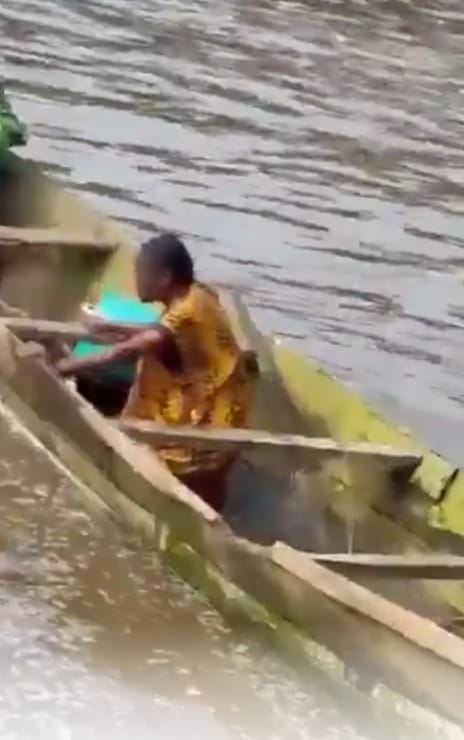
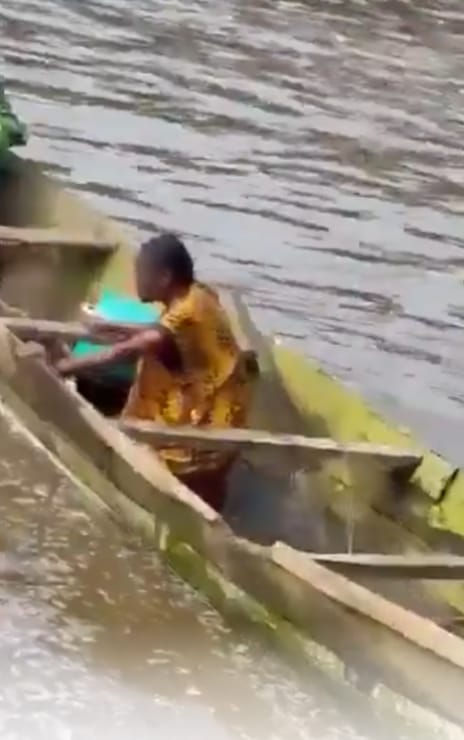
The Ovia River flows through Ovia North-East Local Government Area of Edo State as it has for centuries — a waterway revered in local tradition as a source of life, abundance, and protection. On a day this past week, it allegedly became the site of one of the most disturbing incidents yet reported along its banks: a mother is said to have cast her five-year-old child into its currents, not in a moment of psychological collapse, but in deliberate compliance with the instructions of a so-called seer.
Search parties were immediately mobilised. As of the time of filing this report, residents of the affected community continue to comb the river’s banks and shallows, the sounds of urgent voices carrying across the water in a search that should never have been necessary.

The woman, whose identity has not been officially confirmed by authorities at press time, allegedly told community members who confronted her that she acted on the direct order of a local spiritualist — a “seer” — who reportedly prescribed throwing her child into the river as part of a spiritual ritual. What the woman was promised in return, and what desperation drove her to compliance, remains under investigation. She has since been apprehended by residents and is expected to be handed to the police.

Advertisement

The Edo State Police Command had not issued a formal statement as of press time. Waterways News is actively seeking confirmation from the command’s spokesperson, ASP Eno Ikoedem.

A Waterway With a Name — And a History
The Ovia River is not simply a geographic feature. In Edo cultural and spiritual tradition, Ovia is honoured as a deity of peace and providence — a force held, in oral tradition, to have emerged during times of communal crisis to restore harmony and protect the people from harm. Shrines were raised in Ovia’s name. Songs were composed in her honour. Communities settled along this waterway precisely because of what its waters were believed to offer: safety, sustenance, and continuity.
That a child was allegedly cast into those same waters — not in any ancient ceremonial context, but on the profit-driven instruction of an individual exploiting a vulnerable woman’s faith — is a desecration that cuts across both the human and the spiritual dimensions of this story. The river that communities built their lives around has allegedly been turned against one of its most defenceless members.

This incident adds to a grim record accumulating along the Ovia River corridor. Just weeks prior, the Edo State Police Command recovered the bodies of two women abducted from Iyowa Community within the same Ovia North-East LGA — their remains found in a forest grave after a member of the kidnapping syndicate led operatives to the site. A community that has barely processed one wave of grief now faces another.

The Scale of the Crisis
If confirmed, this incident will not be an anomaly in the national record. It will be the latest entry in a documented and growing pattern.
Data from the National Bureau of Statistics, cited by the National Agency for the Prohibition of Trafficking in Persons (NAPTIP), recorded over 150 ritual killings across Nigeria in the first half of 2025 alone, with women and children as the primary victims. The National Institute for Legislative and Democratic Studies documented over 168 ritual-related deaths in 2022, and nearly 100 in 2024.
NAPTIP leadership has publicly characterised the phenomenon as symptomatic of deeper structural failures. These are not random acts, the agency has stated — they are the product of poverty, inequality, weakened community values, and widespread belief in the efficacy of ritual harm as a route to personal advancement or protection. Weak law enforcement and slow judicial processes have compounded the problem by emboldening perpetrators.
The “seer” in the Ovia case — whoever they are — remains at large.

Advertisement

NIGERIA WATCH | When Waterways Bear Witness to Governance Failure
Let’s situate this story within the wider framework of Nigeria’s inland waterway governance, community protection obligations, and the state’s relationship with its river communities.

Rivers occupy a paradoxical position in Nigerian public life. As physical infrastructure, they are chronically underinvested — the National Inland Waterways Authority (NIWA) has for years contended with inadequate funding, unregulated jetties, and persistent safety gaps along major inland routes. As cultural and community anchors, they are simultaneously some of the most socially significant spaces in the country, carrying the weight of tradition, livelihood, and collective identity.
Yet neither dimension — the infrastructural nor the cultural — is adequately protected by the Nigerian state.

The alleged incident on the Ovia River exposes a governance gap that runs deeper than policing. Inland river communities across Nigeria exist in a condition of compound vulnerability: physically isolated from emergency services, socially embedded in belief systems that formal institutions rarely engage with seriously, and economically marginalised in ways that make desperate choices more likely. The woman at the centre of this story did not arrive at this moment in isolation. She arrived there through a series of compounding failures — of social support systems, of community mental health infrastructure, of any credible state presence capable of disrupting the charlatans who operate freely in spaces where formal authority is absent.

The “seer” economy — the network of native doctors, spiritualists, and ritual practitioners who prey upon vulnerable individuals in communities across southern Nigeria — thrives precisely in the governance vacuum that the Nigerian state has not filled. It fills the space where functional healthcare, social welfare, legal recourse, and psychological support should exist. Where the state is absent, the charlatan moves in.

Advertisement

NIWA’s mandate, and the broader Federal Ministry of Marine and Blue Economy’s remit, technically encompasses the development and protection of Nigeria’s inland waterway communities — not only their economic function, but the communities that depend on them. In practice, that mandate has rarely extended to meaningful community protection frameworks. There are no early warning systems for at-risk households along inland waterway corridors. There are no integrated social intervention programmes tied to waterway community development plans. The rivers are managed, where they are managed at all, as transport corridors — not as living community spaces requiring holistic governance.

Three immediate actions are now required. First: full deployment of search and rescue capacity on the Ovia River, with federal and state coordination if local resources are insufficient. NIWA maintains operational presence along major inland waterways and its assets should be made available to support this effort.

Second: the arrest and prosecution of the seer who allegedly issued the instruction that placed a child’s life in danger. Nigerian law on conspiracy and incitement is applicable, and the individual who gave the order bears criminal responsibility equal to — if not greater than — that of the person who carried it out.

Third: a policy conversation, long overdue, on the integration of social protection frameworks into Nigeria’s inland waterway community governance architecture. The Ovia River corridor, like dozens of others across the Niger Delta and south-south region, cannot be treated as a transport asset while the communities along its banks remain invisible to the welfare state.

Advertisement

A child was allegedly thrown into a Nigerian river on the word of a man who walked away. The river did not ask for this. The community did not deserve this. And the state, which governs neither the waterway nor the community adequately, cannot continue to treat each such incident as an isolated outrage and then move on. Nigeria’s inland waterways connect communities. They also, in moments like this, reveal exactly how unprotected those communities are.

Waterways News will continue to follow this story as official police statements and further community reports become available. Key facts — including the identity of the woman, the identity of the seer, and the status of the child — remain unconfirmed pending official police response. This report presents what is known while framing the verified wider context of superstition-driven harm in Nigerian inland waterway communities.

Facebook Comments Box
Stay connected via Google News
Follow us for latest news and information on Nigeria water ways.
Add as preferred source on Google
Continue Reading

Editor's Choice

NIWA Cracks Down on Life Jacket Violations, Vows Strict Enforcement in Warri

Published

on

Stay connected via Google News
Follow us for latest news and information on Nigeria water ways.
Add as preferred source on Google

NIWA Cracks Down on Life Jacket Violations, Vows Strict Enforcement in Warri

By Okeoghene Onoriobe | Waterways News Correspondent

The National Inland Waterways Authority (NIWA) has thrown its full weight behind the enforcement of its ‘No Life Jacket, No Sailing’ directive, warning that the policy will be applied without exception across Nigeria’s inland waterways.

The renewed commitment was announced during a one-day sensitisation and enlightenment programme hosted by NIWA’s Warri Area Office at NPA Waterside, Warri South Local Government Area of Delta State, as part of the Authority’s 2026 waterway safety awareness calendar.

NIWA Area Manager, Rufus Oladimeji, who addressed boat operators, waterway users and key stakeholders at the event, said the campaign was designed to deepen safety consciousness and reinforce the Authority’s zero-tolerance stance on non-compliance.

Advertisement

“We are here today at NPA Waterside, Warri, with one clear message that will guide all our operations going forward: No Life Jacket, No Sailing,” Oladimeji told participants, stressing that the directive was non-negotiable under NIWA’s mandate to guarantee the safe movement of passengers and goods on inland waterways.

He urged all boat operators and their passengers to treat the wearing of life jackets as routine practice before any trip — not a voluntary gesture, but a fundamental safety obligation.

The Chairman of the NPA Boat Owners Association, Paul Wilikie, offered assurances on behalf of operators, pledging that association members would align with NIWA’s safety directives. He said boat owners recognised the importance of safety compliance not only in protecting lives but also in sustaining the long-term viability of water transportation in the region.

The sensitisation exercise brought together a broad cross-section of stakeholders, including representatives of the Nigeria Police Force, the National Drug Law Enforcement Agency (NDLEA), traditional rulers, community leaders, water transport unions and boat operators — reflecting the multi-agency approach NIWA is deploying to drive behavioural change on the waterways.

Advertisement

A particularly notable feature of the day’s event was the distribution of life jackets to boat operators on the spot — a practical step aimed at eliminating the excuse of unavailability and encouraging immediate compliance.

The Warri exercise is part of NIWA’s wider 2026 safety campaign, which seeks to reduce the frequency of preventable water transport accidents through stakeholder engagement, targeted public education and firmer enforcement of safety standards across the country’s inland waterway network.

Facebook Comments Box
Stay connected via Google News
Follow us for latest news and information on Nigeria water ways.
Add as preferred source on Google
Continue Reading

Trending