
Oil and Gas
Floating Giants of the Deep: How Offshore Oil and Gas Factories are Reshaping the Global Energy Frontier


Floating Giants of the Deep: How Offshore Oil and Gas Factories Are Reshaping the Global Energy Frontier
WATERWAYS NEWS SPECIAL FEATURE | OFFSHORE ENERGY | IN-DEPTH REPORT
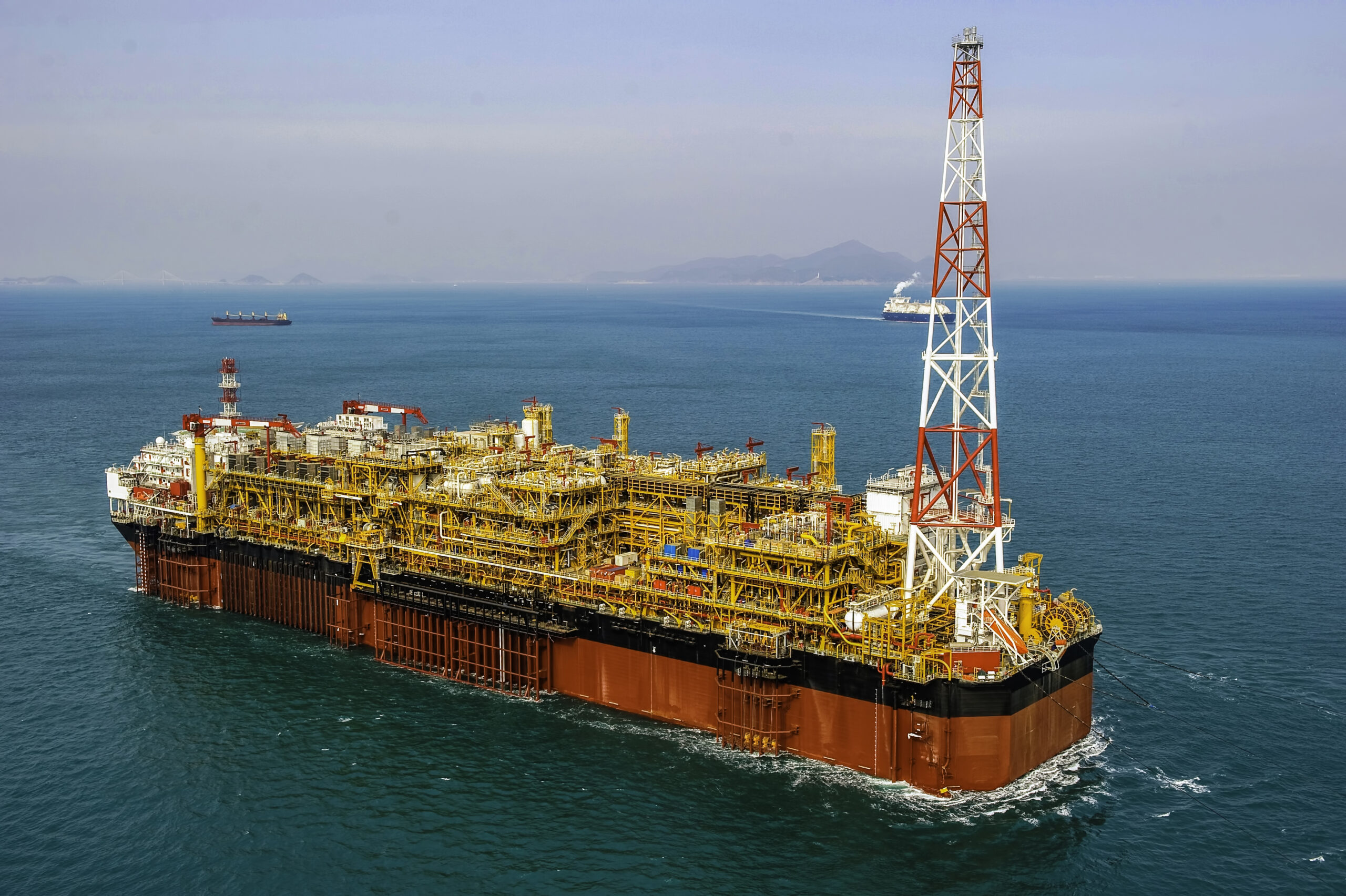
Far beyond the sight of land, colossal floating industrial complexes extract, process, and export the world’s energy — silently powering economies on every continent. Waterways News, in this two parts feature report, takes you inside the hidden world of offshore floating production systems. Here is part one of the report
By Raymong Gold | Co-Publisher and Research Reporter, Waterways News, Lagos
You are standing on a beach at dusk somewhere along Nigeria’s Atlantic coastline. The sun is bleeding orange across the horizon, and there — barely visible at the edge of where the sky meets the sea — sits a massive structure. It looks like a ship, yet it does not move. It has the silhouette of a building, but it rests on water. For a moment, you wonder: what exactly is that?

If you have ever found yourself asking that question, you are not alone. For most people living in coastal communities, these distant structures are nothing more than curious features of the maritime horizon. But to the global energy industry, they are nothing short of revolutionary — floating factories that quietly power the modern world.
Welcome to the world of offshore floating production and storage systems: towering feats of engineering, human ingenuity, and industrial ambition that are transforming how oil and natural gas are extracted and delivered to markets across the globe.
“In the middle of a vast and often turbulent ocean, a facility the size of a small town operates continuously — 24 hours a day, 365 days a year.”
When the Sea Becomes an Industry
The ocean has long been regarded as a highway — a vast corridor across which goods, people, and ideas travel. But the ocean is also something else entirely: it is one of the world’s most productive industrial landscapes. Beneath its waves lie enormous deposits of oil and natural gas, resources that the global economy depends upon for fuel, electricity, and industrial production.
The challenge, historically, has been extraction. Offshore oil and gas fields are often located hundreds of kilometres from the nearest coastline, in waters so deep that conventional fixed platforms — the kind anchored permanently to the seafloor — are either impossible or prohibitively expensive to construct. This is where floating offshore production systems have made their most dramatic contribution.
Rather than building massive permanent infrastructure on the seabed, oil and gas companies deploy purpose-built floating vessels that can be positioned over a field, extract and process the resource, store it, and transfer it to waiting tankers — all without setting foot on dry land. These are not temporary solutions. Many of these floating facilities are designed to operate continuously for 20 to 30 years.
The FPSO: Workhorse of the Offshore World
What It Is
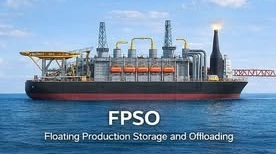
At the heart of the offshore floating energy system is a vessel type that has become ubiquitous in deep-water fields across Africa, Asia, South America, and beyond: the Floating Production Storage and Offloading vessel, universally known as the FPSO.
An FPSO is, in simple terms, an offshore oil processing plant that floats. Crude oil extracted from subsea wells on the ocean floor is pumped up to the vessel through a complex network of flexible risers and pipelines. Once onboard, the oil goes through a series of processing stages: gas is separated from the oil, water is removed, and various contaminants are treated so that the crude can meet market specifications.
The processed crude is then transferred into the vessel’s own onboard storage tanks — tanks that can hold millions of barrels of oil — before being offloaded onto shuttle tankers that transport the cargo to refineries on shore. The entire operation is a continuous cycle: receiving raw crude, processing it, storing it, and dispatching it, day after day, in the middle of the open ocean.
Scale and Complexity
The sheer scale of an FPSO is difficult to comprehend unless you have stood next to one. The largest FPSOs in operation today stretch beyond 300 metres in length — longer than three football pitches laid end to end. They carry tens of thousands of tonnes of equipment: separators, compressors, heat exchangers, power generators, water injection systems, gas flare booms, and accommodation blocks capable of housing crews of 100 to 200 personnel.
Nigeria has been one of the world’s most active FPSO markets for decades. The country’s deepwater fields — including Bonga, Egina, and Agbami — are all developed using FPSOs, making this vessel type central to the country’s oil export economy.
“Nigeria’s deepwater fields — Bonga, Egina, Agbami — are all developed using FPSOs, making this vessel type central to the nation’s oil export economy.”
The FSO: The Quiet Custodian
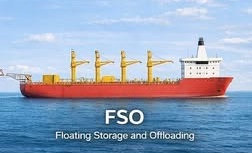
Closely related to the FPSO — but simpler in design — is the Floating Storage and Offloading unit, or FSO. As its name suggests, the FSO does not carry out oil processing. Instead, it serves purely as a floating storage hub, receiving crude oil produced by nearby offshore platforms or subsea production systems and holding it until a shuttle tanker arrives to collect it.
Think of it as an offshore warehouse positioned at sea. FSOs are often deployed in shallower water fields or in areas where the oil processing is handled elsewhere — either on a separate FPSO or through a pipeline to an onshore terminal. Their relative simplicity compared to FPSOs makes them a cost-effective option for certain field configurations.
Although they are less technologically complex than FPSOs, FSOs are by no means small operations. They require sophisticated cargo handling systems, mooring arrangements capable of withstanding powerful ocean swells and currents, and trained maritime crews to manage their day-to-day operations safely.
The FLNG: A Revolution in Natural Gas at Sea
Perhaps the most audacious engineering achievement in the offshore floating energy sector is the Floating Liquefied Natural Gas facility — the FLNG. If the FPSO represents a processing plant at sea, then the FLNG is nothing less than an entire gas liquefaction factory, floating on the ocean surface.
Natural gas, in its raw form, is invisible, highly flammable, and notoriously difficult to transport over long distances without a pipeline. The solution developed by the energy industry is to cool the gas to extreme temperatures — as low as minus 162 degrees Celsius — at which point it transforms into a liquid, shrinking to approximately one six-hundredth of its original volume. This liquefied natural gas, or LNG, can then be loaded onto specially designed tanker ships and transported efficiently to any market in the world.
For many decades, this liquefaction process could only be carried out at massive onshore LNG terminals. But the FLNG has changed this equation fundamentally. An FLNG vessel sits directly above a subsea gas field, extracts the gas, processes it, and liquefies it — all while floating at sea. The LNG produced is then transferred to LNG carrier ships for export.
A Technical Marvel
The engineering challenges involved in building an FLNG are extraordinary. Cryogenic equipment must be designed to handle the violent motion of a vessel at sea. Safety systems must be capable of managing the risk of leaks in environments where there is no easy evacuation route. The thermal insulation required to maintain such extreme temperatures in tropical ocean environments demands materials of remarkable precision and durability.
Shell’s Prelude FLNG — deployed off the coast of Australia and currently the largest floating structure ever built — is a sobering illustration of what these facilities represent. At 488 metres long and weighing 600,000 tonnes when fully loaded, it is a floating city of steel and technology, designed to produce LNG, liquefied petroleum gas (LPG), and condensate simultaneously from an offshore gas field.
— END OF PART ONE OF THIS FEATURE REPORT —
Raymond Gold is a Co-Publisher and Research Reporter for Waterways News. He is based in Lagos.

Business
Dangote Refinery Surpasses Nameplate Capacity, Processes 700,000 Barrels Per Day in Independent Test — Eyes World’s Largest Refinery Crown by 2028
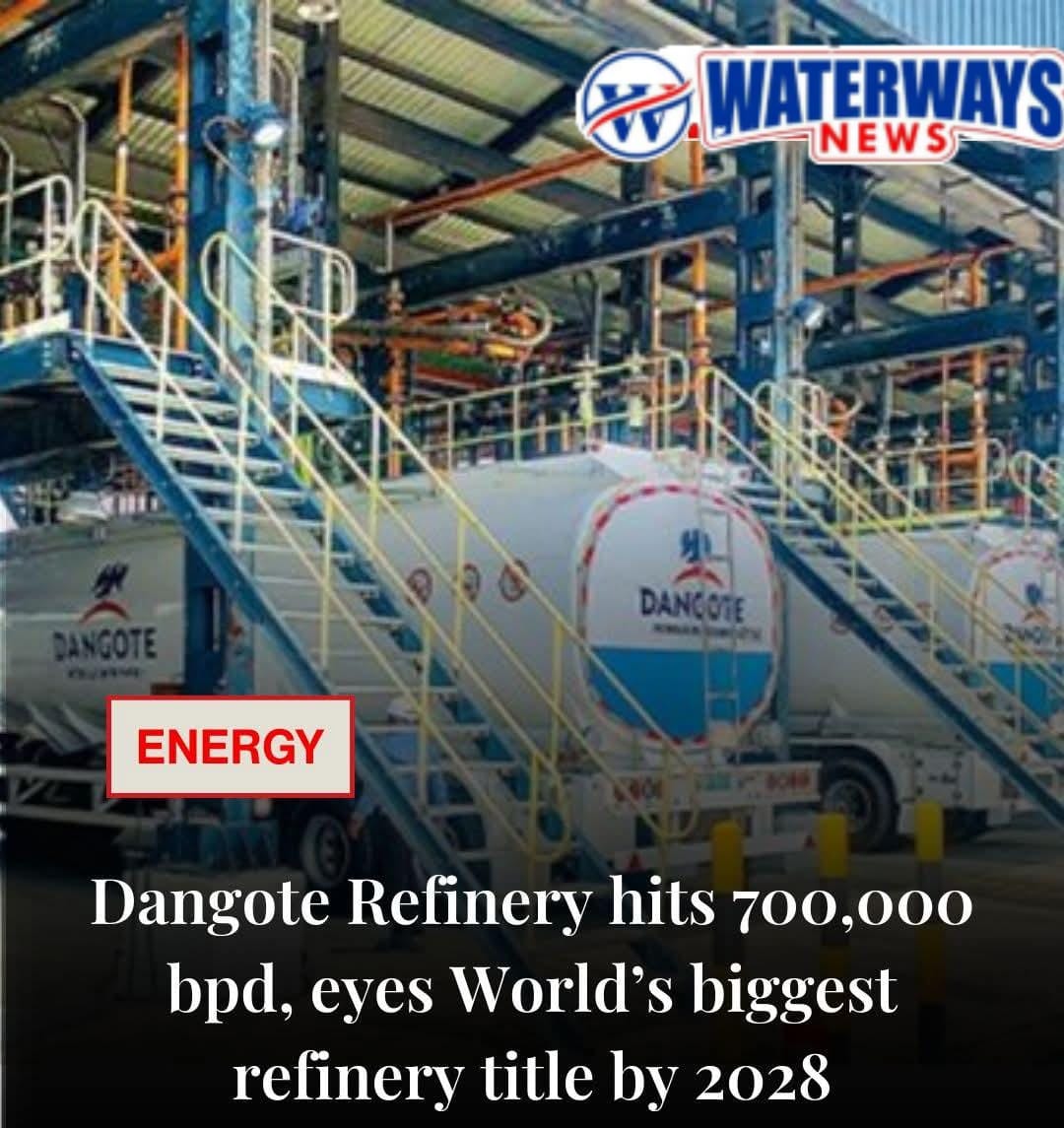
Dangote Refinery Surpasses Nameplate Capacity, Processes 700,000 Barrels Per Day in Independent Test — Eyes World’s Largest Refinery Crown by 2028
Landmark throughput milestone confirmed by independent process licensors; facility now targets 1.4 million bpd expansion within 30 months as European buyers queue up and domestic forex pressure begins to ease
By Okeoghene Onoriobe | Waterways News Correspondent | LAGOS
Dangote Petroleum Refinery & Petrochemicals has achieved a historic throughput milestone, processing crude oil at 700,000 barrels per day — surpassing its own nameplate capacity by 50,000 barrels — in a performance test independently verified by process licensors. The result, officially disclosed by the refinery, cements the Lekki Free Zone facility’s standing as the world’s largest single-train petroleum refinery, a title it has carried since commissioning but now backs, for the first time, with independently verified throughput figures.
The significance of the milestone extends well beyond the technical. For a country that spent decades as one of Africa’s foremost crude oil producers while simultaneously haemorrhaging billions of dollars in foreign exchange importing refined petroleum products it could not produce at home, the data represents a turning of a page — perhaps the most consequential industrial turning Nigeria has seen since the oil boom era.
From Paradox to Proof
Nigeria’s refining story has long been one of institutional failure and squandered potential. For much of the past three decades, the country’s four state-owned refineries — at Port Harcourt, Warri, and Kaduna — operated at negligible capacity or lay idle entirely, leaving Africa’s most populous nation dependent on imported petrol, diesel, and aviation fuel. The downstream sector became a monument to mismanagement, a drain on the public treasury through fuel subsidies that persisted even as ordinary Nigerians queued for hours at petrol stations.
Dangote’s refinery, planted on a sprawling 2,635-hectare plot at the Lekki Free Zone on the eastern outskirts of Lagos, was conceived as the direct industrial answer to that national embarrassment. When Aliko Dangote, Africa’s richest man, first announced the project, it was met with the particular scepticism reserved in Nigeria for projects of outsized ambition. Construction delays, financing complexities, and repeated revised timelines tested that scepticism. But the facility began fuel production in 2024, and since then has steadily ramped output across its product slate — petrol, diesel, aviation fuel, liquefied petroleum gas, and a range of petrochemical feedstocks.
The 700,000-barrel-per-day result, now independently confirmed, is the most concrete performance data the refinery has released since it came online, and it removes whatever residual doubt remained about the facility’s core engineering credentials.
A Waypoint, Not a Destination
Devakumar Edwin, Vice-President for Oil and Gas at Dangote Industries, was careful to frame the milestone as a point on a longer trajectory rather than a finishing line. The refinery, he indicated, is targeting a throughput capacity of 1.4 million barrels per day within 30 months — a figure that, if achieved, would transform the Lekki facility from the world’s largest single-train refinery into potentially the largest refinery of any configuration on earth.
That projection would put the Dangote complex ahead of South Korea’s Ulsan refining complex and Saudi Aramco’s Ras Tanura — both perennial occupants of the top rungs of global refining capacity rankings. Edwin did not detail the capital expenditure required to double throughput, nor the feedstock contracting strategy that would be needed to secure sufficient crude supply for such a dramatic ramp-up. Those are not trivial questions. But the 30-month timeline — pointing to somewhere around the end of 2028 — has been clearly stated, and the market will hold the company to it.
A Global Export Footprint
The refinery’s commercial reach has expanded significantly beyond Nigeria’s borders. Since first production, the plant has found buyers across multiple African countries and, more remarkably, across Europe — the United Kingdom, France, Spain, Italy, and the Netherlands are among confirmed destination markets for its refined products. It has also supplied gasoline to the United States market and jet fuel to Saudi Arabia, the latter carrying a particular symbolic resonance given the Kingdom’s own deep refining heritage and global energy stature.
The geopolitical context has worked in the refinery’s favour. Disruptions in global energy supply chains — most acutely from tensions in the Middle East — have accelerated African governments’ efforts to diversify their energy sourcing, and the Dangote plant has positioned itself as a credible regional anchor. In April 2026, data from S&P Global Commodities placed Dangote Petroleum as the world’s largest exporter of jet fuel for that month — a data point the company has been understandably quick to amplify.
The Forex and Domestic Supply Equation
On the home front, the strategic implications of the refinery’s expanding output are significant and directly felt in Nigeria’s macroeconomic architecture. For years, the importation of petroleum products was one of the primary drivers of Nigeria’s chronic foreign exchange demand — placing sustained pressure on central bank reserves, fuelling naira depreciation, and feeding the cycle of inflation that has eroded purchasing power across the country. By substituting domestic refining capacity for those imports at scale, the Dangote facility provides structural relief to that pressure, and analysts have begun to observe measurable reductions in Nigeria’s net fuel import bill.
However, analysts are also quick to note that the refinery’s output alone cannot solve Nigeria’s downstream distribution challenges. Ageing pipeline infrastructure, logistics bottlenecks, and the still-unresolved depot and retail distribution architecture mean that benefits that should flow from domestic refining capacity do not always materialise efficiently at the pump for the average Nigerian consumer. The refinery may win every throughput test; the last-mile challenge remains a separate, stubborn problem.
Petrochemicals: The Higher-Margin Frontier
Beyond fuel products, the Dangote facility is pressing into higher-value petrochemical derivatives. The company has flagged plans to significantly scale up production of liquefied petroleum gas and industrial feedstocks — among them polypropylene, which feeds Nigeria’s packaging and plastics manufacturing sector, and Linear Alkylbenzene, a key precursor in detergent production. Both represent product streams with stronger margins than conventional fuels, and their domestic production has the additional strategic value of reducing Nigeria’s import dependence across a wider range of industrial goods.
Nigeria Watch
Waterways News analysis of the domestic maritime and coastal trade implications
The Dangote refinery’s 700,000-barrel-per-day throughput is not merely an energy story — it is a maritime story, and one that reshapes the freight and logistics calculus across Nigeria’s entire coastal and inland waterway economy.
For port operators, terminal managers, and shipping lines operating along the Nigerian coast, the refinery’s ramp-up carries direct operational significance. The facility’s product slate — refined fuels, LPG, petrochemicals — will increasingly require coastal distribution to terminals along Nigeria’s riverine and coastal belt, from the Warri axis to Calabar and beyond. The National Inland Waterways Authority (NIWA) and state waterway agencies such as LAGFERRY and the Lagos State Waterways Authority (LASWA) must reckon with the fact that a refinery now producing at this scale generates downstream logistics demand that Nigeria’s coastal fleet is not yet fully equipped to absorb efficiently.
The Cabotage Act, which reserves domestic cargo movement to Nigerian-flagged vessels, is directly implicated. If the Dangote refinery’s coastal product distribution is to comply fully with cabotage provisions — as it should — then the availability and capacity of Nigerian-flagged tankers and product carriers becomes a live operational constraint. This is precisely the moment when the long-delayed disbursement of the Cabotage Vessel Financing Fund (CVFF) matters most. A refinery of this size producing for domestic coastal distribution needs a coastal fleet to match. The CVFF’s continued inaccessibility to Nigerian shipowners represents a structural bottleneck at exactly the wrong historical moment.
The refinery’s growing export footprint — supplying jet fuel to Saudi Arabia, gasoline to the United States, and petroleum products across Europe — also signals a future where Nigerian-controlled shipping lines could, in principle, handle a portion of that trade. That is a conversation Nigeria’s maritime policy establishment has barely begun to have. The Nigerian Maritime Administration and Safety Agency (NIMASA), the Shipping Council, and the Ministry of Marine and Blue Economy should be asking, with urgency, what it would take for Nigerian tonnage to carry Nigerian-refined crude into European and American ports. That is the blue economy dividend this refinery milestone makes newly conceivable, even if not yet reachable.
For freight forwarders and logistics operators, the implications of a 1.4-million-barrel-per-day Dangote refinery by 2028 are transformative. The volume of petroleum products, petrochemicals, and derivatives that would require movement — by sea, river, pipeline, and road — would fundamentally alter Nigeria’s freight market. Those who position now — in tonnage, in terminal capacity, in skills — will define the sector’s landscape for a generation.
Nigeria has long been accused of building upstream wealth and exporting raw value. The Dangote refinery, at its current throughput and with its stated expansion trajectory, represents the most significant structural rebuttal to that accusation in the country’s economic history. For the maritime sector, the imperative is clear: grow to meet it.
Customs Seals Tanker, Halts Unauthorised PMS Discharge at Tin Can Island Port
By Emetena Ikuku | Waterways News Correspondent
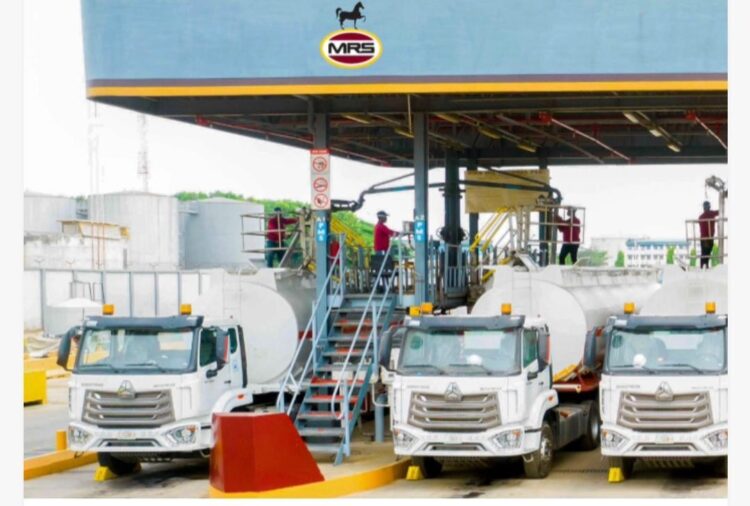
The Nigeria Customs Service (NCS) Tin Can Island Port Command has moved to contain what it describes as a flagrant breach of port regulations, after the product tanker MT NY Maria reportedly discharged Premium Motor Spirit (PMS) at the MRS Terminal — locally known as Dantata Jetty — without the required Customs clearance and while the vessel remained under an active Customs seal.
In a statement signed by the Command’s Public Relations Officer, Oscar Ivara, the NCS pushed back against what it called misleading accounts of the incident circulating in the public domain, insisting its officers acted strictly within the powers conferred by the Nigeria Customs Service Act, 2023.
How the Incident Unfolded
According to the Command, officers from the Boarding and Rummaging Unit boarded the MT NY Maria on Saturday, May 23, 2026, immediately after the vessel arrived from the Dangote Refinery. The boarding was part of a routine documentation and compliance exercise. During the inspection, officers discovered the vessel lacked a mandatory Last Port Clearance from its port of origin — a fundamental documentation gap.
The vessel’s agent was given a two-day window to produce the missing document, while the vessel was officially sealed and placed under Customs control pending compliance.
The situation took a sharper turn when intelligence reaching the Command indicated that by Wednesday, May 27, the vessel had commenced discharge operations — despite the outstanding documentation, and in direct violation of the Customs seal still in force on the ship.
Obstruction Alleged During Enforcement
Officers who mobilised to the terminal to enforce compliance reportedly encountered resistance from security personnel at the facility. Despite the obstruction, Customs operatives gained access to the premises and ordered the ship master to halt the unauthorised discharge and report to the Enforcement Unit to make statements.
The vessel was subsequently resealed in line with standard enforcement procedures.
The Command was emphatic that the ship master was not arrested, but was invited solely to provide statements as part of an ongoing investigation into the circumstances of the incident and the alleged obstruction of officers.
Legal Basis for the Action
The NCS grounded its enforcement in multiple provisions of the Nigeria Customs Service Act, 2023. It cited Sections 30 to 35 covering Customs controls, vessel inspections, examination of goods and documentation verification. Under Section 31(2)(b), international seaports are designated Customs Control Zones, while Section 31(4) mandates that imported goods be unloaded, inspected, assessed and cleared exclusively under Customs supervision.
The discharge of PMS by MT NY Maria while under seal and without clearance was characterised as a breach of Sections 46 to 58 of the Act, which govern reporting obligations, declaration of goods, unloading procedures, and the release of goods under Customs control. Sections 212, 222, 223, 225 and 226 were further cited as giving officers explicit authority to enter premises, board and inspect vessels, patrol Customs areas, and detain ships where violations are established or reasonably suspected.
The NCS added that investigations into the obstruction encountered during the enforcement operation remain active.
Nigeria Watch
The MT NY Maria incident is one of the most pointed illustrations yet of the tensions embedded in Nigeria’s post-deregulation petroleum supply chain — particularly the Dangote Refinery corridor.
As the refinery ramps up domestic fuel supply, product tankers are making increasingly frequent coastal runs between Lekki and the Lagos port terminals. The volume and frequency of these movements are placing new strain on Customs compliance infrastructure, raising the question of whether documentation procedures have been scaled to match the pace of throughput. A vessel clearing Dangote Refinery — a domestic origin — may not trigger the same customs vigilance as an import vessel, yet the regulatory obligations are identical once the product moves into a Customs Control Zone.
The alleged decision to discharge while under an active Customs seal and without clearance — if borne out by the investigation — would represent a serious regulatory breach, and one that carries troubling implications for port order. If terminal operators or vessel principals calculate that enforcement actions can be outpaced or resisted with private security, the credibility of Customs’ regulatory role at the nation’s busiest petroleum terminals comes into question.
For the maritime industry, the key issues to watch are: whether the investigation extends to the terminal operator at the MRS facility; the outcome of the obstruction allegation, which, if substantiated, could carry criminal dimensions; and whether the NCS moves to strengthen documentation protocols for domestic refinery product movements — a gap this incident has thrown into sharp relief.
Waterways News | Port & Maritime Intelligence
Blue Economy
Marine Logistics Eclipse Road Haulage at Dangote Refinery as Bulk Coastal Deliveries Drive New Downstream Model
Marine Logistics Eclipse Road Haulage at Dangote Refinery as Bulk Coastal Deliveries Drive New Downstream Model
Price convergence between refinery and depot operators reshapes Nigeria’s petroleum distribution landscape, with vessel traffic emerging as the dominant evacuation channel
LAGOS, April 25, 2026 (Waterways News)
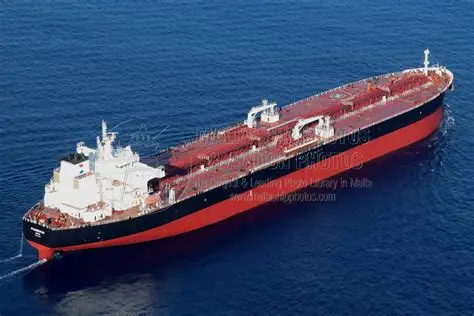
A fundamental restructuring is underway in Nigeria’s downstream petroleum supply chain, as coastal vessel operations have overtaken truck dispatch as the primary evacuation route from the Dangote Petroleum Refinery in Lekki, Lagos — a shift with far-reaching implications for Nigeria’s maritime logistics sector.
Industry sources indicate that the transition has been driven by price alignment between the refinery and private depot operators, with Premium Motor Spirit (PMS) prices at major Lagos depots now broadly at par with refinery marketers’ price levels. The convergence has substantially eroded the arbitrage incentive that previously made direct truck-lifting from the refinery commercially attractive.
From Trucks to Tankers
At the height of truck-based evacuation in December 2025, the refinery was processing an average of approximately 1,000 trucks per day. That volume has since declined sharply, as a structured bulk supply framework has taken hold — one that routes product through coastal vessels to depot operators, who in turn handle onward distribution to retailers.
Under the current arrangement, around 20 approved marketers are designated to lift product from the refinery. These include NIPCO Plc/11 Plc, MRS, TotalEnergies, Conoil, AA Rano, AYM Shafa, Northwest, Rainoil/Eterna, Ardova Plc, and NNPC Retail, alongside Masters Energy, Nepal Energies, Sobaz, Optima, Bovas, Soroman Nigeria Ltd, Heyden, Integrated Oil & Gas, Techno Oil, and Fatgbems.
The effect has been to concentrate product uplift within a defined group of major marketers, while the refinery itself has receded from the end-to-end distribution role — positioning it instead as a bulk supplier to a depot-centred distribution network.
Vessel Traffic Rises Across Port Cities
Recent cargo movements reflect the growing primacy of marine logistics in the new supply model. In Lagos, one vessel discharged approximately 17,000 metric tonnes of Automotive Gas Oil (AGO) to Ardova, while a separate parcel of around 37,000 metric tonnes of PMS berthed for NIPCO following loading at the Lekki facility. Additional PMS deliveries of roughly 20,000 metric tonnes each were recorded at Warri and Calabar, contributing to inventory replenishment across regional depot networks.
The Warri and Calabar deliveries are particularly significant from a maritime logistics standpoint, demonstrating that the refinery’s coastal supply reach now extends well beyond Lagos — a development that positions Nigerian coastal shipping as an indispensable infrastructure layer in the downstream sector.
Pricing Parity Locks In the New Model
Depot-level pricing data as of April 22 underlines why the coastal model has become entrenched. PMS at Bono and Ascon depots in Lagos was recorded at ₦1,204 per litre, while NIPCO, Aiteo, and Gulf Treasure traded in the ₦1,204 to ₦1,205 range — essentially at parity with refinery levels. With minimal margin to exploit through direct truck-lifting, marketers have rationally migrated toward vessel-based sourcing.
Regional differentials reinforce this logic further. PMS in Calabar is priced around ₦1,227 per litre and Port Harcourt at approximately ₦1,218 per litre, making locally-sourced coastal supply more competitive than trucking from the Lekki refinery to these markets.
The refinery’s geographic location — on the outskirts of Lagos — further amplifies trucking costs, making depot-based procurement via coastal vessels the more rational choice for most marketers operating in secondary markets.
Nigeria Watch
What the Dangote Coastal Shift Means for Nigeria’s Maritime Sector
The transition unfolding at the Dangote Petroleum Refinery is more than a logistics footnote — it represents a structural validation of Nigeria’s coastal shipping infrastructure as a critical pillar of national energy distribution.
For years, Nigerian maritime stakeholders — from shipowners and terminal operators to cabotage advocates and NIMASA policymakers — have argued that coastal and inland waterway shipping must be elevated from its peripheral role to become a primary freight channel. The Dangote refinery model is now delivering precisely that, organically and at scale.
The implications are significant. First, the sustained increase in coastal product movements creates fresh commercial opportunities for Nigerian-flagged vessel operators and coastal tanker owners — assuming the Cabotage Act is being enforced and that domestic capacity is prioritised in these supply contracts. Second, the growing throughput at Lagos, Warri, and Calabar jetties will intensify pressure on port-side infrastructure, terminal berths, and marine traffic management systems — raising questions about readiness at NPA-managed facilities along these coastal corridors.
Third, and most strategically, this shift is precisely the kind of demand-side pull the CVFF (Cabotage Vessel Financing Fund) was designed to serve. With a functional indigenous refinery generating sustained domestic coastal cargo, the long-delayed disbursement of the CVFF takes on renewed urgency. Nigerian shipowners competing for Dangote-linked coastal contracts need vessels — and the CVFF, properly deployed, is the financing instrument that can put those vessels in the water.
The refinery has, in effect, given Nigeria’s coastal shipping sector a commercial anchor. Whether the sector — and the regulators who govern it — can rise to the moment is the question that will define the next chapter of Nigeria’s blue economy story.
By Okeoghene Onoriobe, Waterways News Correspondent, Lagos

 Oil and Gas7 months ago
Tantita’s Pipeline Deal: $144m Contract, Rising Output, and the Questions that Deserve Answers
- MARITIME TRADE & SHIPPING7 months ago
World’s Largest Container Ship Sets New Maritime Record with 22,233 TEUs on Single Voyage
- Blue Economy7 months ago
Nigeria’s Coast Guard Bill: A Solution in Search of a Problem?