

Editor's Choice
Saudi Arabia Launches New Shipping Corridors as Hormuz Remains Closed to Commercial Traffic

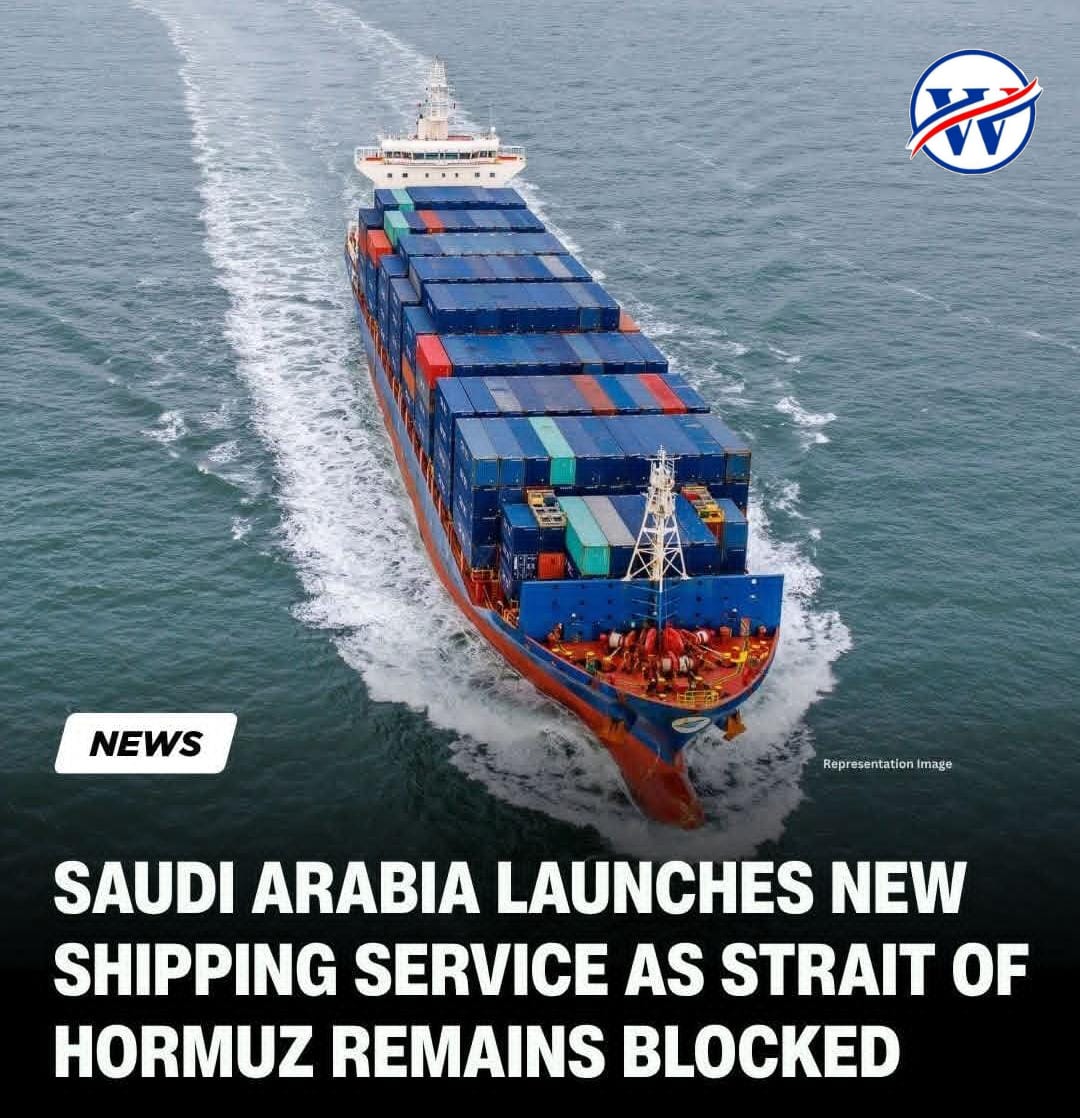

Saudi Arabia Launches New Shipping Corridors as Hormuz Remains Closed to Commercial Traffic
Riyadh activates Red Sea alternatives and pipeline bypasses as the world’s worst maritime supply crisis since WWII enters its third month — with Nigeria’s tanker revenues, crude export premiums, and port traffic in the balance
By Okeoghene Onoriobe | Waterways News Correspondent
Since 28 February 2026, the Strait of Hormuz has been effectively closed to most commercial shipping — triggering what maritime analysts and global energy bodies are describing as the most severe disruption to seaborne trade since the Second World War. Through that narrow artery linking oil and gas producers in the Gulf to the open seas, some 20 percent of the world’s oil and liquefied natural gas normally flows during peacetime. Today, that flow has been reduced to a trickle, and the tremors are being felt from Rotterdam to Lagos.
Iran imposed a selective blockade on 28 February 2026, and the United States subsequently imposed a parallel naval blockade of Iranian ports on 13 April, creating a structural “dual blockade.”

About 2,000 ships remain stranded in the Gulf, waiting to be allowed through. Even as the United States launched “Project Freedom” — a major naval escort operation in early May — the Strait remains far from safe for routine commercial navigation. As of this week, commercial vessel movement through the Strait remains heavily restricted and inconsistent, with a significant number of vessels still waiting outside the Gulf or operating under controlled routing arrangements.
The scale of the economic shock is staggering. With Hormuz tanker traffic still restricted, cumulative supply losses from Gulf producers already exceed one billion barrels, with more than 14 million barrels per day of oil now shut in — an unprecedented supply shock. Oil prices surged sharply after the outbreak of conflict, with Brent recording its highest monthly rise ever by the end of March.
RIYADH’S RESPONSE: TWO NEW SERVICES, ONE CLEAR MESSAGE
Against this volatile backdrop, Saudi Arabia’s port authority, Mawani, has moved decisively to protect its own trade lifelines and demonstrate to the world that Gulf commerce will not be held hostage indefinitely to the fate of a single chokepoint.
Mawani has inaugurated a new shipping service connecting the ports of Jeddah, Salalah, and Djibouti, with a capacity of 1,730 standard containers, to boost connectivity with global ports. Additionally, the Saudi Port Authority has launched a Red Sea Express linking Jeddah, Yanbu, Egypt’s Sukhna, and the Jordanian port of Aqaba, with a capacity of 1,100 containers.
In total, Saudi Arabia’s port authority has now added five new maritime shipping services following Iran’s near-closure of the Strait of Hormuz, in a move designed to strengthen connectivity via the Red Sea and provide supply chain continuity and flow of goods.
Beyond container services, Riyadh has also leaned heavily on pipeline infrastructure. When the conflict peaked in March, Saudi Arabia reportedly used the East–West Pipeline to bypass the Iranian blockade on Hormuz, moving up to five million barrels per day. Another pipeline was also activated, as Riyadh and Abu Dhabi diverted massive volumes of oil from the Hormuz route through Red Sea ports at Yanbu and Al-Muajjiz.
Saudi Arabia and the United Arab Emirates have successfully redirected some exports to terminals loading outside of the Strait, even as mounting supply losses from Hormuz continue to deplete global oil inventories at a record pace.
The new services and pipeline diversions are also part of a broader Saudi diplomatic posture. Riyadh has been pressing the United States to end its blockade of Hormuz and Iranian ports, fearing further strikes by Iran and the potential closure of the Bab-al-Mandab Strait by Iran or its allies like Yemen’s Ansarallah — a development that would effectively shut down the Red Sea corridor that Saudi Arabia is now betting heavily upon.
NIGERIA WATCH: OPPORTUNITY AND EXPOSURE IN EQUAL MEASURE
For Nigeria’s maritime and energy sector, the Hormuz crisis is playing out in contradictory directions simultaneously — creating short-term windfalls while exposing structural vulnerabilities that industry stakeholders and the Federal Ministry of Marine and Blue Economy cannot afford to ignore.
The Revenue Upside
Nigeria sits outside the Hormuz corridor entirely, loading its crude from Atlantic Basin terminals at Bonny, Forcados, Brass, and Escravos. In a market suddenly starved of Gulf supply, this geography has become a premium asset. Producers outside of the Middle East have pushed output higher and lifted exports to record levels in response to the crisis, (IEA) and Nigeria’s OPEC output, still recovering from years of production shortfalls, is now commanding elevated differentials as European and Asian refiners scramble for Atlantic crude alternatives.
The Dangote Petroleum Refinery — which was already reconfiguring Nigeria’s crude trading relationships before the Hormuz crisis — is now operating in an environment where domestic crude retention and refined product exports carry significantly higher value. With Gulf refinery throughputs severely curtailed, Nigerian refined products have found expanded export windows, and the refinery’s forward commercial strategy deserves close scrutiny in light of these geopolitical shifts.
Tanker earnings on West African routes have also surged. Nigerian crude is predominantly carried on Very Large Crude Carriers (VLCCs) and Suezmax vessels. With Gulf loadings choked off and global ton-mile distances extended by Cape of Good Hope rerouting, freight rates have spiked — a boon for shipowners calling at Nigerian terminals, and a factor that NPA and terminal operators at Apapa and the Lekki Deep Sea Port should be monitoring closely in terms of berth demand and port revenue projections.
The Exposure
The same crisis that boosts Nigeria’s crude premium also raises the cost of everything the country imports by sea. Nigeria remains heavily dependent on imported fuel, machinery, fertiliser, and manufactured goods — commodities that now travel longer, more expensive routes under inflated war-risk insurance premiums.
Port users, freight forwarders, and clearing agents operating at Apapa, Tin Can Island, and Lekki are already absorbing these elevated costs in their logistics chains.
Container freight rates on Asia-to-Europe lanes are rising again, and the Strait of Hormuz closure, combined with resumed Houthi attacks, has eliminated any near-term prospect of a return to Suez Canal routing.
Nigerian importers sourcing goods from Asia — electronics, textiles, vehicles, and machinery — are facing extended transit times and higher freight invoices. The Nigeria Customs Service, which has been posting record port revenue figures in recent months, may find collection growth under pressure if import volumes contract in response to elevated landed costs.
Port congestion is also building at accessible alternative hubs such as Jeddah and Salalah — the very ports now being connected by Mawani’s new services.
For Nigerian importers and exporters routing through the Middle East, these congestion-driven delays add another layer of uncertainty to already stretched supply chains.
The Cabotage and NIMASA Dimension
The crisis also carries implications for Nigeria’s domestic maritime policy architecture. NIMASA’s Cabotage Vessel Financing Fund (CVFF), long a subject of debate over disbursement timelines, was designed partly to build a Nigerian-flagged fleet capable of participating in regional and international trade. In a moment when freight rates are elevated and demand for alternative routing through the Atlantic is at a historic high, the absence of a substantial Nigerian-flagged deep-sea presence means that the windfall accruing from higher tanker rates flows overwhelmingly to foreign shipowners rather than Nigerian maritime operators.
This is precisely the structural gap that cabotage policy was meant to address over the long term. Industry voices — including those within the Maritime Workers Union of Nigeria (MWUN) — have argued for years that delays in CVFF deployment deprive Nigerian seafarers and vessel operators of the capacity to participate meaningfully in exactly these kinds of market moments.
THE BROADER PICTURE: HOW LONG DOES THIS LAST?
Even if the Strait is reopened to all traffic, there will still be obstacles to shipping. The United States has said it will take six months to clear mines it believes have been laid by Iran. Underwriters are unlikely to restore normal insurance ratings for Hormuz transits until that demining is well advanced and a sustained ceasefire holds. Assuming flows through the Strait gradually resume from June, global oil supply is projected to decline by 3.9 million barrels per day on average for the full year 2026.
That projection carries significant uncertainty. Iranian Supreme Leader Mojtaba Khamenei — who assumed authority following the death of his father, Ayatollah Ali Khamenei, in the February strikes — has shown no sign of yielding control of Hormuz as a strategic lever. Diplomatic talks in Islamabad in April yielded no breakthrough. The current impasse, in other words, may define the global shipping environment for the remainder of 2026 and beyond.
For Nigeria’s maritime community — port operators, terminal concessionaires, freight forwarders, tanker operators, inland waterway transporters, and policymakers alike — the Hormuz crisis is not a distant geopolitical story. It is actively reshaping the commercial environment in which every Nigerian maritime stakeholder operates, daily.
Waterways News continues to monitor developments in the Strait of Hormuz and their implications for Nigerian ports, shipping, and the blue economy. Feedback and industry perspectives are welcome.

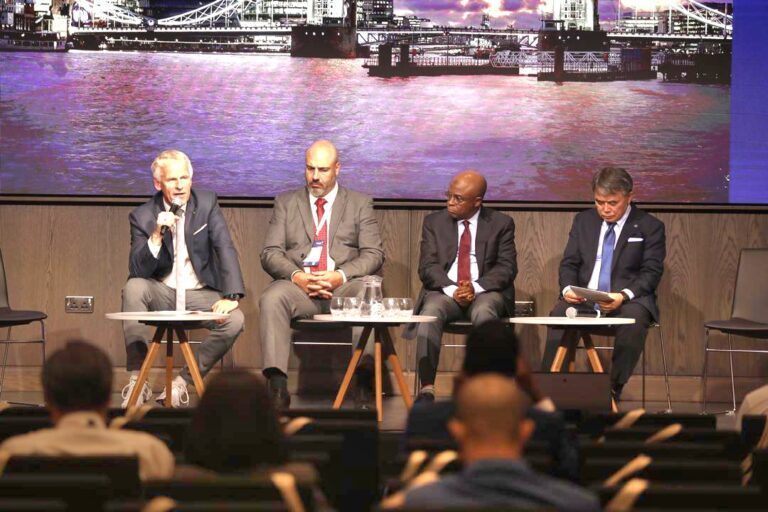
Nigeria’s Port Boom Is Outpacing Its Capacity, Dantsoho Tells World Ports Conference
Dantsoho Pitches Nigeria’s Ports to Global Investors in London, Says Lekki’s Capacity Is Exhausted
By Emamuzou Akatugba | Waterways News | London
The Managing Director of the Nigerian Ports Authority (NPA), Dr Abubakar Dantsoho, has told global port investors that Nigeria’s fast-growing cargo volumes make the country’s ports one of Africa’s most compelling investment opportunities. He said the Tinubu administration has put investor-friendly policies in place.
Dantsoho spoke on Tuesday at the IAPH World Ports Conference in London, which runs from November 3 to 6 at Olympia. He addressed a select group of maritime investors. He is Vice-President of the International Association of Ports and Harbors (IAPH) and Chairman of the Port Management Association of West and Central Africa (PMAWCA).
He said Nigeria’s population, rapid urbanisation and infrastructure gaps are what make the opportunity attractive. He argued that governments across Africa cannot alone fund bigger and deeper seaports, so private investment must move in quickly.
“The investment needed in ports to meet this expansion and growth can only happen if the requisite private investment is attracted and retained,” he said. He added that President Tinubu “has created the enabling atmosphere” for this
Dantsoho said Nigeria’s population has grown from about 45 million at independence in 1960 to over 260 million. In his words, the country needs capacity to receive bigger import vessels and to move higher export volumes.
His strongest example was the Lekki Deep Sea Port. It was funded with Chinese backing and built by China Harbour at a cost of $1.6 billion. He said it was commissioned only about three years ago, yet its capacity “has been exhausted”.
“Clearly, we need more capacity to be able to contain the volumes,” he said. He added that the NPA is pleased to be capturing more cargo, since rising volumes are what lift port revenue.
He also said most cargo arriving in West Africa, largely from China, ends up in the Nigerian market. He compared Nigeria’s population with Ghana (34 million), Côte d’Ivoire (32 million), Benin Republic (14 million) and Togo (9 million).
Other reports from the conference quote Dantsoho saying federal reforms have lifted Nigeria’s exports by about 25 per cent in two years, across oil and non-oil goods. He reportedly also cited two Nigerian ports in the World Bank’s top 20 global rankings, and a Single Window system the NPA developed in 2025 with a Singaporean firm.
NIGERIA WATCH
Capacity is now the story. A $1.6bn flagship port that is already full is the clearest sign yet that Nigeria’s problem has moved from attracting ships to handling them. It strengthens the case for the new deep seaport approvals (Badagry, Olokola, Ibom, Bakassi and Bonny) that have so far been announced faster than they have been built. Investors in London will want timelines, not just approvals.
Retaining investors is harder than attracting them. Dantsoho himself used the phrase “attracted and retained”. Concession renewal anxieties, regulatory overlap among agencies, and the Strait of Hormuz crisis’s effect on freight rates and war-risk insurance all weigh on retention. These are the questions investors will ask after the speech.
Where do the small operators fit? The pitch is about big terminals and big capital. Informal inland waterway operators, represented by WABOTAN and ATBOWATON, remain absent from the conversation.
Waterways News will keep asking how port-led growth and the NPA’s assessment of inland dry ports will translate into jetties, safety and livelihoods for the informal inland waterway operators.
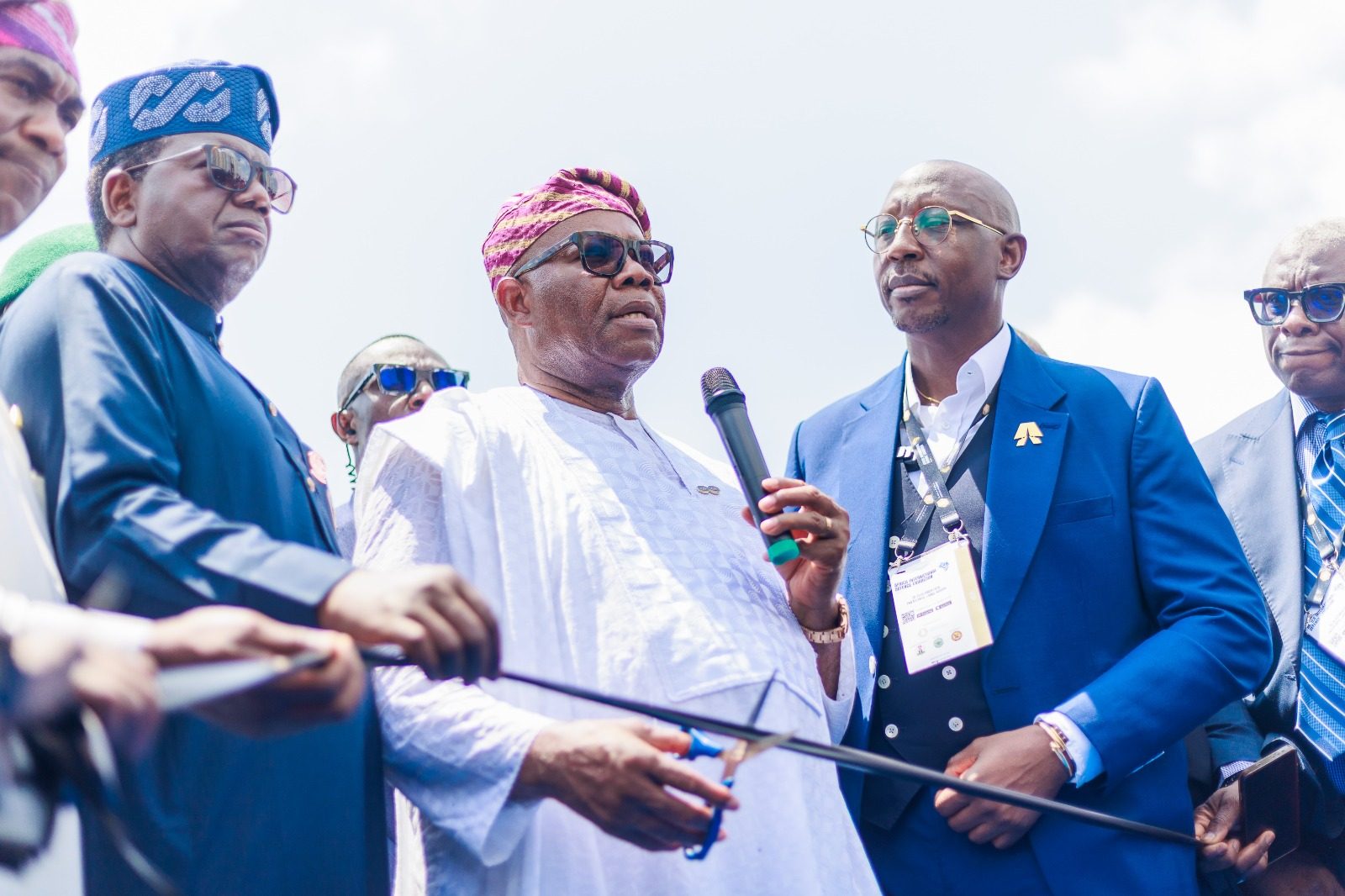
Nigeria Unveils Home-Built ADX-Barra 200 Autonomous Vessel at AFRIDEX 2026
Arridex, DICON joint venture Helagon delivers country’s first indigenously developed unmanned surface vessels%
By Ighoyota Onaibre | Waterways News
Nigeria has unveiled its first indigenously developed autonomous surface vessel, the ADX-Barra 200. Arridex Group, formerly RusselSmith Group, built it through Helagon, its defence joint venture with the Defence Industries Corporation of Nigeria (DICON).
The vessel was unveiled on 26 October at the inaugural Africa International Defence Exhibition (AFRIDEX 2026) at Eko Atlantic, Lagos. The exhibition ran from 26 to 29 October.
President Bola Ahmed Tinubu was represented by Senate President Godswill Akpabio. He said the administration prioritises defence industry growth because a nation is more secure when it can build and maintain its own capability. He described the vessel as that capability taking shape, designed and built by local engineers in partnership with DICON, and said it deserves government support and the confidence of the armed forces.
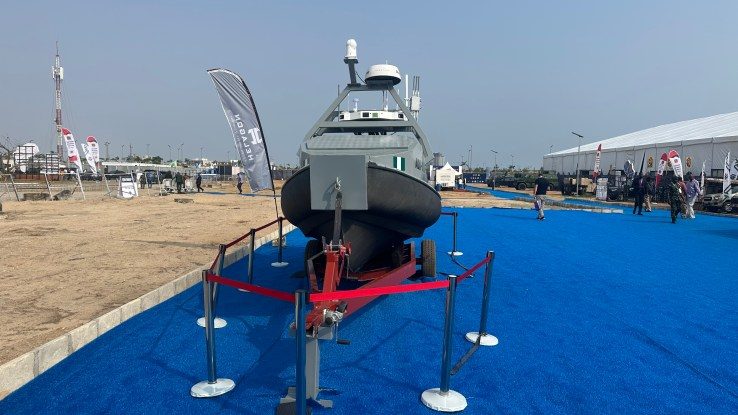
ADX-Barra 200
Arridex Group CEO Kayode Adeleke presented the vessel. He said Helagon was set up to design autonomous systems and that the ADX-Barra 200 is the result. For the forces that will use it, he called it a force multiplier.
The ADX-Barra 200 is one of two platforms in the ADX-Barra series launched at the exhibition. The other is the ADX-Barra 100. Arridex says both were designed, built and integrated in Nigeria by its engineers.
Adeleke tied the platforms to Gulf of Guinea security. He said the region’s waters carry its trade, support its coastal communities and hold much of its energy wealth, and that protecting them calls for capability the region can build, sustain and improve itself. He invited the armed services and other stakeholders to arrange demonstrations and to help shape later generations of the vessels.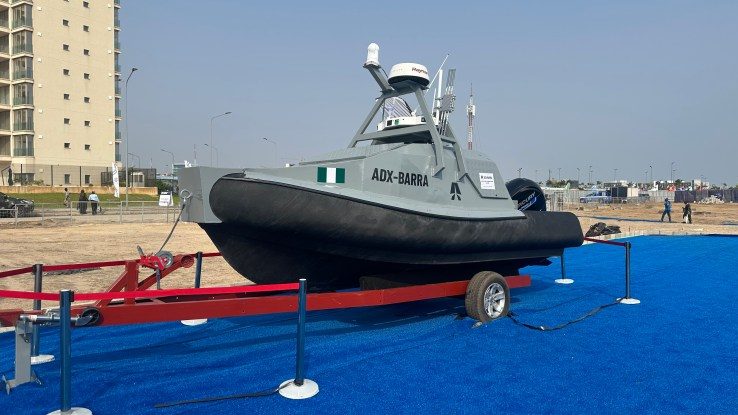
Others at the unveiling included Lagos State Deputy Governor Dr Obafemi Hamzat and the Minister of State for Defence, Dr Bello Matawalle. DICON Director-General Major General Babatunde Ibrahim Alaya, Helagon Chief Operating Officer Engr. Precious Omo-Agege and Arridex senior management were also present.
Arridex has not published the vessel’s technical specifications, including its length, endurance, payload and sensors. Both vessels remained on display at the exhibition.
NIGERIA WATCH
A home-built answer to a long-standing maritime problem: Nigeria’s waters have long needed more patrol capacity than its platforms and budgets can supply. A locally designed vessel that “can be supported, adapted and improved by the team that made it,” as Arridex puts it, addresses one persistent weakness. Imported hulls and systems often sit idle for want of spares, support and trained hands.
The questions that matter next: Unveilings are not deployments. The Navy, NIMASA’s Deep Blue Project and other agencies will want to know the vessel’s range, endurance, sensors and sea-state limits. They will also want to know whether it can work in the Gulf of Guinea. Until Arridex publishes specifications and arranges trials, the “game-changing” claim remains the company’s own.
Beyond defence: Waterways News readers should watch whether this technology filters into civil uses such as inland waterway surveillance, anti-vandalism patrols and search and rescue. The country’s inland operators, including those represented by WABOTAN and ATBOWATON, face insecurity and safety gaps that policy announcements have not closed. Local manufacturing capacity matters to them only if it eventually reaches the waterways where they work.
The accountability test: The industrial-policy argument is sound. It is build locally and maintain locally. It will be judged by procurement, deployment and sustained operation, not by launch-day speeches.
Editor's Choice
Australia Bars Repeat-Offender Bulk Carrier for 90 Days Over Falsified Crew Rest Records
Australia Bars Repeat-Offender Bulk Carrier for 90 Days Over Falsified Crew Rest Records
By Okeoghene Onoriobe | Waterways News
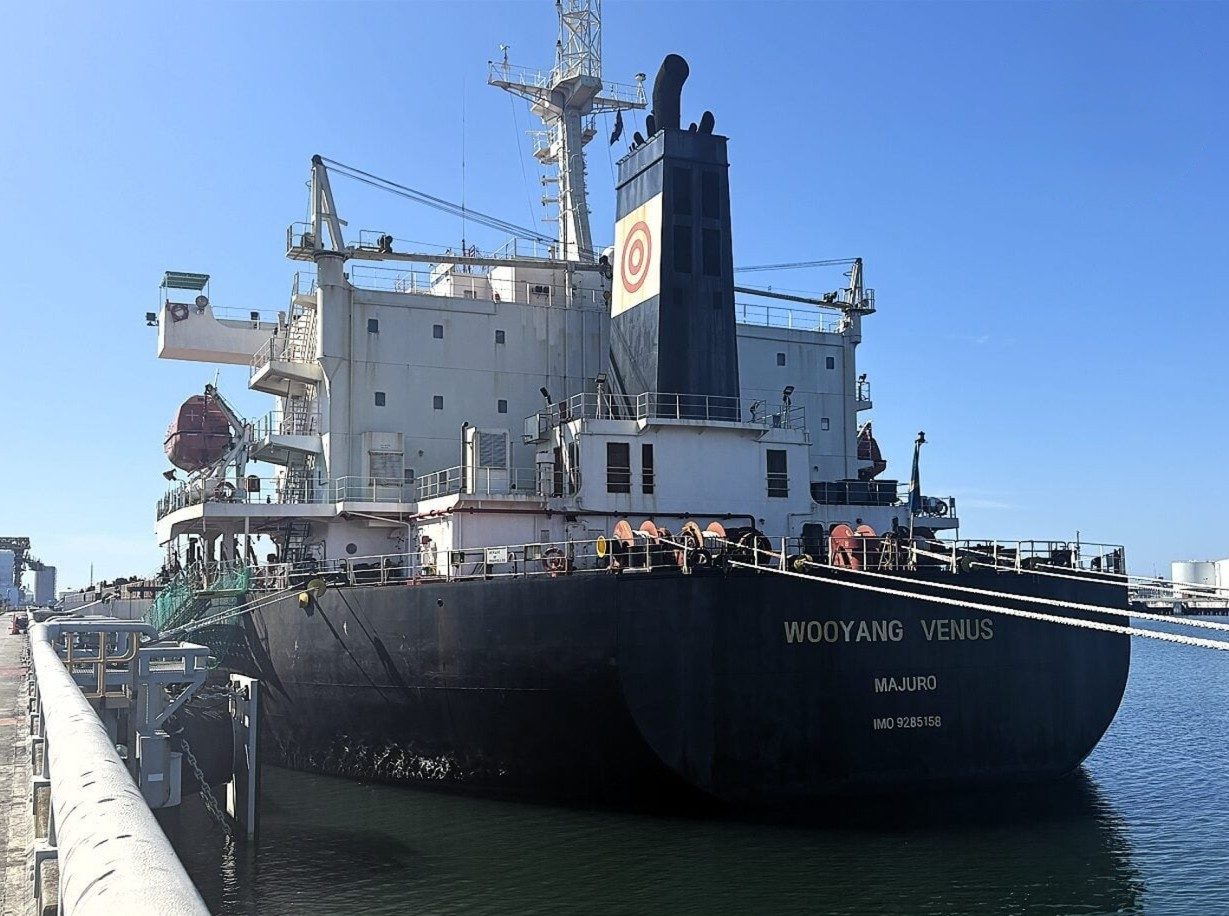
Australian maritime authorities have banned the Marshall Islands-flagged bulk carrier Wooyang Venus from its ports and waters for 90 days. Inspectors found that the ship’s crew work and rest-hour records had been deliberately falsified to hide excessive working hours.
The Australian Maritime Safety Authority (AMSA) boarded the vessel at the Port of Newcastle on 29 October after a complaint under the Maritime Labour Convention (MLC). Its port state control inspection found that the records did not match the hours the crew actually worked. The ship left Newcastle on 31 October for Korea, and the ban took effect afterwards.
This is the vessel’s third brush with Australian enforcement in under three years. AMSA detained it in August 2026 when crew hours were neither properly recorded nor monitored. It was first detained in December 2023, after a complaint from the International Transport Workers’ Federation (ITF).
That inspection found falsified hours records, poor food provisions and an allegation that the master had assaulted a crew member. AMSA’s annual MLC report says the operator then submitted a corrective action plan covering repatriation, better provisions and training on rest-hour compliance. The latest findings suggest those measures did not take hold.
AMSA Executive Director for Maritime Safety and Environmental Compliance, Greg Witherall, said falsifying records meant to protect seafarers undermines both crew welfare and ship safety. He warned that fatigue dulls judgement and slows reaction times, raising the risk of collisions, groundings and injuries, particularly during navigation and watchkeeping.
The ban was imposed under Section 246 of Australia’s Navigation Act 2012. AMSA cited the deliberate falsification, the repeated breaches and doubts over the effectiveness of the owner’s and operator’s safety management systems.
Nigeria Watch
The case matters for Nigeria for three reasons:
Records are the enforcement tool. Fatigue rules only work if rest-hour logs can be trusted. Australia treated falsification as a safety-system failure, not a paperwork lapse, and banned the ship rather than detaining it again.
Repeat offenders need escalating penalties. Two detentions and a corrective plan did not change this operator’s behaviour. Nigerian port state control should ask whether its own follow-up on repeat deficiencies has real consequences.
Seafarer welfare is a Nigerian issue. Nigerian seafarers serve on foreign-flagged ships, and those working boats and ferries on domestic waters face fatigue and welfare gaps too, often with no records at all.
The MLC regime Australia is enforcing shows what accountability looks like. It is the benchmark NIMASA and the inland regulators should be measured against, and one this publication will keep pressing.

 Oil and Gas8 months ago
Tantita’s Pipeline Deal: $144m Contract, Rising Output, and the Questions that Deserve Answers
 MARITIME TRADE & SHIPPING8 months ago
World’s Largest Container Ship Sets New Maritime Record with 22,233 TEUs on Single Voyage
 Blue Economy9 months ago
Nigeria’s Coast Guard Bill: A Solution in Search of a Problem?