

Editor's Choice
Borno Governor Zulum Moves to Unlock Baga–Chad Republic Waterway, Etes Revival of Lake Chad Trade Corridor

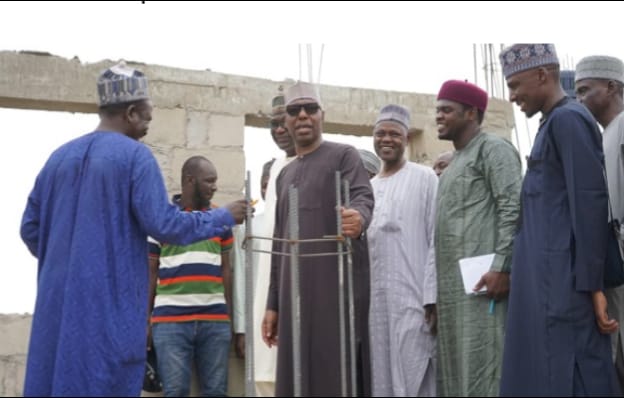

Borno Governor Zulum Moves to Unlock Baga–Chad Republic Waterway, Etes Revival of Lake Chad Trade Corridor
By Oghenewoke Osaweren | Waterways News Reporter
For the communities that once thrived on the waters linking Baga to the Republic of Chad, the Lake Chad Basin was not merely geography — it was livelihood, culture, and commerce. Now, after years of insurgent-imposed silence on those waterways, Borno State Governor, Prof. Babagana Umara Zulum, is pushing to reclaim them.
Zulum paid a working visit to Baga town in northern Borno on Saturday, convening a high-level security summit with Nigerian military commanders in Baga and nearby Kukawa — a meeting squarely focused on unlocking the water corridor that once connected Nigeria’s northeast to the Chad Republic across Lake Chad.
“Our visit to Baga was to interface with the Nigerian military to discuss the modalities for clearing waterways from Baga to the Republic of Chad,” the governor told journalists after the closed-door session. “We have discussed many issues, and insha Allah, the clearance exercise will resume very soon. The governments of Chad and Nigeria are working together to determine how commodities will move between the two countries.”

The significance of that statement should not be lost on Nigeria’s maritime and inland waterway stakeholders. Before the Boko Haram crisis, generations of boat operators contributed to a flourishing formal and informal economy built on the movement of people and goods across Lake Chad — a network that made the Lake Chad Basin a sub-regional trade hub. Every week, canoes laden with smoked fish, corn, wheat, cow and camel hides would depart from Bol and Baga Sola in Chad toward Baga Kawa in Nigeria, which served as a critical commercial gateway for fishing, agricultural, and livestock products moving deeper into the country.
The cessation of that transport has driven up the price of basic commodities, forced some trade routes to be rerouted through Niger or Cameroon, and devastated the economies of lakeside towns — particularly Bol and Baga Sola on the Chadian side, which had largely depended on cross-lake commerce with Nigeria.
Saturday’s engagement forms part of a broader, accelerating push by the Zulum administration to restore that economic artery. The Borno State Government, in collaboration with the Nigerian Navy and with backing from the Government of the Lake Chad Province and other regional partners, has already flagged off the dredging of the Lake Chad waterways at the Baga Fish Dam — a project designed to restore the region’s historic economic relevance after years of insecurity and environmental decline.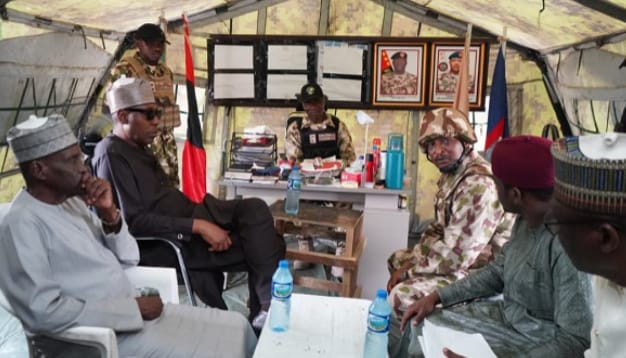
A recent inspection of the International Lake Chad water route in Doron Baga, Kukawa Local Government, confirmed measurable progress on the clearance of shrubs along the route, with state officials expressing confidence that the project would soon enable farmers to resume cultivation of crops including wheat, onion, and maize, while also reviving fishing activities that once sustained entire communities.
The waterway revival effort is being pursued on two diplomatic tracks simultaneously. Zulum has announced plans for a personal visit to N’Djamena to meet with Chadian President Mahamat Idris Déby Itno to discuss the restoration of waterway transport between Baga and Chad, alongside coordinating with chambers of commerce in both Chad and northeastern Nigeria to bolster cross-border economic partnerships.
Crucially, the Baga–Chad water route does not operate in isolation from the wider ecological crisis threatening the entire region. Lake Chad straddles the intersection of Chad, Cameroon, Nigeria, and Niger, and while it historically ranked among the largest lakes in Africa, its surface area — once as vast as 17,800 square kilometres — had shrunk to approximately 1,500 square kilometres in the early 21st century, compounding the threat to regional trade and food security.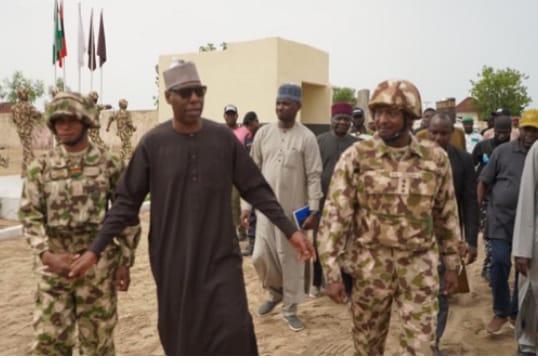
Beyond the waterway negotiations, the governor used the Baga visit to assess infrastructure projects in Kukawa town — inspecting ongoing construction at a General Hospital, a Mega Primary School, and the High Islamic College, which integrates Islamic and Western curricula to provide alternative educational pathways for out-of-school children and Almajiri pupils, qualifying graduates for entry into universities and polytechnics across Nigeria.
An agricultural support package was also announced, with the state government committing to distribute farming tools, implements, and improved seedlings to local farmers and returning fishing communities — a measure that signals the administration is preparing the population to productively fill the economic space that a reopened waterway would create.
For Nigeria’s inland waterway sector, Baga represents one of the starkest illustrations of what insecurity costs a nation in suppressed trade and severed connectivity. The Borno governor’s sustained engagement — military, diplomatic, and developmental — suggests that at least at the state level, the political will to reverse that loss is real and growing.
Waterways News covers Nigeria’s maritime, ports, and inland waterway sector.

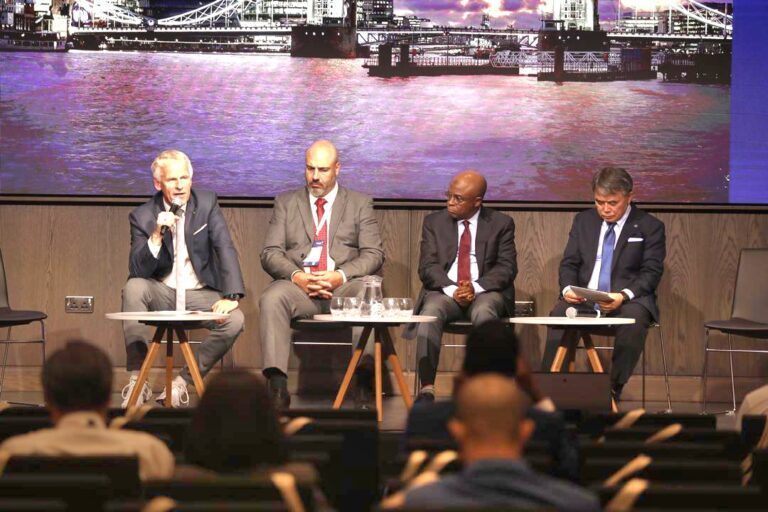
Nigeria’s Port Boom Is Outpacing Its Capacity, Dantsoho Tells World Ports Conference
Dantsoho Pitches Nigeria’s Ports to Global Investors in London, Says Lekki’s Capacity Is Exhausted
By Emamuzou Akatugba | Waterways News | London
The Managing Director of the Nigerian Ports Authority (NPA), Dr Abubakar Dantsoho, has told global port investors that Nigeria’s fast-growing cargo volumes make the country’s ports one of Africa’s most compelling investment opportunities. He said the Tinubu administration has put investor-friendly policies in place.
Dantsoho spoke on Tuesday at the IAPH World Ports Conference in London, which runs from November 3 to 6 at Olympia. He addressed a select group of maritime investors. He is Vice-President of the International Association of Ports and Harbors (IAPH) and Chairman of the Port Management Association of West and Central Africa (PMAWCA).
He said Nigeria’s population, rapid urbanisation and infrastructure gaps are what make the opportunity attractive. He argued that governments across Africa cannot alone fund bigger and deeper seaports, so private investment must move in quickly.
“The investment needed in ports to meet this expansion and growth can only happen if the requisite private investment is attracted and retained,” he said. He added that President Tinubu “has created the enabling atmosphere” for this
Dantsoho said Nigeria’s population has grown from about 45 million at independence in 1960 to over 260 million. In his words, the country needs capacity to receive bigger import vessels and to move higher export volumes.
His strongest example was the Lekki Deep Sea Port. It was funded with Chinese backing and built by China Harbour at a cost of $1.6 billion. He said it was commissioned only about three years ago, yet its capacity “has been exhausted”.
“Clearly, we need more capacity to be able to contain the volumes,” he said. He added that the NPA is pleased to be capturing more cargo, since rising volumes are what lift port revenue.
He also said most cargo arriving in West Africa, largely from China, ends up in the Nigerian market. He compared Nigeria’s population with Ghana (34 million), Côte d’Ivoire (32 million), Benin Republic (14 million) and Togo (9 million).
Other reports from the conference quote Dantsoho saying federal reforms have lifted Nigeria’s exports by about 25 per cent in two years, across oil and non-oil goods. He reportedly also cited two Nigerian ports in the World Bank’s top 20 global rankings, and a Single Window system the NPA developed in 2025 with a Singaporean firm.
NIGERIA WATCH
Capacity is now the story. A $1.6bn flagship port that is already full is the clearest sign yet that Nigeria’s problem has moved from attracting ships to handling them. It strengthens the case for the new deep seaport approvals (Badagry, Olokola, Ibom, Bakassi and Bonny) that have so far been announced faster than they have been built. Investors in London will want timelines, not just approvals.
Retaining investors is harder than attracting them. Dantsoho himself used the phrase “attracted and retained”. Concession renewal anxieties, regulatory overlap among agencies, and the Strait of Hormuz crisis’s effect on freight rates and war-risk insurance all weigh on retention. These are the questions investors will ask after the speech.
Where do the small operators fit? The pitch is about big terminals and big capital. Informal inland waterway operators, represented by WABOTAN and ATBOWATON, remain absent from the conversation.
Waterways News will keep asking how port-led growth and the NPA’s assessment of inland dry ports will translate into jetties, safety and livelihoods for the informal inland waterway operators.
Nigeria Unveils Home-Built ADX-Barra 200 Autonomous Vessel at AFRIDEX 2026
Arridex, DICON joint venture Helagon delivers country’s first indigenously developed unmanned surface vessels%
By Ighoyota Onaibre | Waterways News
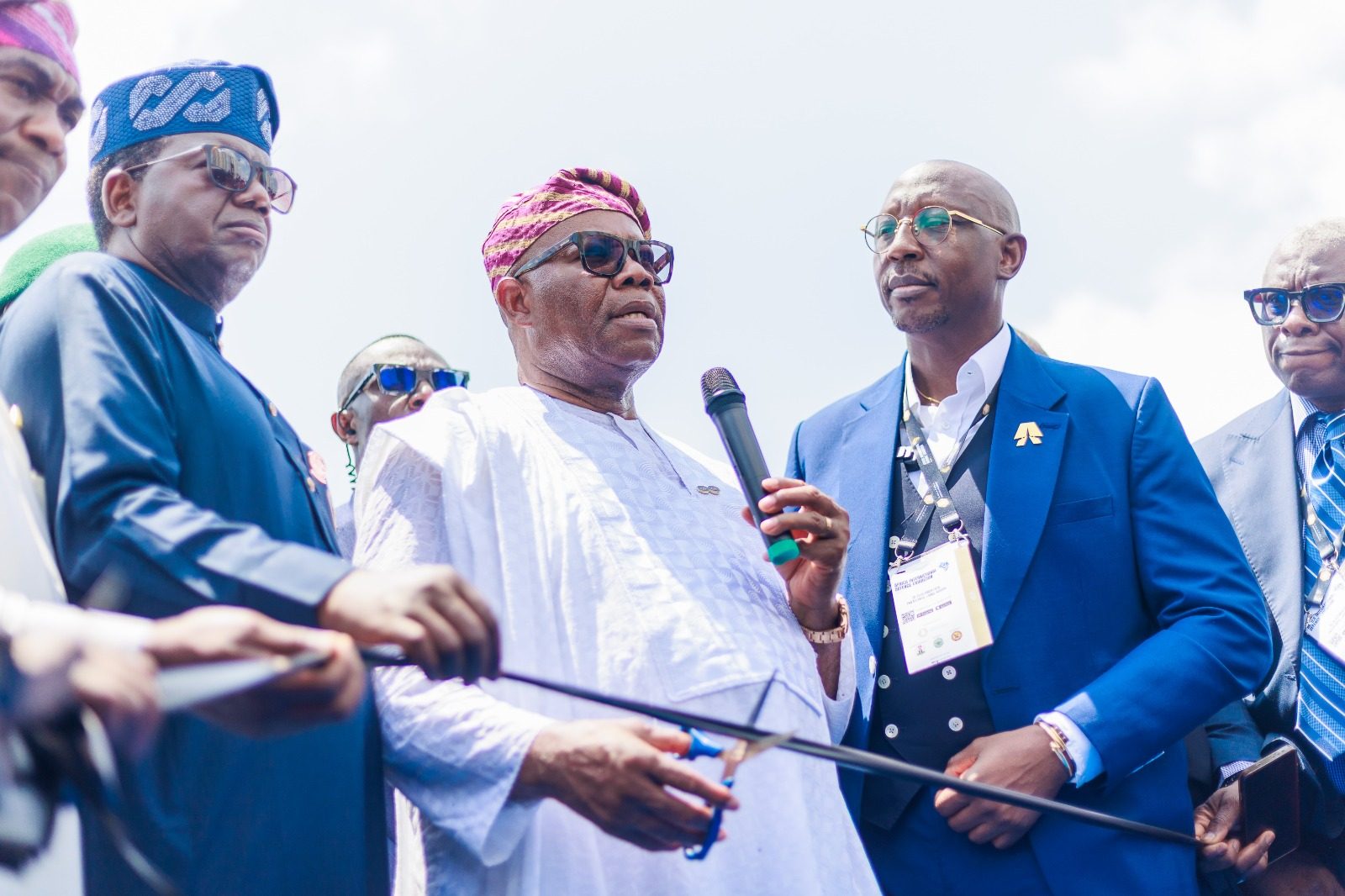
Nigeria has unveiled its first indigenously developed autonomous surface vessel, the ADX-Barra 200. Arridex Group, formerly RusselSmith Group, built it through Helagon, its defence joint venture with the Defence Industries Corporation of Nigeria (DICON).
The vessel was unveiled on 26 October at the inaugural Africa International Defence Exhibition (AFRIDEX 2026) at Eko Atlantic, Lagos. The exhibition ran from 26 to 29 October.
President Bola Ahmed Tinubu was represented by Senate President Godswill Akpabio. He said the administration prioritises defence industry growth because a nation is more secure when it can build and maintain its own capability. He described the vessel as that capability taking shape, designed and built by local engineers in partnership with DICON, and said it deserves government support and the confidence of the armed forces.
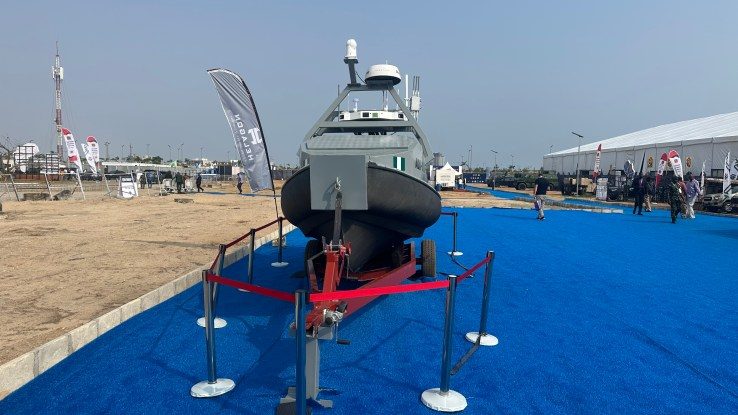
ADX-Barra 200
Arridex Group CEO Kayode Adeleke presented the vessel. He said Helagon was set up to design autonomous systems and that the ADX-Barra 200 is the result. For the forces that will use it, he called it a force multiplier.
The ADX-Barra 200 is one of two platforms in the ADX-Barra series launched at the exhibition. The other is the ADX-Barra 100. Arridex says both were designed, built and integrated in Nigeria by its engineers.
Adeleke tied the platforms to Gulf of Guinea security. He said the region’s waters carry its trade, support its coastal communities and hold much of its energy wealth, and that protecting them calls for capability the region can build, sustain and improve itself. He invited the armed services and other stakeholders to arrange demonstrations and to help shape later generations of the vessels.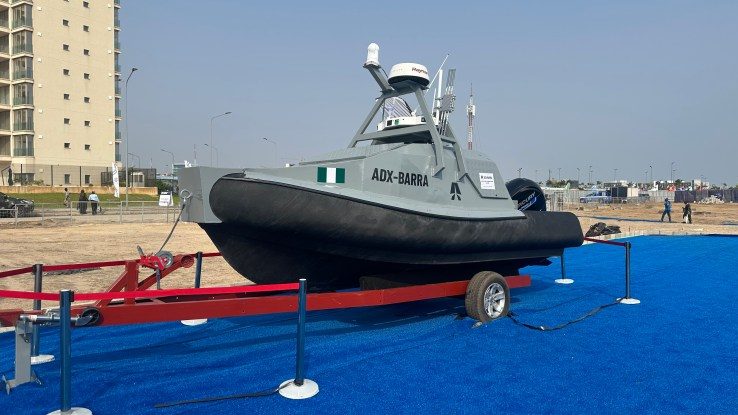
Others at the unveiling included Lagos State Deputy Governor Dr Obafemi Hamzat and the Minister of State for Defence, Dr Bello Matawalle. DICON Director-General Major General Babatunde Ibrahim Alaya, Helagon Chief Operating Officer Engr. Precious Omo-Agege and Arridex senior management were also present.
Arridex has not published the vessel’s technical specifications, including its length, endurance, payload and sensors. Both vessels remained on display at the exhibition.
NIGERIA WATCH
A home-built answer to a long-standing maritime problem: Nigeria’s waters have long needed more patrol capacity than its platforms and budgets can supply. A locally designed vessel that “can be supported, adapted and improved by the team that made it,” as Arridex puts it, addresses one persistent weakness. Imported hulls and systems often sit idle for want of spares, support and trained hands.
The questions that matter next: Unveilings are not deployments. The Navy, NIMASA’s Deep Blue Project and other agencies will want to know the vessel’s range, endurance, sensors and sea-state limits. They will also want to know whether it can work in the Gulf of Guinea. Until Arridex publishes specifications and arranges trials, the “game-changing” claim remains the company’s own.
Beyond defence: Waterways News readers should watch whether this technology filters into civil uses such as inland waterway surveillance, anti-vandalism patrols and search and rescue. The country’s inland operators, including those represented by WABOTAN and ATBOWATON, face insecurity and safety gaps that policy announcements have not closed. Local manufacturing capacity matters to them only if it eventually reaches the waterways where they work.
The accountability test: The industrial-policy argument is sound. It is build locally and maintain locally. It will be judged by procurement, deployment and sustained operation, not by launch-day speeches.
Editor's Choice
Australia Bars Repeat-Offender Bulk Carrier for 90 Days Over Falsified Crew Rest Records
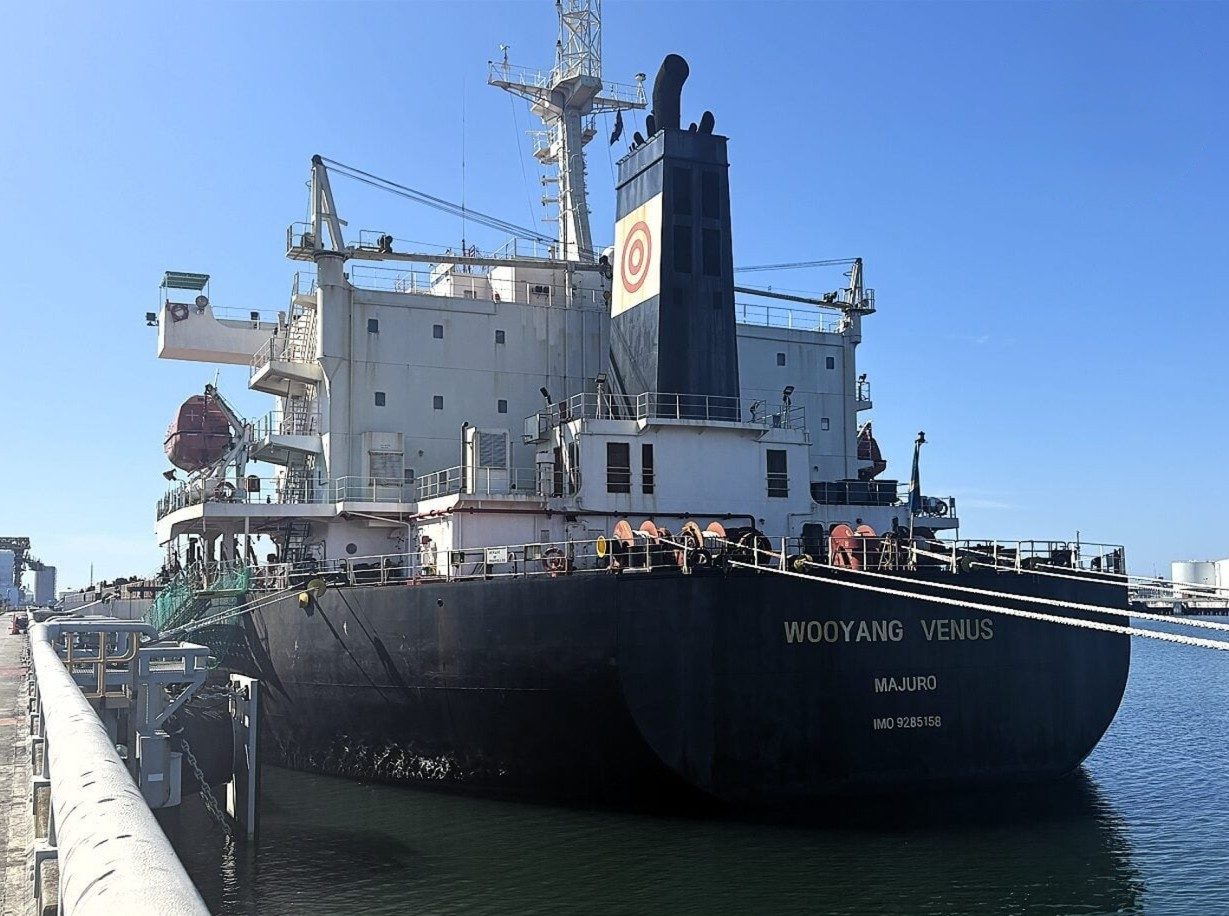
Australia Bars Repeat-Offender Bulk Carrier for 90 Days Over Falsified Crew Rest Records
By Okeoghene Onoriobe | Waterways News
Australian maritime authorities have banned the Marshall Islands-flagged bulk carrier Wooyang Venus from its ports and waters for 90 days. Inspectors found that the ship’s crew work and rest-hour records had been deliberately falsified to hide excessive working hours.
The Australian Maritime Safety Authority (AMSA) boarded the vessel at the Port of Newcastle on 29 October after a complaint under the Maritime Labour Convention (MLC). Its port state control inspection found that the records did not match the hours the crew actually worked. The ship left Newcastle on 31 October for Korea, and the ban took effect afterwards.
This is the vessel’s third brush with Australian enforcement in under three years. AMSA detained it in August 2026 when crew hours were neither properly recorded nor monitored. It was first detained in December 2023, after a complaint from the International Transport Workers’ Federation (ITF).
That inspection found falsified hours records, poor food provisions and an allegation that the master had assaulted a crew member. AMSA’s annual MLC report says the operator then submitted a corrective action plan covering repatriation, better provisions and training on rest-hour compliance. The latest findings suggest those measures did not take hold.
AMSA Executive Director for Maritime Safety and Environmental Compliance, Greg Witherall, said falsifying records meant to protect seafarers undermines both crew welfare and ship safety. He warned that fatigue dulls judgement and slows reaction times, raising the risk of collisions, groundings and injuries, particularly during navigation and watchkeeping.
The ban was imposed under Section 246 of Australia’s Navigation Act 2012. AMSA cited the deliberate falsification, the repeated breaches and doubts over the effectiveness of the owner’s and operator’s safety management systems.
Nigeria Watch
The case matters for Nigeria for three reasons:
Records are the enforcement tool. Fatigue rules only work if rest-hour logs can be trusted. Australia treated falsification as a safety-system failure, not a paperwork lapse, and banned the ship rather than detaining it again.
Repeat offenders need escalating penalties. Two detentions and a corrective plan did not change this operator’s behaviour. Nigerian port state control should ask whether its own follow-up on repeat deficiencies has real consequences.
Seafarer welfare is a Nigerian issue. Nigerian seafarers serve on foreign-flagged ships, and those working boats and ferries on domestic waters face fatigue and welfare gaps too, often with no records at all.
The MLC regime Australia is enforcing shows what accountability looks like. It is the benchmark NIMASA and the inland regulators should be measured against, and one this publication will keep pressing.

 Oil and Gas8 months ago
Tantita’s Pipeline Deal: $144m Contract, Rising Output, and the Questions that Deserve Answers
 MARITIME TRADE & SHIPPING8 months ago
World’s Largest Container Ship Sets New Maritime Record with 22,233 TEUs on Single Voyage
 Blue Economy9 months ago
Nigeria’s Coast Guard Bill: A Solution in Search of a Problem?