
Blue Economy
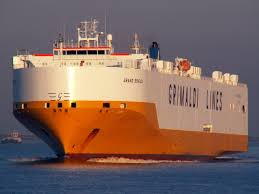
The Grimaldi’s Public Statement on Sales of Empty Containers: An Investigative Analysis


Grimaldi’s “Foreign Customs Position” Defence — Does It Hold Up?
Verdict: Partially Valid in International Shipping Practice, but Legally Insufficient Under Nigerian Law
By Oghenewoke Osaweren | Waterways News
What Grimaldi Claimed
Grimaldi Agency Nigeria’s defence rests on three interlocking arguments:
- The containers were sold in “foreign customs position” — meaning they were never domesticated into Nigeria’s customs territory.
- The sales invoice expressly preserved this classification, limiting use to international carriage.
- Any duty liability arising from domestication falls entirely on the buyer, not the seller.
Let’s examine each leg against Nigerian customs law and international maritime practice.
PART 1: Is “Foreign Customs Position” a Legitimate International Shipping Concept?
Yes — but with important caveats.

In international shipping, a Shipper Owned Container (SOC) is a cargo container that belongs to a business or freight forwarder rather than the shipping line, giving businesses more control over logistics and helping avoid additional costs tied to carrier-owned containers.
The concept Grimaldi invokes — selling containers in “foreign customs position” for continued use in international trade — is broadly consistent with the SOC framework. Since 2022, SOCs have gained significant popularity and are projected to see continued growth due to their cost-saving benefits and operational advantages.
However, “foreign customs position” is not a magic legal shield. It is a classification that describes the customs status of goods — it does not, by itself, exempt a transaction from Nigerian regulatory obligations. The critical question is whether that classification is valid and enforceable within Nigeria’s legal framework, particularly when the physical goods remain on Nigerian soil.
PART 2: What Does Nigerian Law Actually Say?
This is where Grimaldi’s position becomes legally precarious.
The NCS Act 2023 — The Central Problem
The Nigeria Customs Service Act 2023 is a comprehensive reform of Nigeria’s customs and excise legal framework, repealing the long-standing Customs and Excise Management Act and replacing it with a modern, technology-driven and enforcement-focused statute designed to facilitate legitimate international trade, secure government revenue, and align customs administration with international best practices.
Under this Act, the treatment of shipping containers as temporary imports is explicitly regulated. Empty containers fall under temporary imports, which allow goods into Nigeria for a specific purpose and limited period without full duty payment, on condition that they will be re-exported. Shipping lines bring them in to carry cargo and are expected to take them out empty. They cannot be sold in Nigeria unless converted to permanent import.
Section 36 of the NCS Act 2023 states that temporary goods must be re-exported or converted with duty paid; failure is an offence.
The conversion process is not optional. Under the Nigeria Customs Service Act 2023 and Temporary Import Guidelines, conversion requires: application to NCS, customs valuation, payment of duties, VAT and levies into government accounts, and issuance of a release order. Only then can the container be sold legally in Nigeria, and the transaction must be in Naira unless the CBN grants an exemption.
Grimaldi’s arrangement — transferring title to buyers with the expectation that buyers will handle domestication — skips Steps 1 through 4 of this mandatory process entirely. The shipping line cannot transfer the regulatory burden to a private buyer through a contractual clause when the statutory obligation rests on the importer of record — in this case, the entity that brought the containers into Nigeria under temporary import status.
PART 3: The Dollar-Denominated Sale — A Separate Violation
Beyond the customs question, there is a second serious issue Grimaldi’s statement does not adequately address: the currency of the transaction. The CBN FX Manual 2018, Paragraph 9.01, states that all domestic transactions must be in naira except with CBN exemption, and CBN Circular TED/FEM/FPC/GEN/01/010 (2016) specifies that domiciliary accounts are for foreign inflows, not domestic payments.
Grimaldi’s sale of containers priced in US dollars, with Nigerian buyers paying through domiciliary accounts, appears to directly contravene this regulation. This is a distinct and independent violation from the customs duty question — one that Grimaldi’s statement does not address at all.
PART 4: The Revenue Exposure
Industry experts have quantified what is at stake. Using the 2026 Customs tariff for HS Code 86.09 — comprising 5% import duty, 7.5% VAT, 0.5% ECOWAS ETLS levy, and 4% FOB levy — the government loses approximately $350–$400 in duties and taxes per $2,000 container if sold without conversion. For 2,500 units, the loss amounts to $875,000 to $1,000,000 from one company in one transaction.
In the broader picture, Nigeria may have lost as much as $600 million in customs revenue over the past three decades through the unregulated sale of temporary import shipping containers by foreign shipping lines.
PART 5: What Grimaldi Gets Right — And Where It Falls Short
What is defensible:
Grimaldi is correct that in international shipping practice, containers sold in “foreign customs position” for continued use in cross-border trade can legitimately be transferred without domestication — if they actually leave the country and continue in international commerce. This is a recognised practice globally. The concept of an SOC operating in international trade without re-registering under each country’s domestic regime is commercially standard.
Where the argument collapses in the Nigerian context:
The problem is not what the invoice says — it is what happens on the ground. When containers are advertised for sale to the general Nigerian public, priced for the local market, and purchased by Nigerian buyers who will use them domestically (as shops, cold rooms, storage units, building materials — the well-documented reality of container use in Nigeria), the fiction of “foreign customs position” cannot survive legal scrutiny. The more fundamental issue is that the containers were brought into the country under a temporary import regime and therefore cannot be legally sold without first being converted to permanent import status through Customs.
A contractual clause in a sales invoice shifting duty responsibility to the buyer does not extinguish the seller’s statutory obligation under Nigerian law. Contract law cannot override statutory customs obligations — particularly where the seller is the entity that introduced the goods into Nigeria’s customs territory under temporary import status.
CONCLUSION
Grimaldi’s “foreign customs position” argument carries legitimate weight in pure international maritime doctrine — as a general principle, containers transiting between nations in cross-border trade can retain foreign customs status. However, the argument fails as a complete legal defence under Nigerian law for the following reasons:
- Section 36 of the NCS Act 2023 mandates that temporary import goods either be re-exported or formally converted with duty paid before domestic sale — a process Grimaldi bypassed.
- The temporary import regime places the re-export or conversion obligation on the entity that brought the goods in — the shipping line — not on downstream buyers.
- A contractual clause cannot substitute for statutory compliance. Transferring liability to buyers through an invoice disclaimer does not satisfy NCS Act requirements.
- The dollar-denominated transaction is a separate violation of CBN FX regulations, which Grimaldi’s statement does not address.
- The “international carriage” justification is contradicted by the commercial reality: the containers were advertised for sale to the Nigerian public in a domestic market context, not to international exporters acquiring SOCs for cross-border trade.
Grimaldi’s statement is legally sophisticated but strategically incomplete. It addresses international maritime practice accurately on its own terms, while conspicuously sidestepping the specific obligations imposed by Nigerian domestic law. In investigative terms, that gap is the story.


Oyetola Woos Turkish Investors for Fisheries Sector, Vows to Protect Artisanal Fishers
By Okeoghene Onoriobe | Waterways News
The Minister of Marine and Blue Economy, Dr Adegboyega Oyetola, has thrown Nigeria’s fisheries sector open to Turkish investment, insisting that any fresh capital coming into the industry must strengthen and not sideline the millions of Nigerians who depend on artisanal fishing for a living.
Oyetola made the pledge while receiving a delegation from Turkish fisheries and aquaculture firm CRD Impex, led by the company’s General Manager for Fisheries, Cem Tarhan, at his Abuja office. He told the investors the Federal Government was ready to create an investment-friendly climate for credible local and foreign players willing to bring capital, technology and modern value-chain solutions to the sector, on condition that such investment remains inclusive.
“We welcome investors who can bring capital, technology, expertise and modern value-chain solutions to the sector. However, investment must be inclusive and sustainable. It must complement and empower our artisanal fish producers, not undermine their livelihoods,” the Minister said
He listed inadequate infrastructure, poor access to modern fishing technology, weak cold-chain systems, limited processing and storage capacity, and gaps in market access as the major constraints holding back the sector, framing each as an opening for targeted investment rather than a dead end.
The Turkish team, which included CRD Impex founder Hanefi Cardak and Tetra Underwater Services founder Ersun Buyukgoze, toured key fisheries and aquaculture points around the country to size up the terrain first-hand. Stops included the Kirikiri Lighter Terminal in Lagos, the Ozumba Mbadiwe Fish Market in Lekki, and the Esuk Nsidung Beach Market, a major waterfront seafood hub in Calabar, Cross River State.
The Ministry described the visit as part of a broader push to attract serious investment into Nigeria’s blue economy while keeping the welfare of artisanal fishers central to that growth.
Nigeria Watch
The Turkish courtesy call lands squarely in the pattern this desk has tracked all year: big-ticket investment pledges for Nigeria’s waterways, paired with familiar assurances that the small operator won’t be crowded out. The test, as always, is what happens after the photo-op.
Nigeria’s artisanal fishing communities occupy the same economic space as the informal boat operators represented by WABOTAN and ATBOWATON, river- and creek-dependent Nigerians whose livelihoods rise or fall on decisions made far from the waterfront. The infrastructure gaps Oyetola cited which include, weak cold-chain systems, poor storage and limited market access, all mirror the exact complaints this desk has documented from inland waterway operators for years but modernisation announced from Abuja rarely reache the jetties.
Turkish capital chasing Nigerian fisheries and aquaculture is a genuinely new thread, distinct from the Strait of Hormuz shipping story or the CVFF disbursement saga this desk has followed closely. But the underlying question is the same one that has defined Oyetola’s tenure at the Ministry of Marine and Blue Economy: will “inclusive investment” translate into contracts, cooperative partnerships and cold-chain infrastructure that artisanal operators can actually use or will it, like so many blue-economy pledges before it, stall at the courtesy-visit stage?
Waterways News will be watching for the first concrete CRD Impex commitment — site, timeline, or local partnership — as the marker of whether this one is different.

NPERA, NPA Open Technical Talks on Handover of Inland Dry Port Functions
By Ighoyota Onaibre | Waterways News
The Nigerian Ports Economic Regulatory Agency (NPERA) and the Nigerian Ports Authority (NPA) have begun formal engagement on transferring inland dry port oversight to NPERA, marking the start of what both agencies describe as a critical phase in operationalising Nigeria’s new port regulatory framework.
At a management-level meeting between the two agencies, officials focused on the technical groundwork for the handover, chiefly how to draw clear lines of responsibility and avoid duplication among the government bodies with a stake in inland dry port administration.
NPERA’s Director-General/CEO, Dr Akutah Pius, framed the transition as flowing directly from the Minister of Marine and Blue Economy, Dr Adegboyega Oyetola, whom he credited with steering the process toward the sector’s broader development. Akutah was emphatic that NPERA could not carry out the transfer alone, and said the buy-in of every relevant stakeholder agency would be needed to see it through.
He indicated that the Ministry would stay central to coordinating the process even as specific mandates move to the agencies best placed to execute them. Akutah also pointed to the Minister’s earlier interventions during the NPERA Bill’s passage through the National Assembly, which he said had defused inter-agency friction and set the stage for the cooperation now underway.
Describing the purpose of the meeting, Akutah said it was meant to formally kick off the transfer of inland dry port responsibilities to NPERA in fulfilment of its statutory role as economic regulator of the ports sector. He singled out Section 51 of the NPERA Act as a provision that now needs to be put into practical effect to keep the transition orderly and ensure stakeholder roles are properly aligned.
To manage the process going forward, the NPERA boss proposed setting up a joint committee drawing in NPERA, NPA, the National Inland Waterways Authority (NIWA), and the Federal Ministry of Marine and Blue Economy. He argued that inland dry ports matter well beyond the coastline. They extend maritime sector benefits into Nigeria’s hinterland and reinforce the country’s trade and logistics chain.
Responding on behalf of NPA, Managing Director Dr Abubakar Dantsoho welcomed the move and pledged his agency’s full operational and technical backing throughout the transition. He said the process had started on the right footing, and that NPA would furnish updated data on the current state of inland dry ports to inform further discussions, expressing confidence that continued engagement would help the agencies meet their shared objectives.
NPA’s Executive Director, Engr. Lekan Badmus, also commended NPERA for setting the collaboration in motion, calling the meeting a solid first step toward a smooth integration. He noted the two agencies have now moved into the technical phase of the exercise, with close attention being paid to eliminating overlapping functions.
Closing the meeting, Akutah said the proposed joint committee would reconvene with the Minister to seek further guidance and agree on next steps to keep the transition on track.
Nigeria Watch
This meeting is the first visible test of whether the NPERA Act’s promise of a rationalised port regulatory architecture can survive contact with Nigeria’s crowded agency landscape. Section 51’s transfer of inland dry port functions to NPERA looks straightforward on paper; in practice, it touches NPA’s traditional port administration turf, NIWA’s inland waterways mandate, and the Ministry’s coordinating role all at once, precisely the kind of overlapping jurisdiction that has bedevilled reform efforts elsewhere in the sector, most visibly in the long-running NIWA-LASWA tussle that only the Supreme Court could settle.
The proposed joint committee of NPERA, NPA, NIWA, and the Ministry, is a sensible mechanism, but Waterways News readers who have followed the CVFF disbursement saga know that Nigerian maritime governance has no shortage of well-designed committees whose outputs never quite reach implementation. What will matter is whether Akutah’s “technical phase” produces a binding timeline, not another round of goodwill statements.
For inland dry port operators and the hinterland trade corridors that depend on them, the stakes are practical: unclear jurisdiction between NPA and NPERA has historically meant slower cargo evacuation, duplicated levies, and uncertainty for freight forwarders planning routes away from the congested Lagos ports. If this transition is handled well, it strengthens the case for dry ports as genuine pressure valves for Apapa and Tin Can. If it stalls in inter-agency turf negotiation, it becomes one more entry in the gap between policy pronouncement and delivery that this desk continues to track.
Worth watching: whether Minister Oyetola’s office sets an explicit deadline when the committee reconvenes, and whether NIWA, whose inland waterways mandate intersects with dry port hinterland connectivity, gets more than a seat at the table.
Two More Tankers Struck in Strait of Hormuz as Attack Count Hits Five in a Week
By Okeoghene Onoriobe | Waterways News
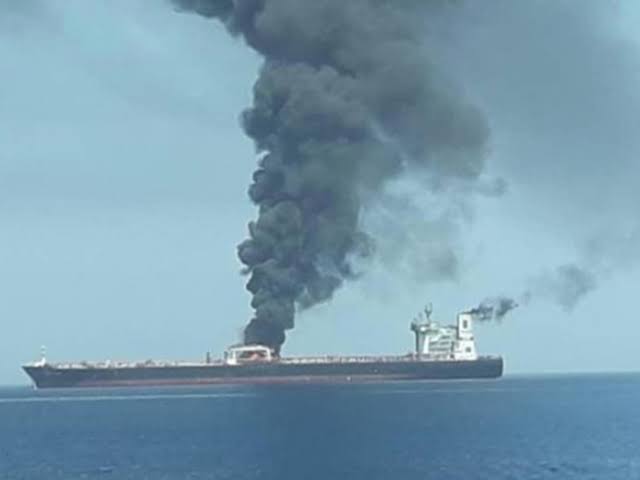
Two more tankers have been hit while transiting the Strait of Hormuz, leaving two seafarers with minor injuries and pushing the number of reported attacks or security incidents against commercial vessels in the waterway to at least five since 16 September.
The UK Maritime Trade Operations (UKMTO) centre said an inbound tanker was struck by an unidentified projectile on Monday. Two crew members sustained minor injuries, but the vessel stayed under its own power and continued to its next port, with no environmental impact reported.
Hours later, UKMTO issued a second alert after an outbound LPG tanker reported being struck by debris from unknown projectiles. All crew were reported safe and the vessel also continued its voyage. Authorities are investigating both incidents, and UKMTO has not attributed either attack to a specific actor.
The two strikes build on a Joint Maritime Information Center (JMIC) advisory covering three earlier attacks between 16 and 18 September, one of which saw a tanker’s hull breached by a projectile, sparking a fire. JMIC continues to rate the threat level in the strait as “severe,” citing a high likelihood of deliberate hostile action and pointing to a pattern of harassment by Iran’s Islamic Revolutionary Guard Corps — drone overflights, surveillance of merchant vessels and VHF hailing, alongside the direct attacks.
Traffic through the chokepoint remains sharply depressed. Only 17 commodity vessels were visibly transiting over the weekend, down from 37 the week before and against a pre-war daily average of roughly 125. That figure excludes vessels sailing with their AIS transponders switched off, and JMIC notes a persistent gap between visible and actual traffic.
Nigeria Watch
For Nigerian maritime stakeholders, the Hormuz crisis is no longer a distant Gulf story. It is a cost line. Every fresh escalation feeds directly into the war-risk insurance premiums and freight rates that Nigerian importers, refiners and shipping agents ultimately absorb, since global tanker and container capacity pulled off the Hormuz route tightens supply elsewhere and pushes rates up across long-haul trades, including those serving West African ports.
The renewed attacks also sharpen the stakes around Nigeria’s push for a stronger voice at the IMO Council table and its broader blue-economy diplomacy under Minister Adegboyega Oyetola. A sustained Gulf disruption is exactly the kind of systemic shock that tests whether Nigeria’s seat translates into influence over how global shipping risk, insurance and rerouting decisions are made, rather than Nigeria simply absorbing the downstream cost.
Locally, the episode is a reminder of the layered nature of “maritime security” as a policy word: the Deep Blue Project and Gulf of Guinea security architecture address piracy and armed robbery close to home, but Nigeria’s ports and shippers remain exposed to security failures thousands of kilometres away in the Gulf.
Waterways News will continue tracking how the Hormuz situation feeds into freight cost pressure at Nigerian ports and NIMASA’s public messaging on the issue.

 Oil and Gas7 months ago
Tantita’s Pipeline Deal: $144m Contract, Rising Output, and the Questions that Deserve Answers
- MARITIME TRADE & SHIPPING7 months ago
World’s Largest Container Ship Sets New Maritime Record with 22,233 TEUs on Single Voyage
- Blue Economy7 months ago
Nigeria’s Coast Guard Bill: A Solution in Search of a Problem?