
Business
TUBAVS Demands Mandatory Verification, Registration of All Vessels on Nigerian Waterways


TUBAVS Demands Mandatory Verification, Registration of All Vessels on Nigerian Waterways
By Raymond Gold | Waterways News
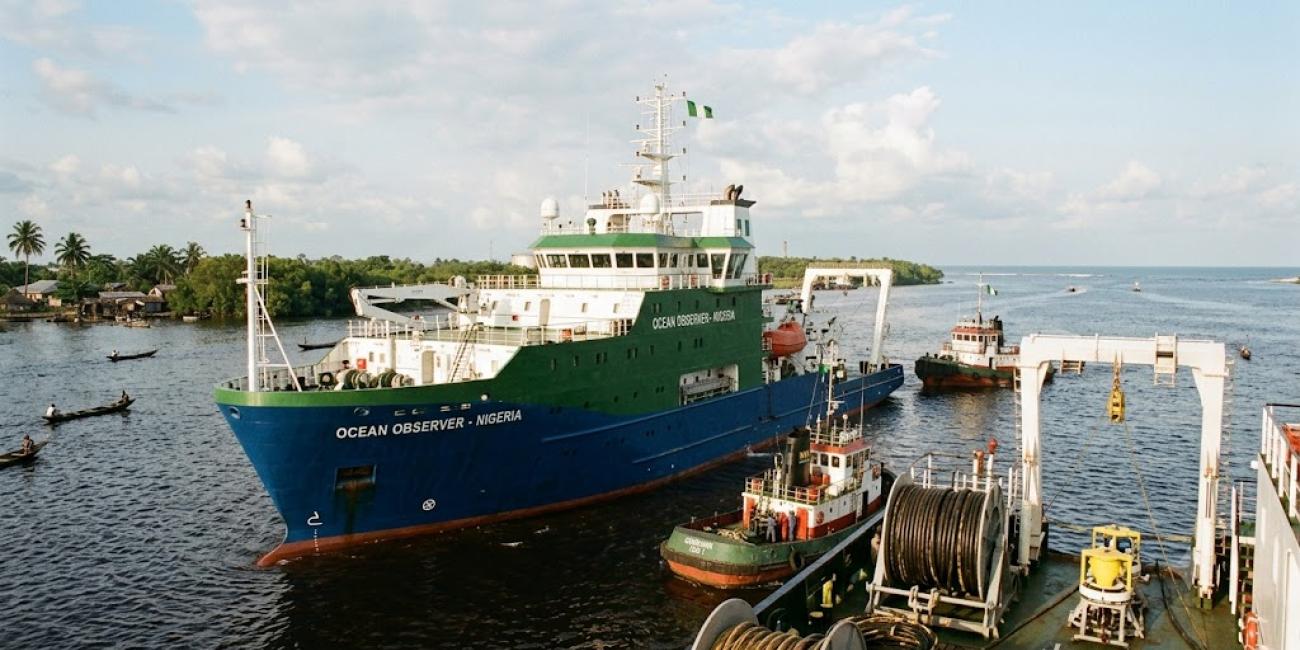
The Tugboat, Fuel Barges, and Seagoing Vessel Association of Nigeria (TUBAVS) has issued a nationwide directive demanding immediate verification, registration, and stricter monitoring of every marine vessel and craft operating on Nigeria’s territorial waters and inland waterways, as part of efforts to support security agencies in curbing piracy and illegal oil bunkering.
In a statement signed by its Legal Adviser, Tonye Wilson, released Wednesday, the association, which describes itself as a unified advocacy voice for maritime operators focused on marine safety and professional standards, said the exercise covers tankers, barges, tugboats, fishing vessels, workboats, houseboats, service boats, landing craft, patrol craft, and any vessel involved in fuel transport, storage, or ship-to-ship transfers.
Wilson linked the directive to rising incidents of illegal bunkering and their toll on national security, revenue, safety, and the marine environment, citing it as consistent with provisions of the Suppression of Piracy and Other Maritime Offences Act of 2019.
Vessel and craft owners are required to complete registration on the union’s website within 90 days of the notice. Applicants must submit a Certificate of Registry or proof of ownership, tonnage certificate, a list of marine vehicles owned by the company, and valid operator’s licences from NIMASA, NIWA, and other relevant regulatory agencies.

Once verified, each vessel will be issued a Unique Vessel Identification Number (UVIN), which owners must display visibly on both the bow and stern of the craft, in line with specifications set by the association and existing maritime law. TUBAVS said the implementation window runs from August 15 to November 30, 2026.
Nigeria Watch
TUBAVS’s intervention lands squarely inside the enforcement gap that has defined Nigeria’s anti-bunkering fight for years: plenty of legislation, uneven verification of who actually owns and operates what’s on the water. A trade association stepping in to run its own registration and tagging scheme, assigning UVINs through a private union portal rather than a NIMASA or NIWA-administered database, raises an immediate question of authority. Regulatory bodies typically own vessel registries; a self-administered identification scheme, however well-intentioned, will need clear alignment with NIMASA and NIWA to avoid creating a parallel and potentially conflicting record system. This is very similar to what SWAAADO is doing with Nigeria Waterways Directory to promote safety and sustainability on Nigeria waterways, and has sought partnership with NIWA and NIMASA for months without any response.
There’s also the practical burden this places on the small operators Waterways News has repeatedly flagged as the most exposed segment of the inland waterways economy. A 90-day compliance window with documentary requirements such as tonnage certificates, proof of ownership, existing NIMASA/NIWA licensing, may be manageable for corporate fleet owners but could strain artisanal boat operators already struggling with financing gaps the CVFF was meant to close. If TUBAVS’s registration drive is not paired with support for smaller craft owners to meet these standards, it risks becoming another compliance hurdle that pushes informal operators further outside the regulated system rather than into it. If this happens, the entire process becomes the opposite of what a verification regime against illegal bunkering should achieve.
The timeline is also worth watching. With implementation slated to run from mid-August through the end of November, the real test will be whether NIMASA and NIWA formally recognise the UVIN framework, and whether enforcement, including consequences for unmarked or unregistered craft, is backed by the Navy’s Deep Blue assets on the water, rather than existing only on paper.
Blue Economy
Cargo Before Ships: Olubowale Tells Dangote, Big Shippers to Anchor Nigerian Fleet Growth With Long-Term Contracts
Cargo Before Ships: Olubowale Tells Dangote, Big Shippers to Anchor Nigerian Fleet Growth With Long-Term Contracts
Indigenous shipowners have again pressed major Nigerian cargo owners, especially the Dangote Group, to underwrite the growth of a domestic fleet by signing long-term Contracts of Affreightment (CoAs) for petroleum products, cement, fertiliser and other bulk commodities.
The renewed push rests on a simple argument from the shipowners: cargo drives trade, trade attracts financing, and only predictable cargo contracts give shipowners the bankable footing to acquire vessels and grow sustainable fleets.
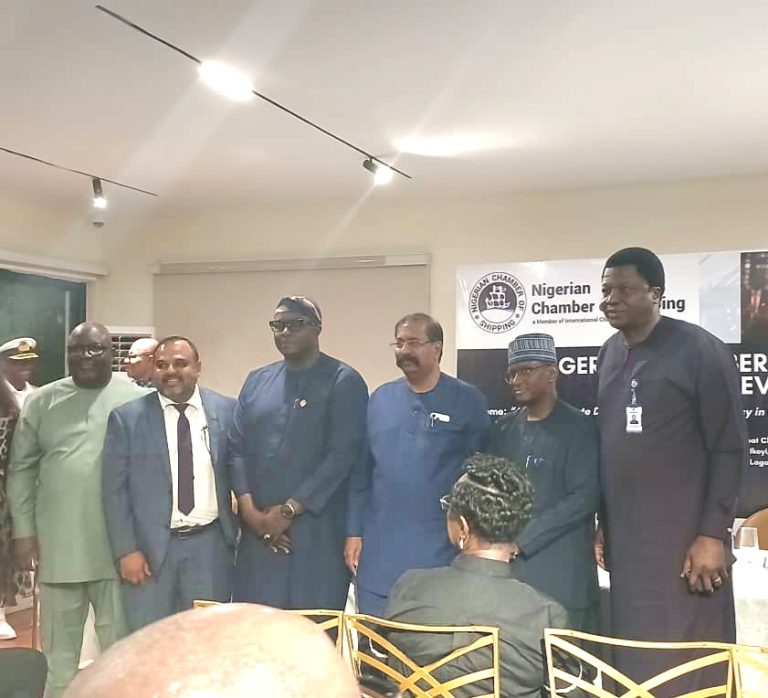
Captain Ladi Olubowale, former President of the Nigerian chapter of the African Shipowners’ Association and Group Managing Director/CEO of Seamate Maritime Integrated Services Limited, made the case at a Public-Private Dialogue with CEOs organised by the Nigerian Chamber of Shipping in Lagos. The event, themed “Unlocking Efficiency in the Marine and Blue Economy Value Chain,” drew industry leaders, cargo owners, terminal operators and policymakers, with Dangote Group’s Group Vice President, Edwin Devakumar, attending as guest CEO.
Olubowale argued that Nigeria’s maritime strategy has spent too long fixated on vessel ownership in the abstract, when the real task is building the commercial conditions that make indigenous vessel acquisition bankable in the first place. His formulation: give credible Nigerian shipowners long-term CoAs, and those contracts become the foundation on which vessels are financed, acquired and deployed.
He flipped the conventional sequencing — instead of waiting for indigenous firms to buy ships before handing them cargo, he proposed securing the cargo and the contract first, structuring finance around it, and letting qualified Nigerian operators acquire vessels against that guaranteed revenue.
For Dangote specifically, whose refinery, cement, fertiliser and industrial operations already generate heavy maritime cargo volumes, Olubowale sees an opening to become a genuine catalyst for Nigerian fleet development by allocating portions of its cargo requirements to qualified indigenous operators under structured, multi-year CoAs. Such arrangements, he said, would let Nigerian shipowners walk into banks, development finance institutions, export credit agencies, leasing firms and international vessel financiers with something concrete: identifiable cargo, predictable revenue and long-term contracts to show for it.
He extended the argument to crude and refined product haulage, noting that foreign-controlled vessels, including Suezmax tankers, still dominate lifting at Nigerian terminals such as Forcados, Bonny and Escravos, pocketing freight earnings generated by Nigerian-origin cargo. The policy question, in his view, is how Nigeria converts the movement of its own cargo into domestic assets, jobs, technical capacity and long-term economic value.
“There is no structural reason why Nigerian companies should not ultimately own and operate Suezmax tankers and other large commercial vessels,” Olubowale said, framing the goal as deliberate commercial capacity-building rather than protectionism without capability.
He set out a four-pillar model of Cargo, Contract, Finance and Vessel, in which cargo owners supply volumes, long-term CoAs convert those volumes into bankable paper, financial institutions fund the vessel purchases, and Nigerian shipowners supply the ships, crewing and technical management. He said this model would complement, not replace, government-backed tools such as the Cabotage Vessel Financing Fund (CVFF), keeping the commercial engine in private hands while government sticks to enabling and regulating.
Olubowale called for sustained dialogue among policymakers, cargo owners, shipowners, terminal operators and financiers, arguing that Nigeria’s cargo base — spanning petroleum products, cement, fertiliser, agriculture and industrial goods, and set to grow further under AfCFTA-driven intra-African trade — is large enough to build a genuinely competitive indigenous shipping industry, if it’s deliberately harnessed rather than left to foreign carriers.
“If we connect Nigerian cargo to Nigerian maritime capacity, we will not merely acquire ships. We will build a sustainable shipping industry,” he said
Nigeria Watch
Olubowale’s cargo-first pitch lands in a familiar gap for Waterways News readers: the distance between policy rhetoric on indigenous fleet-building and the commercial reality that keeps foreign tonnage dominant on Nigerian trade lanes. His four-pillar model is, in effect, a private-sector workaround for a problem the CVFF was meant to solve through government-backed financing and his explicit framing of it as complementary to, not a substitute for, the Fund is notable given how long CVFF disbursement has stalled.
The specific call-out to Dangote is also worth watching. A company generating that volume of captive cargo including refined products, cement and fertiliser could, if it acted on this, become one of the few private actors with the scale to single-handedly seed a viable indigenous tanker or bulk fleet, something years of NIMASA reform announcements have yet to achieve for the sector’s informal and small-scale operators tracked closely in this publication (WABOTAN and ATBOWATON). Whether Dangote or any major shipper, actually commits to multi-year CoAs with Nigerian carriers, rather than continuing to charter foreign tonnage on the open market, will be the real test of whether this dialogue moves beyond another CEO forum.
Blue Economy
STAY AFLOAT, GO ROGUE: INSIDE THE “ALARM BLOW” ECONOMY QUIETLY RUNNING NIGERIA’S OFFSHORE WATERS
STAY AFLOAT, GO ROGUE: INSIDE THE “ALARM BLOW” ECONOMY QUIETLY RUNNING NIGERIA’S OFFSHORE WATERS
By Okeoghene Onoriobe| Waterways News
Long before a vessel drops anchor off Lagos, Bonny, Escravos or Warri, another economy is already at work in the water around it with no manifest, no customs entry, and no line in any government ledger, yet moving real cash, real fuel and real goods every day.
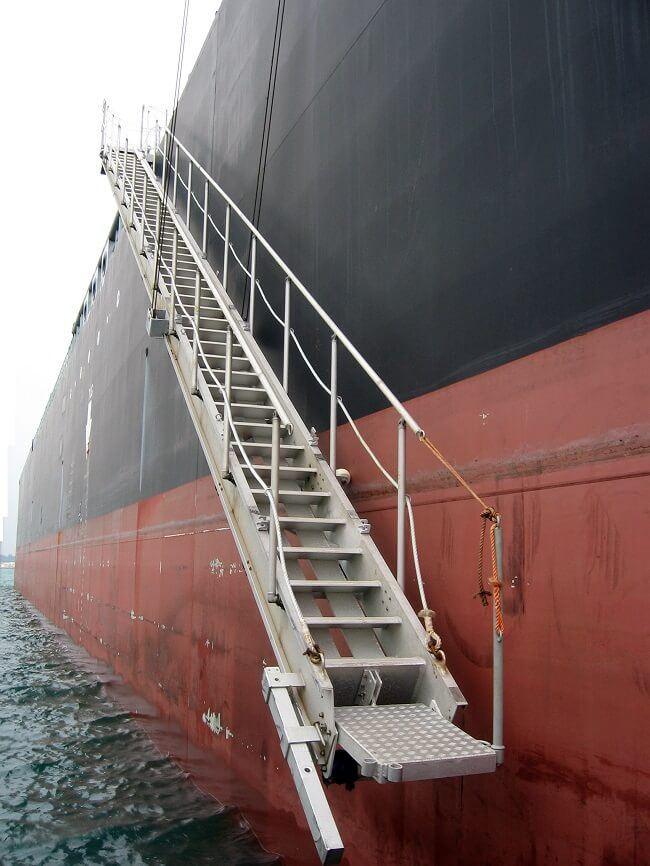
Locally, the traders behind it are called “Alarm Blow.” They ride dinghies far out to meet ocean-going vessels, scale rope ladders and makeshift gangways once alongside, and sell seafarers whatever a long stretch at sea has run short of. These include provisions, cigarettes, recharge cards, drinks, spare parts, personal effects. Payment comes in whatever form the moment allows: naira, dollars, or, notably, litres of PMS and AGO drawn off the vessel itself.
There is no license behind any of it, no manifest, no insurance, no safety gear, and in most cases no name that appears in any official register. Yet the trade has persisted for decades, sustained by a seafarer’s need and the absence of anyone else positioned to meet it offshore.
A GAP THE LICENSED SECTOR LEFT OPEN
Nigerian law already assigns this ground to someone: licensed ship chandlers operating under the Customs and Excise (Ship Chandlers) Licensing Regulations are the only parties permitted to trade with vessels and crews offshore. But the country’s chandling industry has spent years arguing that the formal channel has failed to hold its own ground. Industry figures and successive reports have put the annual capital flight from foreign dominance of ship chandling anywhere from $10 billion to $20 billion, with the Nigerian Licensed Ship Chandlers Association and allied bodies blaming outdated 1968-era regulation, high terminal charges, and weak enforcement of the local-content rules that were meant to reserve the bulk of the trade for Nigerians.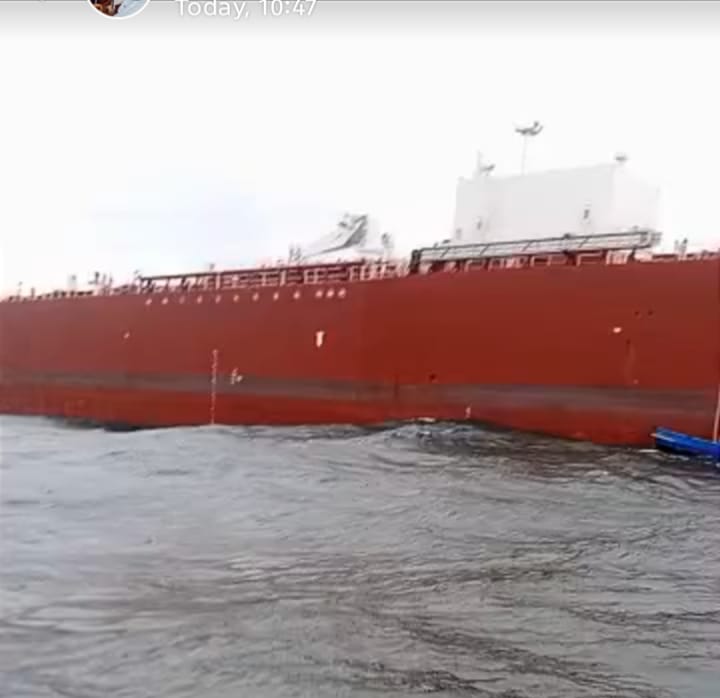
Into that gap, the “Alarm Blow” trade has stepped in, unlicensed and unprotected, but far more responsive than the formal sector it has effectively displaced at the water’s edge. Where a licensed chandler is slowed by paperwork, berth charges and terminal bureaucracy, a dinghy trader simply goes to the ship, at whatever hour, with whatever the crew needs.
THE HIDDEN LEDGER: PMS, AGO AND DOLLARS
The most consequential part of this trade is what it is paid in. When cash is scarce mid-voyage, PMS and AGO change hands between vessel and dinghy alongside dollar payments that never touch a Nigerian bank.
That is where informal offshore hawking edges into a far larger and more damaging economy: illegal bunkering and product diversion, which has cost Nigeria billions in lost petroleum revenue over the years. A single “Alarm Blow” trader moves a small volume. But the pattern, unmetered fuel leaving vessels informally, dollar transactions with no audit trail, sits on the same continuum as the crude and product theft crises that have plagued the Niger Delta and the wider Gulf of Guinea.
WHAT COORDINATION COULD UNLOCK
Regulators have historically treated this trade as a security problem to be chased away. Left there, Nigeria loses twice: the economic value already circulating offshore is never captured, and the product-diversion loophole the current chaos enables never closes.
A coordinated model, bringing Alarmblow operators under a recognized cooperative or district structure, along the lines of how NIWA and the Maritime Workers Union of Nigeria (MWUN) already organized commercial boat operators in Lagos, could change that calculus:
Licensing at scale, extending ship-chandling recognition down to small-scale offshore traders instead of reserving it for large firms, clawing back value currently lost to unregulated and often foreign-dominated supply chains.
Traceable transactions, replacing informal PMS/AGO/dollar barter with regulated payment and product-handling protocols, closing off one of the quieter channels through which petroleum products leak from the formal economy.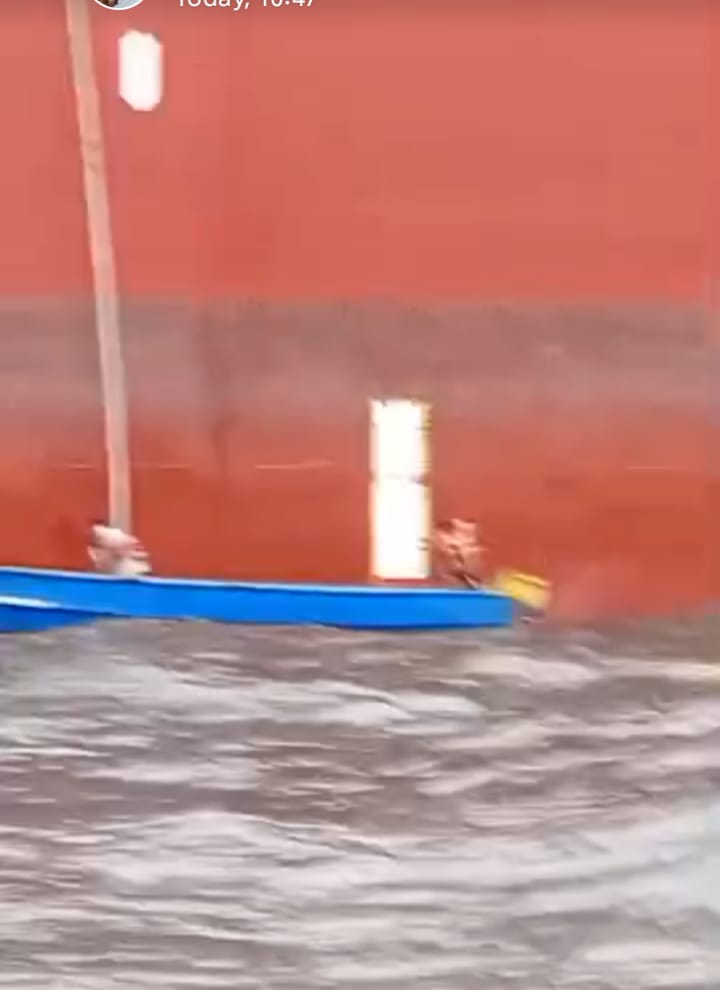
Safety and welfare protection for dinghy operators who currently work with no life jackets, no vessel certification, and no recourse when accidents happen far from shore — a natural extension of the labour-welfare mandate MWUN already carries for other categories of coastal and inland boat workers.
Foreign exchange formalisation, channelling dollar payments currently occurring invisibly offshore into Nigeria’s formal forex system.
Data and taxation, giving NIMASA, the NPA and state revenue authorities visibility into a trade that today contributes nothing to official statistics despite its scale and staying power.
NIGERIA WATCH
The Alarmblow trade is best read as the ground-level twin of a fight Waterways News has tracked for months: the slow collapse of Nigeria’s licensed ship-chandling sector under foreign dominance and regulatory neglect. If the industry’s own figures are close to right, the country is losing double digits in billions of dollars a year at the formal end of that trade alone — money that a modernised, well-financed chandling sector, properly protected under the Local Content Act, should be capturing instead of ceding to foreign firms.
The dinghy trade is what fills the space that failure leaves behind. It is also a reminder of a theme this desk keeps returning to: Nigeria’s informal waterway economy — the wooden-boat operators, the cooperative associations like WABOTAN and ATBOWATON, the traders who meet a maritime need nobody licensed is meeting — persists not out of defiance but because the formal system has not shown up.
NIWA’s ongoing efforts to formalize and safety-certify small-scale waterway operators, and MWUN’s long-standing welfare mandate for boat workers, both point toward the kind of structure that could absorb the Alarmblow trade rather than merely criminalize it.
The harder question is whether NIMASA, the NPA and the Federal Ministry of Marine and Blue Economy see this as worth the effort. A trade this size, moving in fuel and dollars outside every official ledger, is not a footnote to the bunkering and product-diversion crisis the Gulf of Guinea has wrestled with for years, it is one of its smaller, more visible entry points.
Waterways News will continue tracking how, or whether, policymakers move to bring it into the light.
MOWCA Tasks Nigeria, Regional Partners on Niger Delta Blue Economy Investment
By Okeoghene Onoriobe | Waterways News
The Maritime Organisation of West and Central Africa (MOWCA) has renewed calls for expanded investment in the Niger Delta’s maritime assets, urging stronger public-private partnerships to unlock the region’s blue economy potential beyond oil and gas.
MOWCA Secretary-General, Dr Paul Adalikwu, made the call while receiving a delegation from the Niger Delta Chambers of Commerce, Industry, Trade, Mines and Agriculture (NDCCITMA) at the organisation’s secretariat in Abidjan, Côte d’Ivoire.
Adalikwu said that despite the Niger Delta’s global identity as an oil and gas hub, the region holds significant untapped opportunities in maritime transport, fishing, tourism, underwater mining, and other ocean-based economic activities. He described these natural marine resources as a major economic advantage that, with strategic policy direction, effective planning, and sustained investment, could be converted into long-term development gains.
He argued that deeper public-private collaboration could draw foreign direct investment into the region, generate jobs, and speed up economic growth, pointing to the Niger Delta’s waterways, coastal geography, and proximity to the Gulf of Guinea as factors that position it to become a major maritime trade and logistics hub.
The MOWCA scribe added that the organisation remains focused on initiatives that strengthen regional maritime cooperation, advance blue economy development, upgrade infrastructure, promote renewable energy, and support sustainable growth across West and Central Africa.
Speaking for the delegation, NDCCITMA Board Secretary, Dr Solomon Edebiri, said the Niger Delta’s extensive coastlines, waterways, ports, and fishing resources could drive employment, trade, and industrial growth if properly harnessed. He listed additional opportunities in agriculture and agro-processing, compressed natural gas (CNG), logistics, warehousing, packaging, export production, and renewable energy.
Edebiri said the chamber is actively seeking international technical cooperation, investment, and strategic partnerships to help diversify the Niger Delta’s economy away from its heavy reliance on hydrocarbons, with particular attention to fisheries, aquaculture, marine transportation, and coastal infrastructure.
Both parties identified potential collaboration areas spanning blue economy projects, maritime infrastructure, renewable energy, investment mobilisation, Gulf of Guinea regional cooperation, technical capacity building, and maritime trade and logistics, alongside discussions on linking the region with international development partners.
The NDCCITMA delegation also invited MOWCA to the inaugural Niger Delta Economic and Investment Summit and Exhibition (NDEIS), scheduled for September 15–17 in Port Harcourt, Rivers State. Organised in partnership with the Niger Delta Development Commission (NDDC), the three-day summit is expected to serve as a platform for converting the region’s natural resources and economic potential into viable, bankable projects.
Nigeria Watch
For a region whose maritime identity has for decades been defined almost entirely by crude oil terminals, pipeline vandalism, and security patrols, MOWCA’s intervention lands as a useful reminder that the Niger Delta’s blue economy case has been made many times before, with little to show for it at the implementation stage.
The diversification argument Edebiri makes on behalf of NDCCITMA echoes what operators along the creeks and inland waterways of Bayelsa, Delta, and Rivers States have argued for years: that fisheries, aquaculture, and coastal logistics remain undercapitalised even as federal attention stays fixed on oil revenue and, more recently, on gas monetisation. That gap matters for the small-scale and informal waterway operators this desk tracks closely, the boat owners and cooperative members under bodies like WABOTAN and ATBOWATON, who operate the actual vessels moving people and goods through the very waterways MOWCA and NDCCITMA are now describing as investment-ready.
There is also a coordination question worth watching. Any serious blue economy investment drive in the Niger Delta will eventually run into the jurisdictional turf that NIWA, NPA, and state agencies like LASWA already contest elsewhere in the country, as well as into the Federal Ministry of Marine and Blue Economy’s own investment mobilisation plans under Minister Adegboyega Oyetola. Whether MOWCA’s regional framing complements or competes with that domestic architecture is unclear from this meeting alone.
The September NDEIS summit in Port Harcourt will be the first real test of whether this Abidjan conversation converts into anything bankable, or joins the long list of Niger Delta investment pledges that stalled between communiqué and cash, a pattern uncomfortably similar to the CVFF disbursement saga this desk continues to track for indigenous shipowners nationwide. Waterways News will monitor whether MOWCA’s participation at NDEIS produces concrete commitments or another round of stated intentions.

 Oil and Gas7 months ago
Tantita’s Pipeline Deal: $144m Contract, Rising Output, and the Questions that Deserve Answers
- MARITIME TRADE & SHIPPING7 months ago
World’s Largest Container Ship Sets New Maritime Record with 22,233 TEUs on Single Voyage
- Blue Economy7 months ago
Nigeria’s Coast Guard Bill: A Solution in Search of a Problem?