

MARITIME TRADE & SHIPPING
Oyetola Seals Badagry Deep-Seaport MoU with APM Terminals in Copenhagen, Eyes Apapa, Onne Concession Extensions

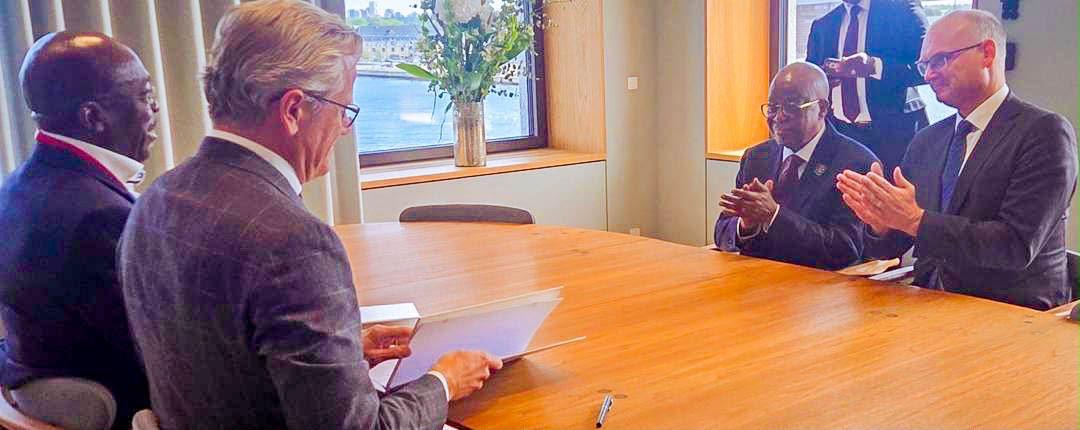

Oyetola Seals Badagry Deep-Seaport MoU with APM Terminals in Copenhagen, Eyes Apapa, Onne Concession Extensions
By Okeoghene Onoriobe | Waterways News
APM Terminals has signed a Memorandum of Understanding (MoU) to develop the long-proposed Badagry Deep-Seaport, as Nigeria’s Minister of Marine and Blue Economy, Dr Adegboyega Oyetola, led a Federal Government delegation to Denmark to deepen maritime cooperation and court fresh investment into the country’s port infrastructure.
The MoU was signed in Copenhagen on Monday, September 7, 2026, committing both sides to exclusive negotiations toward developing the greenfield project. It was signed by A.P. Moller–Maersk Group Chief Executive Officer Vincent Clerc on behalf of APM Terminals, and by Didi Ndiomu, Managing Director of Badagry Port Development Limited and of Quinn McGrath Marine and Environmental Services Limited.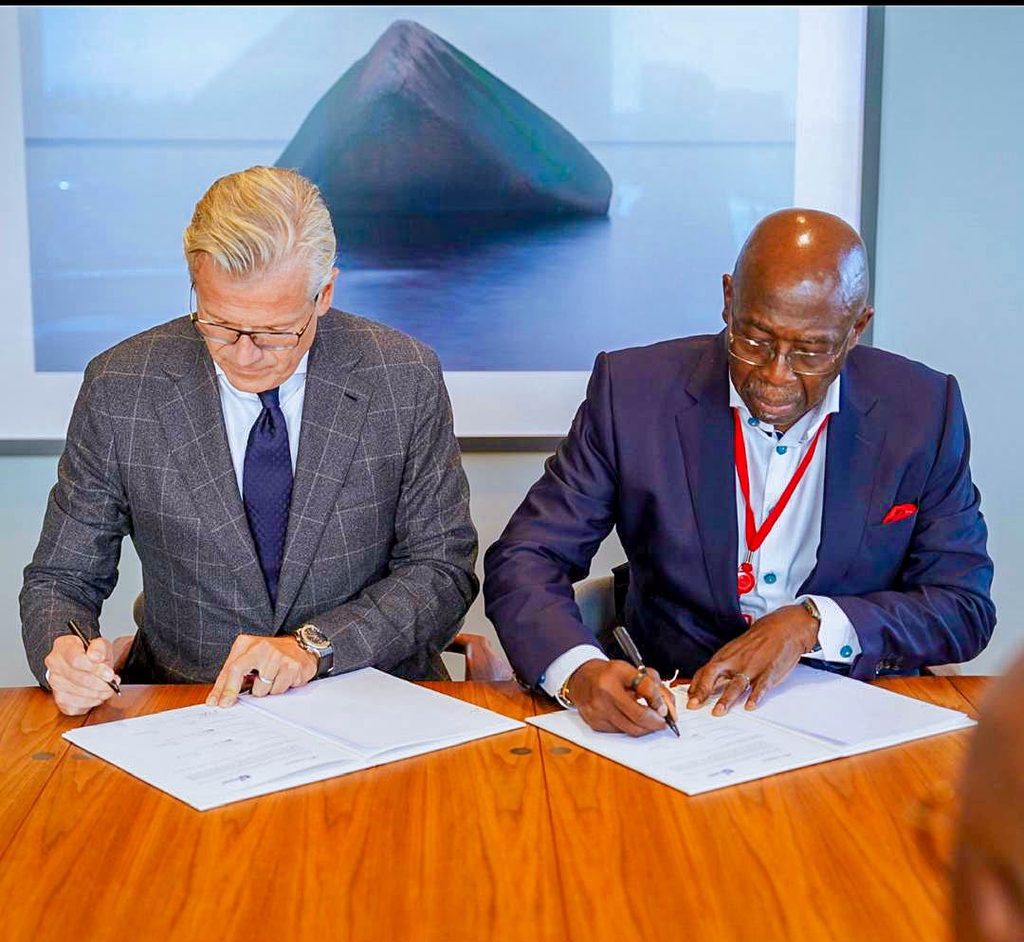
A.P. Moller–Maersk Group Chief Executive Officer Vincent Clerc (l), and by Didi Ndiomu, Managing Director of Badagry Port Development Limited (r) as they sign the MoU on Monday
If it goes ahead, Badagry Deep-Seaport would add fresh deepwater capacity able to take larger container vessels and open new transshipment business for Nigeria and the wider West African market, while also easing congestion pressure on the existing Lagos city ports.

The signing formed part of a broader Danish engagement in which Oyetola’s delegation met senior Danish government and maritime-industry figures. “Our engagement in Denmark underscores the Federal Government’s commitment to modernizing Nigeria’s maritime infrastructure and unlocking the full potential of our blue economy,” Oyetola said, describing the Badagry talks as central to President Bola Tinubu’s ambition to make Nigeria “West Africa’s premier trade and logistics hub.”
Beyond Badagry, the Nigerian side and APM Terminals also discussed extending the company’s existing port concessions at Lagos Port Complex, Apapa, and at the West Africa Container Terminal (WACT) in Onne.
Igor van den Essen, APM Terminals’ Managing Director for Africa & Europe, said the company saw value in both tracks, deepening its Apapa and Onne concessions and building Badagry from scratch. “Developing Badagry as a greenfield project will further ease congestions in city ports and further open new opportunities,” he said, adding that APM Terminals views public-private partnerships as the route to “long-term investment, a better business environment and, thereby, competitiveness in a rapidly developing market.”
Ndiomu called the agreement the start of a new phase for Nigerian maritime infrastructure, saying it was “in full alignment with the government of President Bola Ahmed Tinubu’s ambitious maritime growth strategy.”
The Badagry project would also position Nigeria to handle more transshipment cargo bound for other West and Central African markets through a strategically located deepwater facility.
Nigeria Watch
An MoU is a starting gun, not a finish line and Badagry’s is a race Nigeria has watched restart before. The project has cycled through federal approvals and investor interest for years without breaking ground, most recently surfacing in the run of new deep seaport approvals (alongside Olokola, Ibom, Bakassi and Bonny) that Waterways News tracked earlier this year. What separates Monday’s Copenhagen signing from that pattern is the counterparty: Maersk’s terminal arm is not a paper investor, and its willingness to pursue “exclusive negotiations” signals it sees a bankable case. Whether that translates into diggers on the ground in Badagry, or into another MoU that quietly expires, will depend on land acquisition, environmental clearances and as with every big-ticket Nigerian port promise, the federal government’s follow-through once the cameras from Denmark have gone home.
The concession-extension conversation folded into the same trip deserves at least as much attention from operators as the Badagry headline. Apapa and Onne are live, revenue-generating gateways handling cargo today; any move to extend APM Terminals’ hold on them has immediate implications for shippers, freight forwarders and the smaller operators who move cargo in and out of those terminals, the constituency Waterways News covers most closely. Coming as it does amid ongoing anxiety across the sector about how Nigeria structures and renews its major port concessions, this is a thread we will be pushing NIMASA, NPA and the Ministry to clarify: what terms are on the table, and what safeguards exist for local operators and dockworkers if Apapa and Onne pass into longer-term foreign control.
For the informal and cooperative waterway sector such as WABOTAN, ATBOWATON and their members, a deep water port at Badagry is, for now, a distant prospect rather than an immediate concern. But greenfield development of this scale historically brings dredging, land-use changes and new traffic patterns to the creeks and waterways around it. Waterways News will be watching for whether local waterway communities and small-craft operators are consulted as the Badagry negotiations progress, or whether, as with past infrastructure pushes, they find out about changes to their waterways only after contracts are signed.

Blue Economy
Oyetola Takes Nigeria’s Case on Gulf of Guinea Security and Seafarer Welfare to IMO Council in London
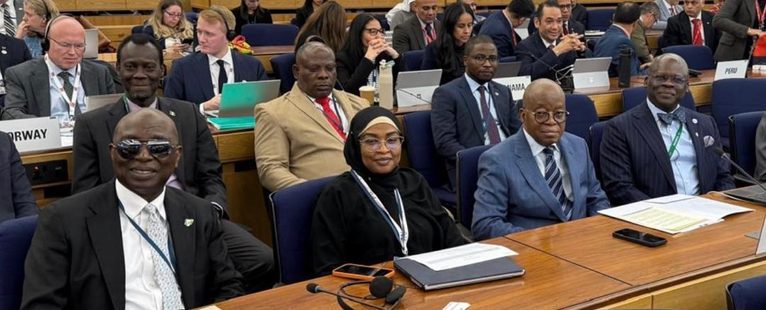
Oyetola Takes Nigeria’s Case on Gulf of Guinea Security and Seafarer Welfare to IMO Council in London
Minister says seafarers must not become casualties of geopolitical disputes as Nigeria presses for stronger technical support for developing maritime nations
By Ighoyota Onaibre | Waterways News
Nigeria’s Minister of Marine and Blue Economy, Dr. Adegboyega Oyetola, has restated the country’s commitment to safe, secure and sustainable international shipping. He is leading a high-level delegation to the 138th session of the International Maritime Organization (IMO) Council in London.
The five-day session opened on November 2 at the IMO headquarters and ends today, November 6, 2026. Nigeria’s participation is meant to strengthen its voice in global maritime governance and to advance the interests of developing maritime nations.
Nigeria sits on the 40-member Council under Category C. The session is considering the protection of vital shipping routes, the welfare and safety of seafarers, institutional governance and the sustainability of the global maritime industry.
Protecting vital shipping lanes
A central issue is the protection of strategic shipping routes against growing security threats and attacks on commercial vessels in high-risk zones. Under Agenda Item 11, “Protection of Vital Shipping Lanes,” Nigeria is expected to draw on its experience combating piracy and maritime crime in the Gulf of Guinea to push for stronger international cooperation and coordinated security responses.
“Nigeria recognises that the challenges confronting the global maritime industry require collective action, stronger international cooperation and effective regulatory frameworks,” Oyetola said. He added that Nigeria was at the Council to see its interests represented and to contribute to solutions that strengthen maritime security, protect seafarers and promote sustainable shipping.
He said the progress made in the Gulf of Guinea showed that maritime insecurity can be tackled “through political commitment, effective coordination and cooperation among regional and international partners.”
Seafarer welfare
Seafarer welfare is also high on the agenda. This follows IMO Secretary-General Arsenio Dominguez’s condemnation of the use of seafarers as pawns in geopolitical disputes. Nigeria is backing measures to prevent the arbitrary detention and abandonment of seafarers, and to ensure their fair treatment, safe repatriation and mental well-being.
“Seafarers are the lifeblood of international shipping,” Oyetola said. “Their safety, dignity and welfare must never be compromised by geopolitical tensions.”
Budget and capacity building
The Council is also reviewing financial allocations for the 2026–2027 biennium and strategic priorities for 2028–2029. Nigeria sees this as an opening to push for more technical cooperation and capacity-building support for developing maritime countries.
Oyetola said developing maritime nations “must have access to the technical expertise, institutional support and investment opportunities required to participate meaningfully in the evolving global shipping industry.”
The delegation
The minister is accompanied by:
The Permanent Secretary, Federal Ministry of Marine and Blue Economy, Mrs. Fatima Mahmood
The Director-General of NIMASA, Dr. Dayo Mobereola
The Director of Maritime Services, Mr. Oyinloye Meshack
Nigeria’s Alternate Permanent Representative at the IMO, Mr. William Bwala
Nigeria Watch
A heavy session. The Council has dealt with more than Nigeria’s agenda this week. Other delegations have also pressed seafarer protection and freedom of navigation, with Liberia and Indonesia among the countries that raised them. The session has also given attention to security in the Strait of Hormuz and the Black Sea. On Wednesday, the Council recommended a second four-year term for Secretary-General Arsenio Dominguez, running from 2028 to 2031. The IMO Assembly must still approve it in 2027. Nigeria’s message on the Gulf of Guinea has been delivered in a crowded room.
Hormuz is a Nigerian issue. This newsroom has followed the Strait of Hormuz crisis closely, from rising freight rates to war-risk insurance premiums at Nigerian ports. Oyetola’s call to shield seafarers from geopolitical tension is not abstract. Dominguez has said thousands of seafarers in the region live and work under heightened risk, and the IMO’s tally of seafarers killed in the region since February stood at 24 as of November 5.
Where the Gulf of Guinea story stands. Nigeria is presenting its Gulf of Guinea record as a model, and the Deep Blue Project is the backbone of that claim. NIMASA has just showcased upgraded assets at AFRIDEX 2026. Delegates in London will weigh the narrative against what stakeholders at home actually experience on the water.
The home test. Nigeria’s arguments at the IMO for seafarer dignity, fair treatment and capacity-building support will carry weight in proportion to how well they are matched at home.
Questions that Waterways News continues to raise:
Do Nigerian seafarers and inland waterway workers enjoy the safety and welfare standards the minister is championing abroad?
Will the technical cooperation Nigeria is seeking reach small-scale and informal waterway operators, such as those under WABOTAN and ATBOWATON, or stay at the policy level?
With Nigeria holding a Council seat, how will diplomatic wins in London be turned into delivery at home, from CVFF disbursement to NPERA implementation?
Waterways News will keep tracking the outcome of the 138th Council session and what it means for Nigerian maritime stakeholders.
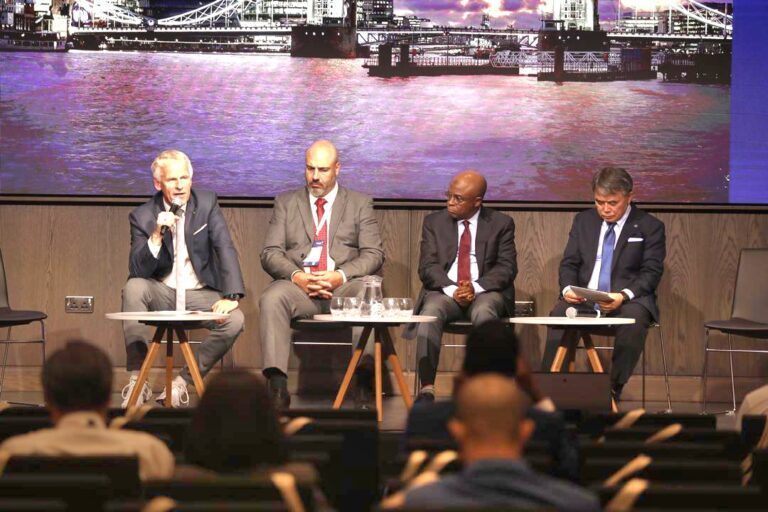
Nigeria’s Port Boom Is Outpacing Its Capacity, Dantsoho Tells World Ports Conference
Dantsoho Pitches Nigeria’s Ports to Global Investors in London, Says Lekki’s Capacity Is Exhausted
By Emamuzou Akatugba | Waterways News | London
The Managing Director of the Nigerian Ports Authority (NPA), Dr Abubakar Dantsoho, has told global port investors that Nigeria’s fast-growing cargo volumes make the country’s ports one of Africa’s most compelling investment opportunities. He said the Tinubu administration has put investor-friendly policies in place.
Dantsoho spoke on Tuesday at the IAPH World Ports Conference in London, which runs from November 3 to 6 at Olympia. He addressed a select group of maritime investors. He is Vice-President of the International Association of Ports and Harbors (IAPH) and Chairman of the Port Management Association of West and Central Africa (PMAWCA).
He said Nigeria’s population, rapid urbanisation and infrastructure gaps are what make the opportunity attractive. He argued that governments across Africa cannot alone fund bigger and deeper seaports, so private investment must move in quickly.
“The investment needed in ports to meet this expansion and growth can only happen if the requisite private investment is attracted and retained,” he said. He added that President Tinubu “has created the enabling atmosphere” for this
Dantsoho said Nigeria’s population has grown from about 45 million at independence in 1960 to over 260 million. In his words, the country needs capacity to receive bigger import vessels and to move higher export volumes.
His strongest example was the Lekki Deep Sea Port. It was funded with Chinese backing and built by China Harbour at a cost of $1.6 billion. He said it was commissioned only about three years ago, yet its capacity “has been exhausted”.
“Clearly, we need more capacity to be able to contain the volumes,” he said. He added that the NPA is pleased to be capturing more cargo, since rising volumes are what lift port revenue.
He also said most cargo arriving in West Africa, largely from China, ends up in the Nigerian market. He compared Nigeria’s population with Ghana (34 million), Côte d’Ivoire (32 million), Benin Republic (14 million) and Togo (9 million).
Other reports from the conference quote Dantsoho saying federal reforms have lifted Nigeria’s exports by about 25 per cent in two years, across oil and non-oil goods. He reportedly also cited two Nigerian ports in the World Bank’s top 20 global rankings, and a Single Window system the NPA developed in 2025 with a Singaporean firm.
NIGERIA WATCH
Capacity is now the story. A $1.6bn flagship port that is already full is the clearest sign yet that Nigeria’s problem has moved from attracting ships to handling them. It strengthens the case for the new deep seaport approvals (Badagry, Olokola, Ibom, Bakassi and Bonny) that have so far been announced faster than they have been built. Investors in London will want timelines, not just approvals.
Retaining investors is harder than attracting them. Dantsoho himself used the phrase “attracted and retained”. Concession renewal anxieties, regulatory overlap among agencies, and the Strait of Hormuz crisis’s effect on freight rates and war-risk insurance all weigh on retention. These are the questions investors will ask after the speech.
Where do the small operators fit? The pitch is about big terminals and big capital. Informal inland waterway operators, represented by WABOTAN and ATBOWATON, remain absent from the conversation.
Waterways News will keep asking how port-led growth and the NPA’s assessment of inland dry ports will translate into jetties, safety and livelihoods for the informal inland waterway operators.
MARITIME TRADE & SHIPPING
NPA Credits Reforms, APM Terminals Partnership for 25% Export Growth, Eyes $1bn Apapa Overhaul
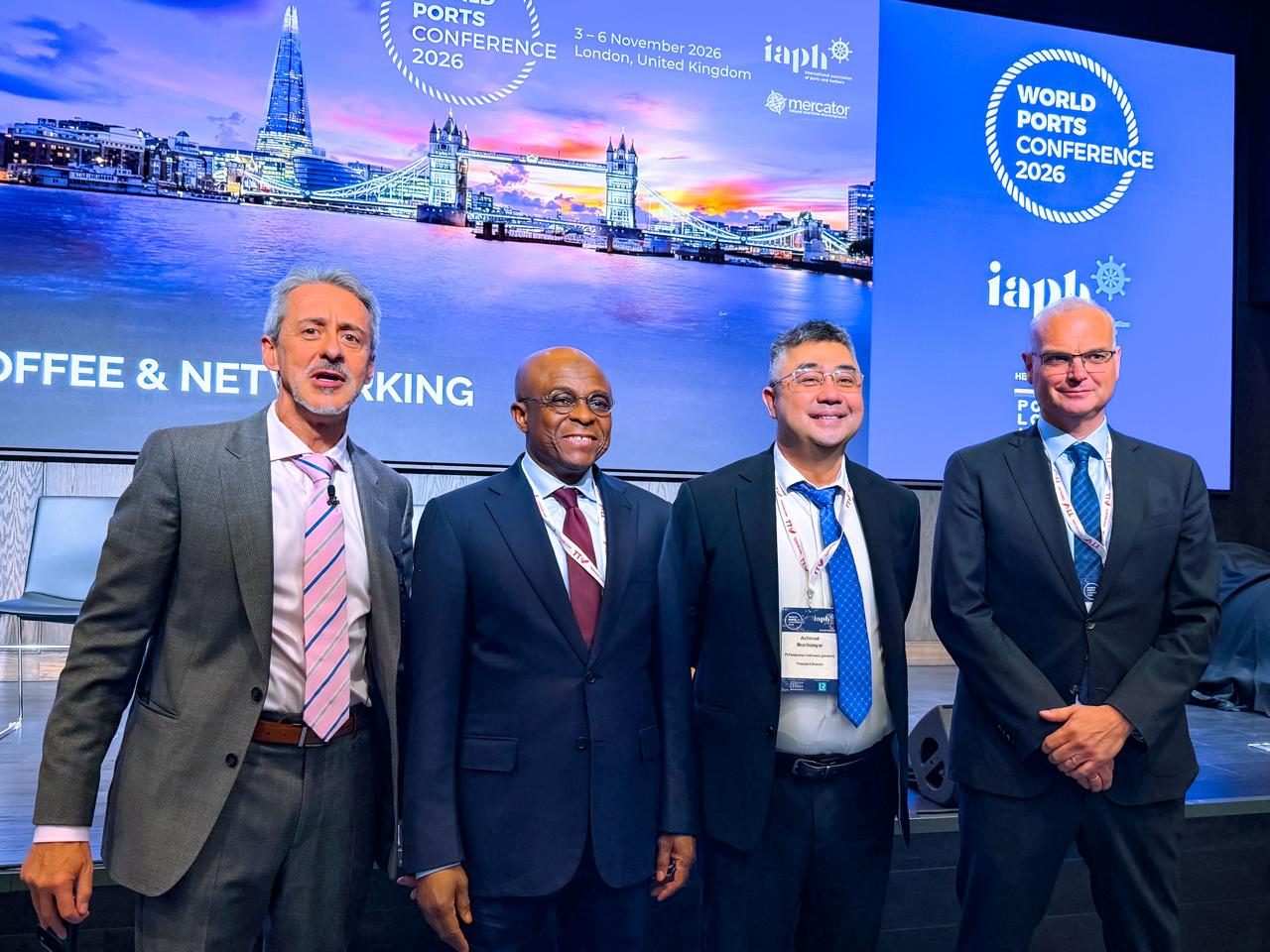
Dantsoho tells IAPH World Ports Conference in London that port revenue has quadrupled, as NPA pushes export terminals and digital platforms
By Emamuzou Akatugba | Waterways News | London
The Nigerian Ports Authority (NPA) says Nigeria’s exports have grown by more than 25 per cent in two years. It credits Federal Government reforms and closer collaboration with major terminal operators, especially APM Terminals.
NPA Managing Director, Dr Abubakar Dantsoho, disclosed this at the IAPH World Ports Conference in London. He said the growth was not driven mainly by oil and gas. Manufacturing and agriculture also contributed, with cocoa, cashew and other raw materials recording higher shipment volumes.
To sustain the momentum, the NPA has set up Export Processing Terminals to streamline the handling and documentation of export cargo. About four are operating nationwide. The authority works with terminal operators, the Nigeria Customs Service and other agencies so that goods are processed locally and meet required standards before shipment.
Dantsoho said the reforms have also positioned Nigeria to benefit from the African Continental Free Trade Area (AfCFTA). He cited Morocco, which he described as an emerging manufacturing hub for electric and other vehicles, as an example of trade and industrial cooperation within the continent.
He linked Nigeria’s improved global port standing to operational efficiency, technology adoption and stronger industry cooperation. He said two Nigerian ports are now in the world’s top 20 in the latest World Bank ranking, and that port revenue nationwide has quadrupled alongside rising cargo volumes. The NPA also uses a regional dashboard to track port efficiency across West and Central Africa. It shows gains in Nigeria and in countries such as Tanzania and Kenya.
On infrastructure, Dantsoho said the Federal Government plans a $1 billion expansion and modernisation of Apapa Port. He stressed that the project will need substantial private capital, and that the NPA is talking to APM Terminals and other potential investors. He added that the NPA plans to deepen partnerships with industry players in countries including Morocco and South Africa.
On digital reform, the NPA has partnered with a Singaporean company on a national single-window system. Talks are ongoing with an Abu Dhabi-based firm on a port community system. Both platforms are meant to improve coordination among stakeholders, simplify cargo clearance and reduce bottlenecks.
NIGERIA WATCH
What the “top 20” actually means: The World Bank ranked Apapa and Tin Can Island among the 20 most improved ports globally. This is an improvement ranking, not a list of the world’s 20 best ports. Both appeared in the 2025 Container Port Performance Index, and Tin Can placed 10th and Apapa 12th for gains between 2020 and 2025. Both ports scored well below zero in 2020 and had only recovered to -26 by 2025, so the climb is real but the starting point was very low. The authority should be precise about this at global forums.
Oil versus non-oil: Reports of Dantsoho’s remarks differ slightly. One account says the growth covered both oil and non-oil exports. The NPA should publish the underlying figures and the baseline year so the 25 per cent claim can be verified, especially the non-oil share.
Private capital and the Apapa plan: A $1 billion Apapa upgrade that depends largely on private investors makes terminal concession terms and port dues central issues for shippers and the Nigerian Shippers’ Council. Stakeholders will want to know who bears the cost, and whether efficiency gains will show up in lower charges.
The small operators’ angle: Export terminals, single-window and port community systems all target the seaport cargo chain. The informal inland waterway operators represented by WABOTAN and ATBOWATON see little of this attention. As reforms are celebrated in London, a fair test of “the blue economy” is whether feeder services, jetties and inland routes get matching investment.
What to watch: the NPA’s data on the four export terminals, the Apapa investment structure, and delivery dates for the single-window and port community platforms.

 Oil and Gas8 months ago
Tantita’s Pipeline Deal: $144m Contract, Rising Output, and the Questions that Deserve Answers
 MARITIME TRADE & SHIPPING8 months ago
World’s Largest Container Ship Sets New Maritime Record with 22,233 TEUs on Single Voyage
 Blue Economy9 months ago
Nigeria’s Coast Guard Bill: A Solution in Search of a Problem?