
Blue Economy
NIMASA Rolls Out Drones, Armoured Vehicles in Deep Blue Upgrade at AFRIDEX 2026

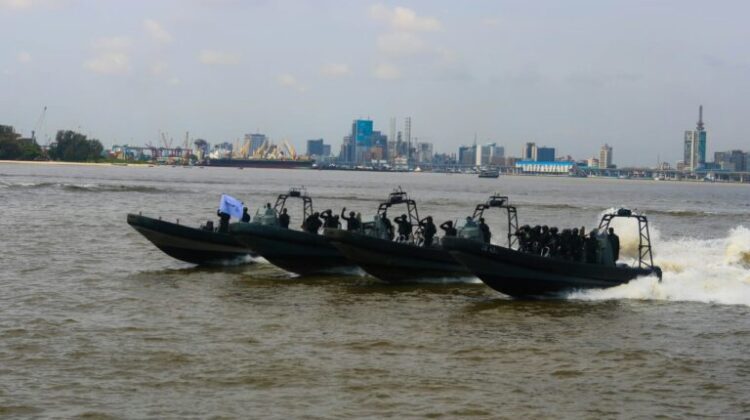

Agency says new assets will sustain the fight against piracy as technical partner calls for regular upgrades and a land-sea security approach
By Raymond Gold | Waterways News
The Nigerian Maritime Administration and Safety Agency (NIMASA) has added a new batch of high-tech equipment to the Integrated National Security and Waterways Protection Infrastructure, better known as the Deep Blue Project. The assets were unveiled at the 2026 Africa International Defence Exhibition (AFRIDEX).
The showcase included vertical take-off and landing (VTOL) drones that can operate from sea vessels, newly delivered armoured vehicles, rugged light utility vehicles built for bush and littoral terrain, and integrated intelligence systems. The equipment is meant to sharpen surveillance and response across both coastal and inland waters.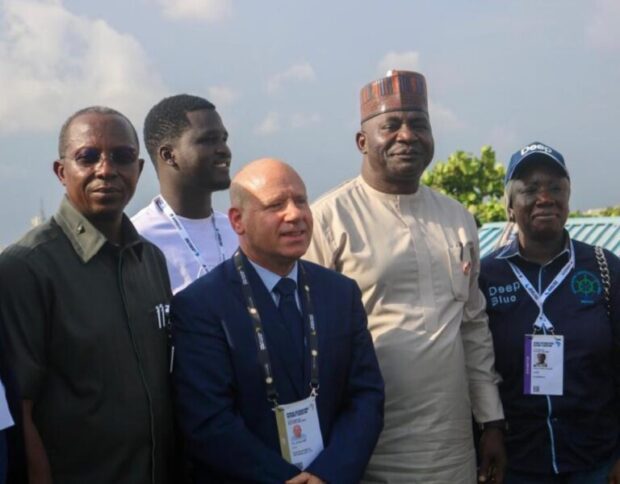
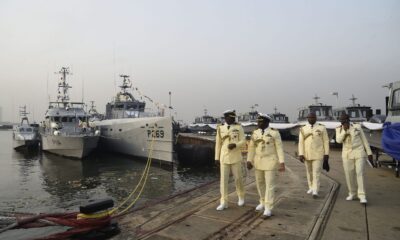
From Right to Left: Head, Deep Blue, Nigerian Maritime Administration and Safety Agency (NIMASA), Mrs. Aisha Yakubu Idris; Honourable Minister of Defence, General Christopher Gwabin Musa; Chief Executive Officer, Homeland Security International (HLSI); Tal Spektor and a guest at the 2026 Africa International Defence Exhibition (AFRIDEX).
The Minister of Defence, General Christopher Gwabin Musa (rtd), toured the Deep Blue stand and watched a live simulation of a piracy interdiction in Nigerian waters.

Speaking for NIMASA Director-General Dr. Dayo Mobereola, the Head of the Deep Blue Unit, Mrs. Aisha Yakubu Idris, said the new assets would strengthen the project’s sustainability. They would also ensure that military personnel deployed under it have the equipment to keep up the fight against piracy. She said Nigeria would maintain zero tolerance for illegal activity in its waters.
Tal Spektor, CEO of HLS International, the project’s technical partner, said assets must be upgraded regularly to keep pace with evolving maritime threats. He argued that maritime security cannot stop at the shoreline, since offshore crime is often tied to land-based networks. He added that upgrades to the intelligence systems have improved cargo monitoring and information-sharing between NIMASA and other government agencies.
AFRIDEX 2026 drew security organisations from several countries, senior military officers and key stakeholders from Nigeria’s maritime sector.
Nigeria Watch
What this means for Nigerian maritime stakeholders
Deep Blue is expanding. The showcase follows NIMASA’s earlier signals about growing the project. In February, the agency said it was considering an expansion after the IMO’s commendation of Deep Blue. In May, Minister of Marine and Blue Economy Adegboyega Oyetola spoke of extending coverage to Bakassi and other vulnerable corridors at the graduation of 492 advanced combat personnel in Elele, Rivers State. AFRIDEX shows the hardware side of that expansion.
The “land link” matters. Spektor’s point that offshore crime has onshore roots is worth noting. It suggests the project is moving beyond patrolling the Gulf of Guinea towards intelligence-led enforcement, including cargo monitoring and inter-agency data-sharing. How well NIMASA, the Navy, the NPA and other agencies actually share data will decide whether that holds up.
Open questions remain. The reports give no figures on the quantity or cost of the new assets, or on how they will be deployed and maintained. For a project that has run on public funds since 2021, stakeholders are entitled to those details.
Inland operators are not in the picture. The showcase focused on offshore and coastal security. Nothing reported addresses whether the new capabilities will reach the creeks and inland waterways where small-scale operators, including WABOTAN and ATBOWATON members, face insecurity daily.
Waterways News will keep asking how far Deep Blue’s protection extends beyond the high seas.
Blue Economy
NIWA Deploys Enforcers to Niger Waterfronts as Boat Operators Cry Out Over Life Jacket Shortage
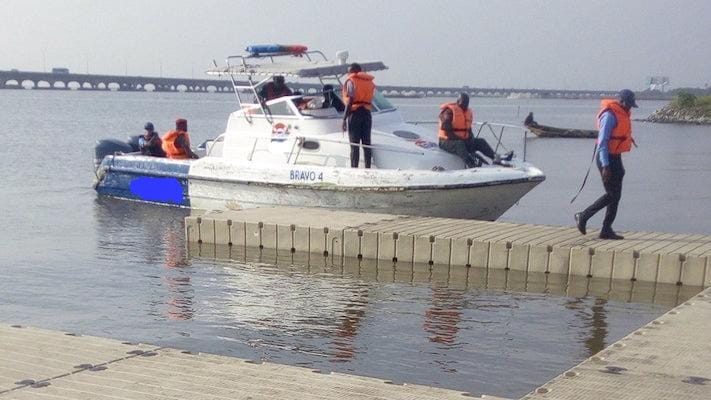
NIWA Deploys Enforcers to Niger Waterfronts as Boat Operators Cry Out Over Life Jacket Shortage
Operators say a 300-seater has only seven jackets, and ask for prices to drop from N20,000 to as low as N5,000
By Raymond Gold | Waterways News
The National Inland Waterways Authority (NIWA) has sent enforcement personnel to waterfronts across Niger State to make life jacket use compulsory and ensure compliance with inland waterways safety rules.
NIWA’s Minna Area Manager, Akapo Adeboye, announced this at the 2026 Sensitisation and Enlightenment Campaign on Inland Waterways Regulations at Zumba Waterfront, Shiroro Local Government Area. The campaign theme was “Total Safety Measures and Compliance on the Nation’s Inland Waterways.”
Adeboye said NIWA has given 3,500 life jackets to boat operators at waterfronts across the state. He was troubled, however, that some operators neither wear the jackets nor provide them for passengers during trips.
He also condemned operators who charge passengers extra to use a life jacket, saying this discourages compliance. He said the safety of lives and property remains a priority of the Federal Ministry of Marine and Blue Economy, and that operators and passengers alike must wear life jackets before boarding. Violators, he warned, will face the full weight of the law.
Some operators at the event said scarcity and cost make full compliance impossible.
Adamu Gunduma said his boat carries 300 passengers but he has seven life jackets, one of them for himself. The other six go to passengers on a first-come, first-served basis.
Adamu Tanko said his 150-passenger boat has three life jackets.
Saidu Sani said his 40-passenger boat has none, for himself or his passengers.
Abubakar Mamman-Kwanu appealed to government and other stakeholders for more jackets through donations and support programmes.
The operators said a life jacket costs about N20,000 on the market and asked authorities to bring the price down to between N5,000 and N6,000. They added that high prices and falling farm-produce prices could keep many farmers from buying one. Farmers, they said, make up a large share of water transport users in the area. They called for stronger government intervention, arguing that easier access to life jackets would improve compliance and prevent avoidable deaths.
The News Agency of Nigeria (NAN) first reported the development on Monday.
Nigeria Watch
Enforcement is arriving before supply. Gunduma, Tanko and Sani together operate boats licensed for 490 passengers, yet they reported 10 life jackets between them. Telling such operators to refuse boarding without a jacket is, for now, an order they cannot obey. Cheap jackets must reach waterfronts before penalties are enforced, or enforcement will fall hardest on the poorest operators.
NIWA has also faced a misuse problem. Adeboye said in an earlier interview that people sell the jackets, use them as pillows or farm tools. He said that when his team revisited a waterfront after a 3,500-jacket flag-off, they could not find one in use. Both complaints can be true at once, and the way out is a mix of local ownership, fitting by boat capacity and visible checks by marshals.
The stakes are real and well documented. After a July 2025 mishap at Zumba, Adeboye said 26 passengers wearing life jackets were rescued alive, 15 bodies were recovered and three people were missing. He noted that the incident came eight days after a NIWA sensitization campaign at the same waterfront.
Marshals and penalties are already in place. Waterways marshals were inaugurated at Zumba to enforce transport regulations. Adeboye has also said NIWA gazetted penalty codes for operators and passengers who fail to comply. The open question is whether operators get realistic access to compliance before sanctions bite.
Questions for NIWA and the Ministry of Marine and Blue Economy:
How many jackets are needed to cover the licensed capacity of boats at Niger waterfronts, against the 3,500 supplied?
Can bulk procurement or local assembly bring the N20,000 price down?
Will NIWA publish compliance figures and sanctions issued after the campaign?
Blue Economy
NPA Moves to Inspect Nigeria’s Inland Dry Ports, Presses Operators to Plug Into Eto, National Single Window
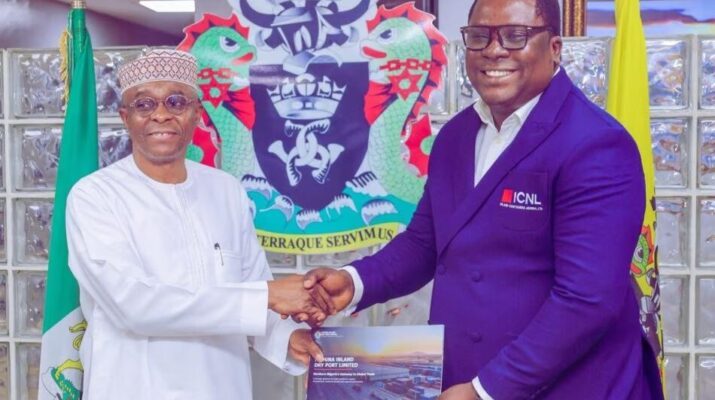
NPA Moves to Inspect Nigeria’s Inland Dry Ports, Presses Operators to Plug Into Eto, National Single Window
Demands Digital Alignment and Infrastructure Upgrade
By Ighoyota Onaibre | Waterways News
The Nigerian Ports Authority (NPA) says it will tour all inland dry ports across the country to assess their readiness and capacity, as it pushes for the hinterland cargo terminals to keep pace with the digital overhaul of the seaports.
Managing Director Dr. Abubakar Dantsoho announced the plan while receiving a delegation of Inland Containers Nigeria Limited (ICNL), led by its Managing Director/CEO, Mr. Omotayo Dada, at the NPA headquarters in Lagos.
Dantsoho told the ICNL team that NPA operations are now nearly 90 per cent automated. He urged the company to align its systems with the Eto truck call-up platform, the Port Community System and the National Single Window (NSW). The aim is real-time cargo tracking, fewer bottlenecks and greater transparency.
He also called for upgrades to dry port infrastructure to handle the higher cargo volumes expected from seaport modernisation, and urged public-private partnerships to improve facilities, streamline logistics and cut the cost of doing business.
Dada described the partnership as the backbone of Nigeria’s multimodal chain, linking coastal ports to northern hubs. He highlighted the role of the Kaduna Inland Dry Port in serving northern shippers and landlocked neighbours Niger and Chad.
Both sides committed to adopting technology, intermodal rail evacuation and stronger dry port facilities, in line with the Federal Ministry of Marine and Blue Economy’s goals of port efficiency, reduced congestion and economic growth.
Nigeria Watch
A pattern, not a one-off. This is not the first time Dantsoho has made this case. In October, he told the Dala and Funtua dry port operators that dry port infrastructure must be upgraded to match the pace of modernisation at the seaports. That meeting followed a directive from Minister Adegboyega Oyetola transferring operational oversight of inland dry ports to the NPA. The Port Act also recognises dry ports as official ports of origin and destination. The latest tour announcement is the NPA exercising that new oversight.
The real test is rail and road. Digital integration will not move containers on its own. Operators have repeatedly cited weak rail connectivity and logistics constraints. Unless the assessment leads to funded rail links and working evacuation corridors, trucks will keep carrying cargo that rail was meant to take, and Apapa and Tin Can will stay under pressure.
Questions for the NPA. Will the tour results be published? Will there be timelines and budgets for upgrades? And how will the NPA bring private dry port operators along on the NSW and Eto integration?
Why waterways stakeholders should care. Cargo that clears faster inland eases pressure on the ports. It also strengthens the case for barging and inland waterways as alternative evacuation routes. Operators in that space, including those represented by WABOTAN and ATBOWATON, will want to see whether the NPA’s inland logistics plans make room for water transport.
Blue Economy
Outboard Engines, Jetties, Fuel Points: Lagos Boat Operators Table Survival Demands Ahead of New Administration
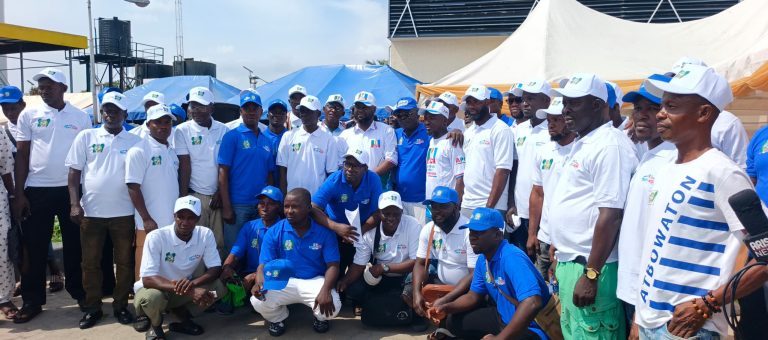
Outboard Engines, Jetties, Fuel Points: Lagos Boat Operators Table Survival Demands Ahead of New Administration
ATBOWATON seeks engine subsidies, flexible repayment terms and more infrastructure for remote communities, while commending LASWA, NIWA and the state government on safety gains
Boat operators in Lagos have asked the next state administration for engine subsidies, flexible repayment arrangements, more jetties and more fuel stations, saying these are needed to keep water transport growing.
The demands came from the Lagos State Chapter of the Association of Tourist Boat Operators and Water Transporters of Nigeria (ATBOWATON) at a political awareness programme organised with its national leadership. Operators, government representatives and political stakeholders discussed what the sector expects from the next government.
Deputy Chairman Babatunde Segun said some members have lost boats or are stuck with faulty engines and cannot work at full capacity. He asked for engine subsidies and flexible repayment terms so affected operators can rebuild. He also called for sustained attention to safety, security, youth employment and tourism, saying these would create jobs and ease pressure on Lagos roads.
Segun credited the present administration with adding jetties and supporting more fuel stations, which ended long trips to reach workable operating points. He also praised joint state and federal efforts to clear dangerous debris from the waterways, which he said has cut accidents and damage to boats and engines. He stressed that remote communities still lack adequate jetties and fuel points.
Founding National Chairman Dr Tarzan Balogun warned that accidents could erode commuter confidence and urged operators to make safety their first priority. He commended LASWA and NIWA for monitoring and for providing life jackets, and called for closer cooperation among federal, state and local governments.
Representing the Special Adviser on Blue Economy, Oluwadamilola Emmanuel, Mr Oladayo Ibrahim said Lagos is committed to becoming a leading maritime and water transport hub. He cited the Omi Eko Project, with modern ferries, electric vessels, better terminals, dredging and digital systems. He said existing operators must not be shut out of the new opportunities, and urged them to embrace professionalism, safety and compliance.
Oriade LCDA Chairman Rasaq Olotede praised investments in jetties and terminals across Badagry Division, including Ilashe, Ibeshe and Kirikiri Town, and commended operators for using life jackets.
The association also endorsed President Bola Tinubu’s re-election and Dr Kadri Hamzat’s governorship ambition.
NIGERIA WATCH
The operators’ message to Omi Eko planners is simple: don’t build the future over our heads. Omi Eko plans 15 ferry routes over 140 kilometres, linking 25 upgraded terminals, served by 75 electric vessels of up to 440 passengers each. Small “banana” boats carrying up to 17 passengers still dominate Lagos waterways. Those are the operators now asking for engine support. Officials have said private ferry operators will run the new electric vessels under a public-private framework. The open question is whether small operators get a real place in that framework or are phased out.
Omi Eko runs from 2024 to 2030 at a total cost of €410 million. That timeline is long for an operator with a dead engine today. The immediate gap between the megaproject and the informal operators who carry most passengers is the kind of policy-versus-delivery gap Waterways News keeps tracking, alongside NIWA-LASWA coordination and the safety record on inland waterways.

 Oil and Gas8 months ago
Tantita’s Pipeline Deal: $144m Contract, Rising Output, and the Questions that Deserve Answers
 MARITIME TRADE & SHIPPING8 months ago
World’s Largest Container Ship Sets New Maritime Record with 22,233 TEUs on Single Voyage
 Blue Economy9 months ago
Nigeria’s Coast Guard Bill: A Solution in Search of a Problem?