

Blue Economy
Bakassi Deep Seaport: Tinubu Breaks Ground on 20-Metre-Draft Port, Says Calabar Will Give Nigeria a Second Trade “Leg”

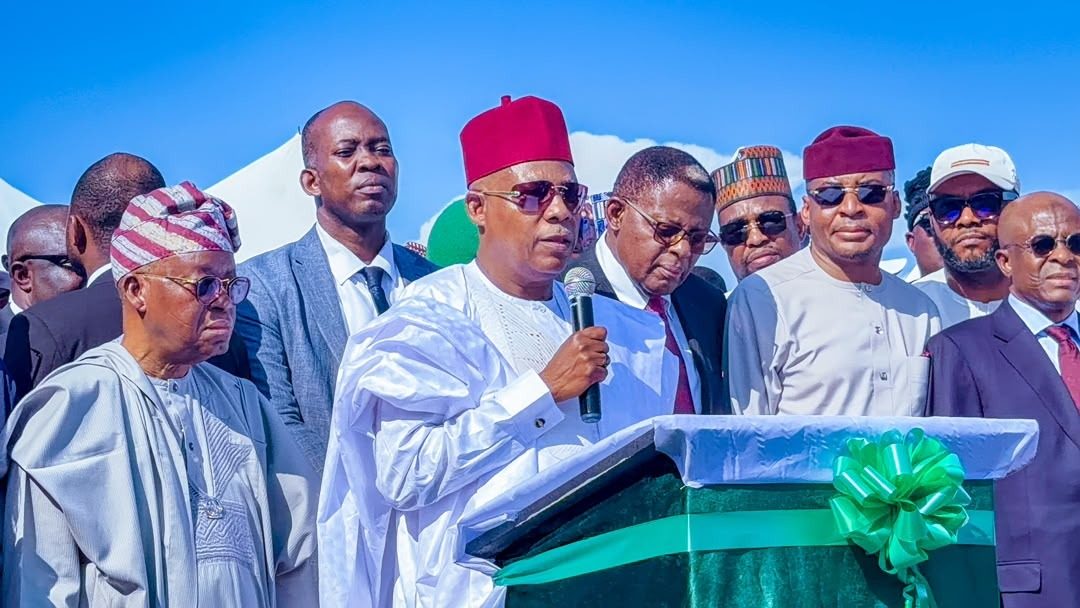

Bakassi Deep Seaport: Tinubu Breaks Ground on 20-Metre-Draft Port, Says Calabar Will Give Nigeria a Second Trade “Leg”
Shettima, Oyetola and Otu say the Cross River project will ease pressure on Lagos, open a new cargo corridor and create jobs
By Raymond Gold | Waterways News
President Bola Tinubu has flagged off construction of the Bakassi Deep Seaport in Cross River State. He called it a strategic national investment that will widen Nigeria’s maritime trade, draw in industrial investment and create jobs.
Tinubu was represented by Vice-President Kashim Shettima at the groundbreaking in Ikang, Bakassi Local Government Area, on Friday, 13 November 2026. The Minister of Marine and Blue Economy, Adegboyega Oyetola, and Governor Bassey Otu were present.

The President said the port will open new commercial corridors, take pressure off existing ports and help Nigeria capture cargo that now passes through neighbouring countries. It is designed with a 20-metre draft for large vessels and will be linked to a 260-kilometre superhighway to move goods inland.
He stressed that the port is meant to complement Lagos, which handles more than 80 per cent of the country’s foreign trade, and not to compete with it. Lagos, he said, cannot carry the whole load alone. “When Calabar works, Nigeria works on two legs,” he said.
Tinubu said Nigeria has yet to fully use its Gulf of Guinea coastline, even though about 90 per cent of global cargo moves by sea.
Project history and funding
The President said the project was conceived in 2014, with an Environmental and Social Impact Assessment developed in March 2015. It gained fresh momentum under Governor Otu, who pursued a $3.5bn financing arrangement with the African Export-Import Bank (Afreximbank). The Public-Private Partnership framework was formalised in February 2025.
Governor Otu said the state has completed key preparatory work, including environmental, hydrographic, geotechnical and geophysical studies, and has secured the necessary federal approvals. The port will be delivered through a PPP with an initial funding approval of $2.27bn. He said it will open opportunities in logistics, shipping, fishing, tourism, trade and shipbuilding.
He also disclosed that the project surveys found inaccuracies in the 1903 navigational charts, and the Federal Government replaced them on 1 October 2026. He said this affirms Cross River’s littoral status.
Selected indigenes are being trained for construction and operational roles, with provisions for knowledge transfer. Otu also outlined a proposed economic corridor linking the state’s airport, the seaport and the Lagos-Calabar Coastal Highway, and invited investors to take advantage of the state’s one-stop investment hub and tax incentives.
Tinubu urged Cross River residents to protect the project from political interference. He acknowledged the economic and territorial losses the state suffered after the Bakassi Peninsula ruling, including lost oil revenue.
Oyetola’s scorecard
Oyetola said the port is a major step toward turning Nigeria’s maritime resources into investment, jobs and sustainable growth, particularly once linked with the Lagos-Calabar Coastal Highway. He said revenue from agencies under his ministry rose from ₦700.79bn in 2023 to a record ₦1.83tn in 2025, which he attributed to improved revenue assurance and the blocking of leakages.
He also listed these sector gains:
Elimination of piracy in Nigerian waters
Approval to modernise six legacy seaports
Nigeria’s election to the IMO Council after almost two decades
Lifting of US Coast Guard restrictions on vessels from Nigeria in August 2026
Approval for disbursement of the Cabotage Vessel Financing Fund (CVFF) to Nigerian shipowners
A rise in national fish production from 1.1 million to 1.4 million metric tonnes
The minister reaffirmed the ministry’s commitment to working with the Cross River Government to deliver a modern, efficient and environmentally sustainable port.
NIGERIA WATCH
Shovels in the ground is not cargo on the quay. Bakassi joins a growing list of deep seaport approvals, alongside Badagry, Olokola, Ibom and Bonny. Stakeholders will want to know which of these have secured financiers, concessionaires and construction timelines, and which remain announcements.
Which number is the real one? Reports describe the project as a $3.5bn Afreximbank arrangement, while the governor cited an initial PPP funding approval of $2.27bn. Cross River and the Federal Government should state how much is committed, from whom, and what is still to be raised.
The Lagos question. Tinubu’s “complement, not compete” framing is welcome. The test will be whether the Bakassi and Calabar corridor gets the rail, road and Customs-processing links needed to pull real cargo, and whether shipping lines and cargo owners see a commercial case.
Local communities. The people of the Bakassi creeks, including fishers and boat operators, will live with the dredging, traffic and construction. Waterways News will keep asking how host communities, and the informal operators that WABOTAN and ATBOWATON represent, will share in the jobs and the project.
Delivery tests for the minister’s claims. Oyetola cited CVFF disbursement approval. Approval is not payment, and Nigerian shipowners are still waiting to see the money reach them.
Waterways News will track the project’s financing, construction milestones and community impact.

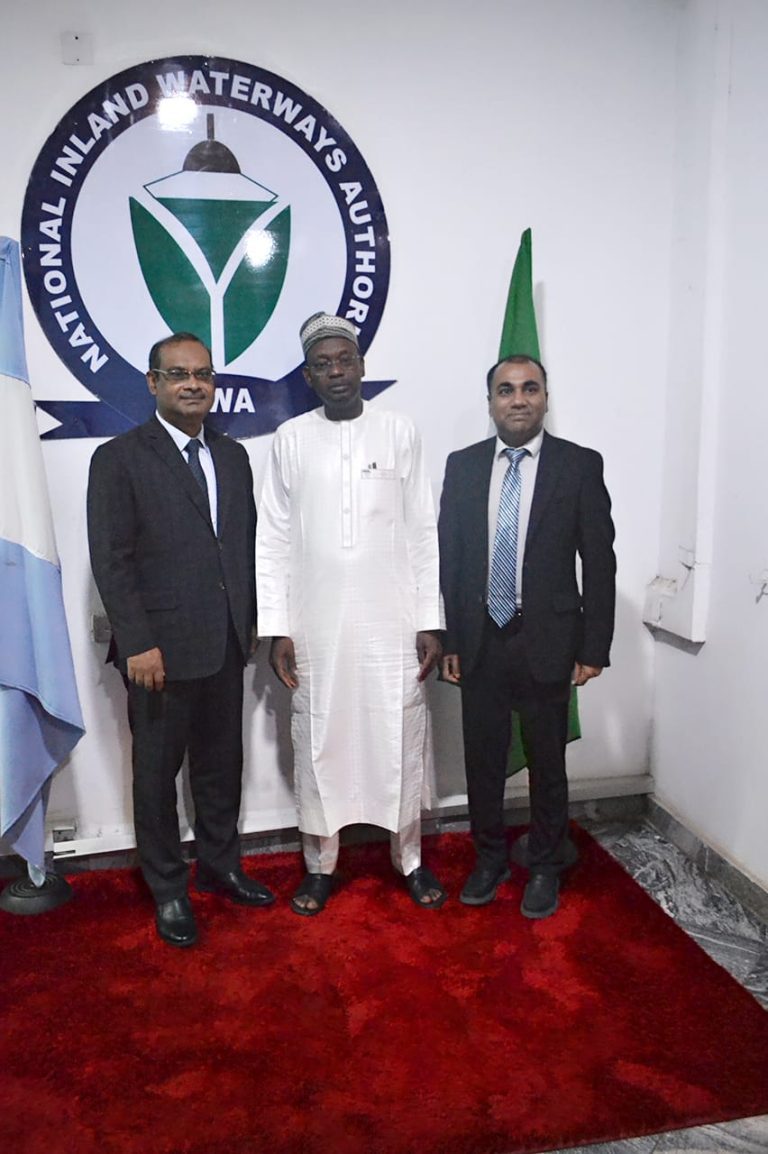
NIWA, Bangladesh Open Talks on Dredging, Boat-Building and River Port Cooperation
Dhaka’s envoy offers technical expertise and training to unlock the potential of Nigeria’s inland waterways
By Raymond Gold | Waterways News
The National Inland Waterways Authority (NIWA) has opened exploratory talks with Bangladesh on technical cooperation, infrastructure development and investment in inland water transport.
The talks followed a courtesy visit by Bangladesh’s High Commissioner to Nigeria, Miah Mohammad Mainul Kabir, to NIWA’s liaison office in Abuja. The proposed partnership would cover dredging, river port development, boat construction, marine equipment manufacturing and the management of passenger ferry services.
NIWA’s Acting Managing Director and CEO, Malam Umar Yusuf Girei, said the visit was a chance to build stronger institutional ties between two countries with extensive inland waterways. He said Bangladesh has made real progress in turning its waterways into a major transport network. By his account, its roughly 24,000 kilometres of waterways carry more than 25 per cent of passenger traffic, along with millions of tonnes of cargo.
Girei said Nigeria has about 10,000 kilometres of inland waterways. The Rivers Niger and Benue are the main routes, giving navigable access to about 28 of the country’s 36 states. He said Bangladesh’s experience offers useful lessons as the Federal Government pushes to maximise the economic benefits of the sector.
He named three areas for possible cooperation:
dredging, channel maintenance and year-round navigability
development and management of river ports and jetties
passenger ferry systems
Kabir said Bangladesh could share its expertise in dredging, boat construction and marine equipment manufacturing. He also stressed capacity building, with training and retraining of the people who operate, maintain and manage inland water transport infrastructure.
Both sides said they hoped the visit would lead to concrete cooperation and lasting institutional partnerships. The discussions remain exploratory, and no agreement, timeline or funding commitment has been announced.
NIGERIA WATCH
Talk is cheap until there’s an MoU. Nigeria has had similar overtures from Bangladeshi diplomats before, including a 2022 visit to NIWA’s then leadership. Stakeholders will want to see a signed agreement, a work plan and funding, not another round of courtesy calls.
Mind the numbers. The 24,000 km figure is Girei’s. World Bank material on Bangladesh gives it as the total length of rivers, streams and canals, while the navigable network is far smaller, at roughly 3,800 to 3,900 km.
The real lesson from Dhaka is sustained dredging and terminal investment: the World Bank committed $360 million in 2016 for the Chittagong–Dhaka–Ashuganj corridor, and Bangladesh now plans to re-dredge nearly 8,000 km of waterways.
Boat-building matters for operators. Bangladesh’s offer on boat construction comes as NIWA pushes the wooden boat phase-out. Operators in WABOTAN, and ATBOWATON have long asked who will pay for compliant vessels and engines. Any technology transfer should include affordable, locally buildable designs and financing for small operators, not only large-scale shipyards.
Jurisdiction. Ports, jetties and ferry systems sit where NIWA and LASWA have clashed since the Supreme Court ruling. Any partnership needs clear mandates, or the gains will be lost to turf disputes.
The people side. Training and retraining should reach boat drivers, engineers and jetty managers, not just agency staff.
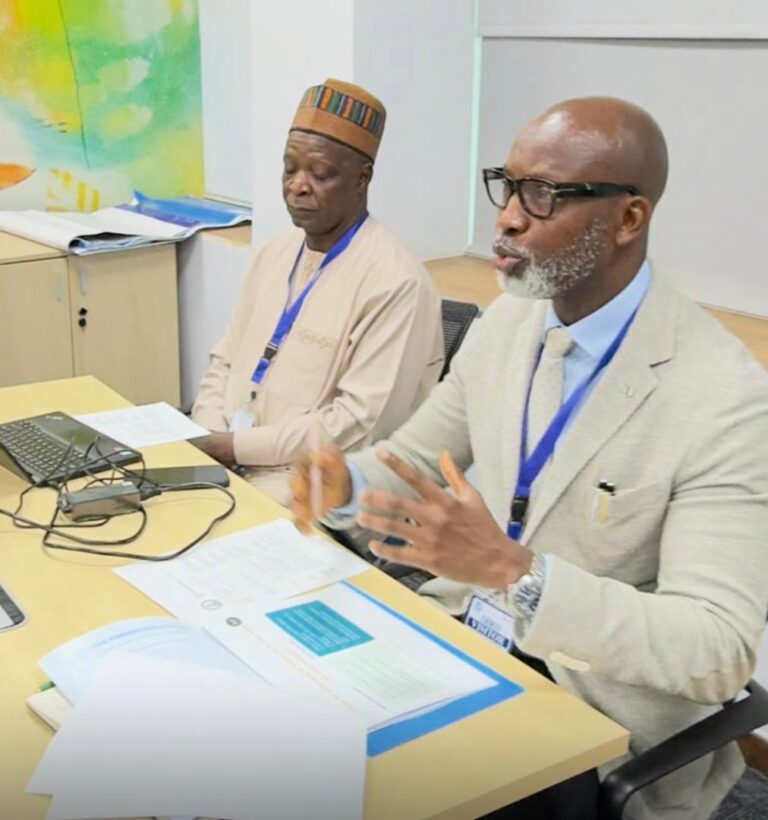
$200m Fish Lifeline: FG Taps World Bank Funds to Push States Towards Fish Sufficiency
Oyetola Sets Sights on Net Exporter Status as FG Secures $200m World Bank Backing for State-Led Aquaculture
By Okeoghene Onoriobe | Waterways News
The Federal Government says it has secured a $200 million commitment from the World Bank Group to drive fisheries and aquaculture production nationwide, as it moves to cut fish imports and close a supply gap of more than 2.2 million tonnes.
The money will be lent to state governments on concessional terms. It is meant to help them expand fish production, attract investment and build viable aquaculture projects.
The Minister of Marine and Blue Economy, Dr Adegboyega Oyetola, announced this at an Executive Training on the Aquaculture Investment Guide, organised by his ministry with the World Bank Group in Abuja. He was represented by the Senior Special Assistant to the President on Marine and Blue Economy, Professor Busayo Fakinlede.
Oyetola said fish is central to food security, household nutrition and rural livelihoods, and that Nigeria cannot be food secure while importing most of its fish. He said the goal is to “produce more, import less” and eventually become a net exporter, which he said requires every state to play its part.
The numbers
Nigeria needs about 3.6 million tonnes of fish a year but produces roughly 1.4 million tonnes. Imports cover the gap and cost nearly $1 billion annually in foreign exchange.
State-driven framework
Under the ministry’s framework, each state is expected to:
identify priority aquaculture value chains
assess investment readiness
develop bankable project pipelines
commit to measurable contributions to national fish output
The training brought together commissioners from Rivers, Bayelsa, Delta and Cross River States, plus permanent secretaries and directors of fisheries and aquaculture from across the federation. It covered business models, risk management, environmental and social safeguards, and public-private partnerships.
A Federal-State interface is also planned to coordinate a national fish security strategy.
Oyetola commended the World Bank for its support on analytical studies, cluster-based development, capacity building and the Aquaculture Investment Guide. He will oversee a post-training stakeholders’ roundtable with states and other stakeholders to sustain momentum.
Ministry’s scorecard
Fakinlede credited the minister’s leadership for:
the August 2026 inauguration of the Technical Committee on Accelerating Fish Production
digitisation of fish import licensing
a rise in national output from 1.1 million to 1.4 million tonnes
US shrimp-export certification after compliance with Turtle Excluder Device requirements
the Fish City and Fish Terminal investment portfolio to attract private capital
NIGERIA WATCH
Read the fine print. As of 9 November, I could not find a published World Bank project document for the $200 million, and the figure rests on the ministry’s statement. The repayment period, interest rate, per-state allocation and disbursement date have not been made public, and it is unclear whether this is new money or part of financing already agreed. Waterways News should press the ministry on these before treating the figure as settled.
Loans, not grants. States carry the debt and must show bankable projects. Strong states like Rivers, Bayelsa, Delta and Cross River, whose commissioners attended, sit on the water and are best placed to benefit. Inland and riverine communities lacking project-preparation capacity risk being left behind.
The missing small operators. The framework speaks of investors, PPPs and bankable pipelines. It says little about artisanal fishers, boat operators and fishing communities, including those represented by WABOTAN and ATBOWATON, who supply and move much of the country’s fish. Without cold chains, landing jetties, safe water transport and affordable engines, higher production will not reach markets.
Policy versus delivery. The target is ambitious, with output reportedly up from 1.1 million to 1.4 million tonnes. Yet Nigeria still meets under 40 per cent of its fish demand, and it has heard similar promises before, from the Cabotage Vessel Financing Fund onward. The test is whether the roundtable produces dates, allocations and measurable state commitments.
Blue Economy
Oyetola Takes Nigeria’s Case on Gulf of Guinea Security and Seafarer Welfare to IMO Council in London
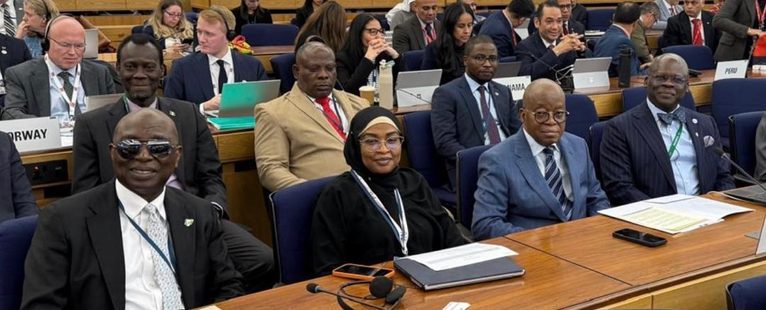
Oyetola Takes Nigeria’s Case on Gulf of Guinea Security and Seafarer Welfare to IMO Council in London
Minister says seafarers must not become casualties of geopolitical disputes as Nigeria presses for stronger technical support for developing maritime nations
By Ighoyota Onaibre | Waterways News
Nigeria’s Minister of Marine and Blue Economy, Dr. Adegboyega Oyetola, has restated the country’s commitment to safe, secure and sustainable international shipping. He is leading a high-level delegation to the 138th session of the International Maritime Organization (IMO) Council in London.
The five-day session opened on November 2 at the IMO headquarters and ends today, November 6, 2026. Nigeria’s participation is meant to strengthen its voice in global maritime governance and to advance the interests of developing maritime nations.
Nigeria sits on the 40-member Council under Category C. The session is considering the protection of vital shipping routes, the welfare and safety of seafarers, institutional governance and the sustainability of the global maritime industry.
Protecting vital shipping lanes
A central issue is the protection of strategic shipping routes against growing security threats and attacks on commercial vessels in high-risk zones. Under Agenda Item 11, “Protection of Vital Shipping Lanes,” Nigeria is expected to draw on its experience combating piracy and maritime crime in the Gulf of Guinea to push for stronger international cooperation and coordinated security responses.
“Nigeria recognises that the challenges confronting the global maritime industry require collective action, stronger international cooperation and effective regulatory frameworks,” Oyetola said. He added that Nigeria was at the Council to see its interests represented and to contribute to solutions that strengthen maritime security, protect seafarers and promote sustainable shipping.
He said the progress made in the Gulf of Guinea showed that maritime insecurity can be tackled “through political commitment, effective coordination and cooperation among regional and international partners.”
Seafarer welfare
Seafarer welfare is also high on the agenda. This follows IMO Secretary-General Arsenio Dominguez’s condemnation of the use of seafarers as pawns in geopolitical disputes. Nigeria is backing measures to prevent the arbitrary detention and abandonment of seafarers, and to ensure their fair treatment, safe repatriation and mental well-being.
“Seafarers are the lifeblood of international shipping,” Oyetola said. “Their safety, dignity and welfare must never be compromised by geopolitical tensions.”
Budget and capacity building
The Council is also reviewing financial allocations for the 2026–2027 biennium and strategic priorities for 2028–2029. Nigeria sees this as an opening to push for more technical cooperation and capacity-building support for developing maritime countries.
Oyetola said developing maritime nations “must have access to the technical expertise, institutional support and investment opportunities required to participate meaningfully in the evolving global shipping industry.”
The delegation
The minister is accompanied by:
The Permanent Secretary, Federal Ministry of Marine and Blue Economy, Mrs. Fatima Mahmood
The Director-General of NIMASA, Dr. Dayo Mobereola
The Director of Maritime Services, Mr. Oyinloye Meshack
Nigeria’s Alternate Permanent Representative at the IMO, Mr. William Bwala
Nigeria Watch
A heavy session. The Council has dealt with more than Nigeria’s agenda this week. Other delegations have also pressed seafarer protection and freedom of navigation, with Liberia and Indonesia among the countries that raised them. The session has also given attention to security in the Strait of Hormuz and the Black Sea. On Wednesday, the Council recommended a second four-year term for Secretary-General Arsenio Dominguez, running from 2028 to 2031. The IMO Assembly must still approve it in 2027. Nigeria’s message on the Gulf of Guinea has been delivered in a crowded room.
Hormuz is a Nigerian issue. This newsroom has followed the Strait of Hormuz crisis closely, from rising freight rates to war-risk insurance premiums at Nigerian ports. Oyetola’s call to shield seafarers from geopolitical tension is not abstract. Dominguez has said thousands of seafarers in the region live and work under heightened risk, and the IMO’s tally of seafarers killed in the region since February stood at 24 as of November 5.
Where the Gulf of Guinea story stands. Nigeria is presenting its Gulf of Guinea record as a model, and the Deep Blue Project is the backbone of that claim. NIMASA has just showcased upgraded assets at AFRIDEX 2026. Delegates in London will weigh the narrative against what stakeholders at home actually experience on the water.
The home test. Nigeria’s arguments at the IMO for seafarer dignity, fair treatment and capacity-building support will carry weight in proportion to how well they are matched at home.
Questions that Waterways News continues to raise:
Do Nigerian seafarers and inland waterway workers enjoy the safety and welfare standards the minister is championing abroad?
Will the technical cooperation Nigeria is seeking reach small-scale and informal waterway operators, such as those under WABOTAN and ATBOWATON, or stay at the policy level?
With Nigeria holding a Council seat, how will diplomatic wins in London be turned into delivery at home, from CVFF disbursement to NPERA implementation?
Waterways News will keep tracking the outcome of the 138th Council session and what it means for Nigerian maritime stakeholders.

 Oil and Gas8 months ago
Tantita’s Pipeline Deal: $144m Contract, Rising Output, and the Questions that Deserve Answers
 MARITIME TRADE & SHIPPING8 months ago
World’s Largest Container Ship Sets New Maritime Record with 22,233 TEUs on Single Voyage
 Blue Economy9 months ago
Nigeria’s Coast Guard Bill: A Solution in Search of a Problem?