Blue Economy
BEYOND THE APPLAUSE: What Nigeria’s IMO Council Victory Really Means for the Blue Economy

By Bode Animashaun, waterwaysnews.ng
The headlines have been triumphant. Federal Government congratulations. Minister’s speeches about returning to the global maritime table. President Tinubu’s affirmation. But beneath the ceremonial cheering, a more sobering reality emerges:
Is Nigeria’s re-election to Category C of the International Maritime Organization Council a genuine breakthrough for the nation’s struggling blue economy, or merely another diplomatic appointment that will gather dust while structural problems persist?


The answer, it turns out, is somewhere in between—and that complexity is precisely what Nigeria’s maritime community needs to understand.
The Victory: Real, But Context Matters
Let’s start with the facts. Nigeria was re-elected to Category C of the IMO Council on November 28, 2025, ending a 14-year drought that lasted through five consecutive failed election attempts. The last time Nigeria held a Council seat was 2011, before five consecutive campaigns to return home failed in 2011, 2013, 2015, 2017, 2019 and 2021
The IMO Council is the executive organ of the International Maritime Organization and is responsible for supervising the work of the organization between sessions of the Assembly. The Council performs all functions of the Assembly except making recommendations to governments on maritime safety and pollution prevention, functions reserved for the Assembly
So yes, the seat is real. But is it powerful? That’s where the truth gets complicated.

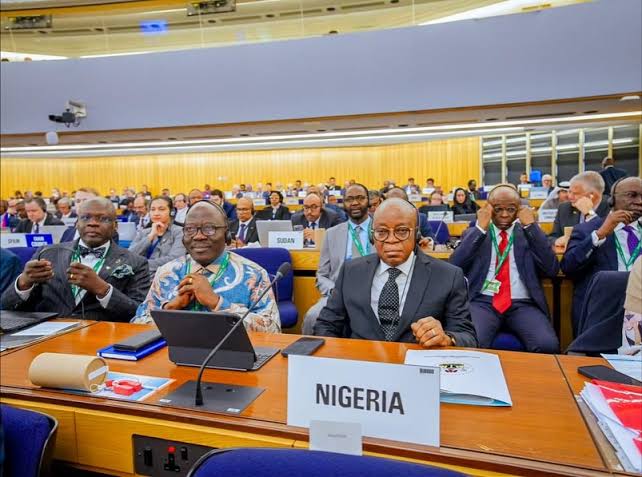
What This Seat Actually Gives Nigeria
Winning seats on the IMO Council means wielding influence over decisions that could affect shipping routes, maritime technology investment, and compliance standards dictated by IMO guidelines. For Nigeria specifically, it’s much more than symbolic politics.
President Tinubu noted that the new IMO Council mandate aligns with his administration’s drive to unlock the full potential of Nigeria’s blue economy, expand maritime infrastructure, strengthen anti-piracy initiatives, and improve the nation’s standing as a regional shipping hub, to borrow from a report on TV360 Nigeria.
More concretely, the position empowers Nigeria to influence policies on shipping safety, environmental regulation, navigation standards, pollution control, maritime security, and sustainable ocean governance. Given the country’s large coastline and critical position in the Gulf of Guinea, such influence could translate to stronger regional leadership
But here’s what matters most: one advantage of being in the IMO, especially for a country like Nigeria, which has in recent times recorded huge success in the fight against piracy, is having a say in the IMO’s decisions, which will help the country push for collective security efforts, stronger regulation, and better compliance for both national and regional shipping, trade, and safety
The Blue Economy Payoff: If It Works
Nigeria doesn’t just get a seat at the table. It gets credibility. Nigeria’s return is expected to strengthen the country’s maritime and blue economy sectors by improving access to technical expertise, expanding international partnerships, boosting investor confidence, and reinforcing Nigeria’s leadership role in the Gulf of Guinea.
Think about what that means. When a Nigerian shipping company seeks financing from international lenders, or when a port operator attempts to attract foreign investment, the fact that Nigeria sits on the IMO Council changes the calculus. It’s no longer just another West African port or shipping registry applying for capital. It’s a nation that has earned global recognition for maritime competence.
The seat provides leverage for international cooperation, funding, and technical partnerships —exactly what Nigeria’s creaking port infrastructure and underdeveloped shipping sector desperately need.
What Happened When Countries Lost This Influence
The cautionary tale sits right in Nigeria’s history. Nigeria first joined the IMO in 1962 and held Council positions at various intervals up to 2009, after which five consecutive attempts to return failed. Its absence limited Nigeria’s influence on global maritime regulations, shipping security, and ocean governance
Those fourteen years weren’t wasted time. They were time Nigeria spent irrelevant. While Kenya used its IMO Council seat to contribute meaningfully to maritime policy development, and the Philippines used its Category C position to advance and promote the human rights, safety and well-being of seafarers according to the Nigerianports, Nigeria was on the sidelines.
Belgium, which sits on the IMO Council, emphasizes that being a member enables the country to influence international shipping policy over the next two years. It notes that the Council determines the priorities and budget of the IMO and that decisions have a major impact on the economy and on the entire logistics chain
If Belgium—a relatively small nation—leverages its Council seat for concrete economic advantage, why shouldn’t Nigeria?
The Uncomfortable Truth: This Isn’t Just An Honour
But here’s where expectations must collide with reality. Nigeria lost previous IMO Council elections due to structural lapses including poor preparation, weak diplomatic networking and regional bloc support, late and disorganised campaign planning, failure to implement findings and recommendations from the IMO Member State Audit Scheme (IMSAS), a weak indigenous shipping sector, and inadequate seafarers’ training and welfare. Other challenges included piracy, delays in updating maritime legislation, slow enforcement of safety and environmental standards, and inconsistent compliance with the International Ship and Port Facility Security (ISPS) Code across ports
Many of these problems haven’t disappeared just because Nigeria won an election. They’ve improved, yes, but structural reform takes time. The real question isn’t whether Nigeria now has the seat—it does. The question is whether the country’s institutions are ready to use it effectively.
What Other African Nations Are Doing With Their Seats
Look across the continent. The other African nations elected to Category C alongside Nigeria are Egypt, Kenya, Morocco, and South Africa. Each is using their position strategically.
Kenya’s bid for re-election to the IMO Council under Category C is a strategic move that reinforces the country’s maritime diplomacy and leadership in the region. A continued seat ensures Kenya remains influential in shaping global maritime policy, particularly as it advances its blue economy agenda.
Egypt controls the Suez Canal—arguably the world’s most strategically important shipping lane. Its IMO Council presence helps it shape global maritime law. Morocco is advancing its maritime infrastructure and using Council influence to push regional development. South Africa is using its seat to advocate for African maritime interests.
Nigeria? It controls the Gulf of Guinea—a region rife with piracy, oil theft, and environmental degradation. Nigeria will also represent the interests of West and Central African nations in global maritime governance and help bridge the gaps. Nigeria will present challenges facing the nations in the region at the council’s global agenda, such as piracy, oil theft, environmental pollution, capacity gaps, technical assistance needs, and influencing international safety standards
The platform is there. The leverage is available. Whether Nigeria uses it wisely is another matter entirely.
The Blue Economy Connection: Where The Rubber Meets The Road
Here’s what this Council seat could actually unlock for Nigeria’s struggling blue economy. An elected country on the council supervises programmes, approves budgets, and steers regulatory priorities, while preventing dominance by the major shipping powers in Categories A and B
This means Nigeria can now advocate directly for developing nations’ concerns at the highest decision-making levels of maritime governance. It can push back against regulations that favour the wealthy shipping nations. It can champion capacity-building for Nigerian maritime professionals. It can influence standards that affect how Nigerian ports operate and how Nigerian-flagged vessels are treated globally.
More importantly, it can shape the narrative around maritime safety and sustainability in ways that benefit a developing nation’s maritime sector.


The Verdict: Not Everything, But Not Nothing
So is this appointment mere recognition? No. Is it transformative? Not by itself.
What Nigeria’s IMO Council seat actually represents is an opportunity—one that the country earned back through sustained reforms and strategic diplomacy, but one that must now be executed flawlessly to deliver real returns.
The successful comeback ends a long period of exclusion and restores a voice in shaping global shipping and maritime-safety regulations, increasing confidence for investors and partners in the blue-economy sector, and enhancing credibility for continued reforms across NIMASA, port operations, and coastal security
For Nigeria’s blue economy to flourish, the country can’t simply occupy the seat. It must argue forcefully for developing nations. It must help shape a maritime regulatory environment that doesn’t automatically disadvantage smaller, less-resourced maritime nations. It must use the platform to attract investment and technical partnerships. And it must deliver results that justify the trust the international community has placed in it.
The applause was deserved. The work begins now.
Bode Animashaun covers maritime policy and blue economy development for waterwaysnews.ng