
Blue Economy
Broken Laws, Broken Promises: How Nigeria’s Outdated Legal Framework is Costing the Blue Economy Billions

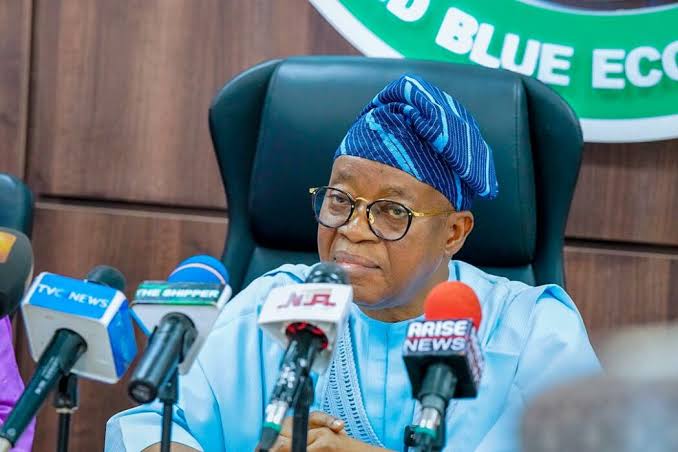

Broken Laws, Broken Promises: How Nigeria’s Outdated Legal Framework is Costing the Blue Economy Billions
By Raymond Gold | Co-producer & Research Reporter | Waterways News, Lagos
Nigeria sits on one of Africa’s most formidable maritime endowments — over 853 kilometres of Atlantic coastline, a sprawling network of inland waterways, rich fishery stocks, and offshore energy reserves that remain largely untapped. Yet, decade after decade, the country’s blue economy bleeds potential. The reason, experts and legal analysts increasingly agree, is not simply a lack of vision or investment. It is a failure of law.
The legislative architecture underpinning Nigeria’s maritime and ocean economy is, in many critical areas, dangerously obsolete. Key statutes were written in eras that never anticipated the complexities of modern ocean governance, illegal unreported and unregulated (IUU) fishing, offshore renewable energy, or the kind of integrated marine spatial planning that now drives blue economy growth across comparable coastal nations.

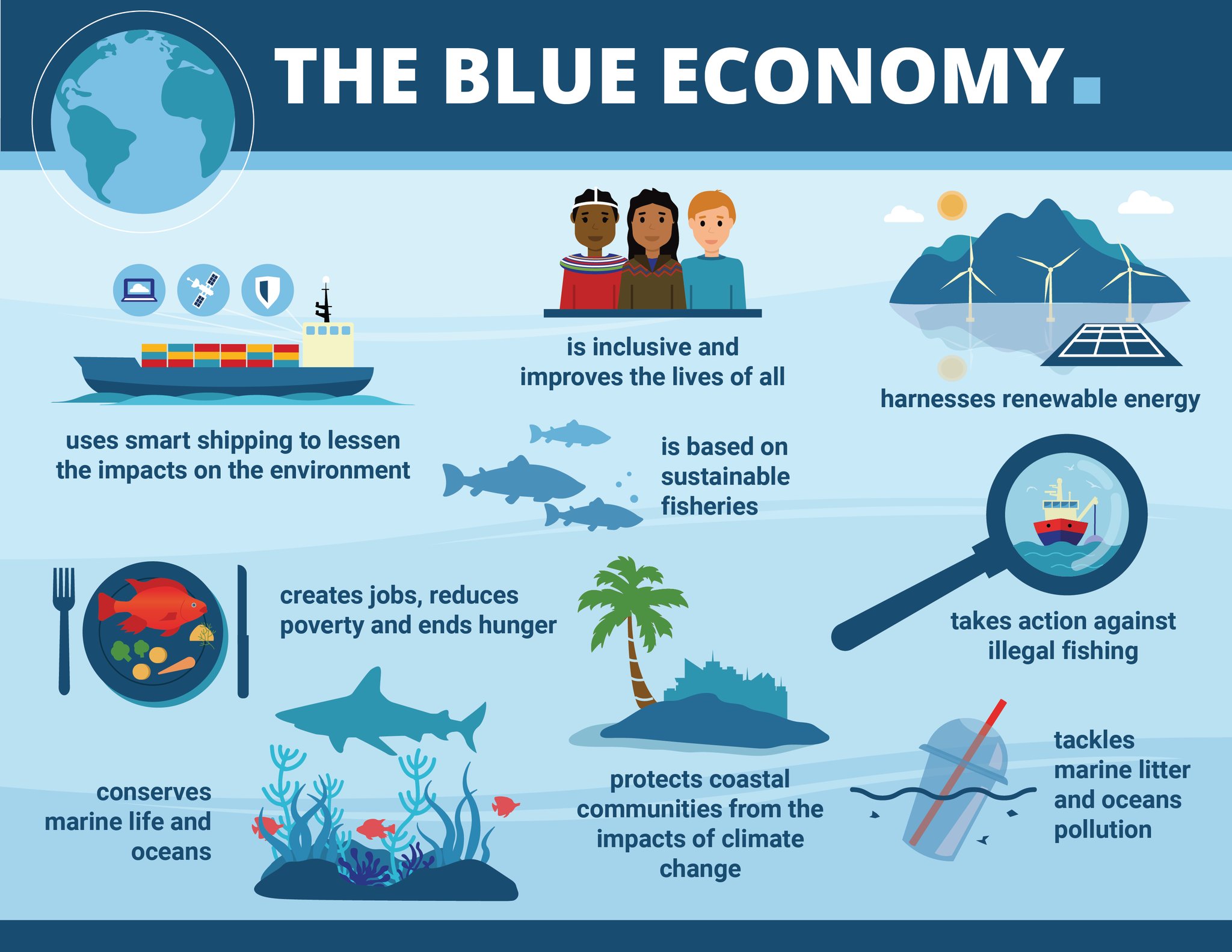
Nigeria’s Sea Fisheries Act, for instance, dates back to 1992 and contains no provisions whatsoever for IUU fishing — a practice now widely recognised as one of the gravest threats to sustainable fisheries globally. While other nations have overhauled their fisheries laws repeatedly to address evolving sustainability principles, Nigeria’s statute remains frozen in time, leaving enforcement agencies without the legal tools to act decisively against poachers and illegal trawlers stripping the country’s maritime resources.
The problem, however, goes beyond outdated statutes. Nigeria’s maritime legal landscape is also riddled with agency conflict — competing mandates created, often inadvertently, by overlapping establishment acts. The Nigerian Ports Authority and the Nigerian Maritime Administration and Safety Agency have long operated across marginal jurisdictional fault lines, with inter-agency rivalries generating revenue losses and regulatory paralysis. These conflicts, rooted in the very acts that created these agencies, have led to inter-agency rivalry, loss of national revenue, and a significant drag on maritime sector progress.
Recent court decisions have begun to address some of these conflicts, though they also expose how deeply structural the problem is. In a landmark 2024 ruling, the Supreme Court of Nigeria held that navigable inland waterways fall within the exclusive legislative competence of the Federal Government, affirming the supremacy of the NIWA Act over conflicting state legislation and creating regulatory clarity for investors and operators in Nigeria’s maritime and inland waterways sector. The ruling settled a long-running dispute between the National Inland Waterways Authority and the Lagos State Waterways Authority over who holds regulatory power on federal waterways — a dispute that had created uncertainty for operators and chilled investment.
More recently, in January 2026, the Supreme Court addressed regulatory and statutory interpretation issues involving maritime administration and levies, reinforcing the doctrine that administrative agencies cannot expand their authority through policy or guidelines beyond what their enabling statute allows. The judgment is significant for LNG operators and maritime logistics providers, clarifying that levies lacking clear statutory backing cannot be validly imposed — a ruling that reduces the risk of the multiple, overlapping charges that have long frustrated maritime businesses operating in Nigerian waters.
At the port operations level, a Federal High Court ruling in May 2025 suspended the collection of a Practitioners Operating Fee imposed on freight forwarders by the Council for the Regulation of Freight Forwarding in Nigeria, holding that the imposition lacked sufficient legal backing — a decision that significantly affects port operations, maritime logistics, and economic activities within Nigeria’s blue economy framework. These court victories are important. But they are reactive, not proactive — firefighting after regulatory overreach has already damaged the operating environment. What Nigeria urgently needs, analysts say, is a comprehensive legislative overhaul that gets ahead of these conflicts rather than waiting for courts to resolve them years after the damage is done.
Dr Emeka Akabogu, a maritime lawyer and policy analyst, has stated that overlapping agency functions and regulatory inconsistencies in the sector continue to hinder investment and operational efficiency. His view is widely shared. The House Committee on Ports and Harbours has confirmed that a Nigerian Port Regulatory Agency Bill is in progress, aimed at streamlining the tangled web of overlapping mandates that currently fragment port governance.
Meanwhile, the human cost of legislative inaction is mounting. NIMASA once projected that Nigeria’s blue economy could generate over $20 billion annually, yet the gap between that potential and actual earnings remains vast. Nigeria continues to lose jobs and revenue to better-organised maritime economies, even as it holds the chair of the World Customs Organization Council — a seat of international maritime prestige that stands in sharp contrast to its domestic governance failures.
Billions in potential maritime earnings remain unrealised, undermining Nigeria’s bid to diversify from oil, with chronic underperformance threatening not only economic diversification but job creation.
The passage of a National Policy on Marine and Blue Economy was welcomed as a step forward. But policy documents, however well-crafted, cannot substitute for enforceable law. Nigeria’s National Assembly must move — urgently — to repeal obsolete maritime statutes, eliminate duplicative agency mandates, enact a comprehensive fisheries law fit for the 21st century, and establish a coordinated legislative framework that treats the blue economy as the national strategic asset it truly is.
Nigeria’s oceans are not the problem. Nigeria’s laws are.


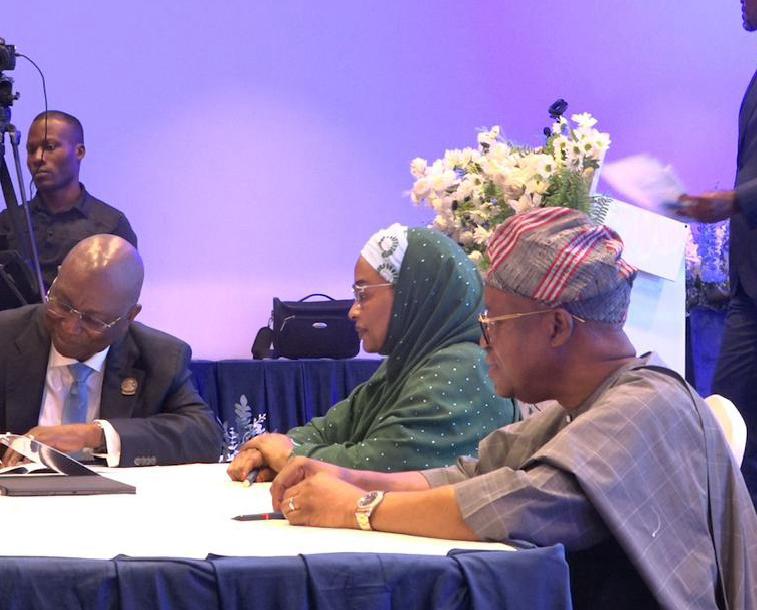
NIMASA Receives Over 60 CVFF Applications, Vows Open and Accountable Disbursement
By Okeoghene Onoriobe | Waterways News Correspondent | Lagos
The Nigerian Maritime Administration and Safety Agency (NIMASA) has disclosed that it has received more than 60 applications for the Cabotage Vessel Financing Fund (CVFF), a development that signals fresh momentum in the push to strengthen indigenous participation in Nigeria’s shipping sector.
The agency equally assured stakeholders that the disbursement of the fund would be handled transparently, with strict accountability measures guiding every step of the process.
The disclosure came on Thursday in Lagos, during the signing of the 2026 Performance Bond between NIMASA’s Director-General, Dr. Dayo Mobereola, and the Minister of Marine and Blue Economy, Dr. Adegboyega Oyetola.
At the event, Minister Oyetola left no room for ambiguity, issuing a pointed directive to heads of agencies under his ministry to focus on results and shun complacency.
“Let me emphasise that all Departments and Agencies under the Ministry must remain firmly focused on delivering tangible results,” the Minister stated.
He further stressed that the performance bonds carry real weight, describing them as binding commitments subject to close monitoring and rigorous evaluation — not documents to be signed and shelved.
“These are not ceremonial documents. They are binding commitments. Accountability will not be optional,” Oyetola declared.
Speaking after the signing, Director-General Mobereola said the reforms being pursued at NIMASA are deliberate and are being driven with strong backing from the Ministry, adding that the agency remains firmly aligned with the Federal Government’s Renewed Hope Agenda.
On maritime security, Mobereola highlighted a landmark achievement: Nigeria has recorded zero piracy incidents in its territorial waters over the past four years. He attributed this record to enhanced surveillance systems and improved collaboration among security agencies.
The NIMASA chief also announced that the agency is close to completing the automation of its ship registry processes — a reform expected to eliminate administrative delays, speed up turnaround times, and sharpen Nigeria’s competitiveness in the global maritime industry.
Additionally, Mobereola noted that Nigeria has deposited three maritime conventions with the International Maritime Organization (IMO), with three more pending Federal Executive Council approval. He also highlighted Nigeria’s re-election into Category C of the IMO Council in November 2025 as a milestone that restores the country’s standing in global maritime governance and reinforces its leadership role on the African continent.
Waterways News | www.waterwaysnews.ng
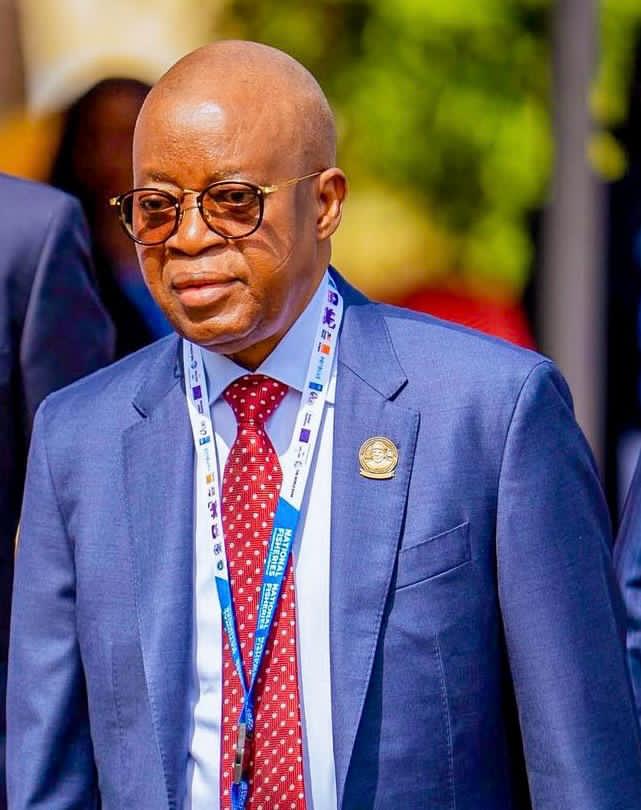
Oyetola Orders NSC Probe into Alleged Plot to Squeeze Out Local Barge Operators
Minister vows zero tolerance for anti-competitive behaviour as indigenous operators cry foul over foreign interference at Nigerian seaports
By Oghenewoke Onoriode|Waterways News Correspondent, LAGOS
The Minister of Marine and Blue Economy, Dr Adegboyega Oyetola, has ordered the Nigerian Shippers’ Council (NSC) to investigate allegations that a coordinated effort is underway to push indigenous barge operators out of Nigeria’s seaport logistics chain.
The directive came during the 2026 First Quarter Citizens/Stakeholders’ Engagement, Sectoral Performance Review, and Ministerial Management Retreat of the Federal Ministry of Marine and Blue Economy, held in Lagos on Thursday.
Operators Raise the Alarm
Representatives of local barge operators used the platform to allege that certain foreign interests are engaged in a deliberate campaign to undermine their operations. They told the Minister that policies, operational bottlenecks, and preferential treatment allegedly extended to foreign-linked entities by some terminal operators are tilting the competitive landscape against Nigerian businesses.
The operators warned that if left unaddressed, the situation could erode local capacity and destabilise Nigeria’s maritime logistics ecosystem.
NSC Given the Mandate
Responding to the allegations, Dr Oyetola reaffirmed the Federal Government’s commitment to protecting local investments and ensuring a level playing field in the maritime sector. He directed the NSC — in its capacity as port economic regulator — to conduct a thorough and impartial investigation into the claims.
The Minister was unequivocal: any anti-competitive behaviour or policy inconsistency that disadvantages Nigerian businesses would not be tolerated.
Engagement as Policy Tool
Dr Oyetola also used the occasion to underscore the importance of regular stakeholder engagement in driving effective sectoral governance. He noted that the government remains firmly focused on developing the marine and blue economy as a pillar of national growth, employment generation, and sustainable development.
Nigeria Watch
The allegations against terminal operators echo long-standing concerns in the Nigerian maritime industry about the marginalisation of indigenous players in port operations. Local barge operators form a critical link in Nigeria’s cargo evacuation chain — particularly at Apapa and Tin Can Island ports — and their displacement would deepen the country’s dependence on foreign logistics providers.
The NSC’s mandate as port economic regulator makes it the appropriate body to probe these claims. However, the effectiveness of the investigation will depend on the Council’s willingness to act on its findings — including, where necessary, imposing sanctions on terminal operators found to have violated fair competition principles.
For the Federal Ministry of Marine and Blue Economy, Thursday’s engagement signals a more assertive posture on indigenous content in maritime logistics — one that stakeholders will be watching closely.
Waterways News — Covering Nigeria’s Maritime, Shipping and Blue Economy Sector
Blue Economy
Tinubu Approves Cargo Tracking Scheme That Could Save Nigeria N900bn in Lost Import Revenue

Tinubu Approves Cargo Tracking Scheme That Could Save Nigeria N900bn in Lost Import Revenue
Presidential approval secured for ICTN as Nigerian Shippers’ Council begins procurement; scheme expected to go live before year-end
By Emetena Ikuku, Lagos
President Bola Ahmed Tinubu has approved the full implementation of the International Cargo Tracking Note (ICTN), a flagship initiative of the Nigerian Shippers’ Council (NSC) designed to plug revenue leakages in the country’s import trade and strengthen regulatory oversight of inbound cargo.
The approval, confirmed at a stakeholders’ engagement convened by the Federal Ministry of Marine and Blue Economy in Lagos, ends months of uncertainty over the scheme’s future and sets the stage for what industry analysts say could be one of the most consequential reforms in Nigeria’s maritime sector in recent years.
What the ICTN Does
The ICTN is a real-time, online cargo tracking system that monitors the movement of inbound shipments from origin to destination. Beyond logistics visibility, it is designed to function as an economic intelligence tool — capturing import data that can be used to close gaps in revenue declaration and combat under-invoicing.
Industry projections suggest the system could help Nigeria recover up to N900 billion annually in import revenue currently lost to leakages — a figure that underscores the commercial stakes of getting the rollout right.
Procurement Underway
Pius Akutah, Executive Secretary and CEO of the Nigerian Shippers’ Council, confirmed to stakeholders that presidential approval had been secured and that procurement processes were already in motion. He expressed confidence that the ICTN would become operational before the end of the year.
Akutah acknowledged that previous implementation attempts had been suspended due to unresolved operational challenges, but said the Council had drawn lessons from those setbacks.
He noted that the Minister of Marine and Blue Economy, Adegboyega Oyetola, is personally committed to ensuring a seamless rollout, with the ministry taking deliberate steps to resolve all outstanding issues before the scheme goes live.
Nigeria Watch
The ICTN revival is significant beyond its revenue implications. For years, Nigerian freight forwarders, cargo agents, and port operators have operated in an environment where cargo data is fragmented and often unreliable — creating fertile ground for manifest fraud, valuation disputes, and customs evasion.
A fully operational ICTN would give the NSC, the Nigeria Customs Service, and the Nigerian Ports Authority (NPA) access to a unified cargo data stream, potentially transforming how import risk is assessed at Apapa, Tin Can Island, and the emerging Lekki Deep Sea Port.
For the broader blue economy agenda being championed by Minister Oyetola, real-time cargo intelligence also supports Nigeria’s ambitions to position its ports as West Africa’s premier logistics hub — a goal that requires the kind of regulatory credibility the ICTN is designed to provide.
Stakeholders will be watching the procurement timeline closely. The scheme has been suspended before, and the maritime industry’s confidence in its delivery will depend on whether the ministry can demonstrate tangible progress before the year runs out.
-

 Oil and Gas4 weeks ago
Tantita’s Pipeline Deal: $144m Contract, Rising Output, and the Questions that Deserve Answers
-
 Blue Economy2 months ago
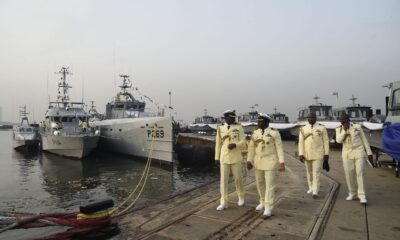
Nigeria’s Coast Guard Bill: A Solution in Search of a Problem?
-
 Business1 month ago
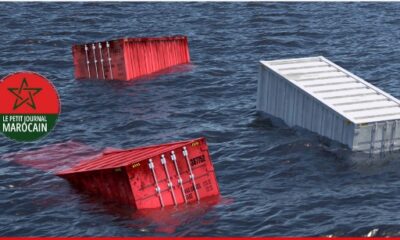
CASABLANCA PORT SHUT DOWN AFTER VESSEL LOSES 85 CONTAINERS — SHIP SERVES NIGERIAN ROUTES