Blue Economy
Broken Laws, Broken Promises: How Nigeria’s Outdated Legal Framework is Costing the Blue Economy Billions

Broken Laws, Broken Promises: How Nigeria’s Outdated Legal Framework is Costing the Blue Economy Billions
By Raymond Gold | Co-producer & Research Reporter | Waterways News, Lagos
Nigeria sits on one of Africa’s most formidable maritime endowments — over 853 kilometres of Atlantic coastline, a sprawling network of inland waterways, rich fishery stocks, and offshore energy reserves that remain largely untapped. Yet, decade after decade, the country’s blue economy bleeds potential. The reason, experts and legal analysts increasingly agree, is not simply a lack of vision or investment. It is a failure of law.
The legislative architecture underpinning Nigeria’s maritime and ocean economy is, in many critical areas, dangerously obsolete. Key statutes were written in eras that never anticipated the complexities of modern ocean governance, illegal unreported and unregulated (IUU) fishing, offshore renewable energy, or the kind of integrated marine spatial planning that now drives blue economy growth across comparable coastal nations.


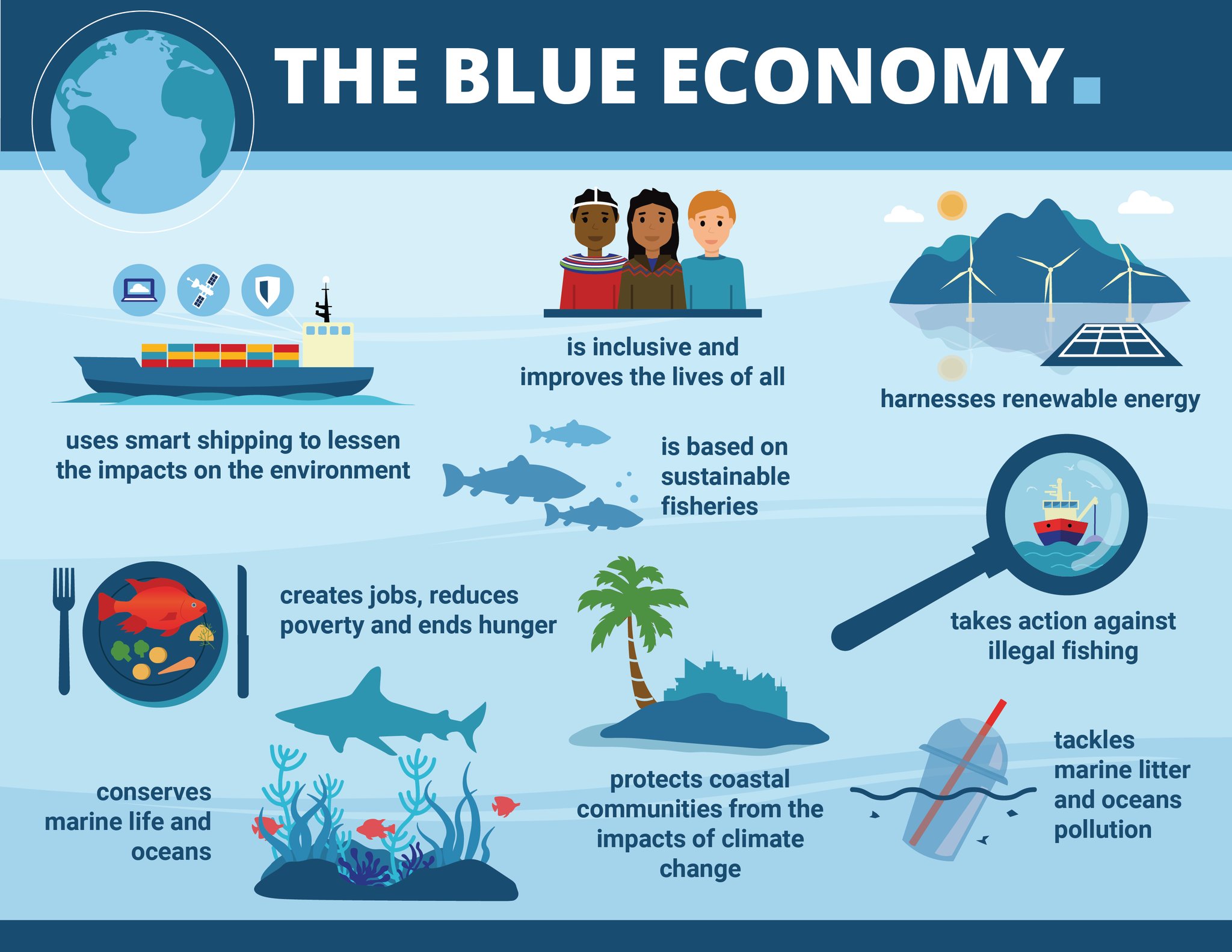

Nigeria’s Sea Fisheries Act, for instance, dates back to 1992 and contains no provisions whatsoever for IUU fishing — a practice now widely recognised as one of the gravest threats to sustainable fisheries globally. While other nations have overhauled their fisheries laws repeatedly to address evolving sustainability principles, Nigeria’s statute remains frozen in time, leaving enforcement agencies without the legal tools to act decisively against poachers and illegal trawlers stripping the country’s maritime resources.
The problem, however, goes beyond outdated statutes. Nigeria’s maritime legal landscape is also riddled with agency conflict — competing mandates created, often inadvertently, by overlapping establishment acts. The Nigerian Ports Authority and the Nigerian Maritime Administration and Safety Agency have long operated across marginal jurisdictional fault lines, with inter-agency rivalries generating revenue losses and regulatory paralysis. These conflicts, rooted in the very acts that created these agencies, have led to inter-agency rivalry, loss of national revenue, and a significant drag on maritime sector progress.
Recent court decisions have begun to address some of these conflicts, though they also expose how deeply structural the problem is. In a landmark 2024 ruling, the Supreme Court of Nigeria held that navigable inland waterways fall within the exclusive legislative competence of the Federal Government, affirming the supremacy of the NIWA Act over conflicting state legislation and creating regulatory clarity for investors and operators in Nigeria’s maritime and inland waterways sector. The ruling settled a long-running dispute between the National Inland Waterways Authority and the Lagos State Waterways Authority over who holds regulatory power on federal waterways — a dispute that had created uncertainty for operators and chilled investment.
More recently, in January 2026, the Supreme Court addressed regulatory and statutory interpretation issues involving maritime administration and levies, reinforcing the doctrine that administrative agencies cannot expand their authority through policy or guidelines beyond what their enabling statute allows. The judgment is significant for LNG operators and maritime logistics providers, clarifying that levies lacking clear statutory backing cannot be validly imposed — a ruling that reduces the risk of the multiple, overlapping charges that have long frustrated maritime businesses operating in Nigerian waters.
At the port operations level, a Federal High Court ruling in May 2025 suspended the collection of a Practitioners Operating Fee imposed on freight forwarders by the Council for the Regulation of Freight Forwarding in Nigeria, holding that the imposition lacked sufficient legal backing — a decision that significantly affects port operations, maritime logistics, and economic activities within Nigeria’s blue economy framework. These court victories are important. But they are reactive, not proactive — firefighting after regulatory overreach has already damaged the operating environment. What Nigeria urgently needs, analysts say, is a comprehensive legislative overhaul that gets ahead of these conflicts rather than waiting for courts to resolve them years after the damage is done.
Dr Emeka Akabogu, a maritime lawyer and policy analyst, has stated that overlapping agency functions and regulatory inconsistencies in the sector continue to hinder investment and operational efficiency. His view is widely shared. The House Committee on Ports and Harbours has confirmed that a Nigerian Port Regulatory Agency Bill is in progress, aimed at streamlining the tangled web of overlapping mandates that currently fragment port governance.
Meanwhile, the human cost of legislative inaction is mounting. NIMASA once projected that Nigeria’s blue economy could generate over $20 billion annually, yet the gap between that potential and actual earnings remains vast. Nigeria continues to lose jobs and revenue to better-organised maritime economies, even as it holds the chair of the World Customs Organization Council — a seat of international maritime prestige that stands in sharp contrast to its domestic governance failures.
Billions in potential maritime earnings remain unrealised, undermining Nigeria’s bid to diversify from oil, with chronic underperformance threatening not only economic diversification but job creation.
The passage of a National Policy on Marine and Blue Economy was welcomed as a step forward. But policy documents, however well-crafted, cannot substitute for enforceable law. Nigeria’s National Assembly must move — urgently — to repeal obsolete maritime statutes, eliminate duplicative agency mandates, enact a comprehensive fisheries law fit for the 21st century, and establish a coordinated legislative framework that treats the blue economy as the national strategic asset it truly is.
Nigeria’s oceans are not the problem. Nigeria’s laws are.