
Editor's Choice
CMA CGM Slaps $750 Per Container Surcharge on Nigeria-Bound Cargo from China

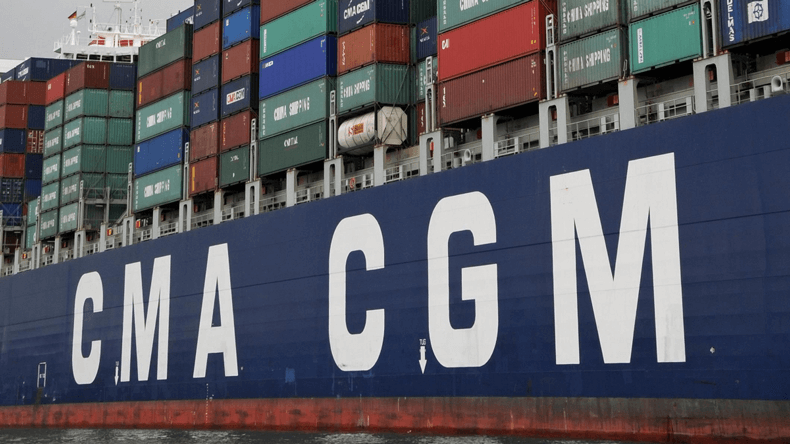

CMA CGM Slaps $750 Per Container Surcharge on Nigeria-Bound Cargo from China
By Okeoghene Onoriobe | Waterways News
French shipping conglomerate CMA CGM has announced a new Peak Season Surcharge (PSS) of $750 per twenty-foot equivalent unit (TEU) on containerised cargo moving from China to Nigeria, a development that threatens to drive up the cost of imported goods across Africa’s most populous nation.
The surcharge, which took effect on 15 June 2026, covers both dry and refrigerated cargo shipped under short-term contracts on the China-West Africa trade corridor.
Under the new rate structure, Nigeria joins Côte d’Ivoire, Benin and Equatorial Guinea at the $750 per TEU band. Togo faces the steepest levy at $850 per TEU, while Ghana attracts $650 per TEU. Countries in the West Africa North range — including Senegal, Liberia, Sierra Leone, Mauritania, Guinea-Bissau, Cape Verde and Sao Tome & Principe — will pay a comparatively lower $350 per TEU. Shipments to Gambia attract $600 per TEU. Guinea is the sole country exempted from the latest charge.

CMA CGM has framed the surcharge as a measure to support reliable and efficient service delivery across the route. However, the timing is likely to draw criticism from Nigerian importers and trade groups already contending with a difficult operating environment marked by naira volatility, elevated inflation and high logistics costs at the nation’s ports.
The new charge represents a dramatic climb from where surcharges stood just 15 months ago. In April 2025, CMA CGM’s equivalent levy on the China-to-West Africa route stood at $250 per TEU. By March 2026, it had reached $700 per TEU before brief adjustments placed it between $500 and $600 per TEU in April notices. The carrier pegged it at $600 per TEU effective 1 June 2026 — only to revise it upward to $750 per TEU within a fortnight, a pattern that underscores the pricing turbulence that has increasingly defined freight rates on this route.
The cumulative effect is stark: today’s surcharge is three times what Nigerian importers were absorbing just over a year ago.
For businesses that rely on imports — manufacturers sourcing raw materials, distributors of electronics and pharmaceuticals, and traders bringing in consumer goods — the new charge adds another layer of cost that is typically passed down the supply chain to end users. In practical terms, it means higher prices on shelves at a time when purchasing power remains under significant strain.
The development also lands as stakeholders continue pressing for structural reforms to reduce the cost of trade through Nigerian ports, improve export competitiveness and attract more direct shipping services to reduce reliance on transshipment hubs.
Industry watchers say that until Nigeria is able to generate sufficient export volumes to make the country a commercially attractive destination for carriers — rather than a market that must absorb whatever surcharges international lines choose to impose — freight pricing will remain largely outside the control of Nigerian businesses and regulators.
NIGERIA WATCH
What this means for Nigeria at a glance
$750/TEU — Current Peak Season Surcharge on China-Nigeria cargo (eff. 15 June 2026)
3x — How much the surcharge has grown since April 2025, when it stood at $250/TEU
2 weeks — How quickly CMA CGM raised the rate from $600 to $750/TEU in June alone
Who bears the cost — Importers of raw materials, pharmaceuticals, electronics, machinery and consumer goods
Knock-on effect — Higher landed costs are expected to feed into factory-gate and retail prices, adding pressure to already elevated inflation
Wider context — Nigeria is paying $100/TEU more than Ghana and $400/TEU more than West Africa North range countries such as Senegal and Liberia
The bigger picture — Without strong export volumes to balance trade flows, Nigeria remains a price-taker on international freight routes
Waterways News | Covering Nigeria’s Maritime, Port and Inland Waterways Sector

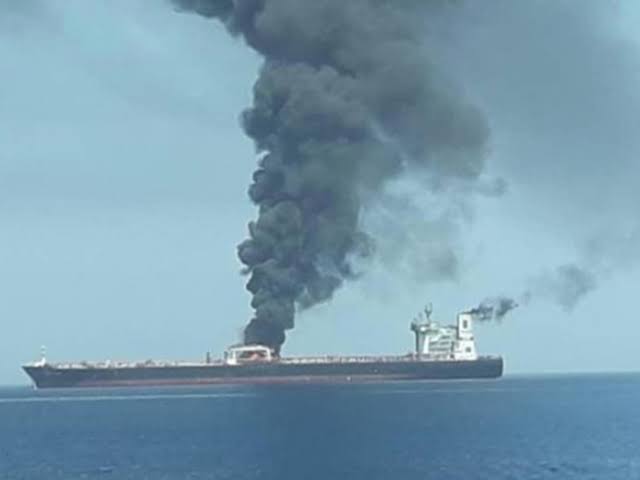
Two More Tankers Struck in Strait of Hormuz as Attack Count Hits Five in a Week
By Okeoghene Onoriobe | Waterways News
Two more tankers have been hit while transiting the Strait of Hormuz, leaving two seafarers with minor injuries and pushing the number of reported attacks or security incidents against commercial vessels in the waterway to at least five since 16 September.
The UK Maritime Trade Operations (UKMTO) centre said an inbound tanker was struck by an unidentified projectile on Monday. Two crew members sustained minor injuries, but the vessel stayed under its own power and continued to its next port, with no environmental impact reported.
Hours later, UKMTO issued a second alert after an outbound LPG tanker reported being struck by debris from unknown projectiles. All crew were reported safe and the vessel also continued its voyage. Authorities are investigating both incidents, and UKMTO has not attributed either attack to a specific actor.
The two strikes build on a Joint Maritime Information Center (JMIC) advisory covering three earlier attacks between 16 and 18 September, one of which saw a tanker’s hull breached by a projectile, sparking a fire. JMIC continues to rate the threat level in the strait as “severe,” citing a high likelihood of deliberate hostile action and pointing to a pattern of harassment by Iran’s Islamic Revolutionary Guard Corps — drone overflights, surveillance of merchant vessels and VHF hailing, alongside the direct attacks.
Traffic through the chokepoint remains sharply depressed. Only 17 commodity vessels were visibly transiting over the weekend, down from 37 the week before and against a pre-war daily average of roughly 125. That figure excludes vessels sailing with their AIS transponders switched off, and JMIC notes a persistent gap between visible and actual traffic.
Nigeria Watch
For Nigerian maritime stakeholders, the Hormuz crisis is no longer a distant Gulf story. It is a cost line. Every fresh escalation feeds directly into the war-risk insurance premiums and freight rates that Nigerian importers, refiners and shipping agents ultimately absorb, since global tanker and container capacity pulled off the Hormuz route tightens supply elsewhere and pushes rates up across long-haul trades, including those serving West African ports.
The renewed attacks also sharpen the stakes around Nigeria’s push for a stronger voice at the IMO Council table and its broader blue-economy diplomacy under Minister Adegboyega Oyetola. A sustained Gulf disruption is exactly the kind of systemic shock that tests whether Nigeria’s seat translates into influence over how global shipping risk, insurance and rerouting decisions are made, rather than Nigeria simply absorbing the downstream cost.
Locally, the episode is a reminder of the layered nature of “maritime security” as a policy word: the Deep Blue Project and Gulf of Guinea security architecture address piracy and armed robbery close to home, but Nigeria’s ports and shippers remain exposed to security failures thousands of kilometres away in the Gulf.
Waterways News will continue tracking how the Hormuz situation feeds into freight cost pressure at Nigerian ports and NIMASA’s public messaging on the issue.
Blue Economy
Oyetola Confirms 7,059 Nigerian Seafarers Placed Onboard Vessels, Orders NIMASA to Fast-Track CVFF Disbursement
Oyetola Confirms 7,059 Nigerian Seafarers Placed Onboard Vessels, Orders NIMASA to Fast-Track CVFF Disbursement
By Ighoyota Onaibre | Waterways News
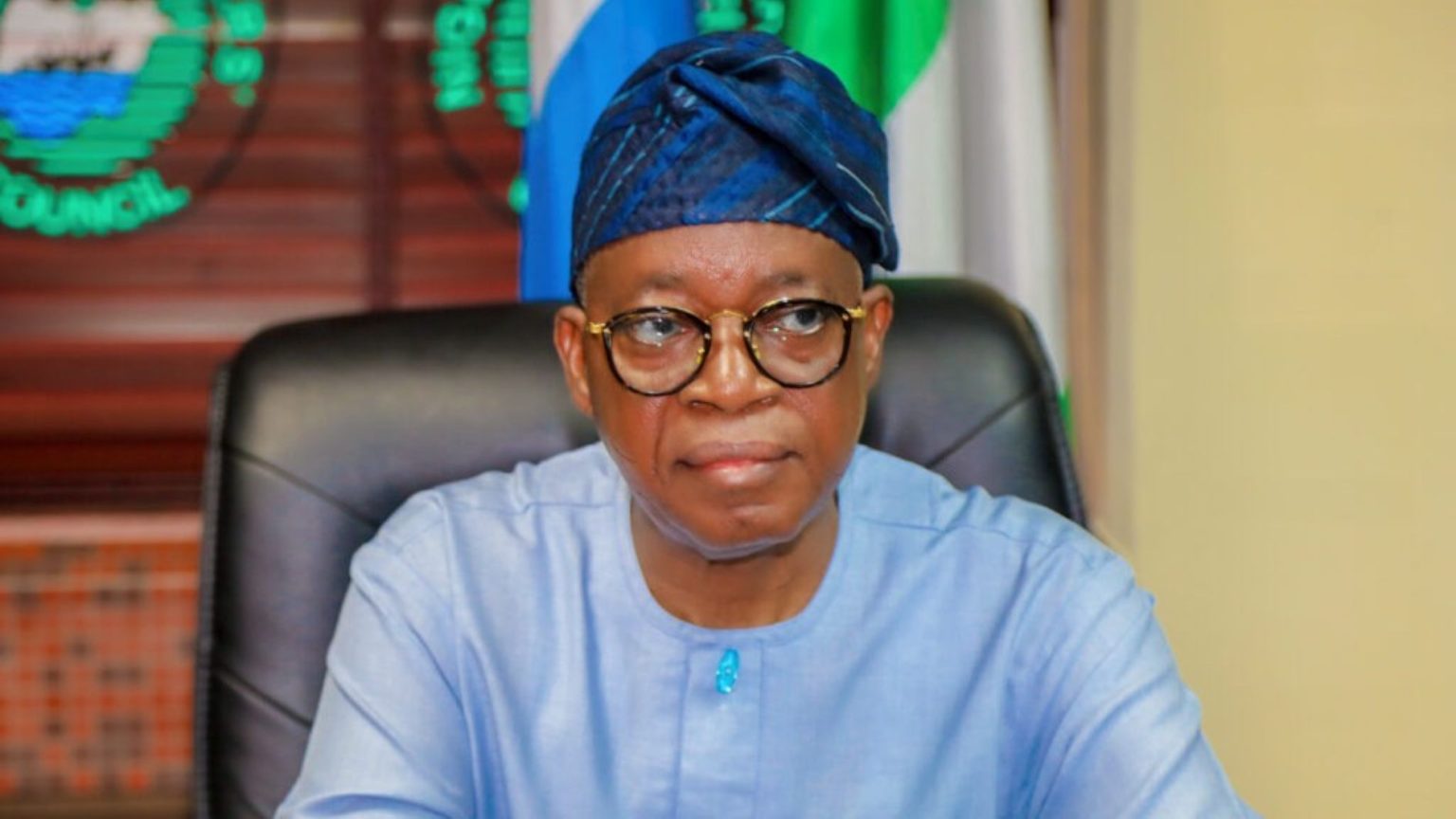
The Minister of Marine and Blue Economy, Dr Adegboyega Oyetola, says 7,059 Nigerian seafarers have so far been placed onboard vessels to acquire seatime experience, part of what he described as the Federal Government’s broader push to build a competitive indigenous maritime workforce.
The Minister, in a statement issued through his Special Adviser, Dr Bolaji Akinola, at the weekend, also directed the Nigerian Maritime Administration and Safety Agency (NIMASA) to work more closely with the 12 approved Primary Lending Institutions (PLIs) to accelerate disbursement of the Cabotage Vessel Financing Fund (CVFF) to qualified Nigerian shipowners.
According to the statement, NIMASA has so far received 92 applications under the CVFF framework, of which 20 have been forwarded to the PLIs and one has been reviewed and cleared for approval. Oyetola said the ship acquisition initiative could generate more than 30,000 direct and indirect jobs across shipyards, marine engineering firms and maritime logistics companies, while deepening Nigeria’s domestic ship-owning and shipbuilding base.
The Minister linked the disbursement push to President Bola Tinubu’s authorisation to unlock financing long owed to domestic maritime operators, framing it as central to realising the economic potential of Nigeria’s blue economy.
On manpower development, Oyetola disclosed that 222 seafarers had been trained free of charge in basic and advanced professional courses, while 333 cadets completed academic training and were awarded degrees. Under the Nigerian Seafarers Development Programme (NSDP), 135 cadets have completed the programme and obtained their Certificates of Competency (CoC).
He said the interventions reflect government’s commitment to strengthening indigenous maritime capacity so that Nigerians can benefit directly from opportunities created by the blue economy.
Nigeria Watch
The seafarer numbers are worth celebrating, but the more consequential line in Oyetola’s statement is the one about CVFF: 92 applications received, 20 forwarded to PLIs, and just one, only one is reviewed and cleared for approval. That ratio is the real story.
Waterways News has tracked the CVFF disbursement saga for years, and the pattern here is familiar: an announcement of “significant progress” that, on closer reading, describes a process still largely stuck at the application stage. Nigerian shipowners have waited over two decades for meaningful access to this fund, first established in 2003. A single approved application, even framed as forward momentum, does not yet amount to disbursement, and it is disbursement, not directives to NIMASA and the PLIs, that shipowners can take to the bank.
The seafarer placement and training figures are a genuine bright spot and speak to real capacity-building through NIMASA’s cadetship and NSDP schemes. But they sit somewhat apart from the CVFF question.
Training seafarers builds the workforce; it does not put Nigerian-owned vessels on the water for that workforce to crew. Until the CVFF pipeline moves from “20 applications forwarded” to actual funds reaching qualified shipowners, Nigeria’s ambition to grow an indigenous shipowning fleet — the same ambition the Minister invoked in citing 30,000 potential jobs — remains aspirational.
Waterways News will continue to press for concrete disbursement timelines and named beneficiaries under the CVFF, rather than accept process updates as a substitute for delivery.
Blue Economy
Navy, Fisheries Department Arrest 34 Suspects, Seize Three Vessels in Renewed War on Illegal Fishing
Navy, Fisheries Department Arrest 34 Suspects, Seize Three Vessels in Renewed War on Illegal Fishing
By Raymond Gold | Waterways News
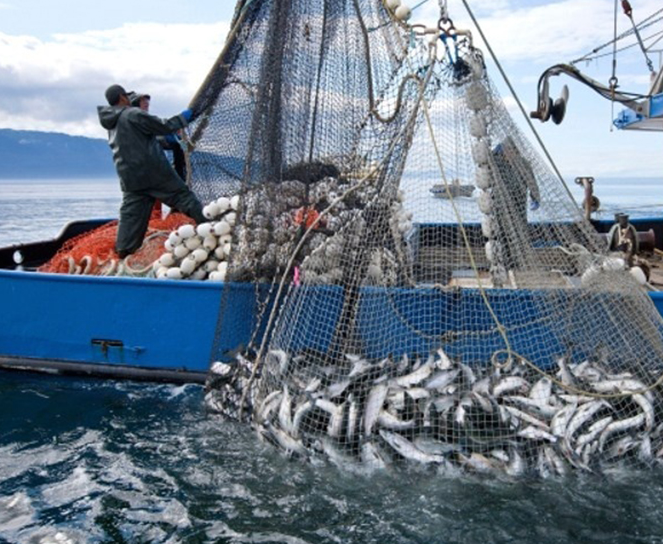
The Federal Department of Fisheries and Aquaculture and the Nigerian Navy have struck a fresh blow against illegal fishing in Nigerian waters, seizing three vessels and arresting 34 suspects in a coordinated three-day sweep.
The operation, codenamed Operation Abo Eja 2026, was designed to tighten surveillance and enforcement against illegal, unreported and unregulated (IUU) fishing, one of the most persistent threats to Nigeria’s marine resources and the livelihoods that depend on them.
Among those arrested were 24 Nigerians, three Ghanaians and three Chinese nationals, underlining the increasingly foreign and cross-border character of the illegal trawling networks operating off the country’s coast.
The Western Naval Command led the offshore muscle of the operation, deploying a naval ship, a helicopter and Special Boat Service personnel, while the Department of Fisheries and Aquaculture supplied technical and regulatory backing to ensure the arrests translate into prosecutable enforcement action.
Deputy Director at the Department of Fisheries and Aquaculture, Adeleke Adegoke, said the operation underscored the need for sharper intelligence gathering and better information sharing between agencies to make future raids more targeted and effective.
Flag Officer Commanding the Western Naval Command, Rear Admiral Abdullahi Mustapha, described the exercise as proof of effective inter-agency coordination, adding that it would strengthen ongoing efforts to safeguard Nigeria’s marine resources.
Nigeria Watch
Operation Abo Eja 2026 lands squarely inside a theme this desk has tracked for months: the steady erosion of Nigerian control over its own coastal waters. Illegal, unreported and unregulated fishing is not a fringe nuisance — it is a direct assault on artisanal fishing communities and the small-scale operators who make up the bulk of Nigeria’s blue economy workforce, even as foreign trawlers, often flagged or crewed out of Asia, continue to test the limits of enforcement.
The presence of Chinese nationals among those arrested will not surprise close observers of Nigeria’s fisheries sector, where foreign-linked trawling operations have long been accused of over-exploiting stocks with little regard for licensing or seasonal restrictions. It also reinforces a broader pattern this publication has flagged repeatedly: foreign dominance of Nigerian coastal waters remains an unresolved policy failure, one that recurs regardless of which agency is nominally in charge.
The joint Navy-fisheries model deployed here — naval assets providing muscle, the fisheries department providing regulatory teeth — is also the same architecture underpinning the Deep Blue Project and broader Gulf of Guinea security efforts championed by the Federal Ministry of Marine and Blue Economy under Minister Adegboyega Oyetola. Deputy Director Adegoke’s call for better intelligence sharing is a familiar refrain in Nigerian maritime enforcement: the hardware and manpower for these operations increasingly exist, but the surveillance and prosecutorial follow-through that would deter repeat offenders has historically lagged.
For the informal and small-scale operators this desk covers closely, the real test will not be the headline arrest numbers but what happens next — whether the 34 suspects face meaningful prosecution, whether the three seized vessels are forfeited rather than quietly released, and whether Operation Abo Eja 2026 becomes a sustained enforcement posture rather than another one-off show of force.

 Oil and Gas7 months ago
Tantita’s Pipeline Deal: $144m Contract, Rising Output, and the Questions that Deserve Answers
- MARITIME TRADE & SHIPPING7 months ago
World’s Largest Container Ship Sets New Maritime Record with 22,233 TEUs on Single Voyage
- Blue Economy7 months ago
Nigeria’s Coast Guard Bill: A Solution in Search of a Problem?