News
Customs Service and Defence Bureau Test Indigenous Airboat for Anti-Smuggling Operations


Customs Service and Defence Bureau Test Indigenous Airboat for Anti-Smuggling Operations
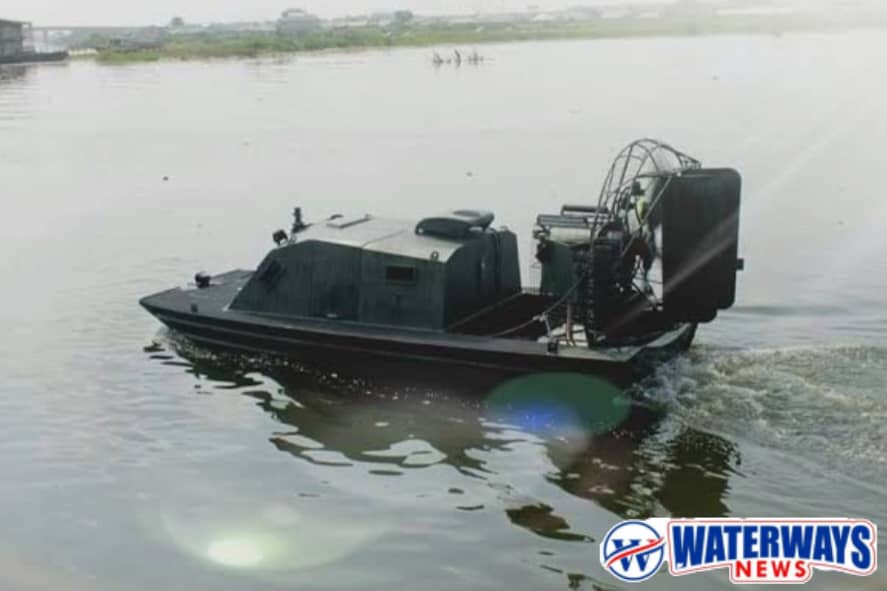
The Nigeria Customs Service (NCS) and Defence Research and Development Bureau (DRDB) conducted joint trials of a locally manufactured airboat on Wednesday, September 3, 2025, at Jabi Lake, Abuja, marking a significant step in strengthening the country’s maritime security capabilities.
The indigenously developed vessel, engineered specifically for navigation in shallow waters and difficult-to-access waterways, underwent comprehensive inspection and field testing by officers from both security agencies. Technical experts demonstrated the craft’s specialized features, highlighting its potential as a strategic asset in Nigeria’s anti-smuggling operations.
Comptroller Haniel Haddison, who heads Special Duties at NCS Headquarters, praised the development as a breakthrough in homegrown technology and its application to border security operations.

“This is a welcome innovation for the Nigeria Customs Service, and we commend the efforts of Comptroller-General Adewale Adeniyi to enhance our operational equipment,” Haddison said during the demonstration.
He emphasized the importance of inter-agency cooperation, stating: “This exemplifies the kind of collaboration that our Comptroller-General champions – synergy with sister agencies, particularly in capacity building initiatives. This will significantly enhance the competency and operational capability of the Nigeria Customs Service.”
Rear Admiral Suleiman El-Ladan, Director of Maritime Research and Development at DRDB, underscored the critical role of collaborative efforts in addressing emerging maritime security challenges. He noted that such partnerships are essential for developing comprehensive responses to evolving threats in Nigeria’s waterways.
The airboat’s design addresses specific operational needs in Nigeria’s complex maritime environment, where conventional vessels often cannot operate effectively in shallow coastal areas, creeks, and inland waterways frequently used by smugglers.
The testing exercise concluded with a ceremonial presentation, as the Director General of the Defence Research and Development Bureau awarded commemorative items to senior Customs officials in appreciation of their participation and ongoing commitment to the joint initiative.
This collaboration represents part of broader efforts by Nigerian security agencies to leverage local innovation and manufacturing capabilities while strengthening inter-agency cooperation in combating smuggling and enhancing maritime security across the country’s extensive waterways.
The successful trials mark a potential milestone in Nigeria’s pursuit of self-reliance in security technology and security equipment manufacturing.

LEKKI COASTAL ROAD: UMAHI PLEDGES TO CLEAR SWAMP CORRIDORS BLOCKING PORT EVACUATION ROUTES
Minister inspects 7th Axial Road project, sets April deadline for contractor
By Oghenewoke Onoriode | Waterways News Correspondent, Lagos
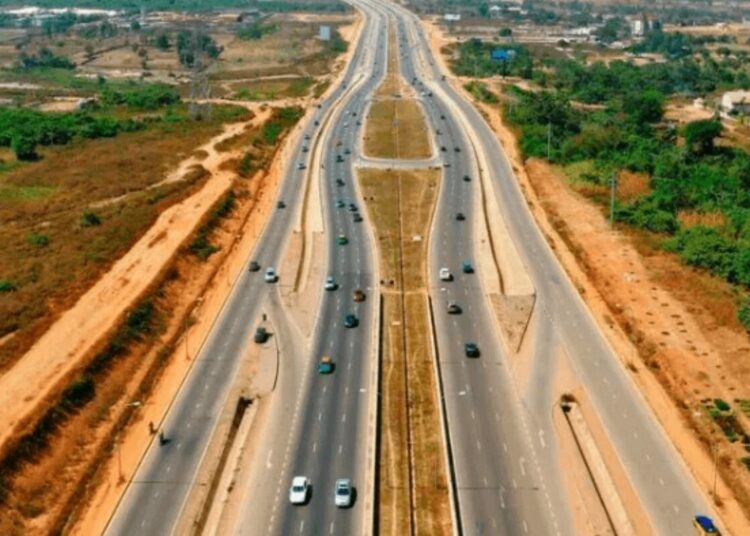
Minister of Works Engr. Dave Umahi has pledged to unlock waterlogged and swampy corridors along the Dangote Refinery route that are hampering cargo evacuation from the Lekki Deep Sea Port, following a hands-on inspection of the ongoing Lekki 7th Axial Road project in Lagos.
The Minister’s visit to the Lekki Corridor underscored the federal government’s recognition of the road as a critical last-mile link for maritime and port logistics — one that, when completed, will ease pressure on existing access roads and strengthen cargo movement from one of Nigeria’s most strategically significant port facilities.
The 7th Axial Road runs behind the Dangote Refinery and connects the Lekki industrial axis to the Sagamu corridor, making it a linchpin for port operations, industrial logistics and national freight movement. It forms part of a wider coastal infrastructure cluster that includes the Coastal Road, Dangote Road and the Lekki Deep Sea Port itself.
Expressing confidence in the project timeline, Umahi directed that roadbed filling works for Project Lot One must be completed by end of April, instructing the project team to ramp up the deployment of manpower, equipment and materials to meet the deadline.
He noted that the 7th Axial Road is designed to complement the broader Lekki corridor infrastructure, with the combined effect of reducing port congestion, improving cargo throughput and positioning the area as a major transportation and industrial hub for Lagos and the wider national economy.
The Minister also stressed the importance of environmental compliance, directing relevant agencies to ensure that construction proceeds without compromising ecological protection in the coastal zone — a concern of particular relevance given the road’s proximity to sensitive swamp and wetland terrain.
The project is being handled by China Harbour Engineering Company Limited (CHEC), the same firm that delivered the Lekki Deep Sea Port. A company representative assured the Minister that resources on site have been scaled up,
Waterways News | www.waterwaysnews.ng
with attention to safety, quality control and environmental standards.
Umahi cited CHEC’s track record on both the Lekki port and the Makurdi–Enugu road reconstruction as grounds for confidence in the firm’s ability to deliver.
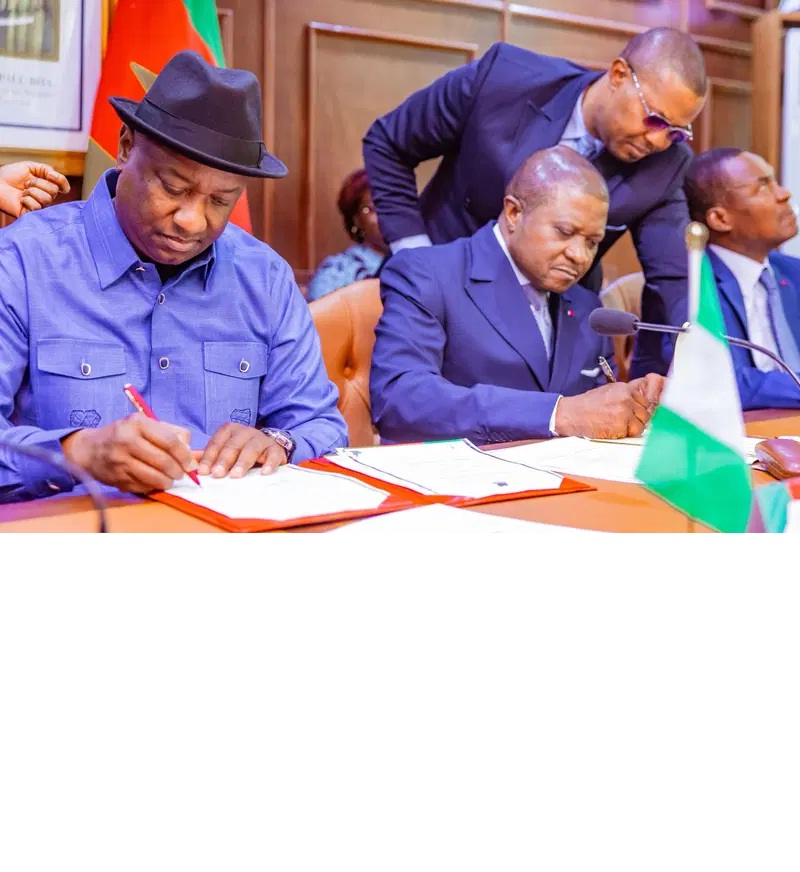
NIGERIA AND CAMEROON SIGN SEARCH AND RESCUE AGREEMENT — A WIN FOR REGIONAL SAFETY
The deal extends emergency cooperation beyond the skies, with implications for maritime and cross-border rescue operations across the Gulf of Guinea.
Nigeria and Cameroon have formalised a Technical Aeronautical Search and Rescue (SAR) Agreement, marking a significant step in cross-border emergency response cooperation between the two neighbouring nations.
Aviation Minister Festus Keyamo signed the agreement during a working visit to Cameroon, accompanied by the Director-General of the Nigeria Civil Aviation Authority (NCAA), Capt. Chris Najomo. The signing was confirmed in a statement by the minister’s Special Adviser on Media and Communications, Tunde Moshood.
“Search and rescue cooperation is not simply a regulatory requirement under ICAO Annex 12; it is a humanitarian imperative and a moral responsibility” Festus Keyamo, Minister of Aviatioon and Aerospace Space Development
Why It Matters Beyond Aviation
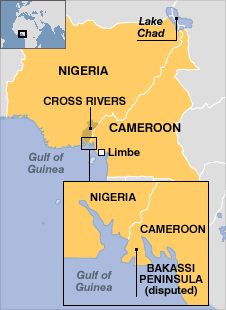
While framed as an aeronautical agreement, the deal carries broader significance for Nigeria’s maritime and coastal emergency response community. Nigeria and Cameroon share not only a land border but also overlapping maritime zones in the Gulf of Guinea — one of the world’s most strategically important and operationally challenging waterways. Strengthened SAR coordination between the two countries sets a precedent and a practical framework that could, in time, extend to joint maritime rescue operations in shared waters.
For Waterways News NG readers — port operators, shipping agents, seafarers, and maritime regulators — the agreement signals a regional shift toward more integrated emergency response, one that the maritime sector has long called for.
What the Agreement Does
The pact establishes clear communication protocols between the Rescue Coordination Centres (RCCs) of both countries, facilitates joint search and rescue operations, and strengthens rapid response mechanisms within their respective Search and Rescue Regions (SRRs). It brings both nations into closer alignment with international safety standards, particularly ICAO Annex 12, which governs SAR obligations for signatory states.
Speaking at the signing ceremony, Minister Keyamo was direct about the stakes involved. “Search and rescue cooperation is not simply a regulatory requirement under ICAO Annex 12; it is a humanitarian imperative and a moral responsibility,” he said.
He added: “In moments of distress, response time saves lives. Borders must never become barriers to humanitarian intervention.”
Framed Within the Tinubu Agenda
The agreement has been positioned by the Federal Government as part of President Bola Tinubu’s Renewed Hope agenda, which prioritises institutional strengthening, regional cooperation, economic revitalisation, and the protection of lives and property.
Keyamo described aviation — and by extension, the broader transport sector — as a strategic driver of economic growth and regional integration, while stressing that such growth must be grounded in safety and effective emergency preparedness.
“Today, Nigeria and Cameroon demonstrate that cooperation — not fragmentation — defines our regional approach to aviation safety,” the minister said, calling the agreement a practical expression of African solidarity and good neighbourliness.
A Building Block for Gulf of Guinea Cooperation
For the maritime community, the deal is worth watching closely. The Gulf of Guinea remains one of the most piracy-affected maritime regions in the world, and coordinated SAR capacity between Nigeria and Cameroon — two of its most significant coastal states — is a building block toward more robust regional maritime security architecture.
Nigeria’s maritime agency, NIMASA, has in recent years worked to strengthen its own SAR and anti-piracy capabilities through initiatives such as the Deep Blue Project. A complementary bilateral framework with Cameroon could reinforce those efforts and improve response times in the event of incidents near shared waters.
The agreement reinforces both countries’ commitment to international safety standards and, for those watching Nigeria’s place in regional maritime affairs, offers a quiet but meaningful signal of diplomatic momentum.
Waterways News NG will continue to track developments in Nigeria-Cameroon maritime and aviation cooperation.
— Waterways News NG | www.waterwaysnews.ng
CASABLANCA PORT SHUT DOWN AFTER VESSEL LOSES 85 CONTAINERS — SHIP SERVES NIGERIAN ROUTES
Port authorities in Morocco have suspended all vessel movements at the Port of Casablanca following a container overboard incident involving a ship that regularly calls at Nigerian ports.
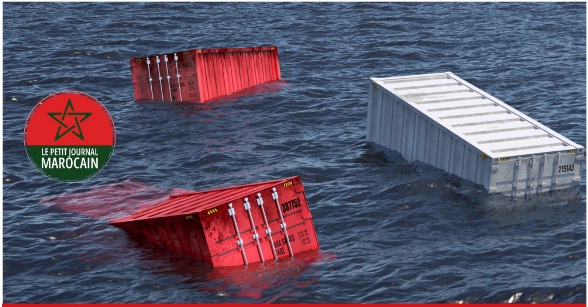
Morocco’s National Ports Agency ordered the suspension at approximately 11:00 PM local time on Thursday, February 26, after the containership Ionikos lost an estimated 85 containers into the water near the harbour entrance while departing the port in heavy seas.
As of Friday, operations at one of Africa’s busiest container ports remained halted, with numerous boxes still reported floating in the channel, posing serious navigational hazards.
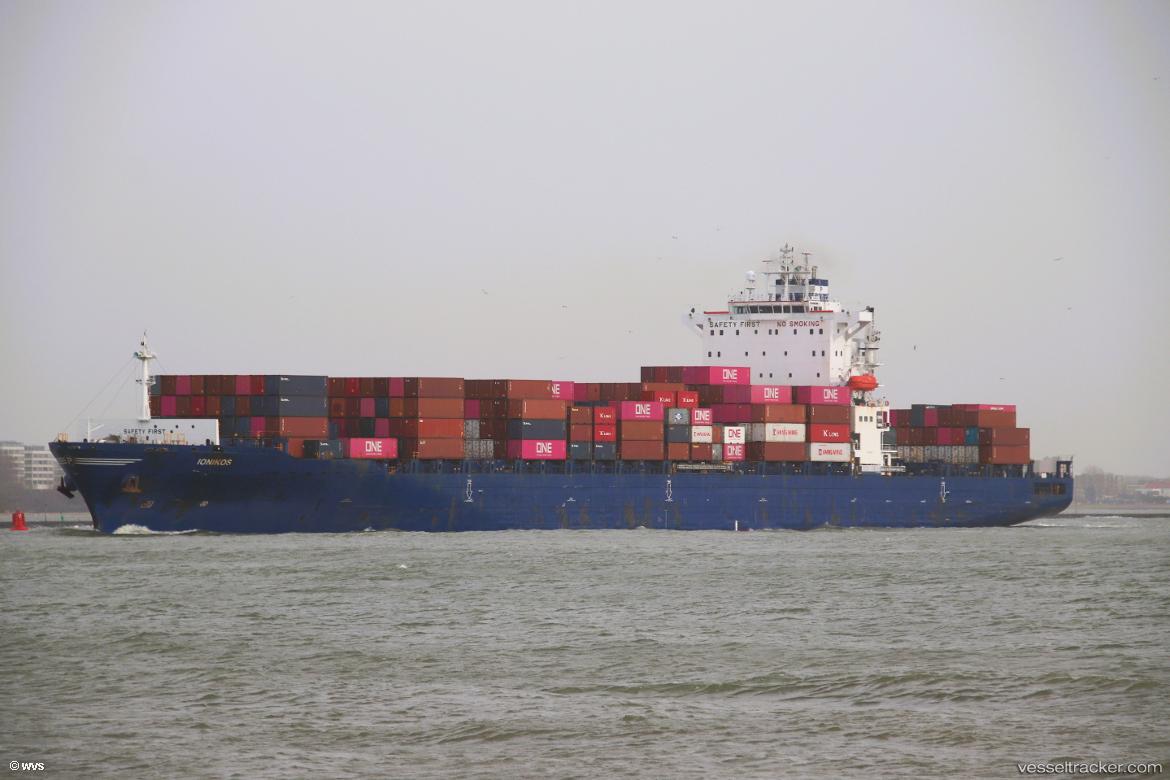
The Ionikos — a 52,427-deadweight-tonne vessel owned by Greek shipping interests and registered under the Liberian flag — is of particular interest to Nigerian shippers and port stakeholders. The ship operates on a service connecting Turkey and the eastern Mediterranean with ports in the Gulf of Guinea, including regular calls at Nigerian terminals and other West African destinations.
According to initial reports, the vessel had completed cargo operations in Casablanca and was bound for Barcelona when it encountered heavy swells on departure. The rough sea conditions caused the ship to roll violently, sending an estimated 85 containers overboard.
The Ionikos, built in 2009, measures 258 metres in length and has a capacity of 4,360 twenty-foot equivalent units (TEU). The vessel is currently anchored approximately six nautical miles offshore as authorities assess the damage and coordinate recovery efforts.
An overnight search and recovery operation was launched involving five vessels from Morocco’s Royal Maritime Gendarmerie and Royal Navy, alongside helicopter aerial support. Officials noted that darkness hampered early efforts to locate and secure the drifting containers. Tugboats have since been stationed near several floating units to prevent further hazards to passing traffic.
Local media in Morocco reported that the lost containers were carrying a range of cargo, including car parts, furniture, and consumer goods. At least one container is reported to have broken open and washed ashore on a nearby beach, where boxes of Nestlé-branded cereal were found scattered.
The incident compounds operational difficulties already affecting the port this winter. Reports indicate that a series of storms and persistent Atlantic swells have disrupted maritime traffic at Casablanca in recent months.
Port authorities said vessel movements would resume only when conditions in the harbour channel are deemed safe for navigation.
The disruption is being monitored closely by Nigerian shipping agents and cargo interests given the vessel’s regular Gulf of Guinea service schedule. Waterways News NG will provide updates as the situation develops.
— Waterways News NG | www.waterwaysnews.ng
-
 Blue Economy2 weeks ago
Nigeria’s Coast Guard Bill: A Solution in Search of a Problem?
-
 News2 weeks ago
From Awareness to Action: How SWAAADO is Rewriting Nigeria’s Waterways Safety Story
-
 Blog3 weeks ago
SWAAADO Intensifies Waterways Safety Sensitization Campaign to Waterfront Communities in Lagos State.