
Business
Dangote Cement Achieves Improved CDP Scores in Climate Change and Water Security



Dangote Cement Plc (DCP) has attained a significant milestone in its sustainability journey, earning a ‘B’ score in both climate change and water security disclosures, as revealed in the recently released 2024 CDP results. This achievement highlights the company’s commitment to environmental responsibility and sustainable business practices.
The Carbon Disclosure Project (CDP) is the world’s most extensive and comprehensive dataset on environmental action, providing a globally recognized framework for investors, companies, and governments to make informed, sustainability-focused decisions. Since 2018, Dangote Cement has voluntarily disclosed its environmental practices through CDP, reinforcing its dedication to corporate transparency and environmental stewardship.
CDP assesses corporate environmental performance based on three critical areas: Climate Change, Water Security, and Forests. The organization assigns scores ranging from A to D, evaluating companies on transparency, governance, and measurable actions toward sustainability.
In the latest assessment, Dangote Cement’s water security score was upgraded from ‘C’ to ‘B’, reflecting the company’s enhanced strategies in water management and conservation. This improvement demonstrates DCP’s increasing efforts to adopt sustainable water usage policies, reduce water waste, and implement conservation programs across its operations.
Similarly, the company’s commitment to climate resilience was reinforced through its ‘B’ score in climate change disclosures. This recognition underscores Dangote Cement’s proactive approach to mitigating climate risks, reducing carbon emissions, and adopting environmentally friendly operational practices.
The company has consistently worked to align its sustainability strategy with global best practices, implementing initiatives such as alternative fuel use, improved energy efficiency, and reduced greenhouse gas emissions in cement production. These efforts position Dangote Cement as a leader in the drive towards sustainable industrial operations in Africa.
As the global business landscape increasingly prioritizes sustainability, Dangote Cement’s improved CDP scores reaffirm its role in promoting responsible environmental management. The company remains committed to further enhancing its sustainability framework, ensuring continuous improvement in climate action and water resource management.


Blue Economy
FROM OCEAN TO ENGINE: How Seawater-to-Hydrogen Technology Could Reshape the Future of Maritime Fuel

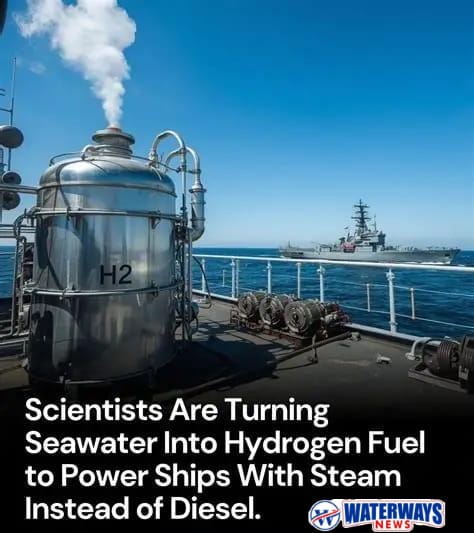
FROM OCEAN TO ENGINE: How Seawater-to-Hydrogen Technology Could Reshape the Future of Maritime Fuel
Breakthrough electrolysis systems promise to turn the world’s most abundant resource into clean shipping energy — and the implications for global shipping are profound
By Raymond Gold | Co-publisher and Research Reporter| Waterways News, Lagos
For centuries, the sea has been both highway and hazard for the world’s merchant fleets — a vast, untameable resource that ships cross but cannot consume. That relationship may now be on the verge of a fundamental transformation. Engineers and clean-energy researchers are advancing technology that converts seawater directly into hydrogen fuel, potentially allowing vessels to generate their own power from the very ocean beneath their hulls.
The concept, long theorised in academic and engineering circles, has in recent years moved closer to practical application. And for an industry under mounting pressure to decarbonise — shipping accounts for nearly three percent of global greenhouse gas emissions annually — the implications could hardly be more consequential.
What the Technology Does
At its core, seawater-to-hydrogen conversion exploits a deceptively simple chemistry: water, whether fresh or saline, is composed of hydrogen and oxygen atoms that can be separated through electrolysis — the application of electrical current to drive a chemical reaction. In conventional electrolysis, this process uses purified water. The innovation driving current research is the ability to perform this separation efficiently using raw seawater, bypassing the costly and energy-intensive step of desalination.
The challenge is considerable. Seawater is not merely water with dissolved salt; it is a complex mineral solution containing chlorides, sulphates, magnesium, calcium, and dozens of trace elements that aggressively corrode standard electrolysis equipment and compromise catalytic efficiency. Overcoming this requires specialised membrane materials, corrosion-resistant electrode coatings, and advanced catalyst designs capable of selectively extracting hydrogen without triggering the destructive chlorine evolution reactions that plague conventional systems.
Several research institutions — including teams at Stanford University and in China’s leading materials science faculties — have demonstrated functional seawater electrolysis cells in laboratory conditions. The next frontier is ruggedising these systems for the rolling, salt-spray environment of an operational vessel on an ocean crossing.
Once extracted, the hydrogen can be deployed aboard ship in two primary ways: through hydrogen fuel cells, which generate electricity through an electrochemical reaction between hydrogen and oxygen with water as the only byproduct; or through combustion in modified engine systems, including hydrogen-driven steam turbines — a technology that echoes the steam age of maritime history but points firmly toward a zero-emission future.
Why This Matters for Shipping
The global shipping industry moves approximately 90 percent of world trade by volume. It runs almost entirely on heavy fuel oil and marine diesel — fossil fuels that produce sulphur oxides, nitrogen oxides, particulate matter, and carbon dioxide at scale. The International Maritime Organisation (IMO) has set a target of net-zero greenhouse gas emissions from international shipping by or around 2050, with intermediate milestones that are already forcing operators and flag states to act.
Alternative fuels — LNG, methanol, ammonia, and green hydrogen — are being explored across the industry. Each carries its own infrastructure challenge. LNG requires cryogenic bunkering terminals. Ammonia is toxic and demands careful handling protocols. Green hydrogen, produced from renewable electricity, depends on an entirely new supply chain that does not yet exist at the scale shipping requires.
Onboard seawater electrolysis sidesteps this infrastructure dependency entirely. A vessel equipped with the technology would, in principle, generate its own fuel continuously during a voyage, powered by renewable energy sources — solar arrays, wind-assisted propulsion, or wave energy convertors — installed on the ship itself. The bunkering port visit, one of the central logistics events in any ocean voyage, could eventually become optional rather than obligatory.
“The vision is genuine maritime energy autonomy,” one marine engineer familiar with current research described it. “You leave port, and the ocean provides.”
The Engineering Obstacles
The path from laboratory demonstration to commercial deployment is rarely short, and seawater electrolysis faces specific engineering obstacles that require resolution before any shipowner will commit capital to a retrofit or newbuild specification.
Foremost among these is the corrosion problem. The electrolytic cell, the filtration system, and all downstream hydrogen handling components must withstand not only the mineral aggressiveness of seawater but also the physical stresses of a marine operating environment — vibration, temperature cycling, and the mechanical demands of continuous operation over voyages measured in weeks. Catalysts and membranes that perform well in controlled conditions may degrade rapidly under these stresses, driving up maintenance costs and reducing reliability.
Filtration is a related challenge. Seawater must be processed through multi-stage filtration to remove particulates, biological matter, and the heaviest dissolved minerals before it reaches the electrolysis cell. The design and maintenance of these filtration trains — compact enough to fit within a vessel’s existing hull footprint without displacing cargo capacity — is itself an active area of engineering research.
Energy efficiency is perhaps the most critical metric. Electrolysis is not thermodynamically free; splitting water requires energy input, and on a vessel where every kilowatt-hour must be generated or stored, the round-trip efficiency of the fuel generation cycle determines whether the system is economically viable. Current state-of-the-art electrolysers operate at between 60 and 80 percent efficiency in ideal conditions. Marine seawater systems are not yet at the upper end of that range.
Scale is the final variable. A research cell producing grams of hydrogen per day is a proof of concept. A commercial system capable of fuelling a Panamax bulker or a large container vessel across the Pacific must produce hydrogen at a rate orders of magnitude higher, consistently and safely, in a package that integrates with existing ship systems and satisfies classification society and flag state safety requirements.
Nigeria Watch: What This Means for West Africa’s Maritime Sector
For Nigerian shipping stakeholders — from the Nigerian Maritime Administration and Safety Agency (NIMASA) to the Nigerian Ports Authority (NPA), private shipowners, and the Federal Ministry of Marine and Blue Economy — seawater-to-hydrogen technology warrants close attention even at this early stage of development.
Nigeria’s maritime sector is undergoing a strategic pivot. The revival of a national carrier through partnerships with DP World and AD Ports Group, the deepening of Lekki Deep Sea Port operations, and the Federal
Government’s blue economy agenda all signal ambitions to position Nigeria as a maritime hub rather than merely a transit market. The vessels and fleets that will carry those ambitions — whether coastal tankers, offshore support vessels, or deep-sea cargo ships — will be subject to increasingly strict international emissions standards as they operate in foreign ports and trade lanes.
The European Union’s Emissions Trading System now applies to shipping, and vessels calling at European ports are already paying a carbon price on their voyages. The IMO’s Carbon Intensity Indicator (CII) regulations are tightening year on year. Nigerian-flagged vessels, and Nigerian operators trading internationally, cannot remain insulated from these requirements indefinitely.
A technology that enables onboard fuel generation from seawater would be particularly valuable for the offshore oil and gas support sector — a significant component of Nigeria’s maritime economy — where vessels operate far from shore for extended periods and fuel logistics represent a meaningful proportion of operating costs. Patrol and surveillance vessels operated by NIMASA and the Nigerian Navy, which must sustain extended coastal and offshore operations, represent another potential application domain.
The immediate priority for Nigerian maritime regulators and industry associations is awareness and engagement: monitoring the development trajectory of seawater electrolysis systems, participating in IMO technical working groups on alternative fuels, and ensuring that when commercial systems begin to reach the market — an eventuality most analysts place in the 2030s — Nigerian operators and shipyards are positioned to adopt rather than adapt belatedly.
Looking Ahead
The conversion of seawater into hydrogen fuel will not decarbonise global shipping overnight. The technology faces real, unresolved engineering challenges, and the capital cycle of the shipping industry — where vessels are built to operate for 25 years or more — means that transformation is necessarily gradual. But the direction of travel is clear, and the pace of research is accelerating.
What was speculative a decade ago is now demonstrable in laboratory conditions. What is demonstrable today will, with sustained investment and engineering ingenuity, be deployable at sea within the decade. For an industry that has powered itself with fossil fuels since the coal age, the prospect of drawing energy from the ocean itself represents not merely a technical advance but a philosophical one: a shift from consuming the earth’s finite reserves to harvesting the planet’s most inexhaustible resource.
The sea, in other words, may one day fuel the ships that sail in it.
Raymond Gold is Co-publisher and Research Reporter for Waterways News
Waterways News covers the Nigerian and West African maritime sector. For enquiries, advertising, and editorial submissions, visit www.waterwaysnews.ng
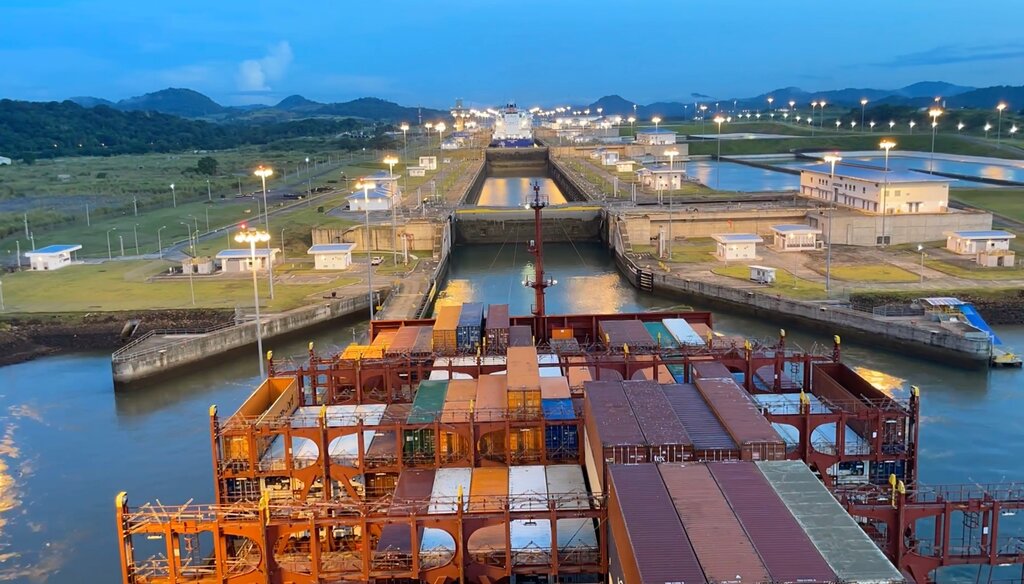
Global Trade Shifts Boost Panama Canal as Hormuz Tensions Reshape Shipping Routes
By Okeoghene Onoriobe | Waterways News
The ongoing conflict in the Middle East and mounting disruptions around the Strait of Hormuz are reverberating across global shipping lanes, with the Panama Canal recording a significant uptick in vessel traffic and cargo volumes as traders seek safer and more reliable routes.
Data released by the Panama Canal Authority covering October 2025 to March 2026 — the first half of the canal’s financial year — show that 6,288 vessel transits were completed during the period, a rise of 224 compared with the corresponding period a year earlier. Total cargo volumes grew by roughly five per cent to reach 254 million Panama Canal Universal Measurement System tonnes, underscoring the waterway’s expanding importance amid shifting geopolitical dynamics.
The momentum has been particularly evident in recent months. Daily transit averages climbed to 34 vessels in January and 37 in March, with peak days recording more than 40 transits — a clear sign that shipping lines are routing more cargo through the Central American passage.
Panama Canal Administrator Ricaurte Vásquez Morales attributed the growth to strong container traffic and a sharp surge in liquefied petroleum gas shipments, describing energy cargoes as an increasingly vital part of the canal’s traffic profile.
The high demand has also driven transit slot auction prices to unprecedented levels. Víctor Vial, Vice President of Finance at the Panama Canal Authority, disclosed that auction prices for some vessels have crossed the $1 million mark — a remarkable climb from the pre-conflict average of between $135,000 and $140,000. Between March and April alone, average auction prices surged to approximately $385,000. Vial was quick to stress, however, that these elevated figures reflect short-term market conditions and do not affect the cost or scheduling of transits booked in advance through the reservation system, which accounts for the bulk of traffic.
The canal’s recovery has been further supported by a return to normal water levels following the severe drought that constrained operations in 2023 and 2024. Gatún and Alhajuela Lakes — the primary water sources for canal operations — are currently at maximum capacity, thanks in part to unseasonably heavy rainfall.
Chief Sustainability Officer Ilya Espino de Marotta said the authority is not anticipating major disruptions in the near term but will maintain close monitoring of water levels as it navigates an El Niño year. Preventative conservation measures remain in place as a precaution.
Nigeria Watch
For Nigerian shippers, freight forwarders and maritime operators, these developments carry direct implications. With LPG shipments surging through the Panama Canal and freight markets reacting sharply to geopolitical pressures, the ripple effects on global fuel supply chains and shipping costs are worth watching closely. Nigeria, as a major crude oil and gas producer and a significant importer of refined petroleum products, sits squarely within the global trade flows being reshaped by these dynamics.
Vásquez Morales reaffirmed the canal’s readiness to meet rising global demand, describing the waterway as open, dependable and well-positioned to serve as a key pillar of international commerce in these uncertain times.
Waterways News | waterwaysnews.ng
Blue Economy
lMinistry of Marine and Blue Economy to Approve Digital Pricing Tool for Freight Forwarding, Haulage
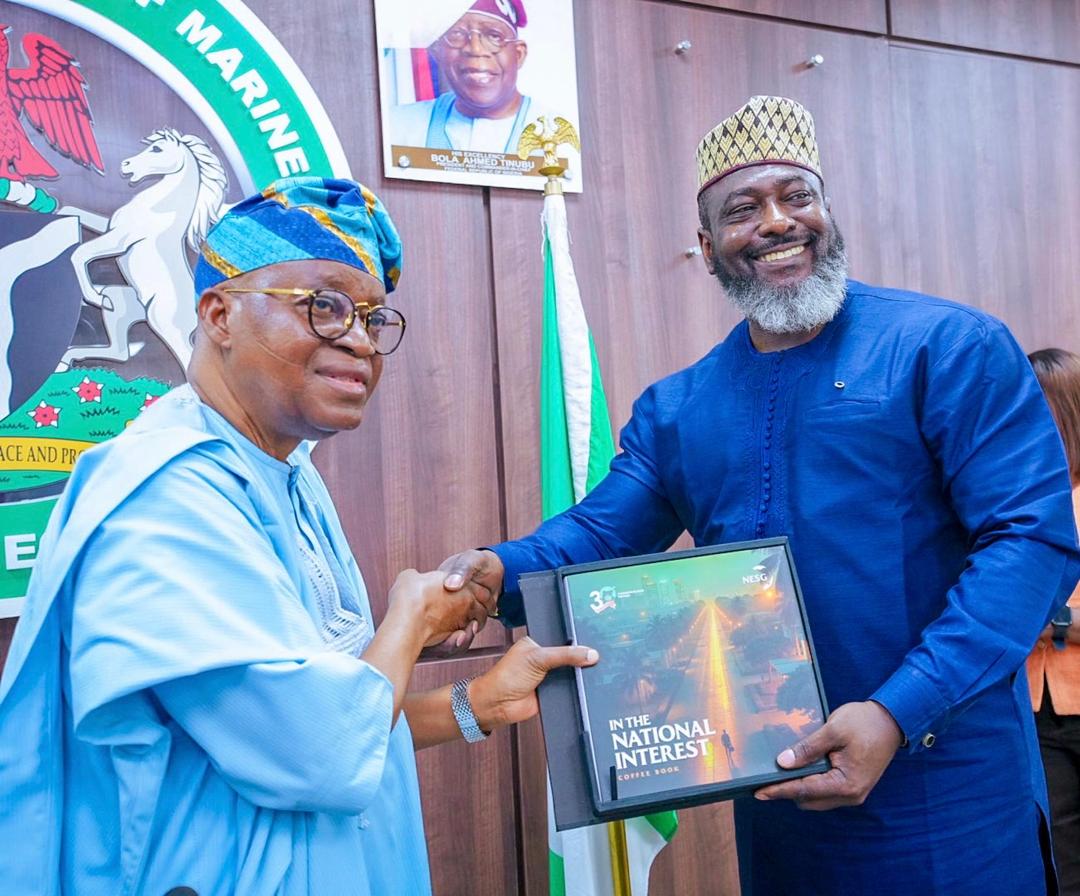
Ministry of Marine and Blue Economy to Approve Digital Pricing Tool for Freight Forwarding, Haulage
CRFFN Registrar Says Proposal Already at Ministry Level; Stakeholder Engagement to Follow Approval
April 28, 2026 | By Okeoghene Onoriobe
The Federal Ministry of Marine and Blue Economy is on the verge of approving a digital standardisation and price determination framework for freight forwarding services — covering customs clearance and haulage operations — in what industry watchers say could be the most consequential structural reform to Nigeria’s logistics cost architecture in years.
The Council for the Regulation of Freight Forwarding in Nigeria (CRFFN) Registrar, Mr. Kingsley Igwe, disclosed this at a town hall meeting organised by JournalNG in Lagos on Friday, confirming that a formal proposal had already been submitted to Minister Adegboyega Oyetola’s ministry and was currently under review.
The Problem: Opacity and Lump-Sum Pricing
At the heart of the initiative is a long-standing grievance across Nigeria’s port and logistics ecosystem — the absence of any standardised, itemised pricing structure for freight forwarding services. Under the current regime, cargo owners engage agents without a clear understanding of what the agent’s service charge actually is, as fees are bundled into opaque lump-sum figures that obscure cost components.
“Today, if you want to clear your consignment, you don’t even know how much the agent’s service charge is because everything is lump sum,” Igwe noted.
“We did a study to establish standards that will guide the industry. For haulage, we made comparisons with several other countries — how is haulage charged? They charge per kilometre, incorporating all necessary cost components such as wear and tear, valuation, insurance, risk and everything on the truck.”
WTO Framework as the Blueprint
Igwe anchored the CRFFN’s approach in a World Trade Organisation framework, which prescribes standardisation as a foundational tool for achieving predictability in global logistics costs. According to the registrar, that framework has informed the development of standard operating procedures — covering port procedures, customs procedures, haulage procedures, and freight forwarding pricing — in peer economies, while Nigeria has yet to adopt equivalent structures.
“That means standardising based on certain parameters. But it’s not so here, and that was why we tried to inculcate this last year,” he said.
Agents the Silent Casualties
In a notable turn, Igwe used the forum to challenge the popular assumption that freight forwarding agents are among the maritime sector’s most comfortably compensated players. He argued instead that the current pricing chaos was quietly devastating agents financially.
“The agents, who most people think go home with a humongous amount of money after clearing, end up broke. Most of them even sacrifice their own money to add to what they are being given because of their inability to predict what it will cost to clear the goods,” he said, adding that he had personal experience of the problem.
He described a recurring cycle in which agents underquote to win clients, only to be confronted by unexpected debit notes from customs — with shippers refusing to make up the shortfall, leaving agents to borrow and absorb the difference themselves.
“He becomes a debtor. He is dying inside slowly. And we say these freight forwarders take too much money home. It’s not true,” Igwe said.
The Digital Mechanism
The proposed framework is designed as a digital tool that would allow agents to input risk variables at the point of engagement, generating a transparent cost projection that accounts for contingencies without eroding the agent’s fixed service percentage.
“The mechanism we are coming out with takes care of every unforeseen risk. It is digital. It would help them input all the necessary risk factors that will take care of the cost without tampering with their own percentage of service charge. The charge is going to be constant whether the risk is high or not — we will now define who, at the point of risk, should bear responsibility,” Igwe explained, noting that shippers sometimes provide inaccurate Bill of Lading information, with agents bearing the consequences.
Igwe confirmed that once ministerial approval is secured, an intensive stakeholder engagement process will be convened to define implementation timelines and parameters.
“My proposal is there at the Ministry, it’s being worked on. By the time it’s been approved, then we’ll hold an intensive stakeholder engagement for the implementation process to be defined,” he said.
Nigeria Watch
For Nigerian shippers, freight forwarders, and port-dependent businesses, the proposed framework arrives at a critical juncture. The opacity of logistics costs has long been cited as a drag on Nigeria’s trade competitiveness — fuelling disputes between cargo owners and agents, distorting cost planning for importers and exporters, and undermining confidence in the freight forwarding profession as a regulated vocation.
If ministerial approval is granted and the digital tool is properly implemented, it could mark a meaningful step toward the pricing transparency that the Nigerian Shippers’ Council and other trade facilitation bodies have long championed. Crucially, the per-kilometre haulage model proposed by CRFFN — benchmarked against international practice — would introduce a rational, auditable basis for one of the most contentious cost components in Nigeria’s port-to-destination logistics chain.
The key question now is implementation fidelity. Nigeria has a well-documented history of regulatory frameworks that secure approval but stall at the stakeholder engagement and enforcement stages. Whether CRFFN, working under the Oyetola-led ministry, can convert this proposal into an operational standard that agents, shippers, and customs brokers actually use — rather than a document that gathers dust — will be the true measure of this initiative’s worth.
-

 Oil and Gas2 months ago
Tantita’s Pipeline Deal: $144m Contract, Rising Output, and the Questions that Deserve Answers
-
 Blue Economy2 months ago
Nigeria’s Coast Guard Bill: A Solution in Search of a Problem?
-
 MARITIME TRADE & SHIPPING2 months ago
World’s Largest Container Ship Sets New Maritime Record with 22,233 TEUs on Single Voyage