
Trending
Egypt Turns to Satellites to Catch Illegal Structures Along Its Waterways


Egypt Turns to Satellites to Catch Illegal Structures Along Its Waterways
Water ministry deploys Google Earth Engine, AI and GIS to detect encroachments on canals and the Nile
By Ighoyota Onaibre Waterways News
Egypt’s Ministry of Water Resources and Irrigation is expanding its use of satellite imagery and remote sensing to monitor waterways, detect illegal construction and track changes along canals and other water bodies.
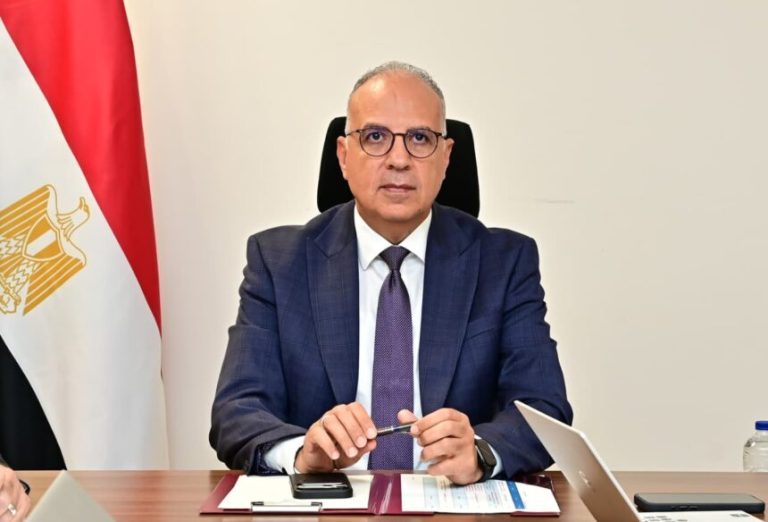
In a statement issued on Saturday, October 24, the ministry said Minister Hani Sewilam reviewed a monitoring model built on Google Earth Engine, a platform that processes satellite imagery to identify changes in geographical features. The system is designed to flag newly built structures along waterways and other developments that could disrupt the flow and management of water resources.
Sewilam stressed that satellite data would give the ministry reliable information for planning and decision-making, and help it spot and act on violations faster.

The ministry also discussed building geospatial databases to document encroachments and changes along waterways. These would give field teams more precise locations of suspected violations, making inspections and enforcement more effective.
Sewilam directed officials to combine satellite observations with field measurements and existing ministry databases. He also called for artificial intelligence (AI) and geographic information systems (GIS) to strengthen data analysis, monitoring and water management planning.
The initiative falls under the ministry’s Water System 2.0 programme, which aims to modernise water management through digital technologies, better monitoring and data-driven decisions. It comes as pressure grows on Egypt’s freshwater supply, with the Nile as the country’s main source.
The move builds on earlier digital efforts. The ministry has recently reviewed a Google Earth Engine application for tracking water hyacinth and aquatic weeds, and launched a digital platform to document and manage state-owned lands along the Nile, starting with Dakahleya. That platform is meant to detect encroachments and track land-use fees in real time, and Sewilam has directed that it be extended to all Nile-bordering governorates.
The ministry did not say when the new model would be rolled out nationwide, or how many violations it has identified so far.
NIGERIA WATCH
Egypt is using satellites to protect a single river system. Nigeria has the Niger, the Benue, the Lagos Lagoon and creeks, and thousands of kilometres of inland waterways, and much of that network is still policed by patrols and complaints.
Illegal structures, shoreline reclamation, dredging disputes and blocked channels are familiar problems in Lagos and across the Niger Delta. They sit within the wider jurisdictional tension between NIWA and LASWA. Remote sensing would give regulators an objective, time-stamped record of who built what and when, which could settle some of those disputes.
Questions for Abuja and Lagos:
Does NIWA have a waterways monitoring system? Is any satellite-based surveillance in use, or does enforcement still depend on physical patrols?
Are the NPERA Act and the Federal Ministry of Marine and Blue Economy planning geospatial data tools? Without digital records, rules on waterway use are hard to enforce.
Who is protected? Egypt’s approach is aimed at encroachers, but Nigerian regulators must make sure surveillance does not fall hardest on informal operators, such as boat owners and jetty users represented by WABOTAN and ATBOWATON, while large violators go untouched.
Nigeria has already shown interest in satellite surveillance elsewhere in the sector, including the Nigeria–Norway illegal fishing tracking effort. The question is whether the same tools will reach the inland waterways.
Maritime Labour and Trade Union
Mental Health at Sea: Nigeria Leads Africa as NIMASA, ITF Seal Africa’s First Seafarer Mental Health Pact
Mental Health at Sea: Nigeria Leads Africa as NIMASA, ITF Seal Africa’s First Seafarer Mental Health Pact
Agency and global transport union to embed wellbeing training in maritime curricula
By Okeoghene Onoriobe | Waterways News
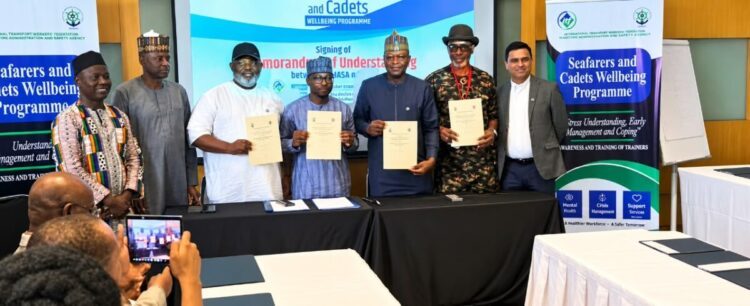
The Nigerian Maritime Administration and Safety Agency (NIMASA) has signed a Memorandum of Understanding with the International Transport Workers’ Federation (ITF) to promote the mental health and wellbeing of Nigerian seafarers and cadets through training, awareness and capacity building.
The agreement was endorsed at the close of a three-day Seafarers’ and Cadets’ Wellbeing Awareness and Train-the-Trainers Programme, themed “Stress: Understanding, Early Management and Coping.” NIMASA organised the programme with the ITF.
NIMASA Director General Dr. Dayo Mobereola said the partnership will support capacity building and the integration of a wellbeing module into maritime training curricula. The goal is to make wellbeing a permanent part of preparing for life at sea. He was represented by the Executive Director, Maritime Labour and Cabotage Services, Mr. Jibril Abba, who signed for NIMASA.
In the DG’s words, seafarers’ wellbeing is “essential to safe shipping.” He said the programme will equip training institutions, agency officers and union partners to identify and manage stress and provide psychological first aid. He cited a 2019 ITF/Yale University study in which one in four seafarers surveyed showed signs of depression and about one in six showed signs of anxiety.
ITF Africa Regional Secretary Mr. Safiyanu Dauda Mohammed, who signed for the federation, said it is the first such agreement the ITF has entered into with any African country. “We are starting with Nigeria,” he said.
The President-General of the Maritime Workers Union of Nigeria (MWUN), Comrade Francis Bunu, welcomed the deal. He said seafarers need to be mentally sound to do their jobs, and called it a significant day for Nigerian seafarers.
Also present were the National President of the Nigerian Merchant Navy Officers and Water Transport Senior Staff Association, Chief Engr. Bob Joseph Yousou; ITF Wellbeing Coordinator Dr. Asif Altaf; and ITF Inspector Mr. Hamani Amadou.
The programme underscores the need to refocus attention on seafarers who work in difficult conditions and spend long periods away from their families. Both parties say the partnership reflects the principle that a healthy seafarer is a safe seafarer.
NIGERIA WATCH
A first for Africa, but delivery is the test. Nigeria’s lead position is a diplomatic win for NIMASA and the Federal Ministry of Marine and Blue Economy.
Seafarer welfare has been on NIMASA’s agenda for years. In 2018, then-DG Dakuku Peterside threatened sanctions on ship owners who defaulted on the seafarers’ contributory pension scheme. In early 2024, the ITF’s UK-based Seafarers Trust approved a grant for a seafarers’ recreation centre, to be built with MWUN and NIMASA. Stakeholders will want to know what became of those commitments before this one is celebrated.
What to watch out for:
Curriculum integration: Whether the wellbeing module actually enters the syllabi of Nigerian maritime institutions, and by when.
Funding and timelines: The announcement gives no budget, rollout schedule or reporting mechanism.
The Reach: The MoU speaks of seafarers and cadets. Many Nigerians who work on the water are informal inland operators, such as boat drivers and boat owners represented by groups like WABOTAN and ATBOWATON. They face stress, long hours and safety risks of their own. Whether wellbeing programmes will extend to this segment, or stop at the formal deep-sea workforce, is a fair question for NIMASA, NIWA and the ministry.
Mental health support is only as credible as its follow-through, and this MoU will be judged by what happens after the signing.
Blue Economy
Oyetola Sets Up NIMBEX Committee to Turn Nigeria’s Blue Economy Potential into Investment
Oyetola Sets Up NIMBEX Committee to Turn Nigeria’s Blue Economy Potential into Investment
Ministry Inaugurates NIMBEX Planning Team, Eyes Africa’s Top Maritime Investment Hub Spot
Oyetola Sets Up NIMBEX Committee to Turn Nigeria’s Blue Economy Potential into Investment
By Emetena Ikuku| Waterways News
The Federal Ministry of Marine and Blue Economy has inaugurated an organising committee for the Nigeria Marine and Blue Economy Expo (NIMBEX), a move meant to position Nigeria as a leading destination for maritime investment, innovation and trade in Africa.
The expo is expected to bring together policymakers, international investors, industry leaders and technology innovators to support the Federal Government’s efforts to unlock the economic value of the marine and blue economy sectors.
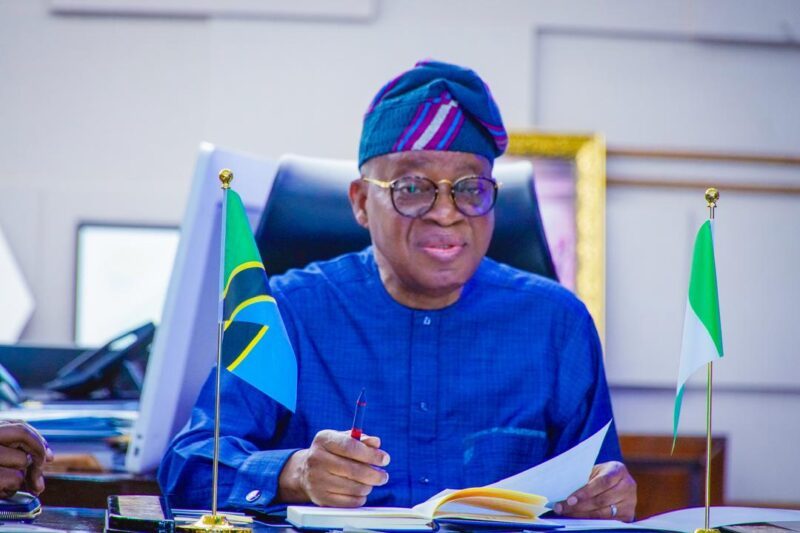
Minister of Marine and Blue Economy, Adegboyega Oyetola, said NIMBEX would help convert Nigeria’s maritime advantages into investment opportunities, economic growth and jobs. “Nigeria’s marine and blue economy holds enormous potential to drive economic diversification, attract investment and create sustainable employment,” he said, adding that the expo would bring together the capital, expertise and partnerships needed to unlock it.
Oyetola was represented at the inauguration by the ministry’s Permanent Secretary, Mrs Fatima Mahmood. She said the expo would help close the gap between Nigeria’s maritime resources and the investment needed to harness them.
The case for the expo rests on the country’s assets: an 853-kilometre coastline, more than 10,000 kilometres of navigable inland waterways across 28 states, and a large domestic market.
Who is on the committee
Chairman: Mr Husseini Shettima, Director of Marine Conservation, Innovation and Technology at the ministry.
Co-chairpersons: Hajia Kalthum Ibrahim, Director of Planning, Research and Statistics, and Professor Busayo Fakinlede, Senior Special Assistant to President Bola Ahmed Tinubu on Marine and Blue Economy.
Member and Chief Operating Officer of the expo: Dr Bolaji Akinola, Special Adviser to the Minister.
Agencies: NPA, NIMASA, NPERA, NIWA and the Council for the Regulation of Freight Forwarding in Nigeria (CRFFN).
Training and research institutions: the Maritime Academy of Nigeria, Oron; the Nigerian Institute for Oceanography and Marine Research; the Federal College of Fisheries and Marine Technology; the National Institute for Freshwater Fisheries Research, New Bussa; and the Federal College of Freshwater Fisheries Technology, New Bussa and Baga.
Industry and states: coastal states, terminal operators, shipowners, freight forwarders, barge operators and other sector stakeholders.
The multi-agency make-up is intended to promote coordinated planning and link investors to credible, policy-backed opportunities.
What NIMBEX will cover
Focus areas include deep-sea mining, port development, shipping, inland waterway development, logistics, offshore energy, maritime finance, fisheries, marine biotechnology, maritime security and environmental sustainability. The expo will also showcase marine renewable energy, green shipbuilding, AI-driven logistics, subsea robotics and coastal tourism.
Beyond showcasing deals, organisers say NIMBEX aims to foster collaboration among government, industry, financial institutions and technology stakeholders, while promoting sustainable use of Nigeria’s marine resources.
NIGERIA WATCH: Where the small operators fit
An expo is only as good as what follows it. Nigeria has no shortage of blue economy summits, but the sector has long struggled to turn announcements into disbursements, as the stalled Cabotage Vessel Financing Fund shows. NIMBEX will be judged on signed deals and funded projects, not footfall.
The committee also raises a question of representation. It names barge operators, shipowners and terminal operators, and it includes NIWA, the regulator of the inland waterways. It does not mention the informal and small-scale passenger and boat operators who work those waterways every day. The 10,000-kilometre inland network is central to the ministry’s pitch, so the people who run it should be at the table. The committee’s “other stakeholders” clause leaves room for them, and associations such as WABOTAN and ATBOWATON should press for seats.
Three things to watch:
The date, venue and investor line-up, none of which was announced at the inauguration.
How NIMBEX differs from the Nigerian Shipowners Association’s NIMAREX, which was relaunched in Lagos in November 2025 after years of inactivity. The sector has to avoid competing expos splitting the same investors.
Whether the fund-raising promised around the blue economy, including the proposed $1bn innovation fund for marine start-ups reported last December, actually reaches operators.
Gabon Rig Disaster: Prospector 5 Sinks With 115 Aboard, One Dead and Four Missing
Jack-up lost stability during preload operations off Mayumba; search continues as Dussafu production halts
By Okeoghene Onoriobe | Waterways News
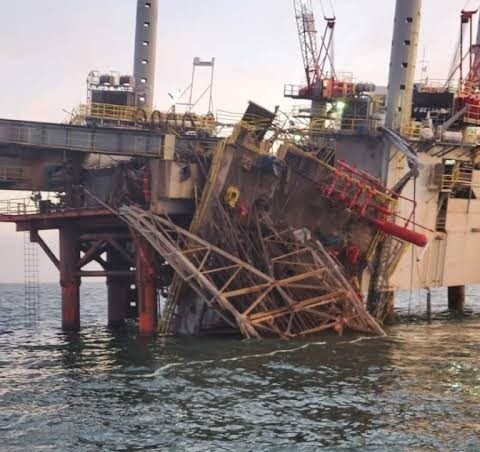
One worker has died and four others are still missing after the jack-up drilling rig Prospector 5 sank off Mayumba, southern Gabon, on Saturday night. The rig was carrying 115 people, and 110 have been confirmed safe. The body of one of the five initially unaccounted for, an Indian national, has been recovered, according to Reuters sources. The four still missing are three Gabonese nationals and one other expatriate. Note that the rig owner’s own update, issued earlier, made no mention of a death and said five people remained unaccounted for.
BW Energy puts the time of the incident at 20:37 local time on Saturday, 24 October 2026, during jacking operations ahead of a planned drilling campaign. The rig lost stability and then sank. Borr Drilling said the rig suffered a “punch through”, a failure of the seabed beneath the rig’s legs, which caused the loss of stability.
The Prospector 5 is a 2014-built unit owned and operated by Borr Drilling. It had been mobilising to the MaBoMo facility to begin the Phase II drilling campaign for BW Energy, and had begun operations for the company in early July. It had not yet started drilling.
Gabon’s authorities have moved to contain the situation. The Ministry of Petroleum and Gas has activated a crisis unit, ordered the navy to strengthen search and rescue, and opened a technical investigation, according to Minister Clotaire Kondja. The unit brings together the ministry, the navy, Gabon Oil, BW Energy and Borr Drilling.
Borr Drilling chief executive Bruno Morand said the company was deeply concerned for those unaccounted for and that supporting the search and the welfare of all personnel was its immediate priority.
On the environment, the early signals are reassuring. Panoro Energy said production had been halted, with no reports of damage or accidental discharge, and the ministry said no harmful substances had been detected in the surrounding waters. Pollution-response resources remain deployed to protect the coastline and Mayumba National Park.
Borr Drilling shares fell more than 9% in US premarket trading on Monday. BW Energy has said its MaBoMo facility was undamaged. BW Energy and Panoro are the field’s two listed partners, holding 73.5% and 17.5% respectively.
NIGERIA WATCH: The Prospector 5 tragedy is a Gulf of Guinea story, and Nigerian stakeholders should read it as one. Jack-up rigs of this class work shallow-water fields across the region, including Nigeria’s, and the risk that sank this one, seabed failure during positioning, is a standard hazard at every location.Nigerian operators, regulators and the crews they employ should be asking three questions.
First, how rigorously are site-specific seabed and soil assessments verified before a jack-up is preloaded in Nigerian waters?
Second, are emergency response and search-and-rescue arrangements around offshore installations tested often enough to match the speed Gabon’s crisis unit has shown?
Third, when casualties include Nigerians and other West African nationals on foreign-owned rigs, who speaks for them and their families?
For NIMASA, the Federal Ministry of Marine and Blue Economy and the Nigerian Navy, the incident is a timely test of readiness. It also sits uneasily beside the sector’s recurring gap between safety rhetoric and delivery, a gap that is felt most by the ordinary workers and small-scale operators who carry the risk when systems fail. Waterways News will follow the Gabon investigation and report any lessons it holds for Nigerian waters.

 Oil and Gas8 months ago
Tantita’s Pipeline Deal: $144m Contract, Rising Output, and the Questions that Deserve Answers
 MARITIME TRADE & SHIPPING8 months ago
World’s Largest Container Ship Sets New Maritime Record with 22,233 TEUs on Single Voyage
 Blue Economy9 months ago
Nigeria’s Coast Guard Bill: A Solution in Search of a Problem?