Blue Economy
HORMUZ IN FLAMES: HOW THE US-IRAN WAR IS CLOSING THE WORLD’S MOST CRITICAL OIL CORRIDOR — AND WHAT IT MEANS FOR NIGERIA

HORMUZ IN FLAMES: HOW THE US-IRAN WAR IS CLOSING THE WORLD’S MOST CRITICAL OIL CORRIDOR — AND WHAT IT MEANS FOR NIGERIA
By Waterways News Correspondent, Okeoghene Onoriobe
The escalating military conflict in the Middle East has sent shockwaves through global shipping, with the Strait of Hormuz — the narrow waterway through which nearly a fifth of the world’s oil supply passes — now effectively off-limits to commercial vessels.
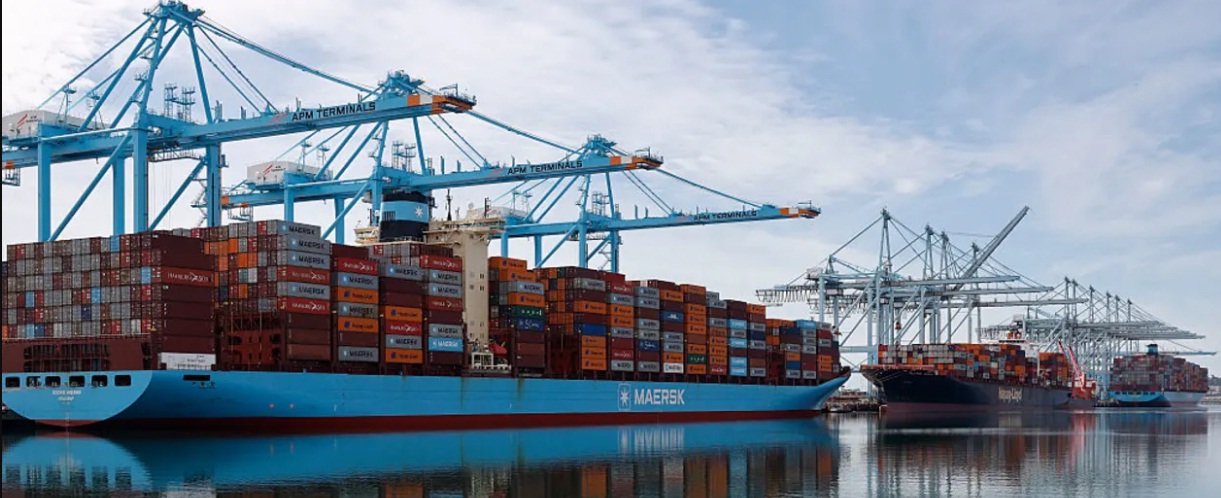
Following joint U.S.-Israeli strikes on Iran over the weekend, the world’s biggest container lines have suspended operations through the strait and are rerouting vessels thousands of kilometres around the Cape of Good Hope. Maersk, Hapag-Lloyd, CMA CGM, and MSC — the four giants that together control the bulk of global container capacity — have all issued emergency advisories pulling their fleets out of the Persian Gulf.


For Nigeria, the consequences are immediate and real. Every tanker carrying crude out of the Gulf, every container ship moving goods into West African ports, and every LNG cargo heading to European buyers now faces longer voyages, higher fuel costs, and inflated freight rates. Nigerian importers — already under pressure from a weakened naira — can expect further cost shocks on goods, machinery, and fuel.

A Choke Point the World Cannot Afford to Lose
The Strait of Hormuz, squeezed between Oman and Iran, is the single most important oil corridor on earth. In 2023, an average of 20.9 million barrels of oil passed through it daily, accounting for roughly 20 percent of global petroleum consumption. Alongside it, the Bab el-Mandeb Strait — the narrow passage connecting the Red Sea to the Gulf of Aden — handled an estimated 12 percent of global seaborne oil trade and eight percent of LNG flows in the same period.
Both waterways are now effectively suspended for major commercial operators.
Maersk confirmed it has halted all vessel crossings through the Strait of Hormuz until further notice, warning that ports in the Persian Gulf, including transshipment hubs Jebel Ali and Khor Fakkan, may face serious delays. The Danish giant has also paused all trans-Suez sailings through the Bab el-Mandeb, rerouting Middle East–India services entirely around the African continent.
“No Real Alternative” — Industry Sounds the Alarm
Peter Sand, chief analyst at global freight benchmarking firm Xeneta, warned that higher container shipping rates must now be factored in across the Middle East region for as long as the conflict continues — adding bluntly that there is “no real alternative” to ocean freight.
“The risk of geopolitics has shown its ugly face with higher frequency and more severity over the past years than ever before,” Sand said. “There is a little bit of fatigue in the industry — you draw 10 contingency plans only to tear them all up because there is a new twist and a new angle to it.”
Energy market analysts say the more pressing threat is not a full closure of the strait — which analysts believe the U.S. and Israel would rapidly neutralise — but the cumulative effect of sporadic attacks on tankers making markets too nervous to operate normally.
“While we are not saying the strait is going to get closed, what the U.S. will not be able to do is control these one-off attacks on tankers,” said Amrita Sen, founder and director of Energy Aspects. “That is enough to make the market extremely cautious about sending vessels in — and that’s what creates the disruptions.”
Nigeria: Caught in the Crossfire
With Nigeria deepening its integration into global maritime trade ahead of the Lagos Blue Economy Investment Summit in March, the timing of this crisis is particularly uncomfortable. Nigerian importers reliant on Persian Gulf transshipment hubs for goods arriving from Asia will be among the first to feel the pinch as rerouting adds days and cost to supply chains.
For a country working to position its ports — Apapa, Tin Can Island, Lekki — as serious players in West African transshipment, the lesson from this crisis is stark: Nigeria’s maritime infrastructure must be resilient enough to adapt when global corridors go dark.
The Ministry of Marine and Blue Economy has not yet issued a formal response to the crisis. Waterways News will continue to monitor developments.
Tags: Strait of Hormuz, Maersk, Nigeria Shipping, Blue Economy, Maritime Security, Persian Gulf, Global Trade