
MARITIME TRADE & SHIPPING
How London’s Insurance Markets — Not Iranian Missiles — Brought the World’s Most Critical Oil Strait to Its Knees


How London’s Insurance Markets — Not Iranian Missiles — Brought the World’s Most Critical Oil Strait to Its Knees
By Okeoghene Onoriobe | Waterways News Correspondent, Lagos
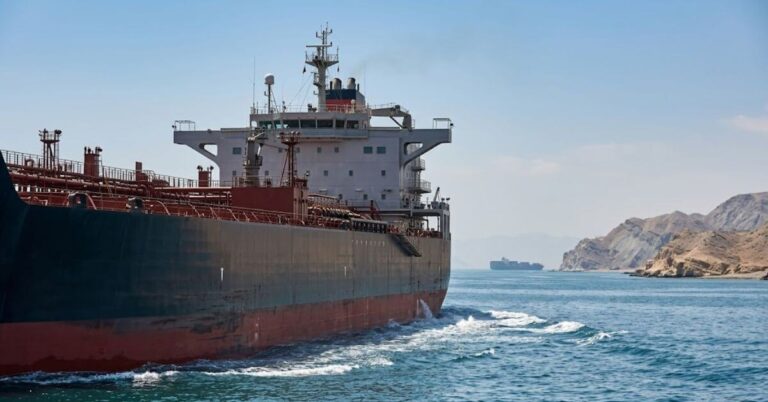
When tensions flare in the Persian Gulf, the world’s gaze turns instinctively to Tehran — to its navy, its missiles, its threats to seal off the Strait of Hormuz. But the near-paralysis of the world’s most consequential maritime corridor last week was not engineered in Iran. It was decided in London. Not in Whitehall. In the offices of insurance underwriters. That is the story that most people missed.
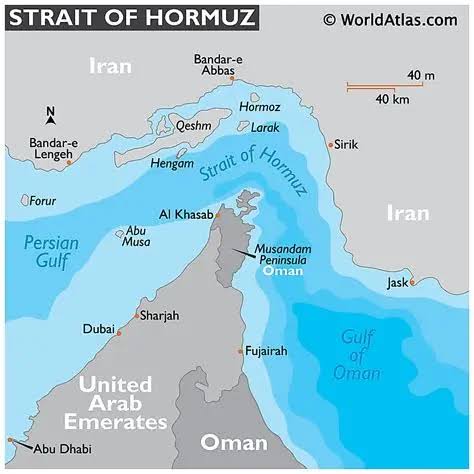
The Strait of Hormuz, the narrow channel separating Iran’s Persian Gulf coastline from the Gulf of Oman, is the jugular vein of global energy trade. On a normal day, approximately 107 cargo vessels transit its waters — tankers laden with crude oil, LNG carriers, and general cargo ships sustaining the energy and trade needs of nations across Asia, Europe, and beyond. Last week, that number collapsed to just 19 vessels. An 81 per cent drop in traffic, achieved without a single shot fired. The weapon used was a spreadsheet.

How Maritime Insurance Controls the Seas
To understand what happened, one must first understand how global shipping actually operates. Approximately 90 per cent of the world’s commercial fleet is insured by just 12 maritime insurance clubs — mutual associations that pool risk on behalf of shipowners. These clubs, in turn, rely heavily on reinsurance markets concentrated in London, where institutions including Lloyd’s of London have dominated maritime risk pricing for centuries.
When conflict escalates in a strategic waterway, reinsurers recalibrate their war risk models. When those models conclude that the numbers no longer work, they withdraw coverage — quietly, efficiently, and with devastating effect.
A $150 million oil tanker will not move without insurance. No reputable operator will expose such an asset, and the lives of its crew, to uninsured risk. When London’s reinsurance markets pull back, ships do not sail. It is that simple.
No blockade. No naval confrontation. Just the withdrawal of a policy document.
Who Bears the Cost
The consequences of a Hormuz disruption, whether engineered by military force or financial withdrawal, fall unevenly across three major players. Iran itself is among the most exposed. Almost all of its oil export revenues depend on the strait. A prolonged shipping collapse does not merely inconvenience Tehran — it cuts off the very revenue stream that funds its strategic ambitions. The so-called “oil weapon,” in this scenario, fires back at the hand that wields it.
China faces perhaps the gravest external exposure. Beijing sources roughly 40 per cent of its crude imports through Hormuz, and absorbs approximately 90 per cent of Iran’s oil exports. Qatar’s LNG shipments to China also transit the strait. It is no coincidence that Chinese officials moved swiftly to call for de-escalation — for Beijing, the economics of a closed Hormuz are existential in the short term.
The Gulf states, too — Saudi Arabia, the UAE, Qatar, Kuwait, and Iraq — depend on the strait to move the approximately 20 million barrels of oil they collectively export each day. There is no credible alternative route. The oft-cited option of rerouting through Saudi Arabia’s East-West pipeline handles only a fraction of that volume.
A Windfall for Moscow, a Headache for New Delhi
For Russia, a sustained Hormuz disruption carries a short-term silver lining. Reduced Gulf supply drives global oil prices upward, increasing the value of Russian crude exports and making Russian oil more attractive to Asian buyers already seeking alternatives to Western-sanctioned barrels.
India’s position is more complex. The country imports approximately 85 per cent of its crude oil, much of it from the Middle East. Higher shipping costs and spiking oil prices translate directly into inflationary pressure on an economy already navigating global headwinds. India’s advantage lies in the breadth of its supplier relationships — it sources from the Gulf, from Russia, and from other producers — but sustained instability in Hormuz would exact a cost regardless.
The Real Architecture of Global Power
For maritime professionals and shipping industry observers, the Hormuz episode offers a lesson that goes beyond geopolitics. It is a demonstration of how deeply financial systems — insurance markets, reinsurance pricing, risk modelling — are embedded in the infrastructure of global trade.
The world’s busiest shipping lanes are not ultimately controlled by the navies that patrol them. They are controlled by actuaries in London who decide what risk is worth pricing and at what premium. When their calculations tip past a threshold, trade freezes — not because a warship has blocked the channel, but because no shipowner can move cargo without cover.
For Nigeria and the broader African maritime community, the lesson is instructive. As the country continues to develop its own blue economy — expanding port capacity, deepening inland waterway investment, and positioning itself within global shipping networks — understanding the architecture of maritime finance is not optional. It is essential.
Missiles create headlines. Risk models decide what actually moves.
Waterways News is Nigeria’s foremost publication covering the maritime, inland waterways, and blue economy sectors


MARITIME TRADE & SHIPPING
Djibouti Unveils Largest Shipyard in East Africa, Strengthening Its Maritime Dominance
Djibouti Unveils Largest Shipyard in East Africa, Strengthening Its Maritime Dominance
By Raymond Gold | Waterways News
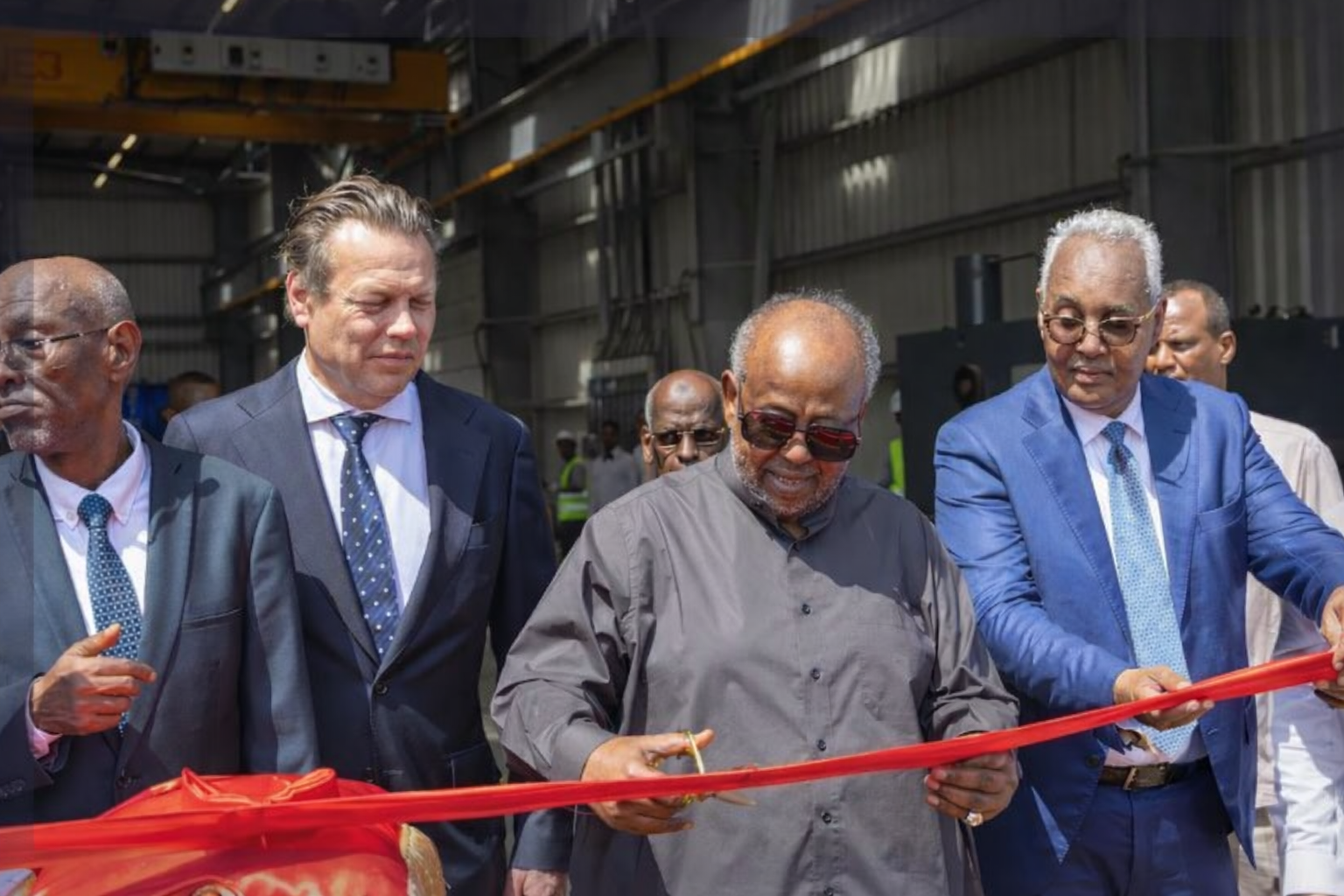
Djibouti has taken a bold step in cementing its status as Africa’s foremost maritime hub, officially inaugurating the Djibouti Ship Repair Yard (DSRY) — now the largest ship repair facility in both the Red Sea and East Africa — in a development that is already drawing attention across the continent’s maritime community.
The facility, developed through a strategic partnership with the Dutch shipbuilding giant, Damen Shipyards Group, was formally opened by President Ismaïl Omar Guelleh and financed by Invest International of the Netherlands at a cost of €107.5 million (approximately $116.5 million). The project, a decade in the making, marks a defining moment not only for Djibouti but for the broader African maritime landscape.
Speaking at the inauguration ceremony, President Guelleh underscored the significance of the project to the nation’s long-term ambitions. “The DSRY project has always been a national priority, given Djibouti’s strategic location at the entrance to the Bab el-Mandeb, one of the world’s busiest maritime routes,” he said.
The Bab el-Mandeb strait, which links the Red Sea to the Gulf of Aden, serves as a critical artery for global trade, channeling cargo between Europe, Asia, and the Middle East. It is against this backdrop that the new yard’s strategic importance becomes immediately apparent.
A Facility Built for Scale
The DSRY is no modest undertaking. Positioned on 80 hectares with over 800 metres of berth, the facility is equipped with a floating dock measuring 217 metres in length and 43 metres in width, with a lifting capacity of 20,100 tonnes — infrastructure capable of accommodating a wide range of vessel types. The yard is designed to deliver both preventive and corrective maintenance services, supported by a combination of international expertise and local talent.
Work at the yard did not wait for the official inauguration to begin. As far back as October 15, 2025, the first large vessel had already entered for dry-docking — the Africa Sun, a 13,719 dwt Djibouti-flagged containership operating along Red Sea and Middle Eastern routes, which docked for a month of repairs.
Aboubaker Omar Hadi, Chairman of the Djibouti Ports and Free Zones Authority, said the facility aligns squarely with Djibouti’s 2035 vision, reinforcing the country’s ambition to become the preeminent maritime services centre on the continent. Minister of Infrastructure and Equipment Hassan Houmed Ibrahim went further, describing the yard as “a strategic national asset that enhances port competitiveness, supports the blue economy, and strengthens Djibouti’s regional position.”
Arnout Damen, President of Damen Shipyards, reaffirmed his company’s commitment to the yard’s long-term operational success, signalling that this is more than a construction handover — it is an ongoing partnership.
Beyond the infrastructure itself, the DSRY is projected to create approximately 350 direct jobs and around 1,400 indirect positions, while nurturing a generation of skilled young professionals in advanced technical maritime fields.
A Strategic Move in a Competitive Region
Djibouti’s investment comes at a particularly charged moment in regional maritime politics. The Horn of Africa is witnessing intensifying competition over port access and control, with the United Arab Emirates actively expanding its footprint through investments and long-term port agreements across the region. Djibouti and the UAE have themselves been locked in prolonged legal disputes over port concession arrangements — a reminder of how high the stakes are in this arena.
For years, East Africa and the broader African continent have depended heavily on overseas facilities in the Middle East, Europe, or Asia for major vessel repairs, draining foreign exchange and adding logistical burden to ship operators. The DSRY fundamentally disrupts that pattern, offering a world-class alternative on African soil.
As maritime analysts have noted, the development reflects a wider continental trend: Africa is no longer content to serve merely as a transit corridor for global shipping. From Southern Africa to West Africa, investments in repair capacity are signalling an era of vertical integration — where ports, logistics, and ship maintenance ecosystems are being developed together. Djibouti’s DSRY is perhaps the most dramatic expression of that ambition yet.
Nigeria Watch
As Djibouti Opens Africa’s Largest Shipyard, Nigeria’s Floating Dock Remains a Cautionary Tale
The inauguration of Djibouti’s Djibouti Ship Repair Yard serves as both an inspiration and a sobering mirror for Nigeria — Africa’s most populous nation and, by rights, one of its most strategically positioned maritime players.
Nigeria is not without assets in this space. Nigerdock, located at the Snake Island Integrated Free Zone in Lagos, remains the largest shipyard facility in West Africa, boasting a 25,000 DWT graving dock, floating dock facilities, and multipurpose workshops that have serviced over 600 vessels in its more than three-decade history. The yard offers ship repair, maintenance, refurbishment, and offshore fabrication services, and has long been a point of pride for the country’s maritime sector.
Yet even as Djibouti cuts the ribbon on a $116.5 million state-of-the-art facility, Nigeria continues to grapple with the ghost of what should have been a transformative asset. A floating dry dock, procured at a cost of approximately N50 billion in public funds — now worth considerably more given naira depreciation — arrived in Nigeria as far back as 2018 and reportedly remained idle for years, caught in a web of bureaucratic bottlenecks and indecision over where to site it. Industry stakeholders have repeatedly described the situation as emblematic of a wider malaise afflicting Nigeria’s maritime infrastructure development.
Watchers of Nigeria’s maritime sector are not blind to the potential. With an estimated 5,000 ship calls annually at its ports, hundreds of active coastal vessels, and a significant fishing fleet, the commercial case for a functional, world-class ship repair ecosystem in Nigeria is overwhelming. Industry estimates have suggested the country could save upwards of N350 billion annually — and earn millions more in foreign exchange — by reducing its dependence on overseas dry-docking, which can cost operators over $1 million per tow before a single repair is carried out.
The question, as Djibouti’s example makes plain, is not whether Nigeria has the need or the resources. It is whether the country can muster the institutional will to transform that need into reality — before other nations on the continent permanently capture the market that should, by geography and volume, belong to Nigeria.
Raymond Gold is Co-publisher and Research reporter for Waterways News. For maritime industry updates, visit www.waterwaysnews.ng
MARITIME TRADE & SHIPPING
NPA: Nigeria Shipped Over 500,000 Tonnes of Petroleum Products from Dangote Refinery to Africa in March

NPA: Nigeria Shipped Over 500,000 Tonnes of Petroleum Products from Dangote Refinery to Africa in March
By Okeoghene Onoriobe | Waterways News Correspondent | Lagos
The Nigerian Ports Authority (NPA) says it played a central role in facilitating the export of more than 500,000 tonnes of petroleum products from the Dangote Refinery to African countries in March alone — a development the authority attributes to improved port coordination and the deployment of a One-Stop-Shop (OSS) framework at the refinery’s terminal.
NPA Managing Director, Dr Abubakar Dantsoho, disclosed this during a stakeholders’ engagement convened by the Ministry of Marine and Blue Economy in Lagos, describing the feat as a demonstration of Nigeria’s growing capacity as a petroleum export hub on the continent.
“As a matter of fact, in the past month, we exported over 500,000 tonnes of petroleum products from Dangote Refinery to African countries. The exports are handled by ships, supported by the NPA’s capacity in port and cargo operations,” Dantsoho said.
The NPA boss noted that despite disruptions to global vessel movement caused by the ongoing Middle East conflict, Nigeria’s domestic and export petroleum supply chains remained stable — a contrast, he said, to several other nations grappling with energy queues and supply shortfalls.
He credited the performance to the OSS platform, introduced under the directive of the Minister of Marine and Blue Economy, Dr Adegboyega Oyetola. The system, which Dantsoho likened to the National Single Window initiative, is designed to bring all agencies and private operators at the Dangote Refinery terminal into a single, coordinated operational framework.
“This system operates similarly to the National Single Window, ensuring efficiency and coordination,” he said, adding that all stakeholders now operate in sync with the refinery’s distribution architecture.
The statement was issued by the NPA’s General Manager for Corporate Communications and Strategy, Mr Ikechukwu Onyemekara.
The March export figures signal a significant step in Nigeria’s ambition to transition from a petroleum-importing nation to a regional supplier — with the country’s port infrastructure and maritime logistics increasingly positioned at the centre of that shift.
MARITIME TRADE & SHIPPING
After 34 Years of Statelessness, Somalia Registers Its First Flag Vessel — A Warning Signal for African Maritime Sovereignty
After 34 Years of Statelessness, Somalia Registers Its First Flag Vessel — A Warning Signal for African Maritime Sovereignty
By Isaac Abekpe
Somalia has officially registered its first nationally flagged vessel since the collapse of its central government in 1991, in what Mogadishu is calling a landmark step toward reclaiming maritime authority over the longest coastline on mainland Africa.
The vessel, named Guney, completed all required legal and regulatory processes before departing Mogadishu under the Somali flag — the first time in over three decades that a vessel has done so under internationally recognised procedures, according to the country’s Ministry of Ports and Maritime Transport.
The registration was made possible through a memorandum of understanding between the ministry and Somali Ship Register Limited, whose general manager Çağdaş Oykun Saltaş signed the agreement alongside Ports and Maritime Transport Minister Abdulqadir Mohamed Nur.
“Today marks an important moment that demonstrates Somalia’s return to its rightful place in international shipping,” Nur said at the announcement ceremony in Mogadishu.
The development carries significant weight for the broader African maritime community. Somalia’s coastline, stretching over 3,300 kilometres, remained effectively ungoverned for decades after state institutions crumbled in the early 1990s. The resulting maritime vacuum bred some of the most disruptive piracy in modern shipping history, with attacks on commercial vessels in the western Indian Ocean plaguing global trade routes well into the 2010s.
For a continent where maritime sovereignty remains a live and often contested issue — and where nations like Nigeria continue to push for stronger indigenous participation in shipping — Somalia’s tentative reassertion of flag state authority offers both a cautionary tale and a model of renewal.
Got a maritime story from across Africa? Reach Waterways News at waterwaysnews.ng
-

 Oil and Gas4 weeks ago
Tantita’s Pipeline Deal: $144m Contract, Rising Output, and the Questions that Deserve Answers
-
 Blue Economy2 months ago
Nigeria’s Coast Guard Bill: A Solution in Search of a Problem?
-
 Business1 month ago
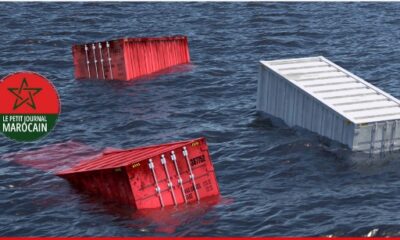
CASABLANCA PORT SHUT DOWN AFTER VESSEL LOSES 85 CONTAINERS — SHIP SERVES NIGERIAN ROUTES