
Op-Ed
How Nigeria Can Benefit from the China-US Trade War

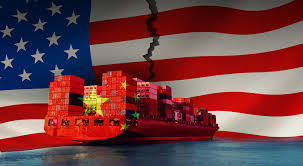

The ongoing trade war between China and the United States has changed global trade in many ways. Countries that once relied on China’s manufacturing power are now thinking of new options. Nigeria, with its large population and strategic location, stands to gain if it plays its cards right. Instead of sitting back, Nigeria can turn these shifts into chances to grow its economy. Here’s a look at how Nigeria can make the most of this situation.
The Impact of the China-US Trade War on Global Supply Chains
Disruptions and Realignments in Global Trade
The trade war has caused many companies to rethink where they produce goods. Some firms are moving factories from China to other countries like Vietnam, India, or Mexico. This means supply chains are changing fast, and new trade routes are opening up. Countries that attract these moving factories can see a boost in investments and jobs.
Opportunities for Developing Countries
Countries that had little manufacturing before are now getting new opportunities. Nigeria, with its large and growing market, has the chance to become an alternative manufacturing hub. Companies looking to diversify away from China will consider Nigeria because of its resources and strategic position.
Expert Insight
Trade analysts say these shifts could benefit countries that are ready. They note that Nigeria’s potential is now more visible because of the realignment of global supply chains. The key is for Nigeria to act quickly and attract new investments.

Nigeria’s Strategic Advantages Amid the Trade War
Geopolitical and Economic Positioning
Nigeria is Africa’s largest economy with a big, youthful population. Its location offers easy access to other African markets. This makes Nigeria an attractive spot for companies seeking to expand across the continent. A large market also means more opportunities for local businesses to grow.
Existing Infrastructure and Resources
Nigeria is rich in natural resources like oil, gas, and minerals. It also has some industries like agriculture and basic manufacturing. These resources can be used to support new investments, especially if the government improves infrastructure.
Policy Environment and Business Climate
Nigeria has started to offer incentives for foreign investors. Still, making it easier to do business is crucial. Improving transport, port operations, and electricity supply will make Nigeria more tempting for companies looking to relocate or invest.
Seizing Investment Opportunities in Key Sectors
Agriculture and Agro-Processing
Trade flows are changing, giving Nigeria a chance to export more farm products. Investing in processing facilities can turn raw materials into finished goods, increasing exports. For example, Nigerian rice and cocoa could see more markets opening in new trade routes.
Manufacturing and Light Industry
Nigeria has room to grow in textiles, electronics, and consumer goods. Some local companies already expand their reach, attracting new investors. More foreign factories could set up here if the business environment improves.
Technology and Digital Services
Nigeria’s tech scene is booming. Startups are developing apps, e-commerce platforms, and digital tools fast. The country has talented young people eager to innovate. This creates an opportunity for foreign tech firms to partner or invest.
Strengthening Nigeria’s Trade and Diplomatic Relations
Building Alliances with China and the US
Nigeria can boost its trade ties with both countries. Staying friendly with China and the US can help Nigeria secure more investment deals. It might also act as a middleman to facilitate new trade agreements.
Regional Integration and Trade Blocs
Joining regional groups like ECOWAS and the African Continental Free Trade Area (AfCFTA) can open doors to more markets. Nigeria could export more goods within Africa, boosting its economy and creating jobs.
Actionable Tips
- Set up agencies to promote trade and investment clearly.
- Highlight Nigeria’s competitive edges, like its resources and land.
- Attend international trade fairs and business forums regularly.
Challenges and Risks to Overcome
Infrastructure and Logistics Bottlenecks
Getting goods across Nigeria remains slow and expensive. Improving roads, ports, and power supply can help attract more factories and exporters.
Political and Economic Stability
Consistency in policies makes Nigeria more appealing. Sudden changes can scare away investors. Keeping politics stable and transparent is essential for long-term growth.
Capacity Building and Skills Development
Many Nigerian workers lack specific skills. Reforms in education and vocational training can fill this gap. Working with international partners can speed up skill development.
Conclusion
Nigeria faces a real chance to grow from the China-US trade war. By focusing on key sectors, improving infrastructure, and building strong trade links, Nigeria can become a regional leader in trade and manufacturing. The country needs to act fast and smart to attract investments and create jobs. Embracing reforms, fostering partnerships, and investing in people will shape Nigeria’s bright future as a major trade hub in Africa. Now is the time to turn these economic shifts into lasting success.


CVFF at 23: Nigeria’s Ship Owners Still Counting Ceremonies, Not Vessels
Two decades of contributions, a flurry of directives, forums and portal launches — but no single kobo has left the vault. As Presidential approval is again cited, stakeholders are asking: will this time be different?
By Emetena Ikuku | Waterways News Maritime Desk
For twenty-three years, Nigerian ship owners have paid into the Cabotage Vessel Financing Fund. For twenty-three years, they have been told disbursement is imminent. Today, the fund remains undisbursed — and the maritime industry has grown weary of applauding the machinery of process rather than the delivery of capital.
The latest chapter in this drawn-out saga unfolded in April 2025, when Minister of Marine and Blue Economy, Adegboyega Oyetola, directed the Nigerian Maritime Administration and Safety Agency (NIMASA) to commence immediate disbursement of the long-embattled CVFF. NIMASA responded by issuing a Marine Notice inviting eligible indigenous shipping companies to submit applications, with qualified operators able to access up to $25 million each. The notice carried a tone of urgency. After years of false dawns — including a 2024 directive from the same minister citing Presidential designation of the CVFF as a key performance indicator for his ministry — industry stakeholders allowed themselves to feel optimistic.
A month later, in May 2025, NIMASA convened a one-day interactive forum at which the minister spoke of transparency mechanisms, a dedicated Cabotage Secretariat Unit, and partnerships with twelve Primary Lending Institutions. The expectation was almost palpable: the jinx, it seemed, had finally been broken.
It had not.
Another Ceremony, Another Threshold
On 22 January 2026, what the industry received was not a disbursement — it was another launch. At the Eko Hotel & Suites, Victoria Island, Lagos, an elaborate ceremony marked the unveiling of an online application portal. Senators, House of Representatives members, shipping company executives, maritime lawyers, agency heads and ministry officials were in attendance. Speeches were made. Officials rehearsed the familiar catalogue of benefits that CVFF disbursement would deliver — indigenous capacity growth, vessel acquisition, job creation, GDP contribution. Lawmakers congratulated NIMASA and the minister. Even maritime lawyers joined the chorus of commendation.
What was absent was any announcement of a beneficiary, a signed loan agreement, or a drawdown date.
The portal, while not without utility as an administrative tool, arrived at a moment when observers had every reason to believe disbursement had already commenced. Industry watchers who had followed proceedings through 2025 were not expecting to celebrate the beginning of an application process — they were expecting to hear of vessels being financed.
The Cost of Ceremony
Beyond the optics of process over outcome, a harder question hangs over the January launch: how much did it cost to unveil a digital portal? Flights and accommodation for invited senators and dignitaries, venue hire and production at one of Lagos’s premier hotel venues, LED screens, stage and lighting, catering, security, media coverage, consultancy and logistics — each line item may appear routine in isolation. Together, analysts note, they could rival the capital outlay for maritime training infrastructure or auxiliary vessel equipment.
A portal of the nature launched could plausibly have been built and publicised for well under N2 million. The ceremony around it almost certainly cost a multiple of that figure. In a sector crying out for capital, the allocation of scarce resources to spectacle over substance invites legitimate scrutiny.
The Structural Problem a Portal Cannot Solve
NIMASA’s Director-General has been explicit that submission of an application through the portal does not guarantee disbursement. This is an important admission, because it locates the real obstacle precisely where it has always been: not in the absence of a digital gateway, but in the structural conditions that have historically prevented approved applicants from actually receiving funds.
Bank lending appetite, eligibility criteria that shift with political priorities, approval timelines, and the sheer inertia of bureaucratic process — these are the walls that an application portal does not demolish. If Nigerian ship owners navigate a sleek digital interface only to encounter the same institutional blockages downstream, technology will have succeeded only in modernising disappointment.
What indigenous operators need is not another threshold to cross. They need certainty: that banks will lend, that criteria will remain stable, that approvals will be timely, and that funds will physically transfer.
Presidential Approval — Again
At the time of writing, it has been announced that Presidential approval for CVFF disbursement has been secured, and that NIMASA is preparing to disburse to sixty applicants who have registered interest through the portal. The announcement has been received by stakeholders with the circumspect caution of people who have been here before — not dismissal, but a measured wait-and-see that reflects the fund’s long history of near-misses.
The question the industry is asking is not whether the announcement is well-intentioned. It is whether, this time, the outcome will match the declaration.
Nigeria Watch
The CVFF was established under the Coastal and Inland Shipping (Cabotage) Act of 2003 to provide concessionary financing for Nigerian shipping companies to acquire vessels and compete in domestic waters. Over two decades, the fund has accumulated levy contributions from foreign shipping operators engaged in Nigerian cabotage trades — a pool now estimated at hundreds of millions of dollars.
Repeated failure to disburse has meant that the fund’s intended purpose — growing an indigenous fleet capable of displacing foreign operators in Nigerian coastal and inland trade — remains largely unrealised. Nigeria’s flag carrier ambitions, currently being pursued through the AD Ports Group and DP World partnership frameworks, sit alongside a CVFF that has yet to finance a single verified vessel acquisition at scale.
For NIMASA DG Dayo Mobereola, whose agency has staked significant institutional credibility on this disbursement cycle, the coming weeks will be definitive. For Minister Oyetola, the CVFF remains a litmus test for whether the Federal Ministry of Marine and Blue Economy can translate maritime policy ambition into measurable fleet development outcomes.
Twenty-three years after contributions began, the industry is not asking for another milestone in the process. It is asking for vessels in the water.
Editorial
NCS Revenue Surge Raises Hard Questions on Trade, Ports, and the Real State of Nigeria’s Economy


NCS Revenue Surge Raises Hard Questions on Trade, Ports, and the Real State of Nigeria’s Economy
28 April 2026 | Waterways News
As Customs collections hit ₦7.28 trillion in 2025, maritime stakeholders and port operators ask: who is this growth working for?
The Numbers Tell One Story. The Ports Tell Another.
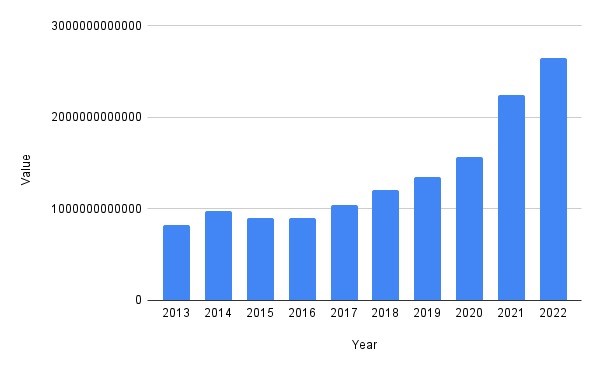
The Nigeria Customs Service has recorded a remarkable revenue trajectory over the past five years — from ₦1.562 trillion in 2020 to ₦2.24 trillion in 2021, ₦2.60 trillion in 2022, ₦3.21 trillion in 2023, ₦6.1 trillion in 2024, and a historic ₦7.28 trillion in the 2025 fiscal year.
For an agency that passes enormous volumes of cargo through Nigeria’s seaports — Apapa, Tin Can Island, Onne, Lekki, and beyond — these figures represent a significant institutional achievement. But they also raise uncomfortable questions that the maritime industry cannot afford to ignore.
Nigeria’s ports are the primary gateway through which the bulk of this revenue is generated. Yet the broader economic context in which they operate — rising inflation, declining consumer purchasing power, factory closures, and stubbornly high unemployment — sits in sharp and troubling contrast to the customs revenue boom. Port-side operators, freight forwarders, and cargo owners continue to report shrinking cargo volumes and tightening margins. If trade is booming enough to generate ₦7.28 trillion, the question industry must ask is: what exactly is being traded, and who bears the cost?
What Is Driving the Revenue Growth?
Several plausible factors are in circulation among port stakeholders. The increasing use of Nigeria’s deep-water terminals by neighbouring landlocked countries — as transit hubs — may be contributing to throughput volumes. Elevated import values driven by naira depreciation naturally inflate duty assessments even where actual cargo volumes are flat or declining. Improved compliance enforcement and the deployment of technology under the leadership of Comptroller-General Dr. Wale Adeniyi may also be playing a role.
The NCS itself has been emphatic that modernisation and automation are central to its revenue performance. For port users and trade facilitators, however, the concern is whether this modernisation is translating into faster cargo clearance, reduced dwell times, and a more competitive port environment — or simply higher collections at the same inefficient pace.
Port Modernisation: Sustained Momentum or Another False Dawn?
Nigeria’s seaport sector has seen its share of well-announced reforms that stalled or reversed. The current wave of trade facilitation measures — the Nigeria National Single Window, the ICTN cargo tracking scheme, and broader port concession renewal processes — must not suffer the same fate.
Maritime stakeholders have a direct stake in ensuring that port modernisation programmes are not merely collection-optimisation exercises for government revenue but genuine improvements in the ease of doing business at Nigerian ports. Reduced cargo dwell times, elimination of multiple documentation bottlenecks, and clear interagency coordination between Customs, the Nigerian Ports Authority, NIMASA, and the Nigerian Shippers’ Council are the benchmarks against which reform must be measured.
There is also the question of interagency alignment. Customs modernisation, however well-funded, cannot function at peak effectiveness in an environment where other agencies at the ports operate on different — and sometimes conflicting — technological and operational platforms. The call for harmonisation is not new, but it remains unheeded at considerable cost to port efficiency.
Anti-Smuggling: Warehouses Bursting, Disposal Lagging
The NCS’s anti-smuggling operations have yielded substantial seizures across all its zones — covering narcotics, foodstuffs, machinery, drones, and contraband clothing and footwear. The Duty Paid Value of these seizures has grown in parallel with revenue figures.
But a problem persists that directly concerns port and logistics operators: the timely disposal of seized goods. Customs warehouses and holding facilities are reportedly overwhelmed, with perishable and time-sensitive items deteriorating while awaiting resolution. In a country where poverty and food insecurity are daily realities, the spectacle of seized rice and foodstuffs rotting in government custody is both a logistical failure and a moral indictment. Faster, more transparent disposal mechanisms — including structured auctions and regulated redistribution frameworks — must be prioritised.
Security Collaboration: The Port Dimension
On maritime and border security, the NCS has strengthened its collaborative frameworks with both domestic agencies and international partners. At a recent international Customs conference, CG Adeniyi stated that crime has evolved beyond borders and that coordinated global action is now a necessity rather than an option.
For the port and maritime sector, this translates directly to the effectiveness of joint operations between Customs, the Nigerian Navy, NIMASA’s Deep Blue Project assets, and port security authorities in combating container fraud, arms trafficking, and narcotics transit through Nigeria’s terminals. The gains recorded in this space deserve acknowledgment, even as gaps in inland container depot oversight and the informal coastal trade corridor continue to attract scrutiny.
CSR: Customs Cares — But What About the Port Community?
The NCS under Dr. Adeniyi has expanded its Corporate Social Responsibility footprint, extending support to institutions across the country. This is commendable. The maritime community, however, has a specific expectation: that CSR initiatives extend meaningfully to port-host communities — the residents of Apapa, Tin Can, Onne, and Warri — whose daily lives are most directly disrupted by port operations and whose infrastructure needs are most acute.
Port-adjacent community investment by the NCS, in partnership with the NPA and terminal operators, would represent a more targeted and impactful use of goodwill resources than broad national CSR campaigns.
Nigeria Watch
The NCS revenue story is ultimately a mirror held up to Nigeria’s broader economic contradictions. For maritime and port stakeholders, the headline numbers matter less than the structural questions underneath them: Is port trade actually growing, or are inflated naira values masking volume stagnation? Is modernisation accelerating cargo clearance, or simply digitising existing bottlenecks? And critically — is the revenue generated at Nigeria’s ports being recycled into the port infrastructure, security architecture, and community development frameworks that would make those ports more competitive, not just more extractive?
The Federal Ministry of Marine and Blue Economy, the NPA, and the NCS must align on a shared port productivity agenda that treats revenue performance and operational efficiency as inseparable goals. Trillion-naira collections mean little if Nigeria’s ports continue to lose cargo to Cotonou, Lomé, and Tema.
Waterways News | Maritime | Ports | Shipping | Blue Economy
Blue Economy
Who Fills the Bucket? Why Nigeria’s $1.1BN Port Overhaul Must Empower Indigenous Shipowners

Who Fills the Bucket? Why Nigeria’s $1.1BN Port Overhaul Must Empower Indigenous Shipowners
Op-Ed | Blue Economy By Raymond Gold O
There is an old saying worth repeating in the corridors of Abuja’s maritime bureaucracy: it is a tragedy to build the finest house in the village, only for your neighbours to own the keys to the front door.
Nigeria has spent considerable political capital — and now $1.1 billion in projected investment — on modernising the physical infrastructure of its gateway ports. But if every vessel docking at a rebuilt Apapa or Tin Can Island flies a foreign flag, and every dollar in freight charges is repatriated abroad, the concrete and cranes amount to little more than an expensive gift to others.
The second chapter of Nigeria’s maritime reform must be about who fills the bucket, not just how well the bucket is built.
The CVFF: A Fund Too Long Locked Away
At the heart of this conversation is the Cabotage Vessel Financing Fund — a mechanism that has, over the years, quietly accumulated more than $700 million from levies on local operators. For too long, that money has sat inaccessible, reducing Nigerian shipowners to spectators in their own territorial waters while foreign carriers collected the dividends of our trade.
That may finally be changing. NIMASA confirmed this week that over 60 indigenous shipowners have already submitted applications through the newly launched CVFF portal — a sign that operators are ready and waiting, even if the system is only now catching up with them.
Minister Adegboyega Oyetola has added weight to the disbursement push, signing a 2026 Performance Bond with maritime agency heads that mandates a transparent and time-bound release of the funds. The bond is notable not just for its content, but for its symbolism: accountability, formally committed to paper.
Four Years Without Piracy — A Quiet Revolution
Backing up the financing drive is a security milestone that deserves far more attention than it has received. Nigeria has now recorded zero piracy incidents in its territorial waters for four consecutive years — a remarkable turnaround for a coastline that, not long ago, was rated among the world’s most dangerous for seafarers.
This is not a footnote. For local banks reluctant to finance vessel acquisitions and for global partners weighing exposure in Nigerian waters, a clean four-year security record is the most persuasive commercial argument available. It de-risks the sector in ways that no policy paper can.
A National Carrier: Ambition Meets Pragmatism
Beyond the CVFF, the Tinubu administration is moving to resurrect a national shipping line — this time through a Public-Private Partnership model involving global port operators AD Ports Group and DP World. The structure reflects a pragmatic acknowledgment that Nigeria need not start from scratch; it can leverage established expertise while retaining strategic ownership.
The commercial prize is substantial. Nigeria currently has negligible presence in the $10 billion annual ship charter market, the overwhelming bulk of which is captured by foreign firms routing cargo through — and profiting from — Nigerian trade lanes. Even a modest domestic share of that market would generate foreign exchange savings, create thousands of skilled seafaring jobs, and provide a structural prop for the naira that no central bank intervention can replicate.
Two Sides of the Same Coin
Port modernisation and indigenous shipping empowerment are inseparable. A world-class berth that is perpetually served by foreign-flagged vessels is a subsidy to other nations’ maritime industries. Conversely, a well-capitalised Nigerian fleet without upgraded port infrastructure to work from is equally incomplete.
Nigeria has spent decades constructing the stadium. The $1.1 billion modernisation programme, the unlocking of the CVFF, the security gains in the Gulf of Guinea, and the push for a new national carrier are, together, the most credible attempt yet to let the home team actually play.
The question now is execution. Performance bonds and portal launches are encouraging signals. But the measure of this reform chapter will not be applications submitted — it will be ships in the water, flying the Green Eagle, and earnings staying onshore.
Raymond Gold is Co-publisher of Waterways News.
Waterways News is Nigeria’s leading maritime publication, tracking the Blue Economy, port trade, and waterways policy.
-

 Oil and Gas2 months ago
Tantita’s Pipeline Deal: $144m Contract, Rising Output, and the Questions that Deserve Answers
-
 Blue Economy2 months ago
Nigeria’s Coast Guard Bill: A Solution in Search of a Problem?
-
 MARITIME TRADE & SHIPPING2 months ago
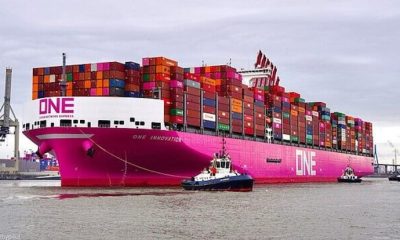
World’s Largest Container Ship Sets New Maritime Record with 22,233 TEUs on Single Voyage