
Waterways Safety and Security
Jigawa Boat Mishap: Death Toll Climbs to Six, 34 Still Unaccounted For


Jigawa Boat Mishap: Death Toll Climbs to Six, 34 Still Unaccounted For
By Okeoghene Onoriobe | Waterways News
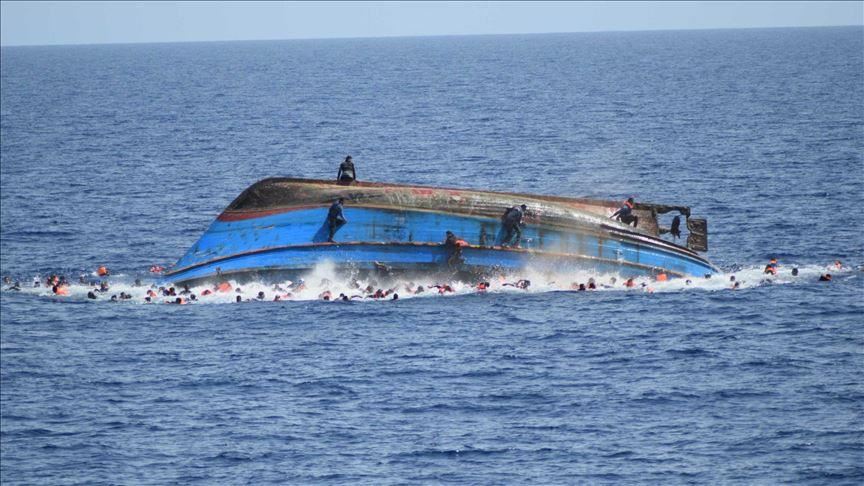
Six persons have been confirmed dead and 34 others remain missing following the capsizing of a boat conveying about 40 farmers and labourers across a river in Malamawar Yan Dutse community, Ringim Local Government Area of Jigawa State.
The incident, which occurred at about 4:30pm on Sunday, has triggered a multi-agency search and rescue operation involving the Jigawa State Police Command, the State Emergency Management Agency (SEMA), and local divers, according to police spokesperson Shi’isu Adam.
Search efforts, suspended overnight due to poor visibility, resumed at daybreak on Monday, with divers vowing to continue until every passenger has been accounted for.

The tragedy has plunged affected families into an anxious wait for news of missing relatives, while residents of the community have renewed calls for improved water transport infrastructure, including the provision of life jackets, modern ferries, and better roads and bridges, to reduce dependence on risky river crossings. Authorities have appealed to residents to remain calm as the search continues.
Nigeria Watch
The Jigawa tragedy is the latest entry in a grim, recurring ledger of inland waterways disasters that continue to expose the yawning gap between Nigeria’s blue economy ambitions and the safety realities on its rivers and creeks. That a boat could be carrying roughly 40 farmers and labourers on a routine river crossing, with no indication of life jackets, certified capacity limits, or formal oversight, speaks to a pattern this publication has tracked repeatedly, the fatal capsizing of boats driven not by extraordinary weather but by ordinary, preventable failures in vessel standards, overloading, and enforcement.
Jigawa sits far from the Lagos lagoon routes that dominate LASWA’s regulatory attention, and that geographic distance is itself instructive. It underscores how Nigeria’s water transport safety deficit is not a Lagos problem or a NIWA problem alone, it is a national one, cutting across states where rivers serve as the only practical link between farming communities and markets, in the near-total absence of bridges or motorable roads.
The residents’ demand for life jackets, ferries, and road infrastructure is a familiar refrain in the aftermath of every such accident, from the Niger boat tragedies to Mile 2 to now Ringim. What is less familiar is a sustained federal or state response that outlives the news cycle. With NIWA and state emergency agencies stretched thin, and the Cabotage Vessel Financing Fund still largely inaccessible to the small-scale operators who might otherwise invest in safer vessels, incidents like this will keep recurring in rural riverine communities that rarely feature in the maritime safety conversation until tragedy forces them into it.
NIWA Warns Unregulated Sand Dredging Fuelling Flooding, Erosion in Riverine Communities
By Okeoghene Onoriobe | Waterways News
The National Inland Waterways Authority (NIWA) has raised alarm over the growing threat posed by unregulated sand dredging to riverbank stability, warning that the activity is worsening flooding and erosion in communities across the country. The Authority said indiscriminate dredging weakens riverbanks, alters the natural course of waterways, and heightens the vulnerability of riverine communities to disaster.
The warning was issued by NIWA’s Area Manager, Farooq Imam, during a sensitisation exercise organised for sand dredgers and residents of Tamburawa communities in Kano State. Sand dredging remains a major source of livelihood in the area, with many residents dependent on the activity for daily income. NIWA, however, expressed concern that some operators were failing to comply with established safety and environmental regulations governing the trade.
Imam warned that uncontrolled dredging undermines riverbank stability, deepening erosion and raising flood risk for communities downstream. He urged dredgers to strictly observe regulations guiding their operations, stressing that compliance with safety and environmental standards was critical to protecting the lives of operators, residents and other waterway users.
He further called on all those working along the waterways to embrace safer practices and avoid activities capable of causing avoidable environmental damage.
As part of measures to reduce accidents and strengthen safety in riverine communities, NIWA distributed life jackets to residents and workers engaged in waterway-related activities, advising beneficiaries to make consistent use of the equipment, particularly while operating on or around the water.
Responding on behalf of operators, the Chairman of the Sand Dredgers Association of Kano State, Mustafa Ahmad, appealed to government and relevant agencies for greater support for the sector, arguing that stronger collaboration between government and dredging operators would help resolve industry challenges while encouraging compliance with safety standards.
NIWA maintained that sustained engagement with dredging communities and operators remains essential to promoting responsible dredging, protecting lives, and preserving the environment. The Authority reiterated that dredging activities must strictly follow established safety and environmental regulations to reduce their contribution to flooding, erosion, and other hazards threatening riverine communities.
Nigeria Watch
The Tamburawa sensitisation exercise fits a pattern that recurs across NIWA’s field engagements nationwide: safety directives and equipment handouts delivered to informal operators whose livelihoods sit outside any formal regulatory or financing framework. Sand dredging, like artisanal boat transport, is a subsistence trade for thousands of riverine Nigerians, and NIWA’s compliance messaging, however well-intentioned, lands on operators who often lack the capital, training or alternative income streams to absorb the cost of regulation.
That tension is the real story behind Kano’s appeal from the Sand Dredgers Association chairman, Mustafa Ahmad, for government support. It echoes calls Waterways News has tracked from WABOTAN and ATBOWATON, the boat operator cooperatives that have long argued that enforcement without empowerment simply pushes informal operators further into non-compliance. Life jackets and warnings address symptoms; they do not touch the structural gap between what NIWA expects of small-scale waterway workers and what NIWA or any federal support scheme has offered them in return.
There is also an unresolved policy dimension. Nigeria’s inland waterways have seen a string of flooding and erosion incidents linked to unregulated dredging and sand-mining activity, yet no dedicated licensing or monitoring framework specific to riverbank sand extraction has emerged nationally, leaving area offices like Kano’s to manage the problem through localised sensitization rather than systemic regulation. Until that gap is closed, expect more of these community-level warnings and more appeals like Ahmad’s, without a durable shift in outcomes.

Parts Central Takes Waterway Clean-Up Drive to Port Harcourt, Eyes Wealth from Waste
By Ighoyota Onaibre | Waterways News
Parts Central Limited is extending its waterways clean-up initiative to Port Harcourt, Rivers State, as it moves to tackle indiscriminate waste disposal and pollution across Nigeria’s inland waterways, and to turn recovered waste into economic value.
The company’s Managing Director, Henry Olaoluwa Onifade, disclosed this while interacting with maritime journalists in Lagos on Thursday, saying the programme, first launched in Lagos in partnership with the National Inland Waterways Authority (NIWA), is now being rolled out to other parts of the country, starting with Port Harcourt.
Onifade said the initiative goes beyond simply clearing waste from the waterways. The company is building systems to collect, sort and process recovered materials — turning plastic waste into recyclables, and water hyacinth and other organic matter into manure, biofuels and other value-added products.
“Those biodegradables are something that we will still recycle for different things — manure and different other things. So, there is nothing that is waste,” he said, responding to questions about what happens to organic material after plastics are sorted out.
He said the clean-up drive would be anchored on data and technology. Parts Central is partnering with the National Institute of Information Technology (NIIT) to build a nationwide database covering ports, jetties, landing points, riverbanks, dockyards and riverine communities connected to Nigeria’s waterways.
“We need the data because if you don’t have data of the people you want to cater for, you won’t know how to cater for them,” Onifade said, adding that the database would help determine waste volumes by location and guide where resources are deployed. Every jetty and landing point would be assessed for existing waste-management facilities, he said, with boats and other watercraft also factored into the data-gathering exercise.
Onifade said the company had spent considerable time testing technologies for tackling waterway pollution, and that the exercise would eventually draw in manufacturers and other players in the plastics and waste-management value chain. Before extending further beyond Lagos, he said, the company is putting structures in place to ensure the programme is properly coordinated and data-driven.
He pointed to rising interest from government agencies, associations and other stakeholders, including the National Environmental Standards and Regulations Enforcement Agency (NESREA), which he said is separately engaging stakeholders on reducing plastic pollution in waterways, as evidence the initiative is addressing a pressing national problem.
“Our goal is for us to have pollution-free waterways. By God’s grace, we will integrate everybody who has a very good and genuine mindset that pollution-free waterways is possible in Nigeria,” he said, summing up the company’s ambition in a phrase: “No more waste on the waterways; we will now have wealth on the waterways.”
Nigeria Watch
Parts Central’s Lagos pilot has already drawn public backing from different stakeholders within the inland waterway community. SWAAADO www.swaaado.org particularly endorsed the NIWA-Parts Central Inland Waterways Clean-Up Initiative when it launched, framing it as the kind of practical, partnership-driven intervention that inland transport operators have long called for, rather than another policy announcement that stalls at the press-briefing stage.
The Port Harcourt expansion will be watched closely on that same basis. Nigeria’s inland waterways carry a familiar pattern: high-profile clean-up and modernisation pledges in Lagos that struggle to reach the creeks, jetties and landing points of the Niger Delta and beyond, where waste-management infrastructure is thinnest and where small-scale boat operators, the same constituency represented by WABOTAN and ATBOWATON, bear the brunt of polluted channels, blocked waterways and the safety hazards that come with them.
The NIIT-backed database Onifade describes, if it materialises as promised, would be a notable departure from how waterway interventions are typically planned in Nigeria with little baseline data on which communities, jetties and landing points actually need waste infrastructure. Whether that data-gathering exercise extends meaningfully into Rivers State’s riverine communities, and whether the “wealth from waste” model produces real income for operators on the ground rather than remaining a corporate talking point, will be the test of whether this expansion earns the same stakeholder goodwill the Lagos pilot received.
FG, NSIB Move to End Turf Wars Over Waterways Safety, Push One-Hour Accident Reporting Rule
By Okeoghene Onoriobe | Waterways News
The Federal Ministry of Marine and Blue Economy (FMMBE) and the Nigerian Safety Investigation Bureau (NSIB) have opened talks on tightening inter-agency cooperation to improve safety across Nigeria’s waterways, amid concerns that overlapping mandates among maritime agencies are slowing accident response and compromising investigations.
Permanent Secretary of the ministry, Fatima Mahmood, said the collaboration was designed to clarify institutional responsibilities and eliminate duplication in maritime safety regulation, enforcement, and accident investigation. She spoke in Abuja on Wednesday while receiving an NSIB delegation led by the bureau’s Director-General, Capt. Alex Badeh Jnr., noting that the ministry was reviewing the marine and blue economy ecosystem to ensure agencies are properly positioned to deliver on their statutory functions.
Badeh used the meeting to press for independent marine casualty investigations to be formally integrated into ongoing maritime policy reforms. He warned that poor coordination and delayed accident reporting could cost lives and destroy evidence critical to establishing what went wrong.
Citing Nigeria’s estimated 10,000 kilometres of navigable inland waterways spread across 28 states, Badeh argued that effective coordination among agencies was no longer optional. He proposed a formal casualty notification protocol that would require marine accidents to be reported to relevant authorities within one hour, giving investigators a realistic window to reach accident scenes and preserve evidence before it is lost or tampered with.
He reiterated that the NSIB’s investigations are independent and no-blame, aimed strictly at establishing the causes and circumstances of accidents and issuing safety recommendations rather than apportioning liability. Stronger inter-agency coordination and timelier investigations, he said, would raise Nigeria’s maritime safety standards and reinforce the country’s standing as a responsible flag, port, and inland waterways state.
Nigeria Watch
The FMMBE-NSIB talks touch a nerve Waterways News has tracked closely: Nigeria’s inland waterways safety architecture has long been fractured by unclear boundaries between NIWA, LASWA, NIMASA, and now NSIB, a fragmentation the Supreme Court’s jurisdiction rulings only partly settled. A one-hour casualty notification protocol sounds straightforward in Abuja, but its real test will be on waterways run largely by informal operators, the wooden boat services and cooperative-run routes represented by groups like WABOTAN and ATBOWATON, where accidents are frequently unreported, underreported, or reported informally to community and cooperative leadership rather than any federal agency.
If the ministry is serious about “clarifying mandates,” that clarity needs to reach beyond Abuja boardrooms to the boat operators actually working the creeks: who they call when a boat capsizes, how fast help arrives, and whether reporting an accident exposes them to enforcement rather than assistance. Without that last-mile buy-in, a one-hour rule risks becoming another safety policy that reads well on paper but changes little on the water. This is the same gap this desk has flagged repeatedly around NIWA’s wooden boat phase-out and the CVFF disbursement saga.

 Oil and Gas7 months ago
Tantita’s Pipeline Deal: $144m Contract, Rising Output, and the Questions that Deserve Answers
- MARITIME TRADE & SHIPPING7 months ago
World’s Largest Container Ship Sets New Maritime Record with 22,233 TEUs on Single Voyage
- Blue Economy7 months ago
Nigeria’s Coast Guard Bill: A Solution in Search of a Problem?