News
Kula Waterways Tragedy: Youth Council Demands Independent Probe, Threatens 21-Day Protest Over 10 Deaths


Kula Waterways Tragedy: Youth Council Demands Independent Probe, Threatens 21-Day Protest Over 10 Deaths
Dispute over Anambra Basin FSO removal at the centre of Rivers State boat tragedy, as Max Shipping denies Ibeto ordered armed deployment
By Ighoyota Onaibre | Waterways News
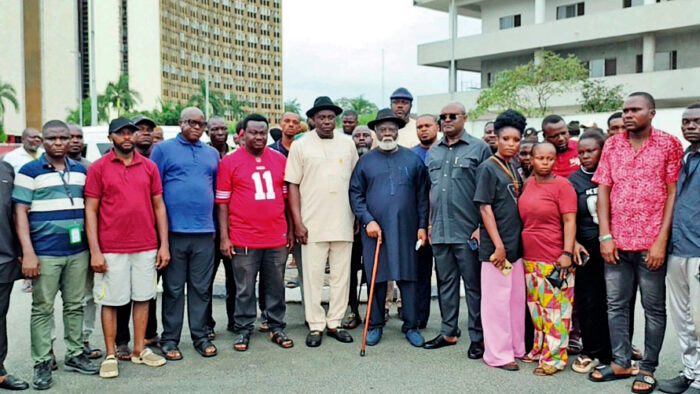
The National Youth Council of Nigeria (NYCN) has demanded an independent investigation into the deaths of about 10 people on the Robertkiri waterways in Kula Kingdom, Akuku-Toru Local Government Area of Rivers State. It has also announced a 21-day protest.
NYCN President Amb. Sukubo Sara-Igbe Sukubo, a stakeholder in Kula Kingdom, said in a statement on Tuesday that the incident occurred on October 20, 2026. He urged Governor Siminalayi Fubara to set up a panel to establish what happened.

He said the deaths followed unresolved tension between host communities and the Ibeto Group over the movement of an oil vessel, the Anambra Basin FSO, out of the area. He said two tugboats, Delta Runner and Laura-V, were involved. The victims, he said, came from satellite communities and fishing settlements. They had raised concerns over alleged pollution of waterways, fishing ports and creeks, compliance with the host-community provisions of the Petroleum Industry Act, and unpaid local vendors.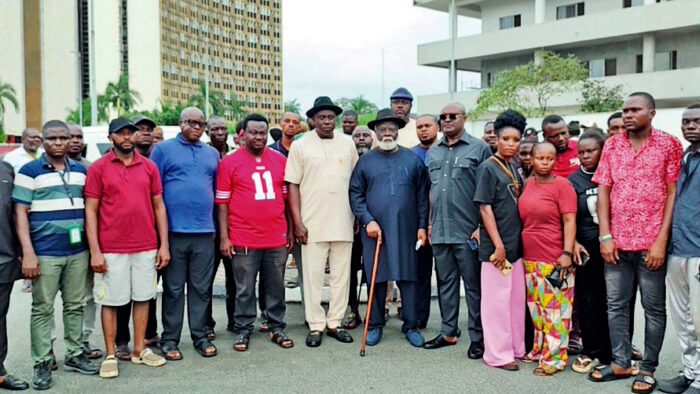
Sukubo said the protest would start next week and involve 51,000 youths. It would include a march to the Port Harcourt residence of Ibeto Group founder Chief Cletus Ibeto and demonstrations at the group’s businesses in Rivers State. He also asked the Federal Government, relevant ministries and rights groups, including Amnesty International, to intervene.
Community accounts reported earlier by Anadolu put the toll at 10 dead and seven missing, with eight rescued. Community leader Jonah Joshua said search operations were continuing. Leaders alleged that men in military uniform arrived in gunboats to facilitate the vessel’s removal, and that a boat capsized during the confrontation. The Rivers State Police Command confirmed it was aware of the incident and investigating, but has not confirmed casualty figures or the circumstances.
Max Shipping Services Limited, owner of the Anambra Basin FSO, has distanced its chairman from the incident. In a statement signed by legal officer Ikeh Chidimma Sylvia, the company said Ibeto did not authorise armed personnel to confront protesters. It said it was only retrieving a vessel hired to Menal Technical Services Limited under a Marine Equipment Hire Agreement dated September 20, 2024, which was later amended. Per reports on the company’s statement, it cited prolonged unpaid hire as the reason for recovery and said the crude aboard had been discharged beforehand. It also called for a probe.
Nigeria Watch
Accountability gap. The accounts conflict on the toll, the role of armed personnel, the cause of the capsize and the oil spill allegations. Only a credible, transparent inquiry can settle them. Until then, families of the missing have no answers.
A commercial dispute on a community waterway. Max Shipping says this was a recovery over unpaid hire. Communities say it was a flashpoint over pollution, PIA host-community obligations and local contractors’ payments. Disputes like this need a clear protocol: who authorises the movement of a floating storage unit, who secures the waterway, and who is responsible for the safety of local boat users when it happens.
The regulators are silent. The reports we reviewed carry no statement from NIMASA, NIWA or the Federal Ministry of Marine and Blue Economy. NIMASA oversees marine safety and vessel operations, while NIWA regulates inland waterways. Stakeholders will ask whether the vessel’s movement and the tug operations were properly cleared, and whether search-and-rescue coordination was adequate.
Informal operators bear the cost. The dead and missing are largely fishing-community members in small boats. Waterways News has repeatedly flagged how small-scale and informal waterway users carry the heaviest burden when commercial, security and regulatory interests collide. The planned 21-day protest, if it goes ahead, could disrupt economic activity and raise the risk of further confrontation on the creeks. Government must act before that happens.
Waterways News will update this story as official positions emerge.
Blue Economy
Outboard Engines, Jetties, Fuel Points: Lagos Boat Operators Table Survival Demands Ahead of New Administration
Outboard Engines, Jetties, Fuel Points: Lagos Boat Operators Table Survival Demands Ahead of New Administration
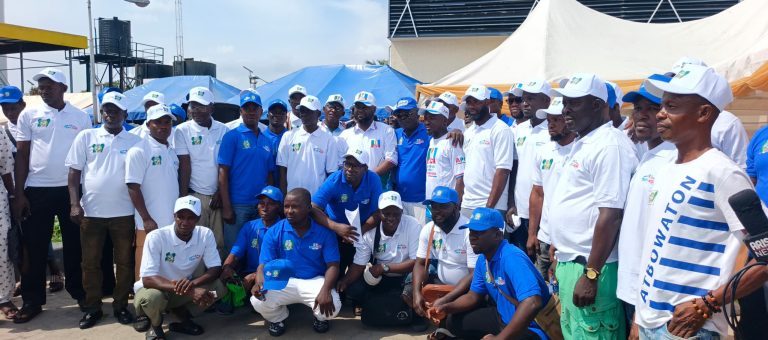
ATBOWATON seeks engine subsidies, flexible repayment terms and more infrastructure for remote communities, while commending LASWA, NIWA and the state government on safety gains
Boat operators in Lagos have asked the next state administration for engine subsidies, flexible repayment arrangements, more jetties and more fuel stations, saying these are needed to keep water transport growing.
The demands came from the Lagos State Chapter of the Association of Tourist Boat Operators and Water Transporters of Nigeria (ATBOWATON) at a political awareness programme organised with its national leadership. Operators, government representatives and political stakeholders discussed what the sector expects from the next government.
Deputy Chairman Babatunde Segun said some members have lost boats or are stuck with faulty engines and cannot work at full capacity. He asked for engine subsidies and flexible repayment terms so affected operators can rebuild. He also called for sustained attention to safety, security, youth employment and tourism, saying these would create jobs and ease pressure on Lagos roads.
Segun credited the present administration with adding jetties and supporting more fuel stations, which ended long trips to reach workable operating points. He also praised joint state and federal efforts to clear dangerous debris from the waterways, which he said has cut accidents and damage to boats and engines. He stressed that remote communities still lack adequate jetties and fuel points.
Founding National Chairman Dr Tarzan Balogun warned that accidents could erode commuter confidence and urged operators to make safety their first priority. He commended LASWA and NIWA for monitoring and for providing life jackets, and called for closer cooperation among federal, state and local governments.
Representing the Special Adviser on Blue Economy, Oluwadamilola Emmanuel, Mr Oladayo Ibrahim said Lagos is committed to becoming a leading maritime and water transport hub. He cited the Omi Eko Project, with modern ferries, electric vessels, better terminals, dredging and digital systems. He said existing operators must not be shut out of the new opportunities, and urged them to embrace professionalism, safety and compliance.
Oriade LCDA Chairman Rasaq Olotede praised investments in jetties and terminals across Badagry Division, including Ilashe, Ibeshe and Kirikiri Town, and commended operators for using life jackets.
The association also endorsed President Bola Tinubu’s re-election and Dr Kadri Hamzat’s governorship ambition.
NIGERIA WATCH
The operators’ message to Omi Eko planners is simple: don’t build the future over our heads. Omi Eko plans 15 ferry routes over 140 kilometres, linking 25 upgraded terminals, served by 75 electric vessels of up to 440 passengers each. Small “banana” boats carrying up to 17 passengers still dominate Lagos waterways. Those are the operators now asking for engine support. Officials have said private ferry operators will run the new electric vessels under a public-private framework. The open question is whether small operators get a real place in that framework or are phased out.
Omi Eko runs from 2024 to 2030 at a total cost of €410 million. That timeline is long for an operator with a dead engine today. The immediate gap between the megaproject and the informal operators who carry most passengers is the kind of policy-versus-delivery gap Waterways News keeps tracking, alongside NIWA-LASWA coordination and the safety record on inland waterways.
Maritime Security and Safety
Nigerian, French Navies Open Six-Day Grand African NEMO Drills to Choke Gulf of Guinea Crime
Nigerian, French Navies Open Six-Day Grand African NEMO Drills to Choke Gulf of Guinea Crime
Exercise in Onne targets piracy, oil theft, illegal fishing and trafficking, with five warships, two helicopters and two drones deployed
By Okeoghene Onoriobe | Waterways News
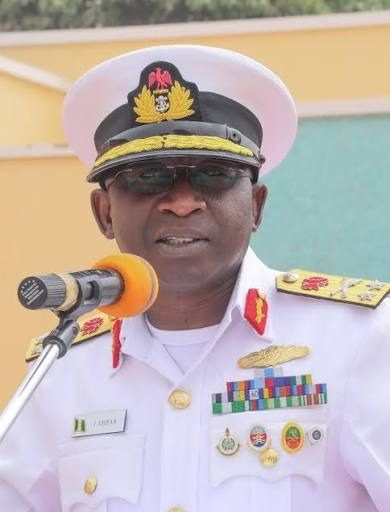
The Nigerian Navy and the French Navy have launched a six-day joint maritime exercise, Grand African NEMO 2026, aimed at crimes at sea in the Gulf of Guinea.
The exercise was inaugurated on Thursday, October 29, in Onne, Rivers State. The Chief of the Naval Staff, Vice Admiral Idi Abbas, was represented by the Flag Officer Commanding, Navy Training Command, Rear Admiral Ebiobowei Zipele.
The Navy has committed five warships, two helicopters, two drones and personnel of the Special Boat Service. It is also drawing on its three operational commands and allied partners.
Zipele said the drills will strengthen maritime surveillance, safeguard freedom of navigation and improve the Navy’s ability to protect Nigeria’s territorial waters and Exclusive Economic Zone (EEZ).
The scenarios cover piracy and armed robbery at sea, human trafficking, illegal oil bunkering, illicit fishing, and the trafficking of arms and narcotics.
Abbas, in his message, said evolving maritime threats make sustained cooperation among regional navies essential. He noted that NEMO has grown since 2018 into a major annual security initiative in the Gulf of Guinea.
The Flag Officer Commanding, Central Naval Command, Rear Admiral Suleiman Ibrahim, said the exercise builds on Exercise Fleet Sentinel, held six months ago, and the ongoing Operation Delta Sentinel.
The drills are expected to deepen cooperation under the Yaoundé maritime security architecture and support Nigeria’s blue economy ambitions.
Nigeria Watch
NEMO is useful as a rehearsal, and Nigeria is a repeat host: the 2021 edition, also flagged off at Onne, involved 13 ships and about 1,500 personnel. That contrast is worth noting. This year’s announced deployment is five warships, though the scope of the two exercises may not be directly comparable.
The real test is what happens after the exercise ends. Stakeholders should watch three things:
Sustained presence: Joint drills sharpen skills, but safe waters depend on patrols and quick response on ordinary days, not exercise week.
Coverage beyond the open sea: Operators on the creeks, rivers and coastal routes, including the small-scale and informal operators represented by WABOTAN and ATBOWATON, face insecurity that rarely makes headlines. They will want to see these gains reach them.
Policy-to-delivery gap: NEMO, Operation Delta Sentinel and the Deep Blue Project all promise better maritime security.
Waterways News will keep asking for measurable results, such as fewer incidents, prosecutions and reduced oil theft.
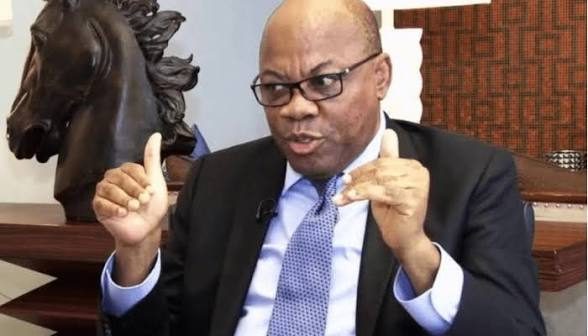
Don’t Just Fund Vessels, Guarantee Cargo, Agbakoba Tells Government at SCAN Summit
Maps Path to Low-Risk Finance for Indigenous Fleet
By Ighoyota Onaibre | Waterways News
Nigeria will draw private capital into indigenous shipping only if it offers shipowners guaranteed cargo, bankable contracts and regulatory certainty. Government-financed vessels alone will not do it, maritime lawyer Mr Olisa Agbakoba (SAN) has said.
Agbakoba spoke on Thursday, 29 October 2026, at the annual summit of the Shipping Correspondents Association of Nigeria (SCAN) in Lagos. The theme was “Low-Risk Capital for Indigenous Shipowners: Overcoming Regulatory and Financial Bottlenecks.” He was represented by maritime lawyer Mr John-Paul Akunne.
He said the theme speaks to turning Nigeria’s maritime potential into a commercially viable indigenous industry that keeps more freight earnings in the country. Despite large cargo volumes, he noted, Nigerian shipowners still struggle to access finance and dependable commercial opportunities.
A national fleet, he said, would retain freight earnings, create jobs for seafarers, strengthen ship management and repair services, and widen Nigeria’s role in domestic, regional and international shipping. But fleet development requires more than buying vessels. It also needs commercially viable ships, competent operators, dependable cargo demand and sustainable financing.
Agbakoba acknowledged that ship finance carries risks tied to vessel values, foreign exchange, insurance, operating costs and freight rates. He said these can be managed through proper legal, technical and financial due diligence. Lenders, he said, must verify vessel ownership, registration, mortgages, insurance, regulatory compliance and the borrower’s capacity to repay. Ship mortgages, guarantees and the assignment of charter earnings and insurance proceeds can provide adequate security.
Collateral alone cannot make an unviable project bankable, he stressed. Vessels need reliable revenue backed by enforceable cargo or charter contracts, because ships without dependable employment struggle to secure funding.
The former President of the Nigerian Maritime Law Association urged oil majors, terminal operators and cargo owners to engage qualified Nigerian shipowners under commercially viable contracts. Those contracts should specify cargo volumes, duration, freight rates, performance standards and payment obligations.
He pointed to the Coastal and Inland Shipping (Cabotage) Act 2003 and the Nigerian Oil and Gas Industry Content Development Act 2010 as existing frameworks for greater local participation. He called for effective enforcement, transparent administration of waivers and better access to cargo for indigenous operators.
Agbakoba also named regulatory uncertainty as a driver of investment costs. He urged closer coordination among NIMASA, the Federal Ministry of Marine and Blue Economy, the Nigerian Ports Authority and the Nigerian Ports Economic Regulatory Agency.
On the Cabotage Vessel Financing Fund (CVFF), he said the fund remains important but should complement commercial lending, development finance and private investment. He called for transparent eligibility criteria, rigorous credit assessment, adequate collateral and effective monitoring.
He recommended six priority measures for sustainable fleet development:
- Cargo-backed financing
Improved cargo access
Regulatory coordination
Mobilisation of private capital
Stronger maritime capacity
An implementation framework with clear timelines and measurable outcomes
Nigeria Watch
The numbers behind the theme. Pre-summit reports put indigenous shipowners at only about four to five per cent of the market. SCAN President Moses Ebosele blamed funding gaps, high interest rates and regulatory bottlenecks for the low local participation. Another report quoted SCAN as saying foreign operators control more than 95 per cent of the trade.
CVFF: movement, but old doubts. The fund Agbakoba wants to see complement private capital has finally begun to move after more than two decades.
President Tinubu approved disbursement more than two decades after the fund was established without Nigerian shipowners accessing it. Earlier reports said NIMASA opened applications for a $25 million tranche on January 22, 2026, drawing about 60 applicants, while some stakeholders remain cautious, citing past unfulfilled promises. Reported fund sizes vary across outlets, from the $25 million tranche to a headline figure of $700 million.
The cargo question is the real test. Agbakoba’s argument shifts the debate from who funds vessels to who guarantees work for them. That cuts to a long-running grievance in the sector. Indigenous operators objected to the launch of Unity Shipping World, the NNPC Shipping, Stena Bulk and Caverton joint venture, calling it a deliberate attempt to undermine Nigeria’s shipowners.
Whether oil majors and cargo owners will sign long-term, enforceable contracts with Nigerian owners is the question that will decide if financing translates into ships on the water.
What it means for waterway operators. For the informal and small-scale operators Waterways News follows, the principle holds at their scale too. Without structured access to cargo and passenger contracts, even well-intentioned funds will struggle to reach the boat owners and transporters who need them.
 Oil and Gas8 months ago
Tantita’s Pipeline Deal: $144m Contract, Rising Output, and the Questions that Deserve Answers
 MARITIME TRADE & SHIPPING8 months ago
World’s Largest Container Ship Sets New Maritime Record with 22,233 TEUs on Single Voyage
 Blue Economy9 months ago
Nigeria’s Coast Guard Bill: A Solution in Search of a Problem?