News
Lake Nwonyo Roars Back to Life: Ibi Fishing Festival Draws Presidents, ₦15m in Prize Money, and a Global Spotlight on Nigeria’s Inland Waters

Lake Nwonyo Roars Back to Life: Ibi Fishing Festival Draws Presidents, ₦15m in Prize Money, and a Global Spotlight on Nigeria’s Inland Waters and Water Tourism
By Laraba Haruna | Waterways News | Jalingo
The ancient waters of Lake Nwonyo became the centre of the world on April 18, 2026, as the historic fishing community of Ibi, Taraba State, hosted the grandest edition yet of the Nwonyo International Fishing Festival — a century-old tradition that is fast cementing Nigeria’s inland waterways as a serious draw for culture, diplomacy, and blue economy investment.
From first light, the lakeside buzzed with the kind of energy that only water can generate. Decorated canoes cut elegant arcs across the lake in a colourful boat regatta, while traditional horsemen staged a full durbar on the banks and young swimmers competed in contests that drew roaring applause from thousands of spectators. For a publication dedicated to Nigeria’s waterways, Nwonyo is not merely a cultural event — it is proof that the nation’s rivers and lakes hold untapped economic and diplomatic power.


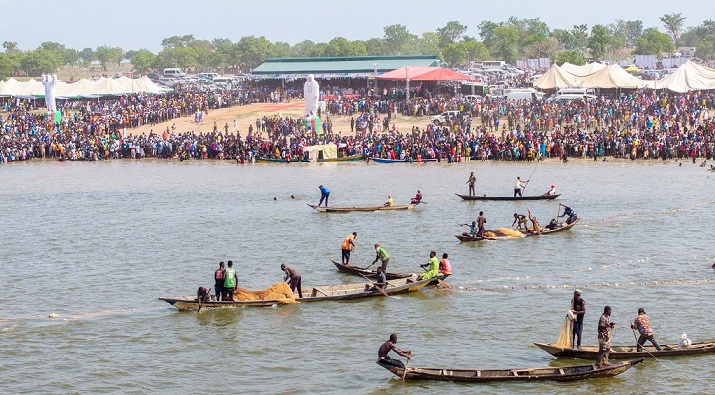

The festival attracted a roster of dignitaries that underscored its growing international weight. President Bola Ahmed Tinubu was represented by the Minister of Tourism. President Dickon Mitchell of Granada attended in person. Ghanaian President John Dramani Mahama sent a representative. Elder statesman General Theophilus Yakubu Danjuma was represented by Plateau State Governor Caleb Mutfwang. Also present were Senator David Jimkuta and host Governor Agbu Kefas of Taraba State, alongside traditional rulers and stakeholders from across the country.
At the heart of the festival, as always, was the fishing competition itself — the symbolic act that gives Nwonyo its soul. Participants cast their nets into the famed lake in a contest that is as much about identity and heritage as it is about catch weight. This year, the Taraba State Government put up ₦15 million in prize money, sending a clear signal that the state is serious about monetising its waterways assets.
Haruna Saleh Busara took the top prize of ₦10 million after hauling in an impressive 55.5 kilograms of fish. Samaila Yakubu followed in second place with 52.6 kilograms, earning ₦3 million, while Emmanuel Daniel rounded out the podium with 18.2 kilograms and a ₦2 million reward.
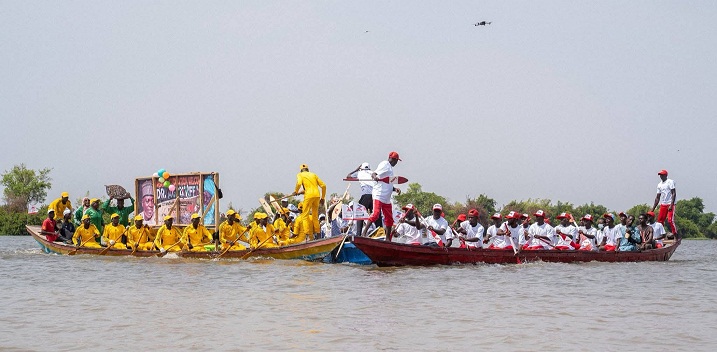

President Tinubu, speaking through his representative, described the festival as a mirror of Nigeria’s unity in diversity and a key driver of tourism. He reaffirmed the Federal Government’s commitment to leveraging culture as an economic engine — a message that resonates directly with ongoing national conversations about the blue economy.
Governor Kefas used the occasion to pitch Taraba State as safe, open, and investment-ready, announcing plans to expand the festival’s global footprint. For a state endowed with rivers, lakes, and fertile fishing grounds, the Nwonyo festival is a flagship opportunity to position those waterways as engines of growth rather than mere geographic features.
General Danjuma, also represented, called the festival a symbol of unity in diversity, noting its enduring role in preserving cultural identity and fostering national cohesion. Senator Jimkuta echoed that sentiment, pointing to the economic ripple effects felt by local traders, transporters, and hospitality operators whenever thousands of visitors descend on the lakeside community.
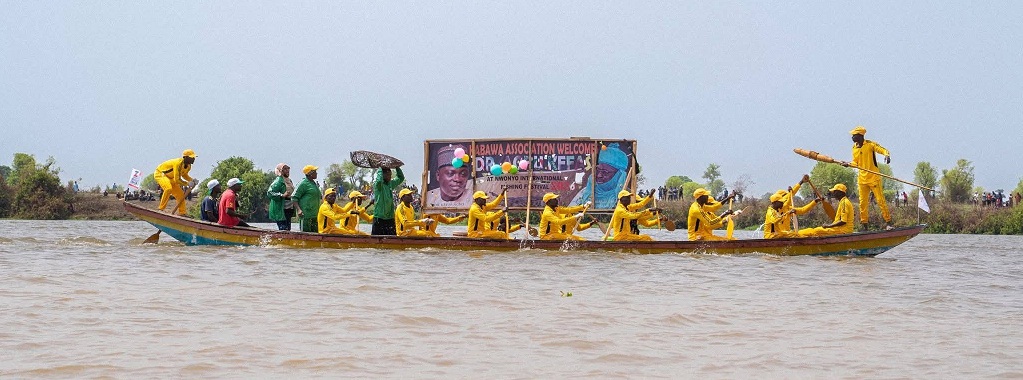

Those economic benefits were visible this year. Markets swelled, boat operators were in high demand, and guesthouses reported full capacity — a microcosm of what Nigeria’s inland water communities can achieve when their natural assets are properly showcased.
The Nwonyo International Fishing Festival has been held for more than a century, evolving from a local Jukun fishing tradition into an internationally recognised cultural institution. Its trajectory is a reminder that Nigeria’s waterways — so often discussed in terms of security threats, oil spills, or flooding — are also sites of living heritage, ecological wealth, and considerable economic promise.
The 2026 edition has placed Taraba State firmly on the global cultural map. But for the waterways community, the larger story is this: when Nigeria’s inland waters are celebrated, managed, and invested in, everyone benefits — from the fisherman hauling his catch at dawn to the diplomat watching from the lakeside.
Adapted from a report by Laraba Haruna