
News
MMCDC Hails NCS Over Training of 3,270 AEO Champions, Calls for Deeper Maritime Collaboration



MMCDC Hails NCS Over Training of 3,270 AEO Champions, Calls for Deeper Maritime Collaboration
By Okeoghene Onoriobe, Waterways News Correspondent, Lagos
The Maritime Media Capacity Development Center (MMCDC) has praised the Nigeria Customs Service (NCS) for its sustained push to build professional capacity within its ranks, spotlighting the growing momentum of the Authorised Economic Operator (AEO) Programme as a pivotal driver of maritime trade efficiency.
In a statement released Friday and signed by the Centre’s Chairman, Sesan Onileimo, the MMCDC expressed strong encouragement over the NCS’s recent disclosure that 3,270 officers have been trained nationwide as AEO Champions, with 120 companies having attained full AEO certification.

Chairman of Maritime Media Capacity Development Center (MMCDC), Sesan Onileimo (left) and the Comptroller-General of Nigeria Customs Service, Bashir Adewale Adeniyi
For a publication audience keenly attuned to the health of Nigeria’s maritime value chain, the figures carry significant weight. AEO-certified operators enjoy streamlined customs processing — a direct benefit to port throughput, cargo dwell times, and the competitiveness of Nigerian trade corridors.
“These milestones underscore the NCS’s commitment to fostering a culture of competence, transparency, and stakeholder engagement within the maritime and trade sectors,” Onileimo stated.
The MMCDC also drew attention to remarks made by Deputy Comptroller of Customs and NCS National Public Relations Officer, Abdullahi Maiwada, at the 17th Session of the Capacity Building Committee of the World Customs Organisation (WCO) in Brussels, Belgium. Maiwada had outlined the Service’s reform communication framework, which centres on institutional capacity building, human resource development, and proactive stakeholder engagement — all of which have direct implications for Nigeria’s ports and inland trade infrastructure.
The Centre further commended the NCS for deploying digital tools such as the Unified Customs Management System, B’Odogwu, alongside programmes like the Time Release Study (TRS), the Advance Ruling Programme, and the Customs Integrity Perception Survey. Together, these initiatives are designed to sharpen operational transparency and align customs processes with measurable trade outcomes — concerns that resonate deeply across Nigeria’s maritime sector.
“As an organisation committed to building media and maritime sector capacity, the MMCDC recognises the profound impact of these initiatives in creating a cadre of well-trained officers who are capable of driving efficiency, integrity, and innovation across Nigeria’s maritime value chain,” Onileimo said, urging continued government investment in such programmes.
The Centre also reserved particular praise for Customs Comptroller General Adewale Adeniyi, crediting his leadership with elevating the NCS’s training infrastructure. Since his assumption of office, the Service has upgraded the Customs Command and Staff College in Abuja, as well as its two training colleges in Lagos and Kano — a development the MMCDC described as having “greatly enhanced the performance of all cadres of officers.”
The results, it noted, are visible in the NCS’s performance across trade facilitation, revenue collection, and the suppression of smuggling and the importation of contraband — all issues with direct implications for the integrity of Nigeria’s maritime gateways.
Onileimo concluded by signalling the MMCDC’s intent to deepen collaboration with the NCS, WCO member-administrations, and sector stakeholders to further advance maritime governance, professional training, and trade best practices.
“Nigeria must continue to lead,” he said. “And the work being done by the NCS is central to that ambition.”
Waterways News — Nigeria’s foremost publication for maritime and inland waterways intelligence.


Maritime Security and Safety
PIRATES ROUTED AS EU NAVAL MISSION RESCUES HIJACKED IRANIAN FISHING VESSEL IN INDIAN OCEAN
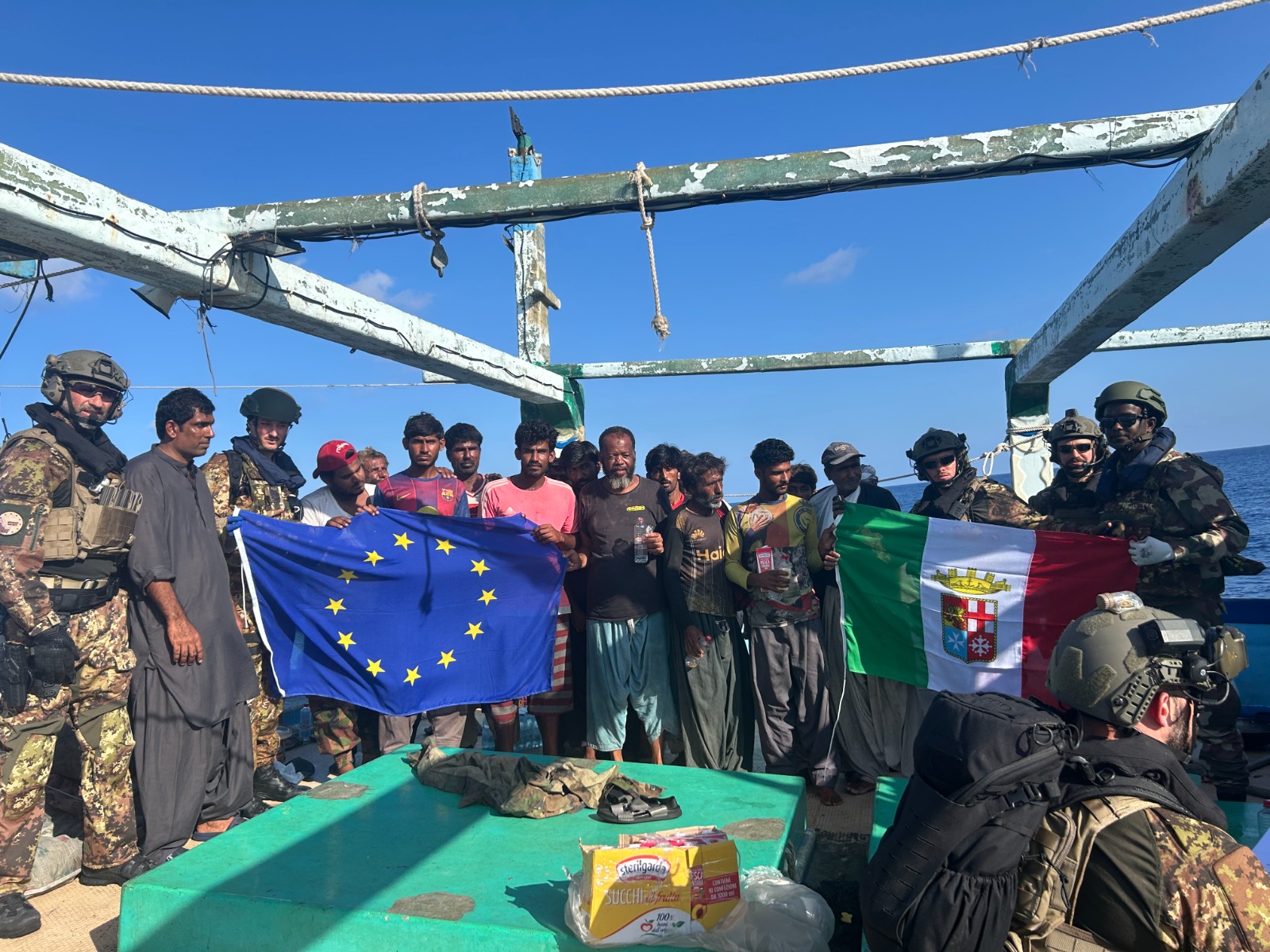
PIRATES ROUTED AS EU NAVAL MISSION RESCUES HIJACKED IRANIAN FISHING VESSEL IN INDIAN OCEAN
By Okeoghene Onoriobe
European naval forces have successfully freed a hijacked Iranian fishing dhow that had been held under pirate control for nearly two weeks in the Western Indian Ocean, in an operation that once again highlights the persistent threat of maritime piracy off the Horn of Africa.
The EU’s naval mission, EUNAVFOR Operation ATALANTA, confirmed that the Iranian-flagged vessel ALWASEEMI was liberated on Sunday after sustained military pressure compelled the pirates to abandon the ship and flee.
The fishing dhow had been seized on March 24 by a Pirate Action Group operating approximately 400 nautical miles east of Mogadishu. Intelligence indicated the pirates intended to deploy the vessel as a “mothership” — a floating base from which to launch attacks against larger commercial ships traversing the busy Indian Ocean shipping corridor.
Rather than mount a direct assault that could have endangered the crew, naval commanders opted for a methodical strategy described as the “concertina effect.” Working in close coordination with Somali maritime police, ATALANTA forces deployed warships and aerial assets to progressively tighten a surveillance net around the hijacked vessel, gradually eliminating the pirates’ room to manoeuvre.
The strategy worked. Cornered and under mounting pressure, the pirates disembarked along Somalia’s north-western coast and dispersed. Naval boarding teams then moved in, secured the vessel, confirmed the safety of all crew members, and provided food, water, and medical assistance to those on board. Evidence was also collected with a view to potential prosecution of the perpetrators.
The Maritime Security Centre Indian Ocean had earlier issued swift alerts to vessels in the region, advising ships to maintain safe distances and boost onboard security measures. By March 27, ATALANTA forces had already located and isolated the ALWASEEMI, ensuring it could not be used as a launchpad for further attacks.
The successful rescue operation drew on broad international cooperation, involving Somali security forces, the Combined Maritime Forces, and INTERPOL — a coalition that maritime security experts say remains indispensable for policing vast and vulnerable ocean corridors.
While Somali piracy had declined sharply from its peak in the early 2010s, the ALWASEEMI incident is among several recent cases signalling a troubling resurgence of activity in the region — one that observers link to broader geopolitical instability affecting key global shipping lanes and the livelihoods of seafarers worldwide.
Waterways News — www.waterwaysnews.ng
MARITIME TRADE & SHIPPING
Djibouti Unveils Largest Shipyard in East Africa, Strengthening Its Maritime Dominance
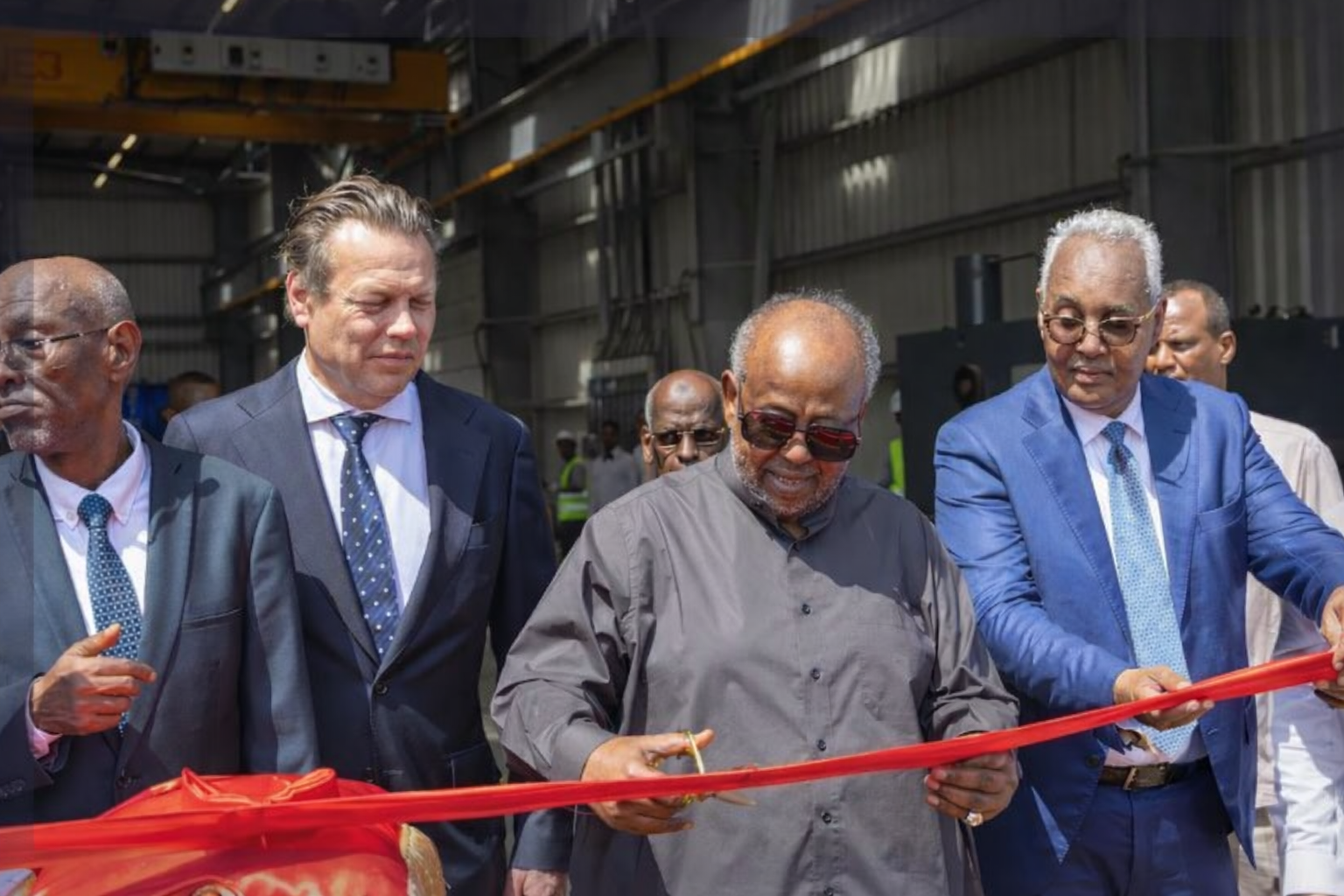
Djibouti Unveils Largest Shipyard in East Africa, Strengthening Its Maritime Dominance
By Raymond Gold | Waterways News
Djibouti has taken a bold step in cementing its status as Africa’s foremost maritime hub, officially inaugurating the Djibouti Ship Repair Yard (DSRY) — now the largest ship repair facility in both the Red Sea and East Africa — in a development that is already drawing attention across the continent’s maritime community.
The facility, developed through a strategic partnership with the Dutch shipbuilding giant, Damen Shipyards Group, was formally opened by President Ismaïl Omar Guelleh and financed by Invest International of the Netherlands at a cost of €107.5 million (approximately $116.5 million). The project, a decade in the making, marks a defining moment not only for Djibouti but for the broader African maritime landscape.
Speaking at the inauguration ceremony, President Guelleh underscored the significance of the project to the nation’s long-term ambitions. “The DSRY project has always been a national priority, given Djibouti’s strategic location at the entrance to the Bab el-Mandeb, one of the world’s busiest maritime routes,” he said.
The Bab el-Mandeb strait, which links the Red Sea to the Gulf of Aden, serves as a critical artery for global trade, channeling cargo between Europe, Asia, and the Middle East. It is against this backdrop that the new yard’s strategic importance becomes immediately apparent.
A Facility Built for Scale
The DSRY is no modest undertaking. Positioned on 80 hectares with over 800 metres of berth, the facility is equipped with a floating dock measuring 217 metres in length and 43 metres in width, with a lifting capacity of 20,100 tonnes — infrastructure capable of accommodating a wide range of vessel types. The yard is designed to deliver both preventive and corrective maintenance services, supported by a combination of international expertise and local talent.
Work at the yard did not wait for the official inauguration to begin. As far back as October 15, 2025, the first large vessel had already entered for dry-docking — the Africa Sun, a 13,719 dwt Djibouti-flagged containership operating along Red Sea and Middle Eastern routes, which docked for a month of repairs.
Aboubaker Omar Hadi, Chairman of the Djibouti Ports and Free Zones Authority, said the facility aligns squarely with Djibouti’s 2035 vision, reinforcing the country’s ambition to become the preeminent maritime services centre on the continent. Minister of Infrastructure and Equipment Hassan Houmed Ibrahim went further, describing the yard as “a strategic national asset that enhances port competitiveness, supports the blue economy, and strengthens Djibouti’s regional position.”
Arnout Damen, President of Damen Shipyards, reaffirmed his company’s commitment to the yard’s long-term operational success, signalling that this is more than a construction handover — it is an ongoing partnership.
Beyond the infrastructure itself, the DSRY is projected to create approximately 350 direct jobs and around 1,400 indirect positions, while nurturing a generation of skilled young professionals in advanced technical maritime fields.
A Strategic Move in a Competitive Region
Djibouti’s investment comes at a particularly charged moment in regional maritime politics. The Horn of Africa is witnessing intensifying competition over port access and control, with the United Arab Emirates actively expanding its footprint through investments and long-term port agreements across the region. Djibouti and the UAE have themselves been locked in prolonged legal disputes over port concession arrangements — a reminder of how high the stakes are in this arena.
For years, East Africa and the broader African continent have depended heavily on overseas facilities in the Middle East, Europe, or Asia for major vessel repairs, draining foreign exchange and adding logistical burden to ship operators. The DSRY fundamentally disrupts that pattern, offering a world-class alternative on African soil.
As maritime analysts have noted, the development reflects a wider continental trend: Africa is no longer content to serve merely as a transit corridor for global shipping. From Southern Africa to West Africa, investments in repair capacity are signalling an era of vertical integration — where ports, logistics, and ship maintenance ecosystems are being developed together. Djibouti’s DSRY is perhaps the most dramatic expression of that ambition yet.
Nigeria Watch
As Djibouti Opens Africa’s Largest Shipyard, Nigeria’s Floating Dock Remains a Cautionary Tale
The inauguration of Djibouti’s Djibouti Ship Repair Yard serves as both an inspiration and a sobering mirror for Nigeria — Africa’s most populous nation and, by rights, one of its most strategically positioned maritime players.
Nigeria is not without assets in this space. Nigerdock, located at the Snake Island Integrated Free Zone in Lagos, remains the largest shipyard facility in West Africa, boasting a 25,000 DWT graving dock, floating dock facilities, and multipurpose workshops that have serviced over 600 vessels in its more than three-decade history. The yard offers ship repair, maintenance, refurbishment, and offshore fabrication services, and has long been a point of pride for the country’s maritime sector.
Yet even as Djibouti cuts the ribbon on a $116.5 million state-of-the-art facility, Nigeria continues to grapple with the ghost of what should have been a transformative asset. A floating dry dock, procured at a cost of approximately N50 billion in public funds — now worth considerably more given naira depreciation — arrived in Nigeria as far back as 2018 and reportedly remained idle for years, caught in a web of bureaucratic bottlenecks and indecision over where to site it. Industry stakeholders have repeatedly described the situation as emblematic of a wider malaise afflicting Nigeria’s maritime infrastructure development.
Watchers of Nigeria’s maritime sector are not blind to the potential. With an estimated 5,000 ship calls annually at its ports, hundreds of active coastal vessels, and a significant fishing fleet, the commercial case for a functional, world-class ship repair ecosystem in Nigeria is overwhelming. Industry estimates have suggested the country could save upwards of N350 billion annually — and earn millions more in foreign exchange — by reducing its dependence on overseas dry-docking, which can cost operators over $1 million per tow before a single repair is carried out.
The question, as Djibouti’s example makes plain, is not whether Nigeria has the need or the resources. It is whether the country can muster the institutional will to transform that need into reality — before other nations on the continent permanently capture the market that should, by geography and volume, belong to Nigeria.
Raymond Gold is Co-publisher and Research reporter for Waterways News. For maritime industry updates, visit www.waterwaysnews.ng
MARITIME TRADE & SHIPPING
NPA: Nigeria Shipped Over 500,000 Tonnes of Petroleum Products from Dangote Refinery to Africa in March

NPA: Nigeria Shipped Over 500,000 Tonnes of Petroleum Products from Dangote Refinery to Africa in March
By Okeoghene Onoriobe | Waterways News Correspondent | Lagos
The Nigerian Ports Authority (NPA) says it played a central role in facilitating the export of more than 500,000 tonnes of petroleum products from the Dangote Refinery to African countries in March alone — a development the authority attributes to improved port coordination and the deployment of a One-Stop-Shop (OSS) framework at the refinery’s terminal.
NPA Managing Director, Dr Abubakar Dantsoho, disclosed this during a stakeholders’ engagement convened by the Ministry of Marine and Blue Economy in Lagos, describing the feat as a demonstration of Nigeria’s growing capacity as a petroleum export hub on the continent.
“As a matter of fact, in the past month, we exported over 500,000 tonnes of petroleum products from Dangote Refinery to African countries. The exports are handled by ships, supported by the NPA’s capacity in port and cargo operations,” Dantsoho said.
The NPA boss noted that despite disruptions to global vessel movement caused by the ongoing Middle East conflict, Nigeria’s domestic and export petroleum supply chains remained stable — a contrast, he said, to several other nations grappling with energy queues and supply shortfalls.
He credited the performance to the OSS platform, introduced under the directive of the Minister of Marine and Blue Economy, Dr Adegboyega Oyetola. The system, which Dantsoho likened to the National Single Window initiative, is designed to bring all agencies and private operators at the Dangote Refinery terminal into a single, coordinated operational framework.
“This system operates similarly to the National Single Window, ensuring efficiency and coordination,” he said, adding that all stakeholders now operate in sync with the refinery’s distribution architecture.
The statement was issued by the NPA’s General Manager for Corporate Communications and Strategy, Mr Ikechukwu Onyemekara.
The March export figures signal a significant step in Nigeria’s ambition to transition from a petroleum-importing nation to a regional supplier — with the country’s port infrastructure and maritime logistics increasingly positioned at the centre of that shift.
-

 Oil and Gas4 weeks ago
Tantita’s Pipeline Deal: $144m Contract, Rising Output, and the Questions that Deserve Answers
-
 Blue Economy2 months ago
Nigeria’s Coast Guard Bill: A Solution in Search of a Problem?
-
 Business1 month ago
CASABLANCA PORT SHUT DOWN AFTER VESSEL LOSES 85 CONTAINERS — SHIP SERVES NIGERIAN ROUTES