

News
Sanctioned Russian LNG Tanker Arctic Metagaz Sinks in Mediterranean After Explosions; Moscow Blames Ukrainian Naval Drones


Sanctioned Russian LNG Tanker Arctic Metagaz Sinks in Mediterranean After Explosions; Moscow Blames Ukrainian Naval Drones
By Oghenewoke Onoriode | Waterways News Correspondent | March 7, 2026
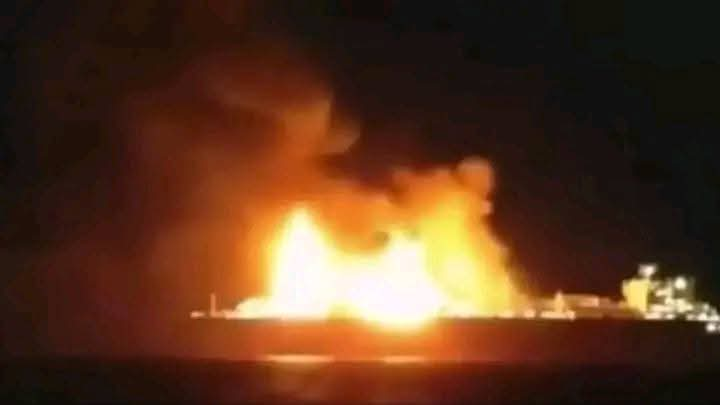
A sanctioned Russian liquefied natural gas (LNG) tanker has sunk in the central Mediterranean Sea following a series of violent explosions and a massive fire, in what Moscow has described as a deliberate naval drone attack by Ukraine — a claim Kyiv has neither confirmed nor denied.
The Arctic Metagaz experienced sudden explosions followed by a massive fire, which ultimately led to its complete sinking on Tuesday night. The wreckage settled in the maritime area between Libya and Malta, approximately 130 nautical miles — or 240 kilometres — north of the Libyan port of Sirte.
Crew Rescued by Omani Tanker

After the first alert was issued, Malta issued an urgent maritime alert and dispatched a King Air aircraft of the Armed Forces of Malta, which located the ship and subsequently a lifeboat with crew members on board. At the request of the Libyan coordination centre, Malta requested the Omani-flagged oil tanker, located approximately 33 nautical miles away, to provide assistance. The vessel recovered all 30 crew members, who were subsequently provided medical care in Libya. All crew members were Russian nationals.
Two individuals who sustained burns are receiving medical assistance in cooperation with the coastal state. Russian diplomatic missions in the region continue to monitor the situation.
What Was the Ship Carrying?
Libyan officials said the vessel was carrying approximately 62,000 tonnes of LNG and warned ships to avoid the site and report any pollution.
Russia stated the ship was headed to Egypt’s Port Said. However, Egypt’s petroleum ministry said the tanker was not scheduled to dock at any Egyptian port and was not listed under any contracts to supply or receive LNG cargoes in the country, countering earlier speculation that it might have been en route to Port Said. Libya’s National Oil Corporation equally distanced itself from the incident, stating the vessel had no connection to its operations.
On February 18, the Arctic Metagaz loaded LNG at Russia’s sanctioned Saam floating storage unit, then travelled around Britain and Spain to enter the Mediterranean.
Russia Points Finger at Ukraine
Russia’s transport ministry alleged the attack was carried out by “uncrewed sea drones” launched from the Libyan coast and denounced the incident as “an act of international terrorism and maritime piracy,” saying the vessel had been carrying LNG cleared under international rules. President Vladimir Putin told state television, “This is a terrorist attack.”
Ukraine has not publicly commented on the allegations. No independent investigation has yet confirmed the cause of the explosions or established responsibility.
A Shadow Fleet Vessel Under Western Sanctions
The 277-metre-long Arctic Metagaz is subject to sanctions by the United States and the United Kingdom for transporting liquefied natural gas from Russian terminals in the Arctic. The vessel is also sanctioned by the European Union.
Tracking data showed the Arctic Metagaz disabled its Automatic Identification System (AIS) on the evening of March 2 after exiting Malta’s exclusive economic zone — a tactic commonly associated with vessels attempting to evade sanctions enforcement.
If confirmed, the destruction of the Arctic Metagaz could mark the first known instance of an LNG carrier being destroyed in a conflict-related attack. While oil tankers have been damaged in recent Mediterranean blasts, LNG carriers have historically avoided direct strikes, given the heightened safety and environmental risks involved.
Environmental Assessment: Authorities Say Risk is Limited
Authorities said environmental damage was unlikely, as the vessel was believed to be carrying LNG rather than crude oil. Unlike crude oil, which spreads across the water surface and persists in the marine environment, LNG — liquefied natural gas — rapidly evaporates upon contact with warmer water rather than pooling as a persistent pollutant. An industry source suggested that environmental damage would likely be limited to the ship’s onboard fuel oil rather than its LNG cargo.
Although LNG tankers carry less oil than typical crude carriers, authorities in the region continue to monitor the site for potential gas release or secondary impacts on marine ecosystems. Libya’s maritime authority has warned vessels to steer clear of the area and report any signs of pollution.
Wider Impact on Russia’s Energy Exports
The loss of the vessel could have outsized consequences for Russia’s efforts to sustain exports from Arctic LNG 2, which relies on a small group of ageing LNG carriers operating outside Western sanctions. Russia has roughly a dozen such ships available for the project — already too few to carry its full production capacity.
The LNG carrier Arctic Vostok, which was sailing westbound across the eastern Indian Ocean when the blast occurred, began heading south-southwest — a course suggesting it is preparing to bypass the Suez Canal and instead sail around the Cape of Good Hope. Such a diversion would add thousands of nautical miles to the voyage and significantly increase operational costs.
A Conflict Expanding Into Mediterranean Waters
This incident represents a significant development in the Russia-Ukraine conflict, with the Mediterranean — a waterway of strategic and economic importance to Africa and the broader region — increasingly drawn into its orbit. North African nations, including Libya, Tunisia, Algeria, and Egypt, whose populations depend on the sea for commerce and livelihoods, have cause to monitor developments closely.
International investigators have yet to independently verify the cause of the Arctic Metagaz explosions. Waterways News will continue to follow this developing story.
© 2026 Waterways News | waterwaysnews.ng

News
Bayelsa Waterways Claim Police Officer, Woman in Two Days as Rescued Commissioner’s Boat Mishap Deepens Safety Fears
Bayelsa Waterways Claim Police Officer, Woman in Two Days as Rescued Commissioner’s Boat Mishap Deepens Safety Fears
Boat Capsize and Tanker-Canoe Collision Within 24 Hours, Renew Waterway Safety Alarm
By Ighoyota Onaibre| Waterways News
A serving police officer and a woman have died in two separate waterway accidents in Bayelsa State, the state Police Command has confirmed, renewing concerns about safety on the Niger Delta’s busy water routes.
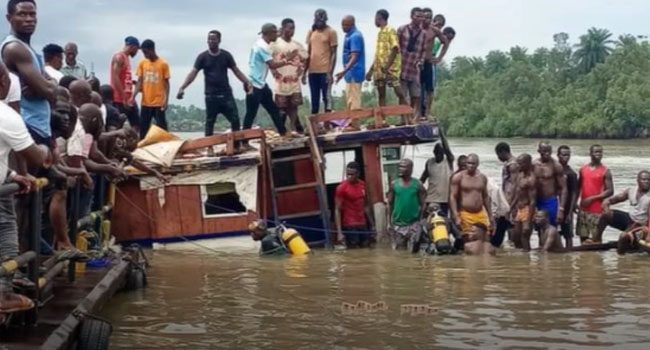
In a statement issued Saturday night by its spokesperson, DSP Musa Mohammed, the command said the first accident happened on Thursday. A passenger boat travelling from Yenagoa to Akassa capsized along the Abedigbene waterways in Brass Local Government Area with eight people on board.
Maritime Union workers in the area raised the alarm. Personnel of the Nigerian Navy’s Forward Operating Base (FOB) Formoso, local divers and members of the Abedigbene fishing community then launched a joint search-and-rescue operation. Seven passengers were pulled out alive, among them Bayelsa State Commissioner for Trade, Industry and Investment, Ebiere Jones, and an officer of the Nigeria Security and Civil Defence Corps. The police officer, initially reported missing, was later confirmed dead.
The second incident happened around 5:20am on Saturday near Angalabiri Community in Sagbama Local Government Area. An oil tanker reportedly operated by Sterling Global Oil Ltd collided with canoes close to the shoreline. Several canoes were destroyed, and a local woman, Mrs Victoria Abetnigo, was seriously injured. She was rushed to Ebedeibiri General Hospital, where she was pronounced dead.
Police said investigations are ongoing into both incidents.
Commissioner of Police CP Ajao Saka Adewale offered condolences to the families, colleagues and loved ones of the victims. He commended the Navy, local divers, maritime workers and fishermen for their swift response. He also urged commercial vessel operators to follow maritime safety regulations, keep a safe distance from shorelines and established canoe routes, and avoid reckless navigation. Passengers, he said, should wear life jackets throughout their journeys.
NIGERIA WATCH
Two incidents, one lesson: safety on Nigeria’s inland waters is still decided in the first minutes.
The Abedigbene rescue worked because local responders were close by. Fishermen, divers and union workers reached the scene before formal help could, which is typical of Niger Delta emergencies. It also exposes how much of the region’s rescue capacity is informal and unfunded.
The Angalabiri collision points to a different risk: large commercial vessels sharing shoreline lanes with canoes. Small-scale operators and riverine communities bear most of the risk in these encounters. They are also the group least represented in the enforcement conversation, which is a recurring Waterways News concern.
Three questions remain for regulators and operators:
Will the investigations into both incidents be made public, including the cause of the capsize and the tanker’s navigation conduct?
Will life-jacket rules be enforced on small passenger boats and canoes, or only announced?
Will marine safety agencies and state authorities put shared safety corridors and visibility measures in place for canoe routes?
Operator associations such as WABOTAN and ATBOWATON have long argued that safety messaging must reach the last-mile operator, not just licensed fleets.
$200m Fish Lifeline: FG Taps World Bank Funds to Push States Towards Fish Sufficiency
Oyetola Sets Sights on Net Exporter Status as FG Secures $200m World Bank Backing for State-Led Aquaculture
By Okeoghene Onoriobe | Waterways News
The Federal Government says it has secured a $200 million commitment from the World Bank Group to drive fisheries and aquaculture production nationwide, as it moves to cut fish imports and close a supply gap of more than 2.2 million tonnes.
The money will be lent to state governments on concessional terms. It is meant to help them expand fish production, attract investment and build viable aquaculture projects.
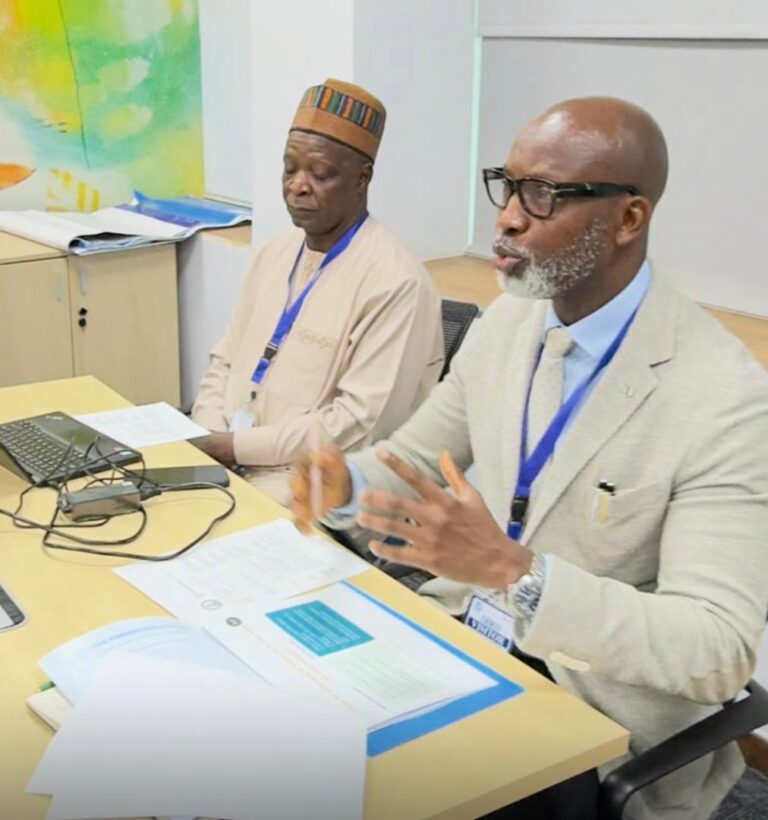
The Minister of Marine and Blue Economy, Dr Adegboyega Oyetola, announced this at an Executive Training on the Aquaculture Investment Guide, organised by his ministry with the World Bank Group in Abuja. He was represented by the Senior Special Assistant to the President on Marine and Blue Economy, Professor Busayo Fakinlede.
Oyetola said fish is central to food security, household nutrition and rural livelihoods, and that Nigeria cannot be food secure while importing most of its fish. He said the goal is to “produce more, import less” and eventually become a net exporter, which he said requires every state to play its part.
The numbers
Nigeria needs about 3.6 million tonnes of fish a year but produces roughly 1.4 million tonnes. Imports cover the gap and cost nearly $1 billion annually in foreign exchange.
State-driven framework
Under the ministry’s framework, each state is expected to:
identify priority aquaculture value chains
assess investment readiness
develop bankable project pipelines
commit to measurable contributions to national fish output
The training brought together commissioners from Rivers, Bayelsa, Delta and Cross River States, plus permanent secretaries and directors of fisheries and aquaculture from across the federation. It covered business models, risk management, environmental and social safeguards, and public-private partnerships.
A Federal-State interface is also planned to coordinate a national fish security strategy.
Oyetola commended the World Bank for its support on analytical studies, cluster-based development, capacity building and the Aquaculture Investment Guide. He will oversee a post-training stakeholders’ roundtable with states and other stakeholders to sustain momentum.
Ministry’s scorecard
Fakinlede credited the minister’s leadership for:
the August 2026 inauguration of the Technical Committee on Accelerating Fish Production
digitisation of fish import licensing
a rise in national output from 1.1 million to 1.4 million tonnes
US shrimp-export certification after compliance with Turtle Excluder Device requirements
the Fish City and Fish Terminal investment portfolio to attract private capital
NIGERIA WATCH
Read the fine print. As of 9 November, I could not find a published World Bank project document for the $200 million, and the figure rests on the ministry’s statement. The repayment period, interest rate, per-state allocation and disbursement date have not been made public, and it is unclear whether this is new money or part of financing already agreed. Waterways News should press the ministry on these before treating the figure as settled.
Loans, not grants. States carry the debt and must show bankable projects. Strong states like Rivers, Bayelsa, Delta and Cross River, whose commissioners attended, sit on the water and are best placed to benefit. Inland and riverine communities lacking project-preparation capacity risk being left behind.
The missing small operators. The framework speaks of investors, PPPs and bankable pipelines. It says little about artisanal fishers, boat operators and fishing communities, including those represented by WABOTAN and ATBOWATON, who supply and move much of the country’s fish. Without cold chains, landing jetties, safe water transport and affordable engines, higher production will not reach markets.
Policy versus delivery. The target is ambitious, with output reportedly up from 1.1 million to 1.4 million tonnes. Yet Nigeria still meets under 40 per cent of its fish demand, and it has heard similar promises before, from the Cabotage Vessel Financing Fund onward. The test is whether the roundtable produces dates, allocations and measurable state commitments.
Maritime Security and Safety
IMO Council Mourns Slain Seafarers, Demands Stronger Protection as Maritime Conflicts Deepen
IMO Council Mourns Slain Seafarers, Demands Stronger Protection as Maritime Conflicts Deepen
Dominguez warns merchant ships remain exposed from Hormuz to the Black Sea as 138th Council session ends in London
By Okeoghene Onoriobe | Waterways News
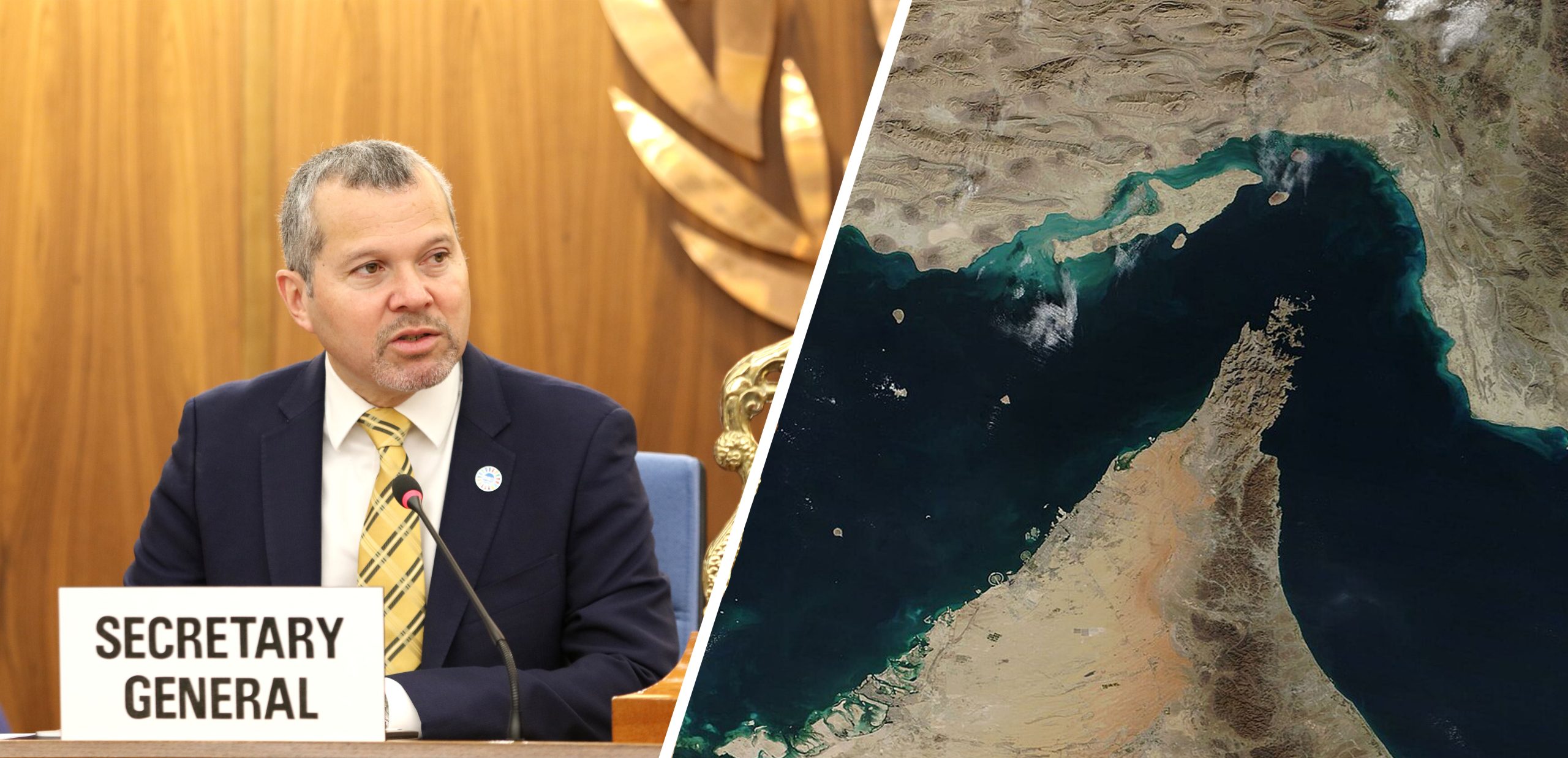
Member states at the International Maritime Organization (IMO) used the opening of the Council’s 138th session to mourn seafarers killed in recent attacks and to demand firmer protection for civilian mariners.
Council met in London from 2 to 6 November, with Russia and Iran putting security in the Black Sea and the Strait of Hormuz at the centre of discussions. On 2 November, Secretary-General Arsenio Dominguez said commercial shipping remained exposed to attack in the Strait of Hormuz, the Red Sea, Bab el-Mandeb, the Eastern Mediterranean, the Black Sea and the Sea of Azov.
The mourning was driven by a run of deaths this year. Five seafarers reportedly died on 29 September during the rescue of the hijacked HONOUR 25 in Somali waters, and several others were seriously injured. In all, 44 seafarers were freed from three vessels. Dominguez noted that 22 seafarers remain captive aboard the ASANA, which was seized earlier this year, and urged continued effort to secure their release.
The Strait of Hormuz remains the deadliest flashpoint. The IMO had verified at least 70 attacks on international shipping there, with 19 seafarers killed, by its late-August assessment. A tally reported by gCaptain put the seafarer death toll at 24 as of 5 November.
Dominguez has repeatedly insisted that seafarers are civilians doing their jobs. He has said they should never become casualties of conflicts to which they are not a party.
Member states echoed the call. Liberia renewed its appeal for seafarer protection and freedom of navigation, and Indonesia said seafarer protection and safety of navigation must be a shared priority.
The session also dealt with leadership. Council backed a second four-year term for Dominguez, subject to approval by the IMO Assembly in 2027. The term would run from 1 January 2028 to 31 December 2031.
Nigeria Watch
Nigeria has more at stake than a distant diplomatic debate. Hormuz disruption has fed through to freight rates, war-risk insurance and port costs for Nigerian importers and shippers. Piracy off Somalia and the Gulf of Aden is a reminder that the Gulf of Guinea’s own security gains, including the Deep Blue Project, cannot be taken for granted.
The Council session also bears on Nigeria’s IMO seat. Abuja has pushed seafarer welfare and maritime security as part of its diplomacy, and the Council’s message gives that agenda more weight. The test is whether Nigeria backs its advocacy abroad with welfare protections, training and safety enforcement for its own mariners and for the informal waterway operators represented by WABOTAN and ATBOWATON.
For those operators, the lesson from London is that protection is a shared responsibility, and it has to reach the people who work on the inland water, not just those on ocean-going ships.

 Oil and Gas8 months ago
Tantita’s Pipeline Deal: $144m Contract, Rising Output, and the Questions that Deserve Answers
 MARITIME TRADE & SHIPPING8 months ago
World’s Largest Container Ship Sets New Maritime Record with 22,233 TEUs on Single Voyage
 Blue Economy9 months ago
Nigeria’s Coast Guard Bill: A Solution in Search of a Problem?