
Maritime Security and Safety
NASS Endorses Tantita Security Contract, Dismisses Petitions Over Pipeline Surveillance


NASS Endorses Tantita Security Contract, Dismisses Petitions Over Pipeline Surveillance
By Okeoghene Onoriobe
Nigeria’s National Assembly has thrown its weight behind the continued engagement of Tantita Security Services Nigeria Limited for pipeline surveillance operations, with lawmakers at a joint Senate and House of Representatives roundtable passing a unanimous vote of confidence in the company.
The joint session, convened by the Senate and House of Representatives Committees on Petroleum Resources, equally dismissed all petitions filed against Tantita’s pipeline surveillance contract following a motion moved by the Chairman of the House Committee on Petroleum Resources (Midstream), Hon. Henry Okojie.

Okojie argued that Tantita, in collaboration with relevant security agencies, had recorded considerable achievements in safeguarding the nation’s petroleum assets, translating into improved oil revenues for the country.
The endorsement followed extensive deliberations at the one-day parliamentary roundtable on the state of pipeline security and Nigeria’s battle against crude oil theft, where legislators reviewed submissions from wide-ranging stakeholders across the oil and gas sector. Data presented at the session pointed to increased crude oil output and a marked reduction in pipeline vandalism since Tantita’s engagement commenced.
Declaring the event open, Speaker of the House of Representatives, Rep. Abbas Tajudeen, noted that despite simmering tensions in the Middle East and the lingering Russia-Ukraine conflict, crude oil remains the world’s largest source of primary energy — particularly in the transport sector, where it still powers 95 per cent of all vehicles, planes and ships.
The Speaker disclosed that the security gains from enhanced pipeline surveillance have helped push Nigeria’s crude oil production to approximately 1.8 million barrels per day, a significant recovery from previous lows triggered by rampant oil theft. He recalled that at the height of the crisis, production collapsed sharply, costing the country billions of dollars in lost revenue and damaging Nigeria’s reputation as a dependable oil producer.
“Nigeria previously lost between 10 and 30 per cent of its crude oil output to theft annually,” Tajudeen said, adding that illegal tapping points had since been largely dismantled while crude deliveries to export terminals had improved markedly.
Beyond production gains, the Speaker highlighted the contract’s social dividend, noting that the surveillance arrangement had generated employment for thousands of Niger Delta youths, many of whom were formerly involved in agitation, offering them alternative livelihoods while strengthening community participation in the protection of oil infrastructure.
He cited legislative backing for the arrangement, including the Petroleum Production and Distribution (Anti-Sabotage) Act and reforms under the Petroleum Industry Act (PIA), as having reinforced enforcement against vandalism and deepened sector governance. He also pointed to the role of the National Oil Spill Detection and Response Agency (NOSDRA) and the Host Community Development Trust under the PIA, which mandates corporate responsibility and gives host communities a financial stake in protecting oil assets.
The Chairman of the House Committee on Petroleum Resources (Downstream), Ikenga Ugochinyere, said the panel subjected every petition and complaint to thorough scrutiny but found no credible basis to sustain any of the claims.
“There is no credible evidence to sustain any of the allegations. Accordingly, all complaints against Tantita are hereby dismissed,” Ugochinyere declared.
His Senate counterpart, Chairman of the Senate Committee on Petroleum Resources (Downstream), Agom Jarigbe, urged policy consistency, warning that disrupting a framework already delivering results would be counterproductive.
“Disrupting a system that is already delivering results would be counterproductive. Our responsibility is to ensure stability,” Jarigbe said.
Odianosen Okojie also cautioned against moves to fragment the surveillance contract, warning that such a step could weaken operational coordination and erode accountability. “We must strengthen what works, not dilute it. Nigeria’s economic security depends on disciplined execution,” he said.
Senior government officials at the session, including Minister of State for Defence, Bello Matawalle, and the Group Chief Executive Officer of the Nigerian National Petroleum Company Limited (NNPCL), Bayo Ojulari, also acknowledged the improvements recorded under the current arrangement.
Ojulari told the meeting that national crude oil production had grown from a historic low of 960,000 barrels per day in 2022 to an average of 1.71 million barrels per day, reaching a peak of 1.84 million barrels per day in 2025 — a turnaround he attributed to an integrated energy security model deployed across the Niger Delta pipeline network.
He described the success as far from accidental, crediting an approach that combined “legislative and executive policy alignment, actionable intelligence, kinetic deployment capabilities, regulatory oversight, industry cooperation, and community-embedded surveillance mechanisms.”
Waterways News | www.waterwaysnews.ng


Maritime Security and Safety
Navy Clamps 13-Hour Waterway Curfew on Calabar-Oron Channel Amid Kidnapping Surge
Navy Clamps 13-Hour Waterway Curfew on Calabar-Oron Channel Amid Kidnapping Surge
NNS Victory, FOB Ibaka mount joint raids; militant hideout demolished, suspect in custody
By Okeoghene Onoriobe| Waterways News Correspondent
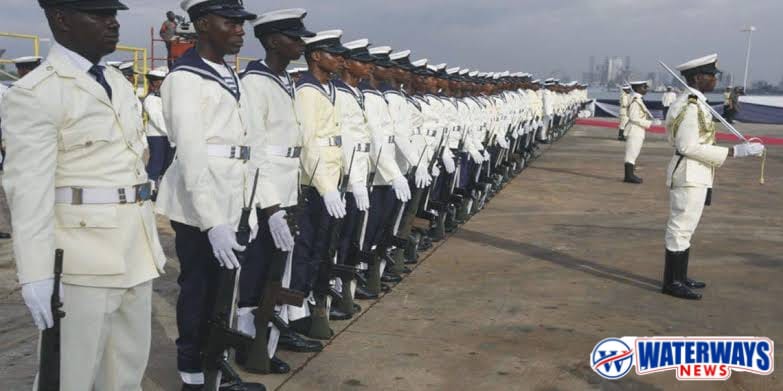
The Nigerian Navy has imposed a 13-hour daily movement restriction on all maritime traffic along the Calabar waterways, banning vessel operations between 6:00pm and 5:00am, as part of an intensified counter-kidnapping campaign targeting criminal networks operating along the Calabar-Oron channel.
The development was disclosed in an official statement by Lt.-Cdr. Suleiman Bala, Public Affairs Officer of the Nigerian Navy Ship (NNS) Victory, based in Calabar, Cross River State.
According to Bala, the curfew — which permits maritime activity only during daylight hours — is a direct operational response to a recent spike in kidnappings along one of Nigeria’s busiest cross-state waterway corridors. The channel, linking Cross River State to Akwa Ibom, serves as a critical passage for riverine communities, commercial boat operators, and fishing vessels.
New Security Outpost at Peacock Crossing
Beyond the movement restriction, the Navy has established a permanent security outpost at Idung I, commonly known as Peacock Crossing, on the island in Cross River State. Bala said the outpost was strategically sited to enable naval personnel to monitor creek activities in real time and deny militants freedom of movement.
In a series of coordinated operations, NNS Victory and Forward Operating Base (FOB) Ibaka conducted raids on fishing settlements at Dayspring Island. Naval authorities said suspected militant elements fled on sighting troops, prompting a subsequent joint clearance operation involving personnel from the Nigerian Army’s 13 Brigade.
“Troops maintained dominance over the creeks and adjoining waterways,” Bala stated, adding that the sustained military presence led to the discovery of a militant hideout linked to a suspect identified only as “Juju” in the Idung axis.
Upon the approach of naval operatives, the suspect fled, abandoning two engine-fitted boats which were seized. The hideout structure was subsequently demolished.
Informant Arrested, Under Interrogation
In a separate intelligence-driven operation, troops tracked and apprehended one individual identified as an informant embedded within the militant network. The suspect is currently in custody and undergoing interrogation, after which he is to be transferred to a relevant security agency for further investigation and prosecution.
Bala said that prior to the deployment of naval assets, militant groups had operated with near-total impunity in the area, conducting kidnappings and extorting riverine communities. He noted that the presence of troops has substantially degraded their operational capacity, pushing them deeper into the creeks and cutting off their logistics chains.
The Navy’s statement concluded with a firm commitment to sustain what it described as “an aggressive posture” until all undesirable elements within the creeks and communities are neutralised
Nigeria Watch
The curfew on the Calabar-Oron channel underscores a widening maritime security challenge that Nigerian authorities have long struggled to contain in the country’s southern waterways. While most attention on waterway insecurity has focused on the Niger Delta’s oil-producing states, the Calabar-Oron corridor — a vital artery for cross-state trade, passenger movement, and fishing — has increasingly come under pressure from criminal elements exploiting its creek-laced geography.
For the Nigerian maritime sector, the operational implications are significant. A daylight-only movement window of 13 hours effectively compresses the commercial window for boat operators, fishing communities, and inter-state water transport services, adding logistical cost and uncertainty to an already challenging operating environment.
NIMASA, which holds statutory responsibility for maritime safety and security coordination under the Suppression of Piracy and Other Maritime Offences (SPOMO) Act 2019, may need to assess whether the Calabar-Oron flashpoint requires a more structured inter-agency response — one that pairs kinetic naval operations with longer-term community engagement and economic alternatives for vulnerable riverine populations.
The Nigerian Navy’s resolve is evident; sustaining it will require resources, intelligence, and coordination across multiple security and regulatory bodies.
Maritime Security and Safety
Iran Seizes Two Container Ships; 15 Filipino Crew Members Reported Safe
Iran Seizes Two Container Ships; 15 Filipino Crew Members Reported Safe
By Okeoghene Onoriobe| Waterways News Correspondent | April 25, 2026
The Philippine government has confirmed that all 15 of its seafarers aboard two container vessels seized by Iran’s Islamic Revolutionary Guard Corps (IRGC) in the Strait of Hormuz are safe and unharmed, bringing some relief to their families and the wider maritime community.
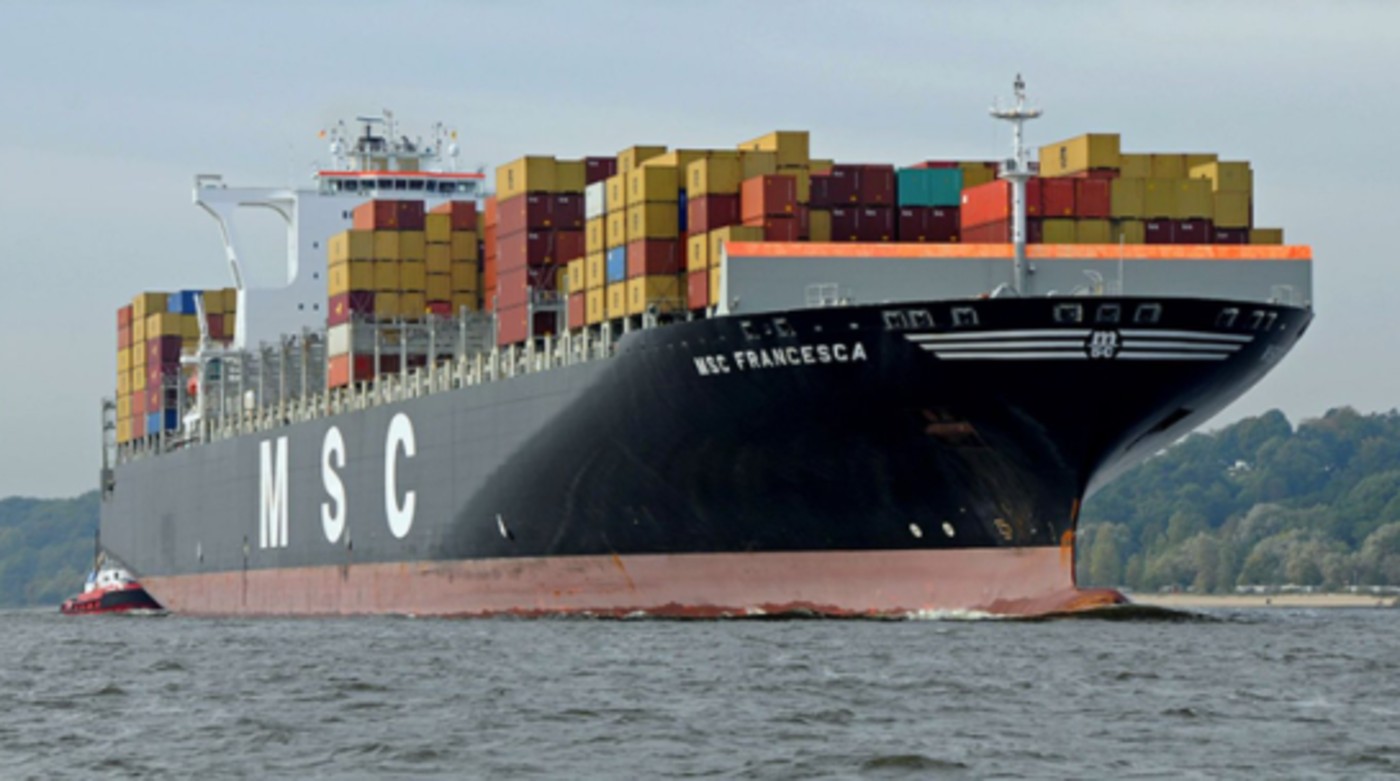
The two vessels — Epaminondas and MSC Francesca — were boarded and seized by IRGC forces on April 22, 2026, as they attempted to transit one of the world’s most strategically significant and increasingly volatile waterways. Ten Filipino crew members were aboard the Epaminondas, with the remaining five on the MSC Francesca.
Confirming their safety, Philippines Department of Migrant Workers (DMW) Secretary Hans Leo J. Cacdac said his office had been assured that all 15 seafarers were safe and unharmed, and that authorities remained in close contact with their families, the manning agency, and the shipowners while continuing to provide support.
The DMW said it is taking all necessary steps to protect the welfare of the affected seafarers, while coordinating closely with all relevant stakeholders.
The incident is the latest in a string of maritime security concerns in the Arabian Gulf region that have placed Filipino seafarers — and the global shipping community — on high alert. The Philippines remains the world’s largest supplier of crew to the international shipping industry, making the safety of its seafarers a matter of significant national concern.
This seizure comes barely weeks after another harrowing incident, in which 21 Filipino crew members were aboard the Panama-flagged product tanker Aqua 1 when it was struck by a missile on April 1, near the Ras Laffan Industrial Hub in Qatar. Fortunately, none of the crew were injured. A second batch of seven survivors returned to Manila on the evening of April 22, bringing the total number of Aqua 1 crew who have arrived home to 17, with four others expected to return shortly.
In a further development that will reassure families across the Philippines, Saudi Arabian offshore vessels company Zamil Offshore informed DMW Secretary Cacdac that 412 Filipino seafarers currently deployed on its vessels in the Gulf are safe, with adequate food supplies and other necessities to last several months.
The escalating pattern of vessel seizures and attacks in the Gulf underscores the mounting risks facing commercial seafarers navigating one of the world’s most critical trade routes. Industry stakeholders are calling for urgent diplomatic engagement to de-escalate tensions and safeguard the lives of maritime workers.
Waterways News will continue to monitor and report developments on this story.
IMO Moves to Free 800 Stranded Ships From Hormuz
With global maritime trade and shipping hanging in the balance, the world’s maritime body is drawing up an escape plan for hundreds of trapped vessels — and their exhausted crews
By Ighoyota Onaibre | Waterways News
The International Maritime Organization is quietly finalising a rescue plan to evacuate hundreds of vessels stranded in the Persian Gulf — but the operation will not move an inch until conflict subsides and the Strait of Hormuz is confirmed free of mines and military threats.
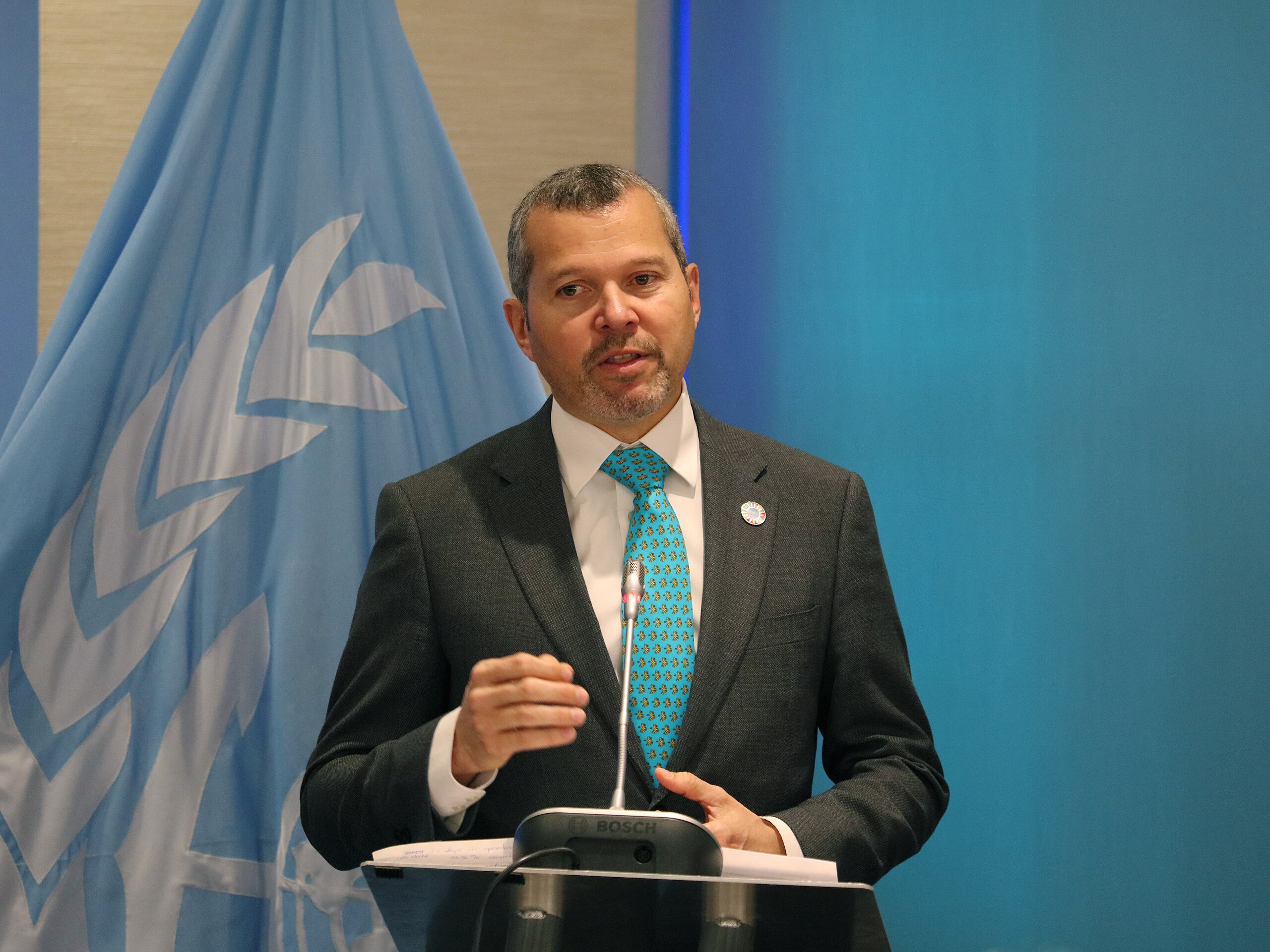
IMO Secretary-General Arsenio Dominguez confirmed that preparations are under way to organise a safe corridor for ships caught in the crossfire of more than seven weeks of escalating hostilities, triggered by US and Israeli strikes on Iran. The plan, however, remains firmly on ice until credible signs of de-escalation emerge.
Close to 800 vessels are currently stuck in the Gulf as traffic through one of the world’s most critical maritime chokepoints has slowed to a near standstill. For Nigerian importers, exporters, and the broader West African supply chain dependent on Gulf-origin energy and commodities, the disruption carries real consequences — from tightening oil availability to delayed cargo consignments.
Iranian warnings and attacks have made shipowners unwilling to risk the passage, though some vessels have reportedly secured exit under tightly controlled routes — in some cases involving payments, a development that has drawn sharp attention from the global shipping community.
The situation has been further complicated by a US naval blockade designed to cut off Iranian war revenues, pushing an already fragile operating environment to the edge as a temporary ceasefire ticks toward expiry.
Behind closed doors, the IMO is mapping out the operational logistics of an evacuation, including how vessels would be prioritised — with the duration of crew entrapment likely to be a key factor.
Any approved transit would follow the long-established Traffic Separation Scheme agreed between Iran and Oman, which has served as the recognised navigational framework for the narrow waterway for decades.
Dominguez was emphatic that the proposed corridor is not a commercial exercise. The goal, he stressed, is humanitarian — to get seafarers safely out of harm’s way, not to restore cargo flows or protect trade revenues.
For Nigeria, the stakes extend beyond sympathy. The Strait of Hormuz handles a significant share of the world’s oil exports, and prolonged closure or instability there feeds directly into the global energy price pressures that continue to weigh on the naira, fuel costs, and freight rates at Nigerian ports.
The IMO says it is ready. The question now is whether the warring parties will give it the window it needs.
Waterways News | Maritime Trade & Shipping
-

 Oil and Gas2 months ago
Tantita’s Pipeline Deal: $144m Contract, Rising Output, and the Questions that Deserve Answers
-
 Blue Economy2 months ago
Nigeria’s Coast Guard Bill: A Solution in Search of a Problem?
-
 MARITIME TRADE & SHIPPING2 months ago
World’s Largest Container Ship Sets New Maritime Record with 22,233 TEUs on Single Voyage