
Maritime Security and Safety
Navy Clamps 13-Hour Waterway Curfew on Calabar-Oron Channel Amid Kidnapping Surge

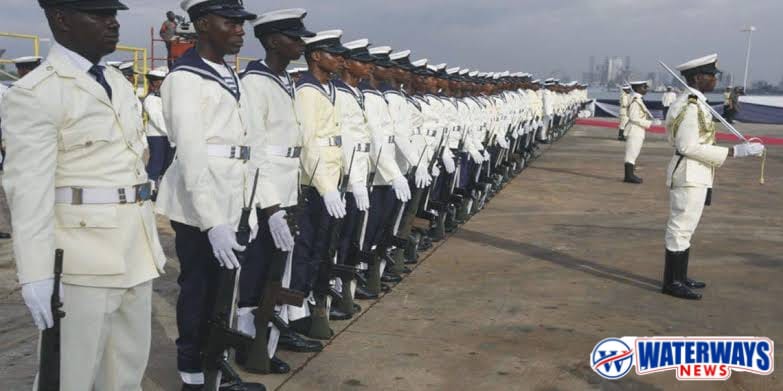

Navy Clamps 13-Hour Waterway Curfew on Calabar-Oron Channel Amid Kidnapping Surge
NNS Victory, FOB Ibaka mount joint raids; militant hideout demolished, suspect in custody
By Okeoghene Onoriobe| Waterways News Correspondent
The Nigerian Navy has imposed a 13-hour daily movement restriction on all maritime traffic along the Calabar waterways, banning vessel operations between 6:00pm and 5:00am, as part of an intensified counter-kidnapping campaign targeting criminal networks operating along the Calabar-Oron channel.

The development was disclosed in an official statement by Lt.-Cdr. Suleiman Bala, Public Affairs Officer of the Nigerian Navy Ship (NNS) Victory, based in Calabar, Cross River State.
According to Bala, the curfew — which permits maritime activity only during daylight hours — is a direct operational response to a recent spike in kidnappings along one of Nigeria’s busiest cross-state waterway corridors. The channel, linking Cross River State to Akwa Ibom, serves as a critical passage for riverine communities, commercial boat operators, and fishing vessels.
New Security Outpost at Peacock Crossing
Beyond the movement restriction, the Navy has established a permanent security outpost at Idung I, commonly known as Peacock Crossing, on the island in Cross River State. Bala said the outpost was strategically sited to enable naval personnel to monitor creek activities in real time and deny militants freedom of movement.
In a series of coordinated operations, NNS Victory and Forward Operating Base (FOB) Ibaka conducted raids on fishing settlements at Dayspring Island. Naval authorities said suspected militant elements fled on sighting troops, prompting a subsequent joint clearance operation involving personnel from the Nigerian Army’s 13 Brigade.
“Troops maintained dominance over the creeks and adjoining waterways,” Bala stated, adding that the sustained military presence led to the discovery of a militant hideout linked to a suspect identified only as “Juju” in the Idung axis.
Upon the approach of naval operatives, the suspect fled, abandoning two engine-fitted boats which were seized. The hideout structure was subsequently demolished.
Informant Arrested, Under Interrogation
In a separate intelligence-driven operation, troops tracked and apprehended one individual identified as an informant embedded within the militant network. The suspect is currently in custody and undergoing interrogation, after which he is to be transferred to a relevant security agency for further investigation and prosecution.
Bala said that prior to the deployment of naval assets, militant groups had operated with near-total impunity in the area, conducting kidnappings and extorting riverine communities. He noted that the presence of troops has substantially degraded their operational capacity, pushing them deeper into the creeks and cutting off their logistics chains.
The Navy’s statement concluded with a firm commitment to sustain what it described as “an aggressive posture” until all undesirable elements within the creeks and communities are neutralised
Nigeria Watch
The curfew on the Calabar-Oron channel underscores a widening maritime security challenge that Nigerian authorities have long struggled to contain in the country’s southern waterways. While most attention on waterway insecurity has focused on the Niger Delta’s oil-producing states, the Calabar-Oron corridor — a vital artery for cross-state trade, passenger movement, and fishing — has increasingly come under pressure from criminal elements exploiting its creek-laced geography.
For the Nigerian maritime sector, the operational implications are significant. A daylight-only movement window of 13 hours effectively compresses the commercial window for boat operators, fishing communities, and inter-state water transport services, adding logistical cost and uncertainty to an already challenging operating environment.
NIMASA, which holds statutory responsibility for maritime safety and security coordination under the Suppression of Piracy and Other Maritime Offences (SPOMO) Act 2019, may need to assess whether the Calabar-Oron flashpoint requires a more structured inter-agency response — one that pairs kinetic naval operations with longer-term community engagement and economic alternatives for vulnerable riverine populations.
The Nigerian Navy’s resolve is evident; sustaining it will require resources, intelligence, and coordination across multiple security and regulatory bodies.


Maritime Security and Safety
Iran Seizes Two Container Ships; 15 Filipino Crew Members Reported Safe
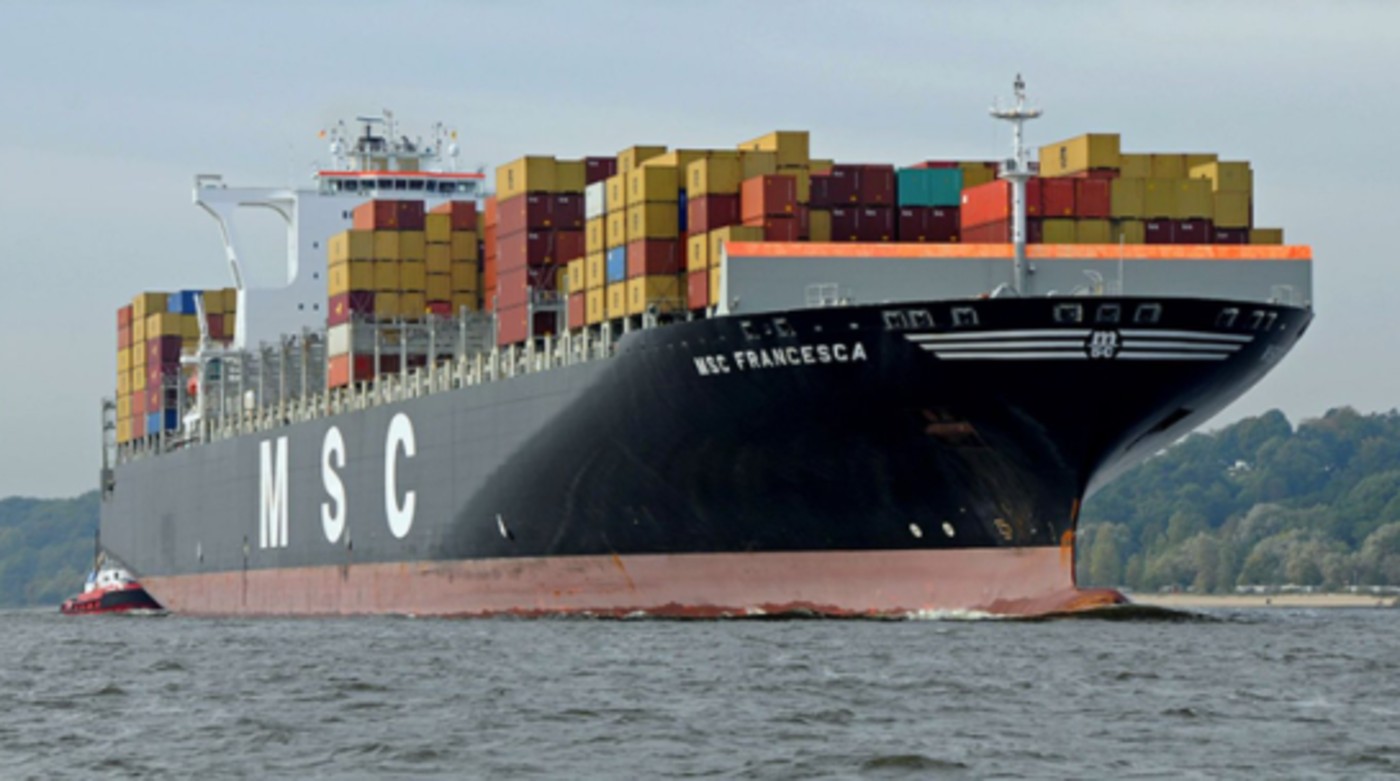
Iran Seizes Two Container Ships; 15 Filipino Crew Members Reported Safe
By Okeoghene Onoriobe| Waterways News Correspondent | April 25, 2026
The Philippine government has confirmed that all 15 of its seafarers aboard two container vessels seized by Iran’s Islamic Revolutionary Guard Corps (IRGC) in the Strait of Hormuz are safe and unharmed, bringing some relief to their families and the wider maritime community.
The two vessels — Epaminondas and MSC Francesca — were boarded and seized by IRGC forces on April 22, 2026, as they attempted to transit one of the world’s most strategically significant and increasingly volatile waterways. Ten Filipino crew members were aboard the Epaminondas, with the remaining five on the MSC Francesca.
Confirming their safety, Philippines Department of Migrant Workers (DMW) Secretary Hans Leo J. Cacdac said his office had been assured that all 15 seafarers were safe and unharmed, and that authorities remained in close contact with their families, the manning agency, and the shipowners while continuing to provide support.
The DMW said it is taking all necessary steps to protect the welfare of the affected seafarers, while coordinating closely with all relevant stakeholders.
The incident is the latest in a string of maritime security concerns in the Arabian Gulf region that have placed Filipino seafarers — and the global shipping community — on high alert. The Philippines remains the world’s largest supplier of crew to the international shipping industry, making the safety of its seafarers a matter of significant national concern.
This seizure comes barely weeks after another harrowing incident, in which 21 Filipino crew members were aboard the Panama-flagged product tanker Aqua 1 when it was struck by a missile on April 1, near the Ras Laffan Industrial Hub in Qatar. Fortunately, none of the crew were injured. A second batch of seven survivors returned to Manila on the evening of April 22, bringing the total number of Aqua 1 crew who have arrived home to 17, with four others expected to return shortly.
In a further development that will reassure families across the Philippines, Saudi Arabian offshore vessels company Zamil Offshore informed DMW Secretary Cacdac that 412 Filipino seafarers currently deployed on its vessels in the Gulf are safe, with adequate food supplies and other necessities to last several months.
The escalating pattern of vessel seizures and attacks in the Gulf underscores the mounting risks facing commercial seafarers navigating one of the world’s most critical trade routes. Industry stakeholders are calling for urgent diplomatic engagement to de-escalate tensions and safeguard the lives of maritime workers.
Waterways News will continue to monitor and report developments on this story.
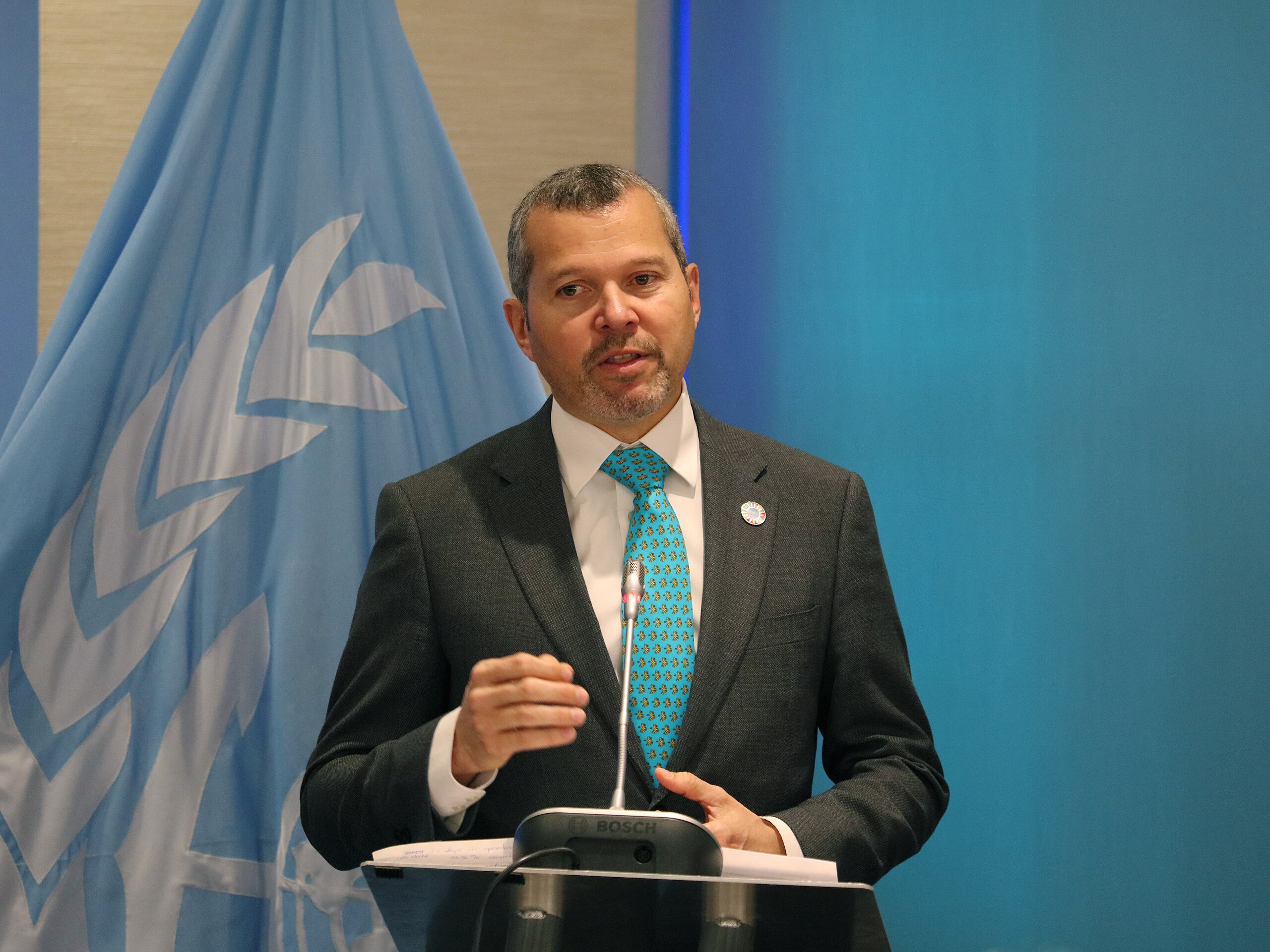
IMO Moves to Free 800 Stranded Ships From Hormuz
With global maritime trade and shipping hanging in the balance, the world’s maritime body is drawing up an escape plan for hundreds of trapped vessels — and their exhausted crews
By Ighoyota Onaibre | Waterways News
The International Maritime Organization is quietly finalising a rescue plan to evacuate hundreds of vessels stranded in the Persian Gulf — but the operation will not move an inch until conflict subsides and the Strait of Hormuz is confirmed free of mines and military threats.
IMO Secretary-General Arsenio Dominguez confirmed that preparations are under way to organise a safe corridor for ships caught in the crossfire of more than seven weeks of escalating hostilities, triggered by US and Israeli strikes on Iran. The plan, however, remains firmly on ice until credible signs of de-escalation emerge.
Close to 800 vessels are currently stuck in the Gulf as traffic through one of the world’s most critical maritime chokepoints has slowed to a near standstill. For Nigerian importers, exporters, and the broader West African supply chain dependent on Gulf-origin energy and commodities, the disruption carries real consequences — from tightening oil availability to delayed cargo consignments.
Iranian warnings and attacks have made shipowners unwilling to risk the passage, though some vessels have reportedly secured exit under tightly controlled routes — in some cases involving payments, a development that has drawn sharp attention from the global shipping community.
The situation has been further complicated by a US naval blockade designed to cut off Iranian war revenues, pushing an already fragile operating environment to the edge as a temporary ceasefire ticks toward expiry.
Behind closed doors, the IMO is mapping out the operational logistics of an evacuation, including how vessels would be prioritised — with the duration of crew entrapment likely to be a key factor.
Any approved transit would follow the long-established Traffic Separation Scheme agreed between Iran and Oman, which has served as the recognised navigational framework for the narrow waterway for decades.
Dominguez was emphatic that the proposed corridor is not a commercial exercise. The goal, he stressed, is humanitarian — to get seafarers safely out of harm’s way, not to restore cargo flows or protect trade revenues.
For Nigeria, the stakes extend beyond sympathy. The Strait of Hormuz handles a significant share of the world’s oil exports, and prolonged closure or instability there feeds directly into the global energy price pressures that continue to weigh on the naira, fuel costs, and freight rates at Nigerian ports.
The IMO says it is ready. The question now is whether the warring parties will give it the window it needs.
Waterways News | Maritime Trade & Shipping
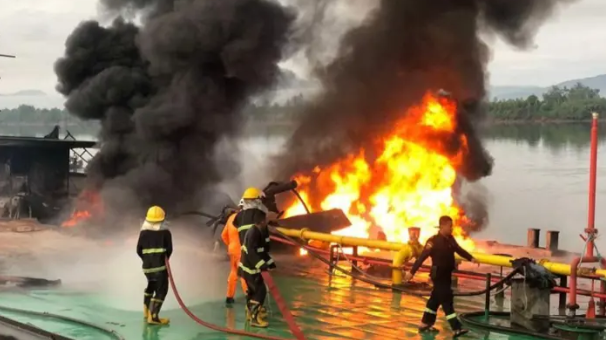
Tanker Inferno at Myanmar River Port Leaves Two Dead, Raises Fresh Safety Alarms
A fuel transfer operation gone catastrophically wrong has turned the port of Homalin in Myanmar’s north-western Sagaing Region into a scene of devastation, killing two people, injuring at least 11 others — and renewing urgent questions about safety standards at inland waterway terminals across Asia.
By Okeoghene Onoriobe | Waterways News
The fire broke out late Monday when an oil tanker caught fire during a routine fuel transfer at the Homalin port, a modest but strategically important inland trading hub along one of Myanmar’s busiest river corridors. What began as a localised blaze quickly spiralled out of control, with flames leaping from the stricken tanker to neighbouring vessels, moored boats and vehicles parked along the harbour.
By Tuesday morning, thick columns of black smoke were still billowing into the sky — captured in videos that circulated widely online — as firefighters battled to bring the inferno under control.
Among the 11 people injured, several were described by local authorities as being in critical condition.
Eyewitness accounts painted a harrowing picture of the chaos that unfolded as darkness fell on the port. Thousands of barrels of fuel were reportedly stored aboard vessels berthed at the facility, and in some of the most alarming scenes, boats already engulfed in flames were seen attempting to pull away from the dock — the desperate manoeuvres of crews caught in a wall of fire with nowhere to go.
Residents told local media that the blaze intensified with frightening speed, fanned by the extreme dry heat that has gripped the region in recent weeks.
A Pattern of Tragedy
What makes the Homalin incident particularly troubling for maritime safety observers is that it is not an isolated event. Authorities confirmed that a strikingly similar disaster struck the very same port just weeks earlier, in March, when two tanker boats caught fire at the same location, killing at least six people.
Two major fire incidents at the same port within a matter of weeks raises serious questions about the adequacy of fire prevention protocols, the safety of fuel handling procedures, and the capacity of port management to enforce basic maritime safety standards at inland terminals.
The port of Homalin serves primarily as a conduit for local trade in goods and fuel — a lifeline for communities in Sagaing Region. Yet the concentration of large fuel stores aboard vessels in such a confined harbour environment, without apparently sufficient safeguards, has now proven fatal on multiple occasions.
Broader Implications for Waterway Port Safety
Inland river ports across the developing world frequently operate under conditions that fall far short of international maritime safety benchmarks. Unlike deep-sea terminals in major cities, smaller inland ports often lack dedicated fire-fighting infrastructure, trained emergency response teams, and the kind of rigorous berthing regulations that govern fuel-handling operations at larger facilities.
The Homalin tragedy is a reminder that fire risk at ports is not a problem confined to the high seas. For waterways professionals, regulators and port administrators, it is a signal that the safety of inland terminals — where local communities depend most directly on port operations — demands far greater attention.
As investigations into the cause of Monday’s explosion continue, the families of the dead and the injured await answers. For the port of Homalin, the more pressing question may be whether anything will change before the next fire breaks out.
Waterways News | Covering Africa’s Maritime and Inland Waterways Sector
-

 Oil and Gas2 months ago
Tantita’s Pipeline Deal: $144m Contract, Rising Output, and the Questions that Deserve Answers
-
 Blue Economy2 months ago
Nigeria’s Coast Guard Bill: A Solution in Search of a Problem?
-
 MARITIME TRADE & SHIPPING2 months ago
World’s Largest Container Ship Sets New Maritime Record with 22,233 TEUs on Single Voyage