Security & Safety
Navy Hospital Gives Mass Burial Notice: A Critical Look at Unclaimed Remains

The Nigerian Navy Reference Hospital (NNRH) in Ojo has issued a stark ultimatum to families across Nigeria: claim your deceased relatives within two weeks, or they will be buried in a mass grave.
The notice, signed by Commander Capt. Aliyu Oyemeyin, affects hundreds of bodies that have accumulated in the hospital’s mortuary over seven years—from August 2018 through December 2025. For families still searching for missing loved ones, this deadline represents both a final opportunity and a sobering reminder of a persistent national tragedy.
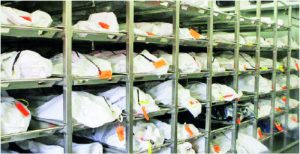
The bodies held at NNRH tell stories of maritime catastrophe and administrative gaps. Many were retrieved from boat mishaps along Nigeria’s waterways—incidents where fishing vessels capsized, commercial boats sank, or overcrowded passenger ferries went down in the country’s notoriously dangerous waters. Others were discovered during routine naval patrols, washed ashore or found floating, their identities lost to time and circumstance.
But why would families leave bodies unclaimed for years? The reasons are as complex as they are heartbreaking. Poverty plays a central role—families in remote coastal communities may lack the resources to travel to Lagos, obtain death certificates, or navigate bureaucratic processes. Some bodies arrive at the hospital unidentified, with no documents, distinctive features, or DNA records to help match them to families. In other cases, families may not know where their relatives ended up. A fisherman lost at sea might never be formally reported missing, and his family could spend years unaware that his body was recovered. Additionally, some families may be unable to afford burial ceremonies or transportation of remains, making the practical challenge of claiming a body insurmountable.


Why Mass Burial Becomes Necessary
For a hospital mortuary, the accumulation of unclaimed bodies creates a humanitarian and public health crisis. Bodies preserved for extended periods consume limited resources—refrigeration, storage space, and maintenance costs that strain already-stretched military budgets. The psychological toll on hospital staff who care for the dead is significant. Beyond logistics, unclaimed bodies represent a profound dignity issue: they cannot be given proper funeral rites, cannot be mourned by families, and cannot bring closure to those left behind.
The mass burial process, while necessary, reflects a failure of the broader system to reconnect the dead with the living. It is a final acknowledgment that despite best efforts, some remains will never find their way home.
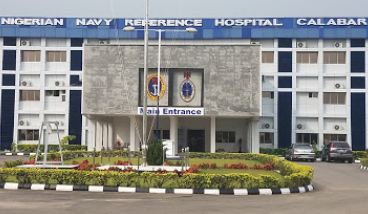
The Nigerian Navy Reference Hospital: History and Funding
The NNRH was established to provide medical services to naval personnel and their families, as well as to support national maritime security operations. As a military medical facility under the Nigerian Navy’s administration, it operates as a tertiary healthcare center in Ojo, Lagos, serving both active-duty sailors and civilians in coastal regions.
Funding for NNRH comes primarily through the Nigerian Navy’s annual budget allocation from the Federal Government. As a military institution, it receives appropriations through the Ministry of Defence, though these allocations have historically been constrained by competing demands across Nigeria’s defense sector. The hospital also generates some internal revenue through patient services and medical procedures, which supplements government funding. However, like many Nigerian public health facilities, NNRH operates under chronic resource limitations. These constraints directly affect its ability to maintain morgue facilities, preserve bodies indefinitely, and conduct extensive identification efforts.
The hospital’s mortuary function—while not its primary mission—has become increasingly important given Nigeria’s maritime challenges. Fishing accidents, naval incidents, and unidentified casualties from coastal communities are regular realities. Yet the mortuary’s capacity and funding have not expanded proportionally to meet this growing need, leaving the institution in the difficult position of having to implement mass burials as a management strategy.
A Call for Solutions
The NNRH’s notice highlights a systemic gap in Nigeria’s approach to unidentified and unclaimed remains. Addressing this crisis would require coordinated action: improved maritime safety regulations to prevent accidents, better missing-persons reporting systems, expanded DNA databases for identification, and dedicated funding for morgue operations and identification efforts. Until such infrastructure exists, notices like this one will continue to mark tragic milestones in Nigeria’s ongoing struggle with maritime casualties and administrative shortfalls.
Based on reporting by Bode Animashaun, Waterways News