
Avaiation
NIGERIA AND CAMEROON SIGN SEARCH AND RESCUE AGREEMENT — A WIN FOR REGIONAL SAFETY


NIGERIA AND CAMEROON SIGN SEARCH AND RESCUE AGREEMENT — A WIN FOR REGIONAL SAFETY
The deal extends emergency cooperation beyond the skies, with implications for maritime and cross-border rescue operations across the Gulf of Guinea.
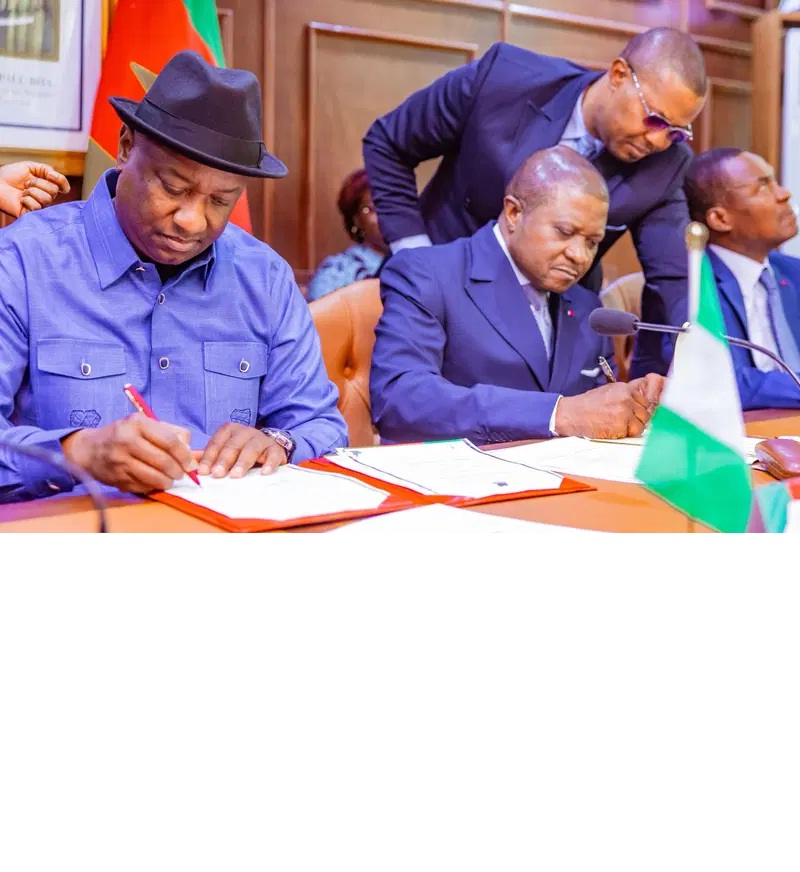
Nigeria and Cameroon have formalised a Technical Aeronautical Search and Rescue (SAR) Agreement, marking a significant step in cross-border emergency response cooperation between the two neighbouring nations.
Aviation Minister Festus Keyamo signed the agreement during a working visit to Cameroon, accompanied by the Director-General of the Nigeria Civil Aviation Authority (NCAA), Capt. Chris Najomo. The signing was confirmed in a statement by the minister’s Special Adviser on Media and Communications, Tunde Moshood.

“Search and rescue cooperation is not simply a regulatory requirement under ICAO Annex 12; it is a humanitarian imperative and a moral responsibility” Festus Keyamo, Minister of Aviatioon and Aerospace Space Development
Why It Matters Beyond Aviation
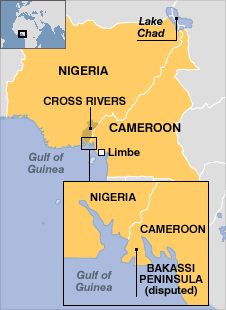
While framed as an aeronautical agreement, the deal carries broader significance for Nigeria’s maritime and coastal emergency response community. Nigeria and Cameroon share not only a land border but also overlapping maritime zones in the Gulf of Guinea — one of the world’s most strategically important and operationally challenging waterways. Strengthened SAR coordination between the two countries sets a precedent and a practical framework that could, in time, extend to joint maritime rescue operations in shared waters.
For Waterways News NG readers — port operators, shipping agents, seafarers, and maritime regulators — the agreement signals a regional shift toward more integrated emergency response, one that the maritime sector has long called for.
What the Agreement Does
The pact establishes clear communication protocols between the Rescue Coordination Centres (RCCs) of both countries, facilitates joint search and rescue operations, and strengthens rapid response mechanisms within their respective Search and Rescue Regions (SRRs). It brings both nations into closer alignment with international safety standards, particularly ICAO Annex 12, which governs SAR obligations for signatory states.
Speaking at the signing ceremony, Minister Keyamo was direct about the stakes involved. “Search and rescue cooperation is not simply a regulatory requirement under ICAO Annex 12; it is a humanitarian imperative and a moral responsibility,” he said.
He added: “In moments of distress, response time saves lives. Borders must never become barriers to humanitarian intervention.”
Framed Within the Tinubu Agenda
The agreement has been positioned by the Federal Government as part of President Bola Tinubu’s Renewed Hope agenda, which prioritises institutional strengthening, regional cooperation, economic revitalisation, and the protection of lives and property.
Keyamo described aviation — and by extension, the broader transport sector — as a strategic driver of economic growth and regional integration, while stressing that such growth must be grounded in safety and effective emergency preparedness.
“Today, Nigeria and Cameroon demonstrate that cooperation — not fragmentation — defines our regional approach to aviation safety,” the minister said, calling the agreement a practical expression of African solidarity and good neighbourliness.
A Building Block for Gulf of Guinea Cooperation
For the maritime community, the deal is worth watching closely. The Gulf of Guinea remains one of the most piracy-affected maritime regions in the world, and coordinated SAR capacity between Nigeria and Cameroon — two of its most significant coastal states — is a building block toward more robust regional maritime security architecture.
Nigeria’s maritime agency, NIMASA, has in recent years worked to strengthen its own SAR and anti-piracy capabilities through initiatives such as the Deep Blue Project. A complementary bilateral framework with Cameroon could reinforce those efforts and improve response times in the event of incidents near shared waters.
The agreement reinforces both countries’ commitment to international safety standards and, for those watching Nigeria’s place in regional maritime affairs, offers a quiet but meaningful signal of diplomatic momentum.
Waterways News NG will continue to track developments in Nigeria-Cameroon maritime and aviation cooperation.
— Waterways News NG | www.waterwaysnews.ng

-
 Blue Economy2 weeks ago
Nigeria’s Coast Guard Bill: A Solution in Search of a Problem?
-
 News2 weeks ago
From Awareness to Action: How SWAAADO is Rewriting Nigeria’s Waterways Safety Story
-
 Blog2 weeks ago
SWAAADO Intensifies Waterways Safety Sensitization Campaign to Waterfront Communities in Lagos State.