Blue Economy
As Nigeria Targets N9 Trillion Customs Revenue, Clarity Emerges on Exchange Rates and the Role of B’Odogwu

As Nigeria embarks on the ambitious National Single Window (NSW) project and the Nigeria Customs Service (NCS) sets its sights on a record ₦9 trillion revenue target for 2026, clarity around customs valuation and exchange rate application has become critical. In response to growing public interest and speculation, the NCS has issued a formal clarification on how exchange rates are determined and applied within its digital infrastructure — specifically through the B’Odogwu system.
By Bode Animashaun
What Is the B’Odogwu System?
The B’Odogwu system is the Unified Customs Management System (UCMS) developed by the NCS to handle all import and export valuation processes. It serves as the sole official digital platform for customs clearance, integrating multiple functions including duty assessment, documentation, and compliance checks.


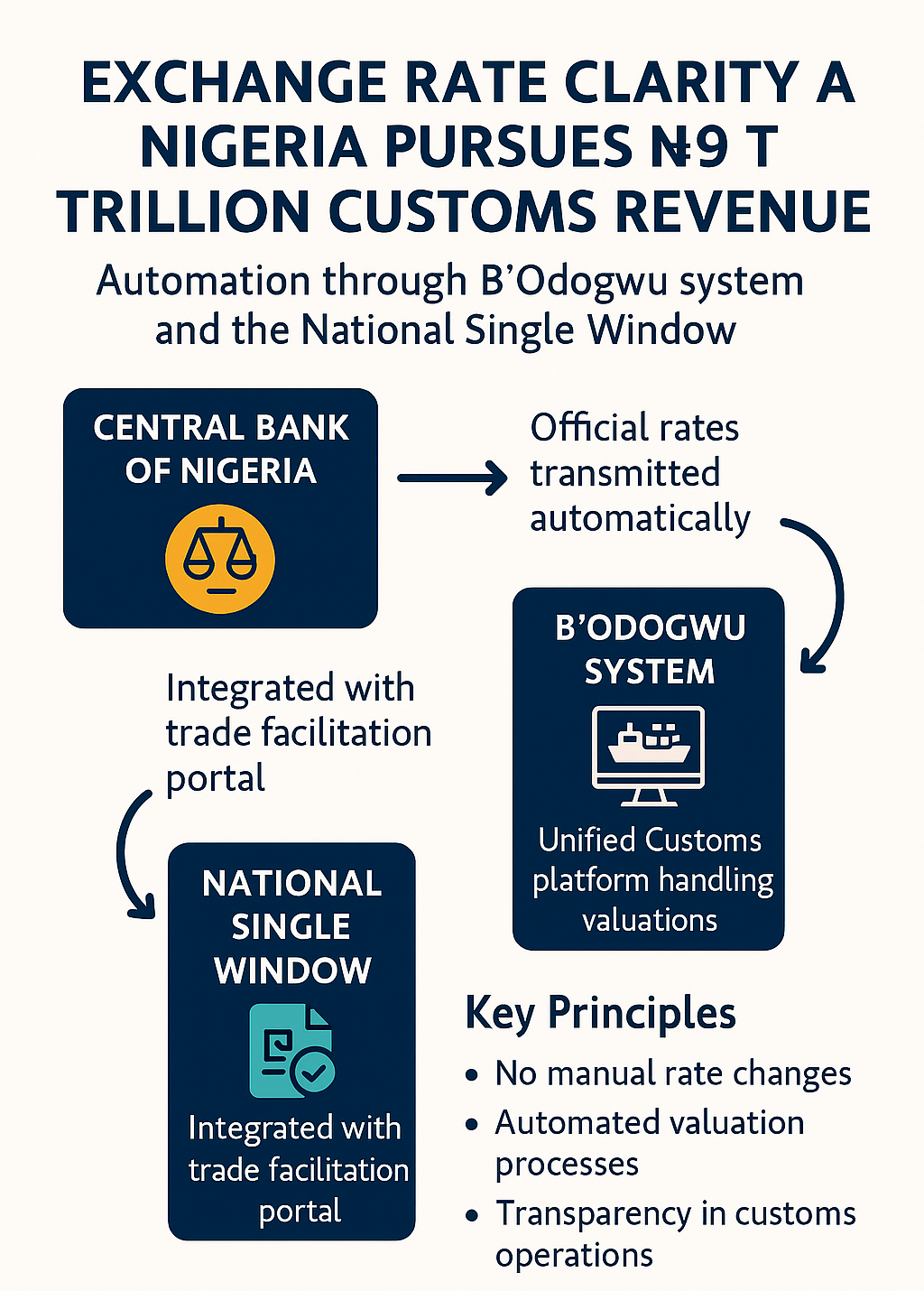
According to the NCS, B’Odogwu does not generate or alter exchange rates. Instead, it receives official rates electronically transmitted by the Central Bank of Nigeria (CBN) — the statutory authority responsible for exchange rate determination under Nigeria’s monetary framework.
“These rates are transmitted electronically and applied automatically across all Customs formations, ensuring transparency, consistency, and compliance with national fiscal and monetary policies,” said Abdullahi Maiwada, National Public Relations Officer of the NCS.
Integration with the National Single Window
The B’Odogwu system is a cornerstone of the NSW initiative, which aims to streamline trade by allowing all regulatory documents to be submitted through a single digital portal. By integrating B’Odogwu into the NSW framework, Nigeria is aligning its customs operations with global best practices — particularly those outlined in the World Trade Organization’s Trade Facilitation Agreement.
This integration ensures:
- Real-time exchange rate application from CBN across all customs points.
- Automated valuation processes that reduce human error and manipulation.
- Inter-agency data sharing, improving transparency and reducing delays.
Why This Matters Now
With the NCS targeting ₦9 trillion in revenue for 2026, accurate and transparent valuation is essential. Misunderstandings around exchange rates can erode investor confidence, disrupt trade flows, and fuel misinformation. By publicly clarifying the role of B’Odogwu and its reliance on CBN rates, the NCS is reinforcing its commitment to fiscal discipline and digital transparency.
Looking Ahead
As the NSW project gains momentum, stakeholders can expect:
- Greater automation in customs clearance.
- Improved compliance with monetary and fiscal policies.
- Enhanced trade facilitation, especially for SMEs and exporters.
However, success will depend on:
- Continuous system upgrades, including API enhancements.
- Stakeholder training and awareness to reduce resistance.
- Robust cybersecurity measures to protect sensitive trade data.
Final Thought
The B’Odogwu system is not just a digital tool — it’s a strategic enabler of Nigeria’s trade modernization. Its integration with the National Single Window marks a significant step toward a more transparent, efficient, and globally competitive customs environment. As Nigeria pursues its ₦9 trillion revenue goal, clarity and trust in systems like B’Odogwu will be key to unlocking sustainable growth.