Corporate Spotlights
Nigeria’s $220 Million Stand Against Meta: Digital Sovereignty at a Crossroads



In July 2024, Nigeria’s Federal Competition and Consumer Protection Commission (FCCPC) sent shockwaves through the tech world by imposing a staggering N352 billion ($220 million) fine on Meta Platforms. The tech giant’s alleged offense? Data privacy violations and discriminatory treatment of Nigerian users compared to those in Western markets.
Meta’s response was swift and dramatic: a threat to potentially withdraw Facebook and Instagram from Africa’s most populous nation.
Beyond Corporate Punishment
This confrontation represents far more than just another regulatory fine. It marks a pivotal moment in Nigeria’s digital journey—a declaration that the nation will no longer accept second-class digital citizenship for its people.
The FCCPC’s allegations center on Meta’s failure to provide Nigerian users with the same level of transparency and control over their data that users in places like Europe and the United States receive. No clear opt-out mechanisms. No transparency about how Nigerians’ data is collected, used, and monetized.
This unprecedented fine signals that the era of regulatory passivity in Nigeria’s digital landscape is ending. For years, Nigerian users have navigated opaque algorithms, inconsistent content moderation, and extensive data harvesting with minimal recourse or protection.

A Global Pattern of Resistance
Nigeria’s action aligns with an emerging global trend. From Ireland to India, regulators are challenging Meta’s data practices with increasing boldness. However, what makes Nigeria’s case particularly significant is that it comes from a nation still developing its digital rights framework—a country asserting its digital sovereignty despite lacking the established regulatory muscle of the EU’s GDPR.
Calling Meta’s Bluff?
Is Meta’s withdrawal threat genuine or merely a negotiation tactic? With over 51 million Nigerians using WhatsApp and millions more on Facebook and Instagram, abandoning such a massive market seems unlikely.
We’ve seen this playbook before. In 2021, Meta briefly blocked Australian news content during disputes over a media bargaining code. Similar threats were issued in Europe over data transfer regulations. Each time, the same pattern emerges: regulatory assertion, corporate resistance, and a tense waiting game.
The Stakes for Nigeria
The consequences of a potential Meta exit would be complex and far-reaching:
- Short-term disruption: Thousands of small businesses, content creators, and entrepreneurs who rely on these platforms for marketing and sales would face immediate challenges.
- Economic uncertainty: The digital economy sector that has flourished around social media marketing could face temporary destabilization.
- Potential innovation catalyst: The vacuum could accelerate the development of local alternatives and reduce Nigeria’s dependence on foreign digital infrastructure.
Digital Colonialism in Question
This confrontation brings to light the troubling reality of digital colonialism—where tech giants extract value from users in the Global South without offering equitable protections or benefits in return.
For many Nigerians, Facebook and Instagram aren’t mere social networks but essential economic tools. Yet while Meta profits from Nigerian data, users remain largely uninformed about how their information is commodified and monetized.
The FCCPC’s fine represents a fundamental question: If European users deserve data portability, informed consent, and algorithmic transparency, why should Nigerians accept anything less?
Short-Term Pain, Long-Term Gain?
If Meta follows through on its threat, the immediate impact would be significant. Businesses dependent on Facebook advertising would lose visibility. Civil society organizations would lose platforms for community engagement. Individual users might lose digital communities built over years.
Yet this disruption could fuel greater digital resilience. Nigerian developers are already building homegrown alternatives, while regional platforms like Ayoba, Nairaland, and Creatlie show promise. With strategic investment and supportive regulation, this crisis could transform into an opportunity for digital independence.
Beyond the Fine: A Digital Rights Agenda
The Meta fine should be just the beginning of a broader conversation. Nigeria needs:
- A comprehensive Digital Bill of Rights guaranteeing data protection and platform accountability
- Well-funded, independent regulatory agencies free from political interference
- Public awareness campaigns about digital rights and data protection
- Multi-stakeholder dialogues to shape Nigeria’s digital future
Continental Leadership
Nigeria isn’t fighting this battle alone. From Kenya’s data protection regulations to South Africa’s Protection of Personal Information Act, countries across Africa are reassessing their relationships with global tech giants.
Nigeria can lead this movement not just through penalties but by pioneering new models of digital governance that balance innovation with rights protection.
The Real Choice
The $220 million Meta fine represents more than punishment for a corporation—it’s about reclaiming agency in a digital landscape where African perspectives have been marginalized.
The true choice facing Nigeria isn’t whether to keep or lose Facebook and Instagram. It’s whether Nigerians will shape their digital future on their own terms or remain passive consumers of technologies designed elsewhere, for someone else’s benefit.
Now is the moment for bold leadership. Nigeria must remain resolute, invest in local alternatives, and demand that tech giants respect its laws, citizens, and data sovereignty.
Because Nigeria is not a digital dumping ground. It is a sovereign nation with rights, dignity, and a digital future worth fighting for.
Blue Economy
APM Terminals Apapa, NPA Stage Joint Clean-Up of Lagos Port Corridor as Global Go Green Week Kicks Off

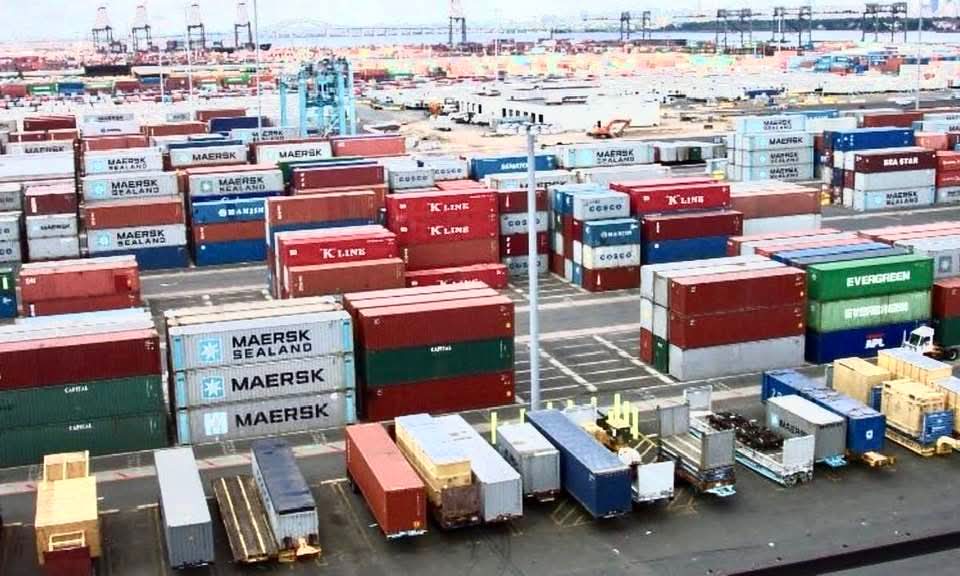
APM Terminals Apapa, NPA Stage Joint Clean-Up of Lagos Port Corridor as Global Go Green Week Kicks Off
Exercise targets Finger Jetty, NPA Roundabout and Adekunle Road stretch as terminal operator pushes 2040 net-zero ambition
By Emetena Ikuku | Waterways News
APM Terminals Apapa has renewed its environmental sustainability pledge with a large-scale clean-up of key access roads within the Lagos Port Complex (LPC), as part of its 2026 Go Green Week campaign.
The exercise, which drew employees of the terminal operator alongside staff of the Nigerian Ports Authority (NPA), covered the corridor stretching from the Finger Jetty through the common-user road to Eko Support Services, the NPA Roundabout, Adekunle Road and the terminal’s main gate. Workers equipped with cleaning tools and protective gear cleared plastics, nylon packaging, wooden planks, bottles, stones and other debris that had accumulated along the routes.
Go Green Week is APM Terminals’ annual global environmental campaign, designed to translate the company’s binding commitment to achieving net-zero carbon operations by 2040 into ground-level action across its terminal network. This year’s edition carries the theme “Healthy Ecosystems… More Resilient and Sustainable Business,” underscoring the link the company draws between environmental health and business resilience.
Speaking at the exercise, Managing Director of APM Terminals Apapa, Kamal Alhraishat, described Go Green Week as a platform for deepening environmental awareness and driving collective action among port community stakeholders. He noted that employees across APM Terminals’ global operations are being encouraged to convert environmental commitments into practical activity, clean-up campaigns, recycling, tree planting and habitat restoration, and said the involvement of NPA staff in the Apapa exercise reflected the value of stakeholder collaboration in sustaining a cleaner port environment.
Health, Safety and Environment Manager, Felix Ugwuagbo, said sustainability sits at the core of the terminal’s operations and decision-making. He argued that environmental responsibility cannot remain confined to boardroom policy but must be embedded in daily port operations and adopted by all port users if lasting progress is to be achieved. A clean port, he added, translates directly into a safer and more efficient one, with knock-on benefits for trade flow and supply chain resilience.
Assistant Manager, NPA Environment (Lagos Port Complex, Apapa), Umar Ibrahim, commended the initiative, stressing that effective waste management underpins safe and efficient port operations. He said a clean port environment protects public health, preserves the surrounding ecosystem and enables the smooth movement of cargo and personnel, while prompt waste removal reduces environmental hazards and improves air quality for all port users.
Nigeria Watch
For a port corridor as congested and heavily trafficked as Apapa, the symbolism of a joint APM Terminals–NPA clean-up matters as much as the exercise itself. The Finger Jetty–NPA Roundabout–Adekunle Road axis is one of the most contested stretches of road in Nigeria’s maritime sector, a corridor that has, for years, doubled as a case study in the country’s port-access congestion crisis, with truck queues, informal trading activity and haulage debris regularly cited as contributors to gridlock and environmental degradation around the LPC.
That an NPA-branded environmental official joined a terminal operator’s own sustainability drive is notable in a sector where regulator-operator relations are more often defined by friction, over concession terms, tariff disputes or infrastructure funding obligations, than by joint action. Whether this collaboration extends beyond a single clean-up day to sustained waste-management protocols along the corridor will be the more meaningful test.
The exercise also lands against the backdrop of Nigeria’s own decarbonisation posture within the IMO framework, and NIMASA’s stated ambitions around green shipping and environmental compliance. As global terminal operators tie local ESG activity to binding 2040 net-zero targets, Nigerian port authorities and operators, NPA, NIMASA and private concessionaires alike, face growing pressure to demonstrate that similar environmental accountability applies not just to corporate campaigns, but to routine port and waterway operations across Lagos, the Niger Delta and beyond.
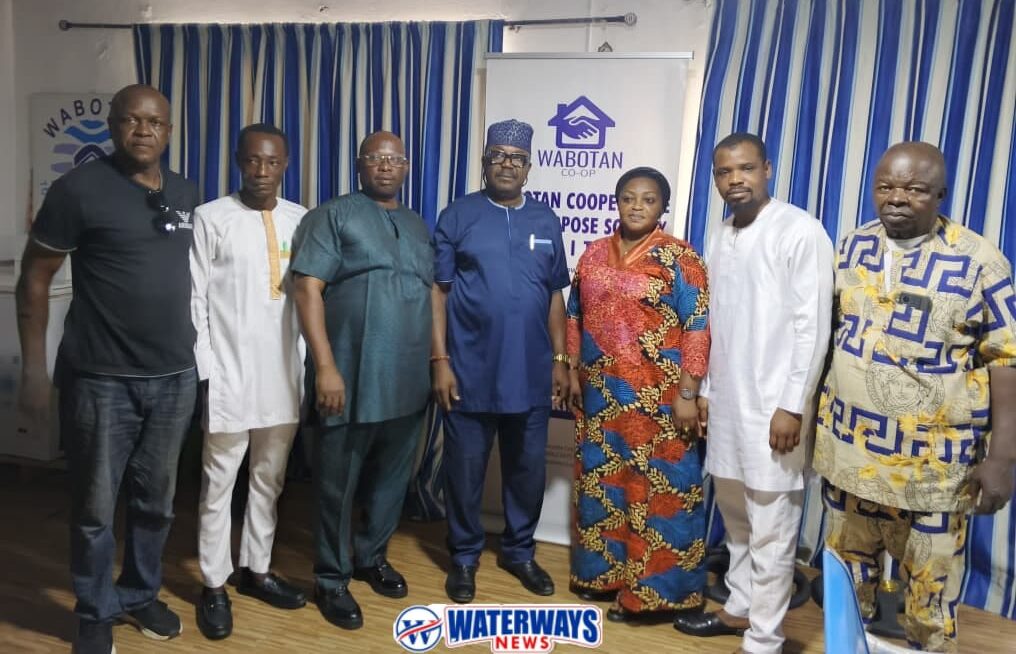
WABOTAN Cooperative Unveils N13.4m Asset Base in Maiden AGM.
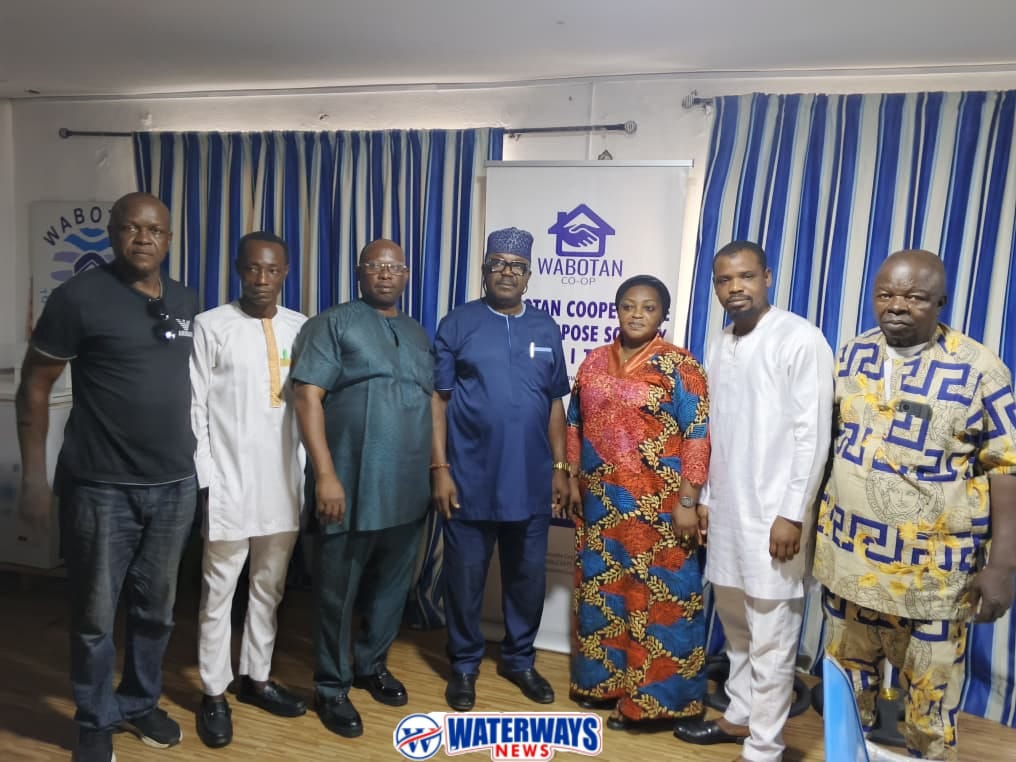
Lagos-based Wabotan Cooperative Multipurpose Society Ltd, declares N13.4 Million assets base as it charts growth path in first year of operations
The Waterfront Boat Owners and Transporters Association of Nigeria (WABOTAN), is the mother association that gave birth to Wabotan Cooperative Multipurpose Society Ltd. The cooperative society has disclosed impressive financial indicators in its first AGM, with assets totaling N13.4 million and income of N792,848.93.
The financial disclosures were made at the cooperative’s first Annual General Meeting held in Lagos at the weekend, marking a significant milestone for the young organization.
Speaking at the event, the Cooperative’s President, Chief Raymond Gold, traced the genesis of the society to his personal journey from Apapa to a waterfront community, where he discovered the immense potential within the water transport sector.
Chief Gold explained that his previous experience in establishing and leading similar cooperative ventures position him to champion the cooperative initiative from inception. “My relocation to a waterfront community opened my eyes to investment opportunities in water transportation. With my background in cooperative leadership, it became clear that I had a responsibility to create a platform that would serve our members and leave a lasting impact,” Gold stated. He added that he got the support of the national president of Wabotan when he suggested the cooperative to him and the cooperative was registered
The president acknowledged teething problems typical of startup organizations but expressed confidence in the cooperative’s ability to overcome them, citing strong support from its supervising authority, the Apapa Area Office of Cooperatives. He also mentioned the enormous support that the leadership of the cooperative has received from Comrade Babatope Fajemirokun, the National President of WABOTAN. He called on members of Wabotan Cooperative to demonstrate unwavering commitment as the society works to institutionalize robust systems for sustainability.
Mrs. Oluwatoyin Adeyemi, who represented the Area Officer, praised the cooperative’s first-year performance while highlighting areas requiring attention. She stressed the importance of executive cohesion, strict observance of cooperative guidelines, and operational discipline.
Adeyemi suggested that future meetings could incorporate virtual participation options to ensure inclusivity for members in distant locations. She also called for accelerated implementation of the society’s investment programs, particularly its boat acquisition project, which remains active.
Presenting the financial statement for the year ending December 2024, Financial Secretary James Olabode, standing in for the treasurer, revealed that the cooperative recorded total income of N792,848.93. The asset profile showed sole assets valued at N13,479,755.86 and joint assets worth N200,000,000, culminating in a combined asset base of N213,479,755.86—a remarkable achievement for a cooperative in its formative stage.
Olabode noted that while hard copies of the financial statements were unavailable at the AGM venue, electronic versions had been distributed to members beforehand, allowing them adequate time for review in line with transparency standards.
The maiden AGM signals a positive start for WABOTAN Cooperative as it positions itself to leverage on opportunities in Nigeria’s expanding inland waterways sector.
SIFAX Group Touches 3,500 Lives Through Strategic CSR Interventions
Leading conglomerate demonstrates commitment to national development with comprehensive empowerment programs
Nigerian conglomerate SIFAX Group has positively impacted 3,500 vulnerable individuals through targeted Corporate Social Responsibility (CSR) initiatives implemented in July and August 2025, reinforcing its commitment to sustainable community development.
The interventions, executed through the company’s flagship NGO, the Ajoke Ayisat Afolabi Foundation (AAAF), and strategic partnerships, reached 3,083 beneficiaries in July alone. Recipients included widows, children, voluntary returnees from abroad, and persons with disabilities across multiple states.
July’s initiatives demonstrated remarkable scope and diversity. Healthcare support reached 639 individuals across Lagos, Isade, and Zaria, while vocational training programs equipped 1,398 women, girls, and boys with marketable skills in crocheting, tailoring, shoemaking, and bag-making.
The Foundation’s community development efforts included providing a borehole for the Agbelekale community in Lagos and facilitating specialized training for petty traders in Umuahia in preparation for an interest-free loans scheme. Additionally, 10 traders received direct empowerment support in Zaria.
In a significant collaboration with the World Bank and the National Commission for Refugees, Migrants and Internally Displaced Persons (NCFRMI), AAAF distributed essential items to 750 voluntary returnees from abroad, addressing critical reintegration needs.
August witnessed the expansion of SIFAX Group’s youth-focused initiatives through a partnership with NIDSMET Services, sponsoring skills acquisition training for 500 young people in Lagos. The comprehensive program covered high-demand sectors including confectionery, catering, textile design, photography, cosmetics, and event management.
At the program’s grand finale in Satellite Town, Lagos, Group Head of Corporate Communications Olumuyiwa Akande, represented by Olatunde Adewola, articulated the company’s broader vision.
“At SIFAX Group, we measure success not just by business achievements but by the lives we touch and the opportunities we create. Entrepreneurship and empowerment remain central to our vision of a better Nigeria,” Akande stated, encouraging beneficiaries to build their futures on principles of integrity, excellence, and digital visibility.
NIDSMET Services Managing Director Olabiyi Oluwole highlighted the program’s track record in producing entrepreneurs who eventually become employers of labor.
“SIFAX Group has been a major supporter of this program since its inception, and many of our graduates have become successful business owners,” Oluwole noted, emphasizing the initiative’s role in addressing Nigeria’s unemployment challenge.
AAAF Coordinator Foluke Ademokun reinforced the Foundation’s commitment to systematic poverty alleviation and sustainable development solutions.
“From scholarships for widows’ children to empowerment opportunities for women, AAAF is committed to eradicating poverty and delivering sustainable solutions to Nigeria’s most pressing challenges,” she explained.
The comprehensive CSR approach demonstrates SIFAX Group’s understanding that sustainable business success requires deliberate investment in human capital development and community empowerment, positioning the company as a model for corporate citizenship in Nigeria’s private sector.

 Oil and Gas7 months ago
Tantita’s Pipeline Deal: $144m Contract, Rising Output, and the Questions that Deserve Answers
- MARITIME TRADE & SHIPPING7 months ago
World’s Largest Container Ship Sets New Maritime Record with 22,233 TEUs on Single Voyage
- Blue Economy7 months ago
Nigeria’s Coast Guard Bill: A Solution in Search of a Problem?